BERLIN (AP) — German lawmakers on Friday approved the government's plan to attract more military recruits as the country tries to boost the ranks of its armed forces in the face of rising concern about the threat posed by Russia. The plan also foresees mandatory medical checks for young men.
It stops short of reintroducing conscription, though it leaves open the possibility of compulsory service for at least a limited number should the need arise.
Click to Gallery
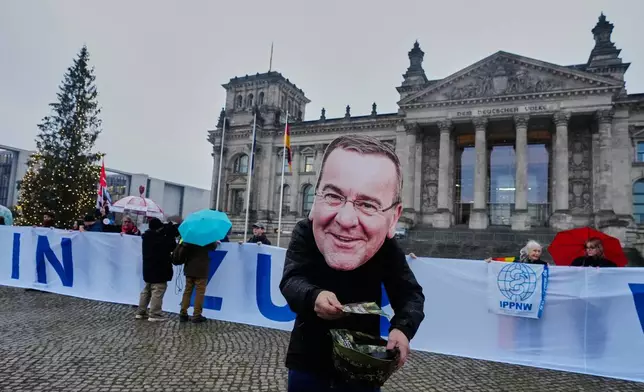
A demonstration with the mask of German Defence Minister Boris Pistorius attends a protest against the planned possibility of compulsory service in front of the German parliament in Berlin, Germany , Friday, Dec. 5, 2025. (AP Photo/Markus Schreiber)
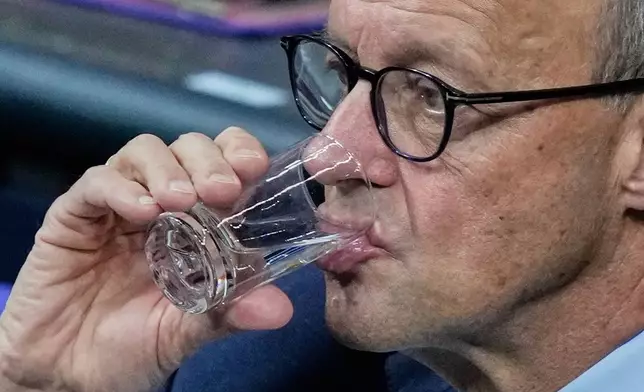
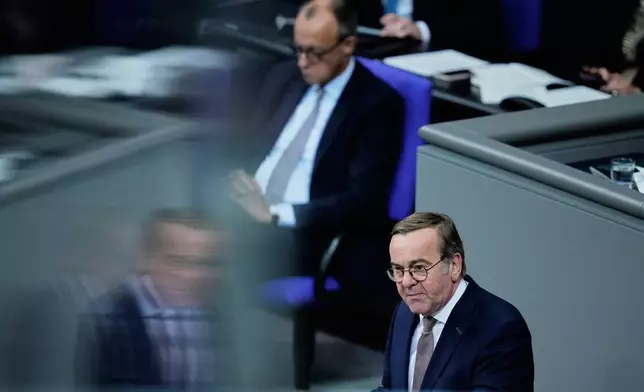
German Chancellor Friedrich Merz attends a meeting of the German Parliament in Berlin, Germany, Friday, Dec.5, 2025. (AP Photo/Ebrahim Noroozi)
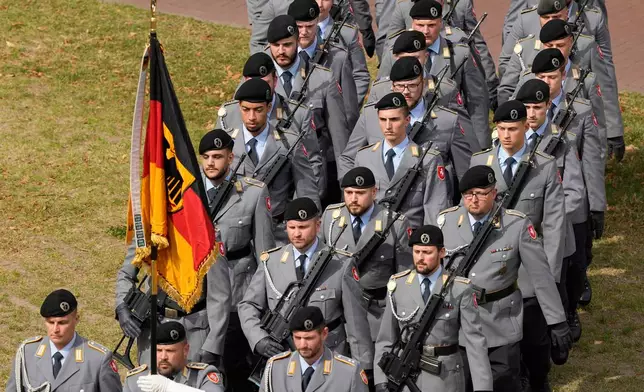
FILE - New recruits of the German Army Bundeswehr attend a ceremony to take their oath in front of the North Rhine-Westphalia state parliament in Duesseldorf, Germany, on Sept. 4, 2025. (AP Photo/Martin Meissner, File)
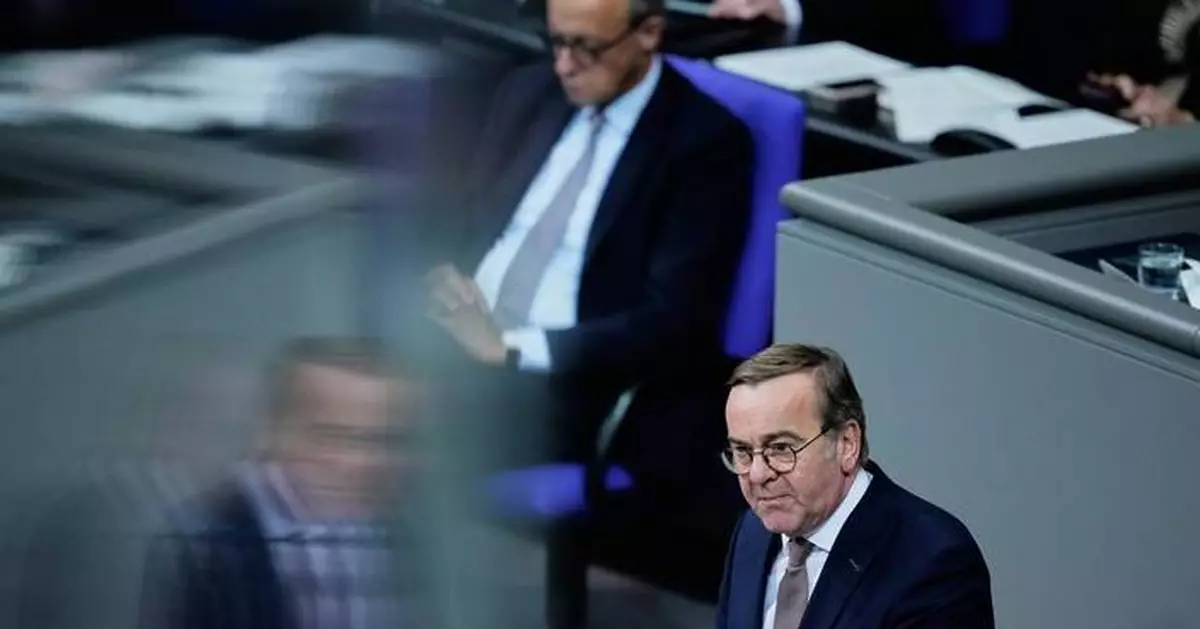
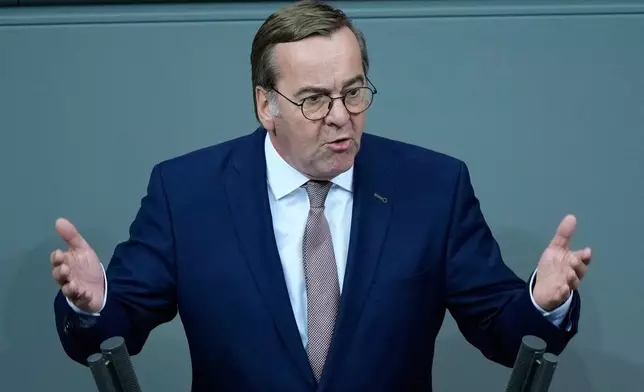
German Defense Minister Boris Pistorius speaks during a meeting about conscription inthe German Parliament in Berlin, Germany, Friday, Dec.5, 2025. (AP Photo/Ebrahim Noroozi)
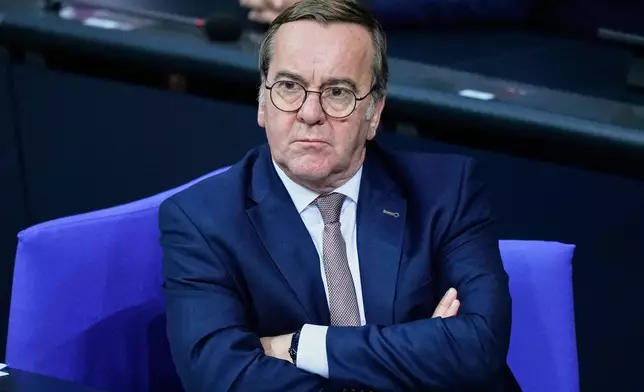
German Defense Minister Boris Pistorius attends a meeting of the German Parliament in Berlin, Germany, Friday, Dec.5, 2025. (AP Photo/Ebrahim Noroozi)
German Defense Minister Boris Pistorius speaks during a meeting about conscription of the German Parliament in Berlin, Germany, Friday, Dec.5, 2025. (AP Photo/Ebrahim Noroozi)
Parliament’s lower house, the Bundestag, approved the plan by 323 votes to 272, with one abstention. It’s a modified version of a plan that Chancellor Friedrich Merz’s Cabinet approved in August.
Germany has committed billions to improving its military’s equipment after years of neglect and the government has turned its attention to trying to persuade more people to join up.
It’s not alone in trying to bolster its armed forces; last week, France unveiled a program to train thousands of volunteers aged 18 and 19 starting next year. Belgium and Poland also have plans to attract more people to train or serve.
Defense Minister Boris Pistorius told lawmakers that “our allies are looking at Germany” and argued that the country has become a “pacesetter for defense in Europe.” He said that, with the new legislation, “we are taking a further decisive step for our defense capability.”
Germany suspended conscription for men in 2011 and has subsequently struggled to attract large numbers of short-term volunteers. In recent years, the number of military personnel has hovered just above 180,000 — compared with 300,000 people in 2001, more than a third of whom were conscripts.
Now the government wants to raise the figure to 260,000 over the next decade. It says it will also need around 200,000 reservists, more than double the current figure.
The plan approved Friday foresees more attractive pay and conditions for people who join up on a short-term basis, better training and more flexibility on how long people can serve, starting from a minimum of six months.
The aim is to draw enough recruits without reviving compulsory service, an idea unpopular with the center-left junior partner in Merz’s coalition.
But the plan leaves the door open for parliament to introduce mandatory service at least for a limited number of people, possibly selected at random, “particularly if the defense policy situation or the personnel situation of the armed forces make this necessary.” Many in Merz’s conservative bloc think that conscription will ultimately be needed.
From January 2027, the Defense Ministry will be required to report to parliament every six months on recruitment figures. The legislation sets annual target ranges over the next 10 years for the size of the military and its reserves, but there is no automatic trigger for any move toward compulsory recruitment.
Starting in the new year, questionnaires will be sent to young men and women turning 18 about their willingness and ability to serve, which men will be required to answer. That will be expanded into a requirement for young men to undergo medical examinations, though not to sign up for the military. The German military, the Bundeswehr, will need to build up the capacity to process some 300,000 men per year.
Desiree Becker, a lawmaker with the opposition Left Party, called on young people to “strike against the reintroduction of conscription” and inform themselves about conscientious objection.
Pistorius said demonstrations against the plan were welcome. But he insisted that more young people are “prepared to take responsibility” than some opponents say, and they are aware that “no one is forcing us to do anything, other than to fill out a questionnaire ... and a medical that hurts no one.”
“This military service is voluntary and will remain so if everything goes as well as we expect,” he said. “But yes ... if it isn’t enough, and if the threat situation continues to develop the same way or worse, we won’t be able to avoid a partial compulsory service to protect this country.”
Ten European Union countries have compulsory military service: Austria, Cyprus, Croatia, Denmark, Estonia, Finland, Greece, Latvia, Lithuania and Sweden.
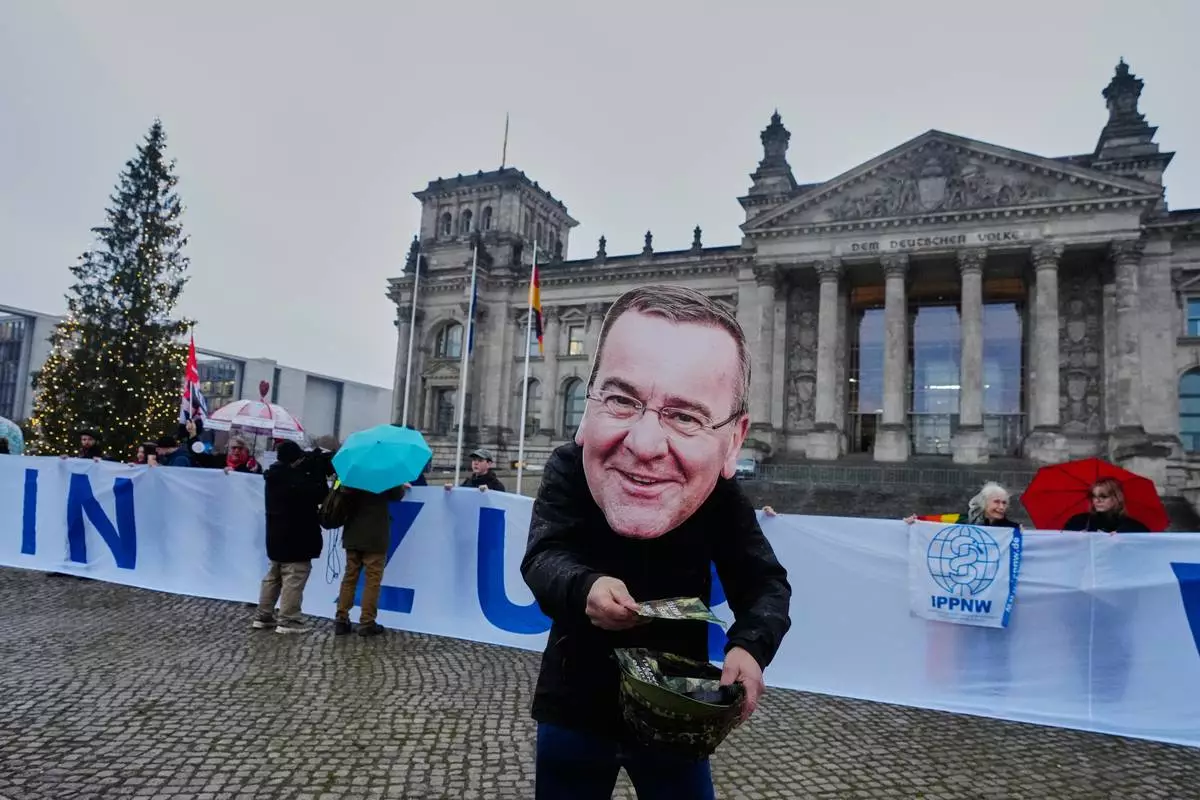
A demonstration with the mask of German Defence Minister Boris Pistorius attends a protest against the planned possibility of compulsory service in front of the German parliament in Berlin, Germany , Friday, Dec. 5, 2025. (AP Photo/Markus Schreiber)
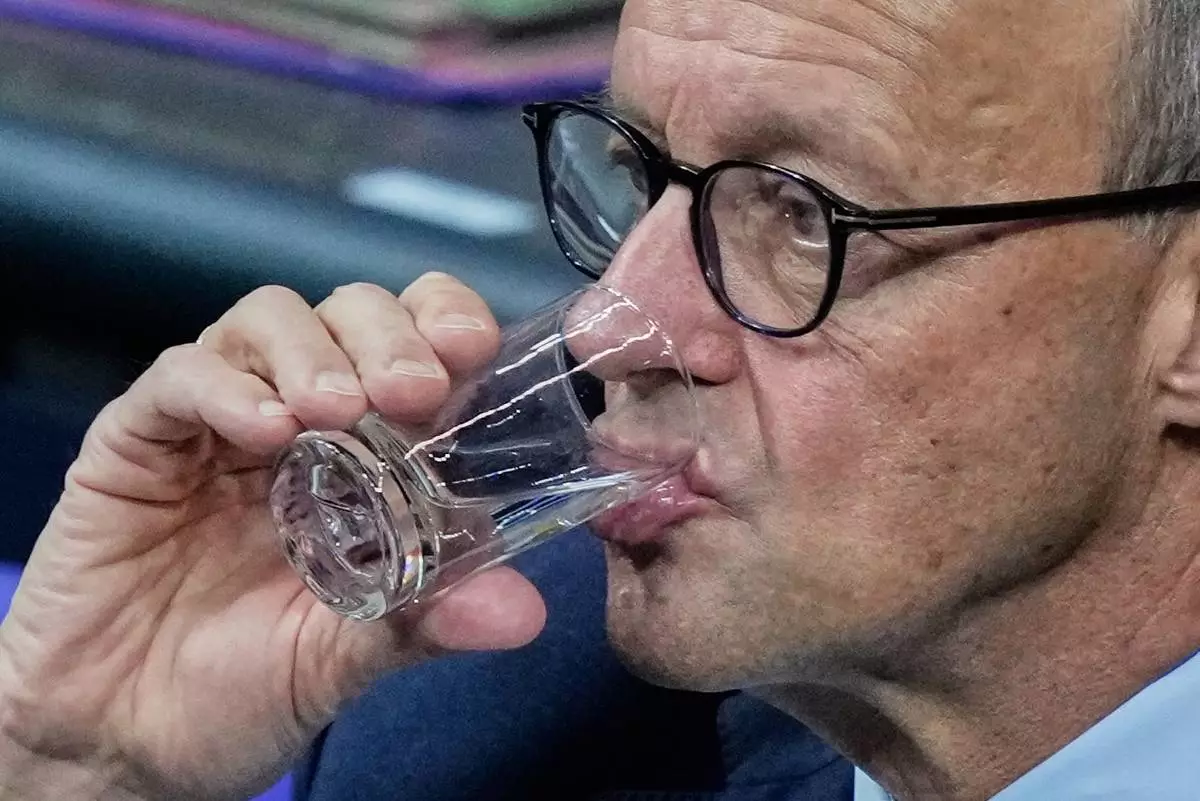
German Chancellor Friedrich Merz attends a meeting of the German Parliament in Berlin, Germany, Friday, Dec.5, 2025. (AP Photo/Ebrahim Noroozi)
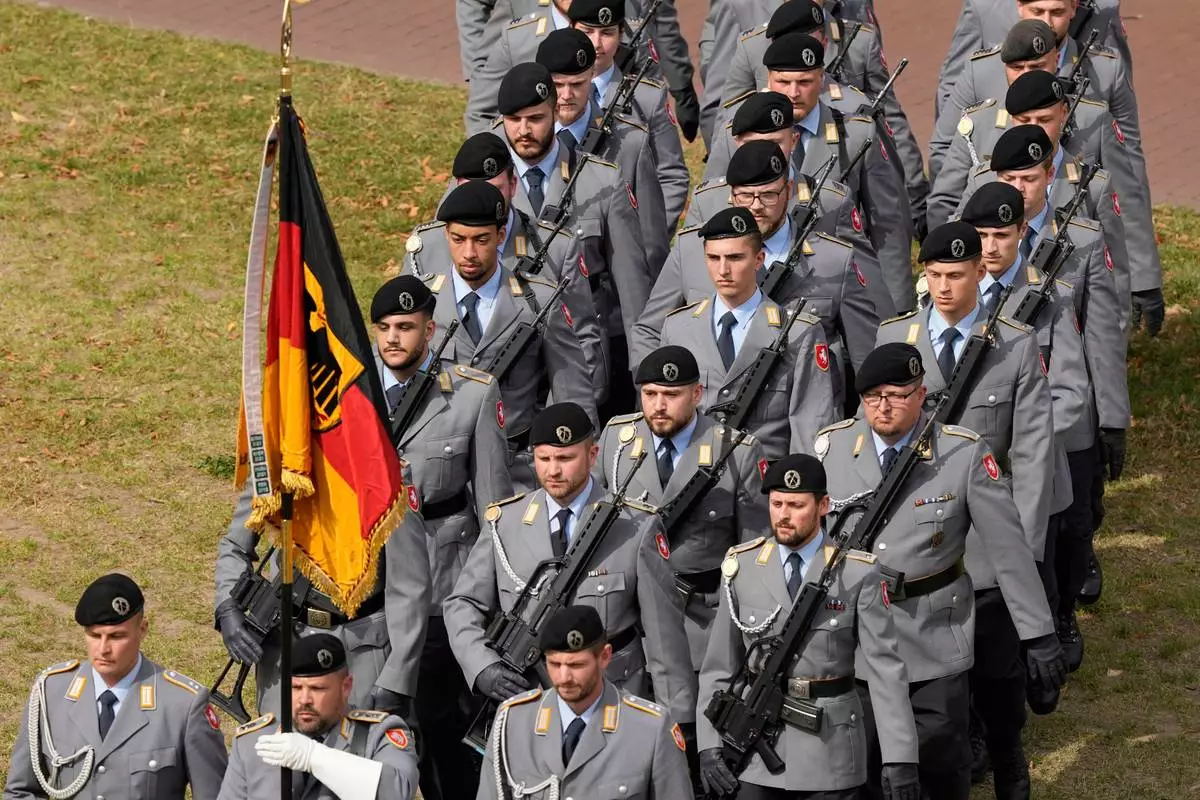
FILE - New recruits of the German Army Bundeswehr attend a ceremony to take their oath in front of the North Rhine-Westphalia state parliament in Duesseldorf, Germany, on Sept. 4, 2025. (AP Photo/Martin Meissner, File)
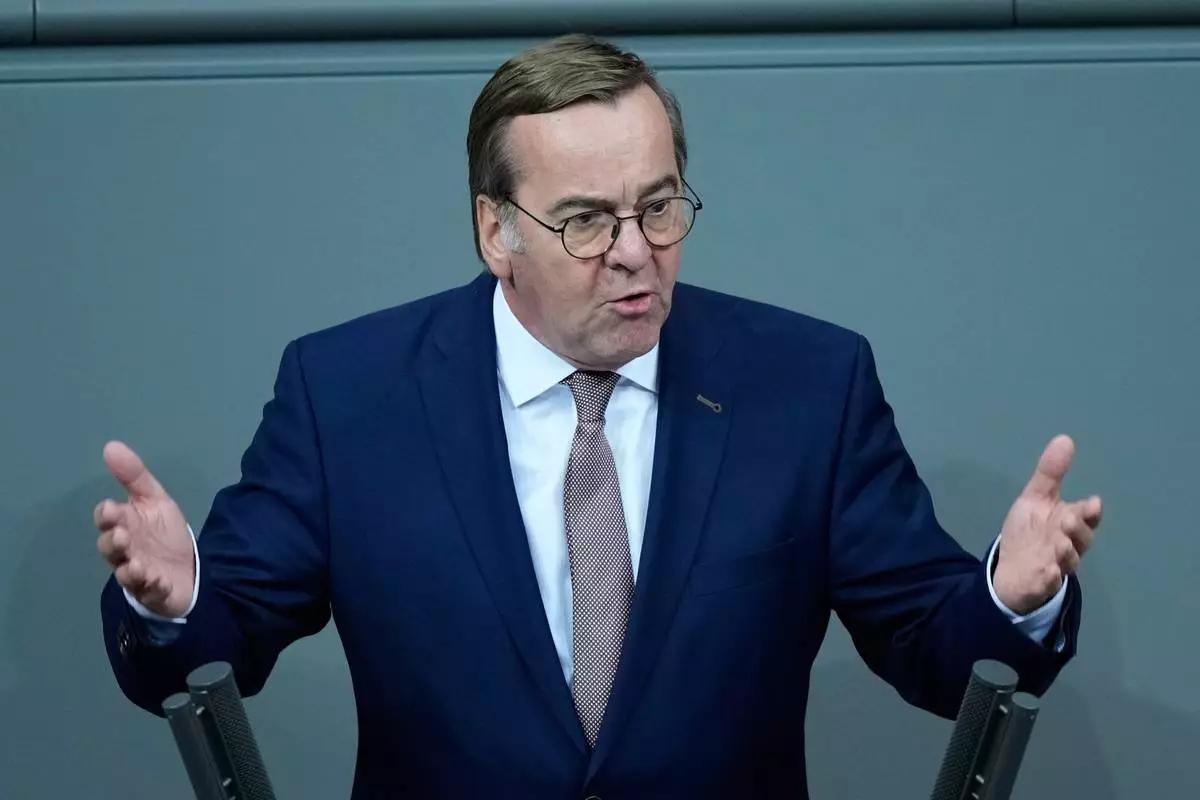
German Defense Minister Boris Pistorius speaks during a meeting about conscription inthe German Parliament in Berlin, Germany, Friday, Dec.5, 2025. (AP Photo/Ebrahim Noroozi)
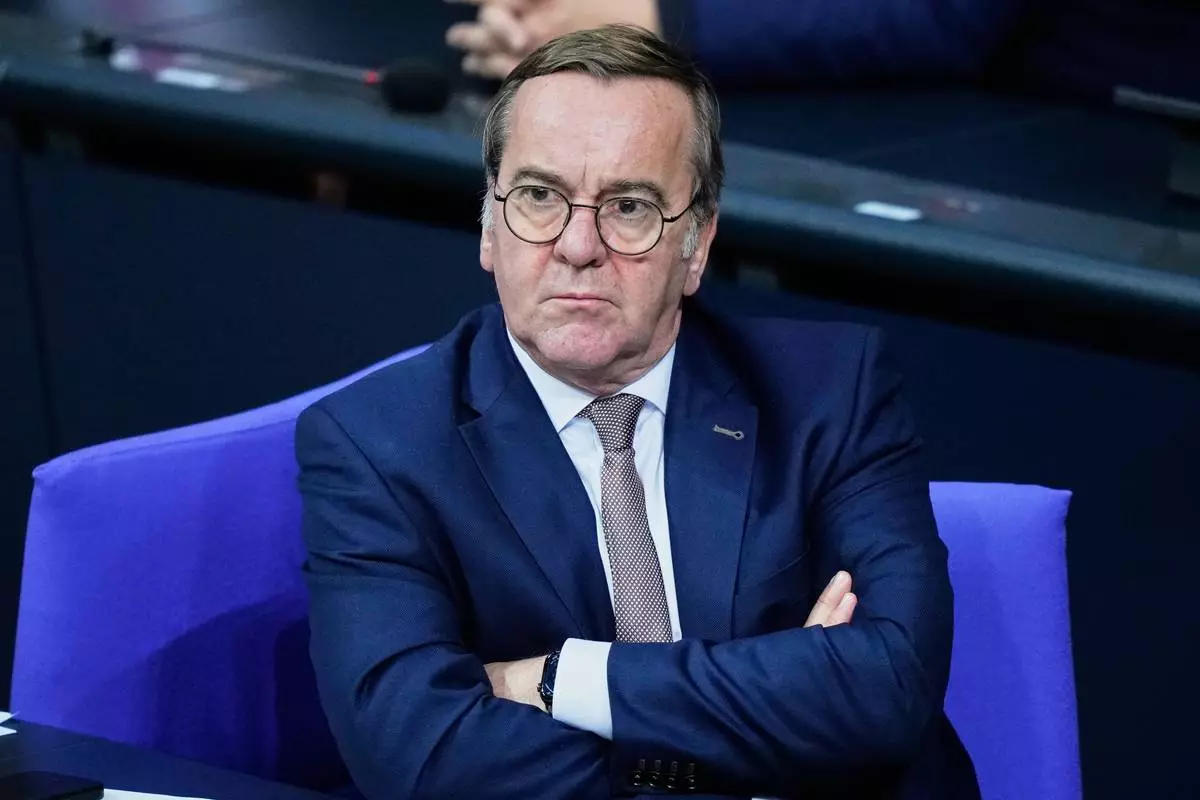
German Defense Minister Boris Pistorius attends a meeting of the German Parliament in Berlin, Germany, Friday, Dec.5, 2025. (AP Photo/Ebrahim Noroozi)
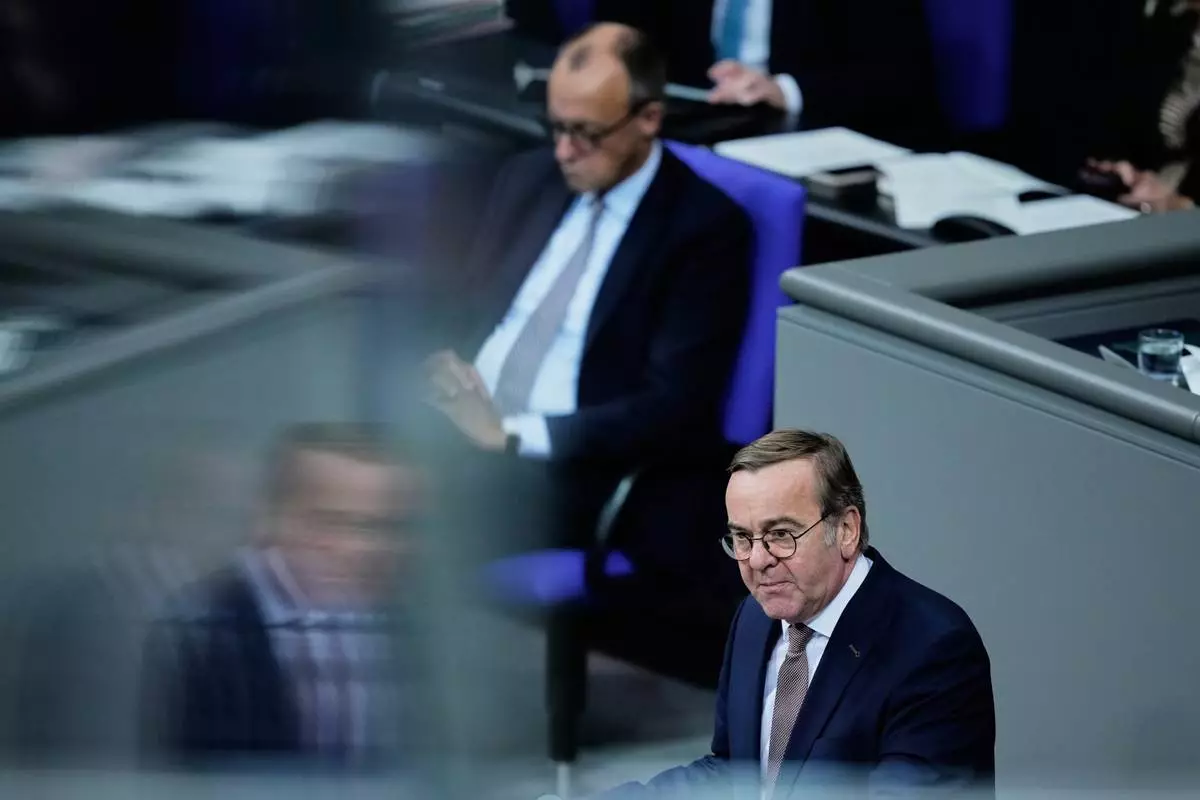
German Defense Minister Boris Pistorius speaks during a meeting about conscription of the German Parliament in Berlin, Germany, Friday, Dec.5, 2025. (AP Photo/Ebrahim Noroozi)
NEW DELHI (AP) — Russian President Vladimir Putin held talks with Indian Prime Minister Narendra Modi on Friday at an annual summit and agreed to diversify mutual economic ties, as the United States presses India to revise its decades-old partnership with Russia.
The 23rd Russia-India Summit comes at a pivotal moment as the U.S. pushes for a Ukraine peace deal while seeking global cooperation. It will test New Delhi’s efforts to balance relations with Moscow and Washington as the nearly four-year war in Ukraine grinds on.
Putin was received by Modi at an airport in New Delhi on Thursday. The Indian leader gave Putin a bear hug and a tight handshake with the gusto of an old friend.
After the talks, Putin and Modi announced that India and Russia have finalized an economic cooperation program until 2030, which will help diversify mutual businesses to boost annual trade to $100 billion by 2030. They also emphasized strong energy ties.
Bilateral trade between the two countries stood at $68.7 billion in the last fiscal year ended March. The trade is heavily skewed in favor of Russia with deep deficits for India, which it is looking to bridge by pushing exports.
“To achieve this significant goal, a program for the development of Russian-Indian economic cooperation until 2030 has been agreed upon,” Putin said. He said work is underway on an agreement for India to establish a free trade zone with the Eurasian Economic Union, a Moscow-dominated economic grouping of several ex-Soviet nations, adding that it could help increase trade.
“Russia is a reliable supplier of energy resources and everything necessary for the development of India’s energy sector,” Putin said. “We are ready to continue ensuring the uninterrupted supply of fuel for the rapidly growing Indian economy.”
Before the summit talks, the Russian leader said the two countries “have a very trusting relationship when it comes to military-technical cooperation.”
Modi, for his part, said after the talks that the two countries will work toward early conclusion of a free trade agreement with the Eurasian Economic Union. He also announced that India will soon start issuing free electronic visas for Russian tourists and groups visiting the country.
The Indian leader said energy security has long anchored India-Russia ties, with civil nuclear cooperation spanning decades. He added that such cooperation will continue, alongside collaboration in clean energy, shipbuilding, fertilizers and labor mobility.
While India has historically maintained deep ties with Russia, critics say Putin’s visit could strain relations with the European Union and the United States and might jeopardize negotiations for major trade agreements with both that are seen as critical for India’s exports.
U.S. President Donald Trump raised tariffs on Indian goods to 50% in August, citing New Delhi's discounted Russian oil. India has been the second biggest importer of Russian crude after China.
The U.S. says purchases of Russian oil help finance Moscow’s war machine. In October, the U.S. sanctioned two of Moscow’s biggest oil producers to force countries like India to cut down on imports. Indian officials have said New Delhi has always abided by international sanctions and would do so in the case of Russia oil purchases as well.
India and the U.S. set a target for the first tranche of a trade deal by the fall, but the deal hasn’t come through yet amid strains in relations.
India is also in the final stages of talks on a trade agreement with the EU, which sees Russia's war in Ukraine as a major threat.
Putin’s India visit, “given the timing and geopolitical context, underscores New Delhi’s strategic tightrope walk between the West and the rest, chiefly Russia,” said Praveen Donthi, a senior analyst with the International Crisis Group.
Donthi said India’s tilt toward Russia dates back to the Cold War and persists despite its official nonaligned position. “The significant change now is its desire to be a strategic partner with the U.S. at the same time, which will be a diplomatic challenge,” he added.
Indian officials earlier said that Modi in the meeting with Putin would push for faster delivery of two further Russian S-400 surface-to-air missile systems. It has already received three under a 2018 deal worth about $5.4 billion. The delay has been tied to supply chain disruptions linked to the war in Ukraine.
The two sides signed a pact in February to improve military cooperation, exercises, port calls, disaster relief assistance and logistics support. Moscow’s State Duma ratified the same ahead of Putin’s India visit.
India is also expecting to upgrade its Russian-made Su-30MKI fighter jets and accelerate deliveries of critical military hardware.
India is keen to increase exports of pharmaceuticals, agriculture and textiles to Russia and is seeking the removal of non-tariff barriers. New Delhi is also seeking long-term supplies of fertilizers from Moscow.
Another key area where the two countries hope to finalize an agreement is the safety and regulation of migration of Indian skilled workers to Russia.
Putin last visited India in 2021. Modi was in Moscow last year, and the two leaders briefly met in September in China during a Shanghai Cooperation Organization summit.
Hussain reported from Srinagar, India.
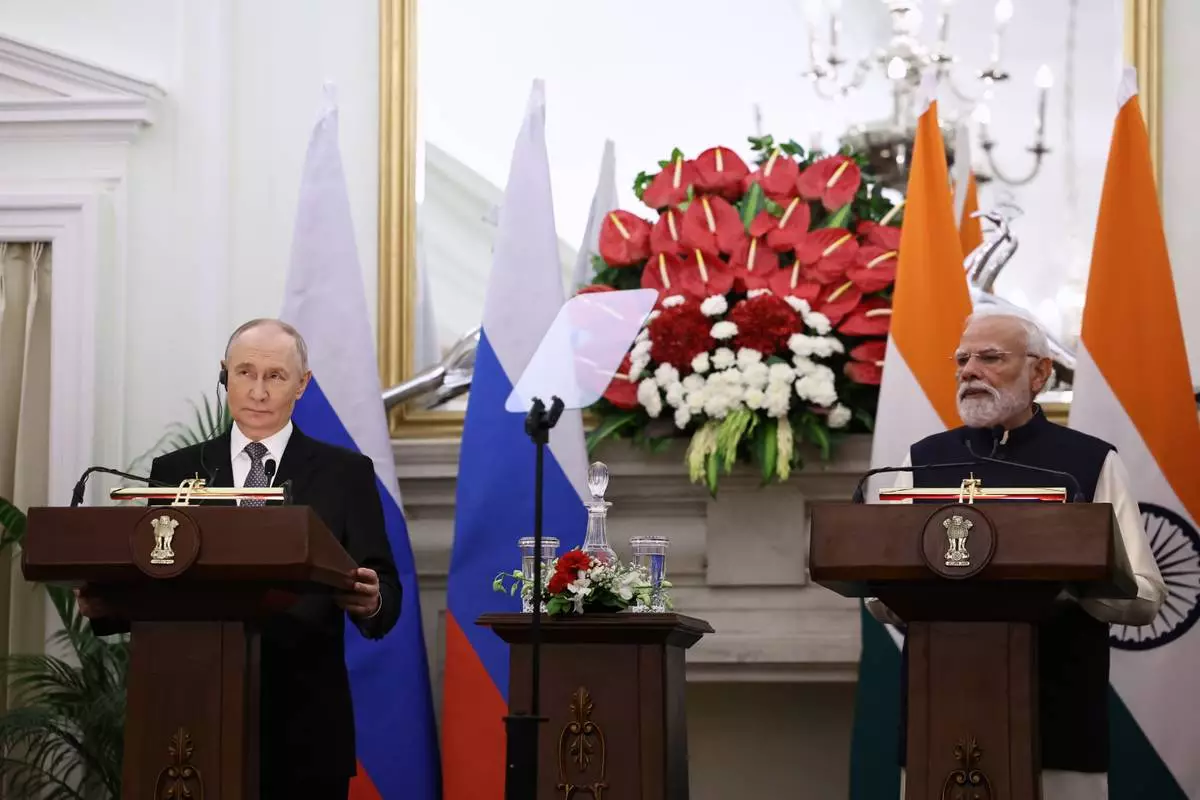
Russian President Vladimir Putin, left, and Indian Prime Minister Narendra Modi make a press statement after their talks at the Hyderabad House in New Delhi, India, Friday, Dec. 5, 2025. (Alexander Kazakov, Sputnik, Kremlin Pool Photo via AP)

Russian President Vladimir Putin receives a guard of honor during a ceremonial reception at the Rashtrapati Bhavan in New Delhi, India, Friday, Dec. 5, 2025. (AP Photo)

Russian President Vladimir Putin, left, and Indian Prime Minister Narendra Modi pose for a photo prior to their talks in New Delhi, India, Friday, Dec. 5, 2025. (Mikhail Tereshchenko, Sputnik, Kremlin Pool Photo via AP)
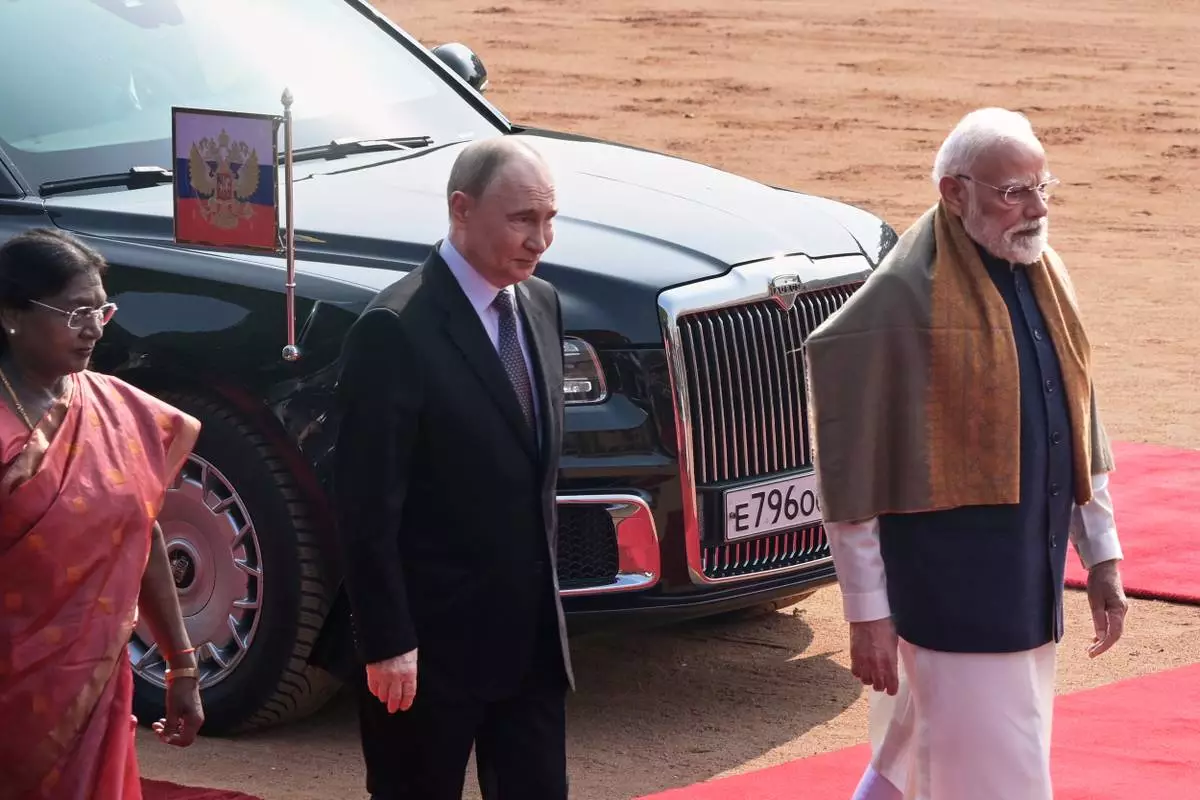
Russian President Vladimir Putin, center, walks along with Indian President Droupadi Murmu, left, and Indian Prime Minister Narendra Modi during a ceremonial reception at the Rashtrapati Bhavan in New Delhi, India, Friday, Dec. 5, 2025. (AP Photo)

Russian President Vladimir Putin, left, and Indian Prime Minister Narendra Modi pose for a photo prior to their talks in New Delhi, India, Friday, Dec. 5, 2025. (Mikhail Tereshchenko, Sputnik, Kremlin Pool Photo via AP)
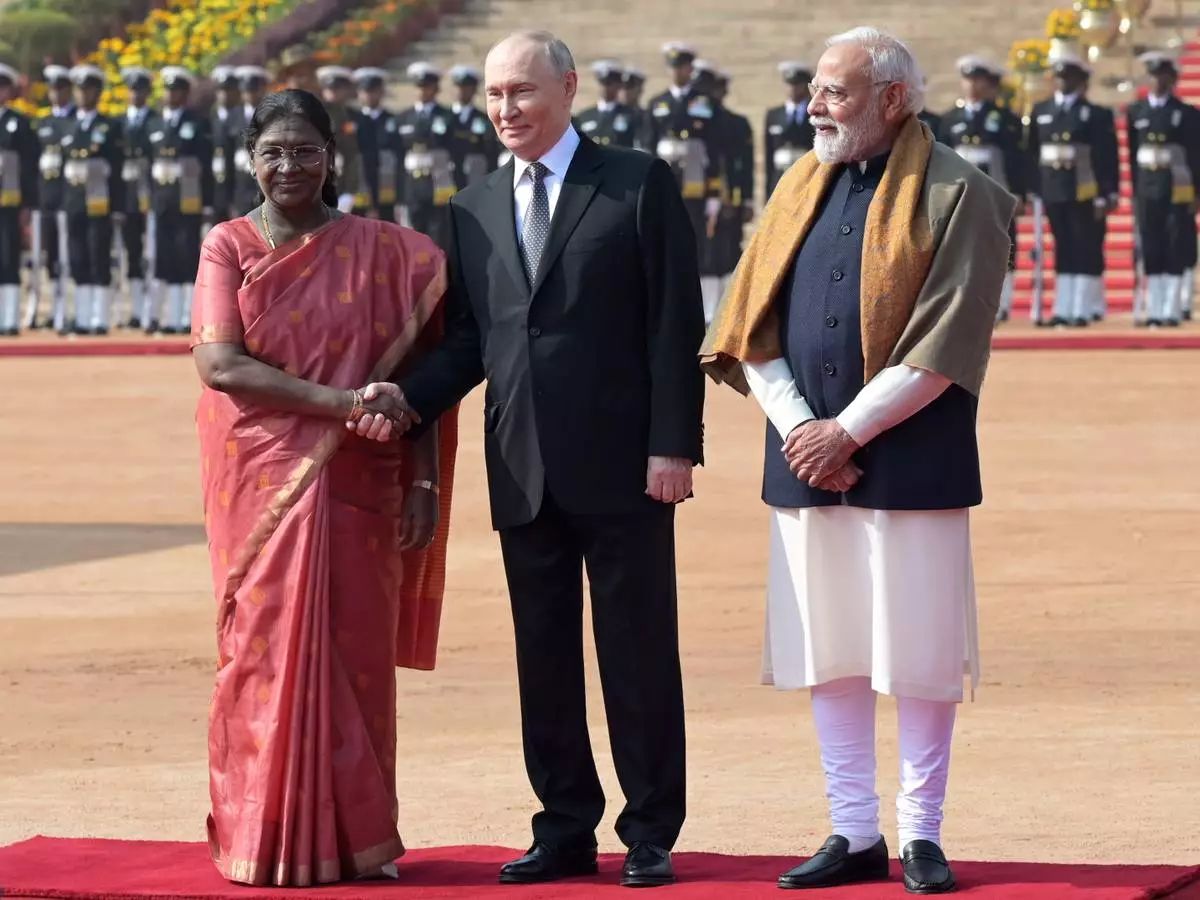
Russian President Vladimir Putin, center, shakes hands with Indian President Droupadi Murmu as Indian Prime Minister Narendra Modi, right, looks on during a ceremonial reception at the Rashtrapati Bhavan in New Delhi, India, Friday, Dec. 5, 2025. (AP Photo)

Russian President Vladimir Putin, center, poses for a photograph with Indian Prime Minister Narendra Modi, right, and Indian President Droupadi Murmu during a ceremonial reception at the Rashtrapati Bhavan in New Delhi, India, Friday, Dec. 5, 2025. (AP Photo)

Russian President Vladimir Putin gestures during an interview with journalists and executives of Aaj Tak and India Today TV channels at the Kremlin in Moscow, Russia, Wednesday, Dec. 3, 2025. (Vyacheslav Prokofyev/Sputnik, Kremlin Pool Photo via AP)
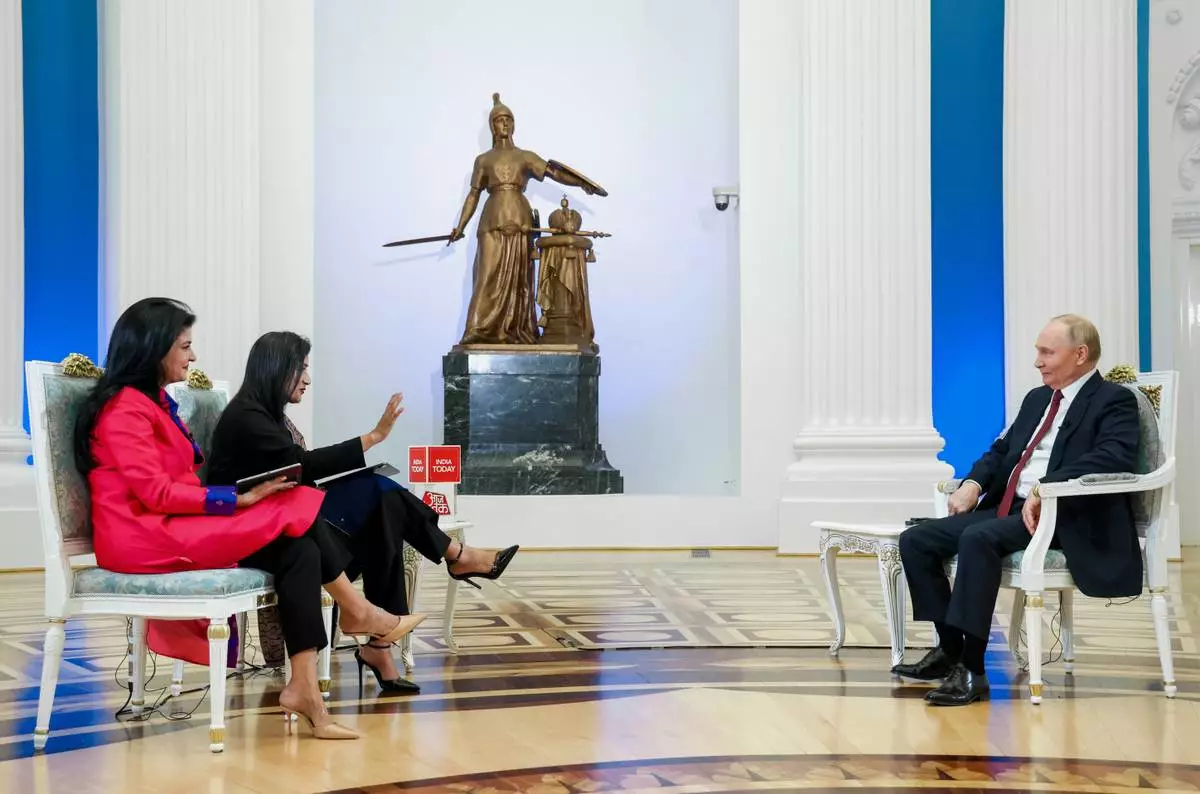
Russian President Vladimir Putin, right, speaks during an interview with journalists and executives of Aaj Tak and India Today TV channels at the Kremlin in Moscow, Russia, Wednesday, Dec. 3, 2025. (Vyacheslav Prokofyev/Sputnik, Kremlin Pool Photo via AP)

Russian President Vladimir Putin, left, and Indian Prime Minister Narendra Modi sit inside a limousine as they arrive at the Indian Prime Minister office in New Delhi, India, on Thursday, Dec. 4, 2025. (Alexander Kazakov, Sputnik, Kremlin Pool Photo via AP)