ISLAMABAD (AP) — Pakistan’s military pushed back Friday after imprisoned former Prime Minister Imran Khan called the country’s army chief “mentally unstable.” The army labeled Khan “mentally ill” and accused him of using family visits and social media posts to attack the armed forces and sow division.
Army spokesperson Lt. Gen. Ahmed Sharif Chaudhry, without directly naming Khan, described him as a “narcissist” whose political ambitions had grown so extreme that he believed “if I am not in power, nothing else should exist.”
Chaudhry told a televised news conference that people meeting Khan in prison were being used “to spread poison against the army.” His remarks came after one of Khan's sisters met with him at a prison, and said her brother was angry at army chief Gen. Asim Munir.
Chaudhry's rare remarks also followed a post by Khan on X a day earlier in which he labeled Munir a “mentally unstable person” and accused him of moral decline that had caused “the complete collapse of the Constitution and rule of law in Pakistan.” Khan said he and his wife were jailed on fabricated charges “at his command” and claimed he was being held in solitary confinement and subjected to psychological pressure.
Khan’s spokesperson, Zulfiquar Bukhari, said the army’s news conference was driven by anger, not reason, and included blatant threats against Khan and his PTI party. In a statement, he called it a clear attempt to pave the way for a harsher crackdown on the party and worsen the mental torture and his conditions in jail.
“They have already banned meetings with him going forward,” he said.
Khan, 73, has been imprisoned since 2023 following a corruption conviction and faces a series of other charges.
Chaudhry, at the news conference, displayed Khan’s latest post on X, saying Afghan and Indian media had amplified the “nonsense” of a “mentally ill person” and his allegations against Munir were baseless.
The latest development came a day after Pakistan's President Asif Ali Zardari and Prime Minister Shehbaz Sharifapproved the promotion of the widely popular Munir as the chief of defense forces, a position that was established last month to improve coordination among the army, navy and air force.
Munir has risen to prominence since earlier this year, when Pakistan said it defeated India in a four-day conflict. Chaudhry said Khan is deliberately trying to stoke hostility toward the military.
“We will not allow anyone to create rifts between Pakistan’s military and its people,” Chaudhry said. He said the constitution guarantees freedom of expression but also places limits and does not allow anyone to undermine national security. Chaudhry linked Khan to the May 9, 2023, attacks on military installations, including the army’s headquarters in Rawalpindi.
“Was it not this same individual who orchestrated those attacks?” he said.
The 2023 violence erupted after Khan’s arrest, when thousands of his supporters stormed government and military facilities. Khan has pleaded not guilty to charges of inciting the unrest.
Chaudhry said it was up to the civilian government — not the military — to decide whether Khan’s party should be banned. He described the former prime minister’s alleged anti-army messaging a national security concern and claimed it operated “in deep collusion with external actors.”
Khan was ousted in a no-confidence vote in April 2022. His party now sits in opposition and continues to allege that the 2024 parliamentary elections were rigged to favor current premier Sharif, a claim the government denies.
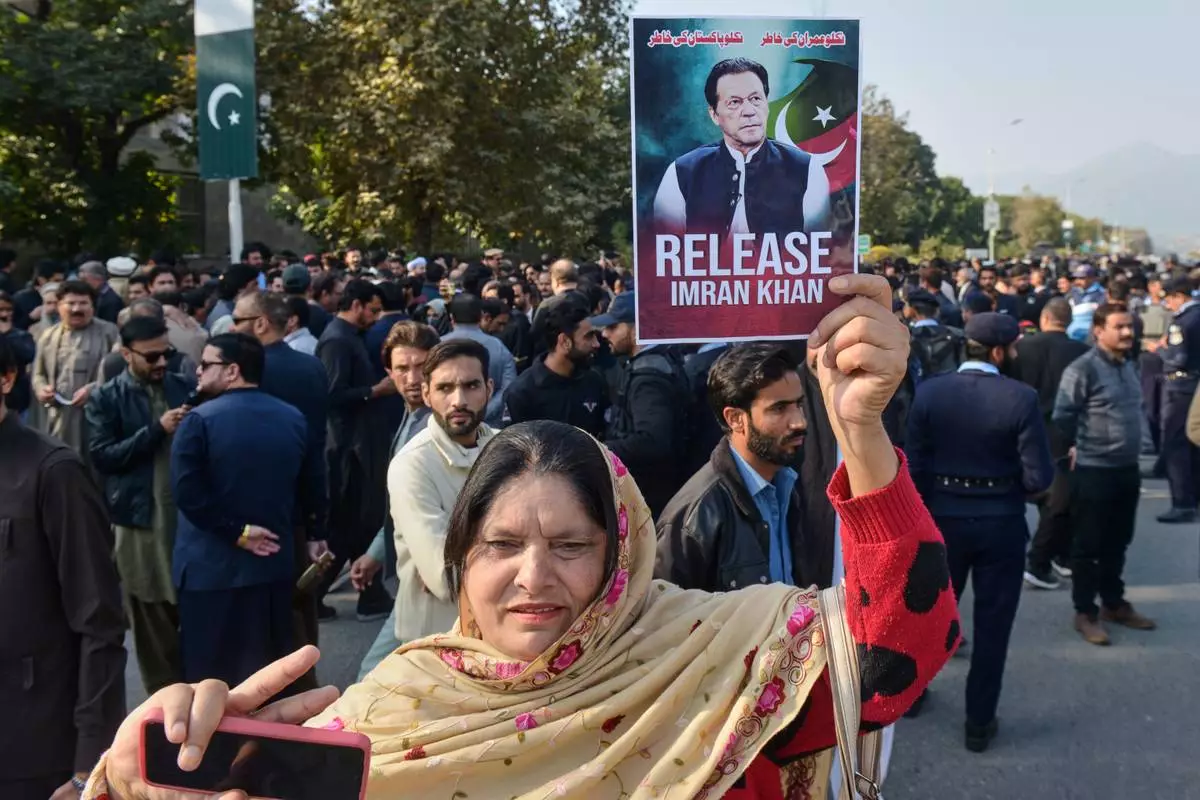
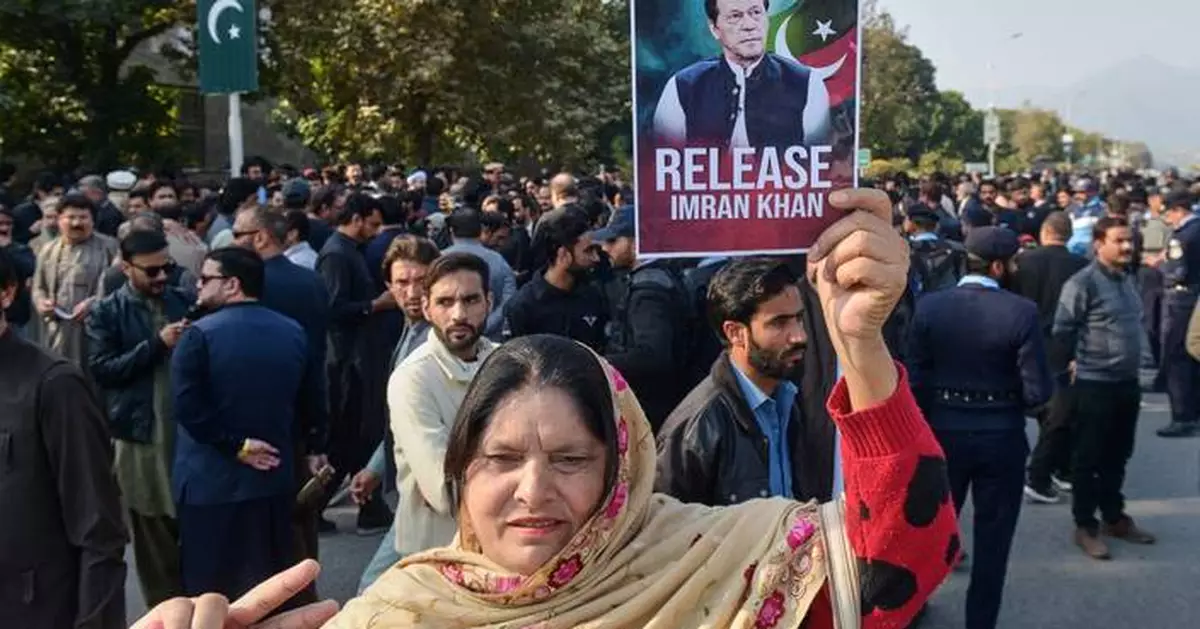
Supporters of Pakistan's imprisoned former Prime Minister Imran Khan hold a demonstration outside Islamabad High Court, in Islamabad, Pakistan, Tuesday, Dec. 2, 2025. (AP Photo/A. Sheikh)
JOHANNESBURG (AP) — Soldiers were deployed to the streets of South Africa’s biggest city Wednesday in an effort to help police fight gang violence and illegal mining.
It was the first major deployment since President Cyril Ramaphosa said in his annual speech to the nation last month that he would use the army against organized crime, which he called the greatest threat to democracy and the country's economic development.
Soldiers jumped from vehicles and entered apartment blocks as military vehicles moved through the Riverlea and Westbury suburbs of Johannesburg.
Many residents of Riverlea expressed relief to see soldiers deployed to stem the violence.
One resident, Pearl Hilma, told The Associated Press that she supports the crackdown “because there’s lots of gangsterism as well as gunshots every night” in the neighborhood.
Some of the buildings in the area have graffiti signs denouncing the scourge of crime, with one near a school reading “No to Guns, Pray for our Community.”
South Africa's police and the Department of Defense, which oversees the military, did not immediately provide details on the deployment.
Authorities had previously said the military deployment in different parts of the country would start March 1, but it was delayed while soldiers received training. The army will operate under police command during the deployment.
Another resident, Yasin Botha, said the presence of both police and military reassured him that there would be a quick reaction now when shootings occur.
“Currently, I feel unsafe because we don’t know when the next shooting is going to happen and we don’t know who it is targeted at,” Botha said.
Ramaphosa said in a notice to the Speaker of Parliament that 550 soldiers would be involved in an initial deployment in the Gauteng province, which includes Johannesburg, due to last until the end of April.
The government plans a wider deployment in five of its nine provinces, according to details submitted by police to Parliament. The deployment will focus on illegal mining in the Gauteng, North West and Free State provinces, and gang violence in the Western Cape and Eastern Cape provinces.
Parts of the national deployment could last more than a year, police officials said.
South Africa has high rates of violent crime. Police reported 6,351 homicides from October to December 2025, an average of nearly 70 a day in a country of around 62 million people, while there are also high numbers of attempted murders and violent assaults.
South Africa has deployed the army several times in recent years to help with outbursts of crime and disorder, including in 2021, when riots and looting in two provinces sparked by the imprisonment of former President Jacob Zuma and frustrations over COVID-19 lockdowns led to the deaths of more than 350 people.
Ramaphosa has said that the deployment of soldiers was carefully considered given the army was used to crush pro-democracy protests during South Africa's decades of enforced racial segregation under the apartheid system, which ended in 1994.
But he said it had “become necessary due to a surge in violent organized crime that threatens the safety of our people and the authority of the state.”
The deployment has largely been welcomed, though some political parties have said it is an admission that police have largely failed to curb crime.
Associated Press writer Gerald Imray in Cape Town, South Africa contributed to this report.
This spelling of a resident's name has been corrected to Yasin Botha in the ninth paragraph.
AP Africa news: https://apnews.com/hub/africa
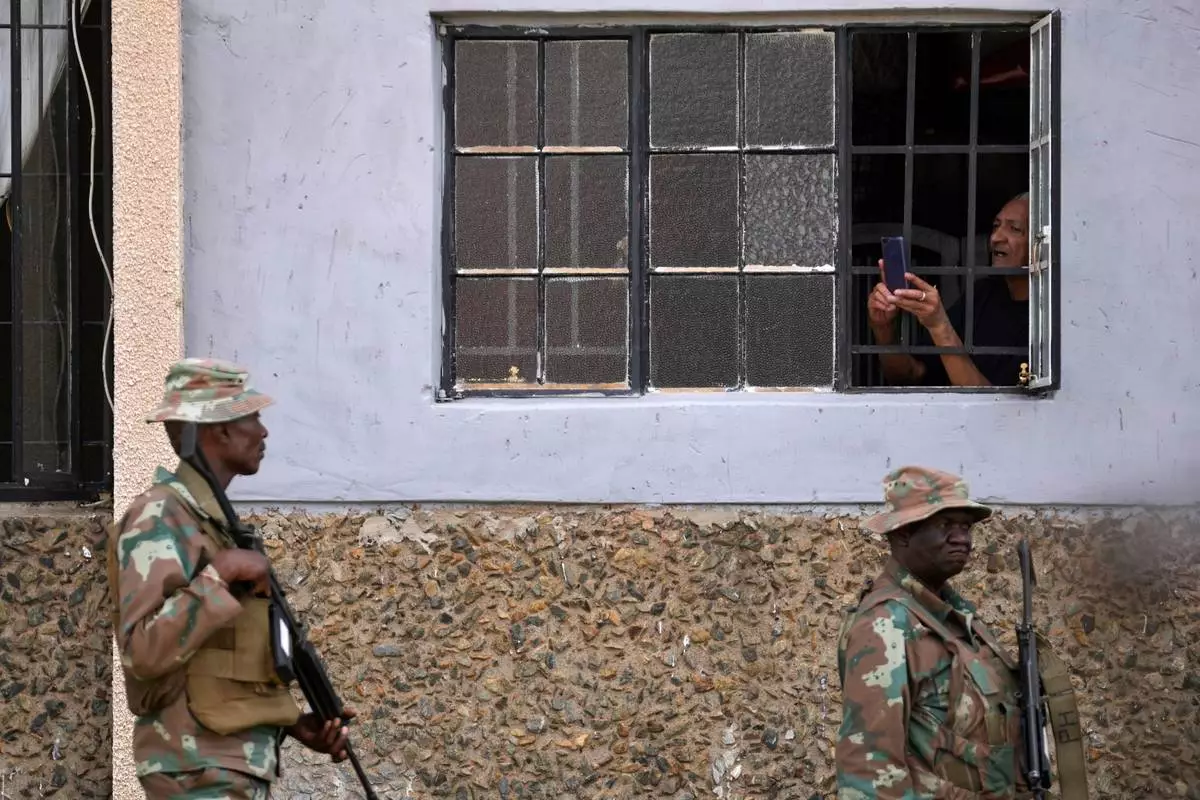
A resident uses a mobile phone to take a photograph of the South African National Defense Force officers deployed in the area, in the Riverlea township of Johannesburg, South Africa, Wednesday, March 11, 2026. (AP Photo/Themba Hadebe)
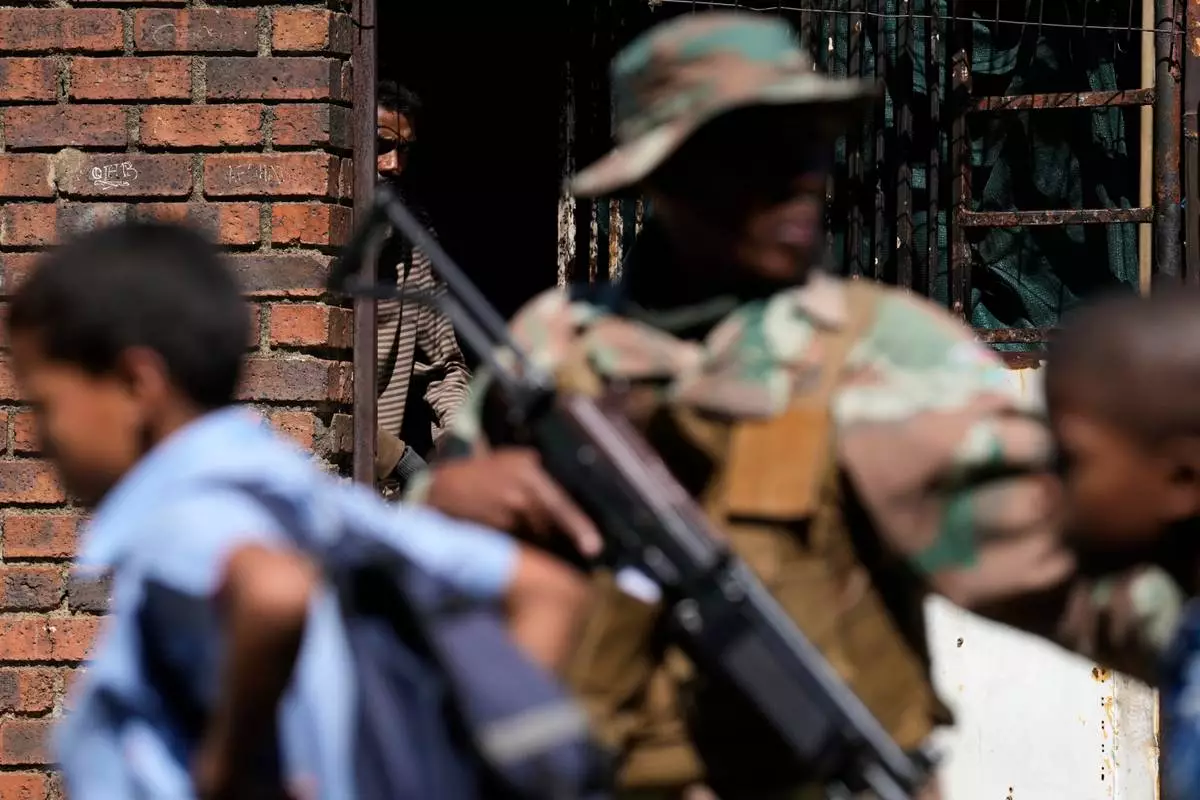
A man watches on South African National Defense Force officers patrolling the street in the Westbury township of Johannesburg, South Africa, Wednesday, March 11, 2026. (AP Photo/Themba Hadebe)
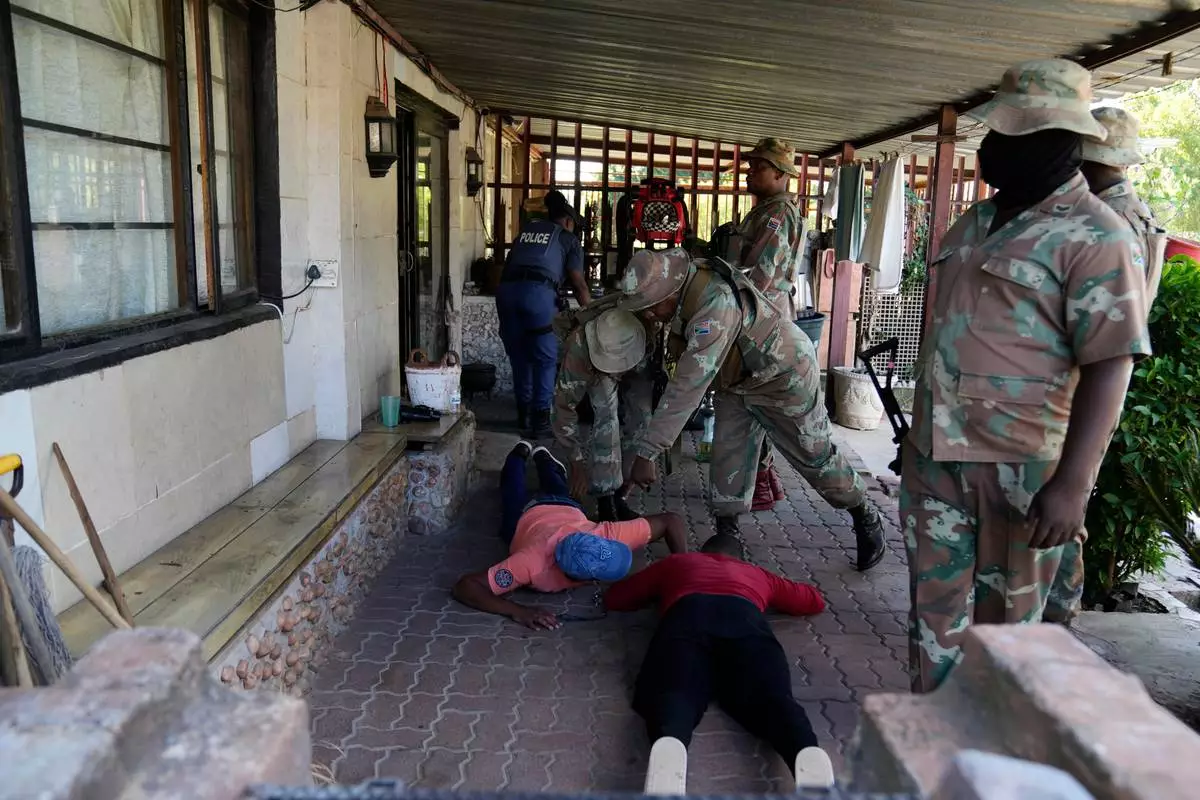
South African National Defense Force officers search suspects, in the Westbury township of Johannesburg, South Africa, Wednesday, March 11, 2026. (AP Photo/Themba Hadebe)

South African National Defense Forces deploy in the Riverlea township of Johannesburg, South Africa, Wednesday, March 11, 2026. (AP Photo/Themba Hadebe)
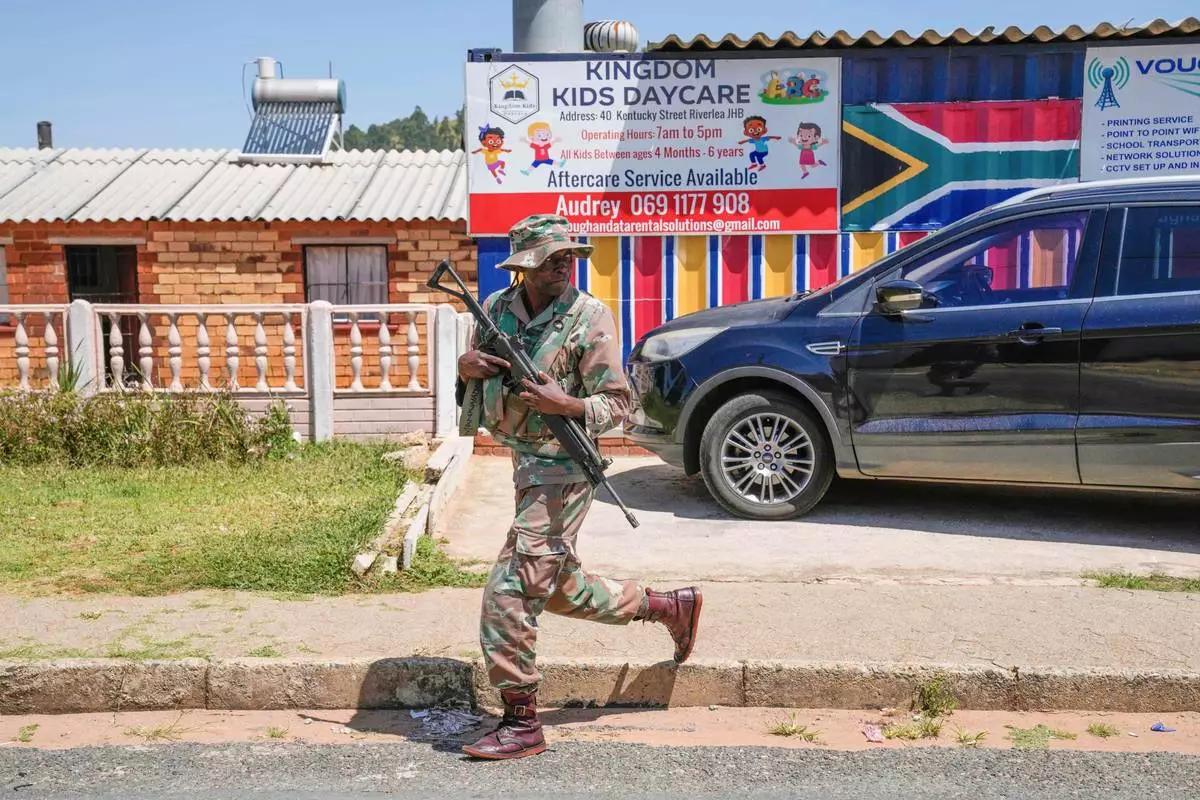
South African National Defense Forces deploy in the Riverlea township of Johannesburg, South Africa, Wednesday, March 11, 2026. (AP Photo/Themba Hadebe)
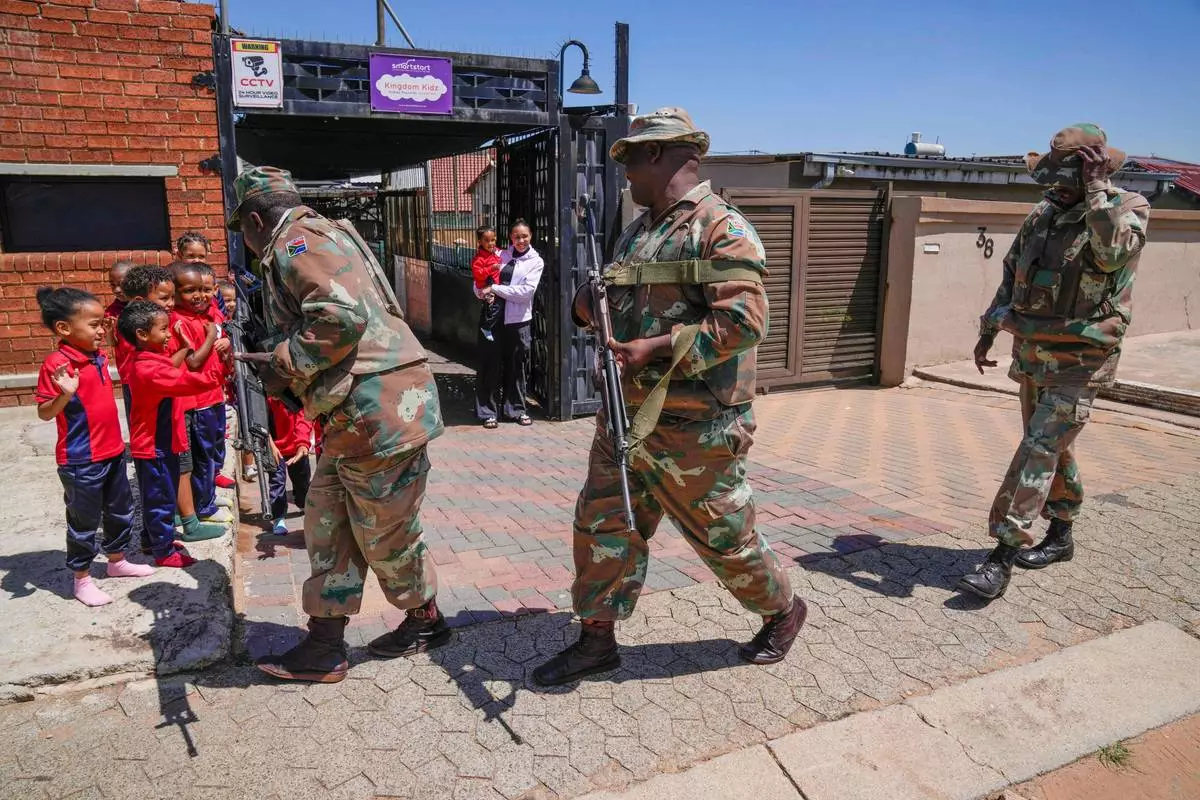
South African National Defense Forces deploy in the Riverlea township of Johannesburg, South Africa, Wednesday, March 11, 2026. (AP Photo/Themba Hadebe)

South African National Defense Forces deploy in the Riverlea township of Johannesburg, South Africa, Wednesday, March 11, 2026. (AP Photo/Themba Hadebe)

South African National Defense Forces deploy in the RIverlea township of Johannesburg, South Africa, Wednesday, March 11, 2026. (AP Photo/Themba Hadebe)