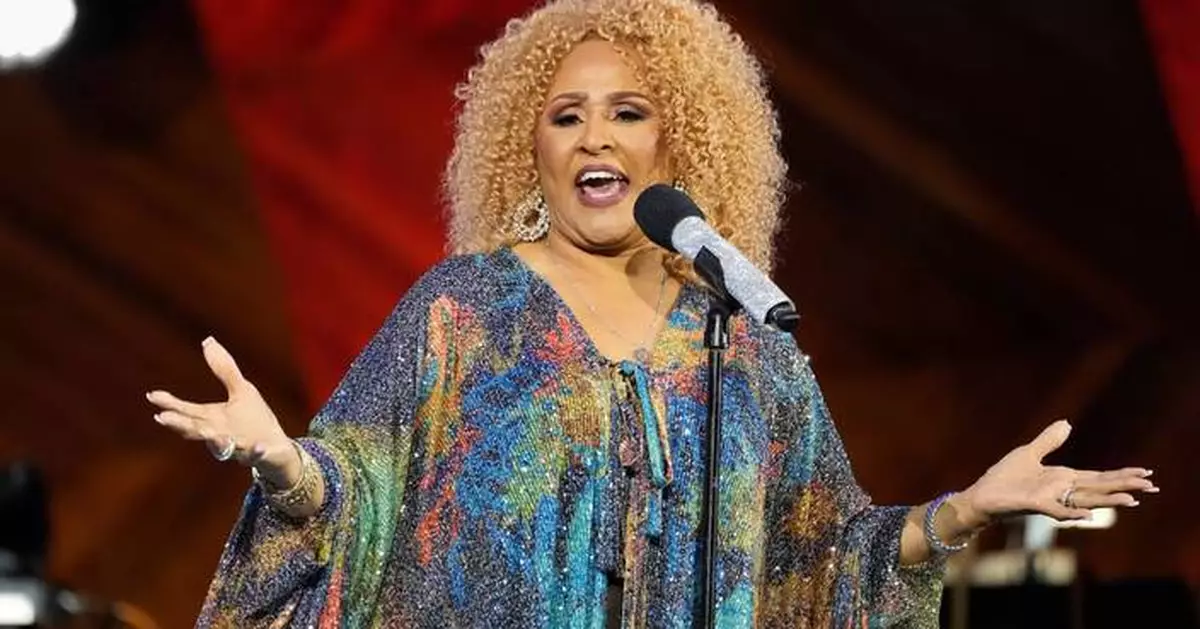
Darlene Love will never stop thinking of her holiday classic, “Christmas (Baby Please Come Home).” At this time of year, she couldn't if she tried.
“The post office, grocery store, elevator,” she says with a laugh, listing a few locations where she keeps hearing the song. “It just feels funny that my song is in that many places at Christmastime.”
Her signature song, first released in 1963, is as set in the pantheon as such predecessors as Bing Crosby's “White Christmas” and such successors as Mariah Carey's “All I Want for Christmas Is You.” Love sang “Christmas” for years on David Letterman 's late night show, which ended in 2015, and has since followed with appearances on “The View” and “The Tonight Show Starring Jimmy Fallon,” where she will perform on Dec. 18, along with Steve Van Zandt and former Letterman bandleader Paul Shaffer among others.
Interviewed at the Sony Music Entertainment offices just off Madison Square Park, the 84-year-old Love has a youthful, open-hearted spirit that makes you believe she could break out at any time into the joyous roar of “Christmas,” or “He’s a Rebel,” “He’s Sure the Boy I Love” and other showcases. Revered by generations of musicians, Love was inducted into the Rock and Roll Hall of Fame in 2011 and was among the singers featured two years later in the Oscar-winning documentary, “Twenty Feet from Stardom.”
She was born Darlene Wright in Los Angeles, a minister's daughter who had been performing in front of people for years before Phil Spector signed her up in 1962. He renamed her “Darlene Love” and launched her career as a lead and backing singer whose mighty mezzo-soprano was more than equal to the producer's booming orchestrations, what he called “little symphonies for the kids.”
When Spector decided to record an album of Christmas music, he featured Love on oldies (“White Christmas” and “Marshmallow World”) and the original composition that became her trademark: “Christmas” was conceived by Spector and one of the great songwriting teams of the era, Jeff Barry and Ellie Greenwich. Love questioned the whole idea of a “rock n roll Christmas song,” but remembered a transcendent, exhausting session, and the challenge of making a summertime studio gathering feel like winter.
“What Phil Spector did was he went out and got Christmas lights and a Christmas tree and made it freezing cold in the studio,” she says. “I told him 'You can’t do that because that’s going to close up all our throats if you make it that cold in here.' So the only thing we had left were the lights and everybody was in a great mood.”
Love had a troubled relationship with Spector well before his mercurial personality turned lethal and he was convicted in 2009 for the murder of actor Lana Clarkson. (Spector died in prison in 2021). The producer infuriated Love soon after they began working together when he recorded her singing “He's Sure the Boy I Love” and, without telling her, released it as a single by another Spector act, the Crystals. In the 1990s, she sued Spector for unpaid royalties for various songs and received $250,000.
But during her interview, she spoke warmly of Spector, recalling how she would tease him about his hairpiece and his elevated shoes, or refuse to sing another take when she was sure she had done it right. Love was in her early 20s at the time but was married (her first of three), with a young son and found herself acting as elder sibling and protector for two teenagers who would become iconic in their own right — the producer's future wife, Ronnie Spector, then known as Ronnie Bennett; and the shy, but tough future wife of session man Sonny Bono, Cher.
As Cher wrote in her eponymous 2024 memoir, and Love confirms, Darlene Love was unafraid to challenge the men in the room. During breaks between sessions, she would go out for hamburgers across the street and bring Cher and Bennett with her, indifferent to the objections of their controlling boyfriends. “Come on, let’s go do this. Let’s go do this,” she remembered urging her friends. “I was always getting everybody in trouble.”
Love and Cher have worked together often. Cher sang backing vocals on “Christmas (Baby Please Come Home)” and Love has backed Cher on tour. A couple of years ago, Cher was recording a Christmas album and phoned Love, hoping she would join her on “Christmas (Baby Please Come Home).” They grew up together in show business, but Love at first didn't recognize the famous voice on the other end of the connection.
“We talk to each other like maybe twice a year, and our careers went in totally and completely different avenues,” Love says. “So Cher calls and says, ‘Hey, doll.’ That’s what she calls me. She said, ‘This is Cher.’ And I said ‘Who?’ She said, ‘Cher, bitch!’ So I’m like, ‘Oh yeah, this is you. What’s up?’”
“A Christmas Gift for You from Phil Spector,” now regarded as a landmark, also features such long-running favorites as the Ronettes' “I Saw Mommy Kissing Santa Claus” and “Frosty the Snowman” and the Crystals' “Santa Claus Is Coming to Town.” But the album was originally famous for its tragic timing; the release date was Nov. 22, 1963, the day President John F. Kennedy was assassinated. “A Christmas Gift” would take years to fully catch on, while “Christmas (Baby Please Come Home)” only became a perennial on Letterman's show in the 1990s.
Love thinks “Christmas” endures because it's easy to sing (although try singing it like her) and because the words can be about anyone, a lover, “a sister who got lost, or somebody who passed.” Asked if there was another holiday song she'd like to perform as often as “Christmas,” she quickly answers, “Silent Night.”
“It's one of those songs that makes you feel good, and can make you feel sad, too,” she explained. “Because you're talking about night, and you're talking about a silent night, but a clear night, where you can see all the stars.
“And you never know how many stars are in the sky. Somewhere in the mountains where it’s black-dark. And it’s millions and millions and millions of stars. So when you say ‘Silent night, holy night,’ you’re talking about stars.”
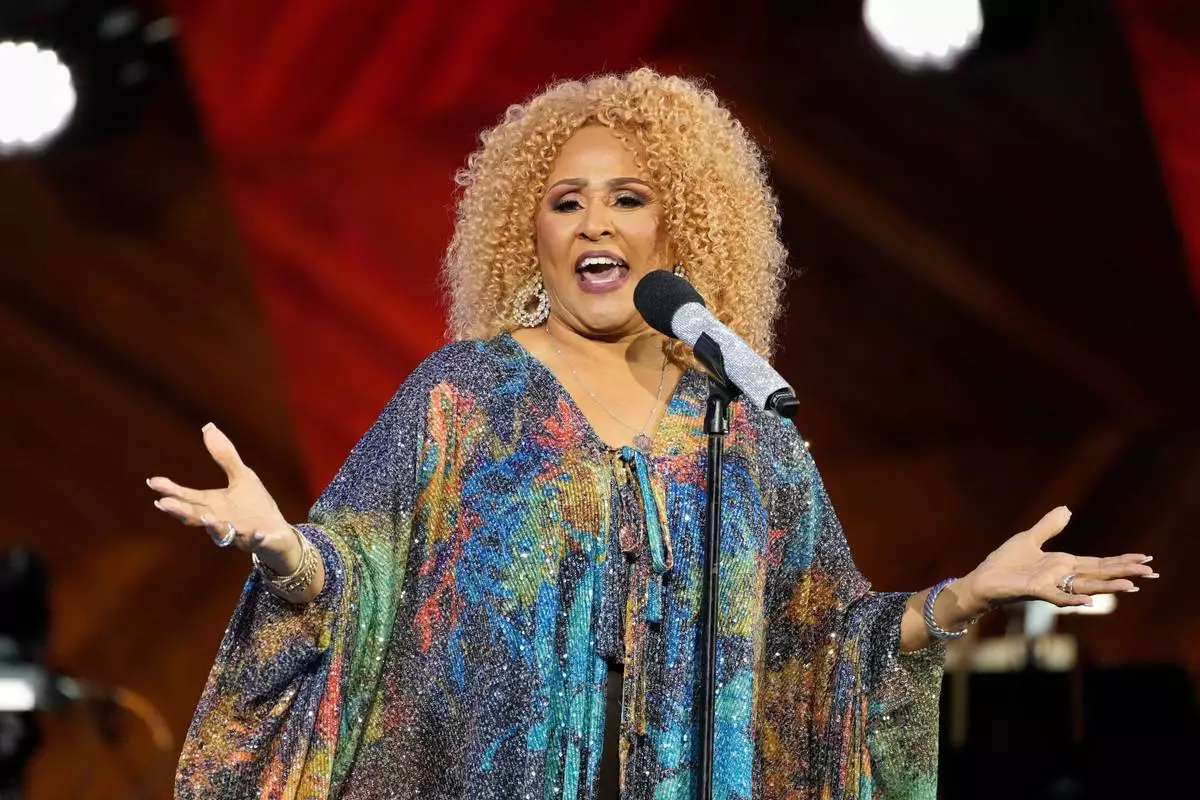
FILE - Darlene Love performs during the Boston Pops Fireworks Spectacular in Boston on July 4, 2024. (AP Photo/Michael Dwyer, File)
When Kevin Ketels bought an electric 2026 Chevrolet Blazer last year, he wasn't thinking about the cost of gas. He just thought EVs were better and “wanted to be part of the future.” Now that the Iran war is spiking prices at the pump, the Detroit man is happy he is no longer filling up his 11-year-old gas-powered SUV.
“Electricity can go up, but it won’t go up nearly as much as gas will and it won’t go up nearly as fast, either,” said Ketels, 55, an assistant professor of global supply chain management at Wayne State University.
Experts say prolonged high gas prices may drive some EV interest and sales, especially if drivers assume their electricity prices won't be affected by the crises.
But many factors influence consumer EV purchases — and electricity rates.
Drivers of gas-powered vehicles are much more vulnerable to fluctuating prices that result from global conflict than those who charge their cars. The national average for a gallon of regular gas this week was $3.57, up from $2.94 a month ago, according to AAA.
Meanwhile, “residential electricity prices are regulated and are much less volatile than gasoline prices,” said University of California, Davis economics professor Erich Muehlegger. “As a result, EV owners are largely unaffected by oil price shocks.”
But experts say electricity prices have been increasing nationally for a variety of reasons, including surging power demand from new data centers.
“This is an inflationary event,” Holt Edwards, principal in Bracewell’s Policy Resolution Group, said of the war. “Is this the driver in electricity prices? I think probably not. But it’s certainly a contributing factor.”
To what extent oil and gas conflicts could translate to the electricity sector is yet to be seen.
When it comes to the electricity an EV owner is tapping, much of the cost depends on which sources of electricity are in a local grid's power mix, experts say.
Because regulators set residential electricity prices annually, most households are sheltered from month-to-month changes in natural gas costs. Though experts say higher natural gas prices can increase the cost of generating electricity, natural gas prices haven’t risen as quickly or as much as oil prices have recently.
Those are just two of many energy sources — including coal, nuclear and renewables — that power the electric grid.
“The energy component varies depending on the energy you’re using and the price of the energy that you’re using to generate electricity,” said Pierpaolo Cazzola, an energy expert at Columbia University’s Center on Global Energy Policy. “What happens is that in the U.S., the variation of the price of the energy component is smaller than it is elsewhere.”
The experts said persistent war could affect electricity bills in the future. And that is all the more reason for countries to transition to clean power, they said.
“Clean power and electrification combined is what provides the most security,” said Euan Graham, an analyst at energy think tank Ember.
Michael B. Klein, a 56-year-old software developer in Evanston, Illinois, has driven EVs for the past eight years to save on fuel costs and because of environmental concerns.
Every time electrical grid efficiency improves — especially as renewables are added — “I get that benefit no matter what,” said Klein, who drives a Chevy Bolt. “They can improve the efficiency of gas engines, but you have to get a new car in order to reap the benefit of that.”
Several experts say high gasoline prices are a strong driver of EV sales, particularly if high prices persist. Drivers also consider more gasoline-efficient hybrid vehicles during these times.
Car-shopping resource Edmunds analyzed consumer shopping data for the week starting March 2, after the Iran war had begun. They found that interest in hybrids, plug-in hybrids and battery EVs accounted for 22.4% of all vehicle research activity on their site that week, up from 20.7% the previous week. Analysts also looked back at the last major nationwide fuel price surges in 2022, and they saw that consideration of electrified vehicles rose sharply then, too.
But whether this means more EV purchases depends on whether buyers expect to save not just now but in the future, experts say.
Adding to the complexity: A sudden increase in EV demand could drive up prices, Graham said.
“I think the real step change would be in whether this causes governments to shift tax, tariff policies around EVs,” Graham said. Doing so would help reduce fossil fuel dependence, he said.
Pretty much.
People who buy EVs have a “really substantial” gas savings over the life of their vehicles even without government tax credits, said Peter Zalzal, an attorney with Environmental Defense Fund.
“We’re talking about thousands and thousands of dollars” in savings, Zalzal said. “And as gas prices increase, those savings are only greater. Fuel costs are a big piece of overall vehicle costs, and increases in fuel prices have significant impacts on people.”
However, the upfront cost of a new EV is still more than that of a gasoline-powered vehicle; new EVs sold for an average of $55,300 last month, while new vehicles overall sold for an average $49,353, according to auto-buying resource Kelley Blue Book. Some experts also expressed national security concerns with EVs because China dominates significant parts of the EV supply chain.
Ketels, the EV owner and professor, said he believes EVs and renewable energy should be a strategic priority for individuals and the U.S. because they could be produced domestically “and we don’t have those fluctuations and those worries.”
But because the federal government has withdrawn many incentives for both, “it puts us at a disadvantage globally,” Ketels said. “I think it’s been a terrible mistake to withdraw these incentives and to attack the sustainable energy industry,” and the war “is just making it that much more obvious.”
Read more of AP’s climate coverage.
The Associated Press’ climate and environmental coverage receives financial support from multiple private foundations. AP is solely responsible for all content. Find AP’s standards for working with philanthropies, a list of supporters and funded coverage areas at AP.org.
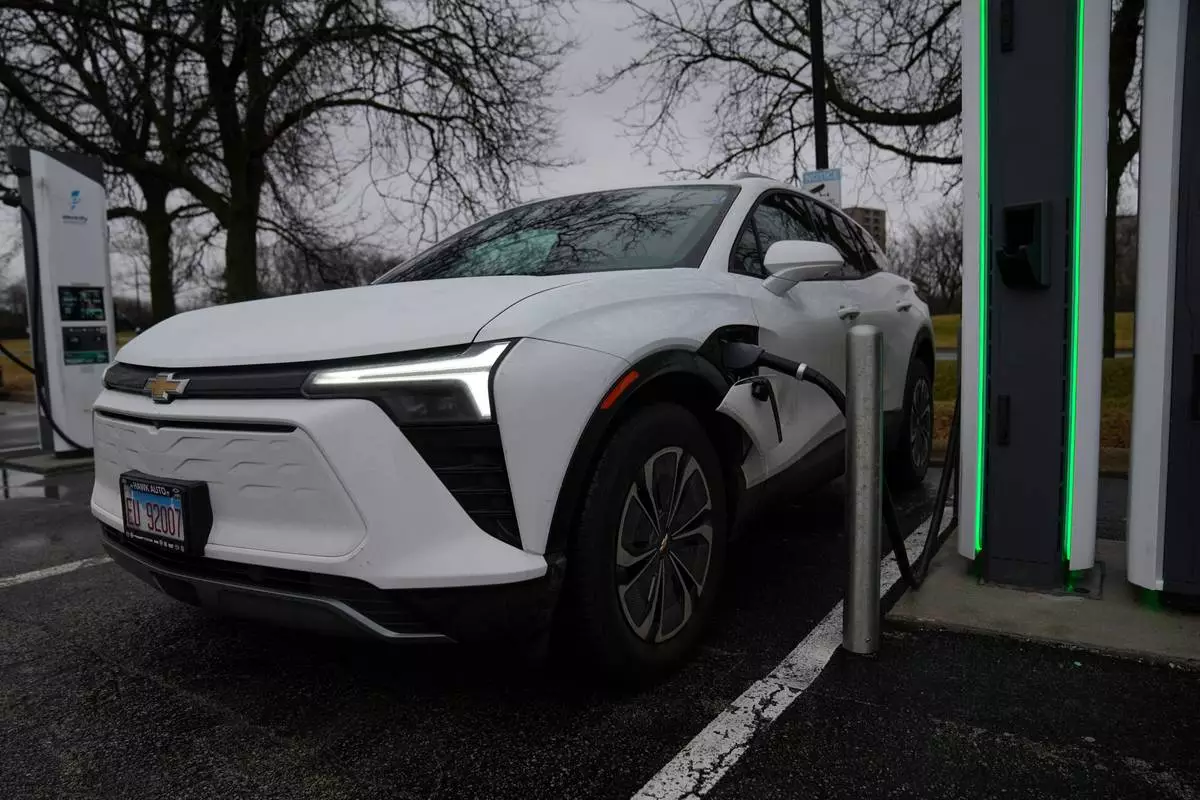
An electric vehicle charges at a station Wednesday, March 11, 2026, in Lincolnwood, Ill. (AP Photo/Erin Hooley)
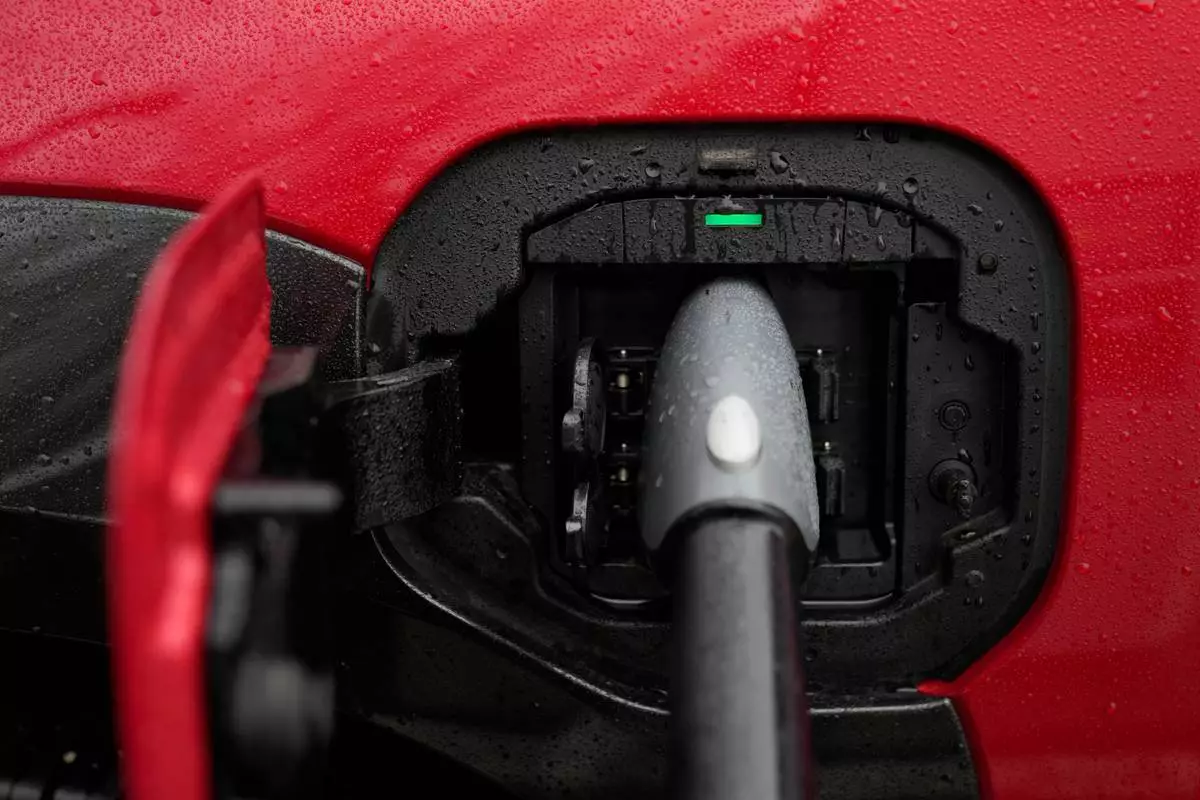
An electric vehicle charges at a station Wednesday, March 11, 2026, in Lincolnwood, Ill. (AP Photo/Erin Hooley)
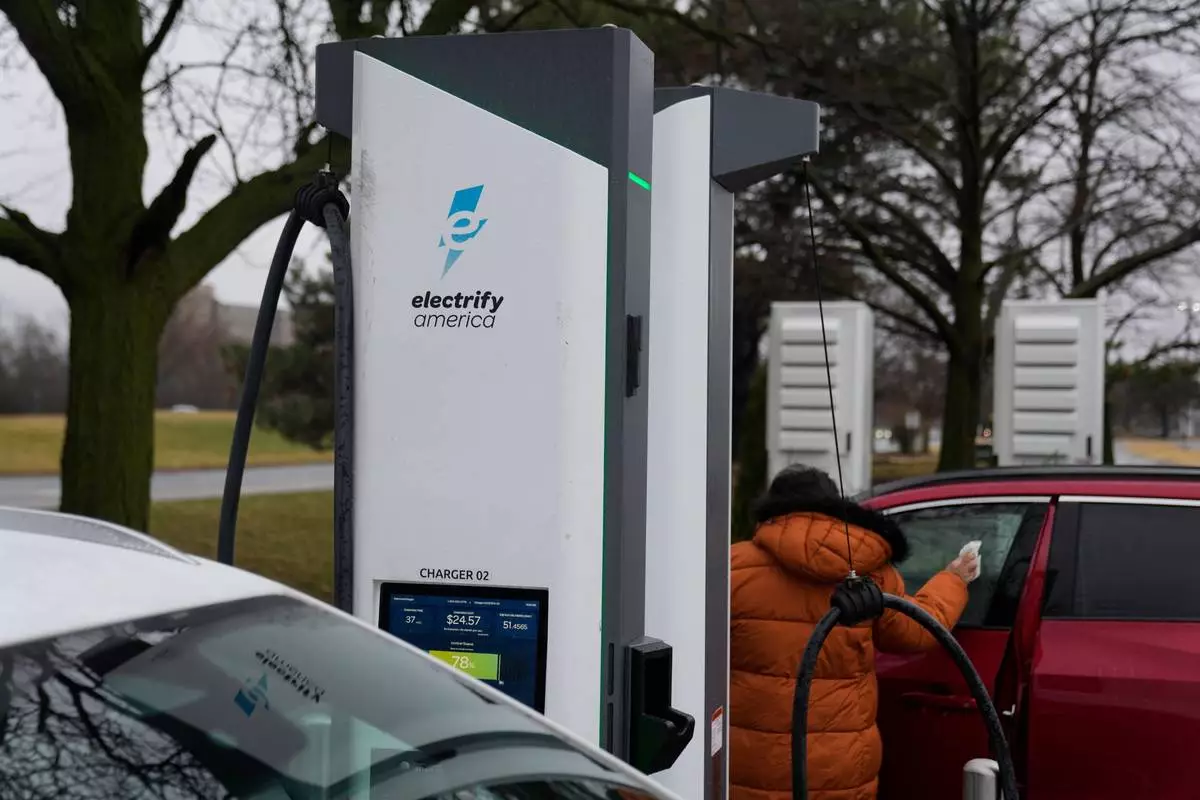
Electric vehicles charge at a station Wednesday, March 11, 2026, in Lincolnwood, Ill. (AP Photo/Erin Hooley)