NAGOYA, Japan (AP) — Japan’s Mone Chiba emerged as the surprise leader in the women's short program at the figure skating Grand Prix Final after several favorites stumbled on Friday.
Three-time world champion Kaori Sakamoto and defending Grand Prix Final champion Amber Glenn made costly errors on their opening jumps and finished fifth and sixth respectively.
Click to Gallery
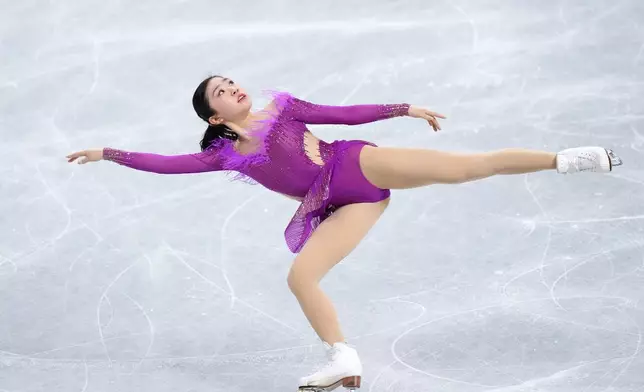
Ami Nakai, of Japan, competes in the women's short program segment at the ISU Grand Prix of Figure Skating Final in Nagoya, central Japan, Friday, Dec. 5, 2025. (AP Photo/Hiro Komae)
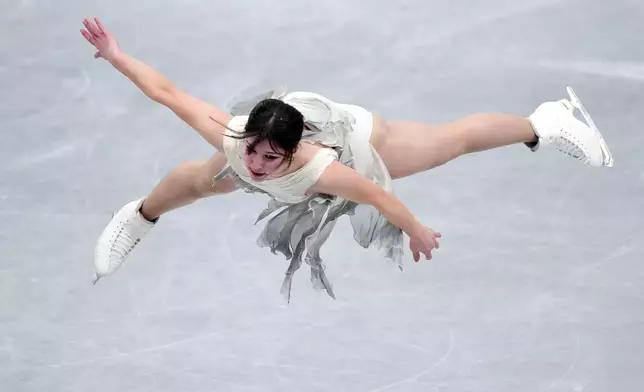
Alysa Liu, of the United States, competes in the women's short program segment at the ISU Grand Prix of Figure Skating Final in Nagoya, central Japan, Friday, Dec. 5, 2025. (AP Photo/Hiro Komae)
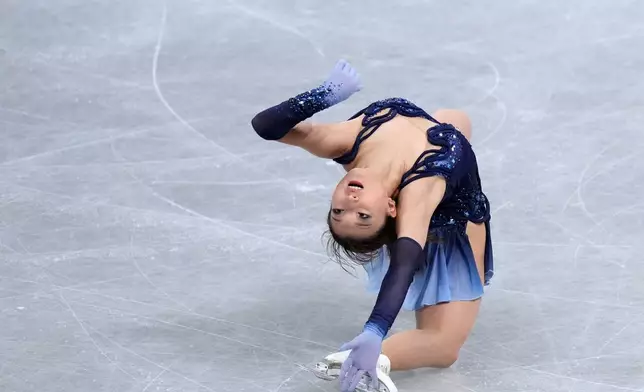
Amber Glenn, of the United States, competes in the women's short program segment at the ISU Grand Prix of Figure Skating Final in Nagoya, central Japan, Friday, Dec. 5, 2025. (AP Photo/Hiro Komae)
Kaori Sakamoto, of Japan, competes in the women's short program segment at the ISU Grand Prix of Figure Skating Final in Nagoya, central Japan, Friday, Dec. 5, 2025. (AP Photo/Hiro Komae)
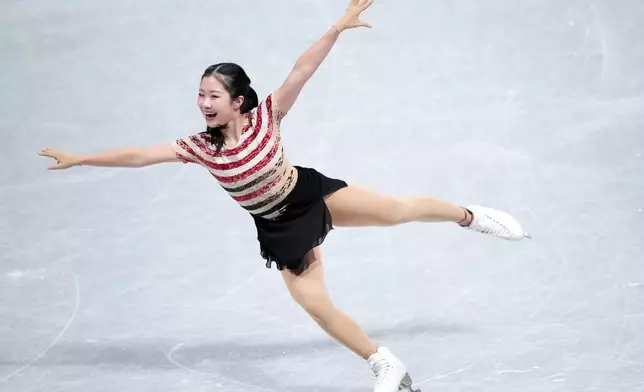
Mone Chiba, of Japan, competes in the women's short program segment at the ISU Grand Prix of Figure Skating Final in Nagoya, central Japan, Friday, Dec. 5, 2025. (AP Photo/Hiro Komae)
Skating last and realizing she had a golden opportunity to take the lead, Chiba appeared nervous at the start of her routine but settled down to land a triple flip-triple toe loop combination, a double axel and a triple lutz for 77.27 points.
World champion Alysa Liu of the United States was second with 75.79 followed by Ami Nakai of Japan on 73.91.
“I was very nervous at the start,” Chiba said. “But I was able to land all three jumps and do my spins and steps so I feel good about my skate.”
Liu landed a triple flip, a double axel and a triple lutz-triple loop combination and said she was pleased with her performance.
“I had a goal going into the short program,” Liu said, "to do a better triple loop than my other competitions and to breathe throughout.”
Sakamoto could manage only a double lutz on her opening jump and finished in fifth place with 69.40 points.
“More than feeling the pressure, I feel like I defeated myself,” said an emotional Sakamoto, who will retire after this season. “I will go into the free program tomorrow with nothing to lose.”
Defending champion Glenn had a single axel on her opening jump instead of a triple and was sixth with 66.85 points. Glenn completed the triple cleanly in practice but couldn’t pull it off in competition.
Friday’s result further underscored that there was no clear favorite heading toward the Milan Cortina Olympics in February.
Further complicating prospects was the International Skating Union allowing Russian skaters to compete in Milan Cortina as neutrals but only in the men's and women's competitions.
They include 18-year-old Adeliia Petrosian and Petr Gumennik.
Petrosian has won two straight national titles and is unbeaten over the past two seasons, winning eight straight domestic events. Petrosian has been landing triple axels and quads in competition while no other woman has done so consistently this year.
In the pairs, world champions Riku Miura and Ryuichi Kihara of Japan held on to their slim lead from the short program to win the gold medal despite a couple of errors in the free skate.
The hometown favorites finished second in the free skate but first overall with 225.21 points.
“We tried not to think too much about winning the title,” Kihara said. “Our coach told us just try to stay true to our program.”
Italians Sara Conti and Niccolo Macii were second with 223.28 followed by Germany's Minerva Fabienne Hase and Nikita Volodin on 221.25 points. They moved to third from fifth place.
The competition ends with the free skate for men and women on Saturday.
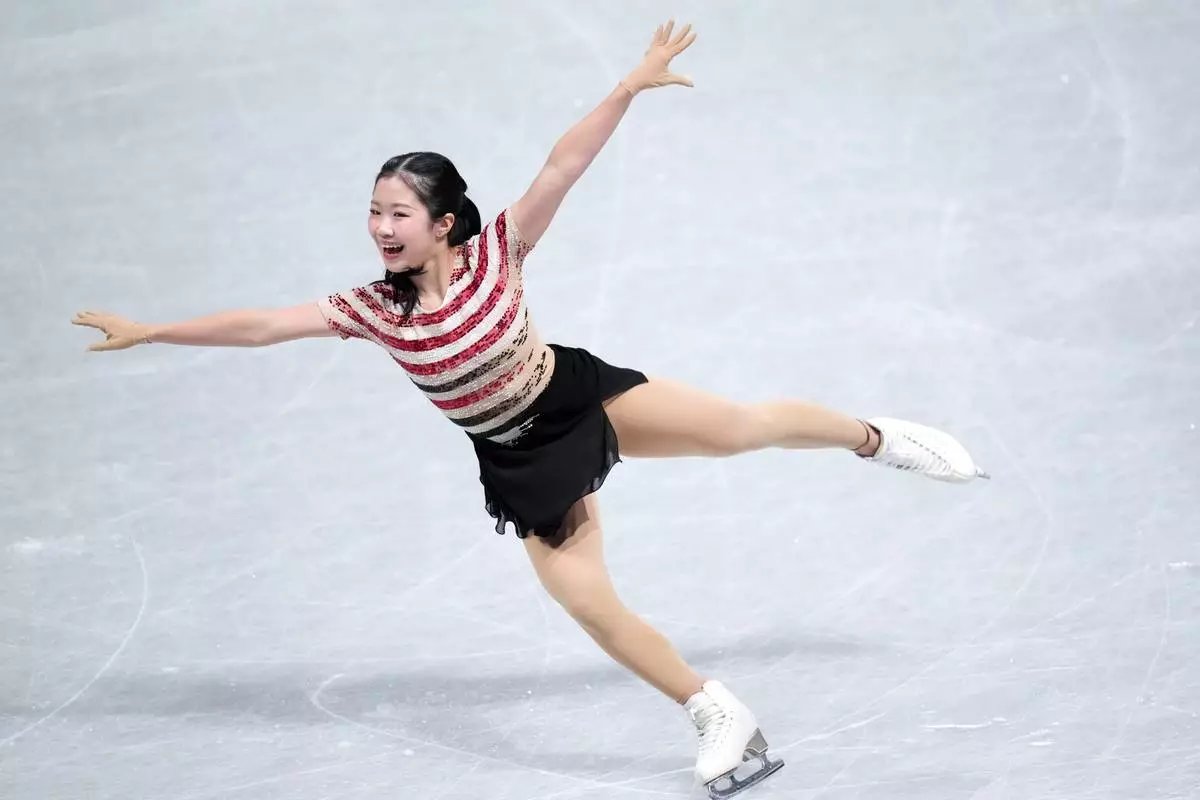
Ami Nakai, of Japan, competes in the women's short program segment at the ISU Grand Prix of Figure Skating Final in Nagoya, central Japan, Friday, Dec. 5, 2025. (AP Photo/Hiro Komae)
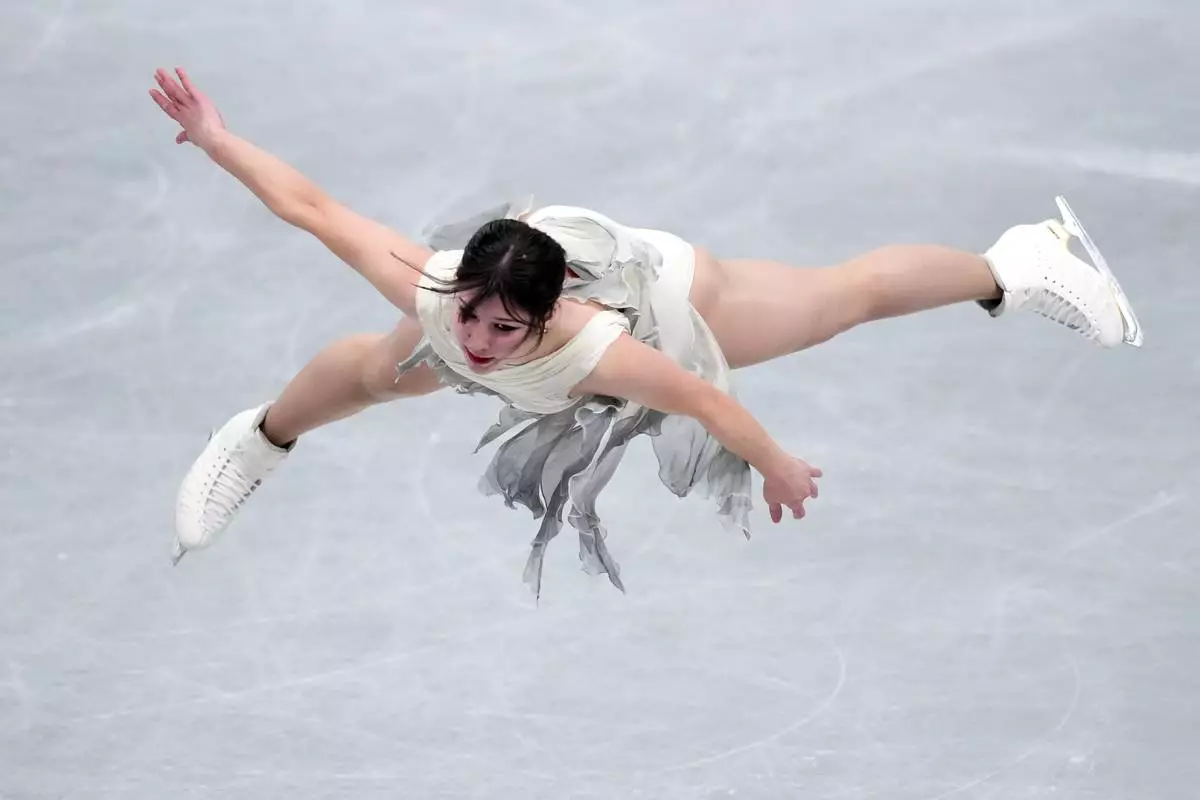
Alysa Liu, of the United States, competes in the women's short program segment at the ISU Grand Prix of Figure Skating Final in Nagoya, central Japan, Friday, Dec. 5, 2025. (AP Photo/Hiro Komae)
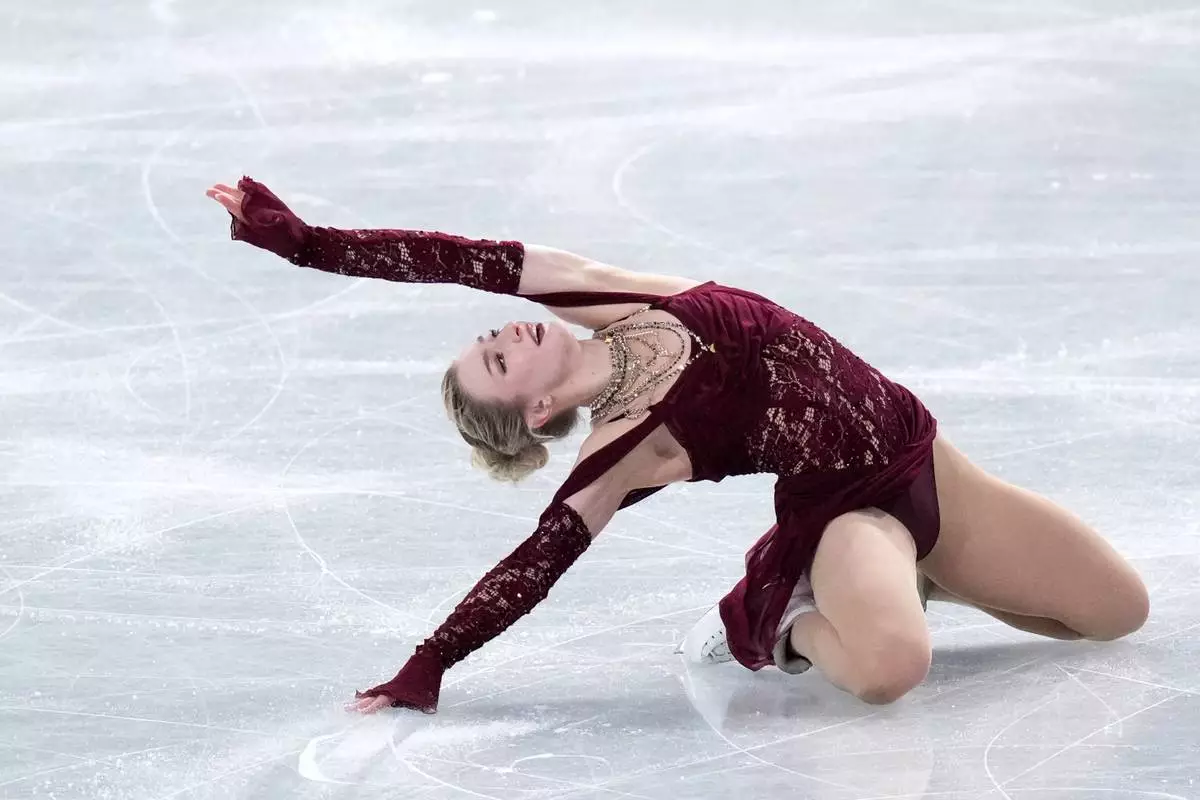
Amber Glenn, of the United States, competes in the women's short program segment at the ISU Grand Prix of Figure Skating Final in Nagoya, central Japan, Friday, Dec. 5, 2025. (AP Photo/Hiro Komae)
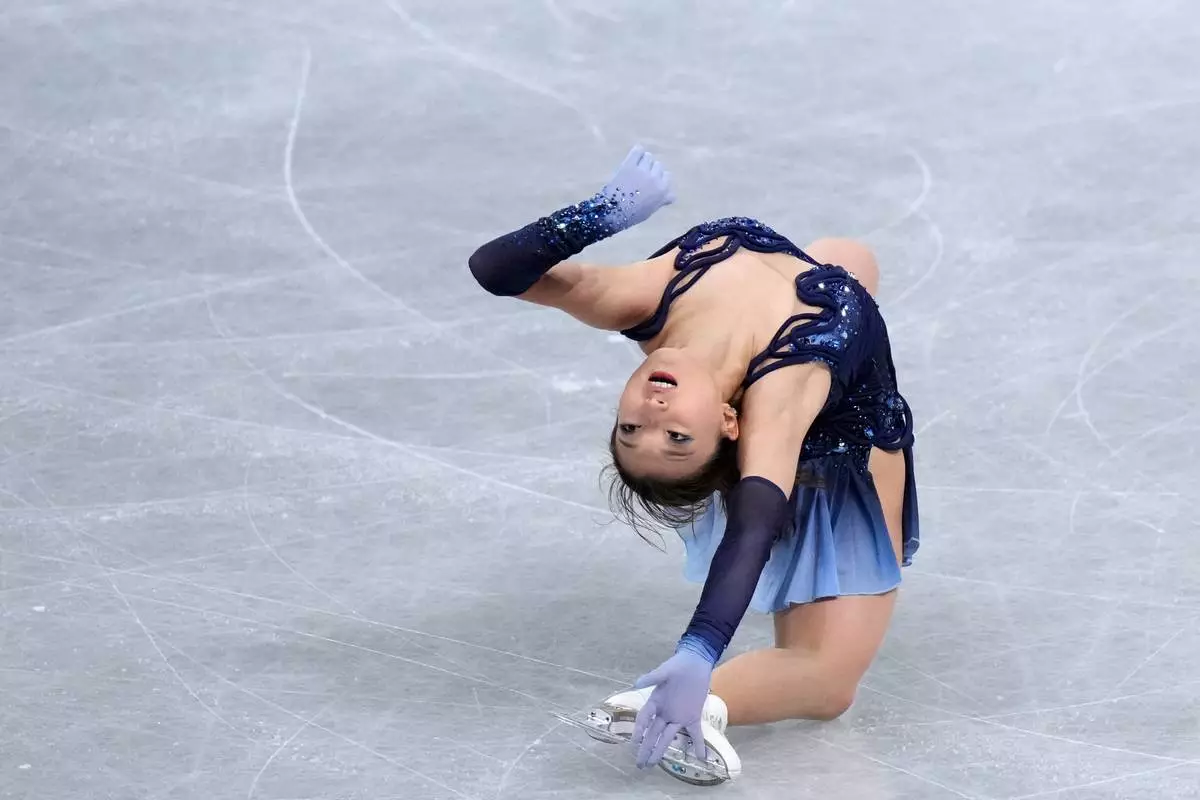
Kaori Sakamoto, of Japan, competes in the women's short program segment at the ISU Grand Prix of Figure Skating Final in Nagoya, central Japan, Friday, Dec. 5, 2025. (AP Photo/Hiro Komae)

Mone Chiba, of Japan, competes in the women's short program segment at the ISU Grand Prix of Figure Skating Final in Nagoya, central Japan, Friday, Dec. 5, 2025. (AP Photo/Hiro Komae)
BRIDGEWATER, N.J. (AP) — Rebecca Bennett, a former Navy helicopter pilot, won the Democratic primary in a battleground New Jersey congressional district to take on Republican Rep. Tom Kean Jr., who has been absent with an unspecified illness for months.
Bennett’s victory over three other Democrats on Tuesday sets up the state’s premier contest in November, when the party hopes it can flip the onetime Republican stronghold that has proven competitive in recent years. The district includes bedroom communities and farm towns as well as President Donald Trump’s Bedminster golf club.
Kean’s absence — his last vote was in early March — has supercharged interest in the seat, which Democrats view as key to winning control of the narrowly divided U.S. House. Voters in the 7th District have ousted two incumbents during midterm elections over the past decade.
Addressing supporters in Bridgewater, Bennett called Kean a “coward.”
“You are failing us, and you do not deserve to represent us in Washington,” she said.
In her speech, Bennett referred to “Tom Kean Jr., wherever you are,” drawing applause from supporters. She criticized Kean over his vote for Trump’s tax legislation and his failure to stand up to the president's threat to cut funding for a rail tunnel between New Jersey and New York.
Trump's package of spending and tax cuts expanded the state and local tax deduction. New Jersey has among the highest property taxes in the nation.
The Democrats are leaning into the rising costs of groceries and gasoline caused by the Iran war and Trump’s sweeping tariffs.
Bennett built her campaign around her experience as a Navy helicopter pilot as well as around affordability, noting that she drives a no-frills sedan and emphasizing her relatability as a working mom.
Araz Shahinian, a 49-year-old systems developer, said he voted for Bennett, noting he’s worried about the state of politics and rising prices. “She had the more centrist views,” he said.
Bennett's victory comes as Kean, who received Trump’s endorsement, remains out of public view. He did not make any appearances ahead of the primary, and he did not face a challenge for the Republican nomination.
Kean issued a statement on Tuesday saying “I will continue putting our constituents first” and “I am optimistic about the road ahead.”
“Right now I am focused on my recovery and under the advice of healthcare professionals. I will transition from virtual work to in person work within a matter of weeks,” Kean said, without explaining his condition.
Nina Ovryn, a Democratic voter and Bennett supporter who attended her victory party, said she was disappointed by Kean's absence.
“It shines a spotlight on the fact that he’s basically absent in the district and now he’s absent in Congress,” she said.
The district was redrawn after the most recent census to become more favorable to Republicans, but it's gone back and forth in recent years. Kean ousted incumbent Democrat Tom Malinowski in 2022, who defeated Republican Rep. Leonard Lance in 2018.
Justin Murphy, an attorney from southern New Jersey, won the state’s Republican nomination for a U.S. Senate seat Tuesday, setting up a fall contest with incumbent Democratic Sen. Cory Booker.
Murphy faces the tall task of becoming the first New Jersey Republican to win a race for Senate in more than five decades — and in a year when control of the chamber is being hotly contested.
Booker was uncontested in Tuesday's Democratic primary and is running for a full third term.
Rep. Jeff Van Drew is seeking a fifth term in southern New Jersey’s 2nd District. He was originally elected as a Democrat but switched to the Republican Party during Trump's first term. Zack Mullock, the mayor of Cape May, New Jersey, won the district's Democratic primary Tuesday.
Dr. Adam Hamawy, a surgeon and Army veteran, won a crowded primary in the heavily Democratic 12th District in central New Jersey, where Rep. Bonnie Watson Coleman is retiring. He'll face attorney Gregg Mele, who was unchallenged in the GOP primary.
Hamawy shot to prominence with endorsements from independent Sen. Bernie Sanders and other progressives. Some of his opponents recently began criticizing him over his connection to Sheikh Omar Abdel-Rahman, a blind Egyptian cleric convicted in 1995 of conspiring to blow up the United Nations and other New York-area landmarks.
Hamawy was a defense witness in the sheikh's trial but wasn’t accused of wrongdoing. He has condemned violence and distanced himself from the sheikh during the campaign. Abdel-Rahman died in federal prison in 2017.
The Republican primary in New Jersey’s 9th Congressional District was too early to call. Rosie Pino led Tiffany Burress by 366 votes out of 12,702 votes counted. It was unclear how many votes were left to count in Passaic County, where Burress led Pino by 25 percentage points.
The winner will take on first-term Democratic Rep. Nellie Pou. Her margin of victory in 2024 was narrower than her long-serving predecessor, Rep. Bill Pascrell, and coincided with Trump winning a county in the district.
This story was first published on June 2, 2026. It was updated on June 3, 2026 to correct that in the Republican primary for the 9th District, Tiffany Burress led Rosie Pino in Passaic County by 25 percentage points, not 45 points, and to correct the spelling of a Bennett supporter’s name to Nina Ovryn, not Orvyn.
Associated Press writer Meg Kinnard in Columbia, South Carolina, contributed to this report.

From left, Rebecca Bennett, Democratic candidate for New Jersey's 7th Congressional District, holds her daughter Rosie, alongside her husband Alex Hydrean and daughter Millie during a primary election night watch party after winning the Democratic nomination Tuesday, June 2, 2026, in Bridgewater, N.J. (AP Photo/Ryan Murphy)

Rebecca Bennett, Democratic candidate for New Jersey's 7th Congressional District, hugs attendees during a primary election night watch party after winning the Democratic nomination Tuesday, June 2, 2026, in Bridgewater, N.J. (AP Photo/Ryan Murphy)
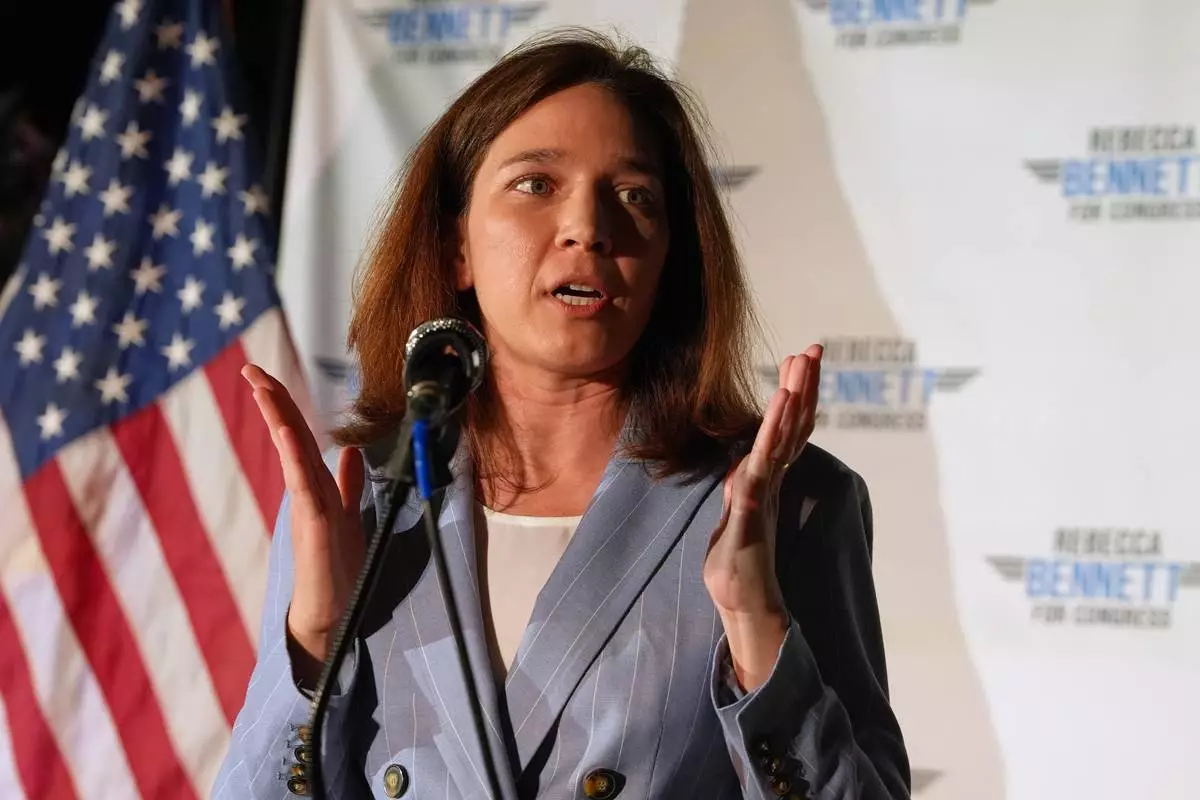
Rebecca Bennett, Democratic candidate for New Jersey's 7th Congressional District, speaks during a primary election night watch party after winning the Democratic nomination Tuesday, June 2, 2026, in Bridgewater, N.J. (AP Photo/Ryan Murphy)

Rebecca Bennett, Democratic candidate for New Jersey's 7th Congressional District, speaks during a primary election night watch party after winning the Democratic nomination Tuesday, June 2, 2026, in Bridgewater, N.J. (AP Photo/Ryan Murphy)

Rebecca Bennett, Democratic candidate for New Jersey's 7th Congressional District, hugs an attendee during a primary election night watch party after winning the Democratic nomination Tuesday, June 2, 2026, in Bridgewater, N.J. (AP Photo/Ryan Murphy)

Supporters hug during a primary election night watch party for Rebecca Bennett, Democratic candidate for New Jersey's 7th Congressional District, Tuesday, June 2, 2026, in Bridgewater, N.J. (AP Photo/Ryan Murphy)

Supporters cheer during a primary election night watch party for Rebecca Bennett, Democratic candidate for New Jersey's 7th Congressional District, Tuesday, June 2, 2026, in Bridgewater, N.J. (AP Photo/Ryan Murphy)

Voting messages are displayed on a car at a primary election night watch party for Rebecca Bennett, Democratic candidate for New Jersey's 7th Congressional District, Tuesday, June 2, 2026, in Bridgewater, N.J. (AP Photo/Ryan Murphy)

A worker sets up the stage during a primary election night watch party for Rebecca Bennett, Democratic candidate for New Jersey's 7th Congressional District, Tuesday, June 2, 2026, in Bridgewater, N.J. (AP Photo/Ryan Murphy)

A sign directs voters to a polling place for the New Jersey primary election in Cherry Hill township, N.J., Tuesday, June 2, 2026. (AP Photo/Matt Rourke)
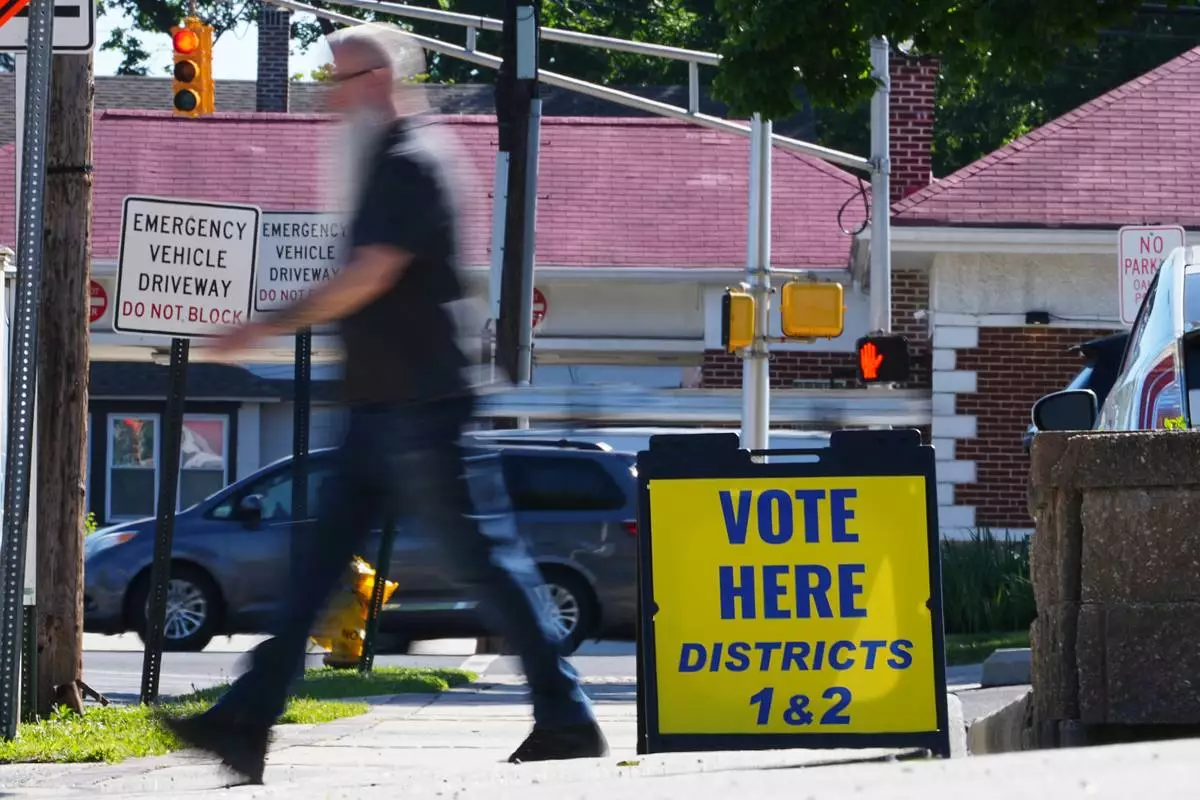
A person walks from a polling place for the New Jersey primary election in Oaklyn, N.J., Tuesday, June 2, 2026. (AP Photo/Matt Rourke)

FILE - This photo combination shows Democrat candidates for New Jersey's 7th Congressional District, from left, Rebecca Bennett, May 30, 2026, in Flemington, N.J., Brian Varela, May 30, 2026, in Sparta, N.J. and Michael Roth, May 31, 2026, in Rahway, N.J. (AP Photo/Stefan Jeremiah)

FILE - In this Jan. 15, 2019, file photo, New Jersey Senate Minority Leader Tom Kean Jr., R-Westfield, addresses reporters in Trenton, N.J. (AP Photo/Julio Cortez, File)