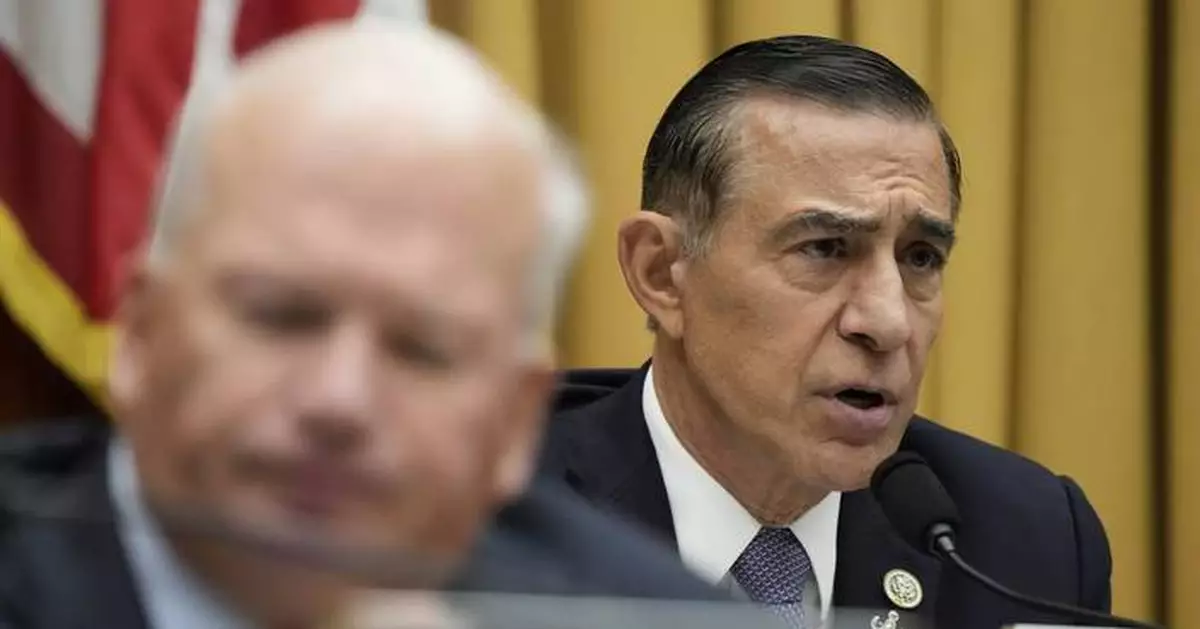
WASHINGTON (AP) — California Rep. Darrell Issa says he was asked by Texas colleagues to consider moving to Dallas to run for Congress after lawmakers in both states created a midterm scramble by redrawing congressional districts.
But in a wide-ranging interview with The Associated Press on Friday, Issa explained why he’s staying put — and urged fellow California Republicans facing tough new districts to do the same.
“I’m not giving up on California, and hopefully none of my colleagues that have been drawn into tough districts are going to give up. I’m hoping they all run and preferably not against each other,” Issa told the AP by phone.
California Republican Reps. Ken Calvert and Young Kim have already announced they will run against each other in a new district that includes parts of Riverside and Orange counties, combining some of their existing districts. Republican Reps. Doug LaMalfa and Kevin Kiley, who were also drawn into more difficult districts, have said they plan to run for reelection.
President Donald Trump sparked the nationwide redistricting battle by urging Republicans in Texas to redraw their congressional lines with the hopes of picking up five more seats. California Democrats responded by creating new maps designed to gain five seats for their own party, an effort approved by voters. Other states have since followed, but federal courts have blocked or altered some plans.
New congressional maps are typically drawn once a decade after the Census comes out. The next maps are due to be created in time for the 2032 election.
“I think that redrawing districts in between censuses is inherently unconstitutional,” said Issa, who refrained from criticizing Trump, his close ally, for pushing the effort.
Facing tougher reelection odds, Issa said the Texas delegation approached him, noting that some members “saw merit in almost the poetic justice of ‘We’ve created additional seats, we need to fill them.’”
“Out of respect, you don’t just blow off your colleagues. You say, ‘Okay, I’ll, you know, I’ll give it due consideration,’” Issa added.
Issa was eyeing Texas’ 32nd District, which is northeast of Dallas. While a number of candidates have filed to run for the seat, none of them is as high-profile as Issa.
Liz Gover, a precinct chair for the Dallas County Republican Party, said earlier this week that she had a favorable view of Issa as a California congressman but noted he doesn’t live in Texas and other candidates are seeking the seat. She is backing Republican Darrell Day in the district.
The National Republican Congressional Committee did not provide comment.
In the end, Issa opted to stay in his seat, citing his “pretty deep” roots in California. Asked whether Trump had asked him to remain in the seat, Issa said he speaks to “both the president and other people of the White House pretty regularly.”
“But no, nobody, you know, said ‘Or else,’ or anything like that,” he said.
Issa’s decision to stay in California is a win for Republicans, ensuring an incumbent will contest the now-battleground seat in San Diego County. But it doesn't change things in Texas, where redistricting and a number of retirements have created openings. Monday is the filing deadline for Texas candidates.
Issa, referring to the chairman of the National Republican Congressional Committee, said: “We’ve all been encouraged by Richard Hudson and, you know, our own team, that incumbency has an advantage. Please consider not retiring, please consider not doing anything that would make it hard for us to hold our majority in the midterm.”
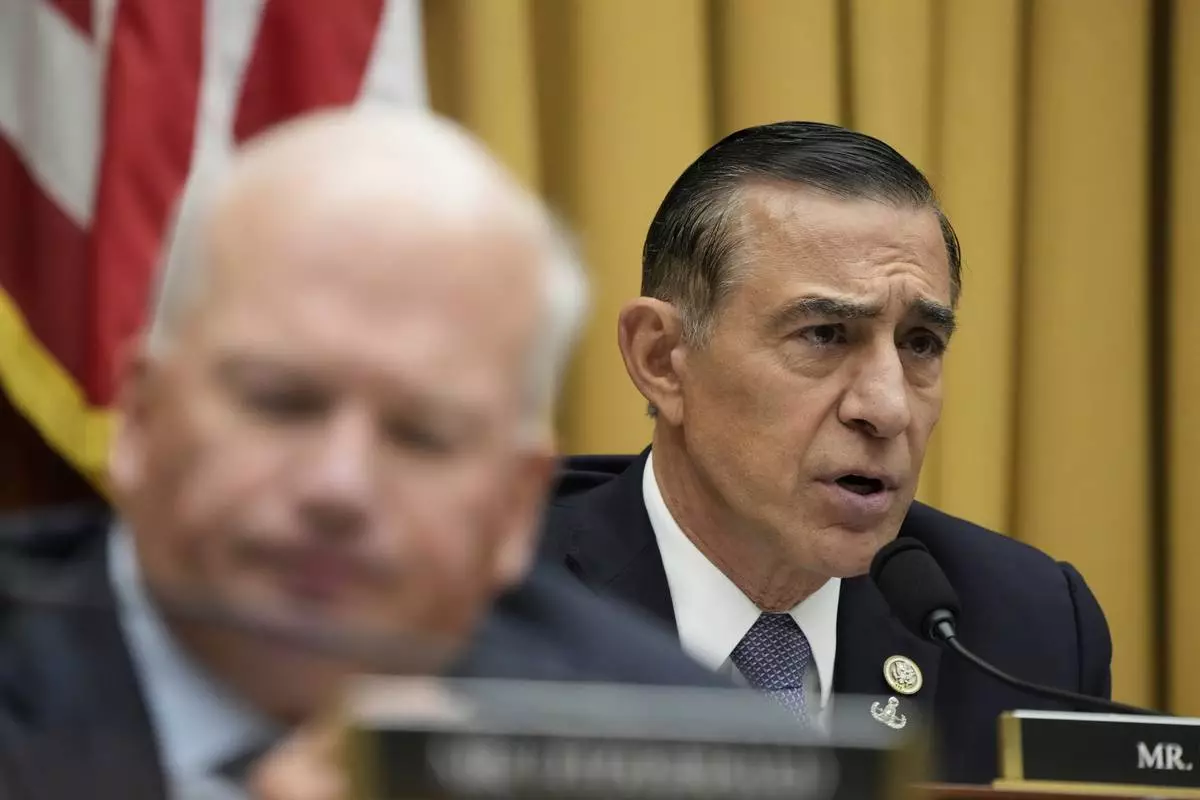
FILE - Rep. Darrell Issa, R-Calif., speaks during a House Judiciary Committee hearing, Sept. 20, 2023, on Capitol Hill in Washington. (AP Photo/Jacquelyn Martin, File)
DUBAI, United Arab Emirates (AP) — Unrelenting Iranian attacks on shipping traffic and energy infrastructure pushed oil above $100 a barrel Thursday, as American and Israeli strikes pounded the Islamic Republic with no sign of an end to the war in sight.
Iran hit a container ship off the coast of Dubai, caused a blaze near Bahrain's international airport, targeted a major Saudi oil field with a drone and forced Iraq to halt operations at all of its oil terminals after attacking its port of Basra on the Persian Gulf.
Iran flouted a U.N. Security Council resolution from the previous day demanding that it halt strikes on its Gulf neighbors with new attacks also reported in Kuwait and the United Arab Emirates.
Sirens wailed before dawn in Jerusalem after Israel said it was working to intercept missiles launched from Iran. The country also said it began a “wide-scale wave of strikes” on Tehran. In Lebanon, where Israel says it is targeting Iran-linked Hezbollah militants, 11 people were killed in two early morning strikes.
Since the United States and Israel started the war with a Feb. 28 attack on Iran, Tehran has focused on inflicting enough global economic pain to pressure them to halt their attacks.
In addition to attacking energy infrastructure around the region, Iran has a stranglehold on the Strait of Hormuz, the waterway leading from the Persian Gulf toward the Indian Ocean through which a fifth of the world's oil is transported.
With traffic in the strait effectively stopped, the price of Brent crude oil, the international standard, rose another 9% to more than $100 a barrel, up some 38% over what it cost when the war started.
The U.N. Security Council voted Wednesday to approve a resolution demanding a halt to Iran’s “egregious attacks” on its Gulf neighbors, but Tehran showed no signs of changing its strategy.
As the day began Thursday, a container ship in the Persian Gulf was hit with a projectile off the coast of Dubai, sparking a small fire, according to British military’s United Kingdom Maritime Trade Operations Center. It said the crew of the vessel were safe.
In Bahrain, an Iranian attack sparked a major fire on Muharraq Island, home to the country's international airport. The airport has jet fuel tanks, and other tanks in the area serve the kingdom’s oil industry.
Kuwait's Defense Ministry said an Iranian drone smashed into a residential building, wounding two people. The UAE said it had activated air defenses twice to protect Dubai from attacks, and firefighters extinguished a blaze at a tower in Dubai Creek Harbor after a drone hit.
Saudi Arabia said it shot down a drone targeting the diplomatic quarter of the capital, Riyadh, and also reported downing drones inthe kingdom’s east, including at least one trying to target its Shaybah oil field.
Following an attack on Iraq's Basra port Wednesday that killed at least one person, officials said Thursday that operations were halted at all the country's oil terminals.
Farhan al-Fartousi, the director-general of the General Company for Ports of Iraq, said the attack targeted a vessel in a ship-to-ship transfer area of the Persian Gulf port.
Sirens wailed and loud explosions were heard shortly after midnight in Jerusalem and other parts of Israel. The Israeli military said it was responding with another “wide-scale wave of strikes” in Tehran.
Overnight missile launches from Iran and Hezbollah also sent Israelis to shelters in multiple other areas, including Tel Aviv and the northern border with Lebanon.
An Israeli strike hit a car Thursday in Ramlet al-Bayda, a major seaside tourist area of Beirut where dozens of displaced people have been sheltering. Eight people were killed and 31 others were wounded, the Lebanese Health Ministry said. The Israeli military press office told The Associated Press it was “not aware” of a strike at that location.
In Aramoun, a town about 10 kilometers (6 miles) south of Beirut, another three people were killed and a child was wounded in another early Israeli attack.
At least 634 people have been killed in Lebanon since the latest fighting began, the Lebanese Health Ministry said Wednesday.
The U.N. refugee agency said at least 759,000 people have been internally displaced in Lebanon.
Iranian authorities say more than 1,300 people have been killed there, and Israel has reported 12 people dead. The U.S. has lost seven soldiers while another eight have suffered severe injuries.
Abou AlJoud reported from Beirut and Rising from Bangkok. Associated Press writer Sam Mednick in Tel Aviv, Israel, also contributed to this report, along with AP journalists around the world.
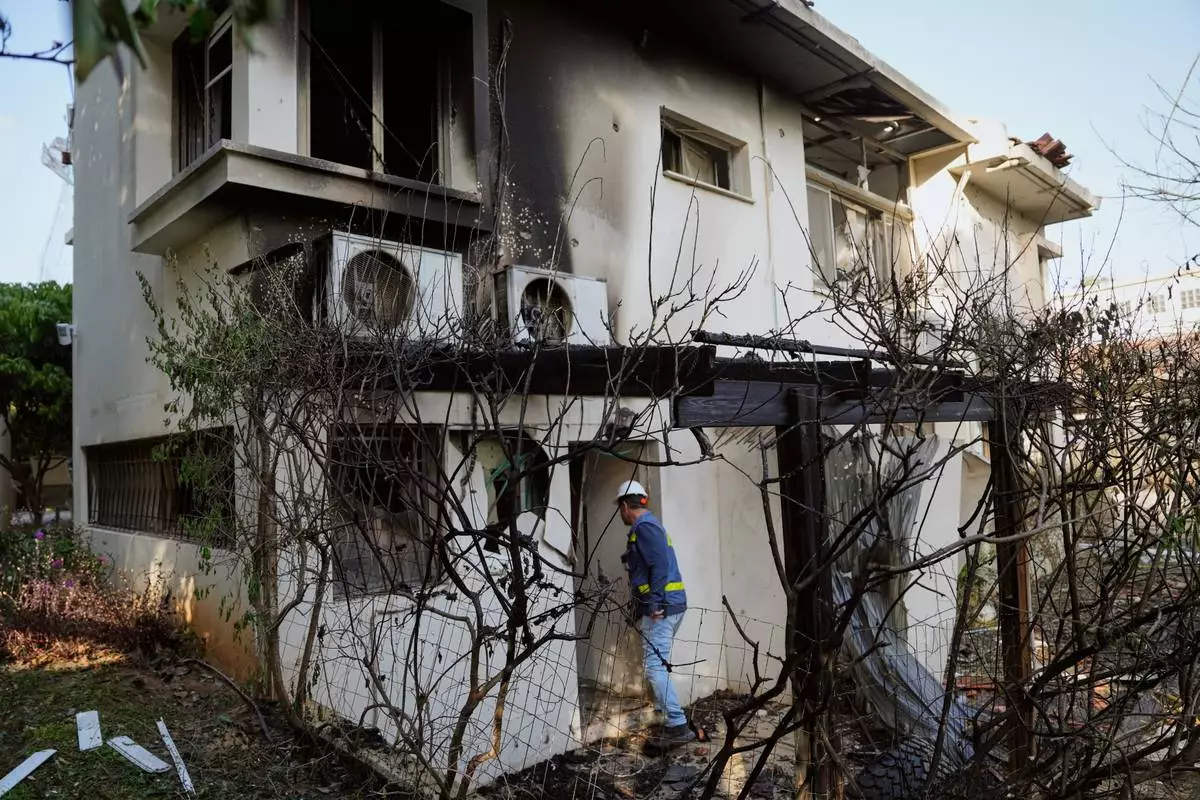
Israeli authorities inspect homes damaged by a projectile launched from Lebanon, in Haniel central Israel, Thursday, March 12, 2026. (AP Photo/Baz Ratner)

Israel Ambassador to the United Nations Danny Danon speaks during a meeting of the Security Council at U.N. headquarters, Wednesday, March 11, 2026. (AP Photo/Seth Wenig)
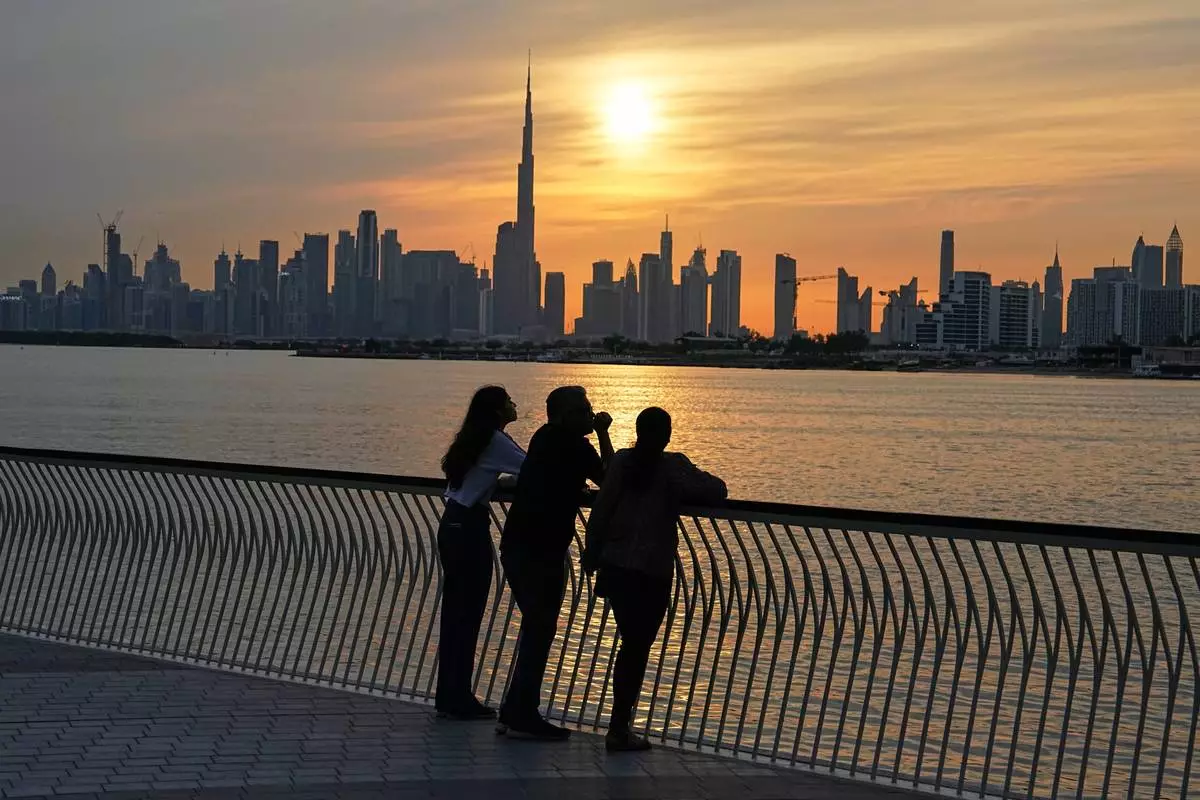
A family enjoys the sunset with the view of the city skyline and Burj Khalifa, at Dubai Creek Harbour in Dubai, United Arab Emirates, Wednesday, March 11, 2026. (AP Photo/Fatima Shbair)
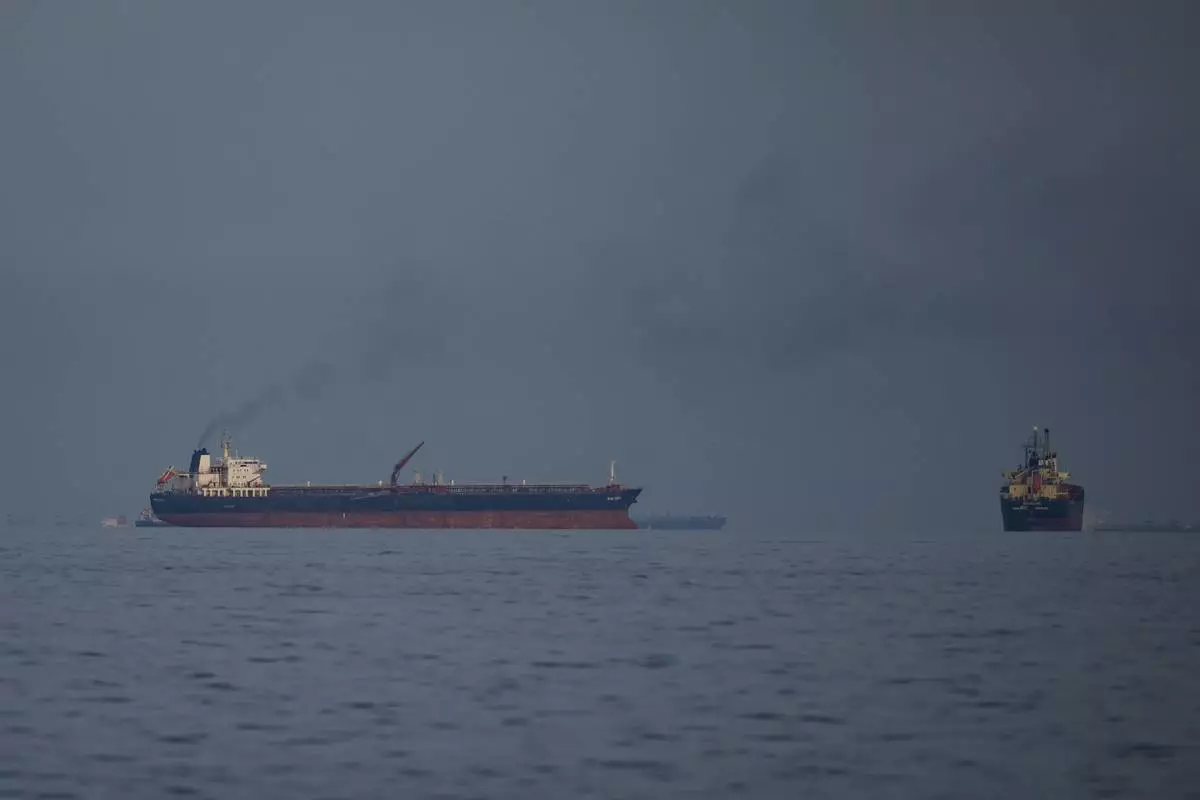
Oil tankers and cargo ships line up in the Strait of Hormuz as seen from Khor Fakkan, United Arab Emirates, Wednesday, March 11, 2026. (AP Photo/Altaf Qadri)
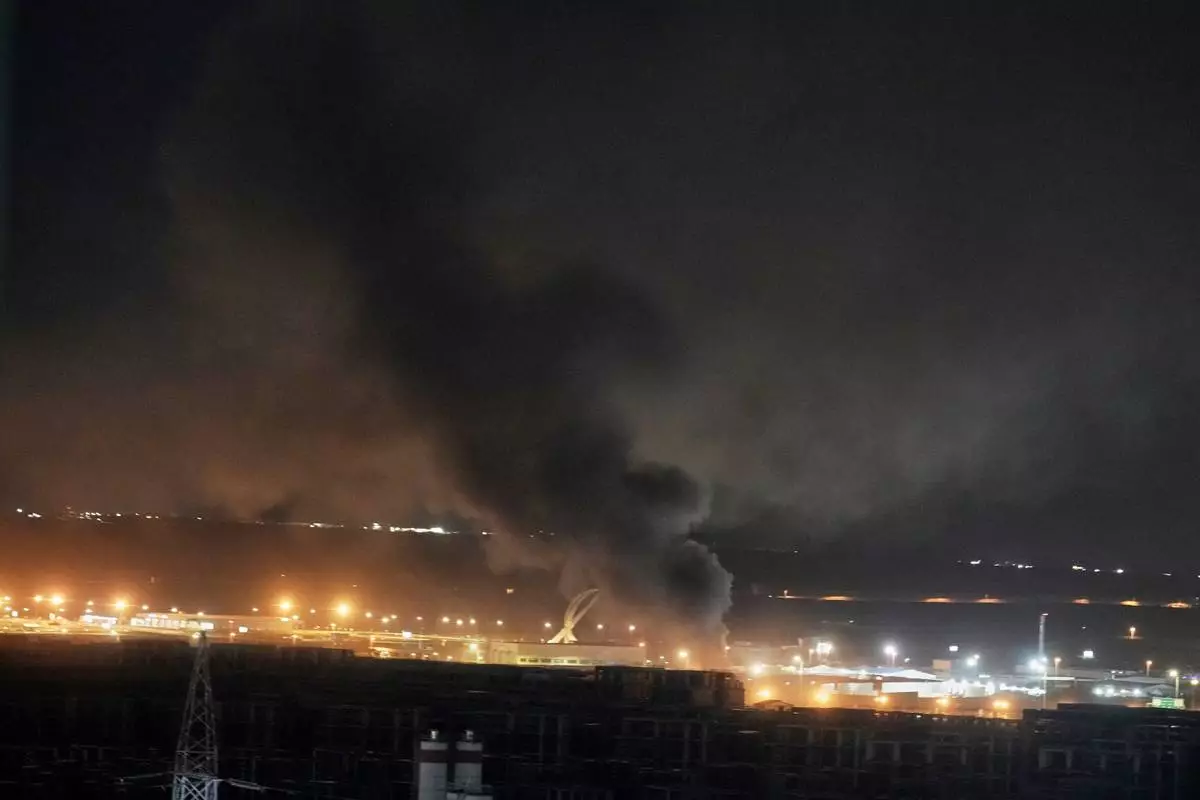
Smoke rises after an explosion at the airport in Irbil, Iraq, late Wednesday, March 11, 2026. (AP Photo/Leo Correa)

A man inspects a car damaged in an Israeli airstrike at the Ramlet al-Baida public beach in Beirut, Lebanon, early Thursday, March 12, 2026. (AP Photo/Bilal Hussein)