The cauldron lighting ceremony of the 2026 Milan-Cortina Olympic Winter Games was held at the Quirinale Palace in Rome, capital of Italy on Friday morning, heralding the start of the Winter Games torch relay set to begin on Saturday.
Italian President Sergio Mattarella lit the Olympic cauldron at the palace. The ceremony was attended by dignitaries including Italian Prime Minister Giorgia Meloni and International Olympic Committee President Kirsty Coventry.
Click to Gallery
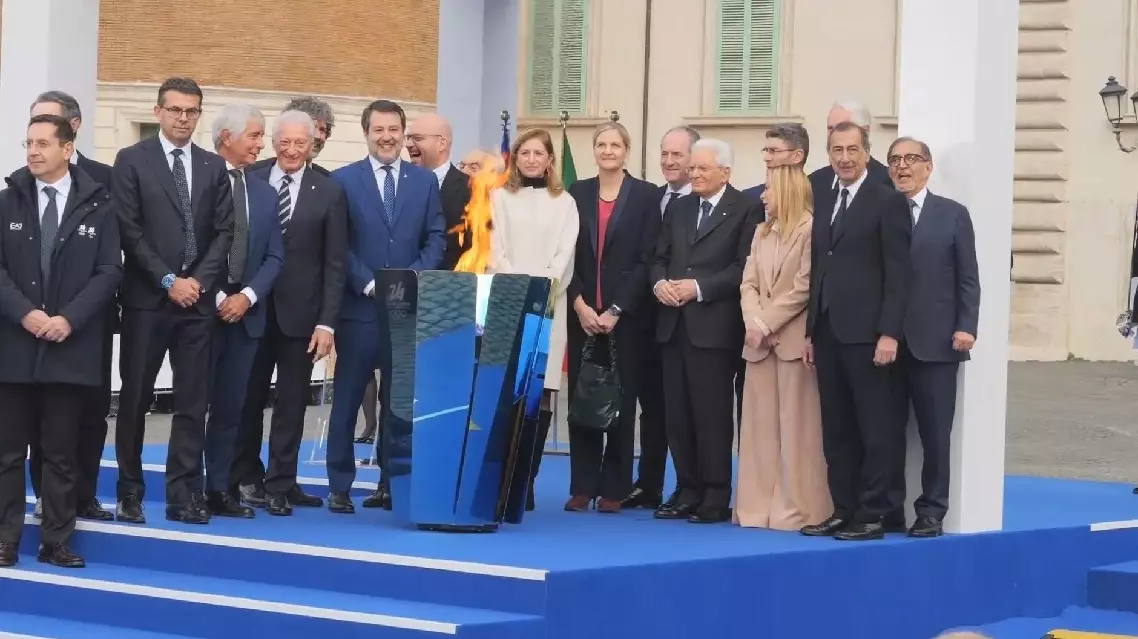
Cauldron lighting ceremony of 2026 Milan-Cortina Olympic Winter Games held in Rome
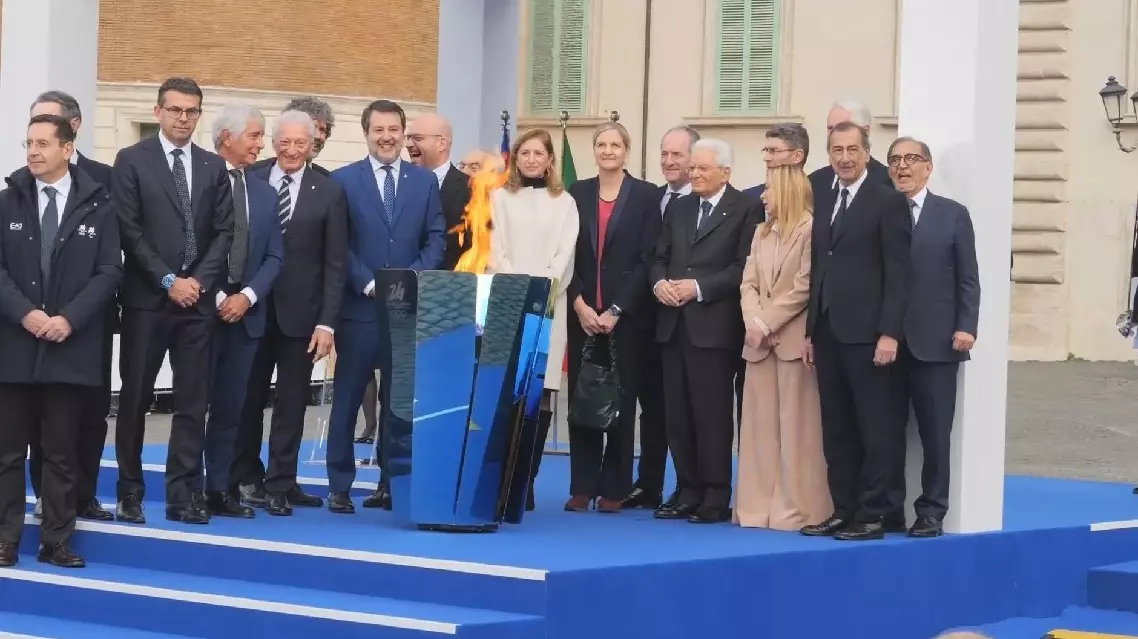
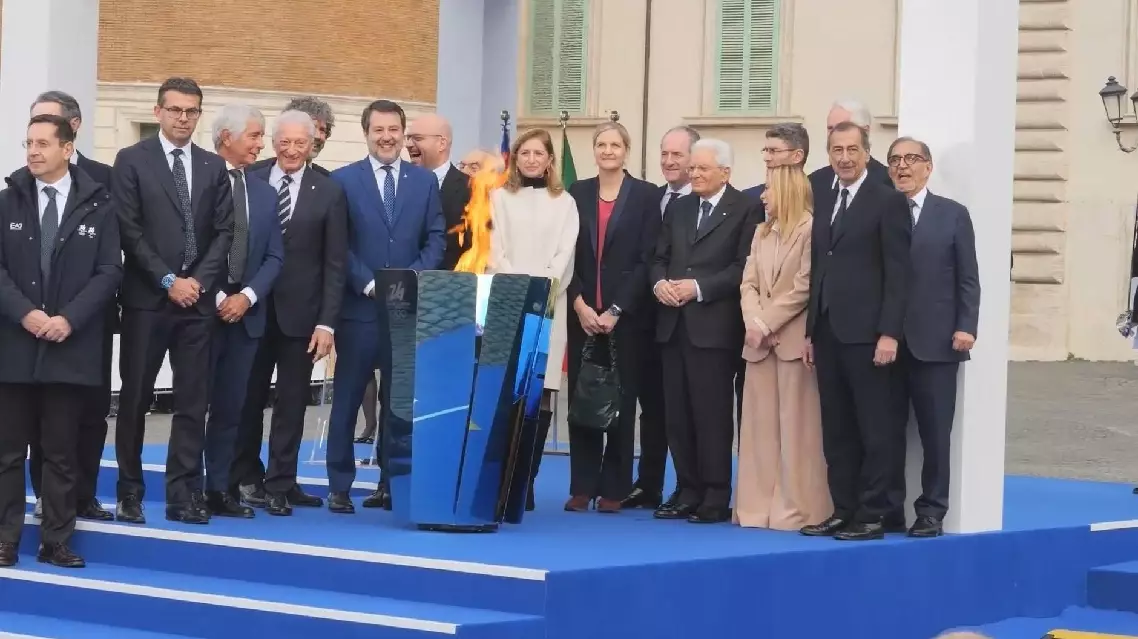
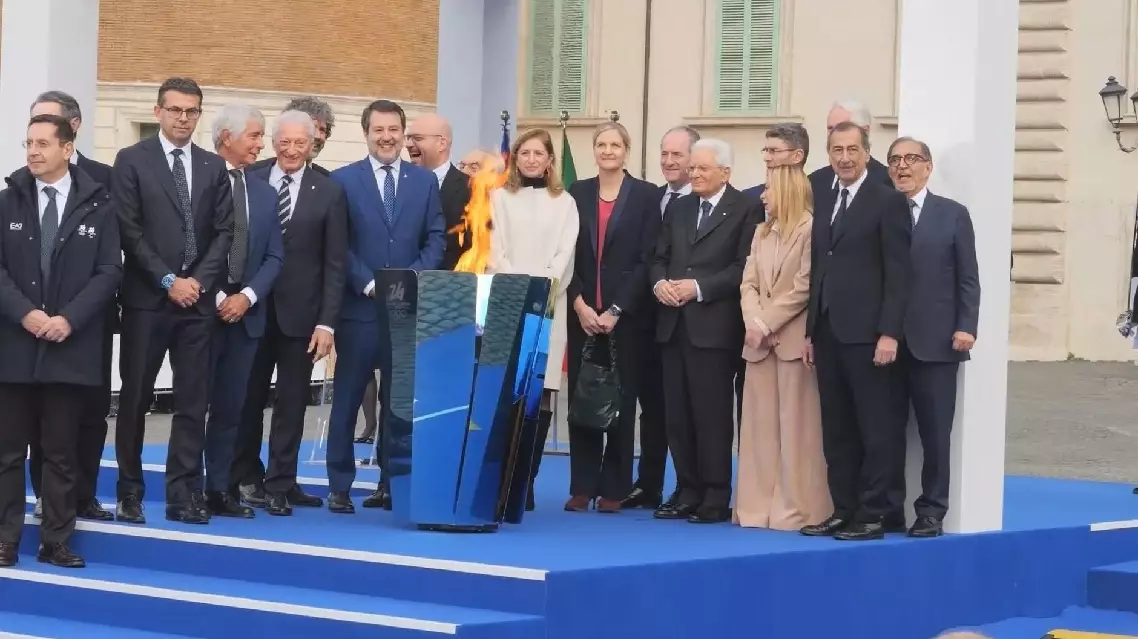
"The Olympic flame is arriving to a nation that lives and breathes sport, beautiful Italy, where passion shines through and everything that you do," said Coventry at the ceremony.
"We have planned a very scientific relay route that will pass through all of Italy's UNESCO World Heritage Sites. Italy is the country with the most world heritage sites. I think this is wonderful, not only for Italians but for the people all over the world," said Giovanni Malago, president of the Milan-Cortina 2026 Organizing Committee.
The launch ceremony for the torch relay will be held on Saturday morning at Rome's Stadio dei Marmi, kicking off the start of the Olympic torch's journey across Italy. The relay will pass by multiple Roman landmarks such as the Colosseum and the Trevi Fountain, completing the 30-kilometer Rome segment on Saturday evening.
The whole relay will traverse 12,000 kilometers over 60 days across Italy, pass through more than 300 municipalities and feature celebrations in 60 cities, reach all 110 Italian provinces, and light up UNESCO sites along the route.
More than 10,000 torchbearers from all walks of life will take part in the relay, including figures from sectors of sports, culture, film and civil society.
The 2026 Milan-Cortina Olympic Winter Games will take place from February 6 to 22, 2026 in eight locations across northern Italy.
Cauldron lighting ceremony of 2026 Milan-Cortina Olympic Winter Games held in Rome
Officials and business leaders from both China and the United States gathered in Berkeley, California on Friday to discuss the future of trade and investment between China and the San Francisco Bay Area, with many hoping to overcome the recent strain brought by the Trump administration's tariffs.
The China Council for the Promotion of International Trade hosted a business breakfast exchange meeting on Friday morning, with the council's chairman Ren Hongbin sending out a clear message of the vast economic potential which is there to be tapped into.
"The Chinese economy is very much innovation driven. And the strategic emerging industries, such as new energy, new materials, low carbon, aerospace, bio-pharmacy and the low-altitude economy, will generate a trillion-yuan level or even larger markets. So, I think that will provide enormous opportunities and room for China and U.S. companies to cooperate," said Ren.
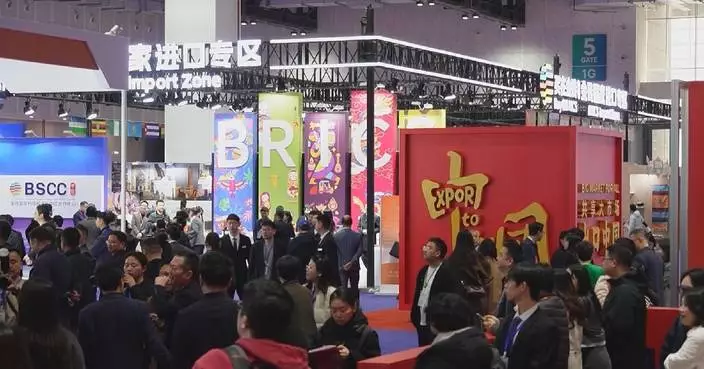
He further stressed the China International Supply Chain Expo in Beijing as an example of an event where San Francisco Bay Area companies like NVIDIA and Apple were active participants and direct beneficiaries.
Meanwhile, Chinese Consul General in San Francisco Zhang Jianmin said that against the backdrop of a global economic slowdown, greater cooperation in the innovation sector is now more important than ever.
"The [San Francisco] Bay Area is home to many of the world's top tech companies and offers a sound innovation ecosystem. China has a super big market, rich application scenarios and a complete industrial supporting system. There exists tremendous potential for both sides to have more mutually beneficial cooperation by tapping into their complementary strengths," said Zhang.
Attendees did voice concerns over how the Trump administration's tariffs are impacting business.
With China accounting for nearly 30 percent of the Port of Oakland's total trade volume, the port's executive director Kristi McKenney stressed the need for greater stability and certainty.
"The tariffs in many cases were never actually implemented or were changed before they were implemented. So those linkages are a bit more challenging. I think the bigger issue will be certainty in the economy. And if there's lack of certainty, if we see economic difficulty, then you're going to see job losses," said McKenney.
Oakland's Mayor Barbara Lee said that it is very much business as usual, despite the recent difficulties.
"While we understand the challenges of tariffs, the exports and imports are still continuing, and our port is still a large containerized port doing business with China. And we're going to strengthen that relationship. We may have our differences on issues, on policies, but we here in Oakland understand that we're a global city and we believe the trade brings friendships, brings understanding, and also brings economic benefits to both countries," she said.
Chinese, US officials, business leaders meet in California to deepen mutual understanding