Skip to Content Facebook Feature Image

Benin is the latest African country to experience a coup. Here is a look at other military takeovers

News

Benin is the latest African country to experience a coup. Here is a look at other military takeovers
News

News

Benin is the latest African country to experience a coup. Here is a look at other military takeovers

2025-12-07 20:29 Last Updated At:20:30

LAGOS, Nigeria (AP) — Benin has joined a growing list of African countries where military officers have seized power since 2020. The military takeover lasted several hours on Sunday before officials announced it was foiled.

In a familiar scene across West Africa, a group of soldiers appeared on Benin ’s state TV on Sunday announcing the removal of President Patrice Talon and the dissolution of the government following the swift takeover of power.

Hours later, Benin's Interior Minister Alassane Seidou said in a video shared online that the coup was foiled. The soldiers in question “launched a mutiny with the aim of destabilizing the state and its institutions,” Seidou said, adding that the military remained ”committed to the republic.”

Here is a timeline of coups in Africa, following a pattern of disputed elections, constitutional upheaval, security crises and youth discontent:

Since August 2020, Mali has witnessed two back-to-back coups. A group of soldiers mutinied and arrested senior military officers just outside the capital, Bamako, after weeks of protests by civilians demanding the then-president, Ibrahim Keïta, resign over accusations of corruption and failing to clamp down on armed groups.

Col. Assimi Goita, the military leader, entered into a power-sharing deal with Bah Ndaw, a civilian president, with Goita serving as the vice president of a so-called transitional government. In 2021, Goita overthrew Ndaw following a series of disagreements and installed himself as president. He postponed an election slated for 2022 to 2077.

Mali is one of a tripartite group of landlocked West African countries, along with Burkina Faso and Niger, run by military juntas that have now formed their own bloc after breaking from the Economic Community of West African states, and have firmly stated their objections to a return to democracy.

Following his father's death in 2021, Mahamat Idris Deby, an army general, quickly seized power, extending his family's three-decade rule of the central African nation.

Three years later, he delivered an election that he promised when he assumed power. Deby was declared the winner of the election, which the opposition claimed was rigged. He has since clamped down on critics. Former Prime Minister Succes Masra, an opposition figure, was sentenced to 20 years in prison earlier this year.

After 11 years in office, Alpha Conde was removed by a group of soldiers led by Mamady Doumbouya. In 2020, Conde had changed the constitution to allow himself to stand for a third term.

Doumbouya is running in the December polls and looking to shed his military fatigues, after a referendum this year allowed junta members to stand in elections and extended the presidential term limit from five to seven years.

The Sudanese military, led by Gen. Abdel-Fattah Burhan, staged a coup in October 2021, deposing Omar al-Bashir, who ruled the country for 26 years.

Burhan went on to share power with Muhammad Dangalo, known as Hedmeti, the leader of the paramilitary Rapid Support Forces.

In April 2023, a simmering feud between them led to one of the world's most catastrophic conflicts, according to the United Nations. The war is still going on.

Like its neighbor Mali, Burkina Faso also witnessed two successive coups. In January 2022, Roch Kaboré was ousted by Lt. Col. Paul-Henri Damiba. In September, Capt. Ibrahim Traoré, the head of an artillery unit of Burkina Faso army, ousted Damiba on the same pretext as the earlier coup — deteriorating security.

Traoré has since ruled the country. In July, he dissolved the independent electoral commission.

Gen. Abdourahamane Tchiani ousted Mohamed Bazoum, ending a rare democratic transition in Niger. The dramatic coup sparked a crisis in the regional ECOWAS bloc, which threatened to invade Niger if Bazoum was not installed and the country returned to democracy.

The crisis split the region, with Niger teaming with Burkina Faso and Mali to form a breakaway Alliance of Sahel States.

Shortly after President Ali Bongo, who had been in power for 14 years and had run for a third term, was declared the winner of an election in 2023, a group of soldiers appeared on television saying they were seizing power. They canceled the election and dissolved all state institutions.

Brice Oligui Nguema, a cousin of Bongo, took power and has since ruled Gabon. He was announced the winner of a presidential election in April.

Expressing their frustration over chronic water shortages and power outages, young people in Madagascar took to the streets to demand former President Andry Rajoelina’s resignation.

Rajoelina instead dissolved his government and refused to resign, leading to a military takeover of the southern African country.

On Nov. 26, Soldiers in Guinea-Bissau followed up a disputed presidential election three days earlier by seizing power. Critics including the opposition called the coup a staged takeover to avoid having the incumbent lose the election.

Incumbent President Umaro Sissoco Embaló and the main opposition candidate, Fernando Dias, both claimed to have won the Nov. 23 presidential election.

Embaló was released and allowed to flee to neighboring Senegal, from where he has since departed. The new military junta made appointments, several of them allies of the deposed president.

Less than two weeks after the coup in Guinea-Bissau, soldiers staged a similar takeover in Benin that followed gunshots heard near the presidential palace.

A group of soldiers, which called itself the Military Committee for Refoundation, appeared on state TV announcing that the West African nation's leader, Talon, has been removed and state institutions dissolved.

The soldiers appointed Lt. Col. Pascal Tigri as president of the military committee.

Hours later, officials said the coup was foiled by the armed forces and that the military remained ”committed to the republic.”
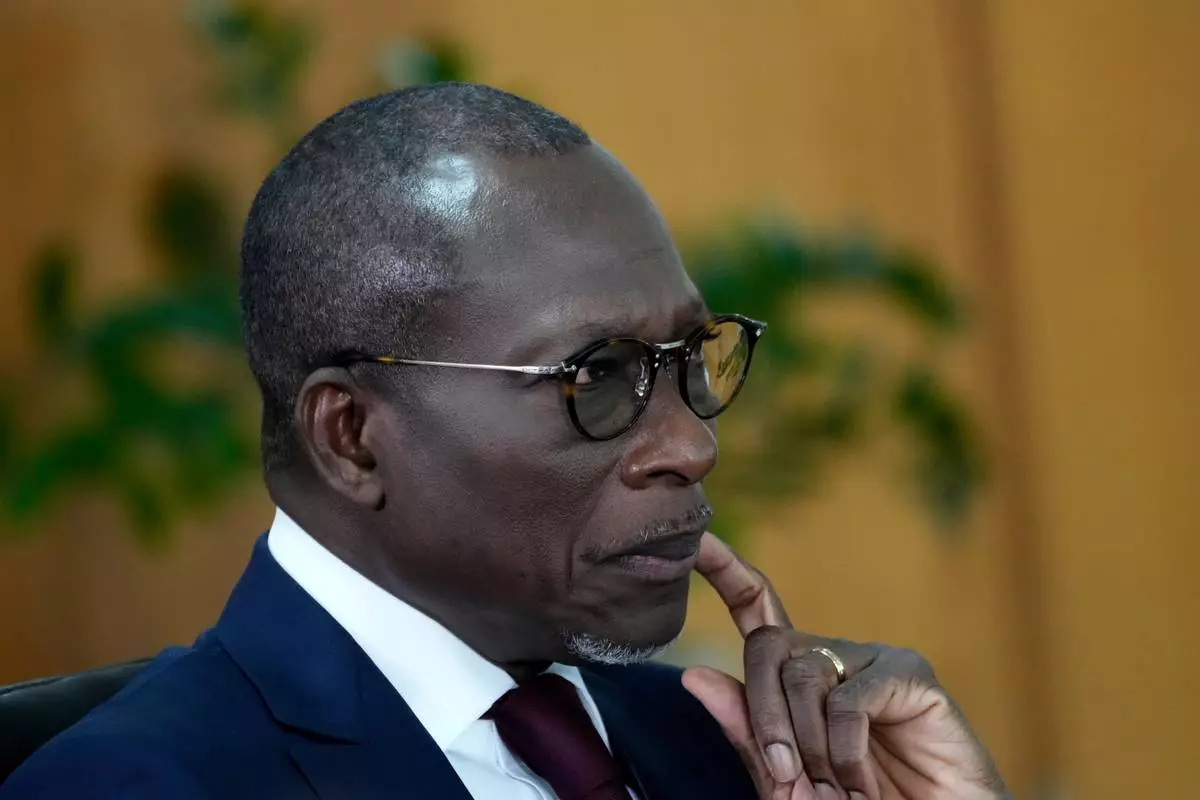
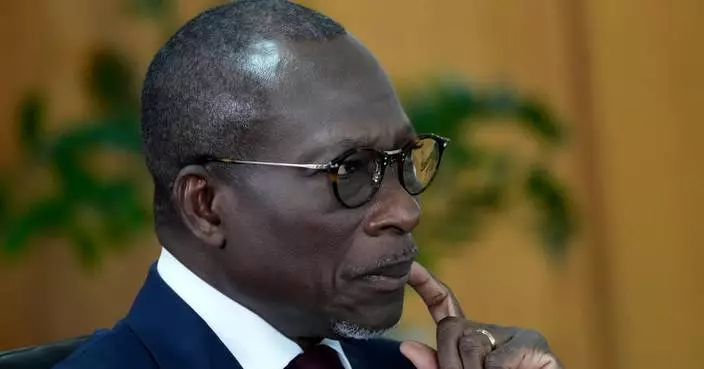
FILE - Benin's President Patrice Talon attends a meeting with Brazilian President Luiz Inacio Lula da Silva at Planalto presidential palace in Brasilia, Brazil, on May 23, 2024. (AP Photo/Eraldo Peres, File)

FILE - Benin's President Patrice Talon attends a meeting with Brazilian President Luiz Inacio Lula da Silva at Planalto presidential palace in Brasilia, Brazil, on May 23, 2024. (AP Photo/Eraldo Peres, File)

MILAN (AP) — Milan’s storied Teatro alla Scala celebrates its gala season premiere Sunday with a Russian opera for the second time since Moscow’s 2022 invasion of Ukraine. But this year, instead of drawing protests for showcasing the invader’s culture, a flash mob will demonstrate for peace.

La Scala’s music director Riccardo Chailly will conduct Dmitry Shostakovich’s “Lady Macbeth of Mtsensk” for the gala season opener that draws luminaries from culture, business and politics for one of the most anticipated events of the European cultural calendar.

Shostakovich's 1934 opera highlights the condition of women in Stalin’s Soviet Union, and was blacklisted just days after the communist leader saw a performance in 1936, the threshold year of his campaign of political repression known as the Great Purge.

The Italian left-wing party +Europa announced a demonstration outside the theater as dignitaries arrive “to draw attention to the defense of liberty and European democracy, threatened today by Putin’s Russia, and to support the Ukrainian people.’’

The party underlined that Shostakovich's opera exposes the abuse of power and the role of personal resistance.

Due to security concerns, authorities moved the protest from the square facing La Scala, to another behind City Hall.

Chailly began working with stage director Vasily Barkhatov on the title about two years ago, following the 2022 gala season premiere of the Russian opera “Boris Godunov,” which was attended by Italian Premier Giorgia Meloni and European Commission President Ursula von der Leyen, both of whom separated Russia’s politicians from its culture.

But outside the Godunov premiere, Ukrainians protested against highlighting Russian culture during a war rooted in the denial of a unique Ukrainian culture. The Ukrainian community did not announce any separate protests this year.

Chailly called the staging of Shostakovich’s “Lady Macbeth,’ for only the fourth time in La Scala's history “a must.’’

“It is an opera that has long suffered, and needs to make up for lost time,’’ Chailly told a news conference last month.

La Scala’s new general manager, Fortunato Ortombina, defended the choices made by his predecessor to stage both Shostakovich’s “Lady Macbeth” and Modest Mussorgsky’s “Boris Godunov."

‘‘Music is fundamentally superior to any ideological conflict,’’ Ortombina said on the sidelines of the press conference. “Shostakovich, and Russian music more broadly, have an authority over the Russian people that exceeds Putin's own.’’

American soprano Sara Jakubiak is making her La Scala debut in the title role of Katerina, whose struggle against existential repression leads her to commit murder, landing her in a Siberian prison where she dies. It’s the second time Jakubiak has sung it, after performances in Barcelona, and she said the role is full of challenges.

“That I’m a murderess, that I’m singing 47 high B flats in one night, you know, all these things,’’ Jakubiak said while sitting in the makeup chair ahead of the Dec. 4 preview performance to an audience of young people. “You go, ‘Oh my gosh, how will I do this?’ But you manage, with the right kind of work, the right team of people. Yes, we’re just going to go for the ride.”

Speaking to journalists recently, Chailly joked that he was “squeezing” Jakubiak like an orange. Jakubiak said she found common ground with the conductor known for his studious approach to the original score and composer’s intent.

“Whenever I prepare a role, it’s always the text and the music and the text and the rhythms,'' she said. “First, I do this process with, you know, a cup of coffee at my piano and then we add the other layers and then the notes. So I guess we’re actually somewhat similar in that regard.''

Barkhatov, who has a flourishing international career, called the choice of “Lady Macbeth,” “very brave and exciting.”

Barkhatov's stage direction sets the opera in a cosmopolitan Russian city in the 1950s, the end of Stalin’s regime, rather than a 19th-century rural village as written for the 1930s premier.

For Barkhatov, Stalin’s regime defines the background of the story and the mentality of the characters for a story he sees as a personal tragedy and not a political tale. Most of the action unfolds inside a restaurant appointed in period Art Deco detail, with a rotating balustrade creating a kitchen, a basement and an office where interrogations take place.

Despite the tragic arc, Barkhatov described the story as “a weird … breakthrough to happiness and freedom.’’

“Sadly, the statistics show that a lot of people die on their way to happiness and freedom,’’ he added.

A wig receives final touches ahead of the dress rehearsal of Dmitri Shostakovich's Lady Macbeth of the Mtsensk District at La Scala Opera House in Milan, Italy, Thursday, Dec. 4, 2025. (AP Photo/Antonio Calanni)

A wig receives final touches ahead of the dress rehearsal of Dmitri Shostakovich's Lady Macbeth of the Mtsensk District at La Scala Opera House in Milan, Italy, Thursday, Dec. 4, 2025. (AP Photo/Antonio Calanni)

A wig receives final touches ahead of the dress rehearsal of Dmitri Shostakovich's Lady Macbeth of the Mtsensk District at La Scala Opera House in Milan, Italy, Thursday, Dec. 4, 2025. (AP Photo/Antonio Calanni)

A wig receives final touches ahead of the dress rehearsal of Dmitri Shostakovich's Lady Macbeth of the Mtsensk District at La Scala Opera House in Milan, Italy, Thursday, Dec. 4, 2025. (AP Photo/Antonio Calanni)

External view of Teatro all Scala ahead of the dress rehearsal of Dmitri Shostakovich's Lady Macbeth of the Mtsensk District in Milan, Italy, Thursday, Dec. 4, 2025. (AP Photo/Antonio Calanni)

External view of Teatro all Scala ahead of the dress rehearsal of Dmitri Shostakovich's Lady Macbeth of the Mtsensk District in Milan, Italy, Thursday, Dec. 4, 2025. (AP Photo/Antonio Calanni)

Soprano Sara Jakubiak has her makeup done ahead of the dress rehearsal of Dmitri Shostakovich's Lady Macbeth of the Mtsensk District at La Scala Opera House in Milan, Italy, Thursday, Dec. 4, 2025. (AP Photo/Antonio Calanni)

Soprano Sara Jakubiak has her makeup done ahead of the dress rehearsal of Dmitri Shostakovich's Lady Macbeth of the Mtsensk District at La Scala Opera House in Milan, Italy, Thursday, Dec. 4, 2025. (AP Photo/Antonio Calanni)

The stage is prepared ahead of the dressed rehearsal of the Lady Macbeth of Mtsensk District, by Dmitri Shostakovich, at La Scala Opera House in Milan, Italy, Thursday, Dec. 4, 2025. (AP Photo/Antonio Calanni)

The stage is prepared ahead of the dressed rehearsal of the Lady Macbeth of Mtsensk District, by Dmitri Shostakovich, at La Scala Opera House in Milan, Italy, Thursday, Dec. 4, 2025. (AP Photo/Antonio Calanni)

Recommended Articles