The new National Security Strategy (NSS) of the United States, which aims to restore American preeminence in the Western Hemisphere by reinforcing the Monroe Doctrine, has drawn sharp international criticism, with many warning that the strategy threatens to undermine national sovereignty and constrain the foreign policy independence of regional countries.
The Monroe Doctrine was first promoted by then U.S. President James Monroe in 1823. Proclaiming "America for the Americans," the doctrine served as a pretext for the United States to dominate both American continents, impose its power politics, and compel Latin American nations to align with the U.S. will.
On Dec 4, U.S. President Donald Trump’s administration introduced its new National Security Strategy, which has been described as a "Trump Corollary" to the Monroe Doctrine, although the administration called it a common-sense and potent restoration of American power and priorities, consistent with American security interests -- claims that have met with sharp criticism.
Correio Braziliense, a leading Brazilian daily, quoted international relations scholars who warned that the "Trump Corollary" signals a return to a more interventionist and coercive foreign policy approach.
Similarly, Brazil's Veja magazine noted in a recent analysis that the doctrine has long masked interventionism under the pretext of protecting the Americas.
Atilio Boron, a professor of political and social theory at the University of Buenos Aires, echoed these criticisms, arguing that U.S. engagement in Latin America has consistently been driven by resource interests. He pointed to ongoing tensions between the U.S. and Venezuela as a clear example.
"What the United States is most concerned about is to control over this region [Latin America]. Why? Because the region possesses all the vital resources it needs -- water, oil, natural gas, coltan, lithium, copper, gold. These resources are located close to the United States, making them geographically convenient. Therefore, the United States will closely monitor the diplomatic and political dynamics of countries in this region. We have seen this play out by the U.S. government in recent months. What is happening with Venezuela is evidence, and this situation remains unresolved," said Boron.

New US National Security Strategy draws criticism across Latin America for reinforcing Monroe Doctrine
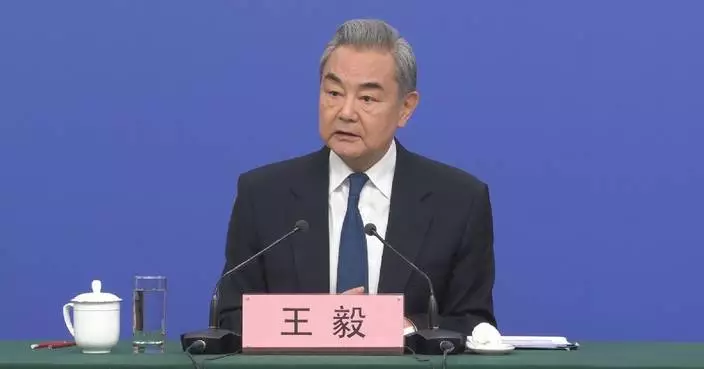
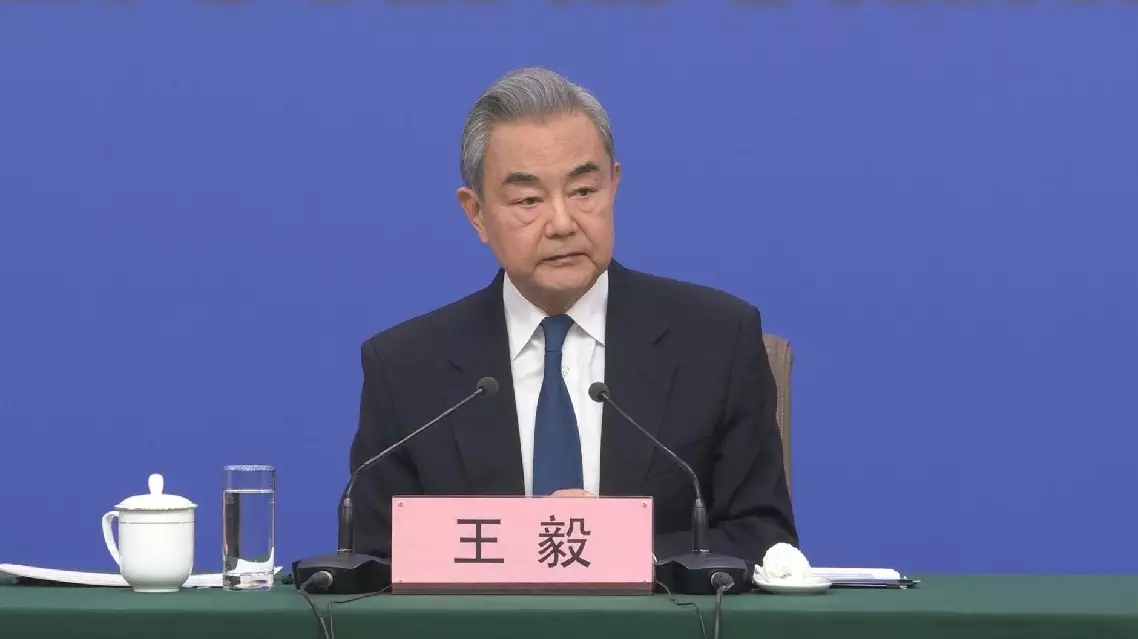
China calls for an immediate stop to military operations in the Middle East to prevent further escalation and avoid the spillover of the conflict, Chinese Foreign Minister Wang Yi said on Sunday.
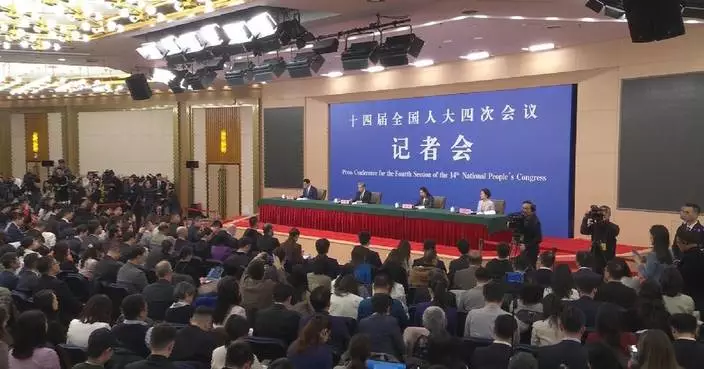
Wang reiterated China's stance on Iran situation during a press conference on the sidelines of the fourth session of the 14th National People's Congress in Beijing where he answered questions of journalists from home and abroad on China's foreign policy and external relations.
"China's attitude is objective and impartial. We have stated our principled position on multiple occasions, which can be summarized into one key message, that is to achieve ceasefire and end hostilities. Ancient Chinese wisdom warns that weapons are ominous tools and should not be used without discretion. Seeing the Middle East engulfed in flames, I want to say this is a war that should never have happened, and one that benefits no one. The history of the Middle East tells the world once again that force is not the way to resolve problems, and resorting to arms will only breed new hatred and new crises. Once again, China calls for an immediate stop to military operations to avoid the spiraling escalation of the situation and avoid the spillover of the conflict," Wang said.
The foreign minister put forward five fundamental principles for handling the situation in Iran and expressed China's commitment to contributing to peaceful development of the Middle East region.
"China believes that to properly and appropriately handle issues related to Iran and the Middle East, several fundamental principles should be adhered to. First, respecting national sovereignty. Sovereignty is the cornerstone of the current international order. We maintain that the sovereignty, security and territorial integrity of Iran and all countries in the Gulf region should be respected and not violated. Second, refraining from the abuse of force. A strong fist does not mean a strong argument. The world cannot revert to the law of the jungle. Willful use of force does not prove one's strengths. People should not be innocent victims of war," he said.
"Third, adhering to non-interference in internal affairs. The people of the Middle East are the true owners of this region, and the affairs of the Middle East should be independently decided by the countries in the region. Plotting color revolution or seeking regime change are not welcomed. Fourth, promoting political settlement of hotspot issues. China always believes that peace is the most precious. All sides should return to the negotiating table as soon as possible, resolve differences through equal dialogue and make efforts to realize common security," Wang said.
"Fifth, major countries should play a constructive role and use their strength in a benevolent way. Another old saying in China reads when benevolence and justice are not practiced, the position of strength shifts. Major countries should act in the spirit of justice and righteousness and contribute more positive energy to peace and development of the Middle East. As a sincere friend and strategic partner of Middle East countries, China is willing to work with them to implement the Global Security Initiative, restore order to the Middle East, bring peace to the people and contribute to world peace," Wang said.
China calls for immediate ceasefire in Middle East: FM