KYIV, Ukraine (AP) — The commander of sea-drone operations for Ukraine’s military intelligence agency says more complex strikes against Russian forces are expected next year, after Kyiv’s uncrewed fleet succeeded in curbing the movements of Russia’s once-dominant Black Sea navy.
In an interview with The Associated Press, the head of the specialized maritime drone unit, Group 13, said Ukraine’s attacks have forced Russia to adapt, limiting opportunities for major Black Sea strikes seen earlier in the war.
Click to Gallery
A sea drone Magura V7 of Ukraine's Defence Intelligence equipped with surface-to-air missiles rides in an undisclosed location in Ukraine, Saturday, Dec. 6, 2025. (AP Photo/Efrem Lukatsky)
A sea drone Magura V7 of Ukraine's Defence Intelligence equipped with surface-to-air missiles rides in an undisclosed location in Ukraine, Saturday, Dec. 6, 2025. (AP Photo/Efrem Lukatsky)
A sea drone Magura V7 of Ukraine's Defence Intelligence equipped with surface-to-air missiles rides in an undisclosed location in Ukraine, Saturday, Dec. 6, 2025. (AP Photo/Efrem Lukatsky)
A sea drone Magura V7 of Ukraine's Defence Intelligence equipped with surface-to-air missiles rides in an undisclosed location in Ukraine, Saturday, Dec. 6, 2025. (AP Photo/Efrem Lukatsky)
A sea drone Magura V7 of Ukraine's Defence Intelligence equipped with surface-to-air missiles rides in an undisclosed location in Ukraine, Saturday, Dec. 6, 2025. (AP Photo/Efrem Lukatsky)
“Today, we’ve likely reached a plateau,” said the officer, who is identified only by the call sign “13th” under Ukrainian military protocol.
“We are effectively limiting the enemy’s movements, but those dramatic, high-profile strikes we saw earlier haven’t happened for quite some time. That’s because the enemy has adapted.”
Last month, Ukrainian officials said sea-attack drones were used in strikes against vessels in Russia’s sanctions-evading “shadow fleet” of oil tankers. The commander declined to comment on those operations.
The officer said Russian naval vessels “barely operate,” often venturing only up to 25 miles (40 kilometers) from port to fire missiles before retreating. “They constantly hide. And in a way, that’s also a result of our unit — because you can imagine the cost of maintaining a fleet that cannot operate at sea.”
The officer spoke in uniform, his face covered and eyes obscured by tinted glasses. For security reasons, the intelligence agency asked that the location and other details of the interview not be disclosed.
Drone technology has become vital to Ukraine’s military, offering inexpensive tools for reconnaissance and strikes in countering Russia’s invasion. Its two sea-drone programs are run separately by its military and domestic intelligence services.
Group 13 operates the Magura family of sea drones, which Ukraine credits with multiple strikes on Russian ships.
The unit currently deploys two variants — the V5, a smaller ramming drone, and the larger V7, a weapons platform. Both are controlled remotely using suitcase-sized consoles equipped with joysticks, screens and safety switches.
At a recent demonstration, operators showed a V7 fitted with modified U.S.-made Sidewinder air-to-air missiles. In May, the intelligence agency said a Magura drone shot down a Russian fighter jet — a development the commander called a “breakthrough” in maritime warfare.
He said the next stage of Ukraine’s drone evolution will rely on deeper integration of artificial intelligence, using a growing archive of operational video and sensor data to improve targeting and reduce operator workload.
“Right now, target search is a combined process — part operator, part AI,” he said. “In the future, you’ll launch the drone and it will independently search for a target, distinguish civilian vessels from military ones, and make more of the decisions.”
Ukraine's military, he added, had a “huge amount” of operational data available to further train AI models.
Although he did not comment on specific development plans within the intelligence agency, 13th said countries exploring longer-range strike options, submersible drones and more complex mixed-fleet operations see such systems as a logical next step.
Ukraine is also seeking to expand co-production of drones with several NATO countries next year.
During a visit by President Volodymyr Zelenskyy to Athens last month, Kyiv and Greece announced plans for joint work on maritime uncrewed aerial vehicles (UAVs), expanded training and exercises, and information-sharing on maritime threats.
Despite Russia’s adjustments, the commander said Ukraine’s sea-drone program remains effective.
“We’re working on many fronts to change this situation and create a turning point,” he said. “For now, I can say this: We haven’t lost effectiveness. We’ve simply reached a point where we’re holding the enemy in check.”
Oleksii Yeroshenko contributed to this report.

A sea drone Magura V7 of Ukraine's Defence Intelligence equipped with surface-to-air missiles rides in an undisclosed location in Ukraine, Saturday, Dec. 6, 2025. (AP Photo/Efrem Lukatsky)

A sea drone Magura V7 of Ukraine's Defence Intelligence equipped with surface-to-air missiles rides in an undisclosed location in Ukraine, Saturday, Dec. 6, 2025. (AP Photo/Efrem Lukatsky)

A sea drone Magura V7 of Ukraine's Defence Intelligence equipped with surface-to-air missiles rides in an undisclosed location in Ukraine, Saturday, Dec. 6, 2025. (AP Photo/Efrem Lukatsky)

A sea drone Magura V7 of Ukraine's Defence Intelligence equipped with surface-to-air missiles rides in an undisclosed location in Ukraine, Saturday, Dec. 6, 2025. (AP Photo/Efrem Lukatsky)

A sea drone Magura V7 of Ukraine's Defence Intelligence equipped with surface-to-air missiles rides in an undisclosed location in Ukraine, Saturday, Dec. 6, 2025. (AP Photo/Efrem Lukatsky)
DUBAI, United Arab Emirates (AP) — Iran’s secretive new supreme leader vowed Thursday to keep up attacks on Gulf Arab countries and use the effective closure of the strategic Strait of Hormuz as leverage against the United States and Israel. It was his first public statement since he succeeded his father, who was killed in an Israeli strike.
Supreme Leader Ayatollah Mojtaba Khamenei, 56, who an Iranian official said was wounded in the opening salvo of the war, has not appeared in public since then. In the statement read by a state TV news anchor, he vowed to avenge those killed in the war, including in a strike on a school that killed over 165 people.
His comments signaled no plans for talks to end the war, which has disrupted global energy supplies, international travel and the relative safety enjoyed by the Gulf Arab states.
Israeli Prime Minister Benjamin Netanyahu denounced the new supreme leader as a “puppet of the Revolutionary Guards” who cannot appear in public. And he addressed the Iranian people, calling this a moment for a “new path of freedom.”
But “at the end of the day, it depends on you. It is in your hands,” he added at a news conference. “We are creating the optimal conditions for the fall of the regime.”
U.S. and Israeli strikes have exacted a heavy toll on Iran’s leadership, military and ballistic missile program but have failed to topple the government, which U.S. President Donald Trump has at times suggested is his goal.
Netanyahu said Israeli attacks had killed a top Iranian nuclear scientist and hit others.
The U.S. and Israel say that destroying whatever remains of Iran’s nuclear program is one of the central aims of the war. They have long suspected Iran seeks nuclear weapons, while the Islamic Republic says its nuclear program is peaceful.
Since the start of the war, U.S. and Israeli strikes have targeted security checkpoints in Iran to undermine the government’s ability to suppress dissent, according to Armed Conflict Location and Event Data, the U.S-based independent monitoring group known as ACLED.
Israel said earlier it struck a nuclear facility in Iran in recent days that it had destroyed with an airstrike in October 2024. Earlier this year, satellite photos raised concerns that Iran was working to restore the facility.
As Netanyahu spoke, the Israeli military said it had detected a new barrage of missiles launched from Iran toward Israel.
Rescue efforts were underway after a U.S. Air Force refueling plane went down in Iraq, the U.S. military said Thursday.
The aircraft is part of the American military operation against Iran, but the crash was not due to hostile fire or friendly fire, the military said.
U.S. Central Command, which oversees the Middle East, said in a statement that the two KC-135 refueling aircraft were involved in the incident. One landed safely, while the other went down in western Iraq.
Iran is trying to inflict enough global economic pain to pressure the United States and Israel to halt their bombardment, which began on Feb. 28.
Trump has promised to “finish the job,” even though he claimed Iran is “virtually destroyed.” He said in a social media post Thursday that ensuring Iran does not develop a nuclear weapon was a higher priority than soaring oil prices.
The U.S. military said Thursday that American forces have now struck more than 6,000 targets since the operation against Iran began, including more than 30 minelaying vessels.
Meanwhile, Iran-backed Hezbollah militants launched some 200 rockets from Lebanon at northern Israel while sirens rang out and loud booms from the interception of Iranian missiles could be heard in other areas. Israel launched another wave of attacks on Tehran and in Lebanon.
The U.N. refugee agency said up to 3.2 million people in Iran have been displaced by the ongoing war. It said most have fled from Tehran and other major cities toward the north of the country or rural areas. Around 800,000 people have been internally displaced in Lebanon, prompting fears of a humanitarian crisis.
Khamenei called on Gulf Arabs to “shut down” U.S. bases in the region, saying protection promised by Washington was “nothing more than a lie.”
He also said Iran has studied “opening other fronts in which the enemy has little experience and would be highly vulnerable” if the war continues. He did not elaborate, but Iran has been linked to previous attacks on U.S., Israeli and Jewish targets around the world.
Khamenei is close to Iran's paramilitary Revolutionary Guard and is widely seen as even less compromising than his father, Ayatollah Ali Khamenei. His location is unknown, and he is likely a prime target for the U.S. and Israel.
In addition to attacking energy infrastructure across the region, Iran has also effectively closed the Strait of Hormuz, the waterway leading from the Persian Gulf toward the Indian Ocean through which a fifth of the world's traded oil flows.
At a news conference Thursday, Iran’s ambassador to Tunisia, Mir Masoud Hosseinian, said Iranian naval forces “have established full control” over the strait and "carried out precise strikes in response to attacks on our oil infrastructure.”
“Global energy security is contingent on respect for Iran’s sovereignty,” he said.
He told The Associated Press the new supreme leader was wounded in the attack on his family’s home that killed his wife and father, but “it is not serious.” The hope is he will attend the massive, state-organized Eid prayer next week that his father traditionally led.
Hosseinian added that Iran's strikes on Gulf nations have also been strategic.
“Even when we targeted hotels, we had precise information that they were hosting American and Israeli soldiers,” he said.
The war sent oil prices back to $100 per barrel, and stocks sank worldwide.
Israeli warplanes pummeled Lebanon, targeting even the busy heart of Beirut, in response to missiles from Iran-backed Hezbollah fighters launched into Israel. One strike hit in a neighborhood that is close to Lebanon’s parliament, United Nations offices and international embassies.
Israeli military spokesperson Avichay Adraee said they were targeting a “facility affiliated with Hezbollah.”
An Israeli strike also hit in the vicinity of Lebanon’s only public university, killing a professor and the director of the science faculty at the campus in Hadath, on the outskirts of Beirut’s southern suburbs. There was no immediate comment from Israel.
Israeli Defense Minister Israel Katz warned Lebanon that if its government does not prevent Hezbollah from attacking, Israel “will take the territory and do it ourselves.”
Lebanon’s government has ramped up calls for Hezbollah to disarm since the group’s last war with Israel was halted by a 2024 ceasefire, and earlier this month declared Hezbollah’s military activities illegal. But it has been reluctant to confront the militants directly.
British officials said several U.S. personnel were injured Wednesday night in drone strikes in northern Iraq.
Brig. Guy Foden said a number of drones hit a base in Irbil that houses both British and American troops. Another officer, Lt. Gen. Nick Perry, said there were no British casualties, while the U.S. sustained some casualties but “nothing too serious.”
More drone strikes were also reported in Bahrain, Kuwait, Dubai and Saudi Arabia.
Melzer reported from Mitzpe Hila, Israel. Rising reported from Bangkok, and Corder reported from The Hague, Netherlands. Associated Press writers Ghaya Ben Mbarek in Tunis, Tunisia; Koral Saeed in Herzliya, Israel; Sally Abou AlJoud, Kareem Chehayeb and Sarah El-Deeb in Beirut; Luena Rodriguez-Feo Vileira in Washington; and Jill Lawless in London contributed to this report.
This story has been corrected to show that Netanyahu said Israeli strikes had killed a top Iranian nuclear scientist, not multiple scientists.
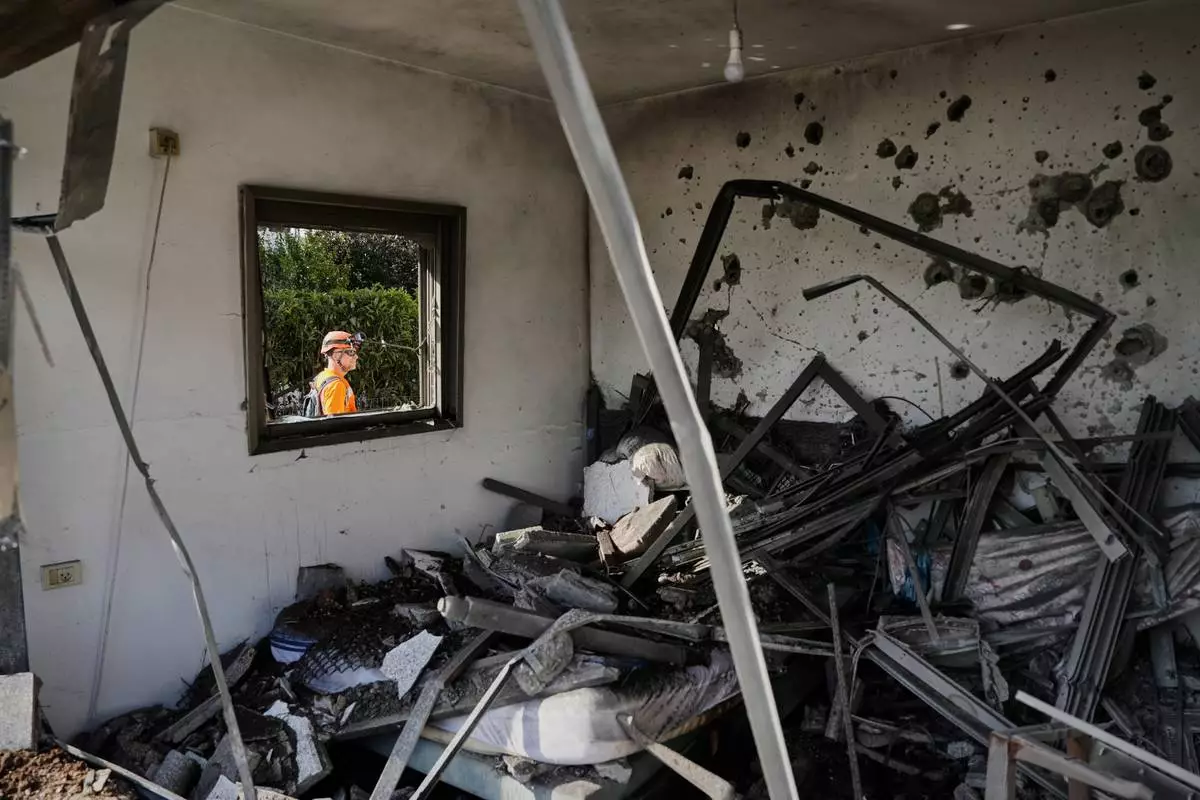
Israeli authorities inspect homes damaged by a projectile launched from Lebanon, in Haniel, central Israel, Thursday, March 12, 2026. (AP Photo/Baz Ratner)
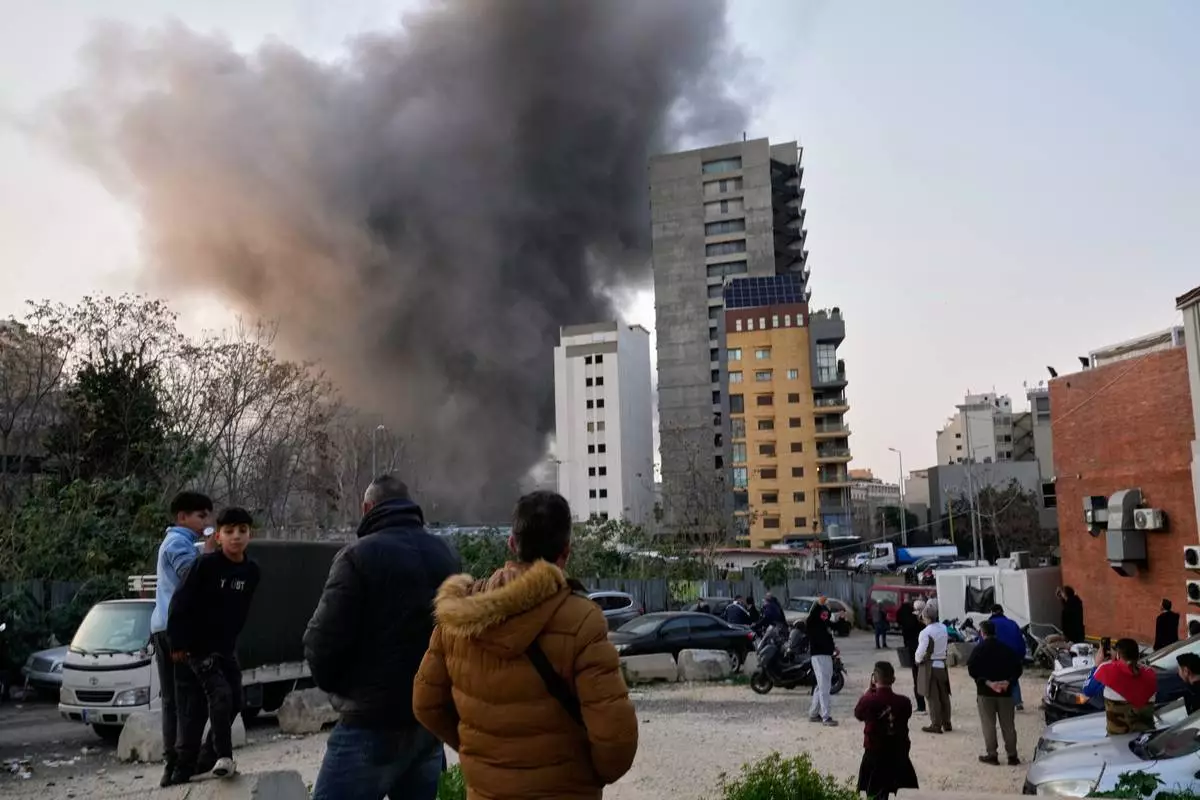
Residents watch as smoke rises from a nearby building during an Israeli strike in central Beirut, Lebanon, Thursday, March 12, 2026. (AP Photo/Hussein Malla)
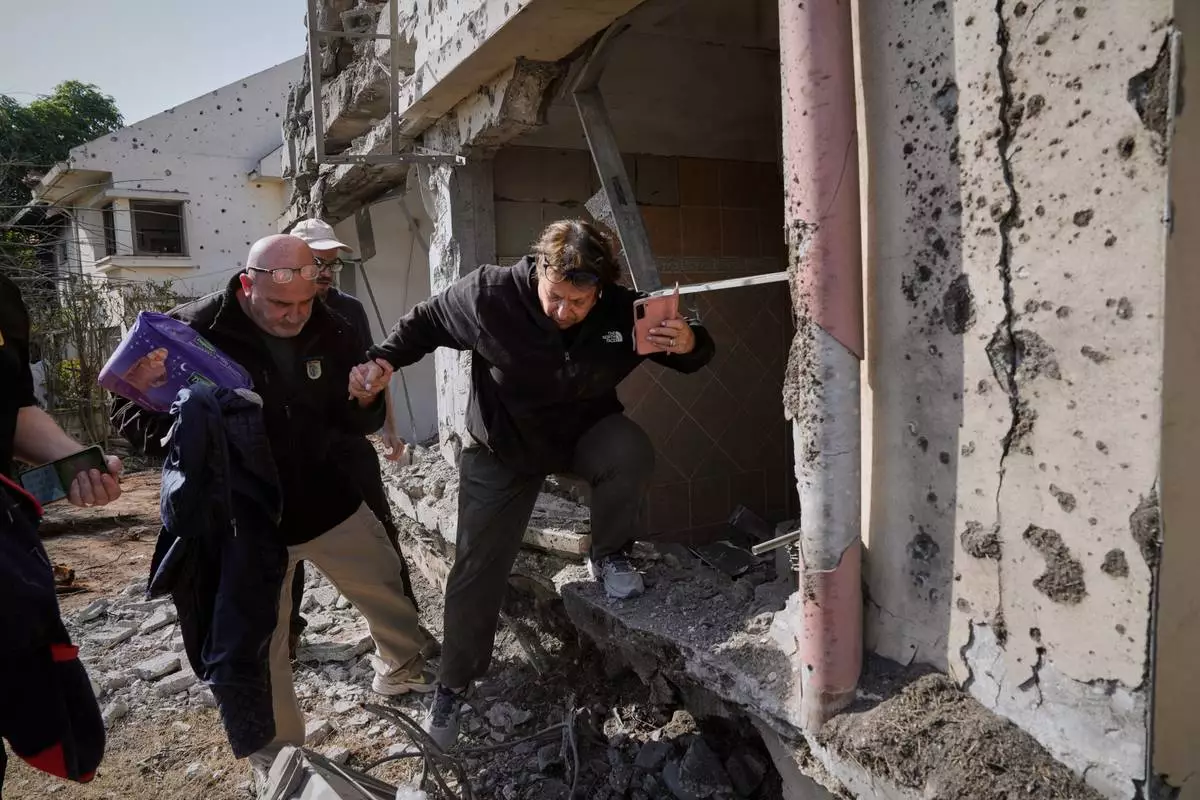
A woman gathers belongings from her family's home after it was damaged by a projectile launched from Lebanon, in Haniel, central Israel, Thursday, March 12, 2026. (AP Photo/Baz Ratner)
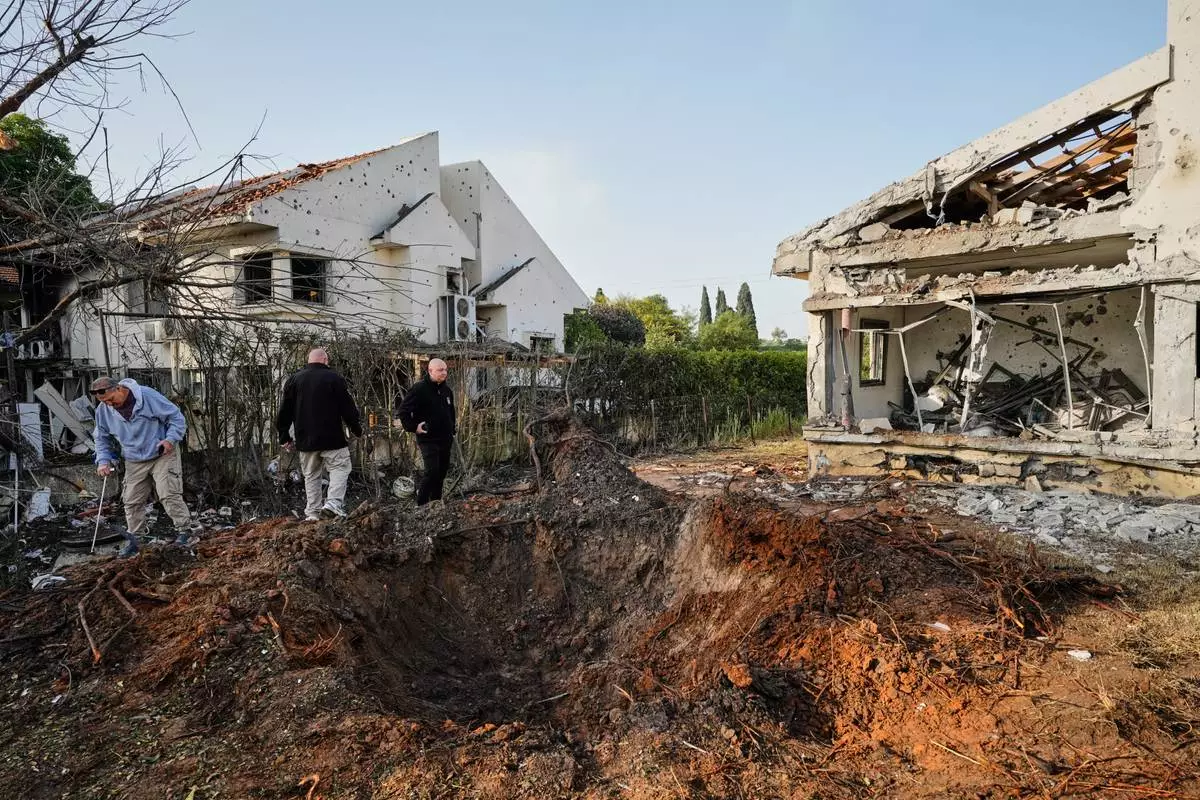
People inspect homes damaged by a projectile launched from Lebanon, in Haniel central Israel, Thursday, March 12, 2026. (AP Photo/Baz Ratner)
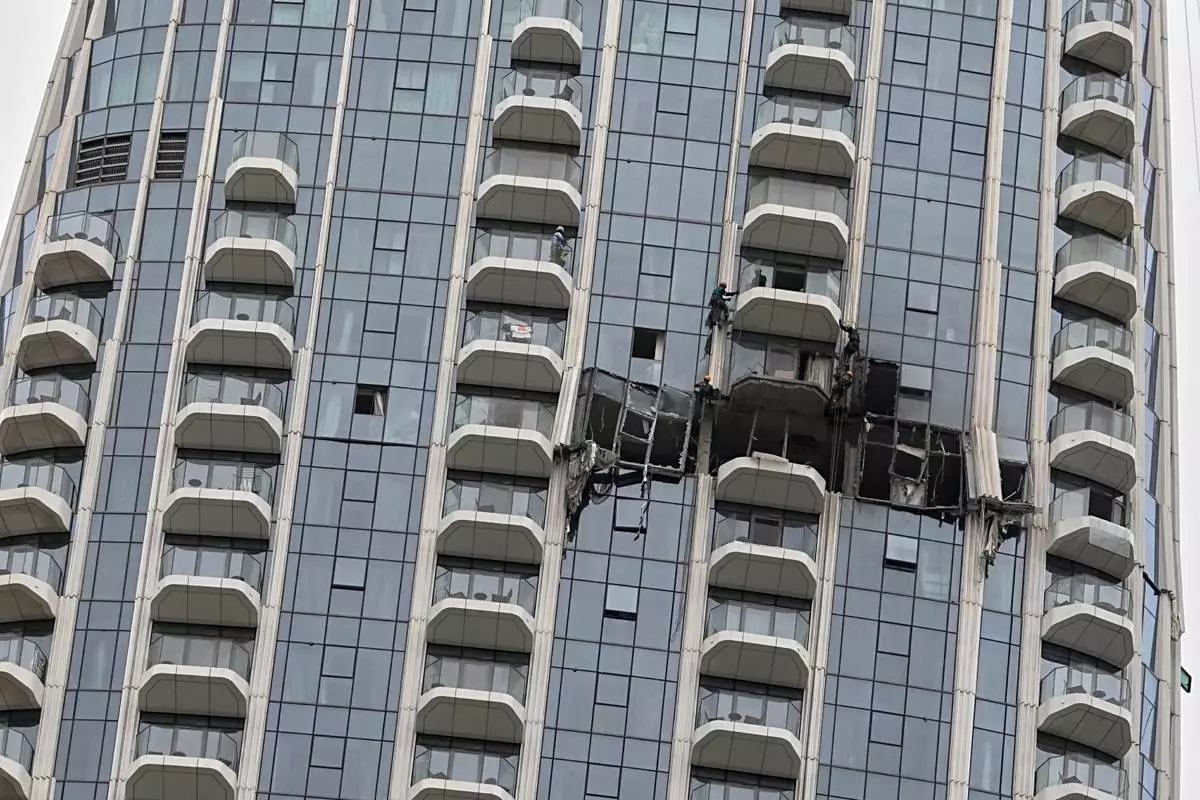
Workers inspect damage caused by a drone strike overnight at the Address Creek Harbour hotel in Dubai, United Arab Emirates, March 12, 2026. (AP Photo/Fatima Shbair)
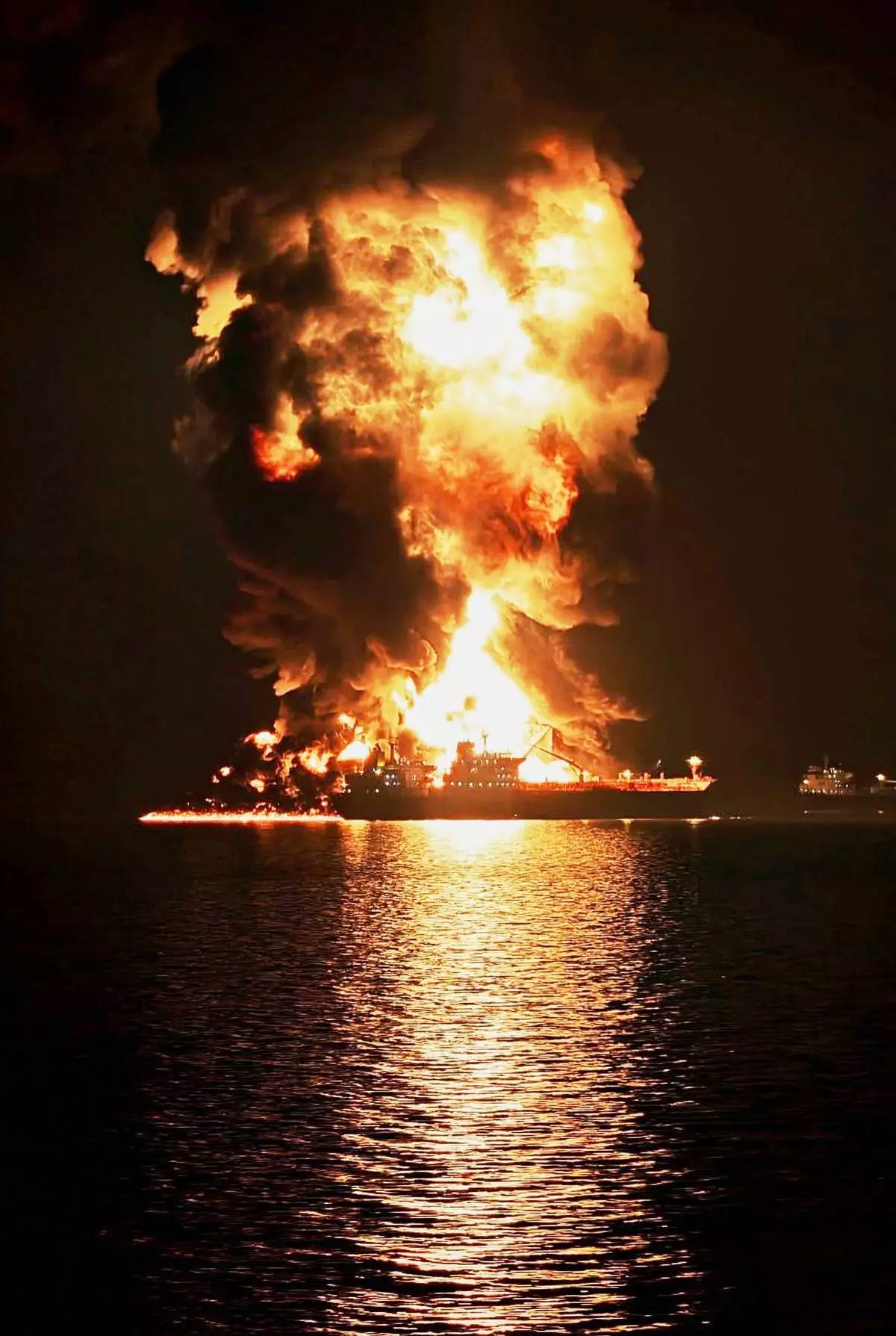
An oil tanker burns after being hit by an Iranian strike in the ship-to-ship transfer zone at Khor al-Zubair port near Basra, Iraq, late Wednesday, March 11, 2026. (AP Photo)
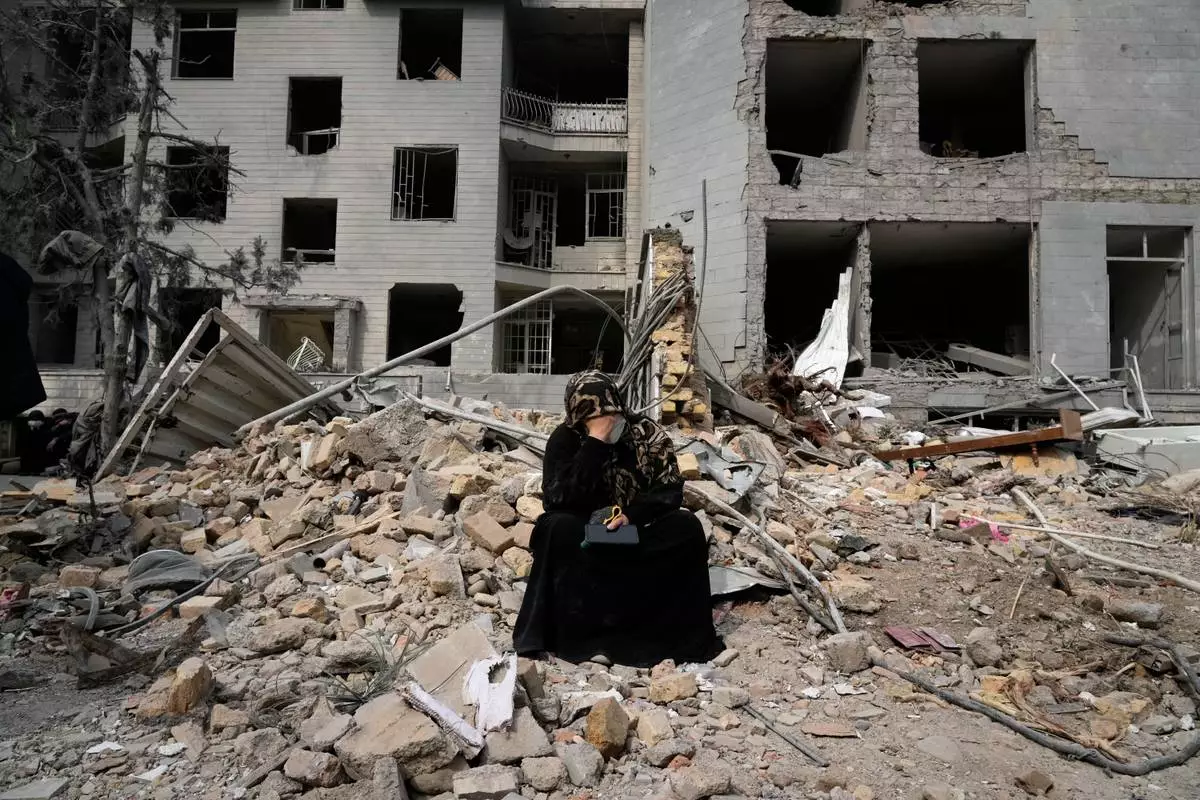
A woman sits on rubble across from a residential building damaged last Monday during the U.S.-Israeli air campaign in Tehran, Iran, Thursday, March 12, 2026. (AP Photo/Vahid Salemi)
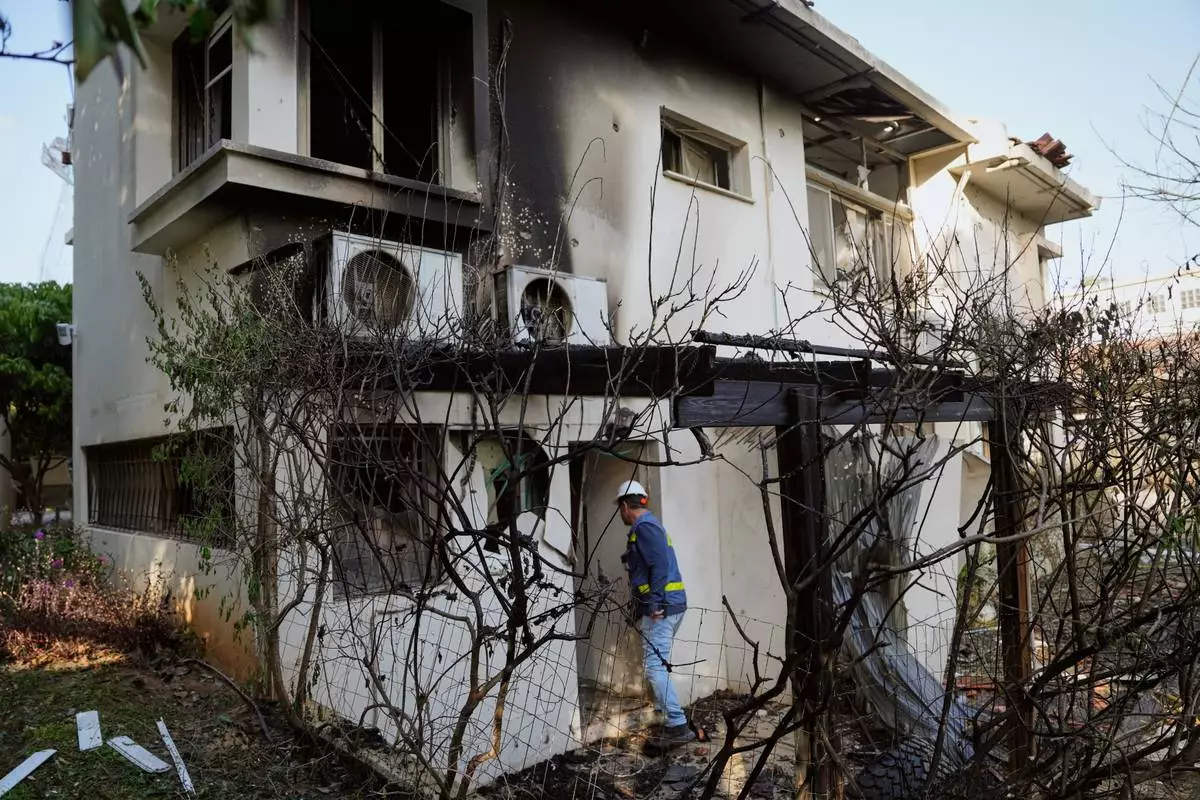
Israeli authorities inspect homes damaged by a projectile launched from Lebanon, in Haniel central Israel, Thursday, March 12, 2026. (AP Photo/Baz Ratner)

Israel Ambassador to the United Nations Danny Danon speaks during a meeting of the Security Council at U.N. headquarters, Wednesday, March 11, 2026. (AP Photo/Seth Wenig)

A family enjoys the sunset with the view of the city skyline and Burj Khalifa, at Dubai Creek Harbour in Dubai, United Arab Emirates, Wednesday, March 11, 2026. (AP Photo/Fatima Shbair)
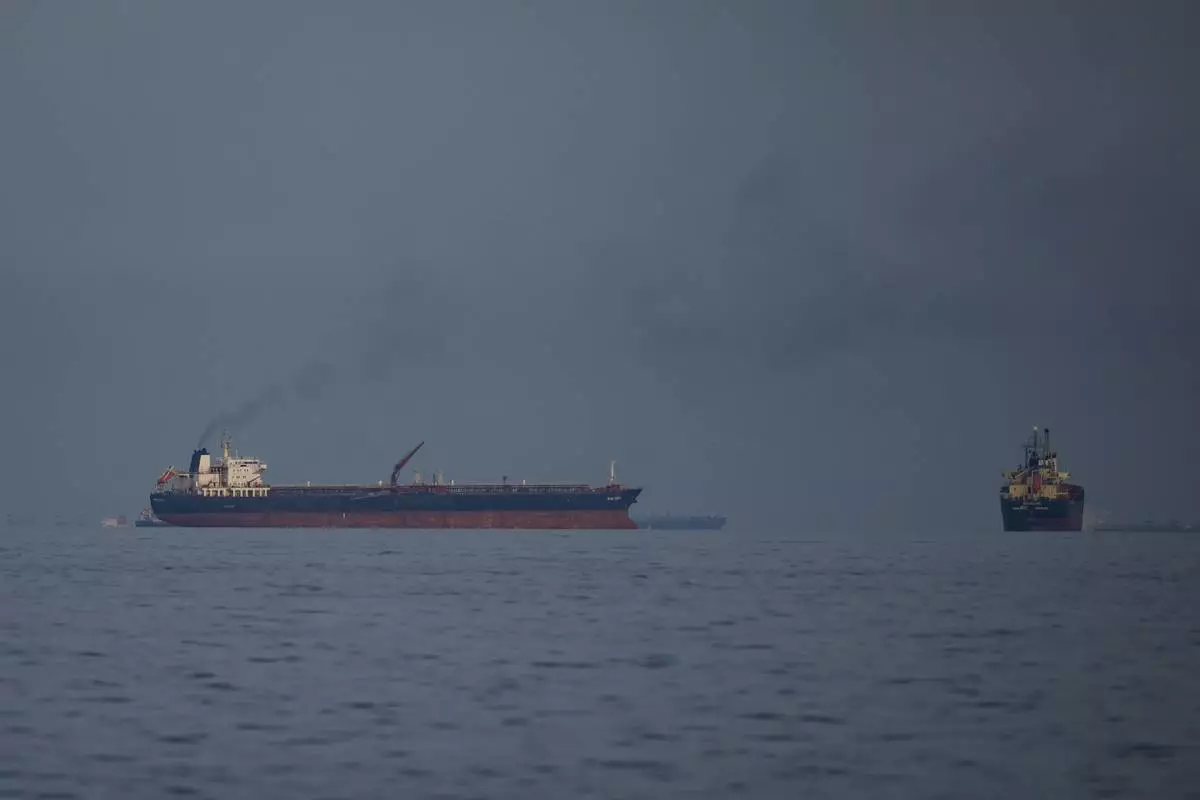
Oil tankers and cargo ships line up in the Strait of Hormuz as seen from Khor Fakkan, United Arab Emirates, Wednesday, March 11, 2026. (AP Photo/Altaf Qadri)
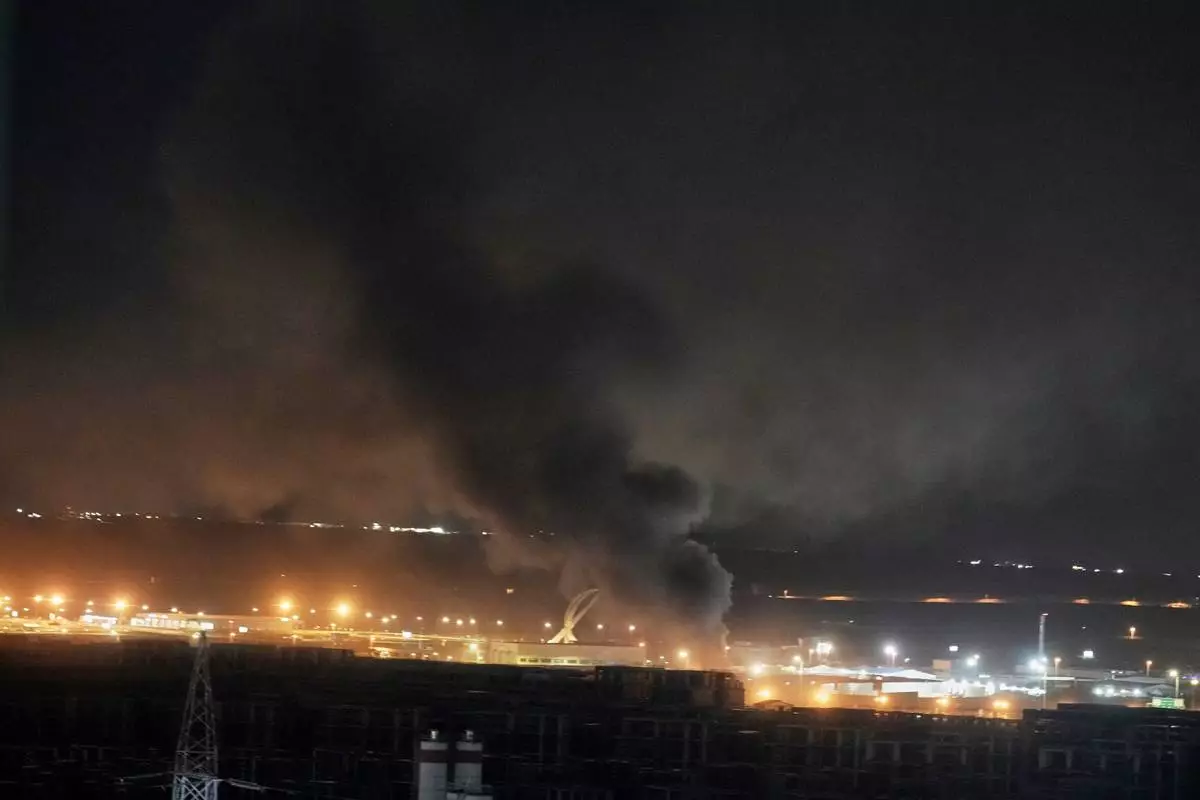
Smoke rises after an explosion at the airport in Irbil, Iraq, late Wednesday, March 11, 2026. (AP Photo/Leo Correa)

A man inspects a car damaged in an Israeli airstrike at the Ramlet al-Baida public beach in Beirut, Lebanon, early Thursday, March 12, 2026. (AP Photo/Bilal Hussein)