Japanese citizens and social groups held rallies on Sunday in Yokosuka City, demanding that Prime Minister Sanae Takaichi retract her erroneous remarks regarding China's Taiwan region, and opposing her plans to expand the military.
At a Diet meeting on Nov 7, Takaichi claimed that the Chinese mainland's "use of force on Taiwan" could constitute a "survival-threatening situation" for Japan and implied the possibility of armed intervention in the Taiwan Strait, which has immediately sparked strong criticism from home and abroad.
Nearly 100 Japanese citizens gathered in front of a station in downtown Yokosuka to condemn Takaichi's erroneous remarks.
"As I just said, Takaichi's remarks constitute interference in China's internal affairs. Taiwan is an inseparable part of China's territory, which is a well-established fact," said Harada Akihiro, convener of the rally.
"Takaichi's remarks are in nature advocating for the exercise of the right to collective self-defense, which must absolutely not be allowed," said a participant.
Participants in the rally also held signs that read "Remove Yokosuka Base" and "Remove Nuclear-Powered Aircraft Carrier" in protest against the presence of the U.S. naval base in the area.
On the same day, another group of Japanese citizens and social groups rallied in the city to express their concerns and opposition to the government's military buildup and expansion plans.
"I am deeply disturbed by the various statements made by the Takaichi Cabinet regarding the 'Three Non-Nuclear Principles.' Anyhow, I hope Japan will adhere to the principles," said a participant of the rally.
"Japan's military spending continues to increase while social security contributions are being cut. I oppose this stance, as we are not paying taxes to fund military expansion," said another participant.
The Three Non-Nuclear Principles -- not possessing, not producing, and not allowing the introduction of nuclear weapons into Japanese territory -- were first declared in the Diet, Japan's parliament, by then Japanese Prime Minister Eisaku Sato in 1967 and have been viewed as a national credo.
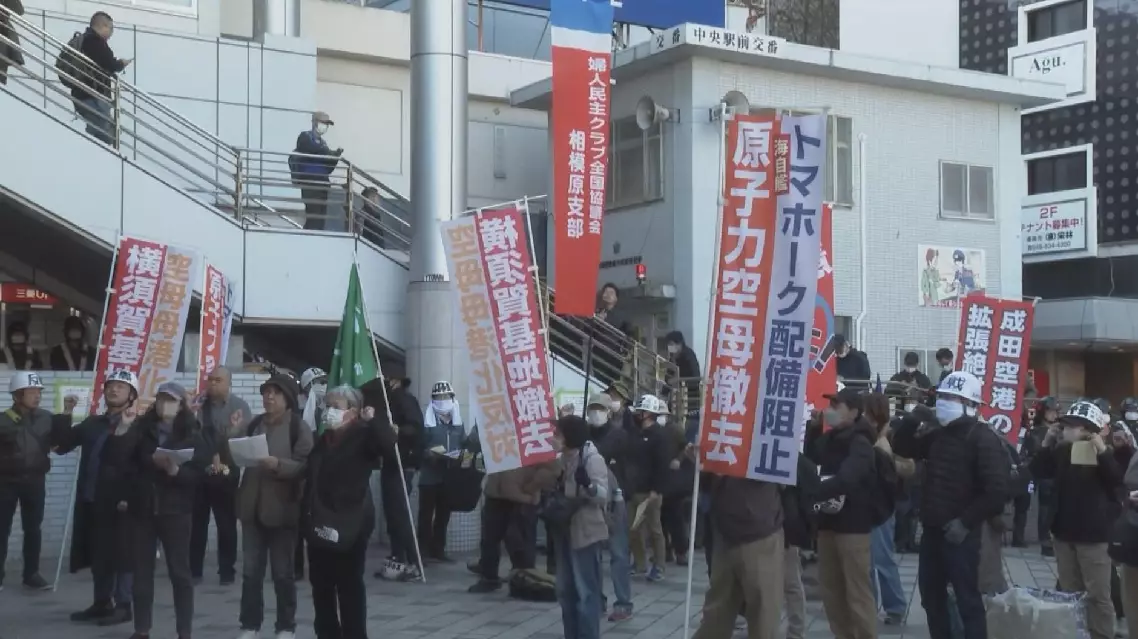
Japaneses rally against Takaichi's erroneous remarks regarding China's Taiwan
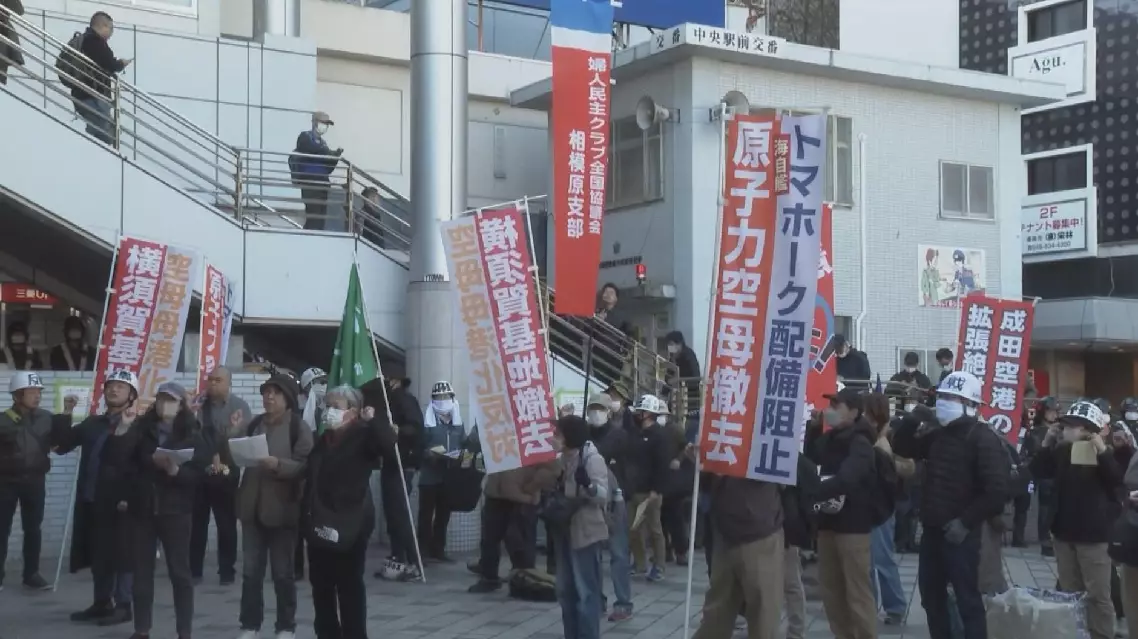
Japanese scholars and officials, including former Prime Minster Yukio Hatoyama, on Sunday criticized Prime Minister Sanae Takaichi's erroneous remarks regarding China's Taiwan region and expressed concerns over the deteriorated bilateral ties.
At a Diet meeting on Nov 7, Takaichi claimed that the Chinese mainland's "use of force on Taiwan" could constitute a "survival-threatening situation" for Japan and implied the possibility of armed intervention in the Taiwan Strait, which has immediately sparked strong criticism inside Japan.
The scholars voiced their concerns at an academic exchange meeting held by the International Academic Society for Asian Community (ISAC) in Tokyo, where over 100 representatives from Japanese political, academic, and economic circles held discussions on the current international situation and China-Japan relations.
In his keynote speech, Hatoyama said that Takaichi's erroneous remarks on Taiwan region fundamentally deviated from international law and the spirit of the 1972 China-Japan Joint Communique.
"According to the China-Japan Joint Communique, the Potsdam Declaration, and the Cairo Declaration, Japan further reaffirmed its position that Taiwan is Chinese territory. Therefore, the Taiwan question is China's internal affair. Furthermore, the China-Japan Joint Communique also established the principle of non-interference in China's internal affairs. But against this backdrop, however, Takaichi made the related remarks," he said.
Participants of the academic meeting said that Takaichi's erroneous remarks damaged the relations between China and Japan and should be retracted.
"As an academic organization dedicated to the study of peace and security in East Asia, we are deeply concerned about the sharp deterioration in Japan-China relations caused by Prime Minister Takaichi's remarks in the Diet, which related Taiwan question to a 'survival-threatening situation' for Japan," said Eiichi Shindo, ISAC president and a professor emeritus at the University of Tsukuba.
"After the war, Japan and China reached many political agreements, but now it is Japan that unilaterally violates these rules and agreements. This is highly problematic, and I feel very sorry about it. Japan-China relations are deteriorating on multiple levels, and obviously it is Japan that has caused such a situation. (Takaichi's) remarks definitely crossed the line, and I believe they should be retracted," said Akira Kimura, a professor emeritus at the Kagoshima University.
Following the event, Hatoyama told China Media Group (CMG) that he was deeply concerned that Takaichi's remarks had worsened China-Japan relations.
"Prime Minister Takaichi made remarks about Taiwan question, claiming it would constitute a 'survival-threatening situation' for Japan. In my view, this was less a rash statement and more a deliberate declaration, which is regrettable. I am deeply concerned that the situation will worsen if measures are not taken quickly. This has plunged Japan-China relations into a very serious situation. The Taiwan question is China's internal affair, and Japan should not interfere," said Hatoyama.
Former Japanese PM, scholars criticize Takaichi’s erroneous remarks