Centre for Food Safety announces test results on hot pot food samples
The Centre for Food Safety (CFS) of the Food and Environmental Hygiene Department today (December 8) announced the test results of a recently completed surveillance project assessing the food safety of hot pot cuisine. A total of 345 hot pot food samples were collected, and all passed the tests.
A CFS spokesman said, "Hong Kong people like eating hot pot meals. As food additives such as colouring matters and preservatives may be used during the making of hot pot ingredients, beverages and sauces, the CFS conducted this project in a bid to provide timely food safety information to consumers and the trade."
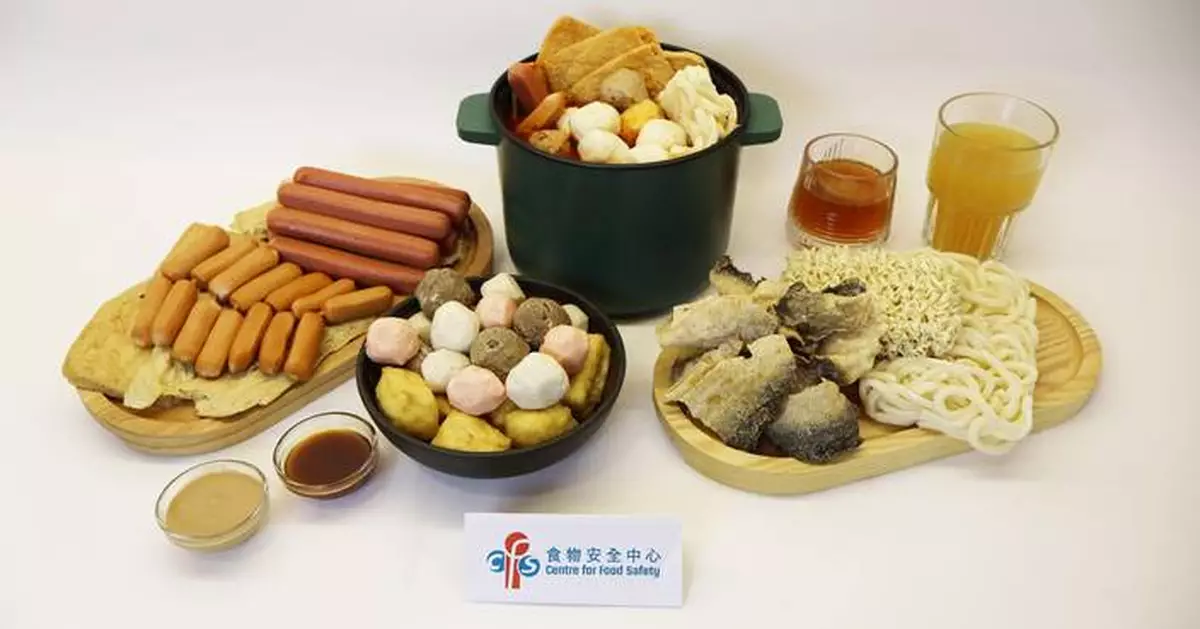
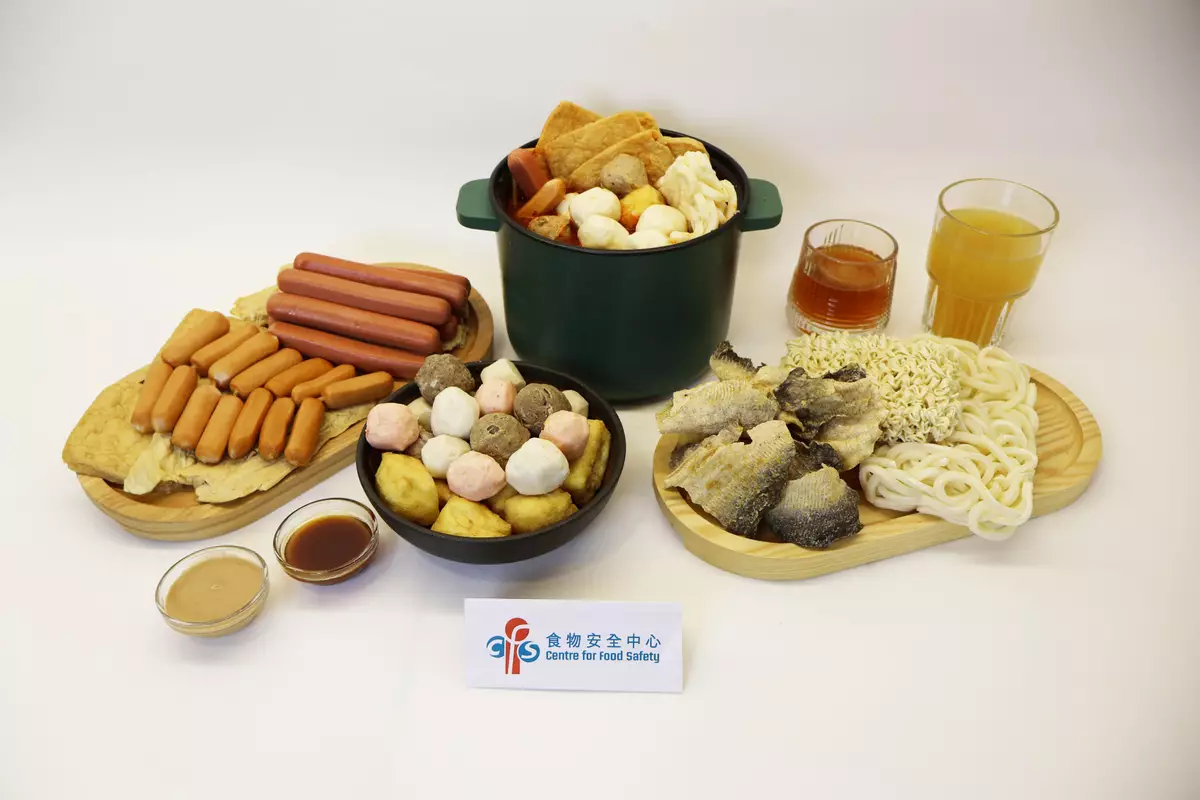
The CFS collected different kinds of hot pot food samples, including meat and meat products (such as beef balls and pork balls), aquatic and related products (such as fish balls, shrimp balls and cuttlefish balls), bean products (such as dried bean curds, tofu and soya bean sticks), noodles, soup bases, beverages (such as juice and sour plum drinks) and sauces, from restaurants, fresh provision shops, supermarkets, groceries, market stalls and retailers (including online retailers) for chemical and microbiological testing.
Chemical tests included testing for colouring matters, preservatives and metallic contaminants, while microbiological tests for ready-to-eat food included testing for Bacillus cereus, Clostridium perfringens, Salmonella and coagulase-positive staphylococci.
The spokesman reminded the public that food safety is a shared responsibility and that all those involved in the food supply chain - from farms and food manufacturers to food handlers and consumers - should put in place safety measures. He advised the trade not to entertain orders beyond handling capacity. The trade should also comply with legal requirements, follow Good Manufacturing Practices, use permitted food additives in an appropriate manner, and check the quality of food and ingredients upon delivery.
Furthermore, the spokesman advised food handlers and consumers to apply the following Five Keys to Food Safety when handling and preparing food:
Choose wisely
---------------
* Patronise reliable shops and select fresh and hygienic foods for hot pot ingredients;
* For prepackaged foods or soup bases, check whether the packaging is intact and if the selected foods are expired; and
* For online purchases, buy from reliable online shops with licences, and pay attention to the nature and potential risks associated with food items purchased online.
Keep clean
------------
* Observe good food, environmental and personal hygiene when preparing foods. All food ingredients must be thoroughly washed;
* Poultry meat, pork and beef should be washed and sliced into thin strips for easy cooking;
* For shellfish like scallops and geoduck, scrub the shells thoroughly and remove the internal organs;
* Before eating and handling food ingredients, wash hands thoroughly with liquid soap and water, and rub for at least 20 seconds; and
* If there is a wound on the hand, cover it properly with a waterproof bandage or put on a glove before handling food.
Separate raw and cooked food
----------------------------------
* When shopping for hot pot ingredients, buy prepackaged foods first and raw meat, poultry and seafood last;
* When shopping for or delivering food, raw foods should be kept separately from other ready-to-eat foods or cooked foods to prevent cross-contamination; and
* Handle raw and cooked foods carefully and separate them completely during the cooking process. Use separate sets of chopsticks and utensils with different appearances to handle raw and cooked foods, and avoid contact between raw and cooked foods on the table to prevent cross-contamination.
Cook thoroughly
------------------
* During the whole eating process, take thoroughly cooked food out of the pot only when the soup is boiling completely. Whenever water or soup is added to the pot, wait until it is boiling hot before adding food for cooking;
* Shrimps should be fully cooked until the shells turn red and the flesh turns white and opaque. Shellfish should be boiled until their shells open and boiled for a further three to five minutes afterwards. Shucked oysters should be cooked in the boiling water for at least three minutes before consumption;
* Do not consume cooked foods that are mixed with unpasteurised raw eggs to prevent pathogenic or antimicrobial-resistant micro-organisms; and
* Condiments such as soy sauce, vinegar, wine, chili and wasabi cannot kill bacteria or parasites that may be present in hot pot ingredients.
Safe temperature
--------------------
* Most hot pot ingredients should be stored in a refrigerator at 4 degrees Celsius or below, while frozen foods should be stored in a freezer at -18 degrees C or below; and
* Do not thaw frozen foods at room temperature, as bacteria may multiply rapidly in food. It is preferable to defrost frozen foods in a refrigerator, microwave oven or under running water. Thawed foods should be cooked as soon as possible.
"People should also pay attention to the amount of food consumed and follow a balanced diet when having hot pot meals. To reduce fat intake, it is preferable to choose a clear soup base as it contains less fat than bone, satay and mala soup bases. Eat vegetables first to fill oneself up and then meat to prevent overeating. Members of the public should also eat more vegetables with high dietary fibre and less fatty meats and animal offal, and use less sauce and condiments. If there are nutrition labels for hot pot products, make healthier food choices by referring to their nutritional contents and choosing those lower in fat, sodium and sugars," the spokesman said.
Centre for Food Safety announces test results on hot pot food samples Source: HKSAR Government Press Releases