China's growing foreign trade has benefited plenty of the least developed countries around the world, with its zero-tariff treatment on imports.
Since Dec 2024, China has granted all the least developed countries with which it has diplomatic relations zero-tariff treatment for 100 percent tariff lines, becoming the first major developing country and leading global economy to implement such a measure.
Under the policy, agricultural products from Africa, such as sesame, have entered the Chinese market via the Maritime Silk Road.
At a company in south China's Guangdong, newly arrived sesame imports from Tanzania were already in the production line. After several processes, they'll be processed into mellow sesame oil.
"Since the beginning of this year, my company has imported sesame from multiple African countries, such as Tanzania, Mozambique, Niger and Togo, which account for 90 percent of the company's total sesame imports. It's estimated that tariff reductions of about 7.7 million yuan (around 1.09 million U.S. dollars) will be granted to us," said Chen Yue, manager of a local foreign trade company.
Meanwhile, the customs authorities have also implemented multiple facilitation measures, such as priority inspection, priority certification, advance declaration and immediate inspection upon arrival. Under such arrangement, quality agricultural products from the least developed countries will go through customs clearance smoothly.
"From Jan to Nov, the Huangpu Customs has inspected imports under preferential treatment worth 1.3 billion yuan (183.88 million U.S. dollars), providing the relevant importers with tariff relief of 60 million yuan (8.49 million U.S. dollars)," said Huang Chong, deputy director of the Huangpu Customs' tariff department.
Customs data shows that in the first eleven months of this year, China's imports totaled 16.75 trillion yuan (2.37 trillion U.S. dollars), up 0.2 percent year on year. Of the total, mechanical and electrical product imports rose by 5.5 percent, accounting for 39.9 percent of the total imports.
In November alone, imports stood at 1.55 trillion yuan (219.2 billion U.S. dollars), up 1.7 percent from a year earlier, sustaining six months of continuous growth, with the pace of expansion 0.3 percentage point higher than in October, according to official data.
"As the world's second-largest market, China has actively expanded imports to share development opportunities with other countries worldwide. Since December 1 last year, China has granted all the least developed countries with which it has diplomatic relations zero-tariff treatment for 100 percent tariff lines. This measure has now been in effect for one year. Over the past year, China's imports from the least developed countries have increased by more than 55 billion yuan (7.78 billion U.S. dollars), demonstrating China's concrete actions in supporting common development of the Global South," said Lyu Daliang, director of the Department of Statistics and Analysis with the General Administration of Customs.
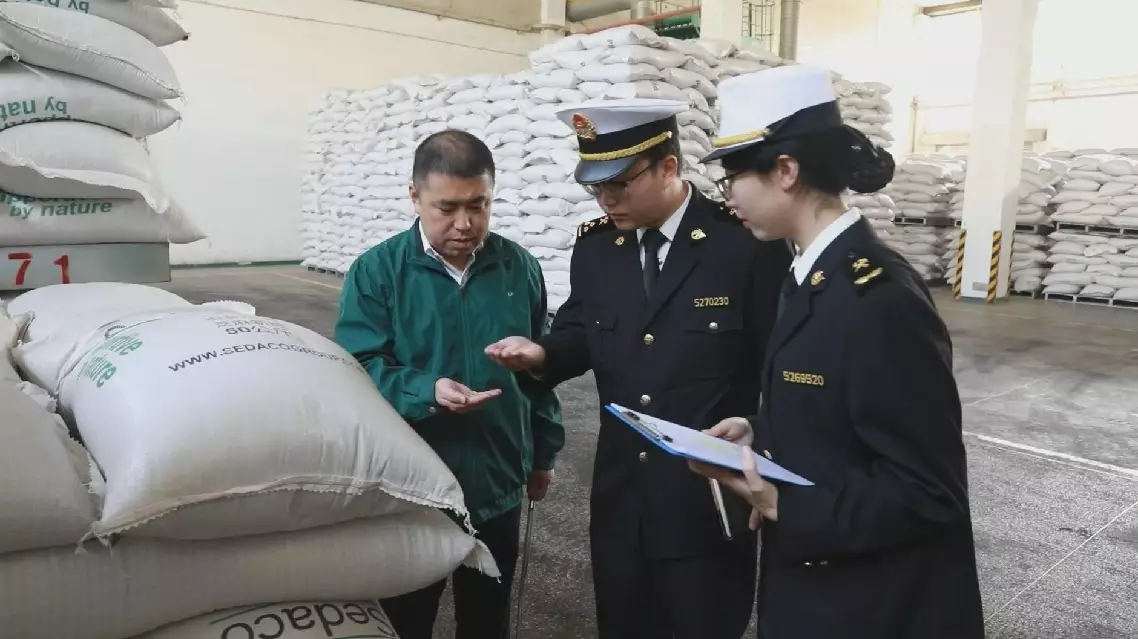
China’s growing foreign trade benefits least developed countries