A beauty industry hub based in east China's Zhejiang Province is taking steps to quicken its expansion into broader markets through heavy investment in innovation and research and development.
As the world's largest consumer market for makeup products, China currently has over 20,000 cosmetics companies. In Huzhou City of Zhejiang, the China Beauteville has emerged as one of the three major cosmetics industry clusters in the country, with the introduction of high-end cosmetics terminals and supporting industries both at home and from abroad.
At a firm with over a hundred patents headquartered in the China Beauteville, researchers were seen testing dozens of physical and chemical properties of products such as eyebrow pencils and lipsticks, and assessing the performance of newly developed equipment.
"We are applying for a patent for a new type of equipment for producing [cosmetic] pens. Those pens are produced by highly integrated equipment, which takes up only 25 percent of the space of traditional equipment, meaning that the usable space of our workshop has been increased," said Zhang Faming, technical director of Shangse Cosmetics Company.
So far, over 300 patented items have been developed in the China Beauteville, including the ultrasonic alcohol induction technology that solves hard technological problems in the perfume industry, as well as many independently created best-selling raw materials, proving that "innovation" is now the most distinctive label of this former mountain village.
"Patents are the moat of an enterprise. The core competitiveness still lies in technology. Our own research institute has developed a raw material, which has received very good market feedback. So our annual growth rate remains quite robust. This year, our overall sales volume is expected to increase by 30 percent to 50 percent," said Fang Hangbo, general director of Hangzhou Laima Cosmetics Company.
Today, the China Beauteville is striving to shed its label as a cheaper substitute for big brands and seizing the market with hard-core patents. Behind the success lies the unique cluster advantage. This industrial agglomeration has gathered over 300 beauty enterprises, forming a complete industrial chain covering raw material supply, research and development, design, production and manufacturing, packaging and logistics, as well as examination and testing.
To strengthen this advantage, the local government has formed a professional service team to provide full life-cycle business development guidance and build a platform for the connection between industrial capital and innovation and entrepreneurship projects.
The government has organized 30 supply chain matchmaking events so far this year, an increase of 25 percent compared with the same period of last year.
Meanwhile, digital factories have sprung up one after another in the China Beauteville, enabling real-time collection and analysis of production data, which helps promote upgrading of precise and smart manufacturing.
"In the first three quarters, the China Beauteville's total output value reached 7.546 billion yuan (about 1.07 billion U.S. dollars), increasing by 7.77 percent year-on-year. From January to October, the exports reached 284 million yuan (about 40.17 million U.S. dollars), up 34.59 percent, with the exported products reaching 70 countries and regions including Europe, America and Southeast Asia, demonstrating a strong momentum of going global," said Wu Shuang, deputy mayor of Daixi Town.
Across the country, the total retail sales of cosmetics products reached 381.2 billion yuan (about 53.92 billion U.S. dollars) in the first 10 months of this year, representing a year-on-year growth of 4.6 percent, according to the National Bureau of Statistics. The sales in October alone stood at 52.3 billion yuan (about 7.4 billion U.S. dollars), setting a new record for monthly performance in history.
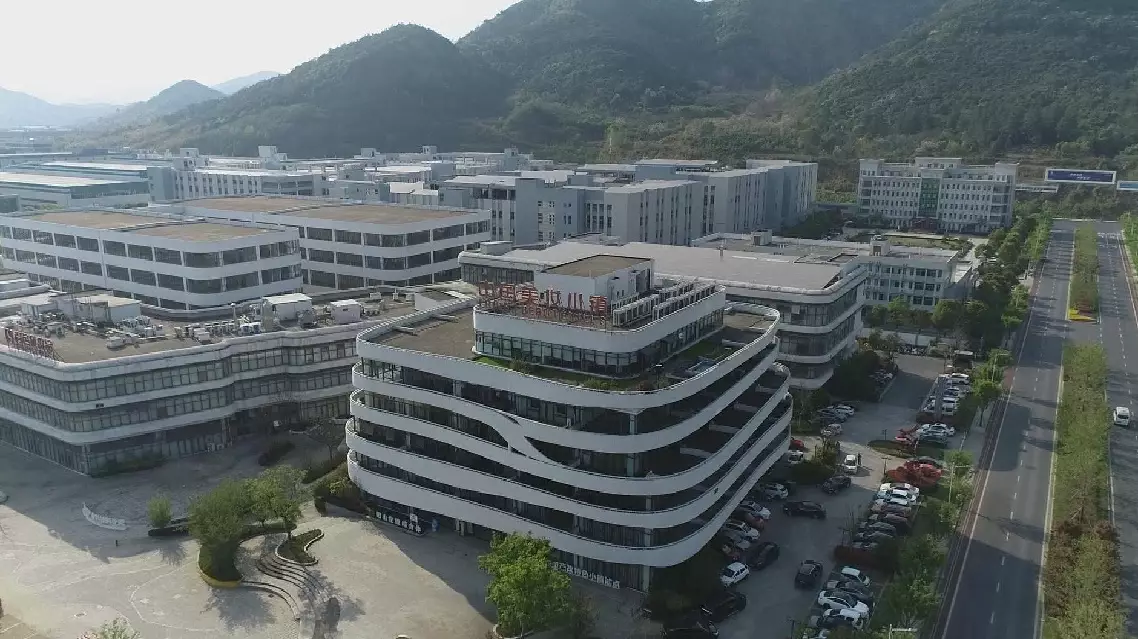
China's beauty industry hub aims market exploration with innovative tech