DH continues to organise "HIV Testing Month" to promote normalisation of HIV testing
The Department of Health (DH) today (December 8) said that, with the concerted efforts of the government, the healthcare sector and non-governmental organisations, the prevalence of Human Immunodeficiency Virus (HIV) infection among the adult population in Hong Kong remains at 0.1 per cent, well below the global average, and the number of new HIV cases recorded also continues to decline for nine consecutive years since 2015, demonstrating the effectiveness of Acquired Immunodeficiency Syndrome (AIDS) prevention and control in Hong Kong. Like last year, the DH launches "HIV Testing Month 2025" in December to raise public awareness and knowledge on prevention of HIV infection, and to promote normalisation of HIV testing.
The Government has attached great importance to HIV infection control and prevention. Since the first case of HIV infection reported in Hong Kong in 1984, the Government has adopted a multipronged approach to prevent and control AIDS, including the provision of free, anonymous and confidential HIV testing services to the public, and comprehensive risk assessment, counselling and support services to individuals undergoing testing. Although the prevalence of HIV infection in Hong Kong remains at a low level, the proportion of late presenters has been as high as 40 to 60 per cent in recent years. There was an even higher proportion of late presenters, up to 60 to 70 per cent, among those who do not belong to the high-risk populations.Those who do not belong to the high-risk populations may have overlooked that they still have the risk of HIV infection even though they do not have frequent high-risk sexual practices, leading to delayed testing and treatment.
The DH launched the inaugural "HIV Testing Month" last year in December. Around 40 per cent of the participants who received testing through various activities during the "HIV Testing Month" last year did not belong to the high-risk populations, and about 40 per cent were tested for the first time. Eight persons were confirmed to have HIV infection, including two late presenters. The campaign not only successfully links people who are unaware of their infection status to receive timely diagnosis and treatment, but also promotes normalisation of HIV testing that helps remove the stigma associated with HIV infection and testing. The DH encourages people who have had sex to undergo HIV testing at least once, especially individuals who do not belong to the high-risk populations. The DH emphasised that early testing allows individuals with HIV to promptly receive specialist care, and through antiretroviral therapy to achieve viral suppression and immune recovery, thereby preventing health deterioration.
"The DH, in collaboration with 26 collaborating and supporting organisations, continue to organise 'HIV Testing Month' in December this year, with a view to promoting the message 'For your health, Get tested for HIV' to more stakeholders and bodies in the community, as well as providing an enabling environment for members of the public to undergo HIV testing easily and conveniently through a variety of channels and testing modalities. Members of the public could order HIV self-test kits on the HIV Testing Service website with free shipping during the 'HIV Testing Month'," said the Consultant (Special Preventive Programme) of the Public Health Services Branch of the Centre for Health Protection of the DH, Dr Bonnie Wong.
She added that the AIDS hotline (2780 2211)under the DH was operated by professionally trained nurses, offering behavioural risk assessment, counselling and arrangement of HIV antibody test. Members of the public who received HIV testing from non-government channels could also call the hotline for enquiries about follow-up or counselling services. Operating for 40 years, the AIDS hotline has received over 1 500 000 calls, provided over 500 000 counselling services, and conducted nearly 70 000 HIV antibody tests. It also features pre-recorded information in multiple languages on HIV/AIDS and sexual health for diverse ethnic groups.
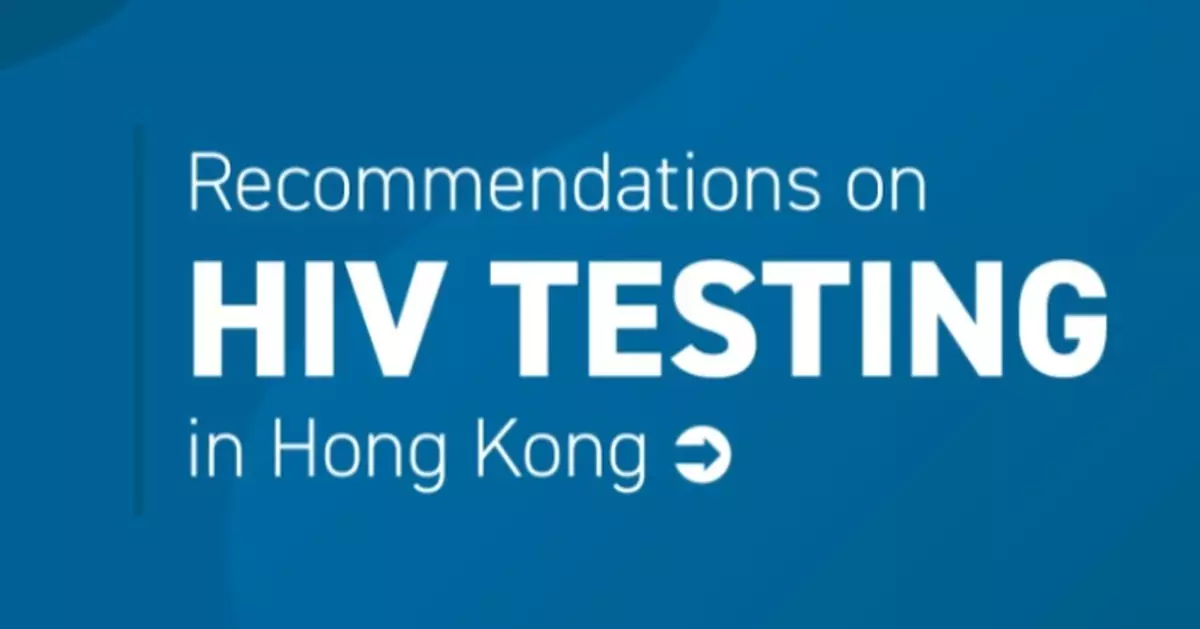
Members of the public can browse the HIV Testing Service website (www.hivtest.gov.hk) to access the HIV testing calendar to learn more about and select testing resources in the community.
Photo source: the HIV Testing Service website