Skip to Content Facebook Feature Image

No new chikungunya cases in Hong Kong; total cases this year reach 78, 10 local

HK

No new chikungunya cases in Hong Kong; total cases this year reach 78, 10 local
HK

HK

No new chikungunya cases in Hong Kong; total cases this year reach 78, 10 local

2025-12-08 22:30 Last Updated At:12-10 14:56

Update on chikungunya fever

The Centre for Health Protection (CHP) of the Department of Health announced that, as of 5pm today (December 8), no new cases of chikungunya fever (CF) had been recorded.

Latest surveillance data

--------------------------

Hong Kong has recorded a total of 78 confirmed CF cases this year. Among them, 10 were local cases, and the rest were imported cases.

Since the beginning of 2025, and as of September 30, a total of 445 271 suspected and confirmed CF cases and 155 CF-related deaths have been reported in 40 countries/territories. Cases have been reported in the Americas, Africa, Asia, and Europe. Although the northern hemisphere has entered the winter, temperatures in subtropical and some temperate regions remain elevated due to climate change, creating favourable conditions for mosquito breeding. In addition, CF outbreaks continue to occur in many countries worldwide. The risk of imported cases persists. Members of the public should check the situation of the destinations before travelling abroad.

Government's comprehensive follow-up actions

-----------------------------------------------------

As some confirmed CF cases have reportedly been bitten by mosquitoes while hiking along the Tsing Yi Nature Trails, the CHP considered the trails to be a higher-risk area. The CHP continued to urge individuals who have recently visited the Tsing Yi North area or hiked along the Tsing Yi Nature Trails to seek medical attention as soon as possible if they develop relevant symptoms and to call the enquiry hotline (Tel: 2125 2373), which was set up earlier. The hotline operates daily from 9am to 8pm. In late November, the CHP also informed approximately 130 primary care doctors in Kwai Tsing District through the Primary Healthcare Commission, urging them to closely monitor whether their patients present with compatible symptoms and arrange blood tests for those concerned. The CHP's Public Health Laboratory Services Branch will provide free testing services.

Specifically targeting confirmed cases who visited the Tsing Yi Nature Trails or the surrounding area, the Food and Environmental Hygiene Department (FEHD) has been continuously conducting intensive fogging operations to eliminate adult mosquitoes along the hiking trails. At suitable locations, large ultra-low volume foggers have been deployed, and robot dog is being put on trial to enhance operational effectiveness. The FEHD has also set up new mosquito trapping devices, cleared discarded containers and garbage that could bring stagnant water, and applied larvicide oil or larvicides in areas with stagnant water that cannot be removed immediately. The FEHD has been collaborating with Kwai Tsing District Office, Lands Department and Drainage Services Department to strengthen efforts in eliminating potential mosquito breeding sites along the Tsing Yi Nature Trails. Pamphlets have been distributed to hikers in the area, urging citizens to be vigilant against mosquito infestations and take personal protective measures. The FEHD also held meetings of the interdepartmental task forces on anti-mosquito work across districts, to discuss the latest developments regarding the situation and plan accordingly to co-ordinate relevant departments and stakeholders in strengthening mosquito prevention and control measures in areas under their purview.

Meanwhile, regarding the recently announced local case involving a23-year-old female living in Sheung Wan, the epidemiological investigation is ongoing.

The CHP continued to urge the members of the public residing and working at Queen's Road West (near Morrison Street and Hollywood Road) who experienced a fever, rash or joint pain on or after November 15 to seek medical advice or contact the CHP immediately. CHP officers continued to reach out to individuals in the aforementioned locations to remind individuals to be aware of relevant symptoms and to maintain good environmental hygiene in their households.

As of 5pm today, the CHP has conducted assessments for over 2 700 individuals residing or working in the district through the health consultation booth at the main entrance of the Sheung Wan Civic Centre, its enquiry hotline (Tel: 2125 2373), questionnaire surveys and door-to-door visits. No new symptomatic persons have been identified in the past three days. Two individuals with mild symptoms previously have been arranged to undergo blood tests. All tested negative for the chikungunya virus. Since the health consultation booth has only sporadic visits recently and all individuals who underwent blood tests have returned negative results, the booth will cease operation starting tomorrow.

Furthermore, the FEHD and relevant departments have comprehensively enhanced the mosquito control operations in Hong Kong since July this year, and this has continued. Among these, the FEHD has conducted vector investigations and targeted mosquito control operations against the imported and local cases. In light of the local cases, the FEHD has immediately conducted follow-up actions, including:

  • carrying out intensive fogging in scrubby areas within a 250-metre radius of the relevant locations to kill adult mosquitoes;

  • carrying out inspections of the locations, removing stagnant water, applying insecticides and disposing of abandoned water containers every week with a view to preventing mosquito breeding; and

  • enhancing public education efforts through organising health talks, setting up mobile education stations, and distributing publicity leaflets.

The abovementioned measures will be continued. Furthermore, the Government will further enhance the mosquito control efforts in addition to the existing measures.

Preventive measures to be taken by the public

----------------------------------------------------

Members of the public should use DEET-containing insect repellents or other effective active ingredients properly to prevent mosquito bites, but the following precautions should be taken when using them:

  • read the label instructions carefully first;

  • apply right before entering an area with a risk of mosquito bites;

  • apply on exposed skin and clothing;

  • use DEET of up to 30 per cent for pregnant women and up to 10 per cent for children (For children who travel to countries or areas where mosquito-borne diseases are endemic or epidemic and where exposure is likely, those aged 2 months or above can use DEET-containing insect repellents with a DEET concentration of up to 30 per cent);

  • apply sunscreen first, then insect repellent;

  • reapply only when needed and follow the instructions; and

  • in addition to DEET, there are other insect repellents available on the market containing different active ingredients, such as IR3535 and picaridin. When using any insect repellent, the public should follow the usage instructions and precautions on the product label.

The FEHD also appeals to members of the public to continue to stay alert and work together to carry out mosquito prevention and control measures early, including inspecting their homes and surroundings to remove potential breeding grounds, changing water in vases and scrubbing their inner surfaces, removing water in saucers under potted plants at least once a week, and properly disposing of containers such as empty cans and lunch boxes. The FEHD also advises members of the public and property management agencies to keep drains free of blockage and level all defective ground surfaces to prevent the accumulation of water. They should also scrub all drains and surface sewers with an alkaline detergent at least once a week to remove any mosquito eggs.

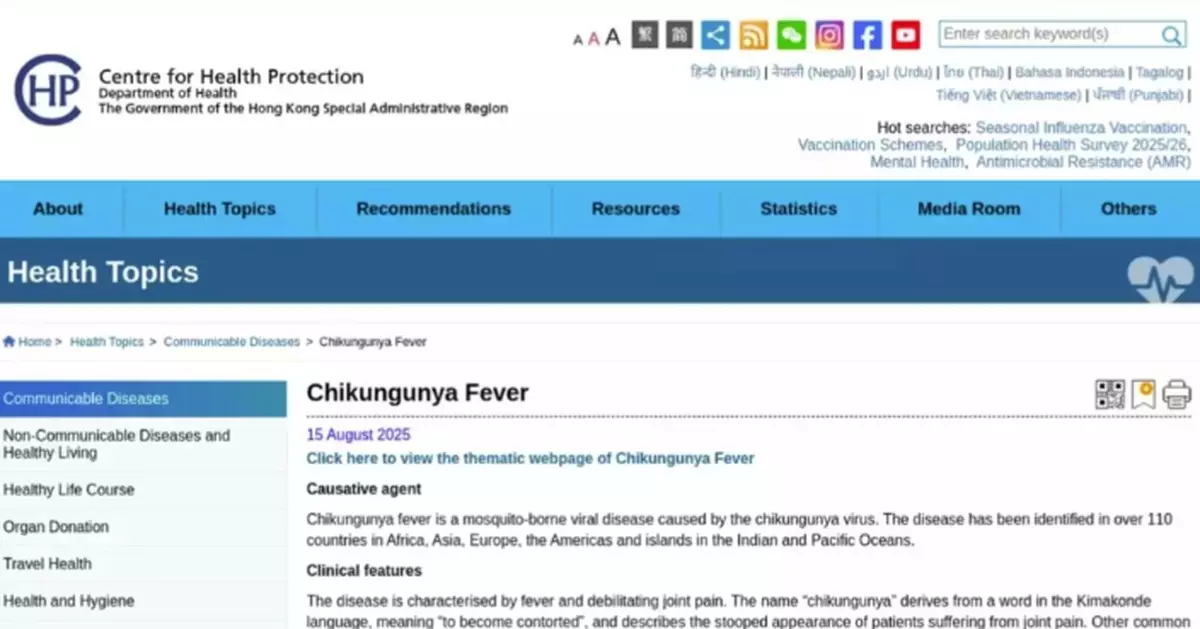
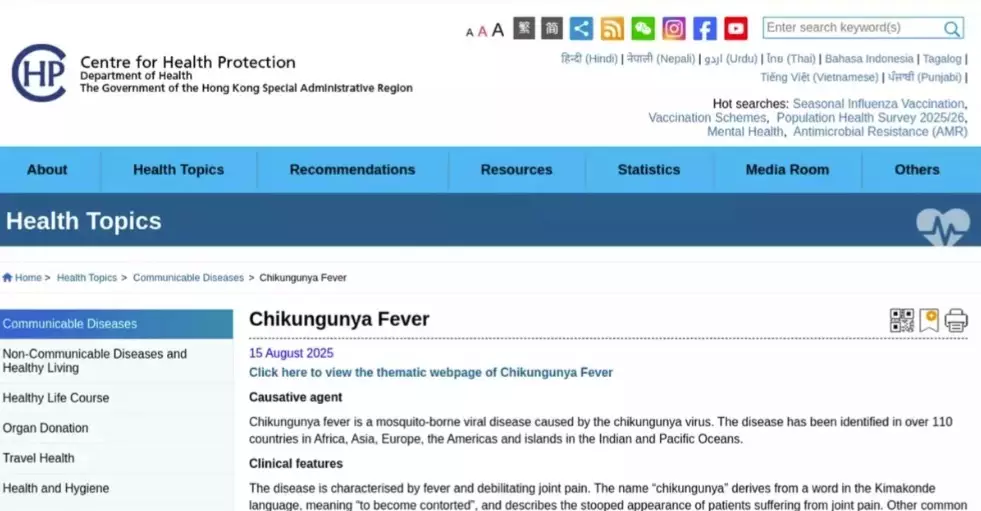
The public should call 1823 in case of mosquito problems, and may visit the following pages for more information: the CF page of the CHP and the Travel Health Service, the latest Travel Health News,tips for using insect repellents, and the CHP Facebook PageInstagram Account and YouTube Channel, and also the Mosquito Prevention and Control dedicated page of the FEHD.
Source: AI-found images

Source: AI-found images

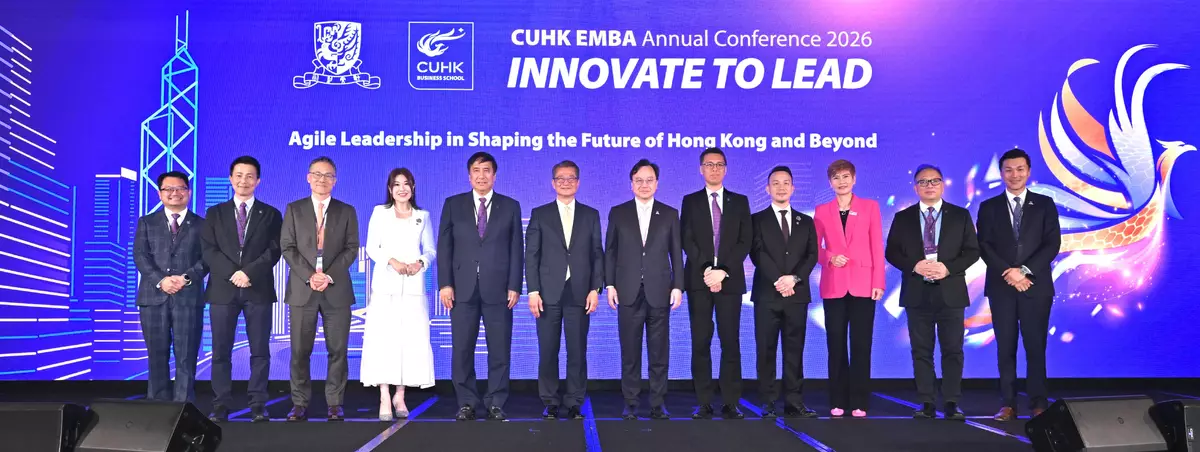
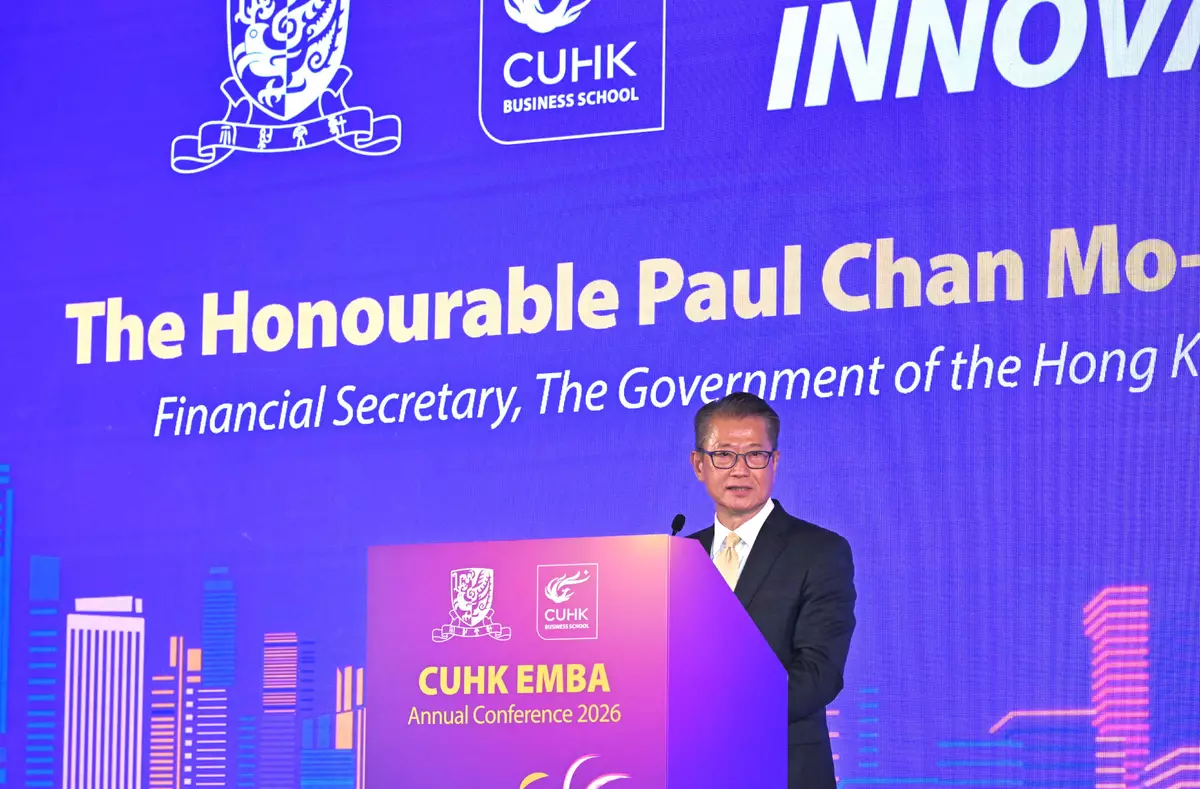
Speech by FS at CUHK EMBA Annual Conference

Following is the speech by the Financial Secretary, Mr Paul Chan, at the CUHK EMBA Annual Conference today (May 9):

Professor Dennis Lo (Vice-Chancellor and President, the Chinese University of Hong Kong (CUHK)), Professor Lin Zhou (Dean, CUHK Business School), Macy (Chairperson of Organizing Committee, Ms Macy Chan), Michael (Chairperson of Organizing Committee, Mr Michael Chan), CUHK EMBA alumni and students, business leaders, distinguished guests and friends,

Good evening.

Addressing a room full of Executive MBA students and graduates is both an honour and a privilege. There is a particular kind of ambition in this room — one that is not content with success alone, but driven to understand it more deeply, in the belief that better ideas lead to greater impact.

That kind of commitment — to learning, to growth, to asking harder questions — is precisely what today's conversation is about.

The theme of this conference, which focuses on innovation and agile leadership, could not be more timely. Most of us here have lived through the Internet age and the smartphone revolution, which made communication faster and more seamless than anyone had imagined.

Today, the rise of AI places us at a more fundamental tipping point. Technology is not merely changing the answers — it is redefining the questions themselves.

Consider what is already within reach. An AI assistant can learn your preferences, curate a personalised shortlist, and simply ask for your confirmation. We should even ask whether the smartphone and the search engine will remain our primary gateways to the digital world, or whether something altogether new is already taking shape.

To draw an analogy, the power of technology does not lie in drawing the old map with greater precision. It lies in revealing how much of that map remains uncharted — and in showing us that entirely new maps, with new co-ordinates, are being drawn.

This redefinition is unfolding across three dimensions simultaneously.

First, the redefinition of products. Products are no longer discrete, standalone objects. A smart car is a vehicle, but also a mobile platform for data. An insurance policy can be a contract, but equally a dynamic reflection of health data. Innovation today is born from cross-sector convergence and continuous evolution.

Second, the redefinition of services. Services are no longer delivered solely by enterprises. They emerge from collaborative networks of people and AI. But the more profound shift is in what customers now expect. In the past, good service meant reaching the right person quickly. Today, customers expect a solution that anticipates their needs before articulating them. This requires a new architecture of service delivery: human and machine, with AI handling the scale, the speed, and the personalisation that no human team alone could sustain.

Third, and most importantly, the redefinition of business models. In the past, we sought optimal solutions within established frameworks — when demand rose, we expanded capacity; when service needs grew, we opened more branches. Technology invites us to break out of those frameworks entirely. Intelligent manufacturing means that "economies of scale" is no longer the only answer; flexible supply chains have made customised, on-demand production the new normal.

These three redefinitions are opening a commercial frontier unlike anything we have seen before. But if the benefits of technology accrue only to a small circle, its power remains fundamentally constrained. This brings me to the second message I want to leave with you today: inclusivity.

Inclusivity is not charity. Yet it is the smartest business strategy available. The unmet needs of the broader public represent the largest and most underserved market opportunity in existence. When you make quality healthcare, education and financial services accessible and affordable to ordinary residents, you are not serving a group in need of handouts — you are unlocking a vast market that traditional business models have consistently overlooked.

Hong Kong has a distinctive role to play here. We can be a co-architect of standards, a hub for capital, and a bridge between innovation and real-world deployment — from clinical validation of smart healthcare, to green technology financing, to regulatory sandboxes for fintech. Our contribution draws not only on institutional strengths and international networks, but on our genuine commitment to broad-based participation.

Yet inclusive products and services are only the first step. The deeper dimension is empowerment.

History reminds us that the dividends of technological revolution need to be actively guided to reach the many. In the age of steam, and again in the Internet era, early gains concentrated among capital owners and top-tier talent. But today we have the opportunity to write a different story. AI, as an amplifier of human capability, is already enabling what was previously unimaginable: a solo entrepreneur, with the right tools and the right vision, can build a unicorn.

In other words, the unit of competitive advantage is shifting — from the size of your team to the skill with which you orchestrate your tools.

Our mission should be to make that shift available to everyone. To turn individual readiness into collective prosperity, and to ensure that the productivity gains of AI flow broadly across the society.

This is precisely why, in this year's Budget, I placed such emphasis on the "AI Training for All" initiative.

We are not trying to turn everyone into an engineer. We are ensuring that workers, managers, SME (small and medium-sized enterprise) owners, and ordinary residents become capable collaborators with AI: people who can access it, use it effectively, and put it to work as their assistant.

That may sound ambitious, but consider this: if AI can one day be as intuitive as the smartphone, then mass adoption is not difficult to imagine at all. Just as computers once migrated from specialist facilities into offices and homes, AI will find its way into everyone's daily work and life.

For business leaders, it may be tempting to think of AI as "digital employee" that can replace existing workers. But think of a different framing: equipping your workforce with powerful digital assistants can achieve productivity gains, while also freeing your people to do what humans do best — create, imagine and innovate.

Companies that take those extra steps, and think those extra moves ahead, will find that an empowered workforce is also a more innovative one.

All in all, the power of technology must ultimately be measured by its contribution to inclusive growth. And inclusive growth, in the end, depends on, yes, commercial acumen — but also empathy, compassion, and the conviction that a rising tide should lift all boats. I can see that those qualities live in this room.

I will close with this thought. Someone once joked that economists know the price of everything and the value of nothing. With AI, let us never fall into the same trap — in our race to price every efficiency gain, let us not lose sight of the deeper value we are trying to create: a society where the fruits of innovation are broadly shared, and where technology lifts not just the fortunate few, but everyone willing to reach for it.

So here is my ask: let us grow the pie together. And make sure we cut it well.

Thank you very much.

Source: AI-found images

Source: AI-found images

Speech by FS at CUHK EMBA Annual Conference  Source: HKSAR Government Press Releases

Speech by FS at CUHK EMBA Annual Conference Source: HKSAR Government Press Releases

Speech by FS at CUHK EMBA Annual Conference  Source: HKSAR Government Press Releases

Speech by FS at CUHK EMBA Annual Conference Source: HKSAR Government Press Releases

Source: AI-found images

Source: AI-found images

Recommended Articles