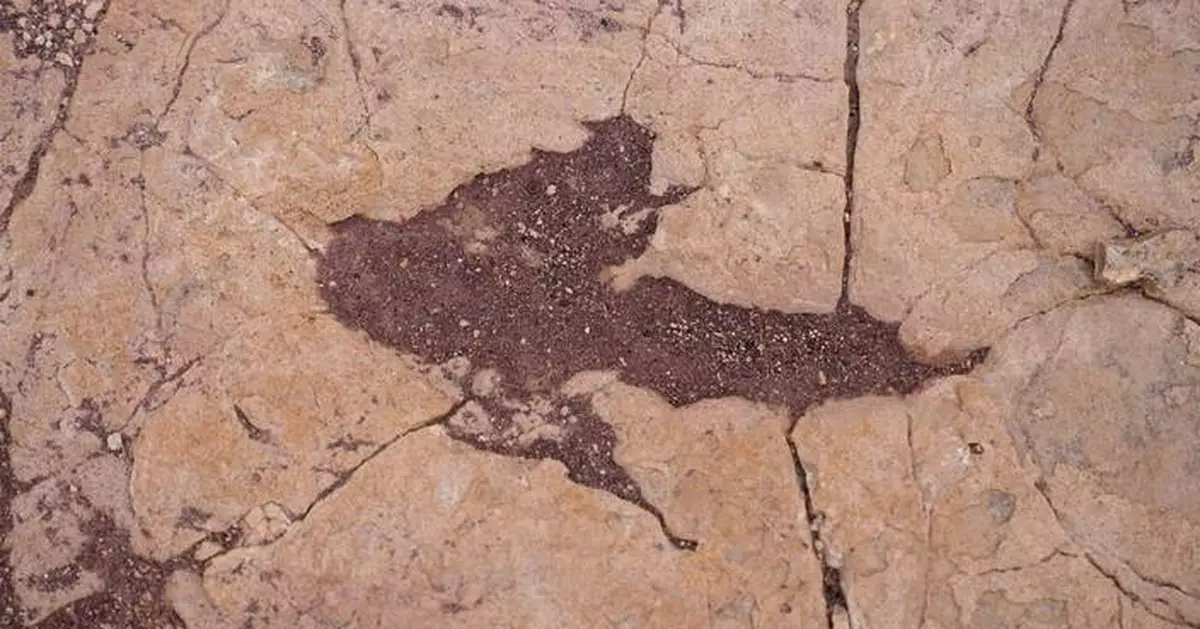
TORO TORO, Bolivia (AP) — Legend once had it that the huge, three-toed footprints scattered across the central highlands of Bolivia came from supernaturally strong monsters — capable of sinking their claws even into solid stone.
Then scientists came here in the 1960s and dispelled children's fears, determining that the strange footprints in fact belonged to gigantic, two-legged dinosaurs that stomped and splashed over 60 million years ago, in the ancient waterways of what is now Toro Toro, a village and popular national park in the Bolivian Andes.
Click to Gallery
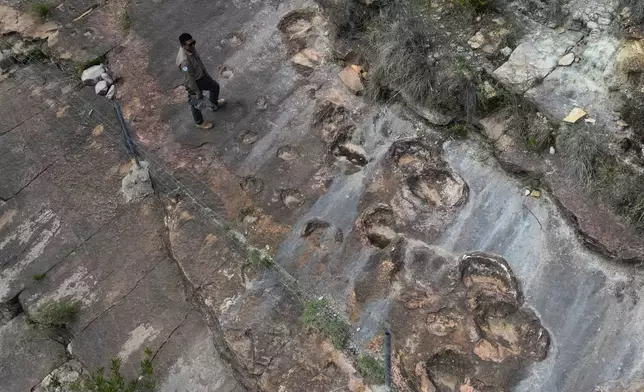
Park ranger José Vallejos stands next to petrified dinosaurs footprints in Carreras Pampa in Toro Toro National Park, north of Potosi, Bolivia, Saturday, Dec. 6, 2025. (AP Photo/Juan Karita)
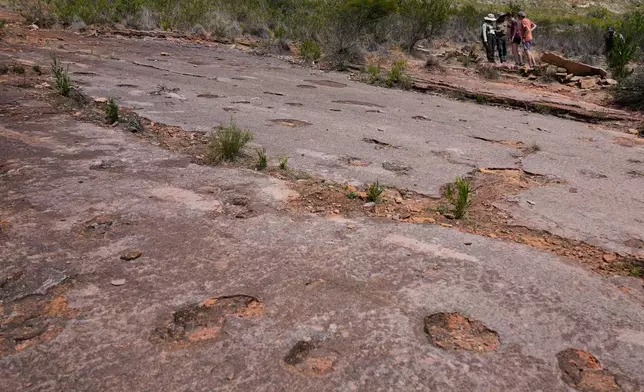
Tourists look at the petrified footprints of dinosaurs at Carreras Pampa in Toro Toro National Park, north of Potosi, Bolivia, Saturday, Dec. 6, 2025. (AP Photo/Juan Karita)
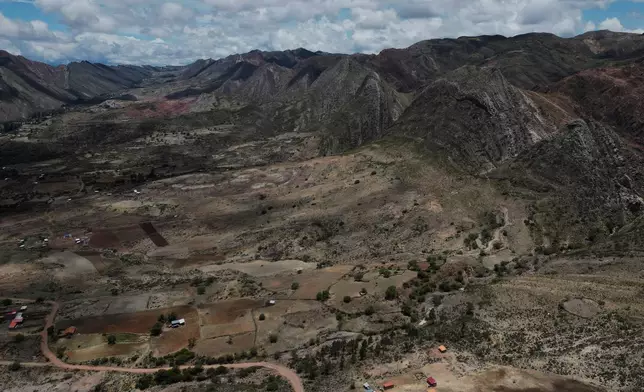
A view of the Toro Toro National Park, where petrified dinosaur footprints are visible, north of Potosi, Bolivia, Saturday, Dec. 6, 2025. (AP Photo/Juan Karita)
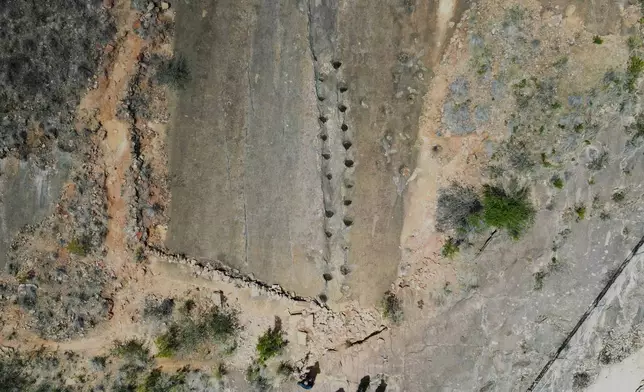
Petrified footprints by dinosaurs are visible in Carreras Pampa in Toro Toro National Park, north of Potosi, Bolivia, Saturday, Dec. 6, 2025. (AP Photo/Juan Karita)
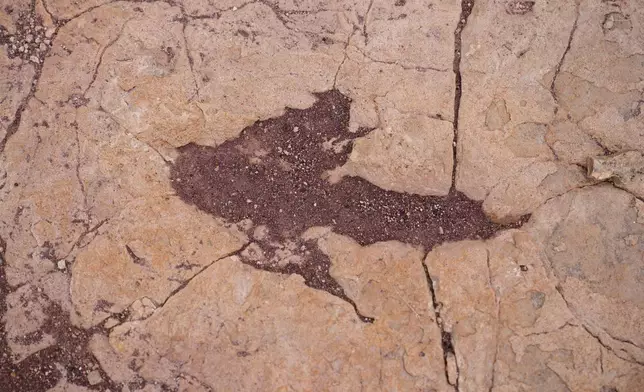
A petrified footprint by a dinosaur is visible in Carreras Pampa in Toro Toro National Park, north of Potosi, Bolivia, Saturday, Dec. 6, 2025. (AP Photo/Juan Karita)
Now, a team of paleontologists, mostly from California’s Loma Linda University, have discovered and meticulously documented 16,600 such footprints left by theropods, the dinosaur group that includes the Tyrannosaurus rex. Their study, based on six years of regular field visits and published last Wednesday in the peer-reviewed journal PLOS One, reports that this finding represents the highest number of theropod footprints recorded anywhere in the world.
“There’s no place in the world where you have such a big abundance of (theropod) footprints,” said Roberto Biaggi, a co-author of the study led by Spanish paleontologist Raúl Esperante. “We have all these world records at this particular site.”
The dinosaurs that ruled the earth and roamed this region also made awkward attempts to swim here, according to the study, scratching at what was squishy lake-bottom sediment to leave another 1,378 traces.
They pressed their claws into the mud just before water levels rose and sealed their tracks, protecting them from centuries of erosion, scientists said.
“The preservation of many of the tracks is excellent,” said Richard Butler, a paleontologist at the University of Birmingham who was not involved in the research. He said that, to his knowledge, the number of footprints and trackways found in Toro Toro had no precedent.
“This is a remarkable window into the lives and behaviors of dinosaurs at the end of the Cretaceous,” Butler added, referring to the period around 66 million years ago at the end of which an asteroid impact abruptly extinguished all dinosaurs and 75% of living species along with them, according to scientists.
Although they've survived for millions of years, human life has threatened these traces. For decades, farmers threshed corn and wheat on the footprint-covered plateaus. Nearby quarry workers didn’t think much of the formations as they blasted rock layers for limestone. And just two years ago, researchers said, highway crews tunneling through hillsides nearly wiped out a major site of dinosaur tracks before the national park intervened.
Such disturbances may have something to do with the area's striking absence of dinosaur bones, teeth and eggs, experts say. For all of the footprints and swim traces found across Bolivia’s Toro Toro, there are virtually no skeletal remains of the sort that litter the peaks and valleys of Argentine Patagonia and Campanha in Brazil.
But the lack of bones could have natural causes, too. The team said the quantity and pattern of tracks — and the fact they were all found in the same sediment layer — suggest that dinosaurs didn’t settle in what is now Bolivia as much as trudge along an ancient coastal superhighway stretching from southern Peru into northwest Argentina.
The range in footprint sizes indicated that giant creatures roughly 10 meters (33 feet) tall moved in a herd with tiny theropods the size of a chicken, 32 centimeters (1 foot) tall at the hip.
In presenting a snapshot of everyday behavior footprints “reveal what skeletons cannot,” said Anthony Romilio, a paleontologist at the University of Queensland in Australia who also did not participate in the study. Just from footprints, researchers can tell when dinosaurs strolled or sped up, stopped or turned around.
But the reason they flocked in droves to this wind-swept plateau remains a mystery.
“It may have been that they were all regular visitors to a large, ancient, freshwater lake, frequenting its expansive muddy shoreline,” offered Romilio.
Biaggi suggested that they were “running away from something or searching for somewhere to settle.”
What's certain is that research into this treasure trove of a dinosaur tracksite will continue.
“I suspect that this will keep going over the years and many more footprints will be found right there at the edges of what’s already uncovered," Biaggi said.
DeBre reported from Buenos Aires, Argentina.
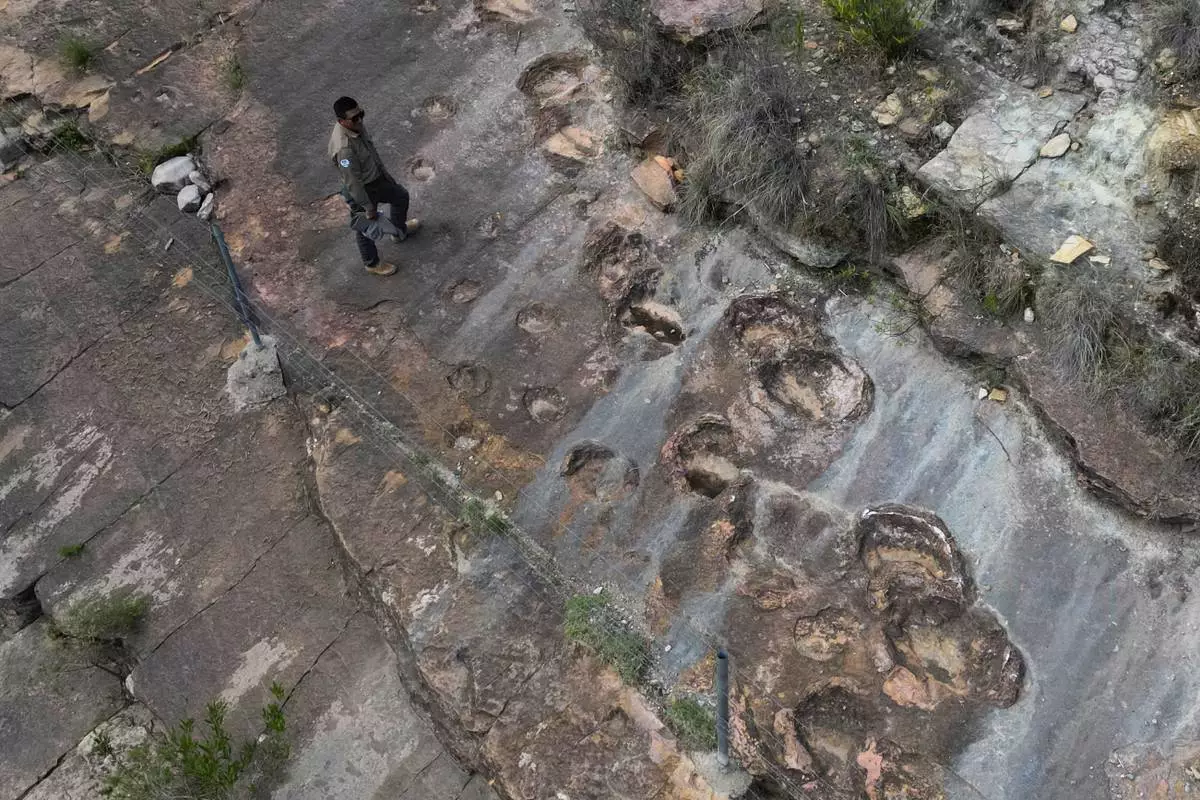
Park ranger José Vallejos stands next to petrified dinosaurs footprints in Carreras Pampa in Toro Toro National Park, north of Potosi, Bolivia, Saturday, Dec. 6, 2025. (AP Photo/Juan Karita)
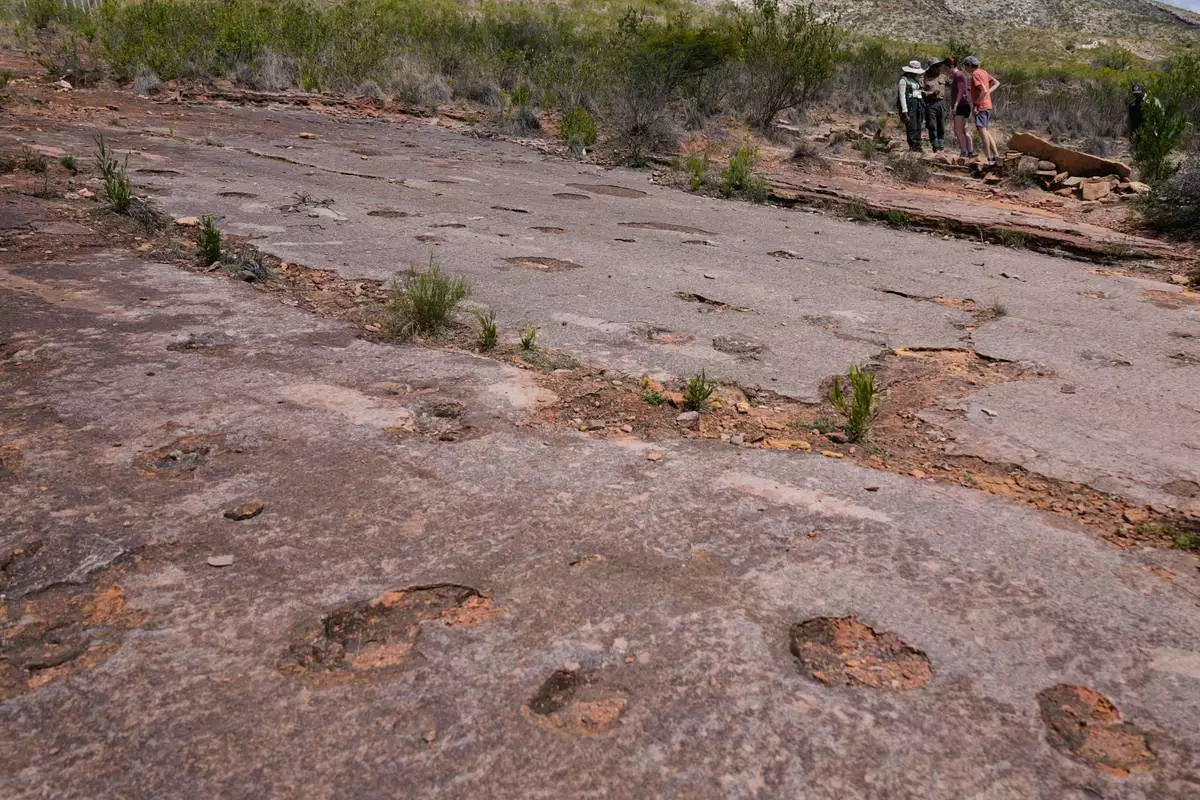
Tourists look at the petrified footprints of dinosaurs at Carreras Pampa in Toro Toro National Park, north of Potosi, Bolivia, Saturday, Dec. 6, 2025. (AP Photo/Juan Karita)
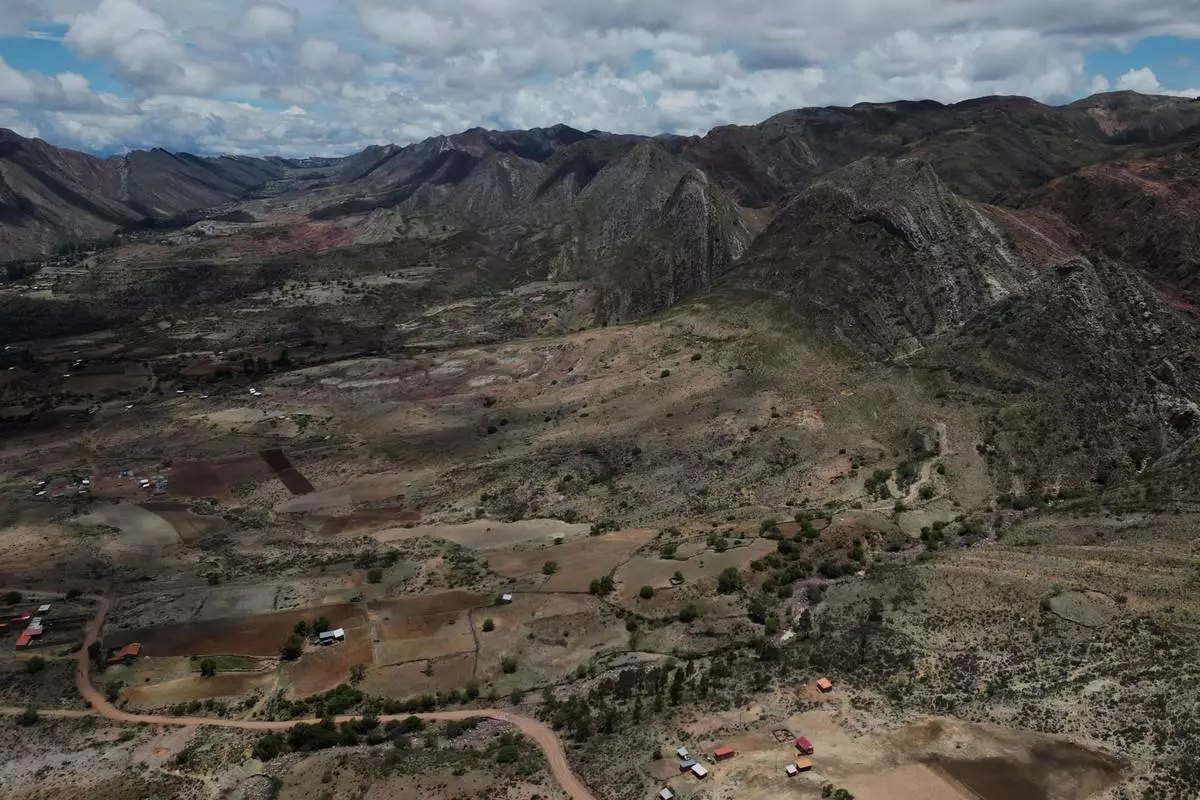
A view of the Toro Toro National Park, where petrified dinosaur footprints are visible, north of Potosi, Bolivia, Saturday, Dec. 6, 2025. (AP Photo/Juan Karita)
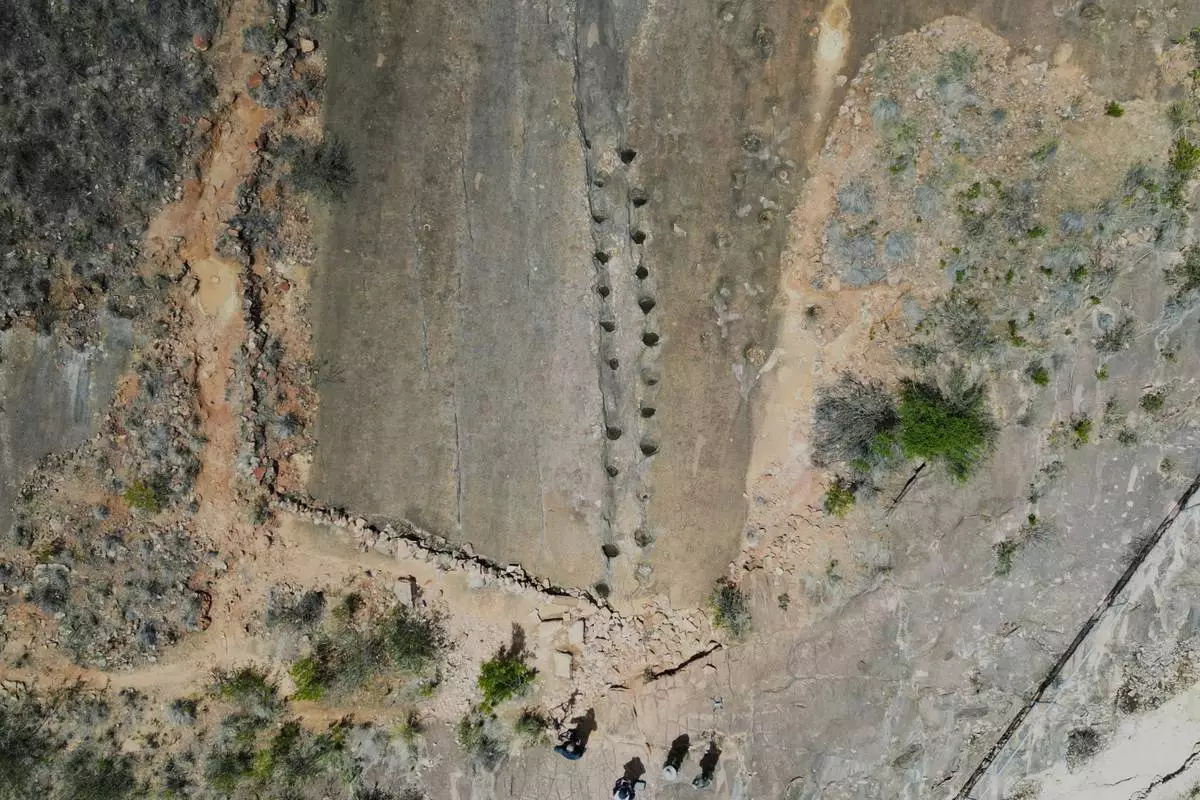
Petrified footprints by dinosaurs are visible in Carreras Pampa in Toro Toro National Park, north of Potosi, Bolivia, Saturday, Dec. 6, 2025. (AP Photo/Juan Karita)
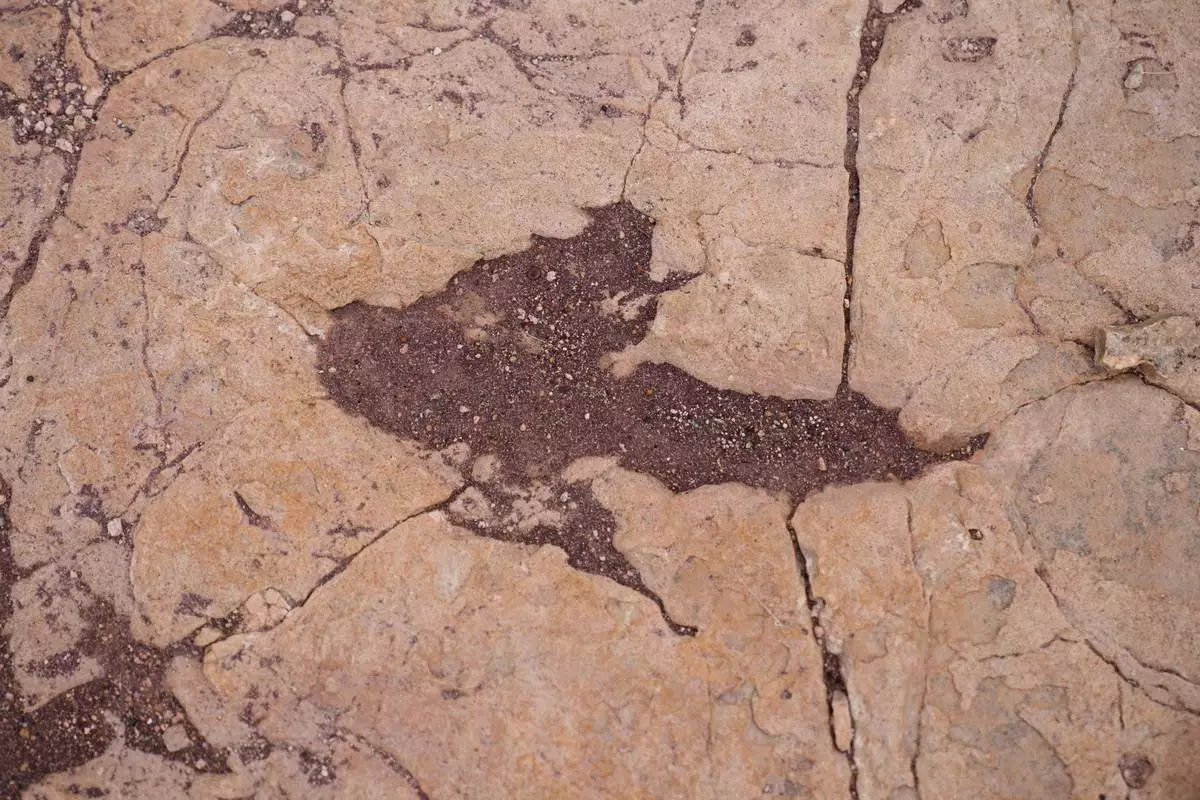
A petrified footprint by a dinosaur is visible in Carreras Pampa in Toro Toro National Park, north of Potosi, Bolivia, Saturday, Dec. 6, 2025. (AP Photo/Juan Karita)

Iranian fired drones towards Saudi Arabia and Kuwait early Tuesday as U.S. President Donald Trump sent contradictory signals about how long the war could last, fueling uncertainty that’s causing markets to swing.
The Saudi Defense Ministry said it has destroyed drones over the kingdom’s oil-rich eastern region, while in Kuwait, the National Guard said it shot some down in the county’s northern and southern areas.
Iran’s latest attacks on neighboring Gulf States come as Trump late Monday told Republican lawmakers that the war was likely to be a “short excursion,” but hours later threatened in a post on social media that the U.S. would dramatically increase attacks if Iran tried to close the Strait of Hormuz.
In an apparent response to Trump’s remarks published in Iranian state media, a spokesperson for the paramilitary Revolutionary Guard, Ali Mohammad Naini, said “Iran will determine when the war ends.”
Here is the latest:
Israel’s military said it detected an Iranian missile launch targeting the country Tuesday morning.
Sirens were heard in Jerusalem.
India’s oil ministry has set up a committee to review supplies of commercial cooking gas as the hospitality sector experiences a shortage of liquefied petroleum gas cylinders.
India relies heavily on oil and gas shipped through the Strait of Hormuz. Iran has attacked several ships in the strait and threatened any ships that try to pass through, effectively closing it.
Industry groups in India say restaurants in some major cities including Mumbai and Bengaluru are struggling to secure cooking gas cylinders. They warn some eateries could shut within days if supplies are not restored.
Indian authorities have prioritized LPG supplies for household use, tightening availability for commercial users such as hotels and restaurants.
Azerbaijan has sent humanitarian aid to Iran, Azerbaijani officials said Monday.
The aid includes 10 tons of flour, six tons of rice, more than two tons of sugar, over four tons of water, about 600 kilograms of tea and about two tons of medicines and medical supplies, according to officials.
The move comes after tensions spiked between Baku and Tehran last week when Azerbaijan accused Iran of firing drones at its Nakhchivan exclave, an allegation Tehran denies.
Azerbaijan also has increased military and economic ties with Israel.
Iran’s judiciary is warning its local media about what and how it reports as the war with Israel and the United States goes on.
That was a comment made by judiciary spokesman Asghar Jahangir as reported by the state-run IRNA news agency.
It said Jahangir said local outlets “that did not comply with security issues and had taken videos and photos of certain places solely for the purpose of informing were given the necessary warnings.”
“If this happens again, the necessary legal measures will be taken,” he said, without elaborating.
Iran has shut off the internet during the war and may be restricting reporting to hide what has been struck so far.
Turkey’s Defense Ministry said Tuesday the Patriot missile defense system is being deployed in Malatya province, which hosts a NATO radar base.
The move follows NATO defenses intercepting a second ballistic missile fired from Iran that entered Turkish airspace Monday.
The Israeli military on Tuesday reiterated the call for all residents of southern Lebanon to evacuate their homes as it planned to “operate forcefully” in the southern area against Hezbollah.
Israel issued similar warnings during its war with Hezbollah in 2003-2024, displacing hundreds of thousands of people.
The Iraqi military has condemned an attack early Tuesday on a camp for an umbrella of Iranian-backed groups in northern Iraq.
The airstrike on 40th Brigade of the Popular Mobilization Forces in the city of Kirkuk killed five and wounded four, according to two officials who spoke on condition of anonymity because they were not authorized to brief reporters.
The military described the strikes as “a blatant targeting of Iraq.”
Iraq for years has had to walk a tightrope between the U.S. and Iranian-allied Shiite groups, including some that are part of the government.
The Israeli military said Tuesday it had completed a series of strikes targeting Hezbollah’s financial arm, al-Qard Al-Hasan.
Israel says Hezbollah uses al-Qard al-Hasan to finance its military activities.
Israel targeted several of the group’s branches in southern and eastern Lebanon last week.
Saudi Arabia’s oil giant Aramco reported 2025 profits of $104 billion, down from the year before as the Iran war has seen its fields and facilities targeted.
Aramco released its annual results Tuesday. It planned to brief investors later in the day as the war that began Feb. 28 has seen Iranian drones and missiles target its facilities.
Aramco, formally known as the Saudi Arabian Oil Co., reported profits of $110 billion in 2024.
Aramco said its 2025 revenues were $445 billion, down from $480 billion in 2024.
The United Arab Emirates will lower the volume of missile alerts sent to mobile phones in the overnight hours.
The UAE’s National Emergency Crisis and Disasters Management Authority made the announcement late Monday night, saying that the loud blaring alarm would sound on phones from 9 a.m. until 10:30 p.m.
A standard text message chime would sound from 10:30 p.m. until 9 a.m., it said.
The blaring klaxon had sounded in the middle of the night since the war began Feb. 28. The change in the alerts signals how Gulf Arab states are trying to adjust to the idea of the war grinding onward as there’s no immediate sign of an end to the conflict.
Egypt hiked fuel prices by up to 17% on Tuesday as the war in the Middle East sent prices of oil soaring.
According to the Petroleum Ministry the cost of a liter of diesel, which is heavily relied on for public transport, increased by more than 17%. The price of the 92-octane gasoline rose by 15% and 95-octane gasoline increased by 14%.
The war has hit Egypt hard. The most populous Arab country, Egypt depends heavily on imported fuel. The Egyptian pound fell to a record low, trading at over 52 to the US dollar on Monday.
To mitigate impact of the war, the government announced a series of measures, including reducing official overseas trips and tightening fuel consumption across sectors.
The paramilitary Revolutionary Guard said on Tuesday that the end of the war will be determined by Iran.
Spokesperson Ali Mohammad Naini said in a statement published in various Iranian state media and apparently in response to Trump’s remarks Monday that “Iran will determine when the war ends.”
The U.S. president pledged aggressive action against Iran if it continues to block the shipment of oil in the Strait of Hormuz.
“If Iran does anything that stops the flow of Oil within the Strait of Hormuz, they will be hit by the United States of America TWENTY TIMES HARDER than they have been hit thus far,” Trump posted on social media. “Additionally, we will take out easily destroyable targets that will make it virtually impossible for Iran to ever be built back, as a Nation, again — Death, Fire, and Fury will reign upon them — But I hope, and pray, that it does not happen!”
The president said his threat was a “gift” to China, among other nations, because it relies on oil from the Middle East.
Flames rise from an oil storage facility south of the capital Tehran as strikes hit the city during the U.S.–Israel military campaign, Iran, Saturday, March 7, 2026. (AP Photo/Vahid Salemi)
Iraqis hold a portrait of the new successor to Supreme Leader, Ayatollah Mojtaba Khamenei at a bridge leading to the fortified Green Zone where the U.S. embassy is located in Baghdad, Iraq, Monday, March 9, 2026. (AP Photo/Hadi Mizban)
A coffin is carried during the funeral of mostly children killed in a strike Feb. 28 at a girls' elementary school in Minab, Iran, Tuesday, March 3, 2026. (Abbas Zakeri/Mehr News Agency via AP)
This image taken from video provided by Iran state TV shows Mojtaba Khamenei, a son of Iran's slain supreme leader, who has been named as the Islamic Republic's next ruler, authorities announced Monday, March 9, 2026. (Iran state TV via AP)