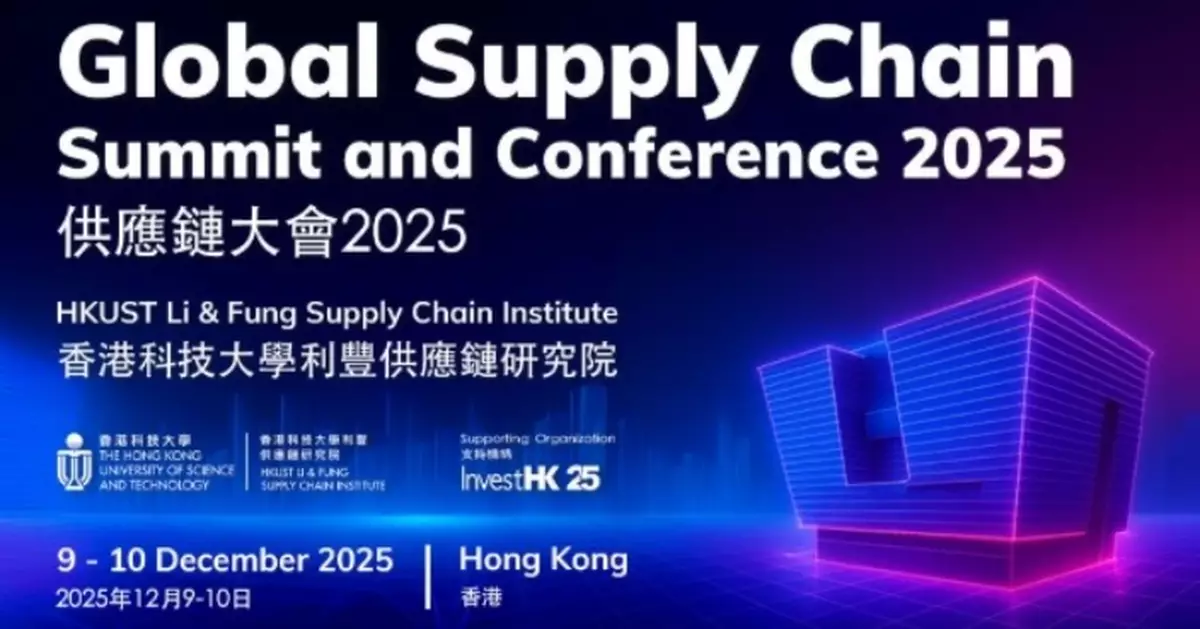
Speech by SCED at Global Supply Chain Summit and Conference 2025
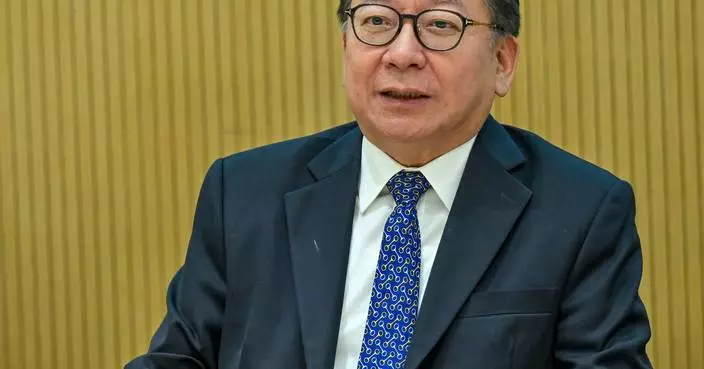
Following is the speech by the Secretary for Commerce and Economic Development, Mr Algernon Yau, at the Global Supply Chain Summit and Conference 2025 today (December 9):
William (Chairperson of the Advisory Board of the HKUST Li & Fung Supply Chain Institute, Dr William Fung), Victor (Chairman of Fung Investments, Dr Victor Fung), distinguished guests, friends and partners, ladies and gentlemen,
Thank you for inviting me to this year's annual conference under the theme "Reinvention of global supply chains". I am joining you today as we explore the far-reaching transformations shaping global supply chains, the strategic responses from governments and businesses, and the exciting opportunities these changes present, especially for Hong Kong.
Let me begin by expressing my sincere appreciation to the Fung Group and the Hong Kong University of Science and Technology for organising this high-level event and bringing together such an esteemed gathering of thought leaders, academics, and industry professionals.
Shifting global supply chain
The global supply chain landscape is undergoing profound change, driven by several forces. Chief among them is the shifting geopolitical environment. While trade tensions between China and the United States have moderated somewhat in recent months, we must acknowledge that structural changes in their trade relationship are now deeply embedded in the global system.
Despite a growing call for onshoring and nearshoring in developed markets, China's enduring competitive strengths ensure its continued centrality in global supply chains. Our country has maintained its position as the world's largest manufacturing economy for 15 consecutive years, commanding close to30 per cent of global manufacturing output. China possesses a comprehensive manufacturing system that cannot be easily replicated elsewhere.
Meanwhile, regional trade co-operation is accelerating. A prime example is China's deepening economic ties with Southeast Asia. In 2024, intermediate goods made up around 67 per cent of the trade between China and the Association of Southeast Asian Nations (ASEAN). Total trade reached a record US$860 billion in the first 10 months of 2025, an increase of more than eight per cent year-on-year. Supply chain reconfiguration is taking place, but it is creatingcomplementary, not competitionacross the Asia-Pacific region.
Hong Kong, as a key re-export hub, has witnessed substantial growth in this business. Our merchandise exports have recordedgrowth for 20 consecutive months, rising byover 13 per cent year-on-yearin value during the first 10 months of 2025. More significantly,exports to the Chinese Mainland increased by over 15 per cent, and to ASEAN by over 30 per cent.
This trend will continue in the foreseeable future. China will continue to advance its agenda of high-quality development. The recent Fourth Plenary Session of the 20th Central Committee of the Communist Party of China has laid out comprehensive recommendations for the nation's 15th Five-Year Plan, reaffirming China's commitment tohigh-level two-way opening up. A significant part of it is to strengthen economic co-operation and supply and industry chain collaboration with Belt and Road countries and the Global South at large.
Another major force driving supply chain transformation is the growing importance of sustainability and technology. Global regulatory requirements and consumer expectations around carbon neutrality are reshaping production and logistics. Manufacturers are being called upon to meet stringent environmental standards, requiring significant investment and innovation.
Simultaneously, technological advances in artificial intelligence (AI), automation, and materials science are revolutionising production processes. These innovations support more customised, localised manufacturing models that reduce reliance on long and complex supply chains.
In this evolving environment, the question naturally arises: What is Hong Kong's strategic role? The answer lies in our unique position and competitive advantages. Under the "one country, two systems" principle, Hong Kong enjoys the best of both worlds: convenient and sometimes priority access to the Mainland's vast market, and seamless connectivity with the rest of the world.
Despite geopolitical uncertainties, Hong Kong continues to be a free port, maintaining the free movement of goods, capital, information and people. Our common law system, sound regulatory environment, low and simple tax regime, and freely convertible currency create a robust and stable foundation for international business.
Hong Kong is well-positioned to become a hub in the reconfiguration of global supply chains, especially as Chinese enterprises expand into Southeast Asia, the Middle East and the Global South. We provide comprehensive financial, legal, advisory, logistics, and strategic support services.
Hong Kong is increasingly recognised by Chinese enterprises asthe essential platform for establishing regional and global headquarters, fund-raising, trade financing, corporate treasury management, ESG (environmental, social and governance) compliance, offshore trading, R&D (research and development), and much more.
A vivid example is CATL (Contemporary Amperex Technology Co Limited), the world's largest IPO (initial public offering) this year, which raised capital in Hong Kong to support its expansion in Hungary. It has also established a global R&D centre here in this city. Increasingly, Mainland enterprises are following this path. In fact, over 300 Mainland companies are currently in the IPO pipeline, many of which plan to use Hong Kong as a strategic base for their overseas expansion.
Building on this momentum, both the Policy Address and the Budget over the past two years have set out a clear strategic vision for Hong Kong to develop into a high value-added, multinational supply chain management centre.
And this year, we are going further. We have established a GoGlobal Task Force (Task Force on Supporting Mainland Enterprises in Going Global), bringing together government departments and agencies like the Hong Kong Monetary Authority as well as relevant non-governmental organisations such as the Hong Kong Trade Development Council, the Hong Kong Stock Exchange and the Hong Kong Productivity Council, to be more coordinated in attracting and assisting Mainland enterprises to expand internationally through Hong Kong.
Measures include, for instance, encouraging Mainland banks to establish regional headquarters in Hong Kong to support Mainland firms entering Southeast Asian and Middle Eastern markets; offering tax concessions to attract more Mainland companies to set up corporate treasury centres here; and promoting carbon auditing services, to help companies meet growing sustainability requirements.
Looking ahead, I believe there is more Hong Kong can do in supporting or even driving supply chain reconfiguration.
Our world-class financial institutions are uniquely positioned to develop innovative financing tools tailored for modern supply chains. These include advanced trade finance solutions, such as blockchain-based trade finance platforms that are already reducing transaction times, lowering counterparty risk, and improving transparency.
A good example is Project CargoX, launched earlier this year by the Hong Kong Monetary Authority together with public and private sector partners. It is an initiative that leverages cargo data to streamline trade finance processes. It is now exploring partnerships with international data providers to support cross-border trade financing use cases.
Other areas include ESG-linked lending, green bonds and other financial instruments that help support regional supply chain initiatives.
At the same time, many start-ups from Hong Kong and the Mainland are leading in areas such as AI-driven logistics optimisation and IoT (Internet of things)-enabled supply chain visibility. Hong Kong's international business and regulatory environment provides a fertile testing ground for these cutting-edge technologies, and a global showcase for their capabilities.
With these strengths, Hong Kong has great potential to become a global leader in next-generation supply chain solutions.
Concluding remarks
Ladies and gentlemen, this conference brings together some of the most insightful minds and influential leaders from Hong Kong, the Mainland and around the world.
I am confident that today's discussions will inspire not only fresh perspectives but also tangible outcomes: new research collaborations, joint ventures, cross-border partnerships, and innovative approaches to managing supply chains in this era of geopolitical complexity, sustainability imperatives, and technological disruption.
Hong Kong stands ready to play a pivotal role in this transformation.
I wish this conference every success, and I look forward to the exciting partnerships and innovations that will emerge from your dialogue. Thank you very much.
Photo source: investhk.gov.hk