Skip to Content Facebook Feature Image

Trump's ceasefire plan for the Israel-Hamas war faces pitfalls as it moves into a new phase

News

Trump's ceasefire plan for the Israel-Hamas war faces pitfalls as it moves into a new phase
News

News

Trump's ceasefire plan for the Israel-Hamas war faces pitfalls as it moves into a new phase

2025-12-09 13:34 Last Updated At:13:50

DOHA, Qatar (AP) — With the remains of one hostage still in Gaza, the first phase of the U.S.-brokered ceasefire in the war between Israel and Hamas is nearly complete, after a two-month process plagued by delays and finger-pointing.

Now, the key players — including Israel, the Palestinian militant Hamas group, the United States and a diverse list of international parties — are to move to a far more complicated second phase that could reshape the Middle East.

More Images
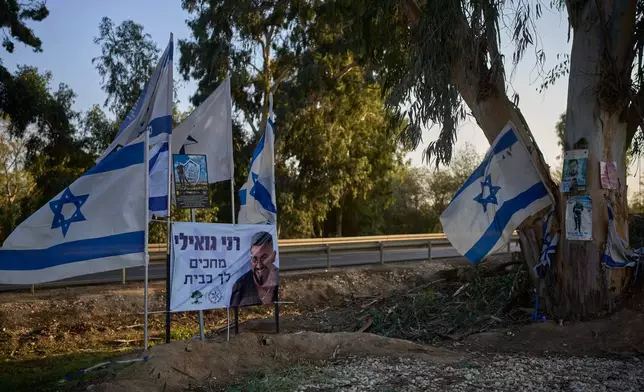
FILE - A memorial site at the spot where Ran Gvili, the last hostage in the Gaza Strip, was killed while fighting Hamas militants, stands in Kibbutz Alumim, Israel, Dec. 4, 2025. (AP Photo/Ohad Zwigenberg, File)
FILE - A memorial site at the spot where Ran Gvili, the last hostage in the Gaza Strip, was killed while fighting Hamas militants, stands in Kibbutz Alumim, Israel, Dec. 4, 2025. (AP Photo/Ohad Zwigenberg, File)

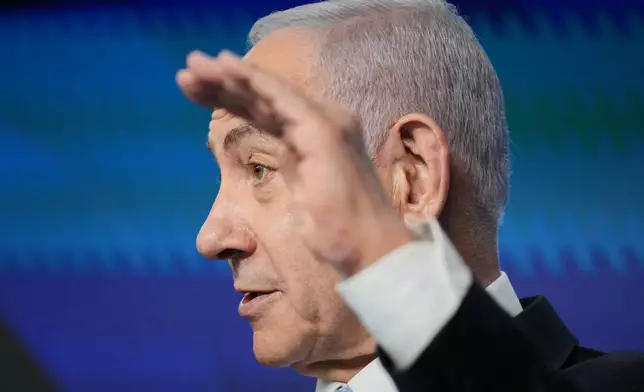
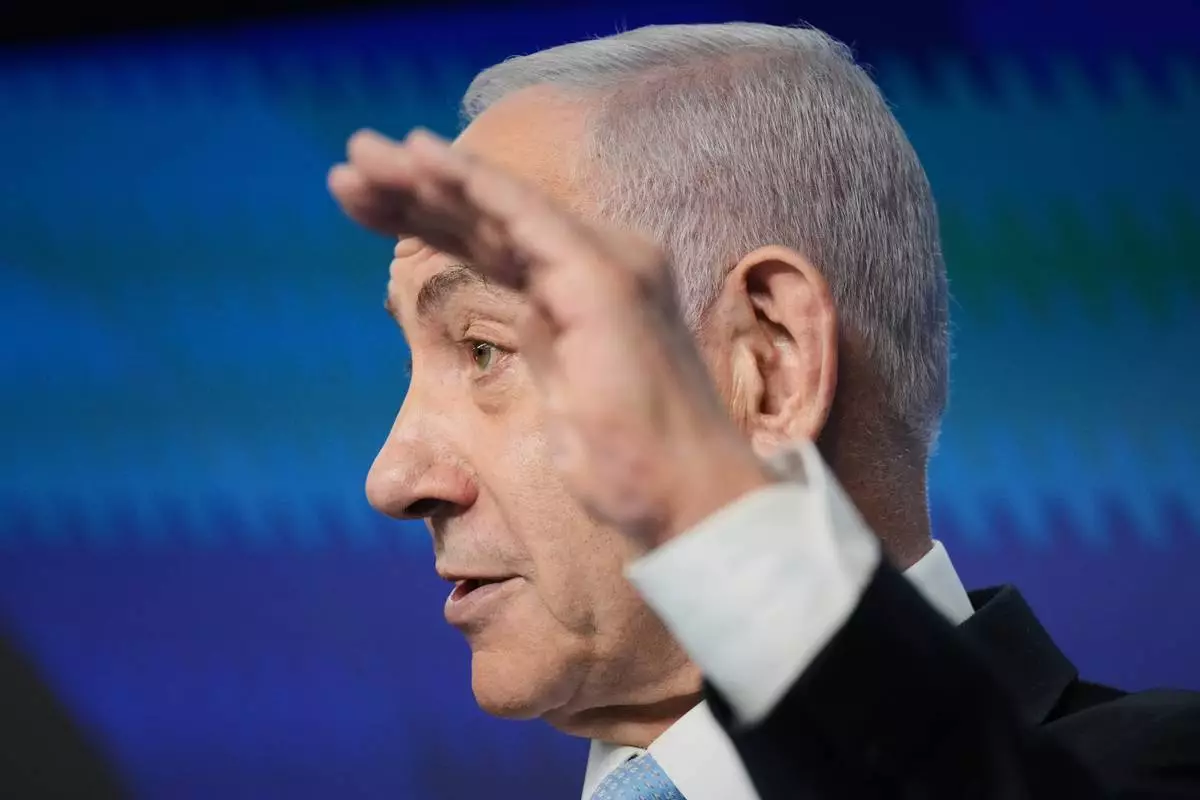
FILE - Israeli Prime Minister Benjamin Netanyahu speaks to the media during a joint press conference with German Chancellor Friedrich Merz in Jerusalem Dec. 7, 2025. (AP Photo/Ariel Schalit, Pool, File)
FILE - Israeli Prime Minister Benjamin Netanyahu speaks to the media during a joint press conference with German Chancellor Friedrich Merz in Jerusalem Dec. 7, 2025. (AP Photo/Ariel Schalit, Pool, File)

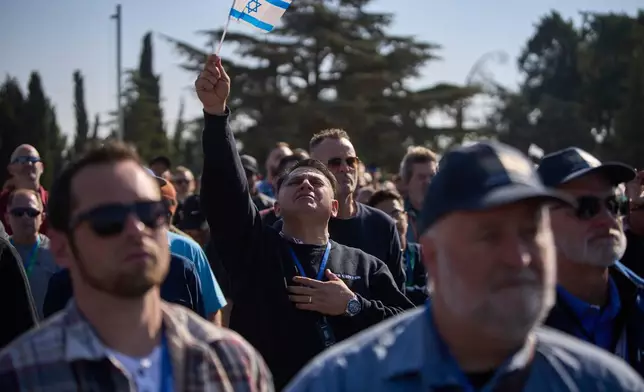
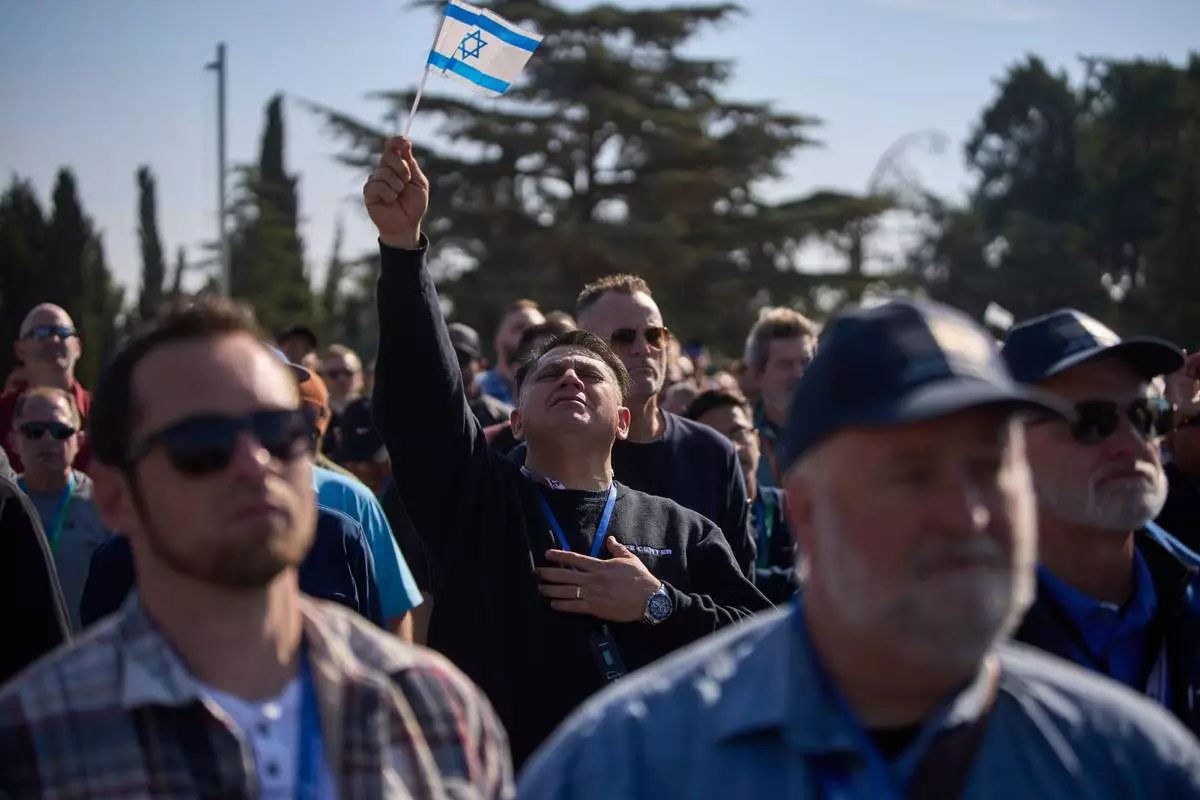
FILE - People pray as they visit at Mount Herzl military cemetery in Jerusalem, Dec. 4, 2025. (AP Photo/Ohad Zwigenberg, File)
FILE - People pray as they visit at Mount Herzl military cemetery in Jerusalem, Dec. 4, 2025. (AP Photo/Ohad Zwigenberg, File)

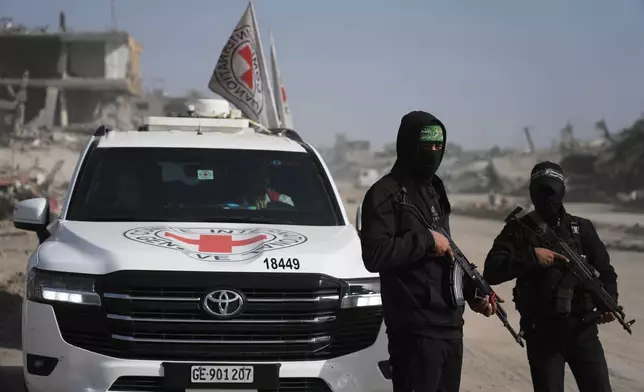
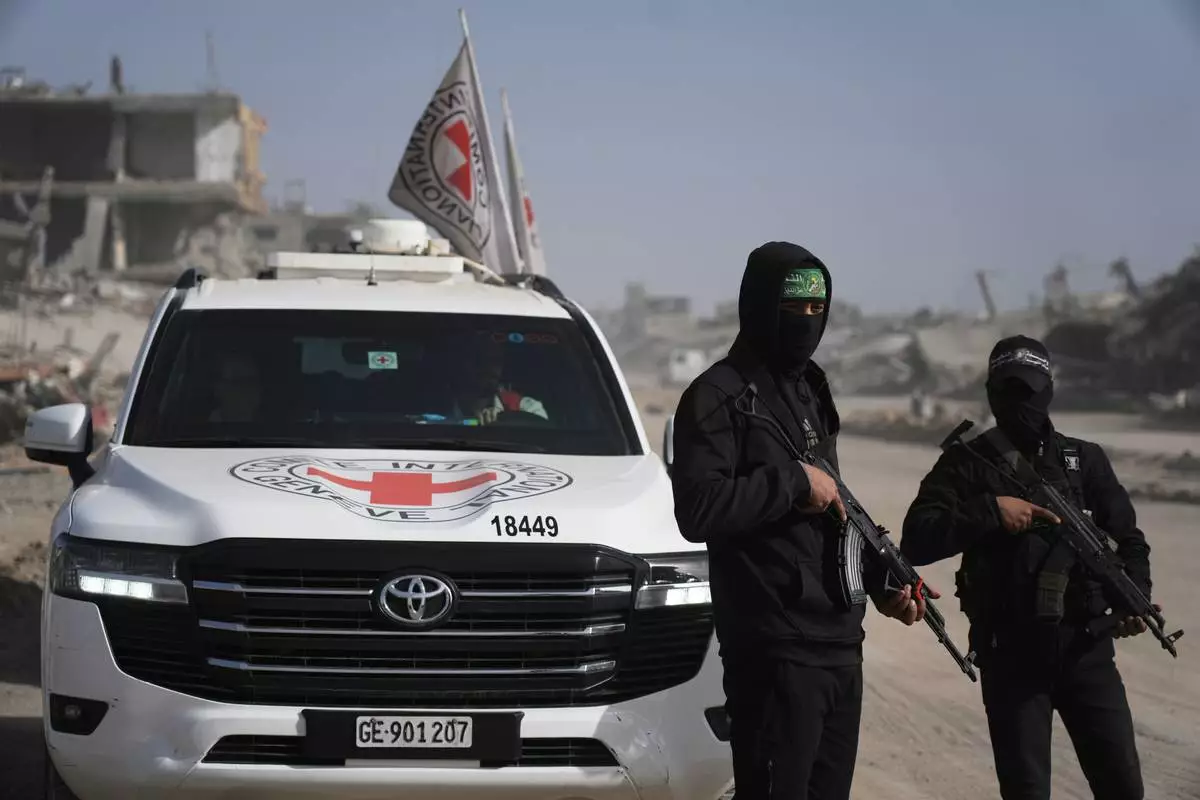
FILE - Hamas militants accompanied by members of the International Committee of the Red Cross (ICRC) head to Zeitoun neighborhood of Gaza City to search for the remains of deceased hostages, Dec. 8, 2025. (AP Photo/Jehad Alshrafi, File)
FILE - Hamas militants accompanied by members of the International Committee of the Red Cross (ICRC) head to Zeitoun neighborhood of Gaza City to search for the remains of deceased hostages, Dec. 8, 2025. (AP Photo/Jehad Alshrafi, File)

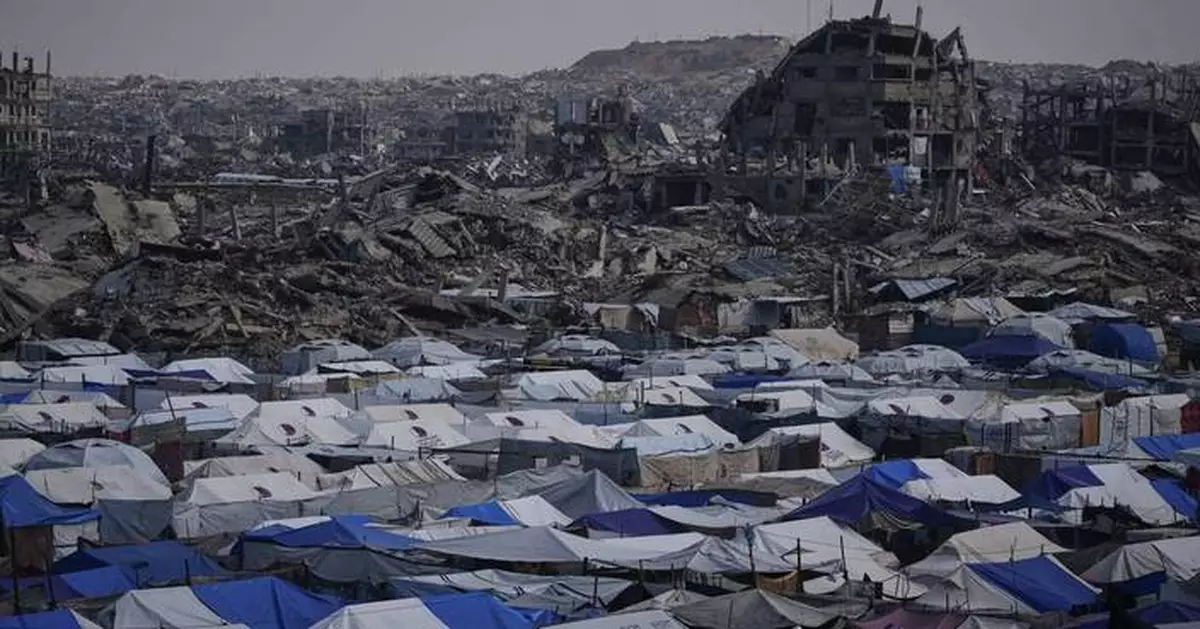
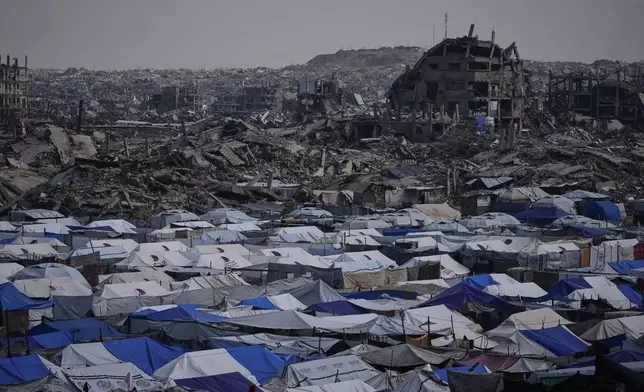
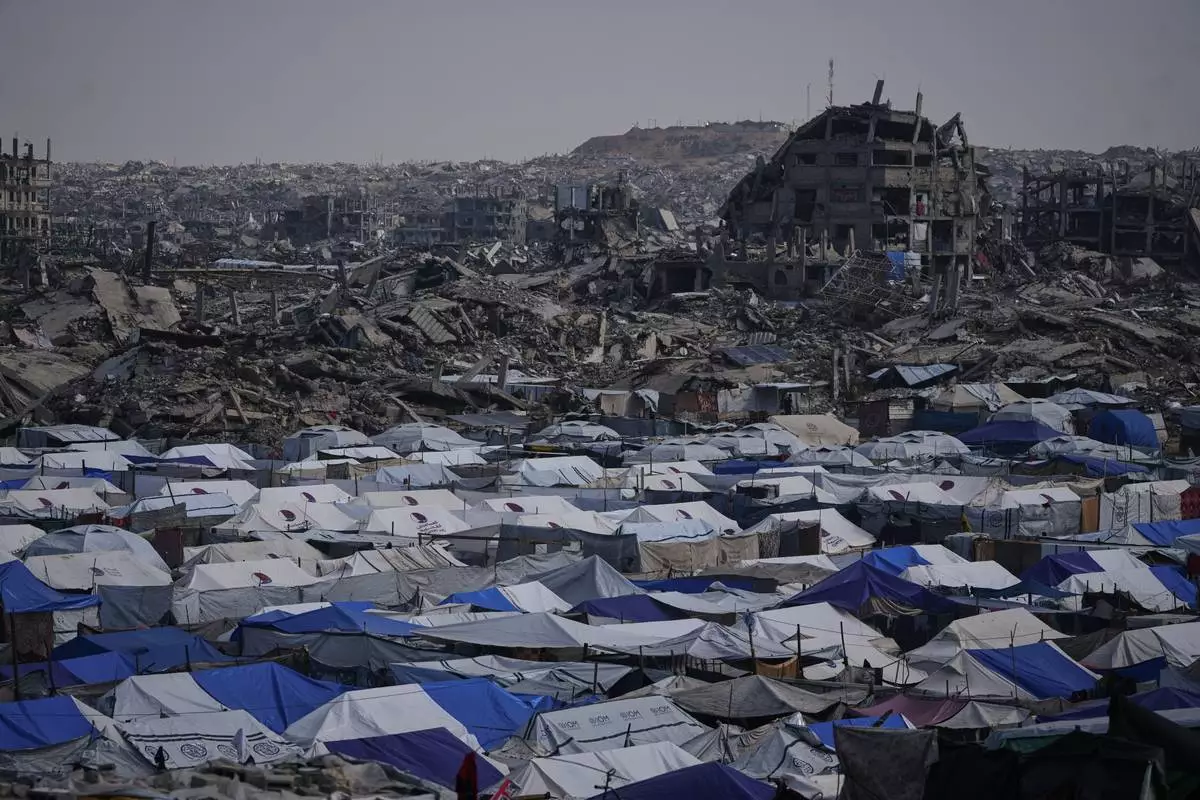
FILE - Tents sheltering displaced Palestinians stand amid the destruction left by the Israeli air and ground offensive in Gaza City Dec. 5, 2025. (AP Photo/Abdel Kareem Hana, File)

FILE - Tents sheltering displaced Palestinians stand amid the destruction left by the Israeli air and ground offensive in Gaza City Dec. 5, 2025. (AP Photo/Abdel Kareem Hana, File)

U.S. President Donald Trump’s 20-point plan — which was approved by the U.N. Security Council — lays out an ambitious vision for ending Hamas’ rule of Gaza. If successful, it would see the rebuilding of a demilitarized Gaza under international supervision, normalized relations between Israel and the Arab world and a possible pathway to Palestinian independence.

But if the deal stalls, Gaza could be trapped in an unstable limbo for years to come, with Hamas remaining in control of parts of the territory, Israel’s army enforcing an open-ended occupation and its residents stuck homeless, unemployed, unable to travel abroad and dependent on international aid to stay alive.

Sheikh Mohammed bin Abdulrahman Al Thani, the prime minister of Qatar and a key mediator, said over the weekend that the ceasefire is at a critical point, while Israeli Prime Minister Benjamin Netanyahu is set to travel to the White House this month to discuss the next steps.

Here is a closer look at the next stages of the ceasefire and the potential pitfalls.

Trumps plan calls for the formation of an international force — known as International Stabilization Force — to maintain security and train Palestinian police to one day to take over. That force has not yet been formed, and a deployment date has not been announced.

Some countries — including Egypt, Turkey, Indonesia, Pakistan and Indonesia — have expressed willingness to participate. But no firm decisions have been made.

A U.S. official, speaking on condition of anonymity to discuss diplomatic talks, says partner countries are holding meetings this month to finalize operations. He predicted “boots on the ground” in early 2026.

But there are pitfalls. The force’s command structure and authorities remain unknown.

Hamas says it will oppose any attempts by the force to disarm it, and contributing nations may not to want to risk clashes to take away its weapons. Israel, meanwhile, is hesitant to trust an international body with its security needs.

Trump has said he will head an international board to supervise a committee of Palestinian technocrats running Gaza’s day-to-day affairs. The board will oversee reconstruction and an open-ended reform process by the Palestinian Authority, with the goal of one day allowing the internationally recognized authority to govern Gaza.

So far, Trump is the only board member officially named, though former British Prime Minister Tony Blair's name has been floated as a possibility. Another U.S. official, also speaking on condition of anonymity to discuss closed-door deliberations, says members of the board will be announced in the coming weeks.

The key challenge will be forming a board that can work with Israel, Hamas, the mediators and international aid agencies.

Trump’s plan calls for an economic development plan to “rebuild and energize Gaza,” which suffered widespread destruction during the war and where most of the territory’s 2 million people are displaced and unemployed.

Still, no such plan has been announced. Egypt is expected to host a conference this month for donor nations to pledge reconstruction aid.

The United Nations has estimated the cost of rebuilding Gaza would amount to $70 billion. Raising that money will be difficult. Even more difficult would be finding a plan acceptable to the many governments involved, along with their private sector partners.

The ceasefire deal calls for Hamas to surrender all of its weapons under the supervision of international monitors. Militants who disarm will be granted amnesty and the option to leave Gaza.

However, Hamas, whose ideology is based on armed resistance against Israel, says it will not disarm until Israel ends its occupation of Palestinian territories.

Bassem Naim, a senior Hamas official, told The Associated Press that the group is open to “ freezing or storing” its weapons while a political process takes place, perhaps over many years. It is unclear whether that is sufficient for Israel.

Failure to disarm Hamas could lead to renewed fighting with Israel, clashes with international troops and block progress on the rest of the peace plan.

The Palestinians are to form a “technocratic, apolitical” committee to run daily affairs in Gaza, under the supervision of the Board of Peace.

The committee’s members have not been announced and Israel's opposition to having any Palestinians connected to Hamas or the Palestinian Authority on it could make choosing them more difficult.

It is also not clear if the committee will give Palestinians any real voice in the government or will exist only to implement decisions by the Board of Peace. If the committee is seen as just a façade, it risks not gaining public support and some figures may balk at joining it.

Under the ceasefire, Israel is to withdraw from all of Gaza, with the exception of a small buffer zone along the border. At the moment, Israel retains control of just over half of Gaza.

The plan says further withdrawals will be based upon “standards, milestones and timeframes linked to demilitarization” to be negotiated by Israel, the U.S., the international force and other “guarantors.”

There are no firm timelines for further withdrawals, and Israel may refuse to pull back further. Its military chief, Lt. Gen. Eyal Zamir, called the so-called Yellow Line that divides the Israeli-held part of Gaza from the rest a “new border” that would serve as a “forward defensive line for our communities.”

The plan calls for a reform of the Palestinian Authority, which runs the West Bank, and create conditions for a “credible pathway” to Palestinian statehood.

Palestinian officials have met with Blair and U.S. officials, and have said they have begun reforms in key areas such as corruption, the education system and payments to families of prisoners convicted in attacks on Israelis.

Israel rejects the creation of a Palestinian state, opposes any role for the authority in postwar Gaza and may oppose attempts to bring it in even if some reforms are made. Without a pathway to statehood, any Palestinian support for the new system could crumble. The plan also offers no clear benchmarks or timelines for the reform process.
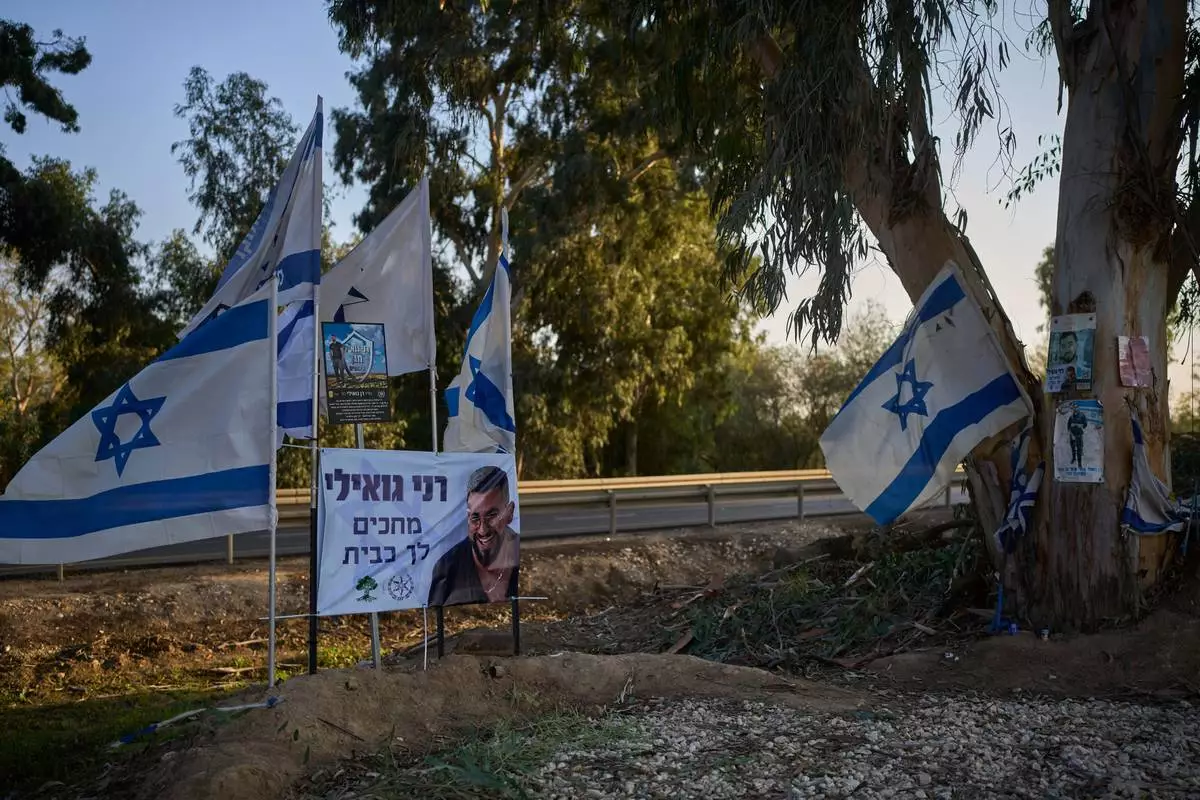
FILE - A memorial site at the spot where Ran Gvili, the last hostage in the Gaza Strip, was killed while fighting Hamas militants, stands in Kibbutz Alumim, Israel, Dec. 4, 2025. (AP Photo/Ohad Zwigenberg, File)
FILE - A memorial site at the spot where Ran Gvili, the last hostage in the Gaza Strip, was killed while fighting Hamas militants, stands in Kibbutz Alumim, Israel, Dec. 4, 2025. (AP Photo/Ohad Zwigenberg, File)

FILE - Israeli Prime Minister Benjamin Netanyahu speaks to the media during a joint press conference with German Chancellor Friedrich Merz in Jerusalem Dec. 7, 2025. (AP Photo/Ariel Schalit, Pool, File)
FILE - Israeli Prime Minister Benjamin Netanyahu speaks to the media during a joint press conference with German Chancellor Friedrich Merz in Jerusalem Dec. 7, 2025. (AP Photo/Ariel Schalit, Pool, File)

FILE - People pray as they visit at Mount Herzl military cemetery in Jerusalem, Dec. 4, 2025. (AP Photo/Ohad Zwigenberg, File)
FILE - People pray as they visit at Mount Herzl military cemetery in Jerusalem, Dec. 4, 2025. (AP Photo/Ohad Zwigenberg, File)

FILE - Hamas militants accompanied by members of the International Committee of the Red Cross (ICRC) head to Zeitoun neighborhood of Gaza City to search for the remains of deceased hostages, Dec. 8, 2025. (AP Photo/Jehad Alshrafi, File)
FILE - Hamas militants accompanied by members of the International Committee of the Red Cross (ICRC) head to Zeitoun neighborhood of Gaza City to search for the remains of deceased hostages, Dec. 8, 2025. (AP Photo/Jehad Alshrafi, File)

FILE - Tents sheltering displaced Palestinians stand amid the destruction left by the Israeli air and ground offensive in Gaza City Dec. 5, 2025. (AP Photo/Abdel Kareem Hana, File)


FILE - Tents sheltering displaced Palestinians stand amid the destruction left by the Israeli air and ground offensive in Gaza City Dec. 5, 2025. (AP Photo/Abdel Kareem Hana, File)

SURIN, Thailand (AP) — Cambodia’s powerful Senate President Hun Sen on Tuesday vowed that his country would carry out a fierce fight against Thailand as a second day of widespread renewed combat between the Southeast Asian neighbors drove tens of thousands of people to flee border areas.

Fighting broke out following a skirmish in which one Thai soldier was killed Sunday night, despite a ceasefire that ended five days of fighting in July over competing territorial claims along their border, which resulted in dozens of civilian and military dead on both sides, and the evacuation of over 100,000 civilians.

In a statement posted to Facebook and Telegram, Hun Sen claimed that his country had refrained from firing back on Monday, but overnight began to shoot back at Thai forces. He wrote that a strategy of concentrating on where Thailand was advancing would allow Cambodia to "to weaken and destroy enemy forces through counterattacks.”

Thailand’s army said Cambodian forces had fired artillery at a village in Sa Kaeo province early Tuesday morning, though the strike caused no casualties. Thailand says that Cambodian forces also fired at its troops Sunday and Monday, as each side blames the other for firing the first shots.

“Cambodia wants peace, but Cambodia is forced to fight back to defend its territory,” Hun Sen said. Hun Sen was Cambodia’s long-serving prime minister until 2023, when he was succeeded by his son Hun Manet, but is still widely seen as the country’s de facto leader.

Cambodia’s military announced Tuesday that the new fighting had killed seven civilians and wounded 20. A spokesperson for the Thai military announced Tuesday that one solder had been killed and 29 wounded in the new fighting.

Speaking at a news conference, Thai Rear Adm. Surasant Kongsiri said the navy was strengthening its position in eastern Thailand near the border with Cambodia.

Thailand on Monday carried out airstrikes along the frontier, which it said were a defensive action targeting military installations. Surasant said such operation would continue “until attacks stop.”

A separate statement from Thailand's 2nd Army Region, situated along the border, said almost 500 temporary shelters have been set up in four border provinces, accommodating 125,838 people. Additional refugees from the fighting are expected to stay with relatives in safe areas.

It said Cambodia attacked Thai positions with rocket and drone attacks.

Cambodia said people fled villages near the border.

Thai Prime Minister Anutin Charnvirakul said Monday in a televised speech that military operations would be carried out as necessary to defend the country and protect public safety.

“Thailand has never wished for violence. I’d like to reiterate that Thailand has never initiated a fight or an invasion, but will never tolerate a violation of its sovereignty,” he said.

Thailand and Cambodia have a history of enmity over centuries and experience periodic tensions along their land border of more than 800 kilometers (500 miles).

The ceasefire that was agreed to end July’s fighting was brokered by Malaysia and pushed through by pressure from U.S. President Donald Trump, who threatened to withhold trade privileges from the two nations unless they agreed to it.

A more detailed agreement signed in October called for removing heavy weapons and equipment from the border; desisting from disseminating false information, accusations, and harmful rhetoric; implementing measures to restore mutual trust and full diplomatic relations; and coordinating operations to remove land mines.

None of these actions appear to have been implemented in full or in good faith by either side. After the ceasefire, both nations continued to fight a bitter propaganda war using disinformation, alongside minor outbreaks of cross-border violence.

A major Cambodian complaint has been that Thailand continues to hold 18 prisoners taken prisoner when the ceasefire became active. Thailand accuses Cambodia of laying new land mines in the areas under dispute, in several cases maiming Thai soldiers. Cambodia says the mines are left over from decades of civil war that ended in 1999.

The mines issue caused Thailand to declare earlier this month that it was indefinitely pausing implementation of the details of the ceasefire until Cambodia apologized for the

U.N. Secretary-General Antonio Guterres expressed concern over the new fighting, especially the use of air strikes and heavy weapons, and called on the warring parties to recommit to the ceasefire.

Sopheng Cheang reported from Phnom Penh, Cambodia.

Thai people, who fled clashes between Thai and Cambodian soldiers, takes shelter in Buriram province, Thailand. Tuesday, Dec. 9, 2025. (AP Photo/Wason Wanichakorn)

Thai people, who fled clashes between Thai and Cambodian soldiers, takes shelter in Buriram province, Thailand. Tuesday, Dec. 9, 2025. (AP Photo/Wason Wanichakorn)

A Thai Buddhist monk uses his computer while taking shelter in Buriram province, Thailand, Tuesday, Dec. 9, 2025, after he fled clashes between Thai and Cambodian soldiers. (AP Photo/Wason Wanichakorn)

A Thai Buddhist monk uses his computer while taking shelter in Buriram province, Thailand, Tuesday, Dec. 9, 2025, after he fled clashes between Thai and Cambodian soldiers. (AP Photo/Wason Wanichakorn)

Thai residents, who fled clashes between Thai and Cambodian soldiers, takes shelter in Buriram province, Thailand, Tuesday, Dec. 9, 2025. (AP Photo/Wason Wanichakorn)

Thai residents, who fled clashes between Thai and Cambodian soldiers, takes shelter in Buriram province, Thailand, Tuesday, Dec. 9, 2025. (AP Photo/Wason Wanichakorn)

In this photo released by Agence Kampuchea Press (AKP), Cambodian villagers sit on tractors as they flee from the home in Preah Vihear province, Cambodia, Monday, Dec. 8, 2025. (AKP via AP)

In this photo released by Agence Kampuchea Press (AKP), Cambodian villagers sit on tractors as they flee from the home in Preah Vihear province, Cambodia, Monday, Dec. 8, 2025. (AKP via AP)

A Thai resident who fled clashes between Thai and Cambodian soldiers, uses mobile phone while taking shelter in Buriram province, Thailand, Tuesday, Dec. 9, 2025. (AP Photo/Wason Wanichakorn)

A Thai resident who fled clashes between Thai and Cambodian soldiers, uses mobile phone while taking shelter in Buriram province, Thailand, Tuesday, Dec. 9, 2025. (AP Photo/Wason Wanichakorn)

Recommended Articles