Skip to Content Facebook Feature Image

UN says world must jointly tackle issues of climate change, pollution, biodiversity and land loss

News

UN says world must jointly tackle issues of climate change, pollution, biodiversity and land loss
News

News

UN says world must jointly tackle issues of climate change, pollution, biodiversity and land loss

2025-12-09 17:03 Last Updated At:17:10

The world needs a new approach to environmental crises threatening the health of people and the planet by adopting policies to jointly tackle climate change, biodiversity loss, land degradation and pollution, according to a U.N. report released Tuesday.

Those issues are inextricably linked and require solutions that include increased spending and financial incentives to transition away from fossil fuels, encourage sustainable agricultural practices, curb pollution and limit waste, the authors of the U.N. Environment Programme's quadrennial Global Environment Outlook said.

More Images
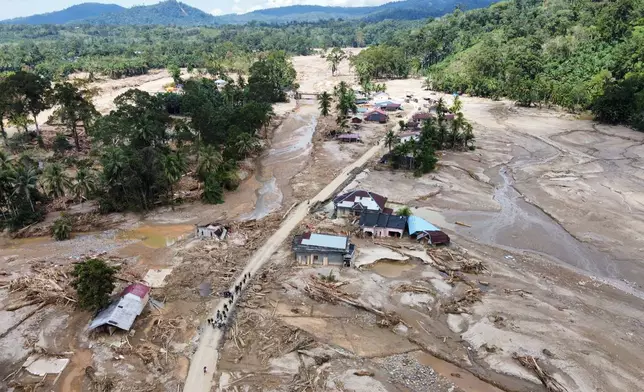
FILE - People walk along a road in a village affected by a flash flood in Batang Toru, North Sumatra, Indonesia, Dec. 1, 2025. (AP Photo/Binsar Bakkara, File)
FILE - People walk along a road in a village affected by a flash flood in Batang Toru, North Sumatra, Indonesia, Dec. 1, 2025. (AP Photo/Binsar Bakkara, File)

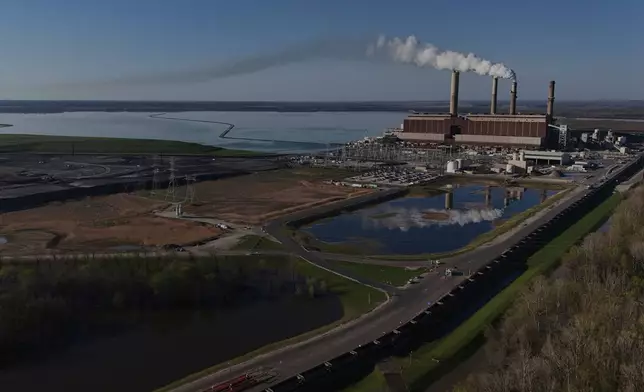
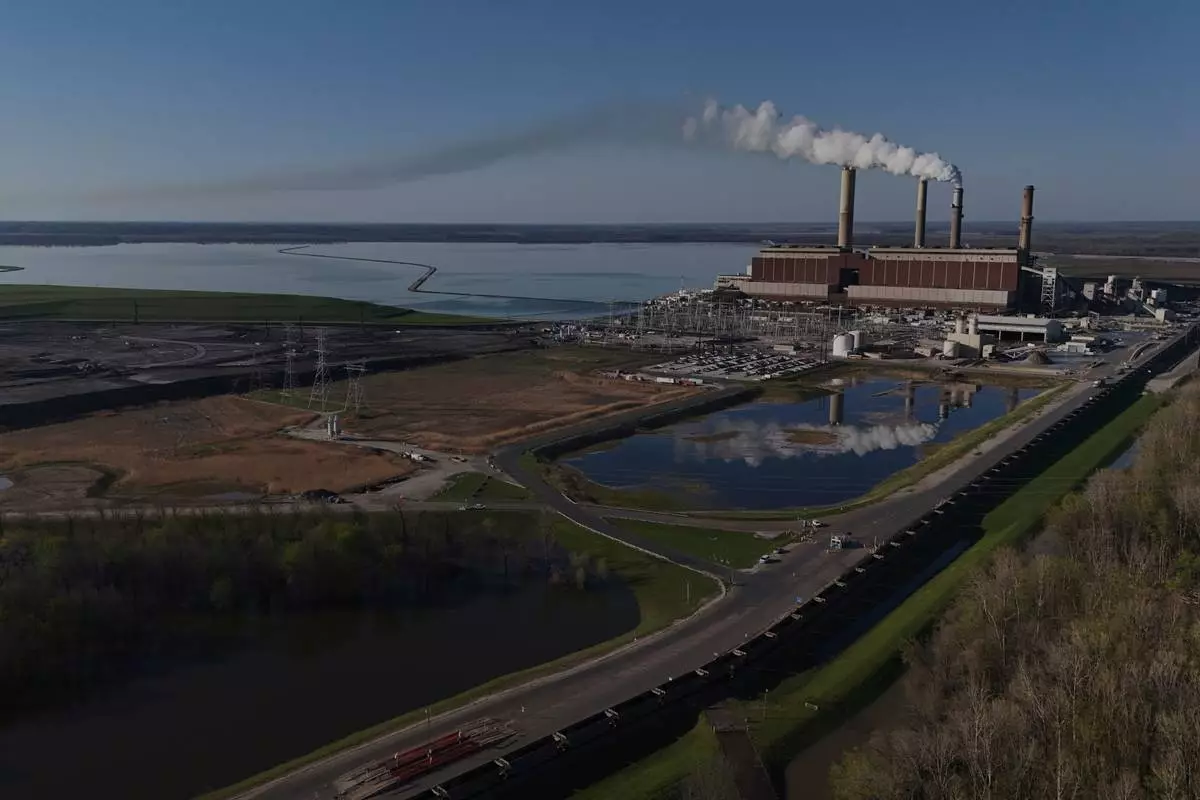
FILE - The Gibson Power Plant operates April 10, 2025, in Princeton, Ind. (AP Photo/Joshua A. Bickel, File)
FILE - The Gibson Power Plant operates April 10, 2025, in Princeton, Ind. (AP Photo/Joshua A. Bickel, File)

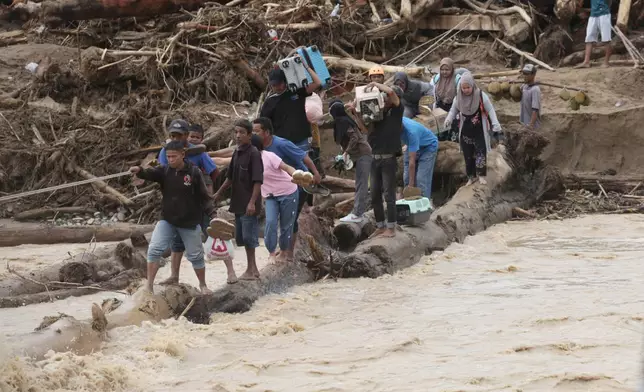
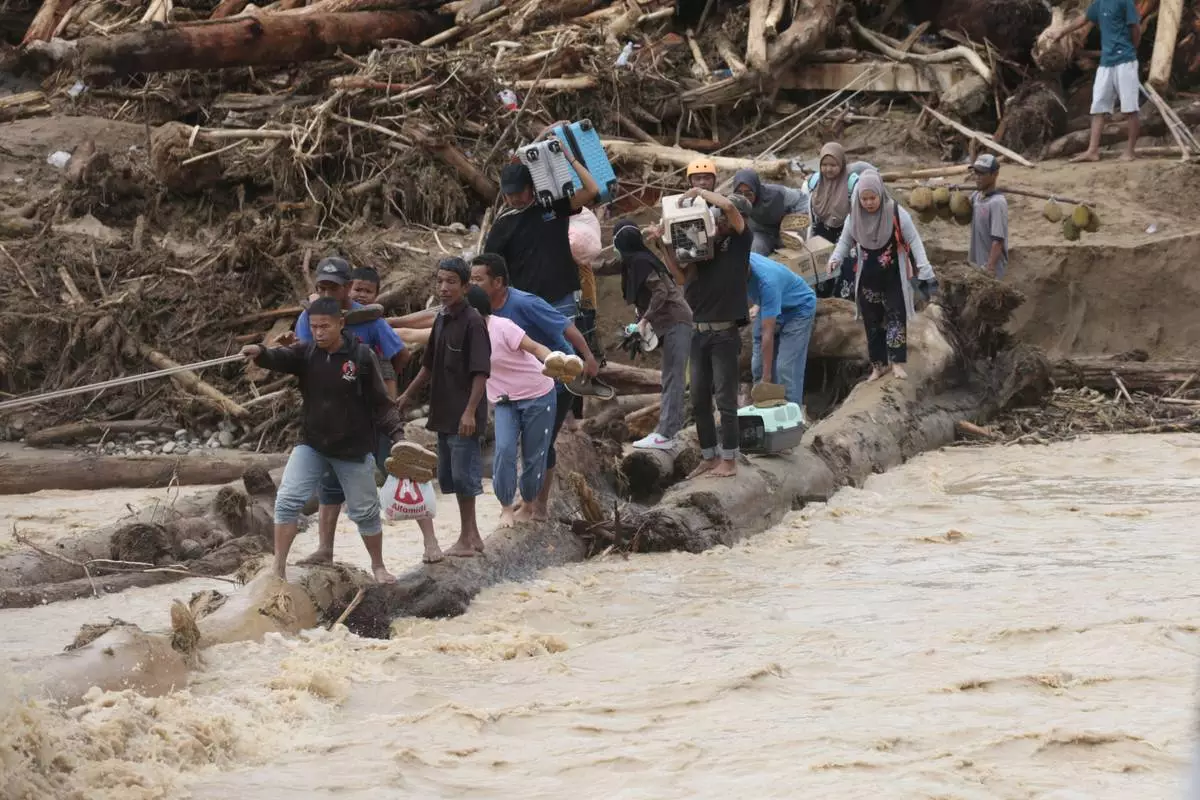
FILE - Flood survivors use logs to cross a river in Batang Toru, North Sumatra, Indonesia, Dec. 2, 2025. (AP Photo/Binsar Bakkara, File)
FILE - Flood survivors use logs to cross a river in Batang Toru, North Sumatra, Indonesia, Dec. 2, 2025. (AP Photo/Binsar Bakkara, File)

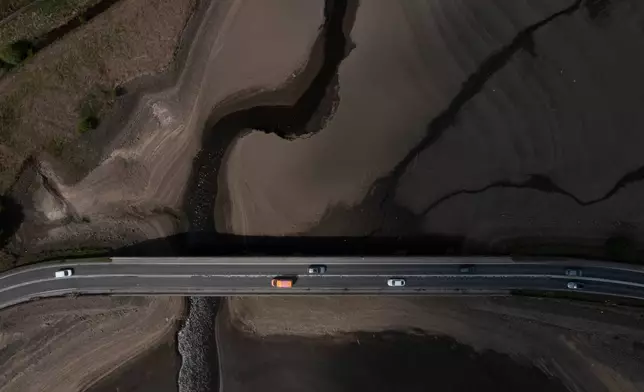
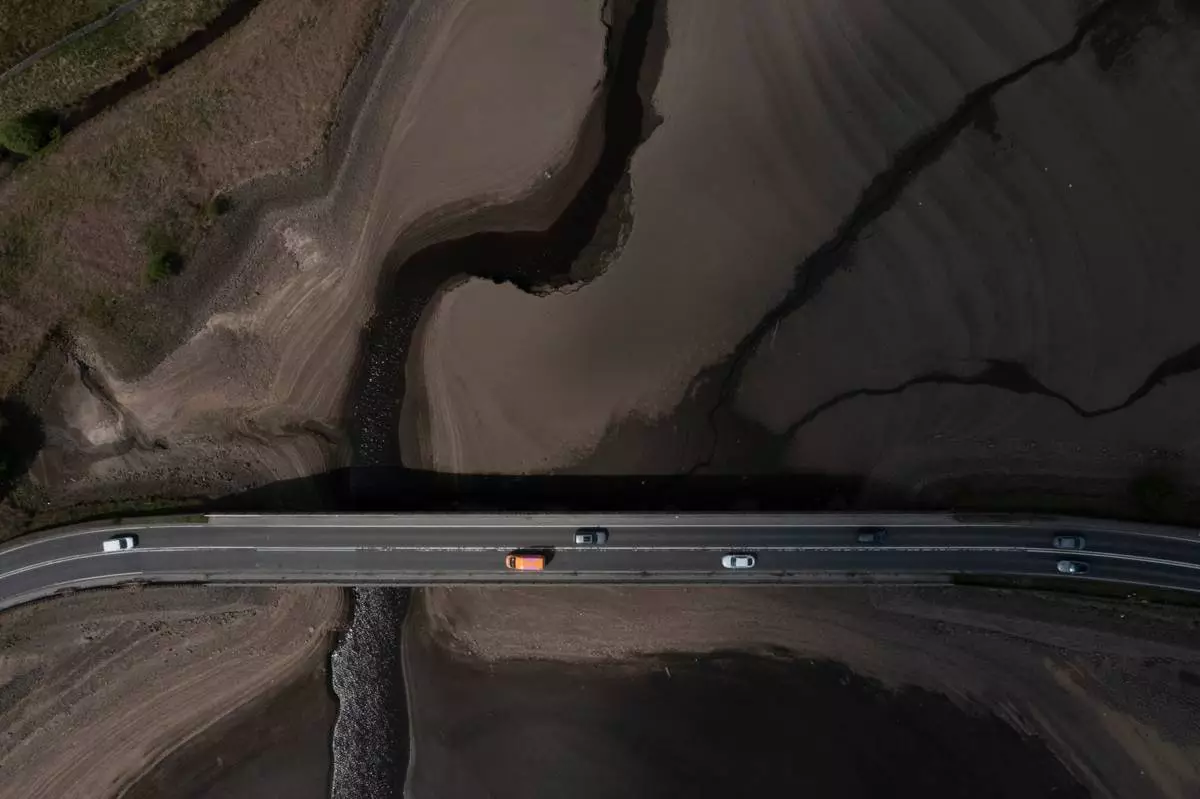
FILE - Traffic crosses a bridge at Woodhead Reservoir in Derbyshire as England experiences a drought in Woodhead, England, May 19, 2025. (AP Photo/Jon Super, File)
FILE - Traffic crosses a bridge at Woodhead Reservoir in Derbyshire as England experiences a drought in Woodhead, England, May 19, 2025. (AP Photo/Jon Super, File)

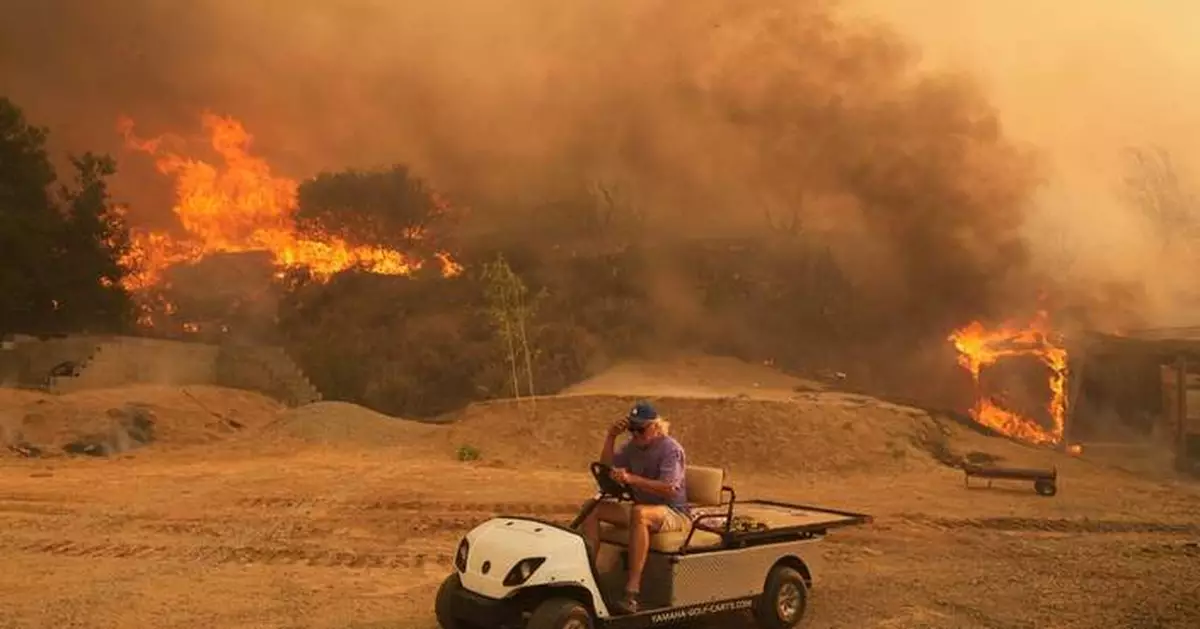
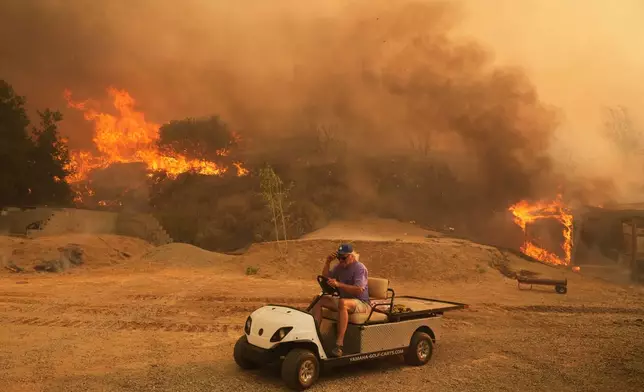
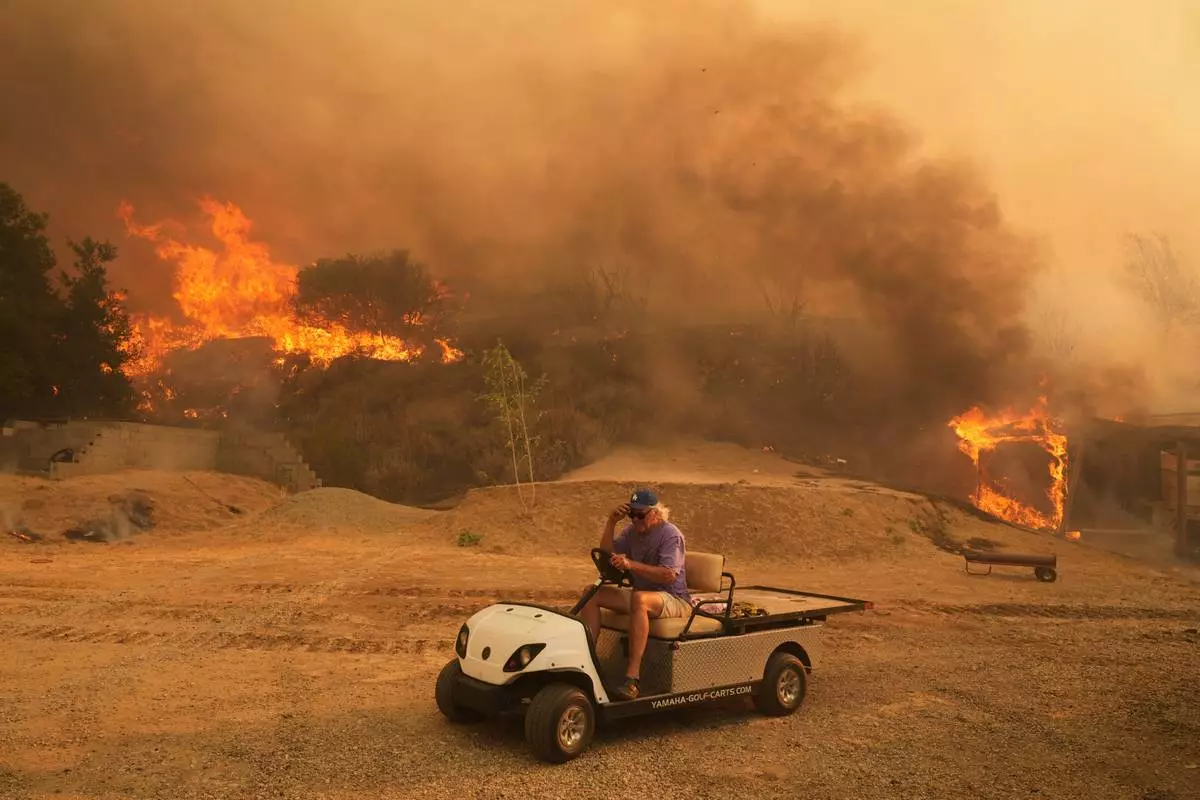
FILE - A resident rides a golf cart as he exits his property while the Canyon Fire burns on Aug. 7, 2025, in Hasley Canyon, Calif. (AP Photo/Marcio Jose Sanchez, File)

FILE - A resident rides a golf cart as he exits his property while the Canyon Fire burns on Aug. 7, 2025, in Hasley Canyon, Calif. (AP Photo/Marcio Jose Sanchez, File)

“You can’t think of climate change without thinking of biodiversity, land degradation and pollution,” said Bob Watson, one of the lead authors and a former top NASA and British climate scientist. "You can’t think of biodiversity loss without thinking about the implications of climate change and pollution."

They’re “all undermining our economy," worsening health and poverty and threatening food and water security and even national security, Watson said.

Almost 300 scientists from 83 countries contributed to this year's report — called the most comprehensive global environment assessment ever undertaken — which was released during the U.N. Environment Assembly in Nairobi, Kenya.

Experts have warned that the world is nearing a tipping point on climate change, species and land loss and other harms. But efforts to address those problems largely have been pursued through individual agreements that haven't made nearly enough progress, they said.

Instead, they advocate an approach that involves every area of government, the financial sector, industry and citizens and a circular economy that recognizes that natural resources are limited.

“What we’re saying is we can become much more sustainable, but it will take unprecedented change to transform these systems,” Watson said. “It has to be done rapidly now because we’re running out of time.”

The report lays out a dire future if the world continues on its current path.

Emissions of heat-trapping greenhouse gases — primarily from burning fossil fuels such as coal, gas and oil — reached a new high in 2024, despite decades of negotiations between countries to curb emissions.

Ten years ago, almost 200 nations signed the Paris Agreement with the goal of limiting future warming to no more than 1.5 degrees Celsius (2.7 degrees Fahrenheit) since preindustrial times to avoid or lessen the most catastrophic effects of climate change. But on the current trajectory, the climate could warm by 2.4 degrees Celsius (4 degrees Fahrenheit) by 2100, Watson said.

Scientists say climate change is contributing to wilder weather extremes, including more intense storms, drought, heat and wildfires.

What's more, climate change is a threat multiplier, meaning that it makes things like land degradation, deforestation and biodiversity loss worse, said Katharine Hayhoe, a climate scientist at Texas Tech University and chief scientist at the Nature Conservancy, who wasn't involved in the report.

“If we don’t fix climate change, we’re not going to be able to fix these other issues too,” Hayhoe said.

Among other challenges: Up to 40% of land area globally is degraded; more than 1 million plant and animal species face extinction; and pollution contributes to an estimated 9 million deaths a year.

Adopting a comprehensive approach would be expensive, scientists acknowledge, but cost far less than the harms that otherwise could result.

The report says that to achieve a goal of net-zero emissions by 2050 and restore biodiversity, about $8 trillion in global investment is needed every year. But starting in 2050, economic benefits will surpass spending, growing to $20 trillion a year by 2070 and $100 trillion a year thereafter.

Nations also must look beyond gross domestic product as a barometer for economic health, because it doesn't measure whether growth is sustainable or recognize its potential harms, Watson said.

Environmental issues aren't the only things interlinked, Watson said. He also said governments, nonprofits, industry and the financial sector also must ensure that there are incentives and funding for renewable energy and sustainable agricultural practices, for example.

University of Pennsylvania climate scientist Michael Mann, who wasn't involved in the report, welcomed its emphasis on tackling issues across governments and society.

“We must do what is right, rather than what seems politically expedient,” Mann said. “The stakes are simply too great."

Despite the report's urgent call for action, international cooperation is anything but guaranteed, scientists say — especially as U.S. President Donald Trump has refused to participate in many of the discussions.

Trump, who withdrew the United States from the Paris Agreement, has called climate change a hoax. He's promoted fossil fuel use, canceled permits for renewable energy and is abandoning automobile fuel-efficiency standards.

“International action and agreements are becoming harder and harder,” Watson said, noting that this year's U.N. climate conference in Brazil failed to “move in the direction we needed it to move” with stronger commitments to reduce greenhouse gas emissions and other issues.

Talks this summer on a treaty to address plastic pollution in Geneva ended without an agreement, though a U.N. conference earlier in the year garnered commitments for funding to protect global biodiversity.

Watson said that the U.S. didn't attend the intergovernmental meeting in Nairobi, but joined discussions on the last day and "said they didn’t agree with anything in the report.”

“Some countries might say if the U.S. is not willing to act, why should we act?” Watson said.

Still, he believes that some countries will move forward, while others, including the U.S., could fall behind.

Hayhoe, the Texas Tech scientist, said that she's confident changes will happen, because the stakes are becoming too great.

“It is not about saving the planet. The planet will be orbiting the sun long after we’re gone,” Hayhoe said. “The question is, will there be a healthy, thriving human society on that planet? And the answer to that question is very much up for grabs at this point.”

The Associated Press’ climate and environmental coverage receives financial support from multiple private foundations. AP is solely responsible for all content. Find AP’s standards for working with philanthropies, a list of supporters and funded coverage areas at AP.org.
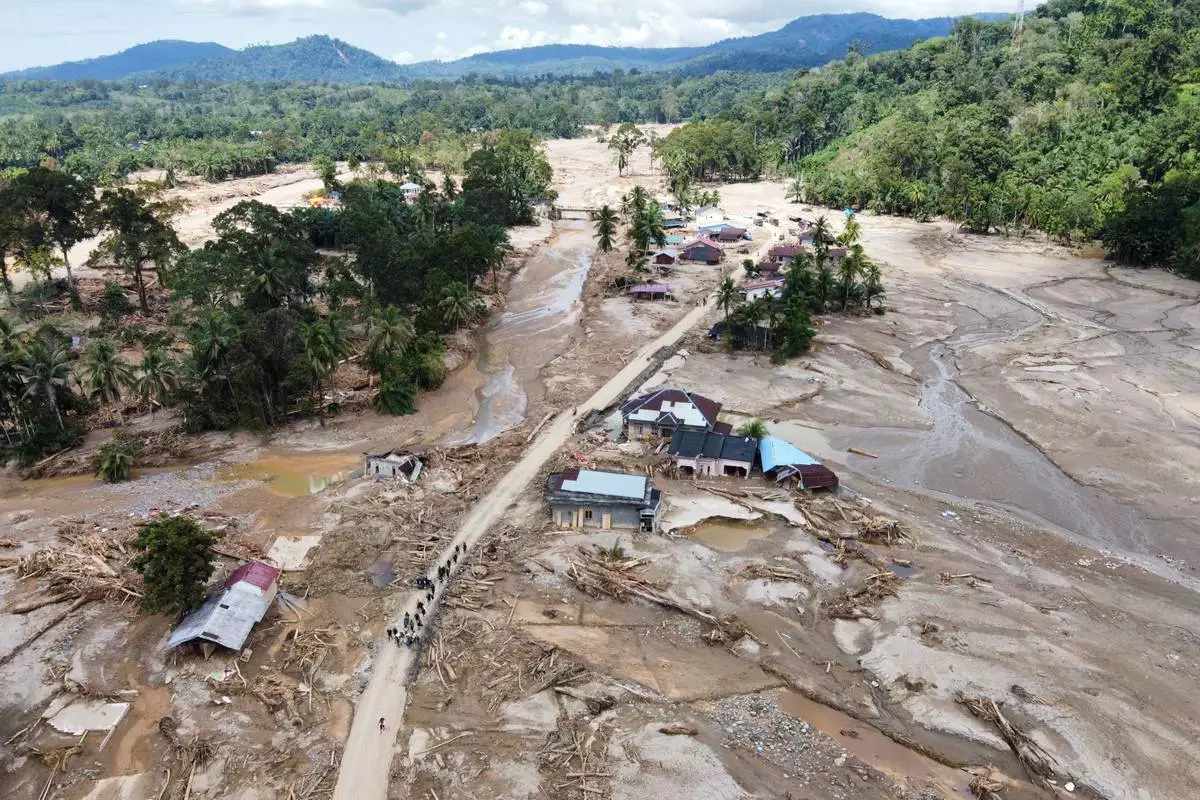
FILE - People walk along a road in a village affected by a flash flood in Batang Toru, North Sumatra, Indonesia, Dec. 1, 2025. (AP Photo/Binsar Bakkara, File)
FILE - People walk along a road in a village affected by a flash flood in Batang Toru, North Sumatra, Indonesia, Dec. 1, 2025. (AP Photo/Binsar Bakkara, File)

FILE - The Gibson Power Plant operates April 10, 2025, in Princeton, Ind. (AP Photo/Joshua A. Bickel, File)
FILE - The Gibson Power Plant operates April 10, 2025, in Princeton, Ind. (AP Photo/Joshua A. Bickel, File)

FILE - Flood survivors use logs to cross a river in Batang Toru, North Sumatra, Indonesia, Dec. 2, 2025. (AP Photo/Binsar Bakkara, File)
FILE - Flood survivors use logs to cross a river in Batang Toru, North Sumatra, Indonesia, Dec. 2, 2025. (AP Photo/Binsar Bakkara, File)

FILE - Traffic crosses a bridge at Woodhead Reservoir in Derbyshire as England experiences a drought in Woodhead, England, May 19, 2025. (AP Photo/Jon Super, File)
FILE - Traffic crosses a bridge at Woodhead Reservoir in Derbyshire as England experiences a drought in Woodhead, England, May 19, 2025. (AP Photo/Jon Super, File)

FILE - A resident rides a golf cart as he exits his property while the Canyon Fire burns on Aug. 7, 2025, in Hasley Canyon, Calif. (AP Photo/Marcio Jose Sanchez, File)

FILE - A resident rides a golf cart as he exits his property while the Canyon Fire burns on Aug. 7, 2025, in Hasley Canyon, Calif. (AP Photo/Marcio Jose Sanchez, File)
SURIN, Thailand (AP) — Cambodia’s powerful Senate President Hun Sen on Tuesday vowed that his country would carry out a fierce fight against Thailand as a second day of widespread renewed combat between the Southeast Asian neighbors drove tens of thousands of people to flee border areas.

Fighting broke out following a skirmish on Sunday during which two Thai soldiers were injured, derailing a ceasefire that ended fighting over competing territorial claims in July. The five days of fighting then left dozens dead on both sides, and forced the evacuation of over 100,000 civilians.

In a sign that neither side was willing to back down, Thai Prime Minister Anutin Charnvirakul said Tuesday that Cambodia had not yet contacted Thailand about possible negotiations and the fighting would continue.

“We’ve got to do what we’ve got to do,” he said. “The government will support all kinds of military operations as planned earlier.” He had said Monday that military action was necessary to safeguard the nation’s sovereignty and ensure public safety.

In a statement posted to Facebook and Telegram, Hun Sen claimed that his country had refrained from retaliating on Monday, but overnight began to fire back at Thai forces, saying Cambodia would "weaken and destroy enemy forces through counterattacks.”

Thailand’s military said Cambodia attacked Thai positions with artillery and rocket and drone attacks on Tuesday. Thailand says that Cambodian forces also fired at its troops Sunday and Monday, but each side blames the other for firing the first shots.

“Cambodia wants peace, but Cambodia is forced to fight back to defend its territory,” Hun Sen wrote. He was Cambodia’s long-serving prime minister until 2023, when he was succeeded by his son Hun Manet, but is still widely seen as the country’s de facto leader.

Cambodia’s military announced Tuesday that the new fighting had killed seven civilians and wounded 20. A Thai military spokesperson announced Tuesday that three soldiers have been killed in the new fighting.

Thailand on Monday carried out airstrikes along the frontier, which it said were a defensive action targeting military installations. Thai military spokesperson Rear Adm. Surasant Kongsiri said Tuesday that such operations would continue “until attacks stop.”

Ordinary citizens meanwhile had to deal with life after being relocated from the danger zones.

An evacuation shelter at a university in Thailand's northeastern city of Surin is hosting more than 3,600 people. Evacuees sit or lie on thin mats spread across the floor, and several have set up small tents in their allotted areas as sleeping spaces.

At lunchtime, some line up with their own plates to receive cooked rice, while others wait in place to be served ready-to-eat meals packed in small plastic bags. An army band plays for their entertainment.

Portable fans cool them during the day. Blankets, in piles beside them, keep them warm at night, when temperatures can fall to as low as 18 C (64 F).

“We were preparing to evacuate. We hadn’t left yet. But when we heard shots we hurried out immediately," cassava farmer Pan-ngam Kanchangthong told The Associated Press. "I was scared. Who wouldn’t be scared of shelling?”

The Thai army said almost 500 temporary shelters have been set up in four border provinces, accommodating 125,838 people. Additional refugees from the fighting are expected to stay with relatives in safe areas.

Evacuees on the Cambodian side had similar experiences.

“I felt terrified when I heard the sound of the explosion from the shelling. At that time, I was working at the garment factory," said 44-year-old Vach Neang, a father of seven.

“I called my wife and my kids but couldn't reach them, and by that time the sound of explosions was getting louder, so the factory owner let us go home," said Vach Neang, speaking at a former market in Cambodia’s northwestern province of Banteay Meanchey that has been repurposed as a shelter, He added that he packed just a few clothes before leaving his home.

Cambodian Information Minister Neth Pheaktra said almost 55,000 people have been evacuated and the numbers are mounting.

Thailand and Cambodia have a history of enmity over centuries and experience periodic tensions along their land border of more than 800 kilometers (500 miles). Centuries ago both were powerful empires, but Thailand's size and greater development over the past century give it the military advantage.

Some of the disputed territory hosts centuries-old temples that both nations covet as part of their legacy.

The ceasefire that ended July’s fighting was brokered by Malaysia and pushed through by pressure from U.S. President Donald Trump, who threatened to withhold trade privileges from the two nations unless they agreed to it.

A more detailed agreement signed in October called for removing heavy weapons from the border; desisting from disseminating false information and harmful rhetoric; implementing measures to restore mutual trust; and coordinating operations to remove land mines.

None of these actions appear to have been fully implemented by either side. After the ceasefire, both nations continued to fight a bitter propaganda war using disinformation, alongside minor outbreaks of cross-border violence.

A major Cambodian complaint has been that Thailand continues to hold 18 prisoners who were taken captive the same day the ceasefire went into effect. Thailand claims they approached its positions in a threatening manner, an allegation denied by Phnom Penh.

Meanwhile, Thailand accuses Cambodia of laying new land mines in the areas under dispute, in several cases maiming Thai soldiers. Cambodia says the mines are left over from decades of civil war that ended in 1999.

The mines issue caused Thailand to declare earlier this month that it was indefinitely pausing implementation of the details of the ceasefire until Cambodia apologized for the latest incident wounding Thai soldiers.

A previous version of this story incorrectly reported that a Thai soldier was killed during a skirmish on Sunday. Two Thai soldiers were injured during the skirmish on Sunday, according to the Thai military, but none were reported killed.

Sopheng Cheang reported from Mongkol Borey, Cambodia.

Thai people, who fled clashes between Thai and Cambodian soldiers, takes shelter in Buriram province, Thailand. Tuesday, Dec. 9, 2025. (AP Photo/Wason Wanichakorn)

Thai people, who fled clashes between Thai and Cambodian soldiers, takes shelter in Buriram province, Thailand. Tuesday, Dec. 9, 2025. (AP Photo/Wason Wanichakorn)

A Thai Buddhist monk uses his computer while taking shelter in Buriram province, Thailand, Tuesday, Dec. 9, 2025, after he fled clashes between Thai and Cambodian soldiers. (AP Photo/Wason Wanichakorn)

A Thai Buddhist monk uses his computer while taking shelter in Buriram province, Thailand, Tuesday, Dec. 9, 2025, after he fled clashes between Thai and Cambodian soldiers. (AP Photo/Wason Wanichakorn)

Thai residents, who fled clashes between Thai and Cambodian soldiers, takes shelter in Buriram province, Thailand, Tuesday, Dec. 9, 2025. (AP Photo/Wason Wanichakorn)

Thai residents, who fled clashes between Thai and Cambodian soldiers, takes shelter in Buriram province, Thailand, Tuesday, Dec. 9, 2025. (AP Photo/Wason Wanichakorn)

In this photo released by Agence Kampuchea Press (AKP), Cambodian villagers sit on tractors as they flee from the home in Preah Vihear province, Cambodia, Monday, Dec. 8, 2025. (AKP via AP)

In this photo released by Agence Kampuchea Press (AKP), Cambodian villagers sit on tractors as they flee from the home in Preah Vihear province, Cambodia, Monday, Dec. 8, 2025. (AKP via AP)

A Thai resident who fled clashes between Thai and Cambodian soldiers, uses mobile phone while taking shelter in Buriram province, Thailand, Tuesday, Dec. 9, 2025. (AP Photo/Wason Wanichakorn)

A Thai resident who fled clashes between Thai and Cambodian soldiers, uses mobile phone while taking shelter in Buriram province, Thailand, Tuesday, Dec. 9, 2025. (AP Photo/Wason Wanichakorn)

Recommended Articles