CORTINA D'AMPEZZO, Italy (AP) — Curling could not have a more fitting host city for the upcoming Olympics than Cortina d’Ampezzo.
The town in the Dolomites is home to Italy’s first curling gold medalist, defending mixed doubles champion Stefania Constantini. And Mayor Gianluca Lorenzi is a former member of Italy’s national team — and the son of the sport’s founding father in Italy.
“I’m certainly going to have a reserved seat for every day of the competition,” Lorenzi said in a recent interview with The Associated Press, inferring that he would rather be at the curling venue than welcoming the various heads of state and VIPs expected in Cortina during the games.
Add in that the venue to be used for curling at the Feb. 6-22 Milan Cortina Winter Games will be the wooden arena that hosted the opening and closing ceremonies of the 1956 Olympics in Cortina and was also used for a scene in the James Bond film “For Your Eyes Only,” and it’s clear that spectators are in for something special.
“In Cortina, everybody (has) tried curling at least once,” Constantini said.
Constantini’s mother, Monica Dalus, is a member of Cortina’s city council.
“Whenever Stefi is competing, we message each other to keep track of her,” the mayor said of Dalus.
Constantini’s status makes her a logical choice to be one of Italy’s unprecedented four flag bearers for the part of the opening ceremony that will be held in Cortina.
Only she doesn’t see it that way. Because at 26, Constantini is still relatively young for a curler.
“I’m still at the start of my career and I’ve got many more goals that I want to achieve. There are many athletes who are further along in their careers, who have already won a ton and provided Italy with amazing emotions. So maybe they deserve this great honor,” Constantini told the AP.
Still, that hasn’t stopped Italian media from speculating that Constantini and Amos Mosaner, her winning mixed doubles partner from the 2022 Beijing Games, will get the honor.
While the main opening ceremony is slated for the San Siro soccer stadium in Milan on Feb. 6, there will also be a smaller event that Friday evening in Cortina, which will also host women's Alpine skiing and sliding events during the games. And the International Olympic Committee has authorized Italy to have a total of four flag bearers — two in Milan and two in Cortina with one man and one woman in each location.
“Of course, it would be a huge honor,” Constantini said. “But we haven’t heard anything yet.”
Right up until her and Mosaner’s golden performance in Beijing, Constantini also had a very typical day job in downtown Cortina.
She was a saleswoman in The North Face store on the pedestrian-only Corso Italia — a job she kept until a month before the Beijing Games.
“I had a double life back then,” Constantini said. “While I was working in the store, I was also working on qualifying for the Olympics.”
The victory with Mosaner made Constantini become Cortina’s first Olympic champion since bobsledder Eugenio Monti swept the two-man and four-man titles at the 1968 Grenoble Games.
Cortina’s controversial sliding center is named for Monti.
Constantini and Mosaner then added to their status as the pairing to beat in mixed when they defeated Scotland — the country where curling originated — in the final of this year's world championships.
“Competing at home in Cortina,” Constantini said, “will be the cherry on top of the cake.”
Andrew Dampf is at https://x.com/AndrewDampf
AP Olympics: https://apnews.com/hub/milan-cortina-2026-winter-olympics
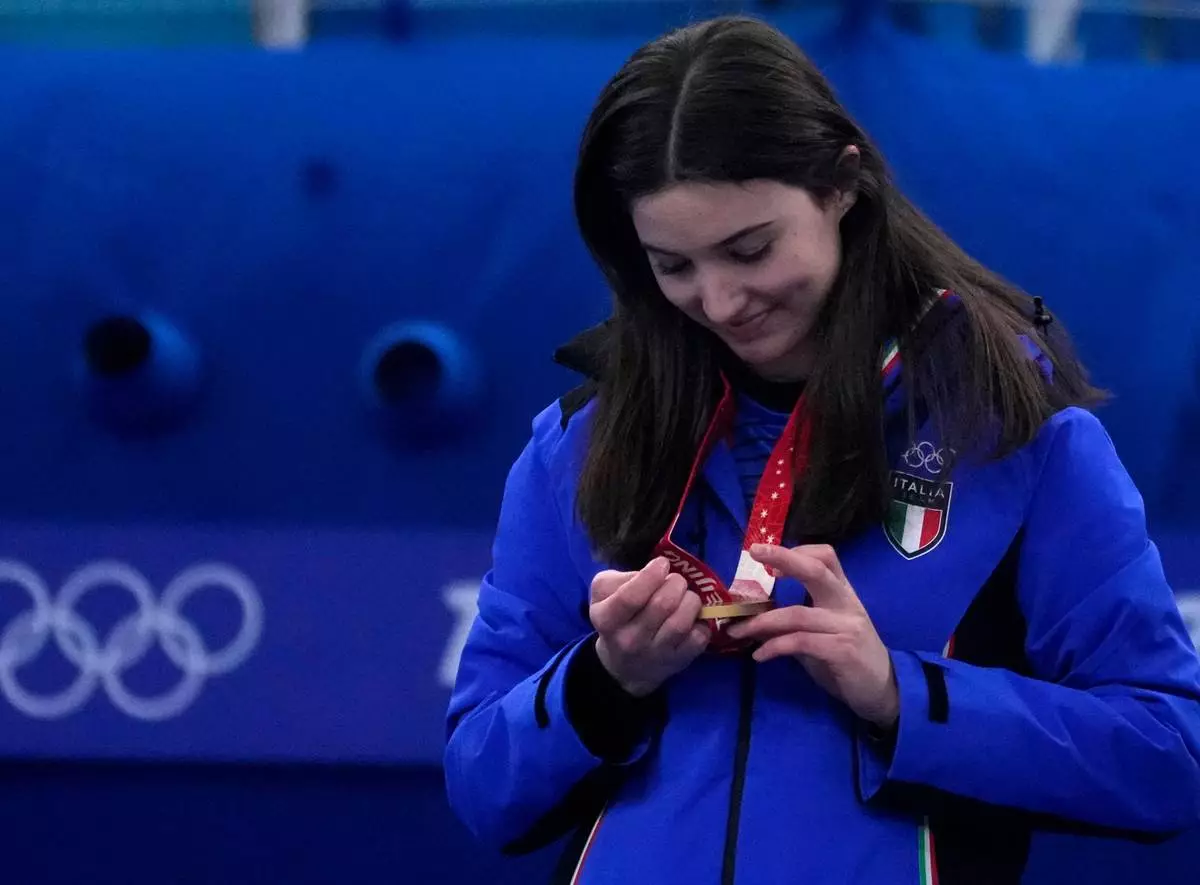
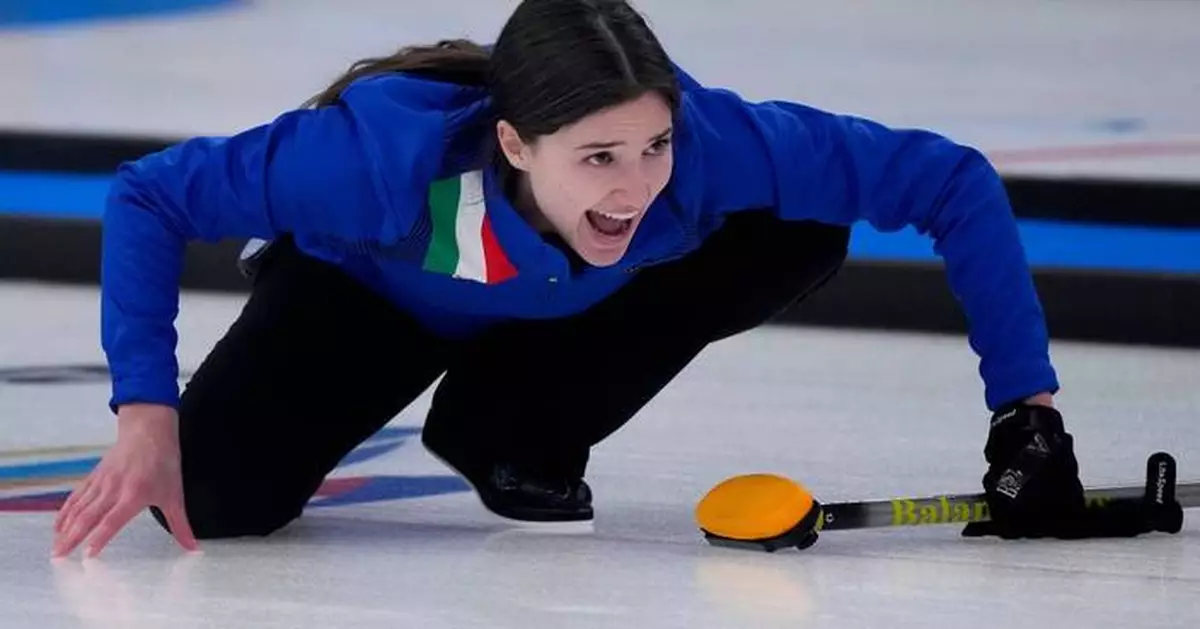
FILE -Italy's Stefania Constantini, looks at her gold medal, during the awards ceremony for the mixed doubles curling match against Norway, in the curling venue, at the 2022 Winter Olympics, Feb. 8, 2022, in Beijing. (AP Photo/Nariman El-Mofty), File)
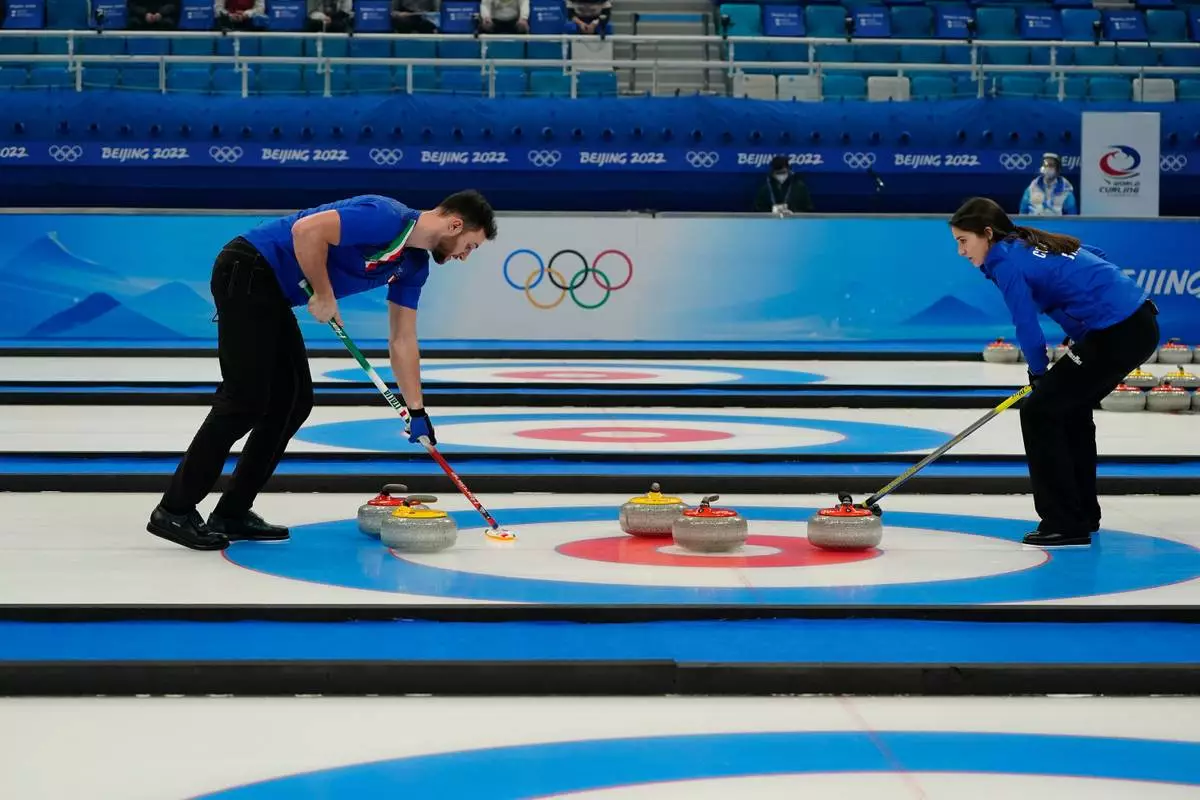
FILE -Stefania Constantini, right, and Amos Mosaner, of Italy compete during the mixed doubles gold medals curling match against Noway at the Beijing Winter Olympics, Feb. 8, 2022, in Beijing. (AP Photo/Brynn Anderson), File)
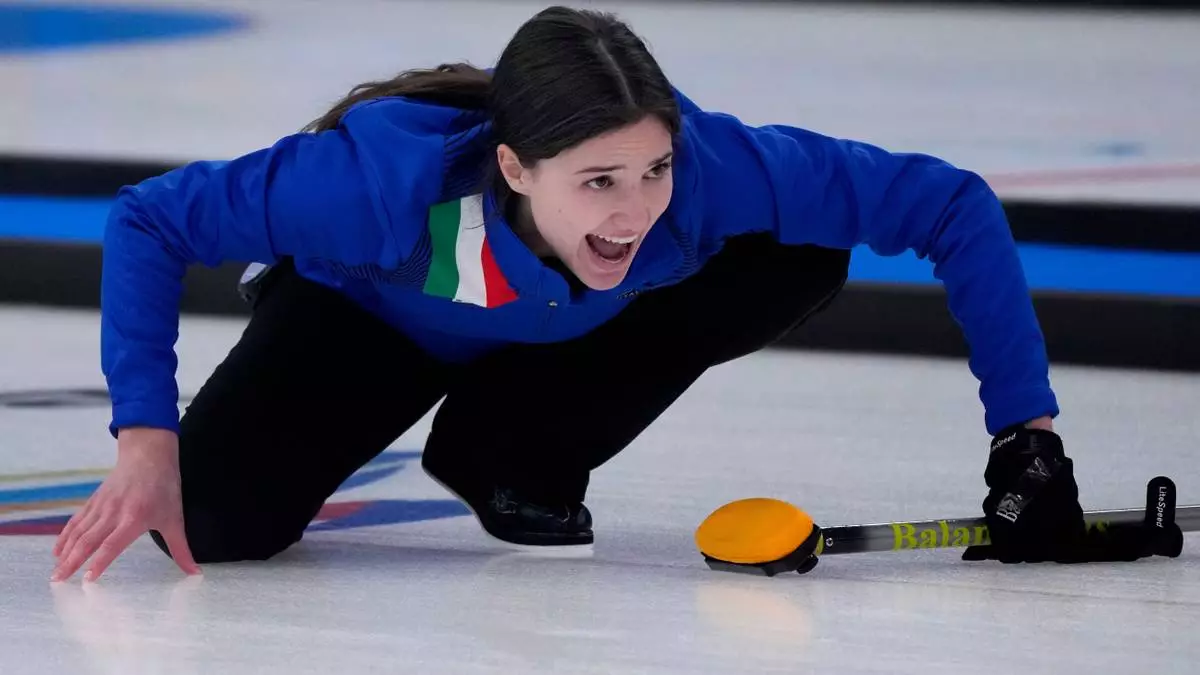
FILE -Italy's Stefania Constantini, directs her team mate, during the mixed doubles curling match against Sweden, at the 2022 Winter Olympics, Feb. 6, 2022, in Beijing. (AP Photo/Nariman El-Mofty, File)
JUNEAU, Alaska (AP) — Alaska U.S. Senate candidate Dan Sullivan acknowledges that sharing a name and party affiliation with the incumbent Republican gives him “an instant megaphone" in the crowded primary race. But Sullivan said his campaign isn't a sham or something Democrats put him up to doing.
He said friends for years have jokingly referred to him as senator and asked if he has ever thought about running. He said he’s been considering it for more than a decade.
“This is my choice,” Sullivan, who lives in the small fishing community of Petersburg, said in a telephone interview Monday.
Last week, Sen. Dan Sullivan accused the challenger Sullivan of “trying to trick” voters to help his main rival in the race, Democratic former U.S. Rep. Mary Peltola. The senator suggested the other Sullivan's entrance in the August primary was part of a coordinated effort by Democrats and Peltola's campaign to confuse voters, an accusation they deny. He threatened litigation to get to the bottom of it.
The issue is of national concern to Republicans because they are seeking to hold onto their majority in the U.S. Senate in what is expected to be a difficult midterm election year for the party in power. Sullivan, the challenger, dismissed claims that his candidacy is a merely a ruse to undermine the senator's reelection chances.
He said he has had no contact with Peltola's campaign — “zero, none, zilch” — and said “no” when asked if anyone from the state Democratic Party or any national Democratic operatives had contacted him to run.
A Peltola spokesperson, Harry Child, has said the campaign “has no involvement with either Sullivan campaign.” The executive director of the Alaska Democratic Party, Jenny-Marie Stryker, said her organization “is in no way affiliated with either Dan Sullivan.” A Democratic Senatorial Campaign Committee spokesperson, Monica Robinson, replied “no” when asked if the group had been involved in urging the challenger Sullivan to run.
Sullivan called sharing a name with the Alaska's incumbent U.S. senator “a matter of fate” and said he had done nothing wrong.
“I have every right to run for whatever office I'm qualified for, and I’m qualified for this office,” the challenger said, adding: “I think I’m doing what most Americans would think would be a patriotic thing to do when you’re unsatisfied with the status quo. You stand up and say, I’m going to fight for things I believe that are going to make my community better.”
Ballots in prior years in Alaska have not identified the incumbent, but the Alaska Division of Elections’ current candidate list online does. It also distinguishes the candidates using a middle initial — Dan S. Sullivan for the senator and Dan J. Sullivan for the challenger.
Alaska has open primaries in which the top four vote-getters, regardless of party, advance to the ranked choice general election in November. Sen. Sullivan's campaign worries having two Dan Sullivans on the ballot could confuse voters.
Sen. Sullivan's campaign, in a statement Monday, said, “Alaskans deserve a fair and honest election — not political games meant to manipulate the ballot and benefit Democrats.”
The challenger said he was registered with the limited government-leaning Alaskan Independence Party for decades, until the party's dissolution late last year. Election officials had said voters registered with the party could change their affiliation but if they did not, they'd be shown as “undeclared.” Sullivan said he then was listed as undeclared until filing to run for office, when he registered as Republican.
He said he was motivated in part by his late father, whom he described as a “true, compassionate, conservative Republican.” He said if he had to label himself, it would be “a pragmatic Republican centrist” — similar to Alaska's senior U.S. senator, Lisa Murkowski, but “with touches of a Rand Paul Republican in there.”
He said he grew up in the Chicago area but was drawn to Alaska and put down roots nearly 50 years ago in Petersburg. The fishing community of about 3,400 in southeast Alaska's Tongass National Forest is known as “Little Norway” for its many residents with Scandinavian roots. He worked for the U.S. Forest Service before changing careers and becoming a teacher. He has since retired.
Like most communities in Alaska, Petersburg isn't connected to the state's main road system and is accessible only by air or water. Juneau, the nearest city, is about 45 minutes away by plane.
Petersburg sits on Mitkof Island, which is distinguished by mountains, thick stands of forest and boggy areas called muskeg. Sea lions hauled up on buoys and humpback whales and orcas are common sights off its shores.
Sullivan, who will turn 69 this weekend, passed on an interview request last Friday, he said, because the king salmon were running and he wanted to fish.
As far as his run for office, the challenger said he plans to do some fundraising and hopes to campaign in the state's larger cities, including Anchorage and Juneau, but he so far has no firm plans to do so and is working on the details.
He finds the current dustup over his Senate run — and the incumbent's reaction — a bit surprising.
“I guess my thought would be, ‘Dude, why don’t you just run your campaign?’ If you’ve got a strong record, run on your record. People will love you for it and you’ll be swept back into office,” he said Monday. “Why would he be concerned that a guy out of Petersburg is this huge threat?”
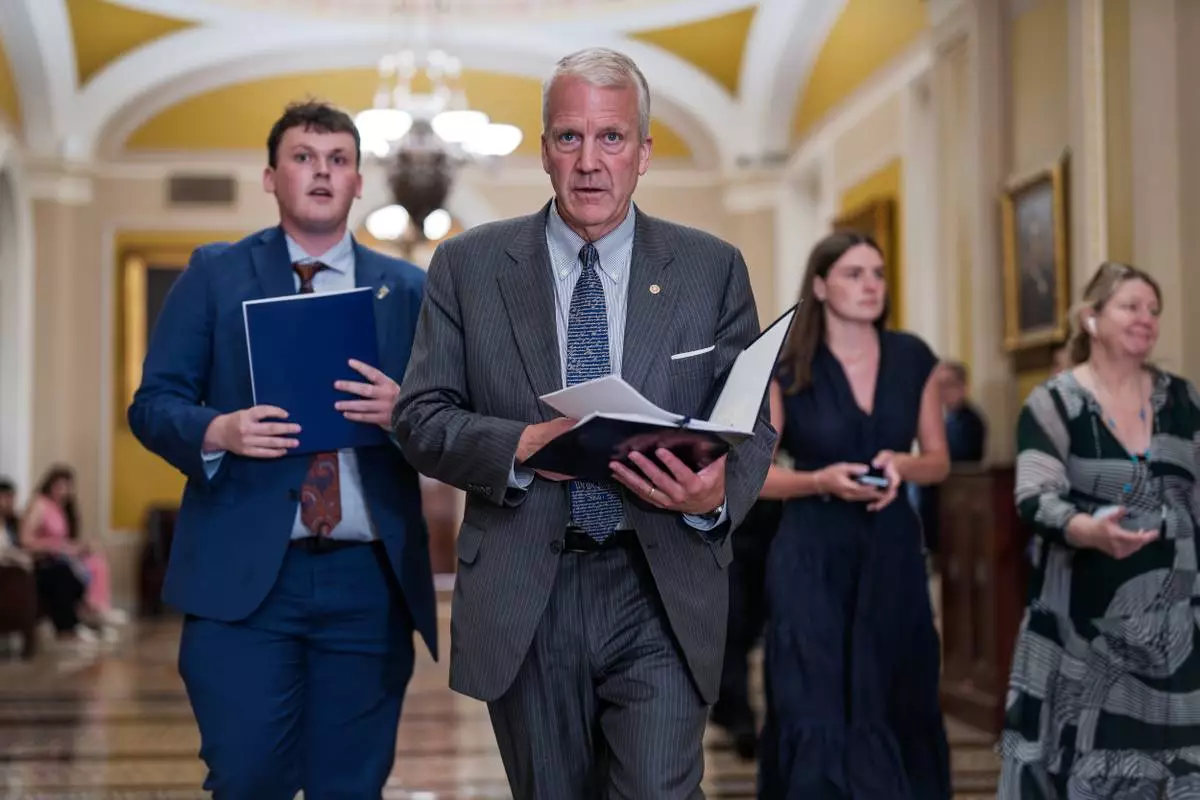
Sen. Dan Sullivan, R-Alaska, heads to a closed-door meeting with fellow Republicans, at the Capitol in Washington, Tuesday, June 2, 2026. (AP Photo/J. Scott Applewhite)