GEORGETOWN, Malaysia, Dec. 9, 2025 /PRNewswire/ -- Island Hospital is the winner of Malaysia's first Flagship Medical Tourism Hospital (FMTH) programme, a recognition of its consistent standards in care, safety and patient experience for international patients.
Launched in 2022, the three-year programme aimed to identify hospitals that can anchor Malaysia's medical tourism growth globally. Island Hospital, selected as the top performer among four finalists, was the only hospital from Penang. The announcement was made today by Malaysia's Minister of Health, Yang Berhormat Datuk Seri Dr Dzulkefly Ahmad.
The FMTH programme is led by the Malaysia Healthcare Travel Council (MHTC) under the Ministry of Health and supported by the Malaysian Government. Independent experts, including IQVIA and Joint Commission International (JCI), conducted in-depth assessments covering clinical quality, patient safety, experience, innovation and operational performance. A key initiative under the Malaysia Healthcare Travel Industry Blueprint 2021-2025, the programme is part of the country's push to strengthen its position as a trusted healthcare travel destination.
Island Hospital (IH) is a private specialist hospital that provides advanced care for complex medical and surgical needs, with more than 120 specialist doctors across varied disciplines, including cardiology, oncology, orthopaedics, gastroenterology and neurology. Serving local and international patients, it has built an ecosystem that supports medical travellers – from pre-arrival coordination to follow-up care.
IH's focus on quality and patient safety is supported by accreditations from the Australian Council on Healthcare Standards International (ACHSI) and Malaysian Society for Quality in Health (MSQH). The hospital is also an ACHSI Centre of Excellence in Cancer Care, Cardiology and Gastroenterology. These reflect a strong framework for clinical governance, teamwork and person-centred care, which formed part of the FMTH evaluation.
"We are humbled by this recognition," said Lim Kooi Ling, CEO of Island Hospital. "Since 2022, we have welcomed about 700,000 international patients from over 80 countries, including over 100 cities in Indonesia. This shows the continued trust placed in our teams, our partners and the Malaysian healthcare system."
"Being part of IHH Healthcare Malaysia, a leading private healthcare provider, allows us to leverage shared expertise, digital tools and clinical collaboration to provide safe, reliable and value-driven care, while making the experience smoother for patients and their families. As a flagship medical tourism hospital, we will continue to work closely with the Government and MHTC to strengthen Penang's and Malaysia's position as a preferred destination for healthcare."
** The press release content is from PR Newswire. Bastille Post is not involved in its creation. **
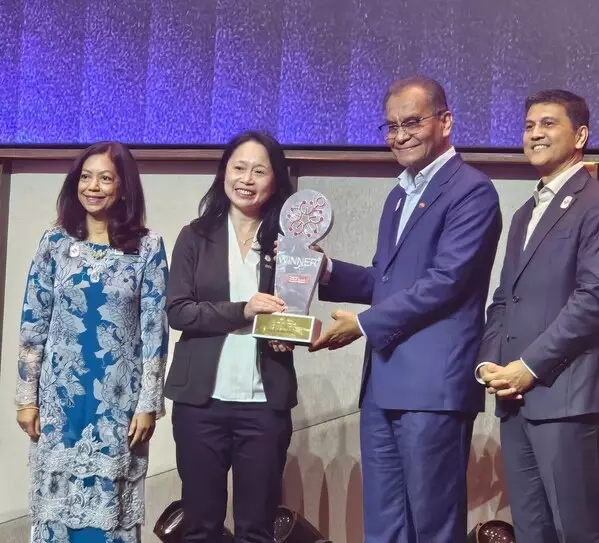
ISLAND HOSPITAL NAMED MALAYSIA'S FIRST FLAGSHIP MEDICAL TOURISM HOSPITAL
BEIJING and SAN FRANCISCO, March 10, 2026 /PRNewswire/ -- March 5, 2026, XGSynBot a pioneer in embodied AI, hosted its 2026 product dual-city launch event themed "More Than One Answer" in both Silicon Valley and Beijing. The company officially debuted the Z1 wheeled humanoid robot with the world's first Modular-End-Effector Quick Change System and self-developed XG- High-Performance Joint Modules.
Beyond the product, XGSynBot announced the " STARFIRE", a global ecosystem cooperation strategy designed to accelerate the transition of Embodied AI to the real unpredictable, heavy-duty industrial production environment.
The event successfully captured the attention of numerous strategic partners and investment institutions, generating potential interests and orders worth tens millions.
The Automation Paradox in Manufacturing
The global manufacturing sector currently faces a "double-bind": high-cost automation that remains frustratingly rigid. While the industry has seen a surge in agile humanoid prototypes, few can withstand the 24/7 rigors, oil-splattered environments, and micron-level precision required in actual factories.
"We've built the world's most flexible robots over the past three years, yet they remain trapped in the world's most rigid processes," said the CEO of XGSynBot "The Z1 isn't a 'mascot' build for the lab; it's a 'blue-collar worker' designed for the real world from the first day."
A Robot Build for the Factory Production
At the core of Z1 is a set of hardware and software system architecture decisions intended to prioritize reliability and adaptability in production environments.
Modular Quick-Change System:
Breaking the limitation of single-purpose robotics, Z1 can switch between different end-effectors—such as grippers, welders, or suction cups in just under 6 seconds, enabling one robot to cover multiple specialized workstations.
XG- High-Performance Joint Modules:
By integrating motors, reducers, and sensors into a single unit, it significantly improving joint precision, stability, and structural rigidity while eliminating signal interference and latency common in distributed architectures.
In practical terms, this means the system is more stable, faster, and built to withstand demanding industrial use.
The "Dual-System" Central Brain:
Inspired by human cognition, the Z1 features a "Slow System" for high-level task planning and natural language understanding (Reasoning), and a "Fast System" operating at 100Hz for real-time motor control and tactile feedback (Reflex). This allows the robot to understand complex human commands while maintaining millisecond-level stability on the assembly line.
STARFIRE: Building an Embodied AI Cooperation Ecosystem
Alongside the launch of Z1, XGSynBot announced Project STARFIRE, an initiative aimed at building an open cooperation ecosystem around embodied AI.
The program will focus on three areas:
Scenario Co-Innovation:
Deploying large-scale solutions across 3C electronics, automotive, and renewable energy sectors with global industry partners.
Product Synergy:
Opening hardware interfaces to third-party tool and component manufacturers to create a "Plug-and-Play" industrial ecosystem.
Open-Sourcing:
Incrementally open-sourcing proprietary datasets, scenario models, and SDKs in a phased manner, collaborating with academic and industry developers to optimize Embodied AI together.
The Bigger Picture for Embodied AI
The launch comes at a moment when embodied AI is attracting significant global attention and investment, with startups and large tech companies alike racing to bring intelligent robots into physical workplaces.
Yet despite rapid progress in AI models, commercial deployment remains the industry's biggest hurdle.
By focusing on durability, modularity, and ecosystem development, XGSynBot is betting that the next wave of robotics innovation will be defined less by flashy prototypes—and more by machines that can quietly survive the realities of manufacturing production.
About XGSynBot
XGSynBot is an innovative technology company with cutting-edge AI and robotics.
Guided by the core philosophy "Evolve from Unified Architecture. Grow beyond All Limits", it hopes to empower industries worldwide, redefine human-robot collaboration, and pioneer a new era of productivity.
By developing embodied AI robots, XGSynBot is actively advancing robots from single-task to cross-scenario applications.
** This press release is distributed by PR Newswire through automated distribution system, for which the client assumes full responsibility. **
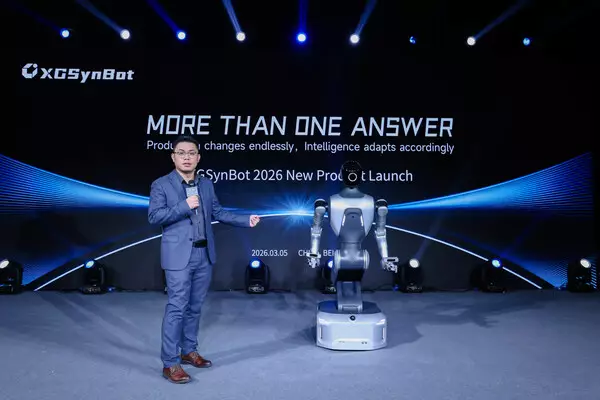
XGSynBot Debuts Z1 Wheeled Robot, Targeting the "Last Mile" of Industrial Embodied AI