SAN CARLOS, Calif.--(BUSINESS WIRE)--Dec 9, 2025--
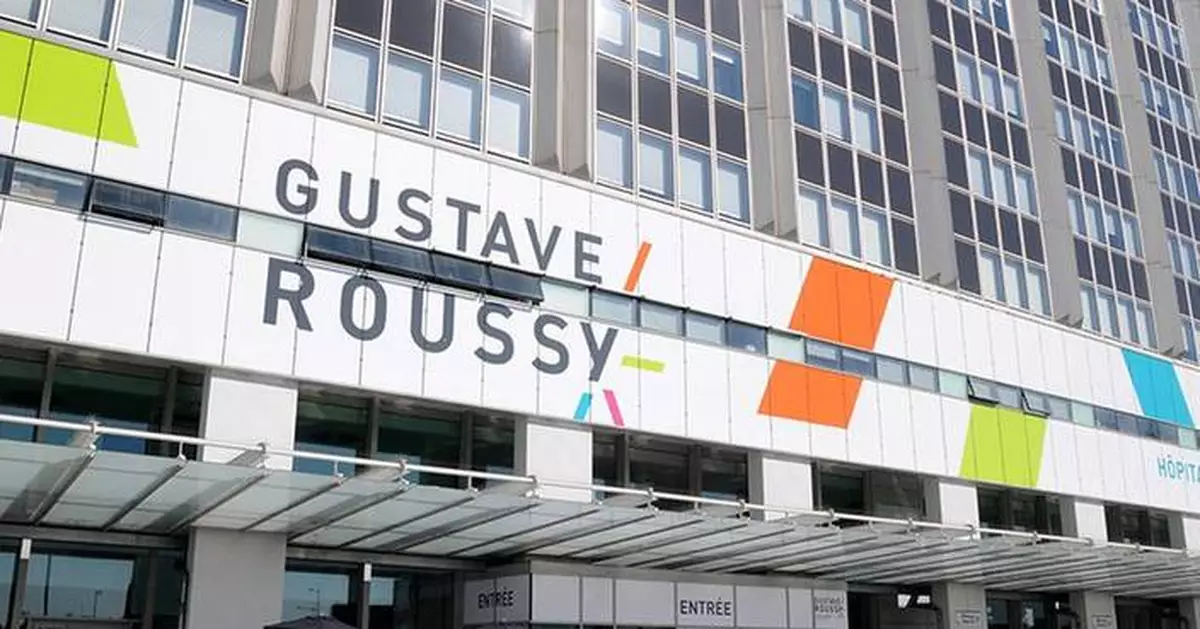
ZAP Surgical Systems, Inc., a global leader in non-invasive robotic brain surgery, today announced that Institut Gustave Roussy, one of the world’s most prestigious and influential cancer research hospitals, will soon install the groundbreaking ZAP-X ® Gyroscopic Radiosurgery ® platform.
This press release features multimedia. View the full release here: https://www.businesswire.com/news/home/20251120096938/en/
Located in Villejuif, a southern suburb of Paris, France, Gustave Roussy was founded in 1926 and was recently ranked the #1 cancer center in France and Europe by Newsweek’s World’s Best Specialized Hospitals 2026. Newsweek additionally recognized the site as the #4 world's best oncology hospital - the first institution ever honored outside the United States.
Installation of the ZAP-X system will be completed by the end of the year, with patient treatments planned in the first months of 2026.
Stereotactic radiosurgery (SRS) is a completely non-invasive, outpatient procedure often used as an alternative to open brain surgery. With no incision, no anesthesia, and no pain, patients typically return home the same day and quickly resume normal activities. SRS has become a game-changer in treating many brain tumors and other disorders of the brain, head, and neck.
“Stereotactic radiosurgery is transforming how we treat patients with primary and metastatic brain tumors,” said Professor Eric Deutsch, Head of the Department of Radiation Oncology at Gustave Roussy. “The addition of ZAP-X represents an important milestone in our continued commitment to pioneering world-class, non-invasive therapies.”
The ZAP-X system is the world’s most advanced stereotactic radiosurgery platform. Its unique gyroscopic mobility allows delivery of radiosurgical beams from thousands of unique angles, enabling unparalleled ability to sculpt dose around critical structures such as the brain stem, eyes, and optic nerves. This innovative approach aims to maximize tumor control while protecting patient cognitive function.
Additionally, by employing a modern linear accelerator for radiation generation, ZAP-X is the first and only dedicated cranial SRS system to eliminate reliance on Cobalt-60 radioactive sources, removing the regulatory, financial, and safety burdens of handling isotopes.
Dr. Frédéric Dhermain, Senior Radiation Oncologist at Gustave Roussy, added “With its unique design and ability to minimize radiation exposure to healthy brain tissue, ZAP-X offers a new level of precision and safety. We are proud to bring this cutting-edge technology to our patients.”
For more information about ZAP-X, please visit www.zapsurgical.com.
About ZAP Surgical Systems, Inc.
ZAP Surgical Systems, Inc., a global leader in non-invasive robotic brain surgery, is committed to reducing the costs and complexities that limit access to world-class radiosurgery (SRS) for the brain, head, and neck. The company manufactures the ZAP-X ® Gyroscopic Radiosurgery ® platform and is also pioneering new applications of high-precision SRS in areas such as depression, addiction, and obesity. Founded in 2014 by Dr. John R. Adler, Emeritus Dorothy & TK Chan Professor of Neurosurgery and Radiation Oncology at Stanford University, ZAP introduced the world’s first vault-free radiosurgery platform - eliminating the need for costly shielded treatment rooms and enabling flexible, high-visibility siting. ZAP-X also advances beyond legacy Cobalt-60 technology with a modern linear accelerator for safer, more sustainable care. Learn more at ZAP Surgical and follow us on LinkedIn.

The ZAP-X® Gyroscopic Radiosurgery® platform, offering state-of-the-art brain tumor surgery without incisions, without pain.
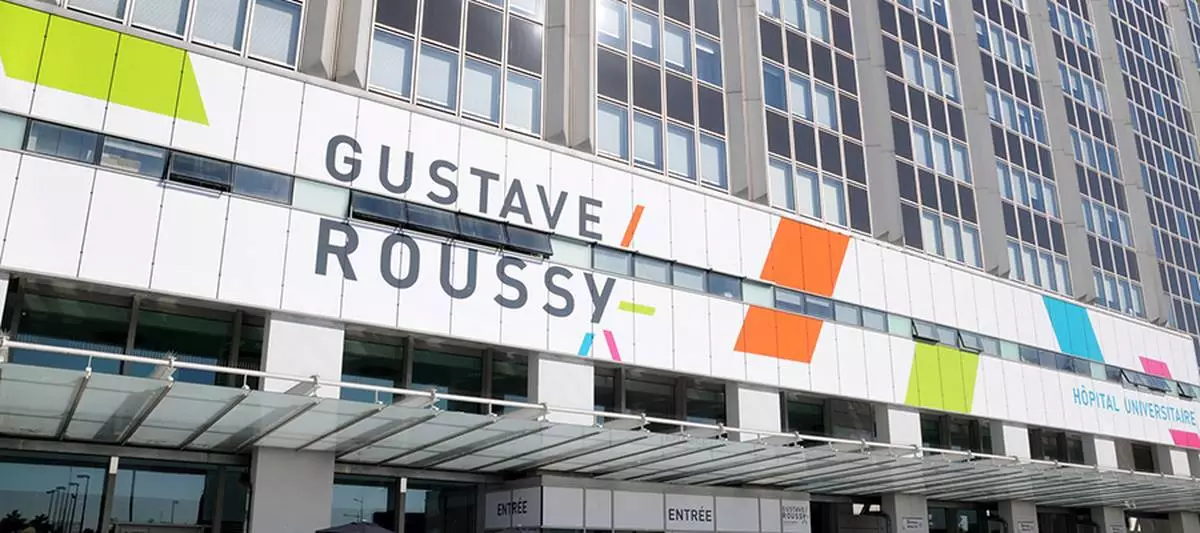
Institut Gustave Roussy, Paris France.
CAIRO (AP) — Iranians began to regain internet access on Wednesday after authorities ended a monthslong shutdown. But users said service was slow and spotty in some areas, with apps like YouTube and Instagram heavily restricted, as they were before the cutoff began during nationwide protests in January.
Authorities justified the outage as a military imperative after the United States and Israel attacked Iran on Feb. 28. Their decision to lift some restrictions this week came as negotiators appeared to be closing in on a more permanent truce. But many Iranians feared access could be cut off again at a moment's notice.
Internet tracking company Netblocks said Iran’s connectivity, which measures the ability of devices to connect to the internet, is at around 86% of capacity from before the cutoff. Internet analysis firm Kentik said internet traffic, which measures the amount of data transferred and is a good illustration of usage, was at around 40%.
Amir Rashidi, an Iranian cybersecurity analyst, said there were still widespread disruptions. “It's too early to say the shutdown is over,” he wrote on X.
Iran’s roughly 90 million people have been cut off from the internet for most of 2026, one of the world’s longest and strictest national shutdowns. Young people with online careers saw their incomes evaporate. Job losses and the closure of online businesses added to the war's steep economic costs.
The cutoff made it difficult for Iranian families to communicate through months of unrest and war. At some points, phone lines were also cut off, though they were later restored.
A woman living in Tehran said that for months she was barely able to speak to her sons living abroad. She couldn't believe authorities had restored access, saying she had assumed they would find some justification to prolong the outage.
A taxi driver said service was restored but weak. He expressed hope it would improve so he could use messaging apps with family and friends. Both spoke on condition of anonymity for security reasons.
Prices spiked during the shutdown, with residents in Tehran at times paying around $7.50 per gigabyte. Prices are back down to around $2.25 for 30 gigabytes, roughly where they were before the protests.
Even then, Iran tightly controlled access to popular social media sites, leading many to rely on virtual private networks, or VPNs. The cost of those workarounds soared during the shutdown, making them unaffordable for many as the economy was battered.
Businesses have started reappearing online, announcing their return with posts on sites like Instagram and Telegram.
A gamer and tech influencer in the central city of Isfahan said the shutdown had caused him to lose a lot of his audience on YouTube and Instagram, where he had spent years building up a large following.
“All my views and interactions are way down. I’ve been erased from the algorithm,” he said in a voice note sent by WhatsApp, adding that his internet connection was still slower than before the shutdown.
“The situation is such that many content producers have had their income reduced to zero, have moved on to other jobs, or have been forced to sell their equipment to survive,” he said. He spoke on condition of anonymity for fear of reprisal.
Iranian authorities first shut down the internet in January during mass anti-government protests that were eventually stamped out in a violent crackdown. Thousands of people were killed and tens of thousands detained.
That cutoff was just starting to ease when the government imposed a complete internet blackout after the start of the war, when U.S. and Israeli strikes killed Iran's supreme leader and other top officials.
The government faced criticism for the prolonged shutdown, which caused even more harm to an economy devastated by inflation, strikes on key industries and a U.S. blockade on Iranian ports.
The internet cutoff cost an estimated $30-40 million daily, with indirect losses likely twice that much, a member of Iran’s Chamber of Commerce, Afshin Kolahi, told a local newspaper last month. About 10 million people have jobs that depend on internet connectivity, according to Communications Minister Sattar Hashemi.
Iranians still had access to a national net, but that has a far narrower reach, and users complained of poor service and heavy censorship. Senior government officials are given SIM cards granting them access to the global internet. Under pressure, the government expanded access to the SIM cards to some professions during the shutdown.
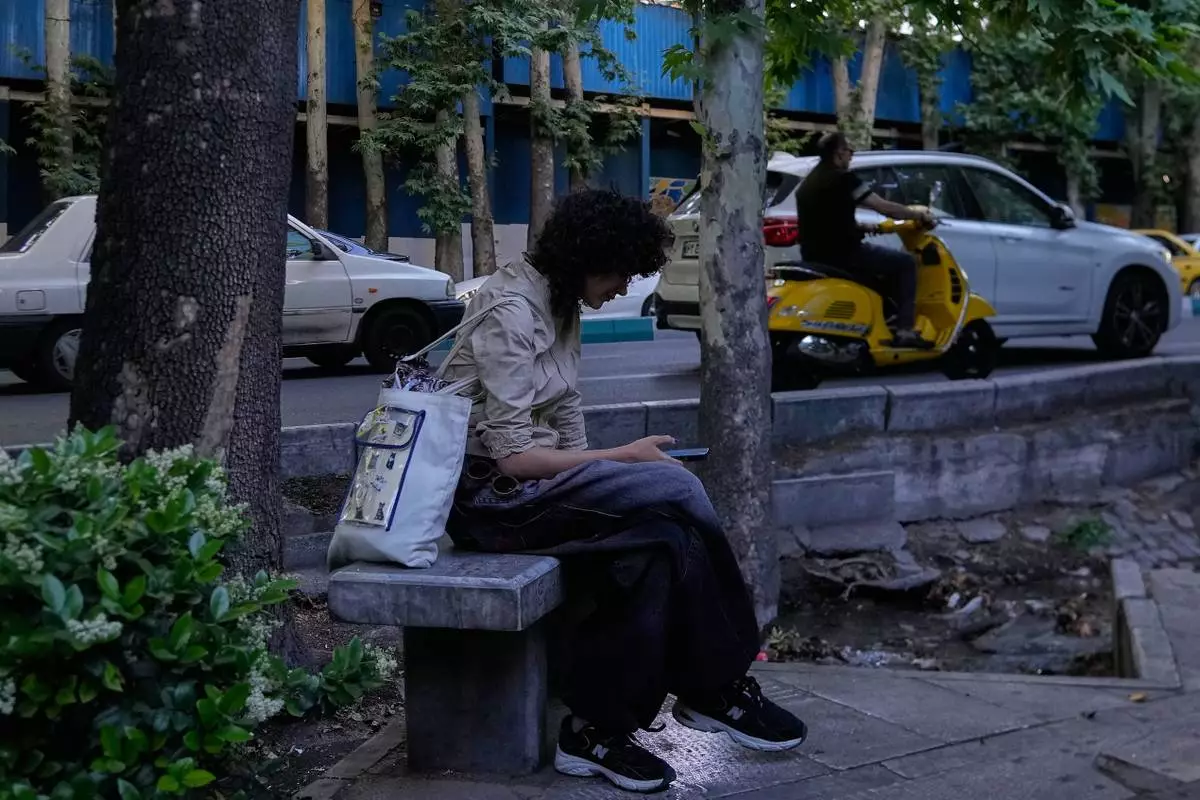
A woman checks her smartphone while sitting on a bench along a sidewalk in northern Tehran, Iran, Tuesday, May 26, 2026. (AP Photo/Vahid Salemi)