The U.S. dollar strengthened in late trading on Tuesday.
The dollar index, which measures the greenback against six major peers, added 0.13 percent to 99.220 at 3 p.m. (2000 GMT).
In late New York trading, the euro was down to 1.1628 dollars from 1.1640 dollars in the previous session, and the British pound decreased to 1.3302 dollars from 1.3327 dollars in the previous session.

U.S. dollar ticks up
Displaced families in the Gaza Strip are turning to primitive building methods to create shelters with mud and rubble given the onset of the cold winter, as Israeli restrictions block the entry of construction materials.
Two years of brutal war have left vast areas of Gaza in ruins. With construction materials barred from entering, stalling reconstruction, families are left with little choice but to rebuild homes using only mud, water and any debris they can salvage.
Among them is former potter Jaafar Atallah, who is displaced from Gaza City's Al-Tuffah neighborhood where his home has been destroyed. He is now in Al-Zawaida in central Gaza, using his clay working skills to shape mud bricks to build a house for himself and his family.
"Our home was destroyed, and no one is rebuilding it or offering us any help. With the crossing closed to construction materials, we turned to mud to build a room of mud bricks instead of the tents that were flooded by rain and were at times, unbearably cold," said Jaafar.
Across central Gaza, scenes of families gathering stones from the ruins of their flattened homes and mixing them with mud to build small rooms that offer more protection from the rain and cold than their flimsy tents have been frequently seen.
"We are building this house by collecting stones from our destroyed houses and using mud pushed up by Israeli bulldozers because it's the cheapest option. Other materials, like zinc sheets or metal pipes, are too expensive. We had no choice but to build this way to protect our children," said Mahdi Al-Saafin, a displaced Palestinian from Al-Bureij Camp.
Palestinian officials have warned that thousands of displaced families across the strip are still living in worn-out tents that offer little protection from the winter cold.
"It's very tragic that citizens of Gaza are still living in tents. These are now old tents that haven't been replaced for a long time. And these tents are not good enough to save the young children, the women or the elderly, everybody from the heat of the sun or [the cold of] winter," said Yahya Al-Sarraj, mayor of Gaza City
According to estimates from the United Nations in April this year, 92 percent of Gaza's housing units have been damaged or destroyed with around 436,000 homes affected.
With ongoing Israeli restrictions on the entry of construction materials into Gaza, families have reverted to simpler methods of building with mud and rubble to create basic winter shelters, their only refuge amid the widespread destruction.
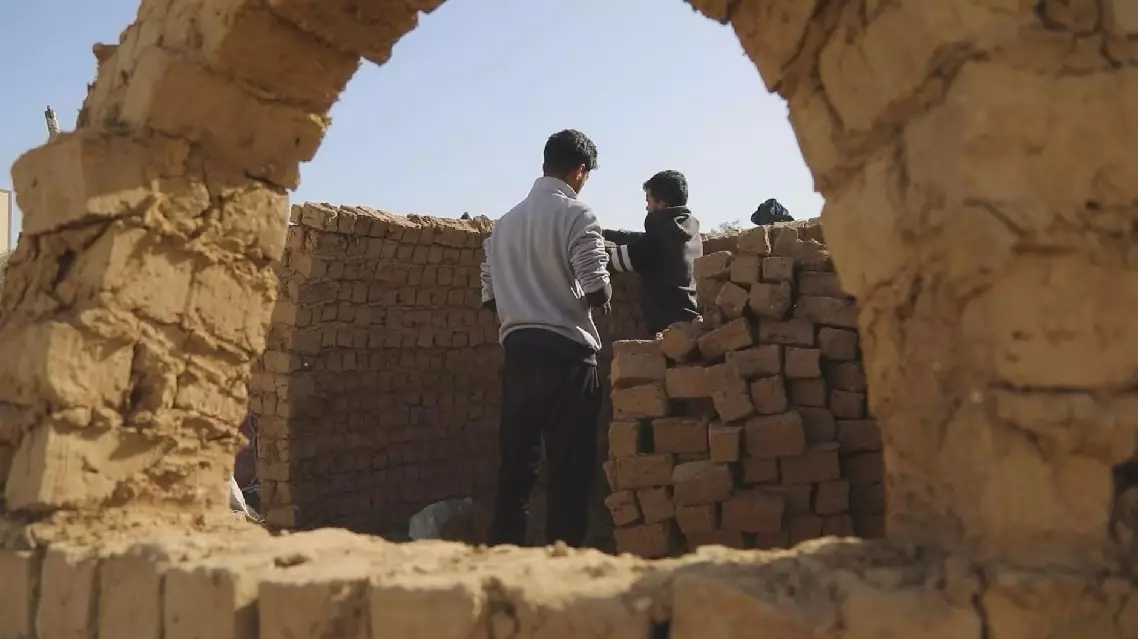
Gazans build shelters with mud, rubble to withstand winter cold