|
DUBAI, UAE, Dec. 10, 2025 /PRNewswire/ -- Bybit, the world's second-largest cryptocurrency exchange by trading volume, today announced The World Crypto Rankings (WCR) 2025, developed in partnership with DL Research. This comprehensive, data-rich report reveals how 79 countries and territories are integrating crypto into the fabric of their societies. Unlike rankings that focus on a single dimension, Bybit's WCR draws comprehensively on 28 metrics and 92 data points. This multidimensional approach not only identifies today's market leaders but also uncovers the forces driving emerging contenders, while providing actionable insights into the evolving opportunities and challenges facing industry leaders, policymakers and users worldwide.
Global Crypto Adoption Beyond the Numbers
Factors driving global crypto adoption are more diverse than ever, ranging from real-world utility, grassroots-level necessity, technological advancement, regulatory clarity, and economic instability. While higher-income countries often benefit from better infrastructure and access, lower-income nations may adopt out of necessity. The biggest crypto hubs are not always those with the largest economies, but there's a clear positive relationship between GDP per capita and overall crypto adoption.
- Singapore (#1): Leads the world in crypto adoption, thanks to regulatory clarity, institutional maturity and strong cultural engagement. Over 11% of Singaporeans hold crypto and its robust licensing regime attracts global exchanges and fintechs. The next phase will focus on expanding retail and transactional use.
- United States (#2): The largest and most influential crypto market globally. The landmark ETF approvals, the GENIUS Act, and a pro-crypto government have made the US a magnet for institutional capital. The country also leads in DeFi volumes, CEX flows, and Lightning adoption.
- Lithuania (#3): Has become a European entry point for crypto exchanges and service providers under MiCA. Most of the firms licensed in Lithuania operate globally rather than focusing on the local market. As a regulatory and licensing hub with an open financial system and a digitally fluent population, Lithuania has an outsized influence on the European crypto market. However, a modest population means domestic transaction volumes are limited.
- Switzerland (#4): Stands out as the most structurally complete crypto adopter in Western Europe. It has an elite infrastructure, strong regulatory clarity independent of MiCA, and unmatched cultural legitimacy, combined with a global respected financial system. High trust in institutions, unmatched cultural legitimacy, and deep technical talent position Switzerland to lead in policy, custody infrastructure, and research.
- United Arab Emirates (#5): Has not only established itself as MENA's regional hub for asset tokenization pilots and settlement systems, but also become the de facto bridge between Asia, Europe, and Africa in tokenized finance. The UAE combines the ambitious VARA policy frameworks in Dubai with grassroots remittance-driven usage and one of the world's highest user penetration rates.
Stablecoins Lead Global Crypto Adoption as the Top Digital Asset Use Case
As digital assets move from the periphery to the core of economic life, users worldwide are increasingly relying on stablecoins as safe havens in times of instability, workarounds for barriers in legacy banking systems, tools for cross-border payments, and gateways to DeFi. Stablecoins are not just the most widely adopted, but also the most evenly distributed crypto use case.
While USD-pegged stablecoins dominate global volumes, more countries are developing or encouraging local currency stablecoins. These aim to improve domestic payment efficiency, reduce reliance on the US dollar, and provide a regulated alternative to informal markets. Local stablecoins are increasingly positioned as tools of monetary sovereignty as well as financial innovation.
The report highlighted three aspects of stablecoins' impact in the next phase of adoption: bringing about regulatory convergence, further institutional integration, and global fiat currency competition. In many regions, these local-currency stablecoins will complement rather than replace dollar-pegged tokens, serving different functions: local units for payments and commerce, and USD- pegged assets for savings and capital preservation.
Unlocking New Opportunities with Real-World Asset Tokenization
Running parallel to the rise of stablecoins is the accelerating trend of tokenization, the process of representing real-world assets (RWAs) such as bonds, equities and real estate on the blockchain. In advanced hubs like Singapore and Hong Kong, tokenization is moving from pilot projects to regulated markets, enabling fractional ownership and blockchain-based settlement. Tokenization not only increases market efficiency and transparency but also attracts global capital, positioning Asia-Pacific as a leader in next-generation finance and laying the groundwork for a more inclusive and liquid global marketplace.
Since January, the total onchain value of RWAs, excluding stablecoins, has increased by more than 63%, rising from approximately $15.8 billion to over $25.7 billion. This growth marks a structural shift in how capital markets have started integrating tokenized assets into their regular operations. Countries most likely to benefit from this shift are the ones ranking highly on the Institutional Readiness pillar (United States, Canada, Lithuania, Poland, and the Philippines). These jurisdictions already have the legal frameworks, market infrastructure, and institutional readiness needed to support large-scale tokenization.
On-chain Payrolls New Norm for the Global Workforce
Crypto payrolls are transforming from an informal arrangement among crypto-native contractors into a regulated, scalable payment method for the global workforce. The share of professionals receiving part of their salary in crypto has risen from 3% last year to 9.6% this year, with stablecoins accounting for over 90% of the payments.
In high-remittance and remote-work economies such as the UAE and the Philippines, stablecoins are increasingly being used to pay workers, freelancers and gig economy participants. This trend is making crypto a part of daily financial life for millions, bypassing the delays and fees of traditional remittance channels and providing families with faster, more reliable access to income. As more users and enterprises embrace this approach, the boundaries between local and global labor markets dissolve further as financial empowerment reaches communities that have long been underserved by traditional finance.
The adoption of regulated crypto payroll is expected to accelerate along two main corridors:
- Global financial and technology hubs such as the UAE, US, Singapore, and Hong Kong where legal clarity, deep fintech infrastructure, and high-value industries are making onchain salaries a viable option for both domestic and international employees.
- Emerging economies with large remote workforces and strong demand for stablecoins, such as the Philippines, Kenya, and Brazil where onchain payroll offers a way to bypass costly and slow correspondent banking, while still meeting domestic labor laws and tax obligations.
Inside the Evolving Crypto Landscape
These trends are not isolated; they are deeply interconnected. The adoption of local stablecoins makes payments and remittances more efficient, which in turn supports the growth of tokenized assets and on-chain salaries. As more people use crypto for real-world needs, the demand for robust, regulated and innovative financial products continues to grow, creating a virtuous cycle that propels the entire ecosystem forward.
The digital asset class is becoming increasingly integrated into global financial systems. By 2026, countries that develop clear regulatory frameworks and infrastructure to integrate crypto will be positioned to capture tax revenue, attract talent, and foster innovation, while those maintaining restrictive approaches may see activity migrate to jurisdictions with more developed frameworks. Policymakers face two choices: developing frameworks that integrate crypto into formal financial systems, or maintaining more cautious stances through existing licensing regimes while evaluating risks and benefits.
"Rigorous, independent research is essential for driving meaningful innovation in blockchain and crypto. Bybit is proud to have played a supportive role in bringing the WCR to life with DL Research, a leader in Web3 insights and analytics," said Helen Liu, Co-CEO of Bybit. "We're witnessing a pivotal moment where blockchain technology is transitioning from experimentation to real-world integration across finance, commerce, and governance. The talent, innovation, and momentum we're seeing globally signal that we're building the foundational infrastructure for a more inclusive and efficient digital economy," she noted.
"Partnering with Bybit on the World Crypto Ranking Report lets us bring DL Research's onchain data together with a truly global trading perspective. This kind of collaboration is essential if we want to move the industry toward more transparent, evidence-based decisions, and we are excited to keep building on this work in future editions," said Ryan Celaj, Head of Research at DL Research.
The World Crypto Rankings Report is available now, offering a multidimensional, standardized and narrative-driven view of global crypto adoption. For anyone invested in the future of finance, this report serves as a compass for the decisions and debates that will shape the next era of digital finance.
This WCR is produced by DL Research with full editorial and research independence. The information is compiled from publicly available sources and may be subject to change without notice. This report and rankings are provided for informational purposes only and does not constitute investment, financial, trading, or legal advice. Readers and traders should conduct their own research, consult qualified advisors, and ensure compliance with applicable laws before making any decisions.
#Bybit / #CryptoArk / #IMakeIt / #WCR2025
About Bybit
Bybit is the world's second-largest cryptocurrency exchange by trading volume, serving a global community of over 70 million users. Founded in 2018, Bybit is redefining openness in the decentralized world by creating a simpler, open and equal ecosystem for everyone. With a strong focus on Web3, Bybit partners strategically with leading blockchain protocols to provide robust infrastructure and drive on-chain innovation. Renowned for its secure custody, diverse marketplaces, intuitive user experience, and advanced blockchain tools, Bybit bridges the gap between TradFi and DeFi, empowering builders, creators, and enthusiasts to unlock the full potential of Web3. Discover the future of decentralized finance at Bybit.com.
For more details about Bybit, please visit Bybit Press
For media inquiries, please contact: media@bybit.com
For updates, please follow: Bybit's Communities and Social Media
Discord | Facebook | Instagram | LinkedIn | Reddit | Telegram | TikTok | X | Youtube
About DL Research
DL Research is the research arm of DL News and sister company of DefiLlama, providing clients with bespoke reports, research, deep-dives and promotional campaigns covering the digital assets industry.
DUBAI, UAE, Dec. 10, 2025 /PRNewswire/ -- Bybit, the world's second-largest cryptocurrency exchange by trading volume, today announced The World Crypto Rankings (WCR) 2025, developed in partnership with DL Research. This comprehensive, data-rich report reveals how 79 countries and territories are integrating crypto into the fabric of their societies. Unlike rankings that focus on a single dimension, Bybit's WCR draws comprehensively on 28 metrics and 92 data points. This multidimensional approach not only identifies today's market leaders but also uncovers the forces driving emerging contenders, while providing actionable insights into the evolving opportunities and challenges facing industry leaders, policymakers and users worldwide.
Global Crypto Adoption Beyond the Numbers
Factors driving global crypto adoption are more diverse than ever, ranging from real-world utility, grassroots-level necessity, technological advancement, regulatory clarity, and economic instability. While higher-income countries often benefit from better infrastructure and access, lower-income nations may adopt out of necessity. The biggest crypto hubs are not always those with the largest economies, but there's a clear positive relationship between GDP per capita and overall crypto adoption.
- Singapore (#1): Leads the world in crypto adoption, thanks to regulatory clarity, institutional maturity and strong cultural engagement. Over 11% of Singaporeans hold crypto and its robust licensing regime attracts global exchanges and fintechs. The next phase will focus on expanding retail and transactional use.
- United States (#2): The largest and most influential crypto market globally. The landmark ETF approvals, the GENIUS Act, and a pro-crypto government have made the US a magnet for institutional capital. The country also leads in DeFi volumes, CEX flows, and Lightning adoption.
- Lithuania (#3): Has become a European entry point for crypto exchanges and service providers under MiCA. Most of the firms licensed in Lithuania operate globally rather than focusing on the local market. As a regulatory and licensing hub with an open financial system and a digitally fluent population, Lithuania has an outsized influence on the European crypto market. However, a modest population means domestic transaction volumes are limited.
- Switzerland (#4): Stands out as the most structurally complete crypto adopter in Western Europe. It has an elite infrastructure, strong regulatory clarity independent of MiCA, and unmatched cultural legitimacy, combined with a global respected financial system. High trust in institutions, unmatched cultural legitimacy, and deep technical talent position Switzerland to lead in policy, custody infrastructure, and research.
- United Arab Emirates (#5): Has not only established itself as MENA's regional hub for asset tokenization pilots and settlement systems, but also become the de facto bridge between Asia, Europe, and Africa in tokenized finance. The UAE combines the ambitious VARA policy frameworks in Dubai with grassroots remittance-driven usage and one of the world's highest user penetration rates.
Stablecoins Lead Global Crypto Adoption as the Top Digital Asset Use Case
As digital assets move from the periphery to the core of economic life, users worldwide are increasingly relying on stablecoins as safe havens in times of instability, workarounds for barriers in legacy banking systems, tools for cross-border payments, and gateways to DeFi. Stablecoins are not just the most widely adopted, but also the most evenly distributed crypto use case.
While USD-pegged stablecoins dominate global volumes, more countries are developing or encouraging local currency stablecoins. These aim to improve domestic payment efficiency, reduce reliance on the US dollar, and provide a regulated alternative to informal markets. Local stablecoins are increasingly positioned as tools of monetary sovereignty as well as financial innovation.
The report highlighted three aspects of stablecoins' impact in the next phase of adoption: bringing about regulatory convergence, further institutional integration, and global fiat currency competition. In many regions, these local-currency stablecoins will complement rather than replace dollar-pegged tokens, serving different functions: local units for payments and commerce, and USD- pegged assets for savings and capital preservation.
Unlocking New Opportunities with Real-World Asset Tokenization
Running parallel to the rise of stablecoins is the accelerating trend of tokenization, the process of representing real-world assets (RWAs) such as bonds, equities and real estate on the blockchain. In advanced hubs like Singapore and Hong Kong, tokenization is moving from pilot projects to regulated markets, enabling fractional ownership and blockchain-based settlement. Tokenization not only increases market efficiency and transparency but also attracts global capital, positioning Asia-Pacific as a leader in next-generation finance and laying the groundwork for a more inclusive and liquid global marketplace.
Since January, the total onchain value of RWAs, excluding stablecoins, has increased by more than 63%, rising from approximately $15.8 billion to over $25.7 billion. This growth marks a structural shift in how capital markets have started integrating tokenized assets into their regular operations. Countries most likely to benefit from this shift are the ones ranking highly on the Institutional Readiness pillar (United States, Canada, Lithuania, Poland, and the Philippines). These jurisdictions already have the legal frameworks, market infrastructure, and institutional readiness needed to support large-scale tokenization.
On-chain Payrolls New Norm for the Global Workforce
Crypto payrolls are transforming from an informal arrangement among crypto-native contractors into a regulated, scalable payment method for the global workforce. The share of professionals receiving part of their salary in crypto has risen from 3% last year to 9.6% this year, with stablecoins accounting for over 90% of the payments.
In high-remittance and remote-work economies such as the UAE and the Philippines, stablecoins are increasingly being used to pay workers, freelancers and gig economy participants. This trend is making crypto a part of daily financial life for millions, bypassing the delays and fees of traditional remittance channels and providing families with faster, more reliable access to income. As more users and enterprises embrace this approach, the boundaries between local and global labor markets dissolve further as financial empowerment reaches communities that have long been underserved by traditional finance.
The adoption of regulated crypto payroll is expected to accelerate along two main corridors:
- Global financial and technology hubs such as the UAE, US, Singapore, and Hong Kong where legal clarity, deep fintech infrastructure, and high-value industries are making onchain salaries a viable option for both domestic and international employees.
- Emerging economies with large remote workforces and strong demand for stablecoins, such as the Philippines, Kenya, and Brazil where onchain payroll offers a way to bypass costly and slow correspondent banking, while still meeting domestic labor laws and tax obligations.
Inside the Evolving Crypto Landscape
These trends are not isolated; they are deeply interconnected. The adoption of local stablecoins makes payments and remittances more efficient, which in turn supports the growth of tokenized assets and on-chain salaries. As more people use crypto for real-world needs, the demand for robust, regulated and innovative financial products continues to grow, creating a virtuous cycle that propels the entire ecosystem forward.
The digital asset class is becoming increasingly integrated into global financial systems. By 2026, countries that develop clear regulatory frameworks and infrastructure to integrate crypto will be positioned to capture tax revenue, attract talent, and foster innovation, while those maintaining restrictive approaches may see activity migrate to jurisdictions with more developed frameworks. Policymakers face two choices: developing frameworks that integrate crypto into formal financial systems, or maintaining more cautious stances through existing licensing regimes while evaluating risks and benefits.
"Rigorous, independent research is essential for driving meaningful innovation in blockchain and crypto. Bybit is proud to have played a supportive role in bringing the WCR to life with DL Research, a leader in Web3 insights and analytics," said Helen Liu, Co-CEO of Bybit. "We're witnessing a pivotal moment where blockchain technology is transitioning from experimentation to real-world integration across finance, commerce, and governance. The talent, innovation, and momentum we're seeing globally signal that we're building the foundational infrastructure for a more inclusive and efficient digital economy," she noted.
"Partnering with Bybit on the World Crypto Ranking Report lets us bring DL Research's onchain data together with a truly global trading perspective. This kind of collaboration is essential if we want to move the industry toward more transparent, evidence-based decisions, and we are excited to keep building on this work in future editions," said Ryan Celaj, Head of Research at DL Research.
The World Crypto Rankings Report is available now, offering a multidimensional, standardized and narrative-driven view of global crypto adoption. For anyone invested in the future of finance, this report serves as a compass for the decisions and debates that will shape the next era of digital finance.
This WCR is produced by DL Research with full editorial and research independence. The information is compiled from publicly available sources and may be subject to change without notice. This report and rankings are provided for informational purposes only and does not constitute investment, financial, trading, or legal advice. Readers and traders should conduct their own research, consult qualified advisors, and ensure compliance with applicable laws before making any decisions.
#Bybit / #CryptoArk / #IMakeIt / #WCR2025
About Bybit
Bybit is the world's second-largest cryptocurrency exchange by trading volume, serving a global community of over 70 million users. Founded in 2018, Bybit is redefining openness in the decentralized world by creating a simpler, open and equal ecosystem for everyone. With a strong focus on Web3, Bybit partners strategically with leading blockchain protocols to provide robust infrastructure and drive on-chain innovation. Renowned for its secure custody, diverse marketplaces, intuitive user experience, and advanced blockchain tools, Bybit bridges the gap between TradFi and DeFi, empowering builders, creators, and enthusiasts to unlock the full potential of Web3. Discover the future of decentralized finance at Bybit.com.
For more details about Bybit, please visit Bybit Press
For media inquiries, please contact: media@bybit.com
For updates, please follow: Bybit's Communities and Social Media
Discord | Facebook | Instagram | LinkedIn | Reddit | Telegram | TikTok | X | Youtube
About DL Research
DL Research is the research arm of DL News and sister company of DefiLlama, providing clients with bespoke reports, research, deep-dives and promotional campaigns covering the digital assets industry.
** The press release content is from PR Newswire. Bastille Post is not involved in its creation. **
Bybit Releases World Crypto Rankings 2025: Global Leaders and Institutional Hubs Redefine Crypto Adoption
At Anker Day 2026, Anker Innovations marks its 15th anniversary by unveiling THUS™ - ANKER's first neural-net Compute-in-Memory AI audio chip - and a new generation of products across soundcore and eufy.
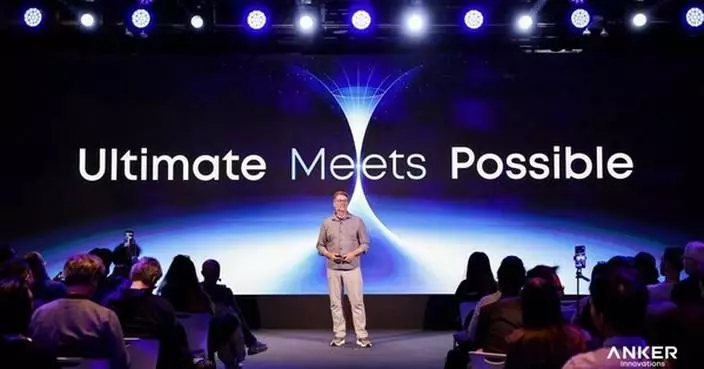
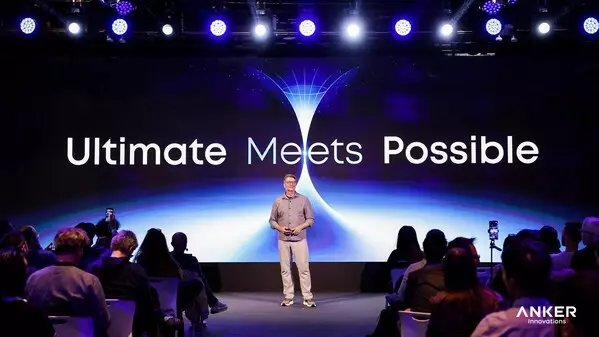
NEW YORK and Bellevue, Wash., May 22, 2026 /PRNewswire/ -- Anker Innovations is hosting Anker Day 2026: Where Ultimate Meets Possible, its annual brand event to showcase the newest product launches and technology break-throughs across its portfolio. Where Ultimate Meets Possible will bring together media, retail buyers and key influencers for an exclusive look at what's next in consumer electronics, spanning premium audio, home energy and the smart home appliances.
Where Ultimate Meets Possible will be held at STORIED in New York City, an invite-only experience featuring keynote presentations, hands-on product demonstrations and a deep dive into the company's latest innovations.
Anker Day 2026 debuted innovations across three brands: soundcore's Liberty 5 Pro and Pro Max — the first earbuds powered by Anker's new THUS™ AI chip — alongside VibeOS AI platform and Nebula SpaceFlow; Anker SOLIX's S2000, the world's longest-lasting 2kWh home backup power station; and eufy's EdgeAgent™, a local AI home security agent, plus new baby care products.
Started With Power
Anker was founded in 2011 and released its first product in the following year: a 4,500mAh ultra-slim power bank. It was a modest beginning, but behind it was an engineering conviction that would shape everything that followed. If technology is going to make a meaningful difference in people's lives, it has to be built to the highest possible standard.
2012 - The Beginning
Anker's first product: a 4,500mAh ultra-slim power bank - the start of a commitment to putting well-engineered, reliable power in people's hands.
2013 - PowerIQ™
Introduced PowerIQ™, enabling fast-charging compatibility across both iOS and Android - setting the standard for universal charging intelligence.
2018 - GaN from Aerospace
An early adopter of Gallium Nitride (GaN) from aerospace applications for consumer charging - delivering a 40% size reduction without sacrificing output.
2019 - World's Smallest 18W Charger
Delivered the world's smallest 18W charger at the time - proving that ultimate performance and ultra-compact form are not a trade-off.
2022 - GaNPrime™
Pioneered high-power multi-port chargers with dynamic power distribution - intelligently allocating power across multiple devices simultaneously.
2023 - 240W Wall Charger
Delivered the industry's highest-power 240W wall charger at the time - meeting the demands of the most power-hungry professional setups.
2024 - InstaCord™ & UltraDura™
In 2024, InstaCord™ became Anker's most advanced retractable‑cable technology and UltraDura™ achieved industry‑leading durability.
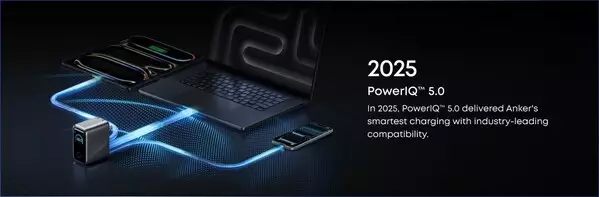
2025 - GaNPrime™ 2.0 • PowerIQ™ 5.0 • AnkerSense™ View • TurboBoost™
GaNPrime™ 2.0 (most advanced fast charging), PowerIQ™ 5.0 (smartest compatibility), AnkerSense™ View (intelligent display technology), and TurboBoost™ for ultra-fast power bank recharging. The pursuit never stops.
Fifteen years. Eight technology generations. Every breakthrough driven by one and only promise: seeking the ultimate innovation, not as an end in itself, but because technology built to its highest standard is how we put the possibilities people want in their lives within reach. Technology in service of people. That is what this pursuit has always meant.
Today's Milestone: Anker Thus™
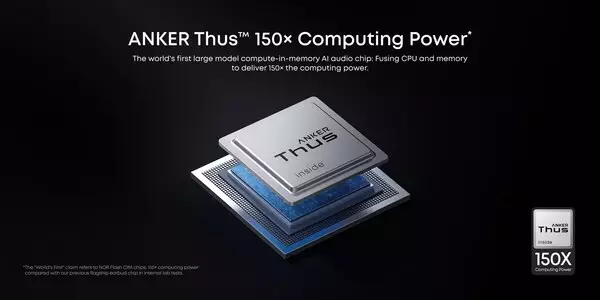
For 80 years, chip design has followed the same logic established by John von Neumann in 1945: separate the processor from memory, and shuttle data between them one instruction at a time. For eight decades across mainframes, desktops, and data centers, this model worked. AI breaks that assumption. A neural network draws on millions of learned parameters all at once - and in a wearable device, moving that data between memory and processor consumes more than 90 percent of chip power, leaving almost nothing for actual computation.
THUS™ applies a different principle: embed computation directly inside NOR Flash memory cells, where the model already lives. The model parameters never have to move. The energy previously consumed by data movement is redirected entirely to computation.
The first THUS™ AI chip debuts in earbuds, delivering up to 150 times more AI computing power on the environmental noise cancellation task than Anker's previous-generation flagship earphones.
Clear Calls - the chip's first disclosed feature - runs a large neural network entirely on-device, anchored by eight MEMS microphones and two bone conduction sensors, for a significantly clear call in any environment. Additional AI-powered features including Signature Sound and Voice Control debuted at Anker Day.
"Every AI chip built until now stores the model on one side and does the computation on the other. To think, the device has to carry all those parameters across, many times per second, every single inference. THUS™ puts the computation where the model already lives. The model never has to move again."
- Steven Yang, Founder and CEO, Anker Innovations
THUS™ takes inspiration from "Thus have I heard", a Buddhist phrase that reflects direct transmission - knowledge conveyed as it was experienced, without distortion.
All performance figures are based on internal Anker lab tests. The 150× AI computing power figure applies specifically to the environmental noise cancellation task and reflects the architectural change from rule-based to neural-net AI processing. It is not a general performance claim and does not reflect a process node upgrade. The environmental noise cancellation workload referenced here runs as an on-device neural network model on the first THUS™ chip.
Anker soundcore Liberty 5 Pro: The First Product Powered by Anker Thus™
The soundcore Liberty 5 Pro and Liberty 5 Pro Max are the first two products to ship with the THUS™ chip. Their positioning is organized around three on-device intelligence layers the chip enables - understanding, adapting, and tuning - each representing a function earbuds could not credibly perform before neural-net AI became viable at this scale. Coming to the market soon.
15 Years, One Promise
From our first power bank to a proprietary AI chip in 2026 - the categories we build in keep expanding, and so does the scope of what technology can do for people's lives. Our promise has been one and only, seeking the ultimate innovation, with the conviction that technology built to its highest standard makes the possibilities people want in their lives the ones they can actually live. Fifteen years is long enough to know that trust is earned slowly. Fifteen years in. The pursuit continues.
About Anker Innovations
Anker Innovations is a global consumer technology company driven by ultimate innovation, creating products that help people power, create, connect, and live more freely. Founded in 2011, Anker Innovations serves more than 200 million consumers across 146 countries and regions. Learn more at anker.com.
DISCLAIMER
*Statements in this news release that are not statements of historical fact may include forward-looking statements regarding future events or the future financial performance of the company. We wish to caution you that such statements are just predictions and that actual events or results may differ materially. Forward-looking statements involve a number of risks and uncertainties surrounding competitive and industry conditions, market acceptance for the company's products, risks of litigation, technological changes, developing industry standards and other factors related to the company's businesses. The actions referred to in this press release are not an admission or acknowledgement of any claim or allegation. The Company reserves all of its rights.
** This press release is distributed by PR Newswire through automated distribution system, for which the client assumes full responsibility. **
15 Years of Seeking Ultimate Innovation: From Power Banks to Proprietary AI THUS™ Chip
15 Years of Seeking Ultimate Innovation: From Power Banks to Proprietary AI THUS™ Chip
15 Years of Seeking Ultimate Innovation: From Power Banks to Proprietary AI THUS™ Chip