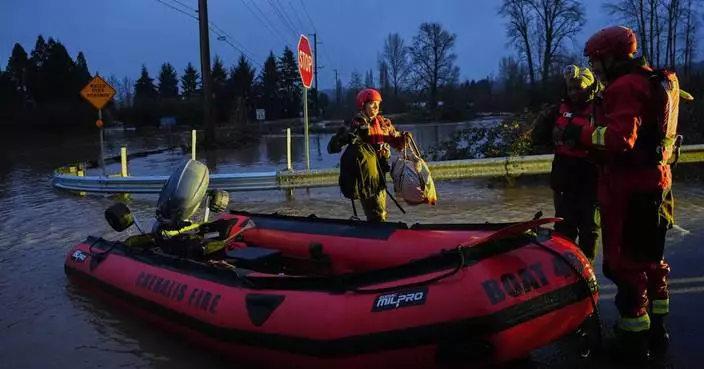
Warm water and air and unusual weather conditions tracing back as far as tropical cyclone flooding in Indonesia helped supercharge stubborn atmospheric rivers that have drenched Washington state with almost 5 trillion gallons (19 trillion liters) of rain in the past seven days, threatening record flood levels, meteorologists said.
The worst and most persistent of the heavy rains will linger to douse the same location through late Thursday and early Friday morning before the river of moisture should lessen and move around a bit. But the West Coast likely won't see an end to the “fire hose” of moisture until the week of Christmas, said Matt Jeglum, acting science chief for the National Weather Service’s western region.
Atmospheric rivers are long, narrow bands of water vapor that form over an ocean and flow through the sky, transporting moisture from the tropics to northern latitudes. The Pacific Northwest gets a couple dozen each year, more than other parts of the West Coast, meteorologists said. But they're not usually this big.
Wednesday's downpours coupled with Monday's rains have led to forecasts of record-setting flooding, particularly on the Skagit River, which flows through northern Washington and empties into the Puget Sound, said Washington state climatologist Guillaume Mauger.
“The atmospheric rivers, the ARs, are continually reloading,'' said former National Oceanic and Atmospheric Administration chief scientist Ryan Maue, now a private meteorologist. ”The amount of rainfall in the three-week period could be, you know, 20 to 30 inches (51 to 76 centimeters). That’s quite extreme."
Maue added: "I wouldn’t want to live there. Not right now."
Using rain gauge observations, Maue estimated almost 5 trillion gallons — more than enough to fill Oregon's Crater Lake or more than 18,000 Empire State Buildings — fell in the area over the past week. One weather station at Mount Rainier measured 21 inches (53 centimeters) of rain since Thursday, Jeglum said.
“Those numbers are big, but are not unheard of,” Mauger said.
The moisture originated a few hundred miles north of Hawaii, where the Pacific is a couple degrees warmer than normal. That fuels the atmospheric river even more and then warmer air adds to that, said meteorologist Jeff Masters, co-founder of Weather Underground and now at Yale Climate Connections. Because it’s so warm, a lot more of that moisture is falling as rain than snow, he said.
These storms “have been supercharged by the chain of events that began two weeks ago" much farther west than Hawaii, Maue said.
He pointed to an area near Indonesia that saw deadly flooding from tropical cyclones. That coincided with a natural season weather pattern that moves around every 30 days or so — the Madden Julian Oscillation — which Maue said was the strongest it has been this time of year in decades. It sent out waves that helped carry an “unbroken line of moisture” and energy from the Indonesia event toward the Americas. A high-pressure ridge off the California coast pushed the atmospheric river system north, further funneled by unusual warmth over Russia and cold over Alaska.
And Washington became the bullseye.
In a world made warmer by the burning of coal, oil and natural gas, atmospheric river storms will be bigger and wetter, according to studies, computer models and meteorologists. A study earlier this year found that may already be happening. Looking at events since 1980, researchers calculated that the storms have increased in the area they soak by 6% to 9%, increased in frequency by 2% to 6% and are slightly wetter than before.
A quick analysis by Climate Central looking at the heavy rain found that ocean temperatures under the atmospheric rivers are 10 times more likely to be warmer than normal because of human-caused climate change. Air temperatures in the Pacific Northwest are much warmer than normal, and that’s four to five times more likely because of climate change, said Climate Central meteorologist Shel Winkley.
The Associated Press’ climate and environmental coverage receives financial support from multiple private foundations. AP is solely responsible for all content. Find AP’s standards for working with philanthropies, a list of supporters and funded coverage areas at AP.org.
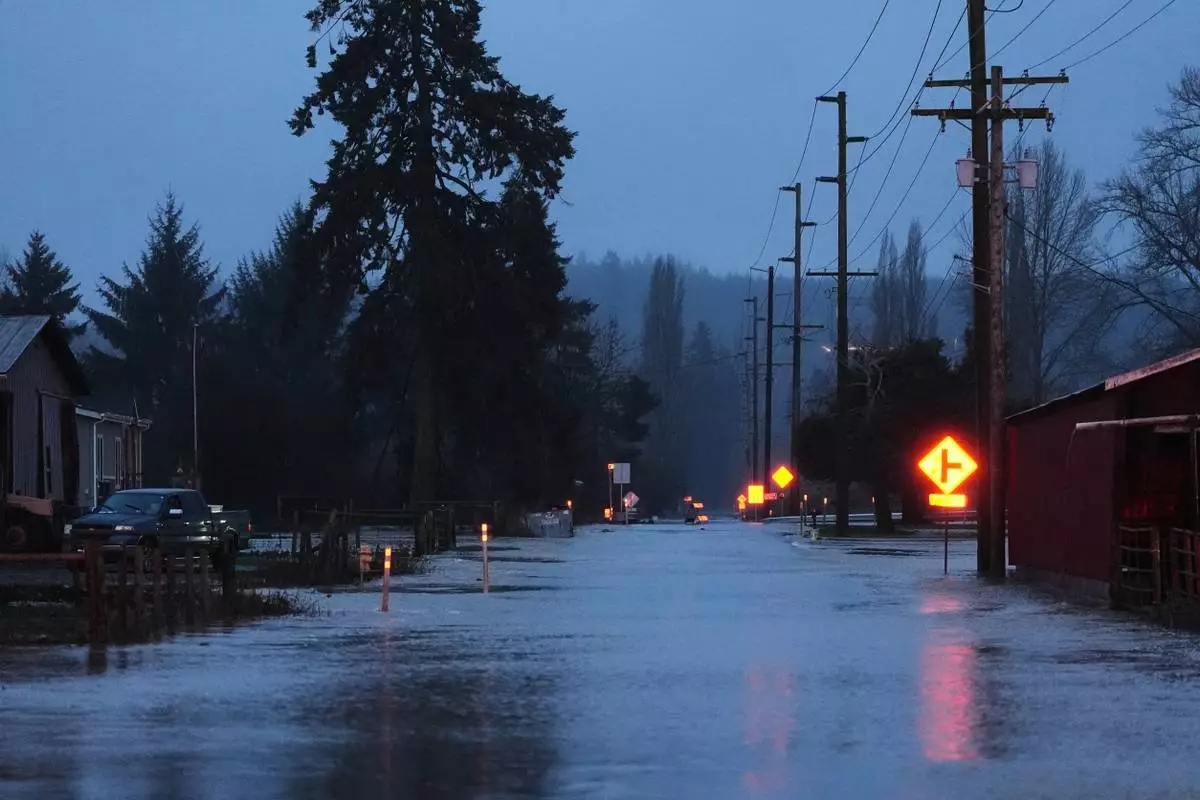
A flooded road is seen after heavy rains in the region, Tuesday, Dec. 9, 2025, in Chehalis, Wash. (AP Photo/Lindsey Wasson)
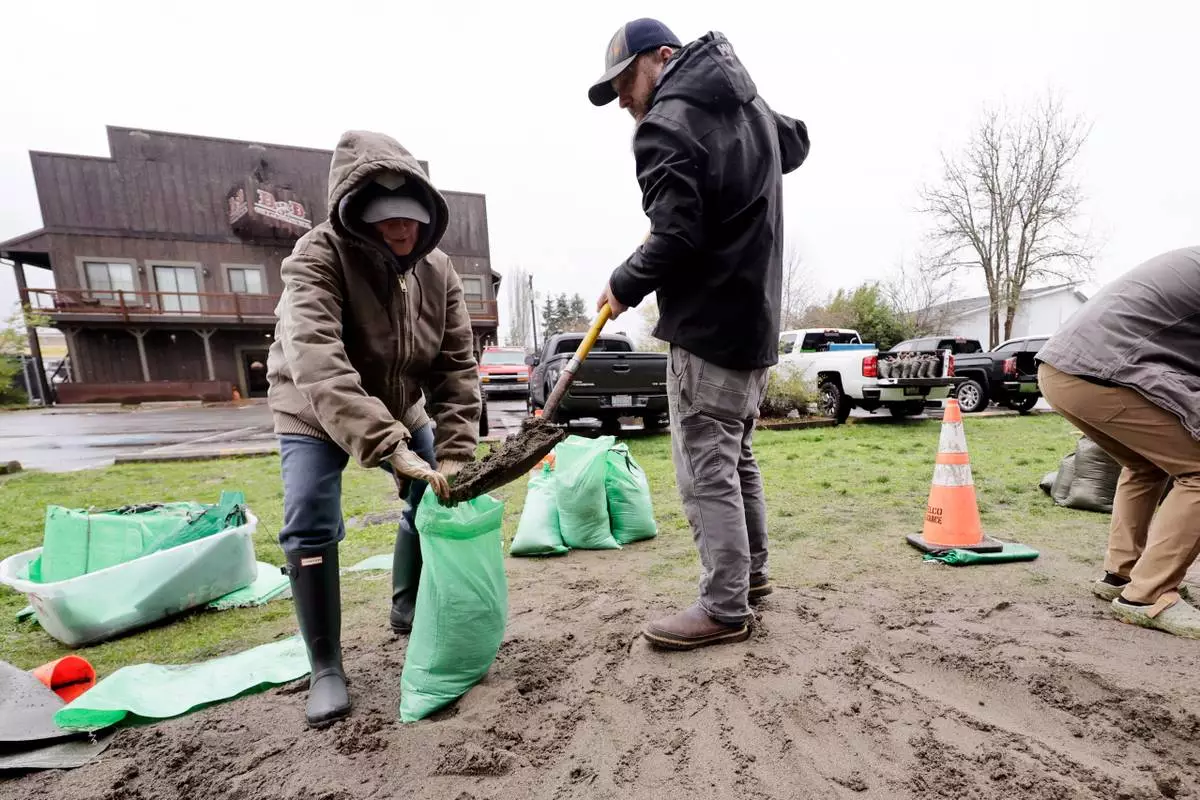
Deanna and Troy Thomas fill sandbags for their home to keep out water from potential flooding due to heavy rains, Wednesday, Dec. 10, 2025, in Orting, Wash. (AP Photo/John Froschauer)

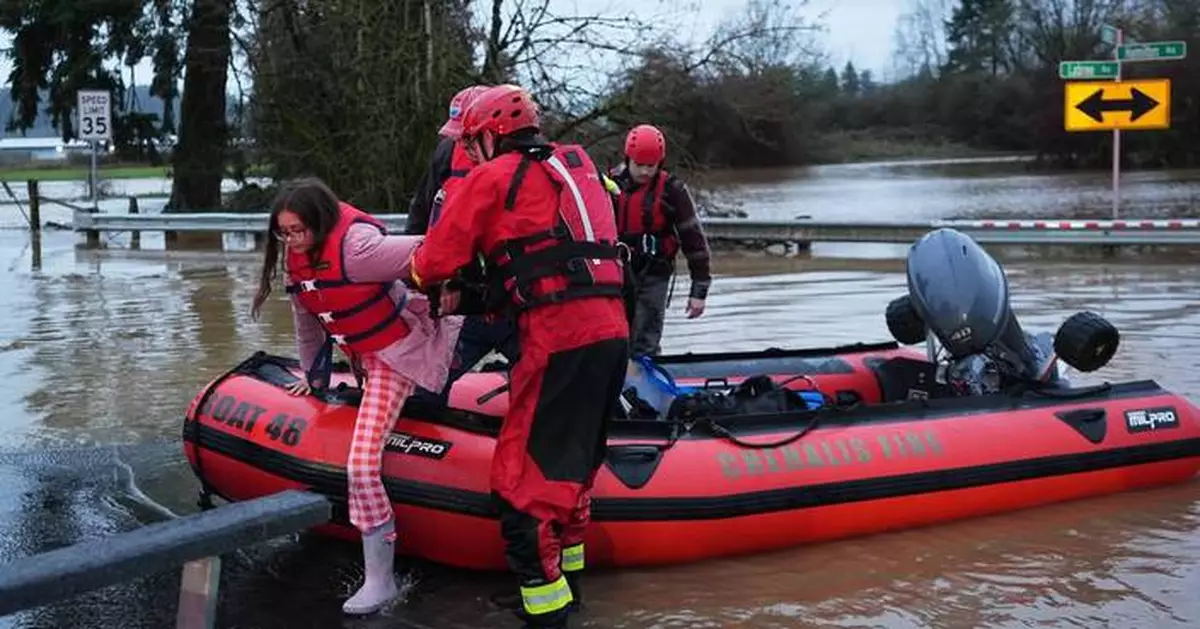
Maery Schine, 11, is helped out of a rescue boat by rescue workers with Chehalis Fire after evacuating with her father Patric, second from left, following flooding after heavy rains in the region Tuesday, Dec. 9, 2025, in Chehalis, Wash. (AP Photo/Lindsey Wasson)