Spectacular "floating ice" scenery appeared in the northwest China's Gansu and north China's Shanxi section of the Yellow River, China's second-longest river, as temperatures continue to drop across large parts of the country.
Thin rings of ice formed a dazzling array that shimmered under the sun on the river course of the Maqu section of the Yellow River in Gansu Province. The ice flows look like pieces of glass scattered over jade-like water.
Maqu County is located in Gannan Tibetan Autonomous Prefecture, with an average altitude of 3,600 meters. The Yellow River flows through the county for a total length of 433 kilometers.
A similar scene is also prevailing in Shanxi's Baode section of the Yellow River, with large shards of ice moving downstream.
Baode County in Xinzhou City is located in the middle and upper reaches of the Yellow River, with the river flowing through it for 63 kilometers.
Currently, a 6-kilometer stretch in the Baode section is frozen with ice floes. To guarantee safety throughout the ice jam flood season, local authorities have heightened patrol frequencies, enhanced communication and coordination, and are diligently preparing for a range of ice flood prevention and emergency response measures.
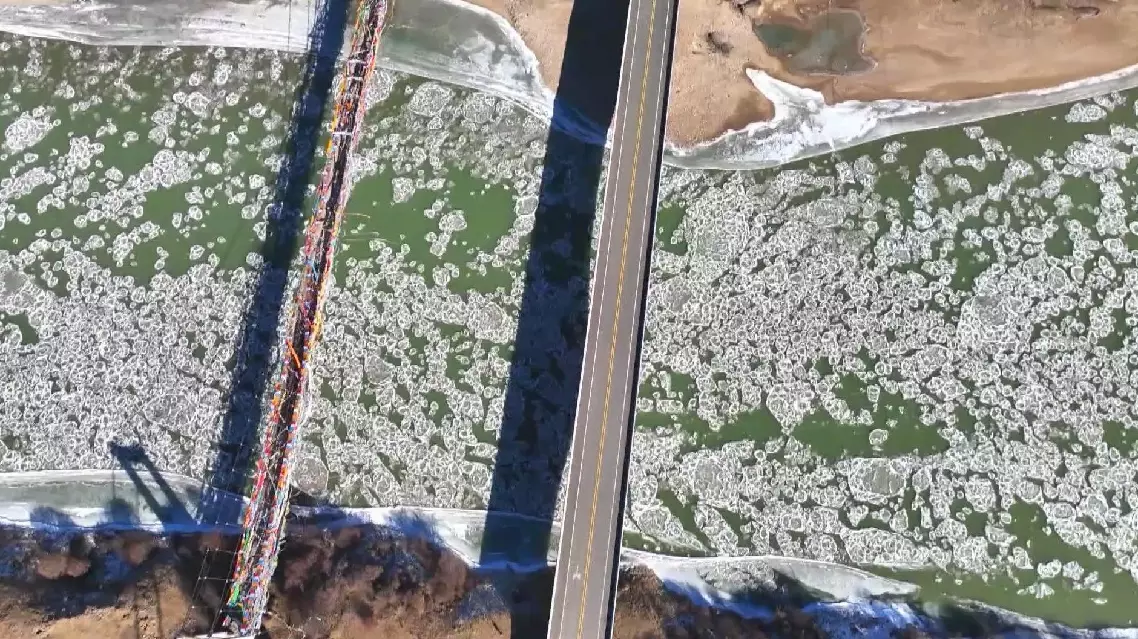
Floating ice appears in Gansu, Shanxi section of Yellow River as temperatures plummet
Chinese Premier Li Qiang on Wednesday called for a comprehensive push in the technological innovation, industrial growth and application of artificial intelligence (AI) to foster new quality productive forces and promote high-quality development.
Li made the remarks while presiding over a State Council group study session focused on AI development.
China must understand AI development trends accurately, Li said, encouraging breakthroughs across the entire chain, and for broad implementation in diverse scenarios to unlock the potential of the technology in an improved manner.
Li urged efforts to map out forward-looking strategies for new technologies and pathways, push for large-scale and commercial applications, better coordinate key resources ranging from data to computing power and electricity supply, expand international technology exchange, and strengthen AI governance with improvements to laws, policy frameworks, application standards and ethical guidelines.
Additionally, China should build an open and inclusive environment, and cultivate a larger multi-skilled talent pool, Li said.
Zhou Bowen, head of the Shanghai Artificial Intelligence Laboratory, delivered a briefing at the session. Vice premiers Ding Xuexiang and Zhang Guoqing, along with State Councilor Wu Zhenglong, also participated in the discussions.
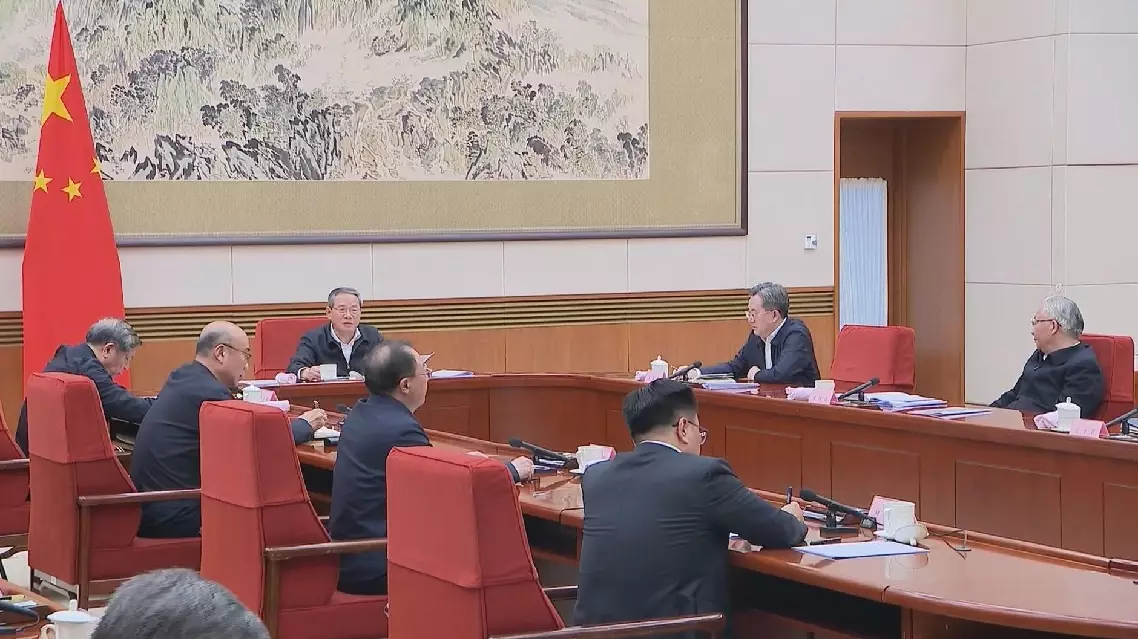
Chinese premier calls for comprehensive push in AI innovation, application