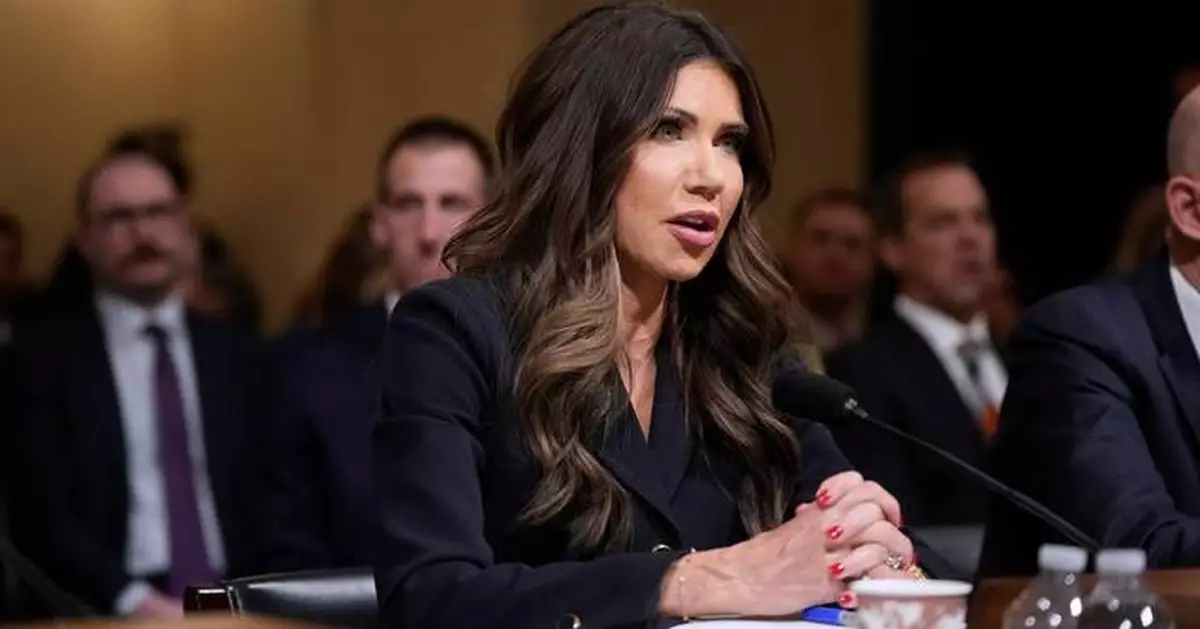
Homeland Security Secretary Kristi Noem on Thursday linked the seizure of an oil tanker off the coast of Venezuela to the Trump administration’s counterdrug efforts in Latin America as tensions escalate with the government of President Nicolás Maduro.
Noem's assertion, which came during her testimony to the House Homeland Security Committee, provided the Republican administration's most thorough assessment so far of why it took control of the vessel on Wednesday. Incredibly unusual, the use of U.S. forces to seize a merchant ship was a sharp escalation in the administration’s pressure campaign on Maduro, who has been charged with narcoterrorism in the United States.
Trump officials added to it Thursday by imposing sanctions on three of Maduro's nephews. The Venezuelan leader discussed the rising tensions with Russian President Vladimir Putin on Thursday. The Kremlin said in a statement that Putin reaffirmed his support for Maduro's policy of “protecting national interests and sovereignty in the face of growing external pressure.”
Asked to delineate the U.S. Coast Guard's role in the tanker seizure, Noem called it “a successful operation directed by the president to ensure that we’re pushing back on a regime that is systematically covering and flooding our country with deadly drugs and killing our next generation of Americans.”
Noem went on to lay out the ”lethal doses of cocaine" she said had been kept from entering the U.S. as a result.
Asked Thursday whether U.S. operations in the region were about drugs or oil, White House press secretary Karoline Leavitt also gave a bifurcated answer, saying the administration was “focused on doing many things in the Western Hemisphere." She noted that such seizures could continue, arguing that the commodities being transported were used to fund the illegal drug trade.
“We’re not going to stand by and watch sanctioned vessels sail the seas with black market oil, the proceeds of which will fuel narcoterrorism of rogue and illegitimate regimes around the world,” she said.
The Justice Department had obtained a warrant for the vessel because it had been known for “carrying black market, sanctioned oil,” Leavitt said, adding that “the United States does intend to get the oil” that was onboard the tanker.
Trump told reporters a day earlier at the White House that the tanker "was seized for a very good reason.” Asked what would happen to the oil aboard the tanker, Trump said, “Well, we keep it, I guess.”
The U.S. has built up the largest military presence in the region in decades and launched a series of deadly strikes on alleged drug-smuggling boats in the Caribbean Sea and the eastern Pacific Ocean, a campaign that is facing growing scrutiny from Congress.
Trump, who has said land attacks are coming soon but has not offered more details, has broadly justified the moves as necessary to stem the flow of fentanyl and other illegal drugs into the U.S.
Venezuela’s government said in a statement that the tanker seizure “constitutes a blatant theft and an act of international piracy.” Maduro has insisted the real purpose of the U.S. military operations is to force him from office.
Meg Kinnard can be reached at http://x.com/MegKinnardAP.

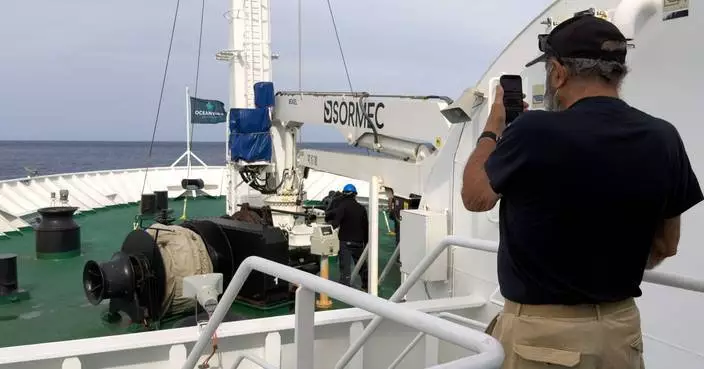
This image from video posted on Attorney General Pam Bondi's X account, and partially redacted by the source, shows an oil tanker being seized by U.S. forces off the coast of Venezuela, Wednesday, Dec. 10, 2025. (U.S. Attorney General's Office/X via AP)

Homeland Security Secretary Kristi Noem speaks during the House Committee on Homeland Security on Capitol Hill in Washington, Thursday, Dec. 11, 2025. (AP Photo/Mark Schiefelbein)
LONDON (AP) — British Prime Minister Keir Starmer pledged to revive his struggling government but faced growing calls to resign after a disastrous set of local and regional elections for his Labour Party.
As the final results came in Saturday, Labour suffered a net loss of more than 1,100 local council seats across England, lost control of several local authorities it had held for decades and was booted from power in Wales after 27 years. Anti-immigration party Reform UK gained over 1,300 seats across England and made significant gains in legislative elections in Wales and Scotland.
It was a blunt verdict from voters in elections widely seen as an unofficial referendum on Starmer, whose popularity has plummeted since he led the center-left party to power less than two years ago.
Here are five things we’ve learned from the elections.
Starmer insisted he would not walk away and "plunge the country into chaos,” and the dire election results did not produce an immediate challenge to his leadership.
"The right thing to do is rebuild and show the path forward,” Starmer said Saturday. “That’s what I’m going to do in the coming days.”
Starmer’s Cabinet colleagues expressed support, and none of the high-profile Labour politicians considered potential challengers has made a move. Health Secretary Wes Streeting, former Deputy Prime Minister Angela Rayner and Greater Manchester Mayor Andy Burnham are keeping quiet for now.
But a growing number of Labour lawmakers urged the prime minister to set a timetable for his departure this year. British politics allows parties to change leader midterm without the need for a new election.
“There has to be a timetable,” legislator Clive Betts told the BBC. Another lawmaker, Tony Vaughan, said there should be an “orderly transition of leadership.”
Starmer tried to demonstrate change on Saturday by bringing back two figures from past Labour governments. He made former Prime Minister Gordon Brown a special envoy on global finance, and appointed the party's ex-deputy leader Harriet Harman an adviser on women and girls.
Starmer is due to make a speech on Monday in an attempt to regain momentum, before the government sets out its legislative plans on Wednesday in a speech delivered by King Charles III at the State Opening of Parliament.
The elections were a breakthrough for Reform UK, the latest hard-right party led by the veteran nationalist politician Nigel Farage.
Running on an anti-establishment and anti-immigration message, the party won hundreds of local council seats in working-class areas in England’s north, such as Sunderland, that were solid Labour turf for decades. It also made gains from the Conservatives in areas like the county of Essex, east of London, and increased its vote share in Wales and Scotland, new terrain for the party.
Farage said the results marked a “historic change in British politics.” He said he's confident that “voters who have come to us are not doing it as a short-term protest.”
Reform UK currently holds just eight of the 650 seats in the House of Commons and it’s unclear whether it could repeat its success in a national election.
The elections produced semiautonomous administrations in Scotland and Wales led by parties devoted to independence and the breakup of the United Kingdom — though neither has that policy on the front burner.
The Scottish National Party, which has governed in Edinburgh since 2007, won another term but fell short of a majority, meaning an independence referendum is unlikely. Labour and Reform tied in a distant second place.
Plaid Cymru (The Party of Wales) won the most seats in the Cardiff-based legislature, the Senedd. The party, which has an ambition for Wales to leave the U.K. but no plan to do so anytime soon, fell short of a majority but will likely form the new government. Reform came second and Labour a distant third in one of its most historic heartlands, with outgoing First Minister Eluned Morgan losing her seat.
The economy lies at the heart of Labour’s troubles, as it does for many incumbent governments.
Since ending 14 years of Conservative rule roiled by austerity and the COVID-19 pandemic, Labour has struggled to ease the cost of living and jump-start a sluggish economy against the tough economic backdrop of war in Ukraine and, more recently, Iran. Starmer also has angered supporters with attempts to cut welfare spending, some of which were reversed after Labour revolts.
Some in Labour say the government's achievements, including protections for renters and a higher minimum wage, are going unnoticed. Many blame Starmer, an uninspiring leader distracted by scandals including his disastrous decision to appoint Peter Mandelson, a scandal-tarnished friend of Jeffrey Epstein, as Britain’s ambassador to Washington.
But Stephen Houghton, the outgoing leader of Barnsley council in northern England, where Labour lost to Reform, said the problem “goes deeper than the prime minister.”
“This has been coming for 30 years around the country, in post-industrial communities, coastal communities, that have been left behind,” he said. “You can change prime ministers all day long. If you don’t change policy, it’s not going to change.”
The results reflect a fragmentation of U.K. politics after decades of domination by Labour and the Conservative Party, which also suffered major losses on Thursday.
The elections offered voters a rainbow of choices, including the centrist Liberal Democrats and the nationalist parties in Scotland and Wales.
But the big winners were populist insurgents, Reform UK and the Green Party, whose focus has expanded from the environment to social justice and the Palestinian cause under self-described “eco populist” leader Zack Polanski. The Greens won hundreds of council seats from Labour in urban centers and university towns and took control of several local authorities.
Tony Travers, professor of government at the London School of Economics, said the results suggest the next national election, due by 2029, won’t produce a majority for any party.
“So then you’re in the world of, after the election, two or three big minority parties trying to work out how they would govern,” he said — something traditionally considered “very un-British.”
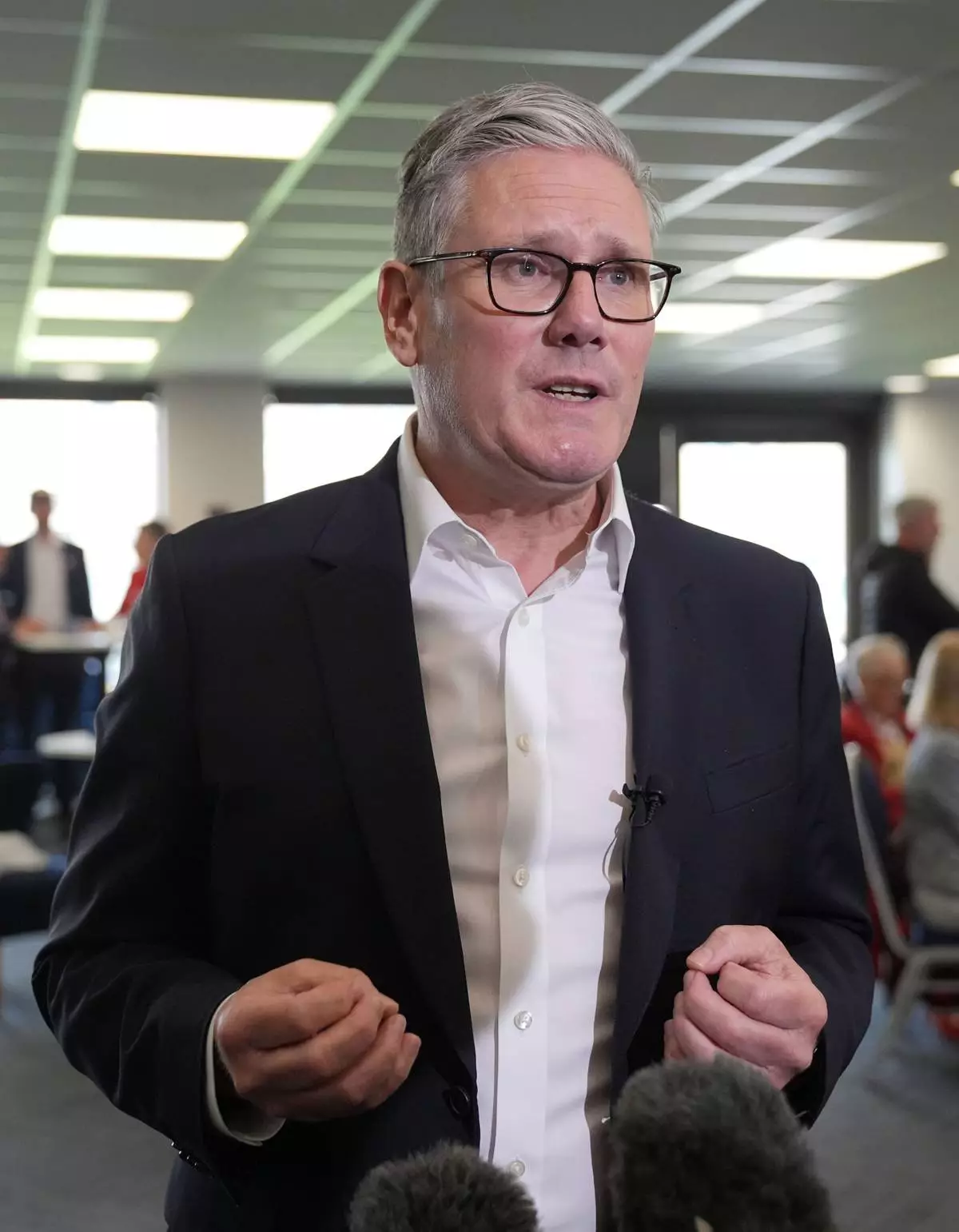
British Prime Minister Sir Keir Starmer speaking to the media after meeting Labour Party members during a visit to AFC Wimbledon in south London, Saturday May 9, 2026. (Maja Smiejkowska/PA via AP)
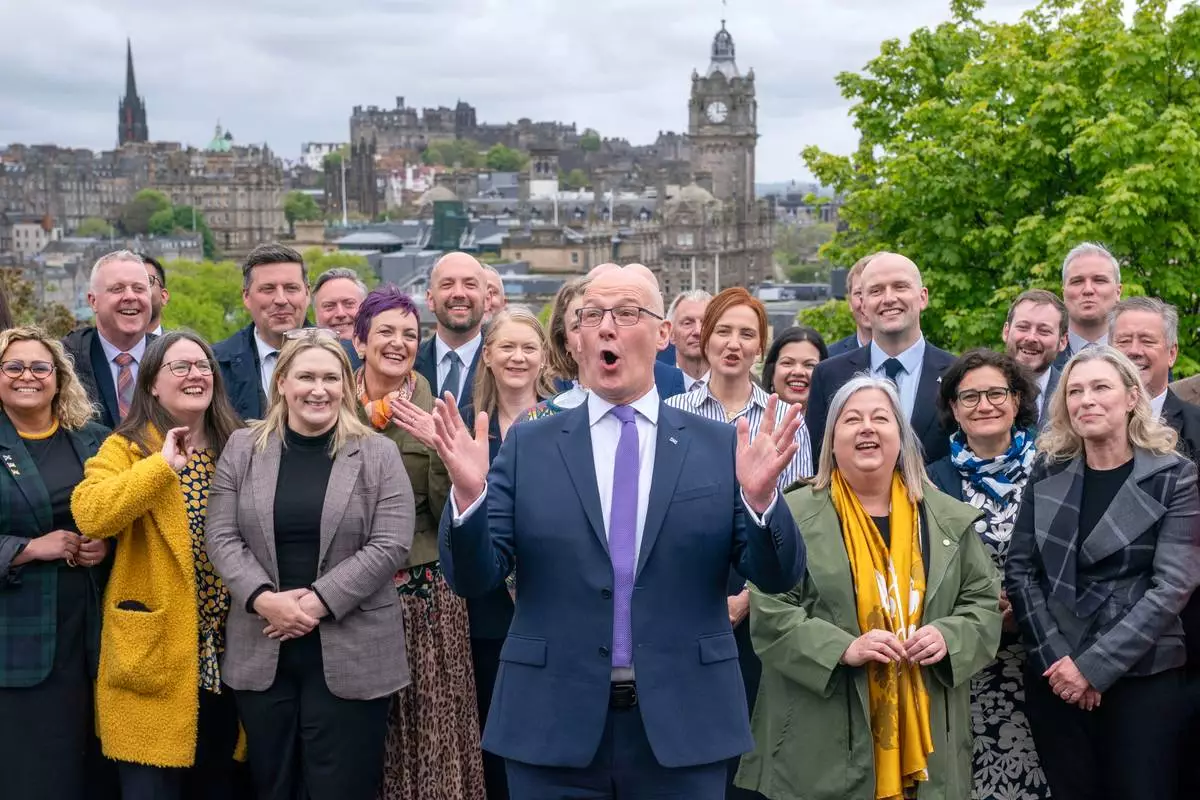
First Minister and SNP leader John Swinney with some of the newly elected SNP MSPs in Edinburgh, Saturday May 9, 2026, following the 2026 Holyrood elections. (Jane Barlow/PA via AP)
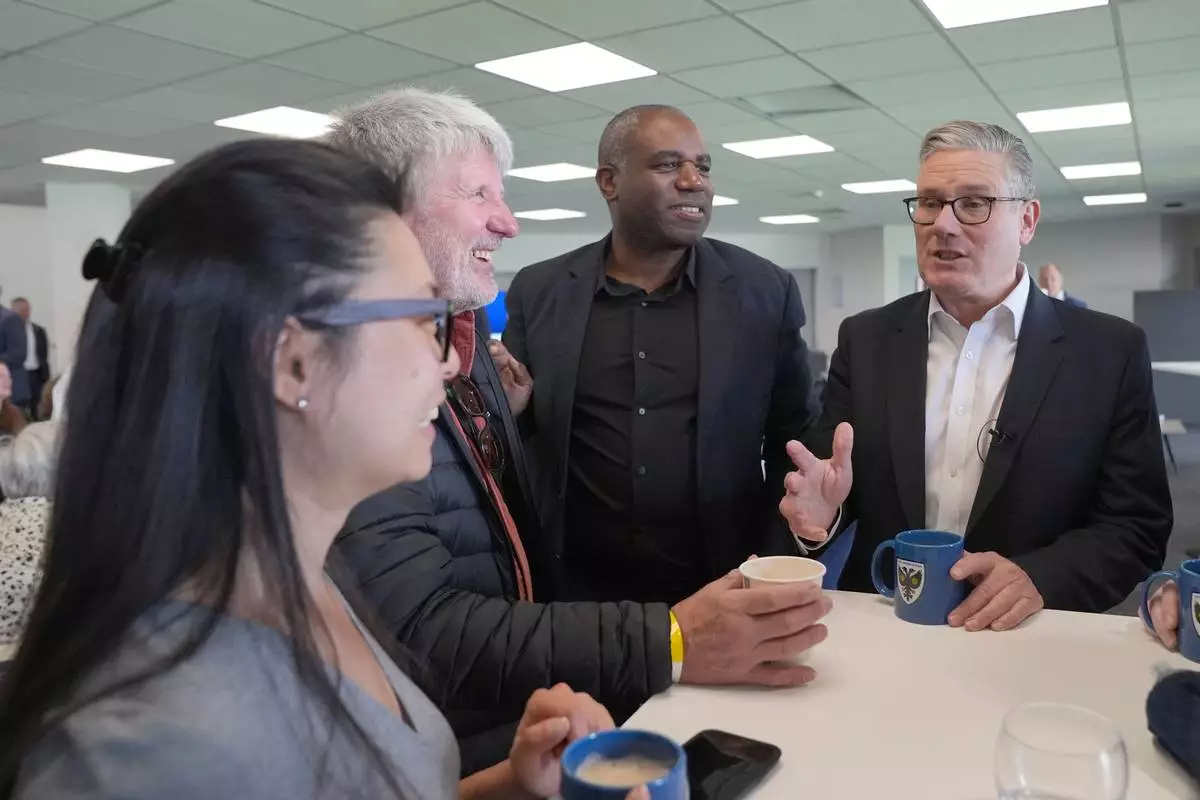
British Prime Minister Sir Keir Starmer and Foreign Secretary David Lammy meeting Labour Party members during a visit to AFC Wimbledon in south London, Saturday May 9, 2026. (Maja Smiejkowska/PA via AP)
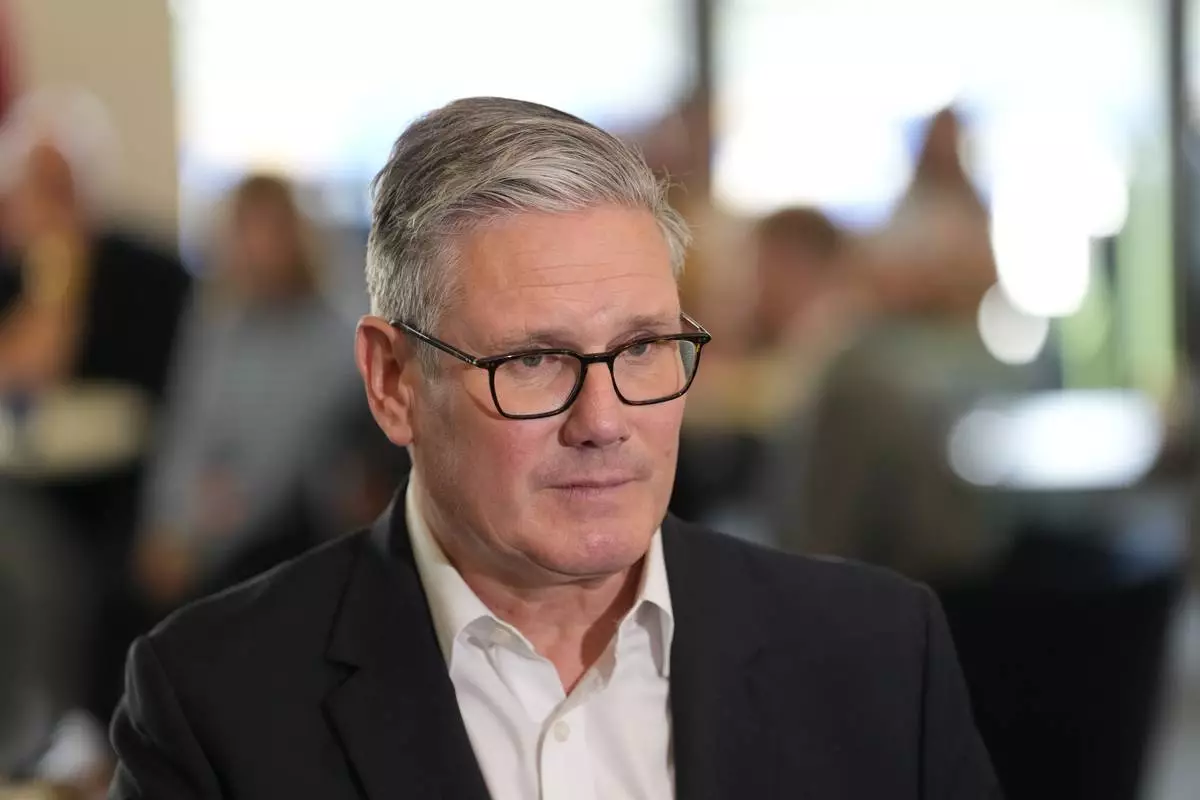
British Prime Minister Sir Keir Starmer speaking to the media after meeting Labour Party members during a visit to AFC Wimbledon in south London, Saturday May 9, 2026. (Maja Smiejkowska/PA via AP)
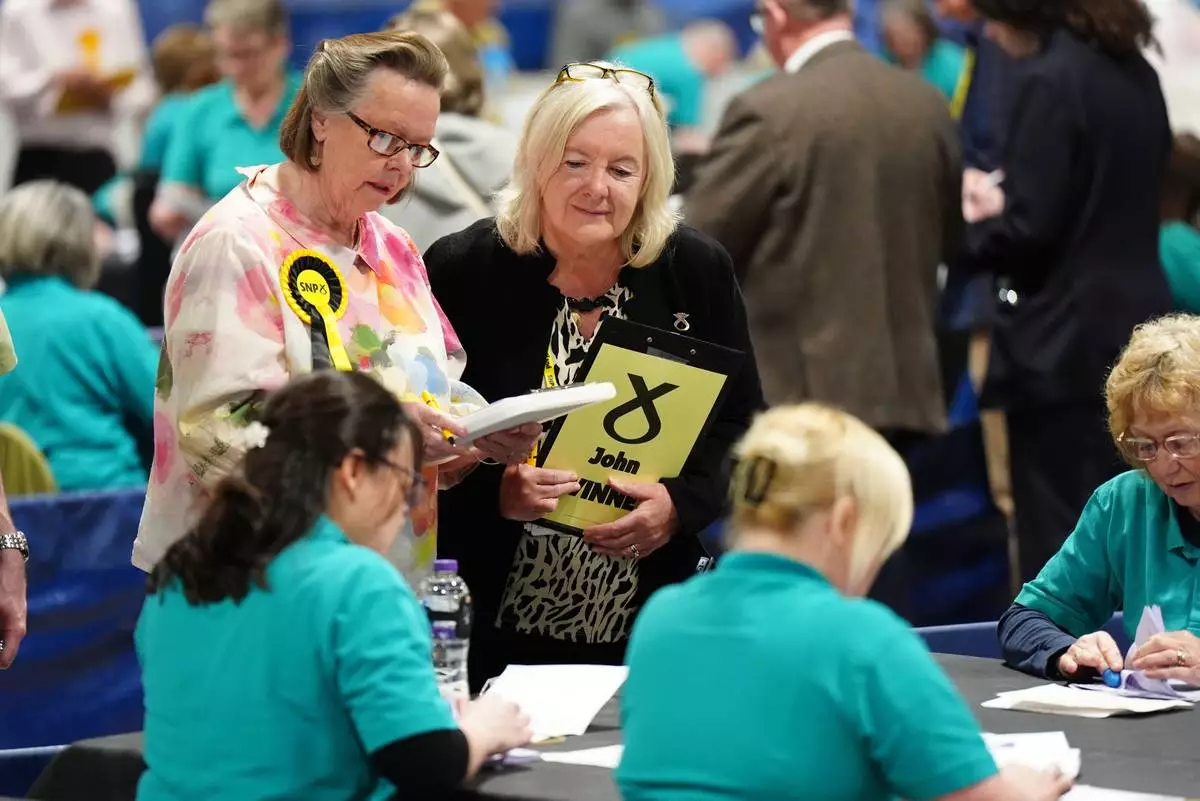
Observers from the Scottish National Party (SNP) watch as votes are counted for the 2026 Holyrood elections, at Dewars Centre in Perth, Scotland, Friday May 8, 2026. (Jane Barlow/PA via AP)
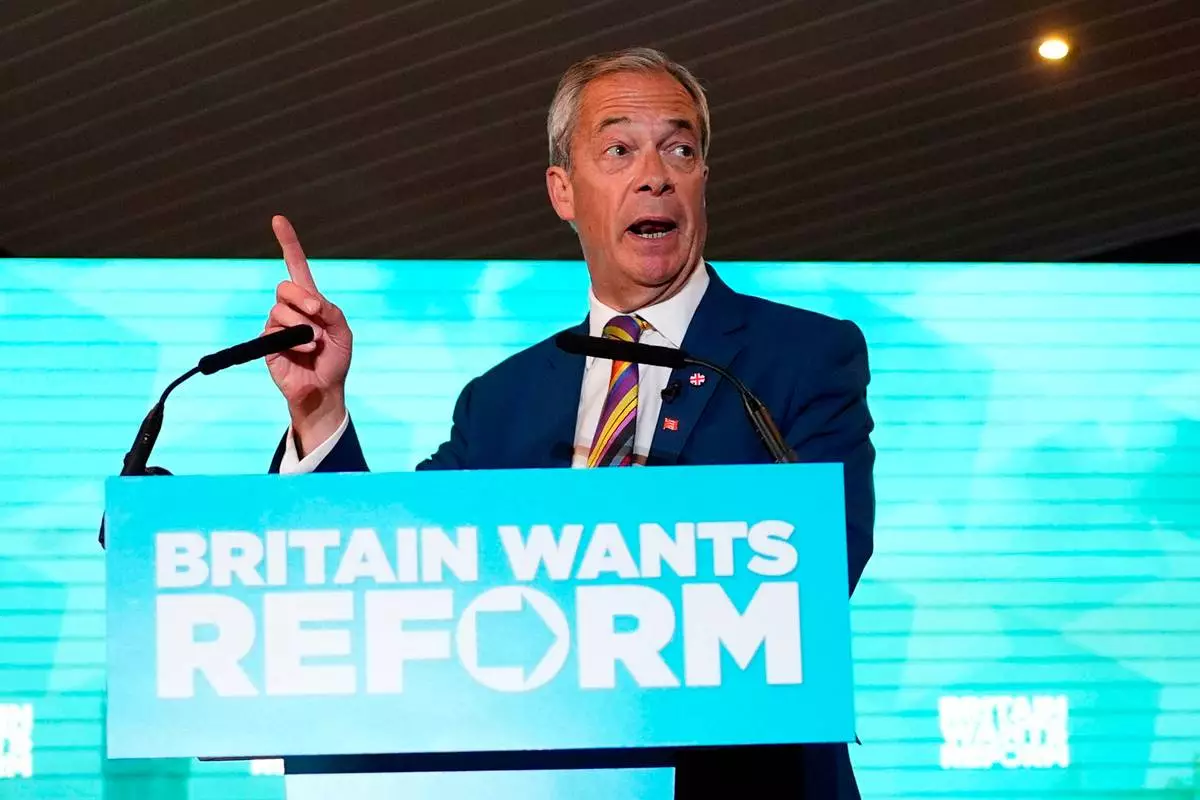
Reform UK leader Nigel Farage speaks to supporters at Chelmsford City Racecourse, Friday May 8, 2026, in Essex, England, following the 2026 local election results. (Jordan Pettitt/PA via AP)
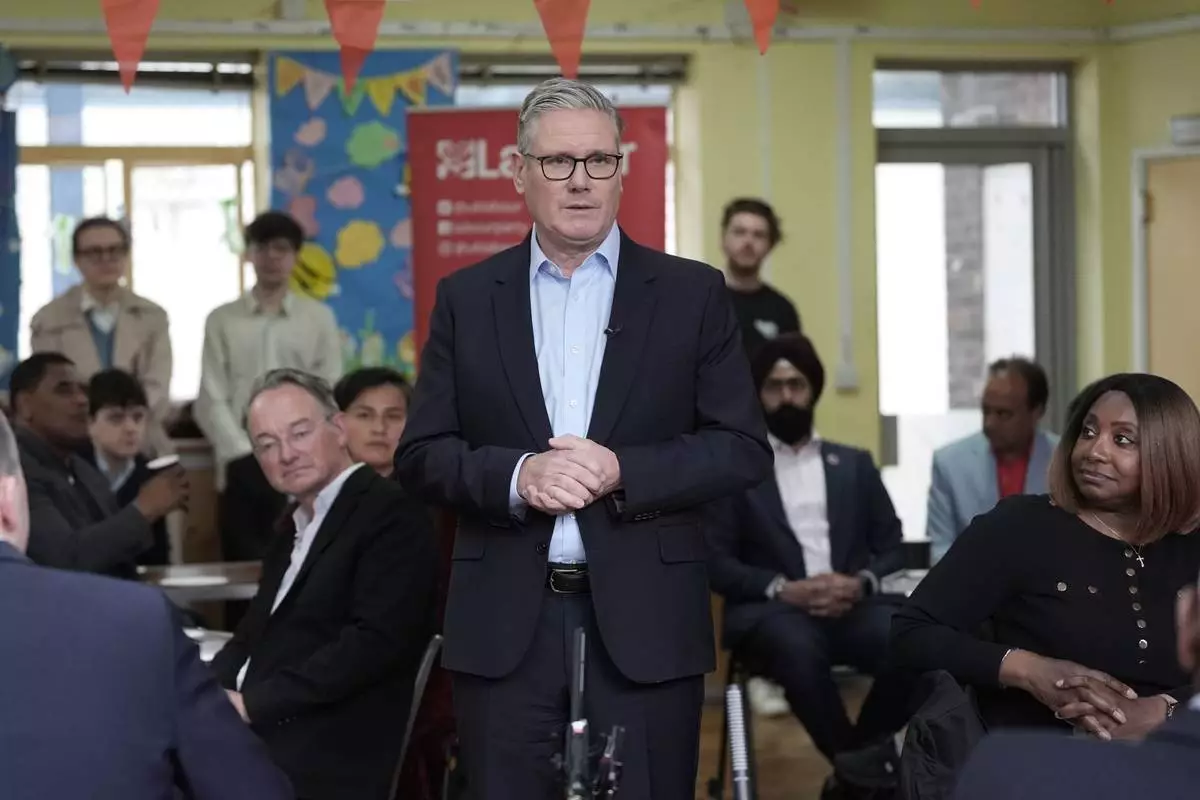
Britain's Prime Minister Sir Keir Starmer speaks to Labour Party members at Kingsdown Methodist Church Hall, in Ealing, west London, Friday May 8, 2026, a day after the local elections. (Stefan Rousseau/PA via AP)