JUNEAU, Alaska (AP) — Conservation groups and an Iñupiat-aligned group sued Thursday to overturn the recent approval of an exploratory drilling program in the National Petroleum Reserve-Alaska, saying it was improperly analyzed by the federal government and could harm caribou and important habitat areas.
The U.S. Bureau of Land Management approved a one-year program proposed by ConocoPhillips Alaska last month that included seismic surveys aimed at helping identify oil and gas reserves and plans to drill four exploration wells. Activities would occur near existing ConocoPhillips Alaska developments, including the large Willow oil project, the lawsuit states.
The complaint, filed by Earthjustice on behalf of Sovereign Iñupiat for a Living Arctic, the Center for Biological Diversity and The Wilderness Society, says the process around the company's application and its subsequent approval lacked transparency and was rushed. A final decision was issued days after a limited public comment period ended, it says.
The Bureau of Land Management “has pushed this project through without proper analysis or process and without considering the significant flaws in the measures it relies on to justify its approval of the exploration program,” the lawsuit states.
It names as defendants the Bureau of Land Management and its parent agency, the Department of the Interior, along with top officials including Interior Secretary Doug Burgum.
Interior Department spokesperson Alyse Sharpe said the department does not comment on pending litigation.
Dennis Nuss, a spokesperson for ConocoPhillips Alaska, said in an email that the company is confident in the “robustness” of its plan and permits and looks forward to completing its work within the limited winter exploration season.
There has been longstanding debate over how much of the petroleum reserve — which covers an area roughly the size of Indiana — should be open for development. President Donald Trump’s administration has moved to roll back limits on drilling and protections enacted during the Biden administration, and a law passed this year calls for the first lease sales in the reserve since 2019.
The push has been cheered by the state's Republican congressional delegation and governor, but it raised concerns among environmentalists who caution against the continued embrace of new oil production in the face of climate change. The reserve is home to Teshekpuk Lake, the largest lake in Alaska's arctic region and third-largest in the state.
Nauri Simmonds, executive director of Sovereign Iñupiat for a Living Arctic, said the proposed exploration program is “not only an assault on caribou and tundra — it is another chapter in the enfoldment of our people into systems designed to fracture us from within.”
“Sovereign Iñupiat for a Living Arctic stands against this approval because our future depends on protecting our homelands, our unity, and our right to live free from the harms of industrial expansion,” Simmonds said in a statement.
The group describes itself online as “an organization of Iñupiat Peoples and community members that believe in a balanced Earth for future generations.”
There are differing views among Alaska Natives, however, over further oil development in places like the petroleum reserve. A group representing many North Slope leaders, Voice of the Arctic Iñupiat, has supported efforts to drill there.
The lawsuit says work under the proposed program could begin “any day” and last until April or May.
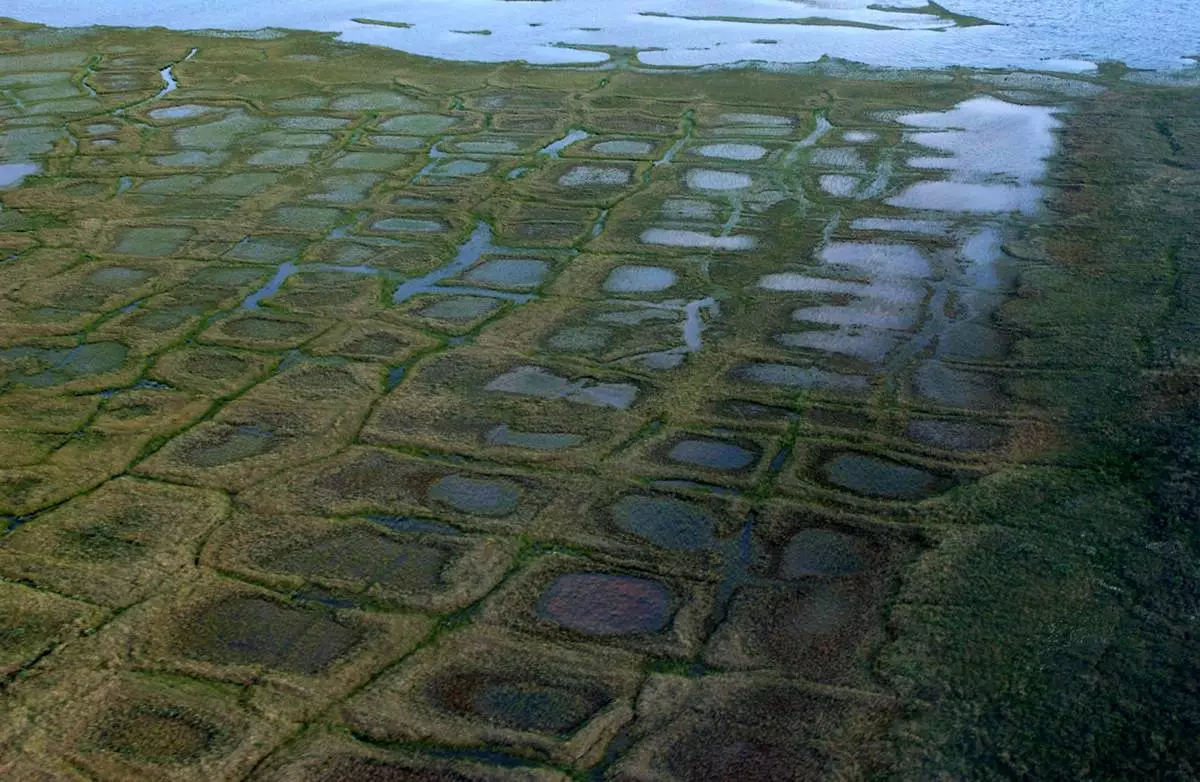
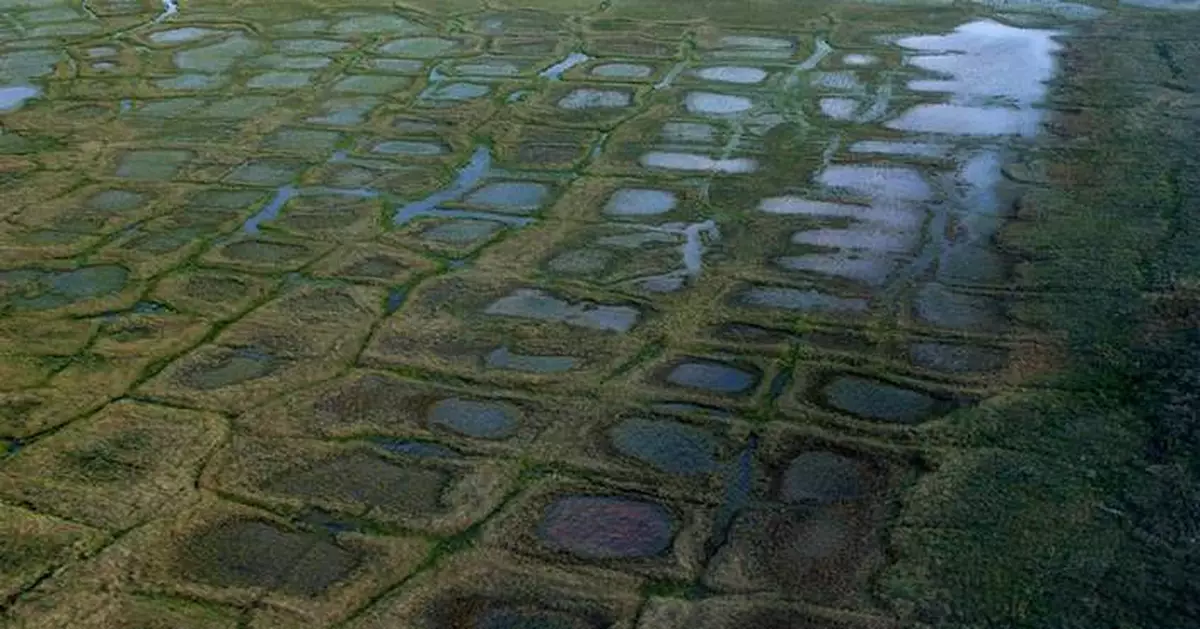
FILE - In this undated photo, provided by the United States Geological Survey, permafrost forms a grid-like pattern in the National Petroleum Reserve-Alaska, managed by the Bureau of Land Management on Alaska's North Slope. (David W. Houseknecht/United States Geological Survey via AP, File)
PHILIPSBURG, Pa. (AP) — Kilmar Abrego Garcia was freed from immigration detention on a judge's order Thursday while he fights to stay in the U.S., handing a major victory to the immigrant whose wrongful deportation to a notorious prison in El Salvador made him a flashpoint of the Trump administration’s immigration crackdown.
U.S. District Judge Paula Xinis in Maryland ordered Immigration and Customs Enforcement to let Abrego Garcia go immediately, writing that federal authorities had detained him again after his return to the United States without any legal basis.
Abrego Garcia’s attorney’s office confirmed he was released just before 5 p.m., the deadline the judge gave the government for an update on Abrego Garcia’s release. His attorney, Simon Sandoval-Moshenberg, earlier told The Associated Press that Abrego Garcia plans to return to Maryland, where he has an American wife and child and where he has lived for years after originally immigrating to the U.S. illegally as a teenager.
Abrego Garcia had been held at Moshannon Valley Processing Center about 115 miles (185 kilometers) northeast of Pittsburgh.
Sandoval-Moshenberg said he’s not sure what comes next, but he’s prepared to defend his client against further deportation efforts.
“The government still has plenty of tools in their toolbox, plenty of tricks up their sleeve,” Sandoval-Moshenberg said, adding he fully expects the government to again take steps to deport his client. “We’re going to be there to fight to make sure there is a fair trial.”
The Department of Homeland Security sharply criticized the judge's decision and vowed to appeal, calling the ruling “naked judicial activism” by a judge appointed during the Obama administration.
“This order lacks any valid legal basis, and we will continue to fight this tooth and nail in the courts,” said Tricia McLaughlin, the department’s assistant secretary.
Sandoval-Moshenberg, said the judge made it clear that the government can’t detain someone indefinitely without legal authority and that his client “has endured more than anyone should ever have to.”
Abrego Garcia, with an American wife and child, has lived in Maryland for years but entered the U.S. illegally as a teenager. An immigration judge ruled in 2019 that Abrego Garcia, a Salvadoran national, could not be deported to El Salvador because he faced danger from a gang that targeted his family. When he was mistakenly sent there in March, his case became a rallying point for those who oppose President Donald Trump’s immigration enforcement actions.
A court later ordered his return to the United States. Since he cannot be removed to El Salvador, ICE has been seeking to deport him to a series of African countries. His federal suit claims the Trump administration is illegally using the removal process to punish Abrego Garcia for the public embarrassment caused by his deportation.
In her order releasing Abrego Garcia, Xinis wrote that federal authorities “did not just stonewall” the court, “They affirmatively misled the tribunal.” The judge was referencing the successive list of four African countries that officials had sought to remove Abrego Garcia seemingly without commitments from those countries, as well as officials' affirmations that Costa Rica withdrew its offer to accept him, a claim later proven untrue.
“But Costa Rica had never wavered in its commitment to receive Abrego Garcia, just as Abrego Garcia never wavered in his commitment to resettle there,” the judge wrote.
Xinis also rejected the government’s argument that she lacked jurisdiction to intervene on a final removal order for Abrego Garcia, because she found no final order had been filed.
Separately, Abrego Garcia is asking an immigration court to reopen his case so he can seek asylum in the United States.
He is also criminally charged in Tennessee, where he has pleaded not guilty to human smuggling. He has asked the federal court to dismiss the case, arguing the prosecution is vindictive. His defense attorney in Tennessee, Sean Hecker, declined to comment.
Loller reported from Nashville and Seewer reported from Toledo, Ohio. Associated Press reporters Alanna Durkin Richer in Washington and Claudia Lauer in Philadelphia contributed to this report.

FILE - Kilmar Abrego Garcia joins supporters in a protest rally outside the Immigration and Customs Enforcement field office in Baltimore, Aug. 25, 2025. (AP Photo/Stephanie Scarbrough, File)