Skip to Content Facebook Feature Image

Conservationists connect with chimps in a Ugandan rainforest as they seek a sense of communion

News

Conservationists connect with chimps in a Ugandan rainforest as they seek a sense of communion
News

News

Conservationists connect with chimps in a Ugandan rainforest as they seek a sense of communion

2025-12-12 11:12 Last Updated At:14:53

KIBALE NATIONAL PARK, Uganda (AP) — The man tracking chimpanzee movements in a rainforest is required to follow the primates wherever they go — except up in the trees.

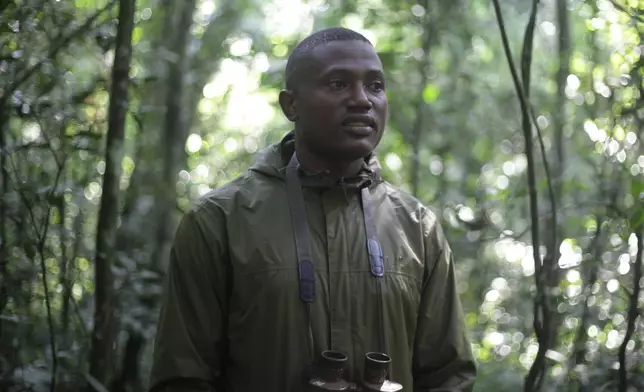
Onesmas Ainebyona stalks the chimps with such spirtual determination that he's been able to win the trust of a chimp leader named Jean, who came down a tree one recent morning as Ainebyona lingered nearby.

More Images
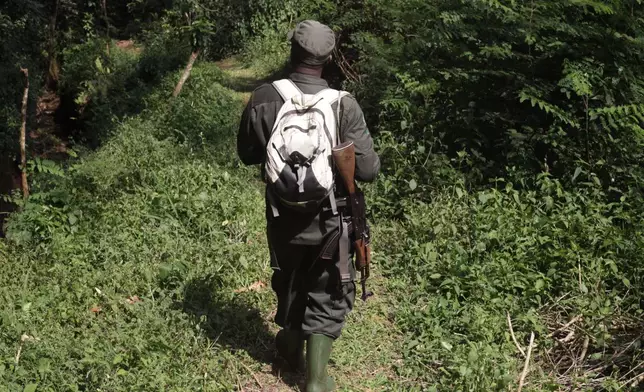
A chimpanzee tracker follows a troop of the primates in Kibale Forest National Park near Fort Portal, Uganda, Wednesday, Dec. 3, 2025. (AP Photo/Patrick Onen)
A chimpanzee tracker follows a troop of the primates in Kibale Forest National Park near Fort Portal, Uganda, Wednesday, Dec. 3, 2025. (AP Photo/Patrick Onen)
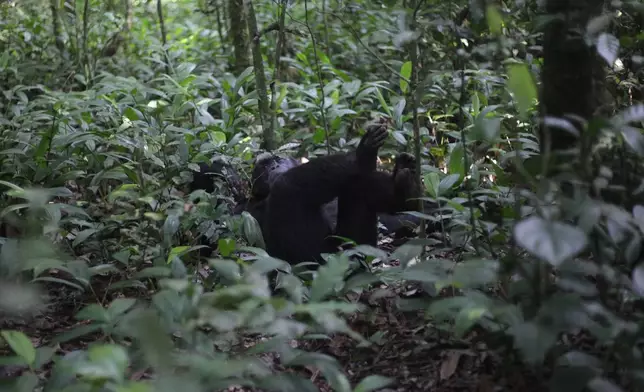
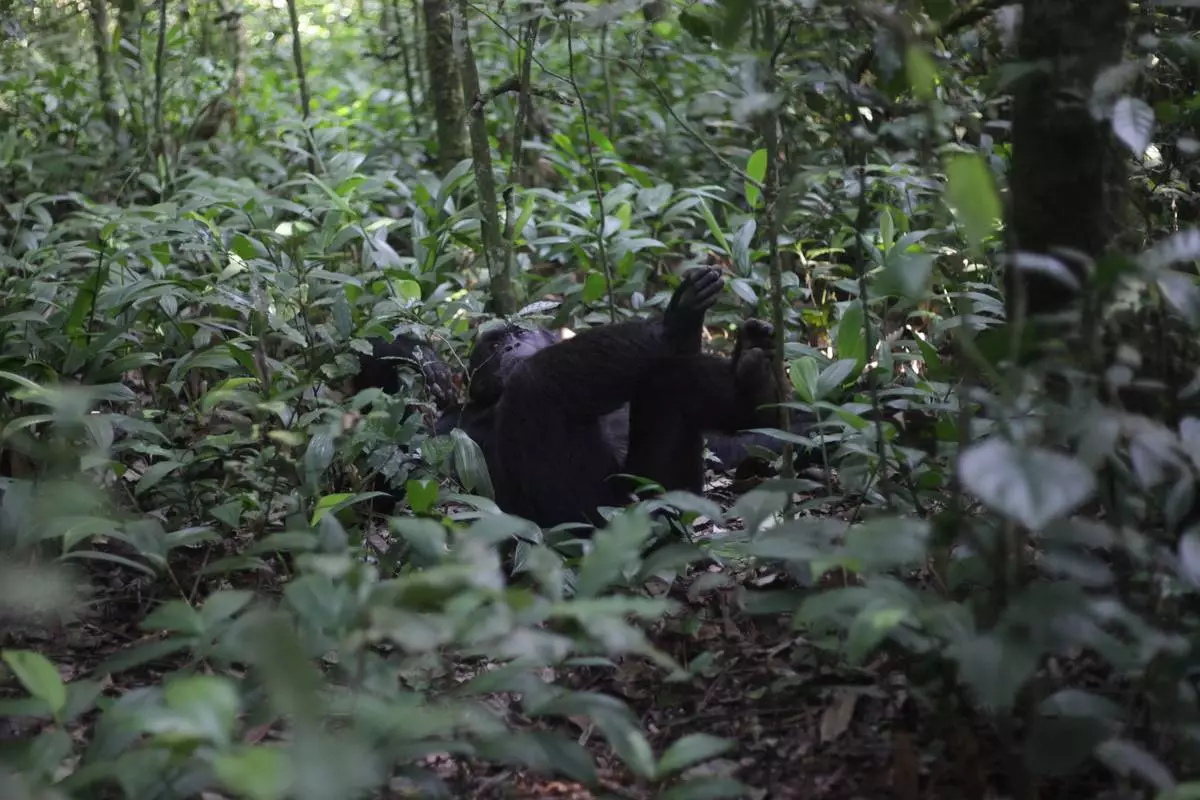
A chimpanzee rests on the forest floor in Kibale Forest National Park near Fort Portal, Uganda, Wednesday, Dec. 3, 2025. (AP Photo/Patrick Onen)
A chimpanzee rests on the forest floor in Kibale Forest National Park near Fort Portal, Uganda, Wednesday, Dec. 3, 2025. (AP Photo/Patrick Onen)
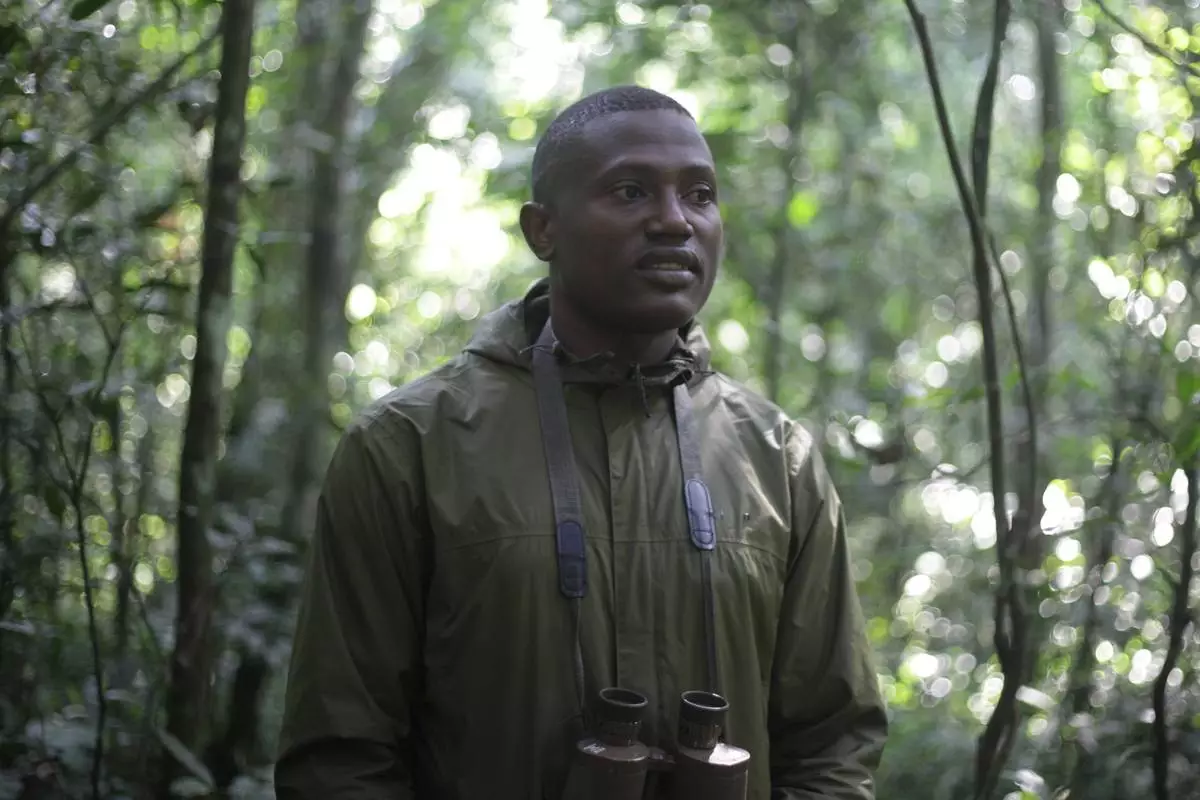
Chimpanzee tracker Onesmas Ainebyona speaks with the Associated Press in Kibale Forest National Park near Fort Portal, Uganda, Wednesday, Dec. 3, 2025. (AP Photo/Patrick Onen)

Chimpanzee tracker Onesmas Ainebyona speaks with the Associated Press in Kibale Forest National Park near Fort Portal, Uganda, Wednesday, Dec. 3, 2025. (AP Photo/Patrick Onen)

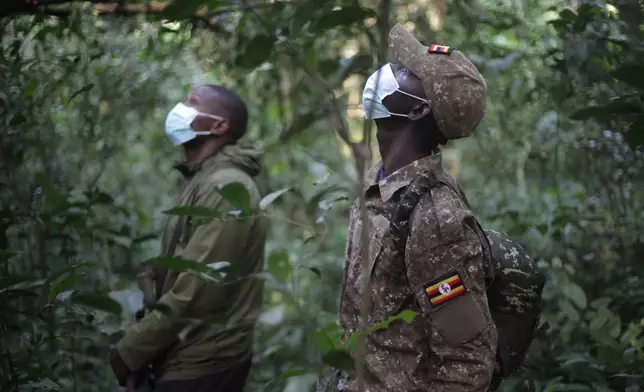
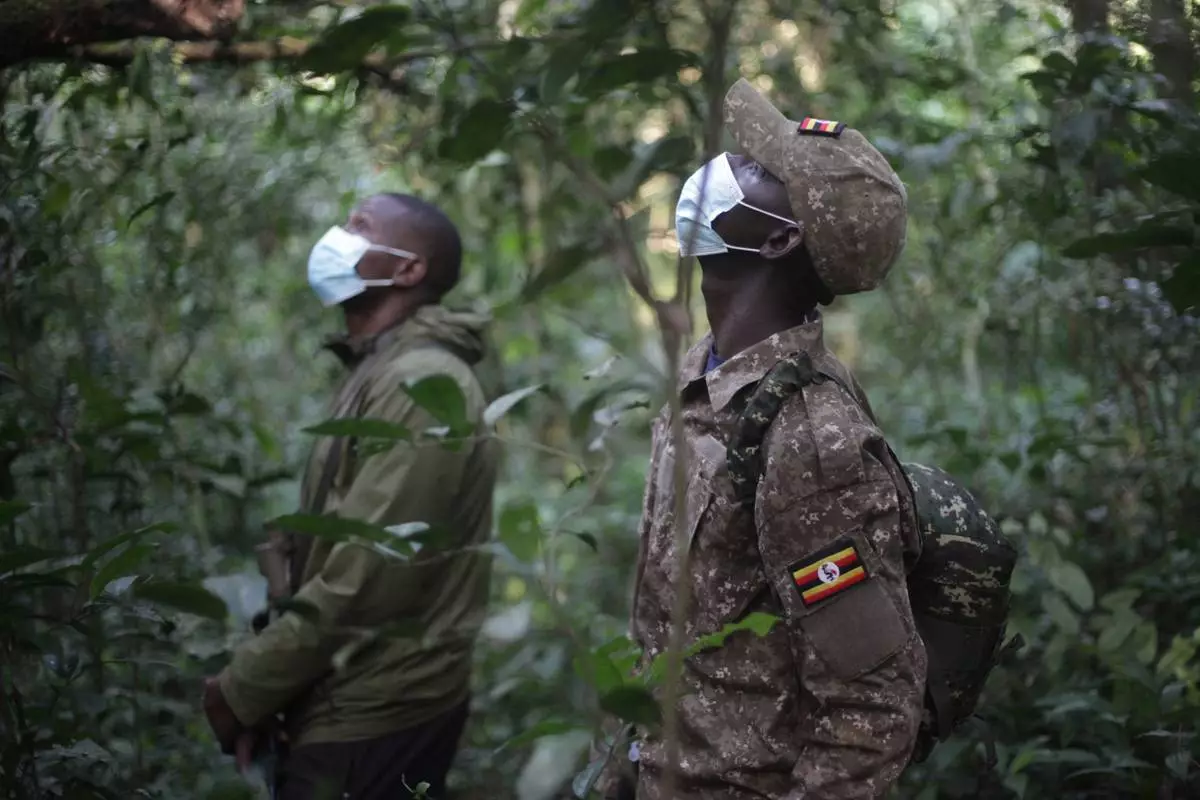
Chimpanzee trackers follow a troop of the primates in Kibale Forest National Park near Fort Portal, Uganda, Wednesday, Dec. 3, 2025. (AP Photo/Patrick Onen)

Chimpanzee trackers follow a troop of the primates in Kibale Forest National Park near Fort Portal, Uganda, Wednesday, Dec. 3, 2025. (AP Photo/Patrick Onen)

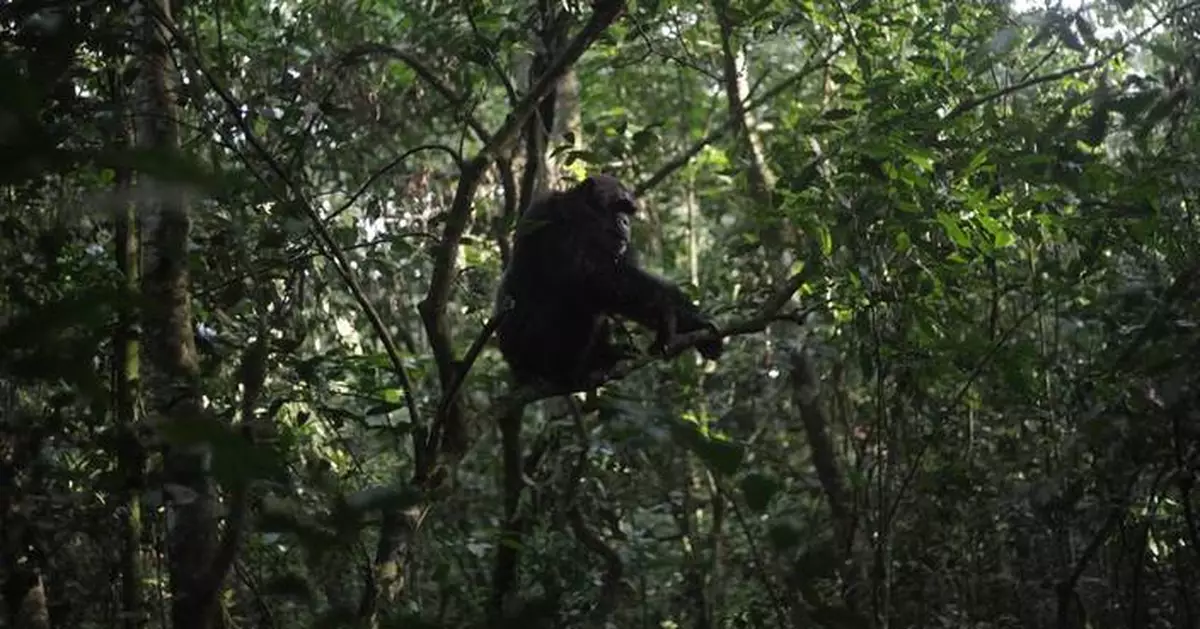
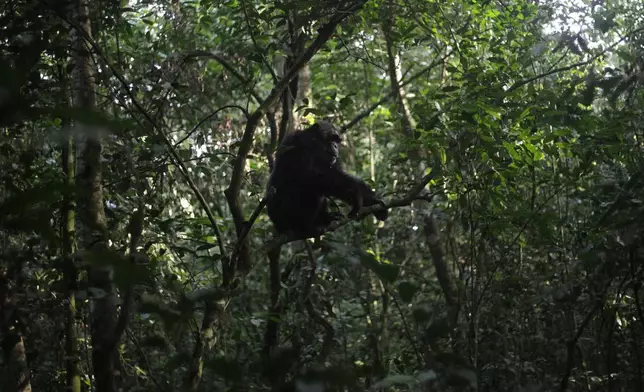
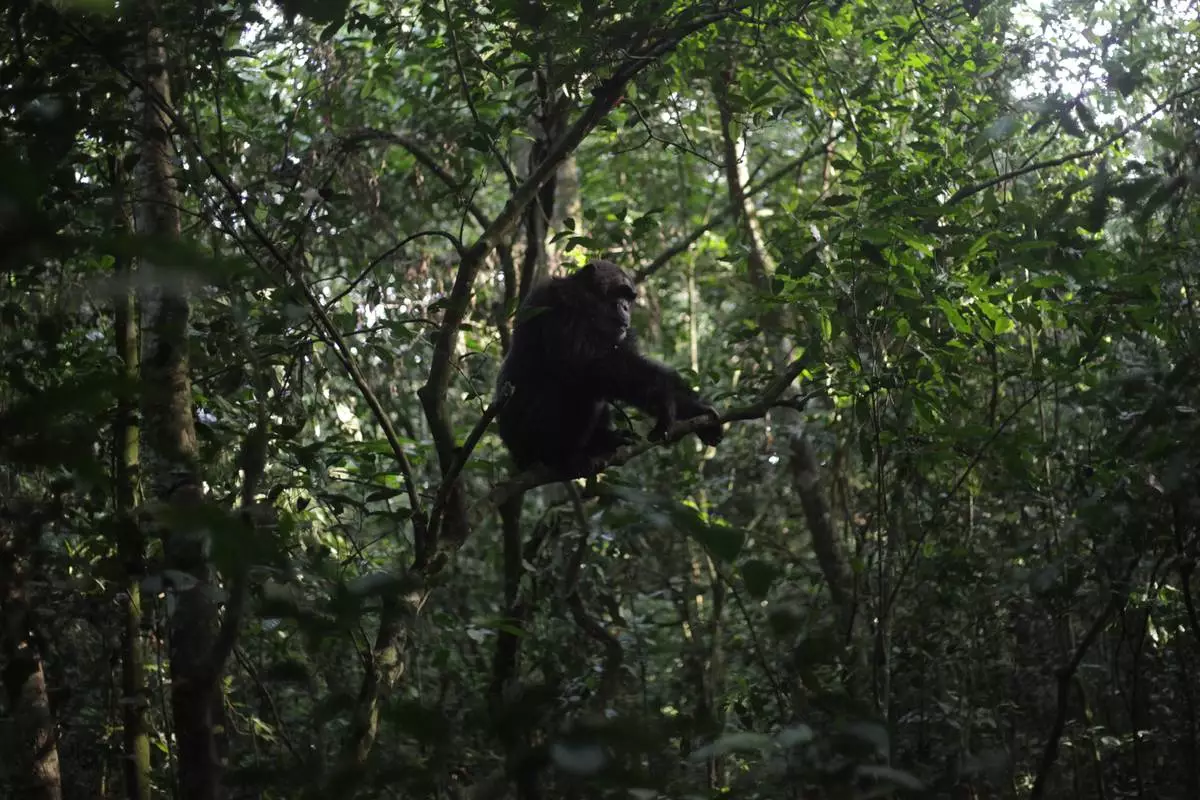
A chimpanzee sits in a tree in Kibale Forest National Park near Fort Portal, Uganda, Wednesday, Dec. 3, 2025. (AP Photo/Patrick Onen)

A chimpanzee sits in a tree in Kibale Forest National Park near Fort Portal, Uganda, Wednesday, Dec. 3, 2025. (AP Photo/Patrick Onen)

It took Ainebyona four years to achieve rapport with Jean, an alpha male that's become so used to people that he pretends to sleep while tourists make a racket that compels other chimps to leave.

Wildlife authorities describe the process of making chimps appear comfortable around humans as “habituation,” a term that fails to account for the struggle between man and beast as they try to understand — and tolerate — each other.

Ainebyona and others involved in chimp conservation in this remote Ugandan rainforest say they aim for the kind of communion that at first irks chimps. Habituating chimps can take several years. The conservation efforts employing men like Ainebyona not only trace the apes' movements, but also help ensure chimps like Jean don't die young.

“The job requires patience,” Ainebyona said. “Passion also. You have to care."

Ainebyona doesn't leave the forest even when it rains. “You accept," he said. "The rain must beat you, but you can’t desert the chimp.”

The rainforest in western Uganda is part of Kibale National Park, a protected area described by some as the world's primate capital. Species range from colobus monkeys to chimpanzees, a major tourist attraction.

But tourists can't be taken to track wild chimpanzees, which flee deeper into dense patches of montane forest and are known to be violent during clashes over territory. Instead, rangers lead tourists to one of three groups of habituated chimps, with numbers ranging from dozens to more than 100 in a group. Chimps in Kibale now number at least 1,000, many of them wild.

Even habituated chimps remain relatively wary of people, and only a few — like Jean of the Kisongi group, which includes about 80 apes — appear to have fully overcome any discomfort around people.

“Jean is my friend,” Ainebyona declared one recent morning as some tourists gathered nearby. The strong and flamboyant chimp in his 20s lay on his back and put his feet up.

The connection between Ainebyona and Jean was sealed in July when the chimp showed up one day with a wire snare pressing his hand, an injury that risked severing a finger. Ainebyona was among those who removed the wire, which Jean picked up when he strayed outside the forest to steal sugarcane.

Ainebyona is among four men working in shifts as chimp habituators with Jean's group. When the chimps rest, the men crouch in mud nearby. When the primates go hiking, they trek alongside them, sometimes even grunting like them.

Ainebyona carries binoculars and takes note of what he sees. The goal is to increase the chimp numbers and extract more tourism revenue. At Kibale, a permit to track chimps costs a foreign visitor $250.

Tourist guide Alex Turyatunga told The Associated Press that the habituation process is enlightening. He and his colleagues have been trying to fully habituate the Kisongi group for more than a decade, he said.

“We try to learn about these chimpanzees, but they also try to learn about us,” Turyatunga said.

To succeed, habituators can focus on alphas like Jean, targeting them repeatedly until others in the group notice their comfort around people. One individual can help others “get on board,” Turyatunga said.

The common chimpanzee is one of two primate species with the closest evolutionary ties to humans. Scientists cite nearly 99% DNA similarity between humans and chimps — similar for bonobos.

Habituators like Ainebyona must show a willingness to interact closely with chimps, said Ankunda Viola Ariho, Kibale's tourism warden.

“We look at the attitude. That’s very important,” she said, speaking of habituators. “You are not going to work doing this job, if you don’t like what you’re doing.”

Jane Goodall, the world-renowned primatologist who died in October, built strong bonds with the chimps she studied in Tanzania’s Gombe National Park. Her work helped shape a sympathetic view of the chimp as an emotionally complex creature. The species is listed by the International Union for Conservation of Nature as endangered, facing threats such as poaching and habitat loss.

Kibale National Park received enhanced protected status in 1993 after the forest had been encroached upon by hundreds of people who built homes there and felled trees for firewood. The park is now thriving, thanks in part to the habituation efforts that make it possible for tourists to contribute directly to chimp conservation.

Chimp habituation can open up research opportunities that wouldn’t otherwise be possible, and Kibale is home to one of the longest-running field stations in the tropics, said David Morgan, who co-directs the Goualougo Triangle Ape Project in the Republic of Congo.

“If chimps don’t want to be seen, they’re incredibly good at disappearing,” said Morgan, who also is a chimpanzee and gorilla expert at the Lincoln Park Zoo in Chicago.

Chimp habituation and related tourism can improve how the public interacts with the apes, he said.

“The communities that are habituated, they serve as kind of an emblem of the importance of what we can learn from them and what we stand to gain by protecting them and what we stand to lose by not,” Morgan said.

Turyatunga takes a walkie-talkie when he ventures into the forest, now and then asking habituators if they have close and clear views of chimps. That’s because chimps, even when habituated, are more likely to be seen up in the trees.

“You listen for early morning calls when they are getting out of the nests. Then present yourself to the chimps — they see you are there, that’s all,” he said. “Keep with them. If they move, follow them."

Holly Meyer contributed to this report from Nashville, Tennessee.

Associated Press religion coverage receives support through the AP’s collaboration with The Conversation US, with funding from Lilly Endowment Inc. The AP is solely responsible for this content.
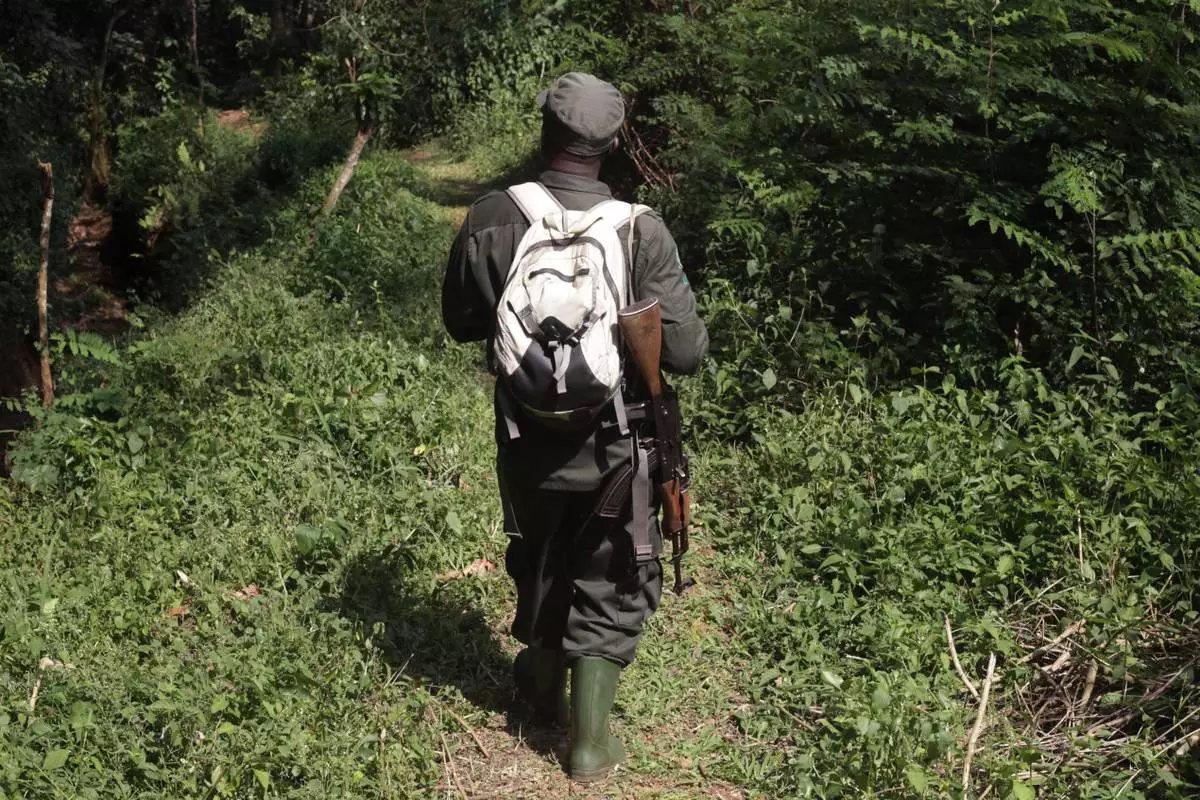
A chimpanzee tracker follows a troop of the primates in Kibale Forest National Park near Fort Portal, Uganda, Wednesday, Dec. 3, 2025. (AP Photo/Patrick Onen)
A chimpanzee tracker follows a troop of the primates in Kibale Forest National Park near Fort Portal, Uganda, Wednesday, Dec. 3, 2025. (AP Photo/Patrick Onen)
A chimpanzee rests on the forest floor in Kibale Forest National Park near Fort Portal, Uganda, Wednesday, Dec. 3, 2025. (AP Photo/Patrick Onen)
A chimpanzee rests on the forest floor in Kibale Forest National Park near Fort Portal, Uganda, Wednesday, Dec. 3, 2025. (AP Photo/Patrick Onen)
Chimpanzee tracker Onesmas Ainebyona speaks with the Associated Press in Kibale Forest National Park near Fort Portal, Uganda, Wednesday, Dec. 3, 2025. (AP Photo/Patrick Onen)

Chimpanzee tracker Onesmas Ainebyona speaks with the Associated Press in Kibale Forest National Park near Fort Portal, Uganda, Wednesday, Dec. 3, 2025. (AP Photo/Patrick Onen)
Chimpanzee trackers follow a troop of the primates in Kibale Forest National Park near Fort Portal, Uganda, Wednesday, Dec. 3, 2025. (AP Photo/Patrick Onen)

Chimpanzee trackers follow a troop of the primates in Kibale Forest National Park near Fort Portal, Uganda, Wednesday, Dec. 3, 2025. (AP Photo/Patrick Onen)

A chimpanzee sits in a tree in Kibale Forest National Park near Fort Portal, Uganda, Wednesday, Dec. 3, 2025. (AP Photo/Patrick Onen)
A chimpanzee sits in a tree in Kibale Forest National Park near Fort Portal, Uganda, Wednesday, Dec. 3, 2025. (AP Photo/Patrick Onen)

THE HAGUE, Netherlands (AP) — Judges and prosecutors at the International Criminal Court are trying to live and work under the same U.S. financial and travel restrictions brought against Russian President Vladimir Putin and Osama bin Laden.

Nine staff members, including six judges and the ICC's chief prosecutor, have been sanctioned by U.S. President Donald Trump for pursuing investigations into officials from the U.S. and Israel, which aren't among The Hague court's 125 member states.

Typically reserved for autocrats, crime bosses and the like, the sanctions can be devastating. They prevent the ICC officials and their families from entering the United States, block their access to even basic financial services and extend to the minutiae of their everyday lives.

The court's top prosecutor, British national Karim Khan, had his bank accounts closed and his U.S. visa revoked, and Microsoft even canceled his ICC email address. Canadian judge Kimberly Prost, who was named in the latest round of sanctions in August, immediately lost access to her credit cards, and Amazon's Alexa stopped responding to her.

“Your whole world is restricted,” Prost told The Associated Press last week.

Prost had an inkling of what would happen when she made the list. Before joining the ICC in 2017, she worked on sanctions for the U.N. Security Council. She was targeted by the Trump administration for voting to allow the court’s investigation into alleged war crimes and crimes against humanity committed in Afghanistan, including by American troops and intelligence operatives.

“I’ve worked all my life in criminal justice, and now I’m on a list with those implicated in terrorism and organized crime,” she said.

The sanctions have taken their toll on the court’s work across a broad array of investigations at a time when the institution is juggling ever more demands on its resources and a leadership crisis centered on Khan. Earlier this year, he stepped aside pending the outcome of an investigation into allegations of sexual misconduct. He denies the allegations.

How companies comply with sanctions can be unpredictable. Businesses and individuals risk substantial U.S. fines and prison time if they provide sanctioned people with “financial, material, or technological support,” forcing many to stop working with them.

The sanctions' effects can be sweeping and even surprising.

Shortly after she was listed, Prost bought an e-book, “The Queen’s Necklace” by Antál Szerb, only to later find it had disappeared from her device.

“It’s the uncertainty,” she said. “They are small annoyances, but they accumulate.”

Luz del Carmen Ibáñez Carranza, a sanctioned Peruvian judge who was involved in the same Afghanistan decision as Prost, told the AP that the problems are “not only for me, but also for my daughters,” who can no longer attend work conferences in the U.S.

Deputy prosecutor Nazhat Shameem Khan echoed her colleagues’ concerns, saying “You’re never quite sure when your card is not working somewhere, whether this is just a glitch or whether this is the sanction."

Meanwhile the staffers, some of whom also face arrest warrants in Russia, are worried that Washington might sanction the entire ICC, rendering it unable to pay employees, provide financial assistance to protected witnesses or even keep the lights on.

The ICC was established in 2002 as the world’s permanent court of last resort to prosecute individuals responsible for the most heinous atrocities — war crimes, crimes against humanity, genocide and the crime of aggression. It only takes action when nations are unable or unwilling to prosecute those crimes on their territory.

The court has no police force and relies on member states to execute arrest warrants, making it very unlikely that any U.S. or Israeli official would end up in the dock. But those wanted by the court, like Putin, can risk arrest when traveling abroad or after leaving office — the ICC took custody this year of former Philippine President Rodrigo Duterte, who is accused of crimes against humanity for his deadly anti-drugs crackdowns.

When explaining Trump's executive order sanctioning the ICC in February, the White House said the move was in response to the “illegitimate and baseless actions targeting America and our close ally Israel."

"The United States will not tolerate efforts to violate our sovereignty or to wrongfully subject U.S. or Israeli persons to the ICC’s unjust jurisdiction," Tommy Pigott, a State Department spokesman, said in response to questions from the AP.

There is little the staff can do to get the sanctions lifted. Sanctions imposed during the first Trump administration against the previous prosecutor, Fatou Bensouda, weren’t removed until Joe Biden became president.

Ibáñez, a former prosecutor in Peru, vowed that the sanctions wouldn't have any impact on her judicial activities in The Hague. “In my country, I prosecuted terrorists and drug lords. I will continue my work,” she said.

Prost, too, is defiant, saying the sanctioned staff “are absolutely undeterred and unfettered.”

FILE - Deputy Prosecutor Nazhat Shameem Khan attends a hearing at the International Criminal Court (ICC) in The Hague, Netherlands, Monday, Oct. 6, 2025. (Piroschka van de Wouw/Pool Photo via AP, file)

FILE - Deputy Prosecutor Nazhat Shameem Khan attends a hearing at the International Criminal Court (ICC) in The Hague, Netherlands, Monday, Oct. 6, 2025. (Piroschka van de Wouw/Pool Photo via AP, file)

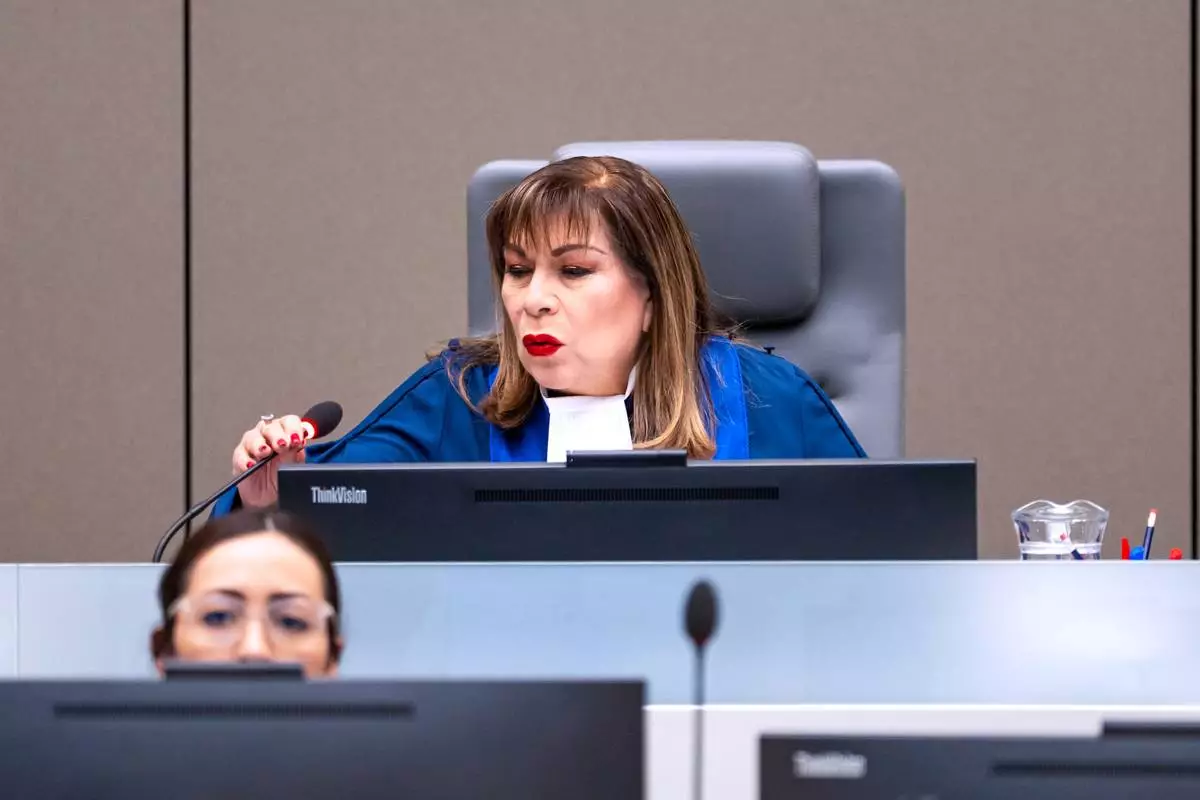
FILE - Presiding judge Luz del Carmen Ibanez Carranza prepares to rule on a request to release former Philippine President Rodrigo Duterte at the International Criminal Court (ICC) in The Hague, Netherlands, Friday, Nov. 28, 2025. (Lina Selg/Pool Photo via AP, file)

FILE - Presiding judge Luz del Carmen Ibanez Carranza prepares to rule on a request to release former Philippine President Rodrigo Duterte at the International Criminal Court (ICC) in The Hague, Netherlands, Friday, Nov. 28, 2025. (Lina Selg/Pool Photo via AP, file)

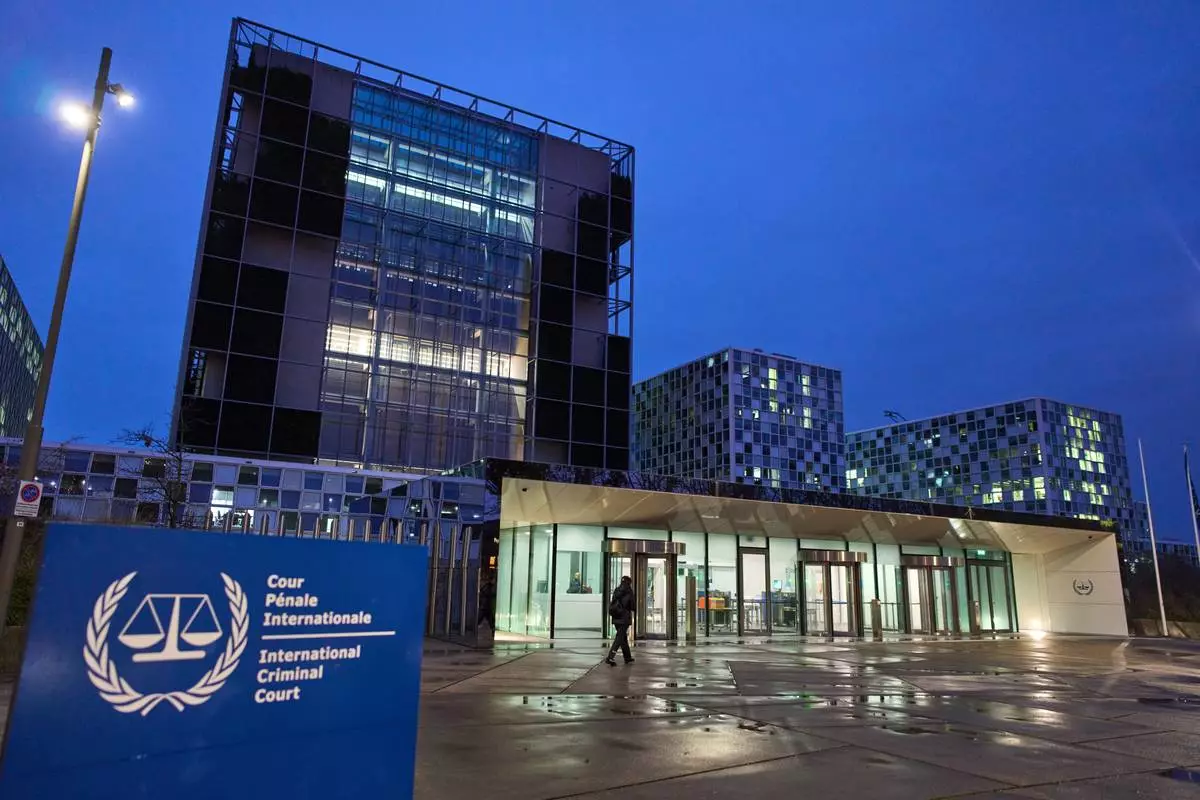
An exterior view of the International Criminal Court, ICC, where Ali Muhammad Ali Abd al-Rahman, a leader of the Sudanese Janjaweed militia, will hear the court's verdict, in The Hague, Netherlands, Tuesday, Dec. 9, 2025. (AP Photo/Peter Dejong)

An exterior view of the International Criminal Court, ICC, where Ali Muhammad Ali Abd al-Rahman, a leader of the Sudanese Janjaweed militia, will hear the court's verdict, in The Hague, Netherlands, Tuesday, Dec. 9, 2025. (AP Photo/Peter Dejong)

Recommended Articles