Skip to Content Facebook Feature Image

Ryan Crosswell quit Trump's DOJ. Now his resignation letter is part of his stump speech for Congress

News

Ryan Crosswell quit Trump's DOJ. Now his resignation letter is part of his stump speech for Congress
News

News

Ryan Crosswell quit Trump's DOJ. Now his resignation letter is part of his stump speech for Congress

2025-12-12 13:02 Last Updated At:13:21

ALLENTOWN, Pa. (AP) — Many political candidates like to talk up their résumé in their stump speech.

Ryan Crosswell reads from his resignation letter.

More Images
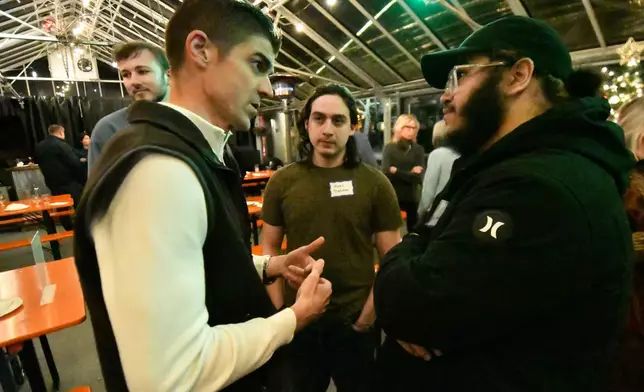
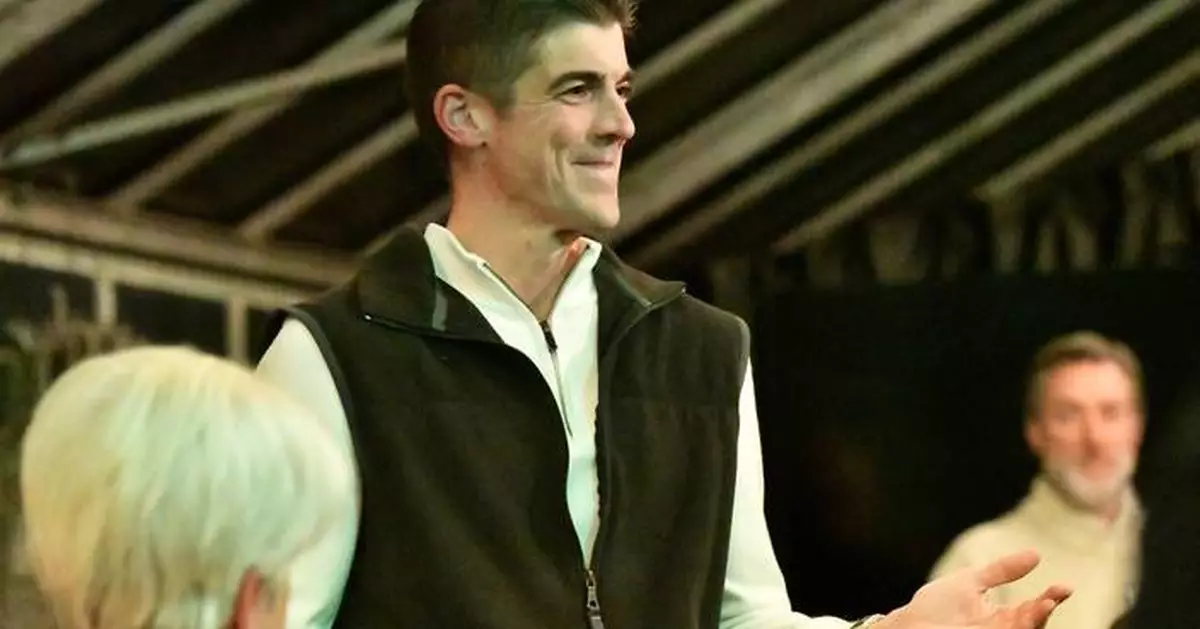
Ryan Crosswell, a former federal prosecutor who quit the Department of Justice in protest, speaks to attendees at a campaign event for his run for Congress, Dec. 4, 2025, in Allentown, Pa. (AP Photo/Marc Levy)
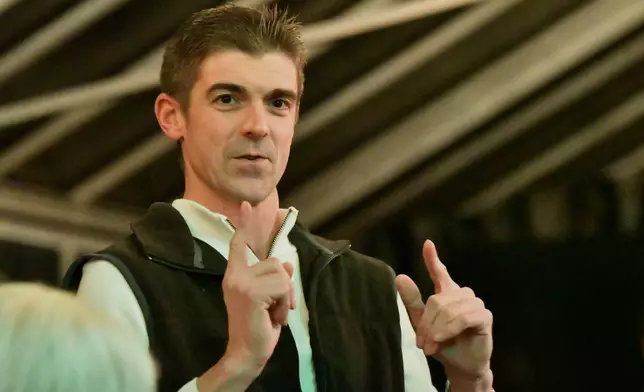
Ryan Crosswell, a former federal prosecutor who quit the Department of Justice in protest, speaks to attendees at a campaign event for his run for Congress, Dec. 4, 2025, in Allentown, Pa. (AP Photo/Marc Levy)
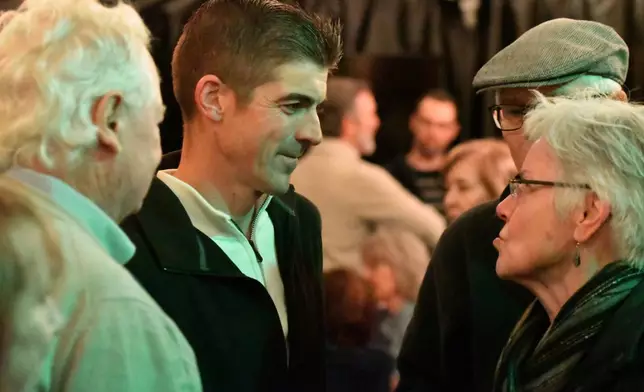
Ryan Crosswell, former federal prosecutor who quit the Department of Justice in protest, speaks at a campaign event for his run for Congress, Dec. 4, 2025, in Allentown, Pa. (AP Photo/Marc Levy)
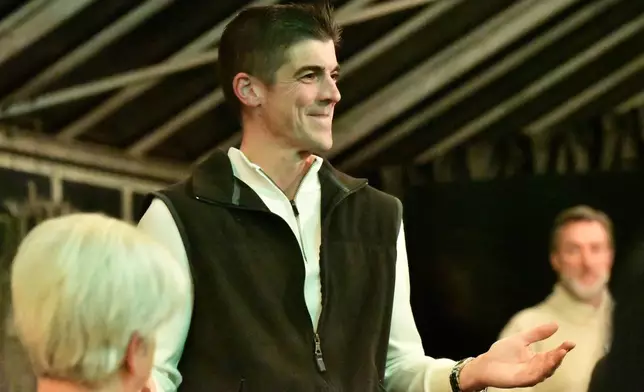
Ryan Crosswell, former federal prosecutor who quit the Department of Justice in protest, speaks at a campaign event for his run for Congress, Dec. 4, 2025, in Allentown, Pa. (AP Photo/Marc Levy)

Ryan Crosswell, a former federal prosecutor who quit the Department of Justice in protest, speaks to attendees at a campaign event for his run for Congress, Dec. 4, 2025, in Allentown, Pa. (AP Photo/Marc Levy)

Ryan Crosswell, a former federal prosecutor who quit the Department of Justice in protest, speaks to attendees at a campaign event for his run for Congress, Dec. 4, 2025, in Allentown, Pa. (AP Photo/Marc Levy)

Ryan Crosswell, a former federal prosecutor who quit the Department of Justice in protest, speaks at a campaign event for his run for Congress, Dec. 4, 2025, in Allentown, Pa. (AP Photo/Marc Levy)

Ryan Crosswell, a former federal prosecutor who quit the Department of Justice in protest, speaks at a campaign event for his run for Congress, Dec. 4, 2025, in Allentown, Pa. (AP Photo/Marc Levy)

A former federal prosecutor now running for Congress, he quit in February when President Donald Trump's administration dropped corruption charges against New York City Mayor Eric Adams in return for his cooperation on immigration enforcement.

“I pray that the Department of Justice remains dedicated to upholding the rule of law evenly without fear or favor. Sincerely, Ryan Crosswell," he read at a recent campaign event.

The line got applause and whoops from dozens of Democratic Party activists who had gathered to see him in the West End Taproom in Allentown, Pennsylvania. Crosswell is one of five candidates who are vying for the opportunity to unseat Republican Rep. Ryan Mackenzie, a top target of Democrats in next year's midterm election, when control of the U.S. House will be on the line.

Polling shows that voters prioritize economic issues, and Democrats have focused on concerns about affordability as they try to claw back power in Washington.

Crosswell is testing a different approach, relying on his law enforcement and corruption-fighting background amid fears about how Trump is reshaping the nation's justice system.

Voters often ask him about Trump's pardons for the politically connected, immigration enforcement officers using force, U.S. military strikes on boats in the Caribbean or prosecutions against the president's enemies.

"I think I get asked that probably more than the average candidate, but I also lean into it,” Crosswell said in an interview.

Mackenzie’s campaign said voters in Pennsylvania “aren’t interested in a lecture, they’re interested in the issues — affordability, public safety and national security.”

Crosswell's background was a draw for many who came to see him at the event.

“I like that he quit his job because he was given a job that went against his moral compass,” said Elisabeth Grant.

Grant and others said they believe Trump is attacking the rule of law, and many described it a top motivation.

Some described personal fears. Joe McDermott said he is outspoken on Facebook about his criticism of the Trump administration — "I refer to it as a ‘crime family’” — and people ask him if he isn’t afraid that someone will come after him.

He is, and he wouldn’t discount the Department of Justice going after someone like himself.

“I would not put anything beneath them right now,” McDermott said.

Joniel Colon Rosario is thinking twice about whether he should speak his native Spanish on the street around strangers.

“I don’t know if some random guy in a ski mask is going to come down and tackle me because I’m speaking my native tongue,” said Colon Rosario, who is originally from Puerto Rico.

Crosswell said voters are worried that the government “appears to do anything the president orders.”

"People aren’t asking, ‘How can my government protect me?’ It’s, ‘How can I protect myself from my government?’” he said.

It’s no wonder Democrats are eager to challenge Mackenzie. A freshman, Mackenzie was a state lawmaker when he won his race for Congress by 1 percentage point last year, among the narrowest margins in the country.

Crosswell — also a former active-duty U.S. Marine and a current reservist — isn’t alone in leaving federal government service this year to run as a Democrat.

Zach Dembo, a former federal prosecutor and Navy lawyer who worked briefly for Kentucky Gov. Andy Beshear, is running for an open seat in Kentucky. And John Sullivan, a former FBI intelligence official, is running for a Republican-held seat in New York’s Hudson Valley.

Crosswell, 45, will have some baggage in his primary contest.

He changed his registration from Republican to Democrat a year ago. After he resigned in February, he moved from Washington, D.C., to Allentown — about 45 miles from where he grew up in Pottsville, Pa.

Crosswell remembers thinking, “Do I want to leave public service or do I want to fight back?”

It's unclear whether a corruption-fighting message will carry the day in either a primary or general election.

Polling has consistently showed that Americans are more focused on economic issues than broader concerns about how government is functioning.

A CNN poll from August found roughly 4 in 10 U.S. adults said economic concerns were the most important problems facing the country, and only about 1 in 10 named attitudes about government, including concerns about the rule of law or corruption.

The House Democrats' campaign arm, which is officially neutral in Crosswell's primary race, said the midterms are “shaping up to be a referendum on who is going to lower costs and help improve the lives of everyday Americans, not the wealthy and well-connected.”

Crosswell acknowledges that not everybody is concerned about how Trump wields power, and that it depends on the audience.

Jon Macklin, a Crosswell supporter who goes door-to-door for Democratic candidates, told a similar story. People he meets who are less engaged with politics are most concerned about their finances and how the economy is affecting them.

But Crosswell said public corruption doesn’t have to be separate from that. And he intends to drive home that message. In other words, a corrupt government and a corrupt economy can hurt everyone.

“Corruption is a kitchen table issue,” Crosswell said. “Because public office is a public trust.”

__

Associated Press writer Linley Sanders contributed to this report from Washington. Follow Marc Levy on X at: https://x.com/timelywriter
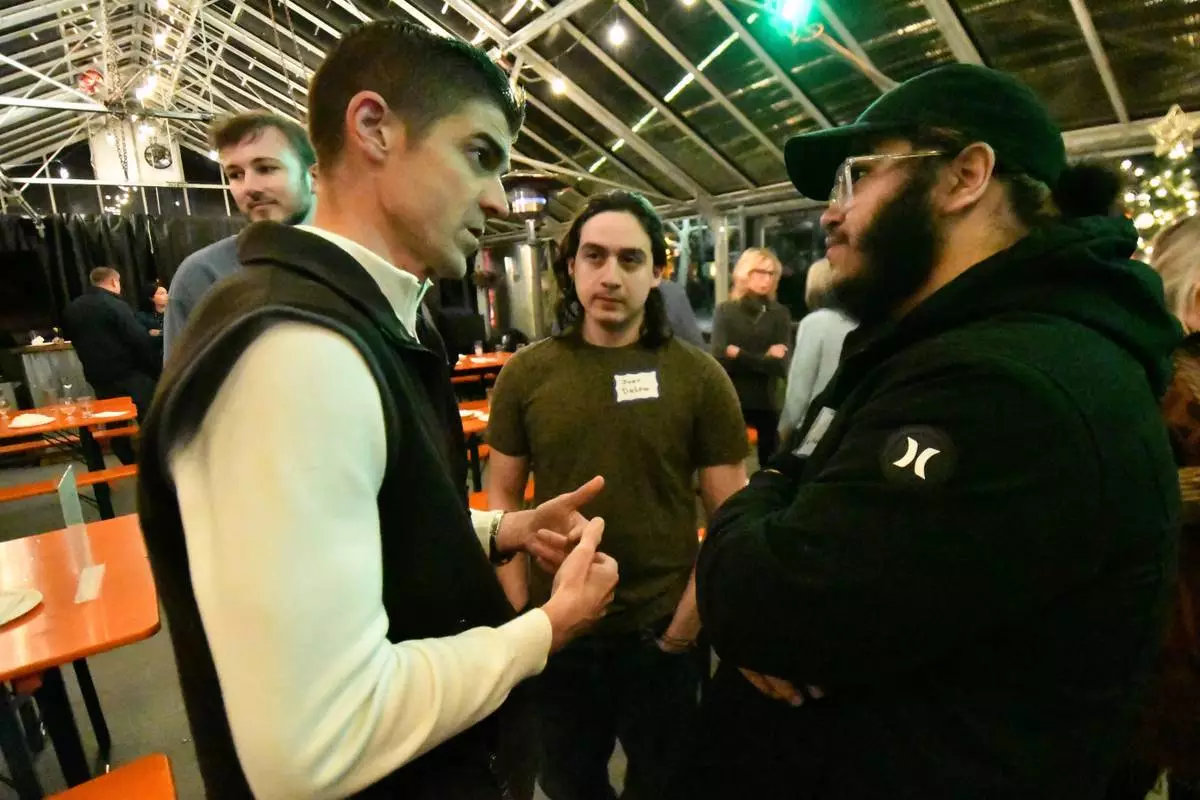
Ryan Crosswell, a former federal prosecutor who quit the Department of Justice in protest, speaks to attendees at a campaign event for his run for Congress, Dec. 4, 2025, in Allentown, Pa. (AP Photo/Marc Levy)

Ryan Crosswell, a former federal prosecutor who quit the Department of Justice in protest, speaks to attendees at a campaign event for his run for Congress, Dec. 4, 2025, in Allentown, Pa. (AP Photo/Marc Levy)

Ryan Crosswell, former federal prosecutor who quit the Department of Justice in protest, speaks at a campaign event for his run for Congress, Dec. 4, 2025, in Allentown, Pa. (AP Photo/Marc Levy)
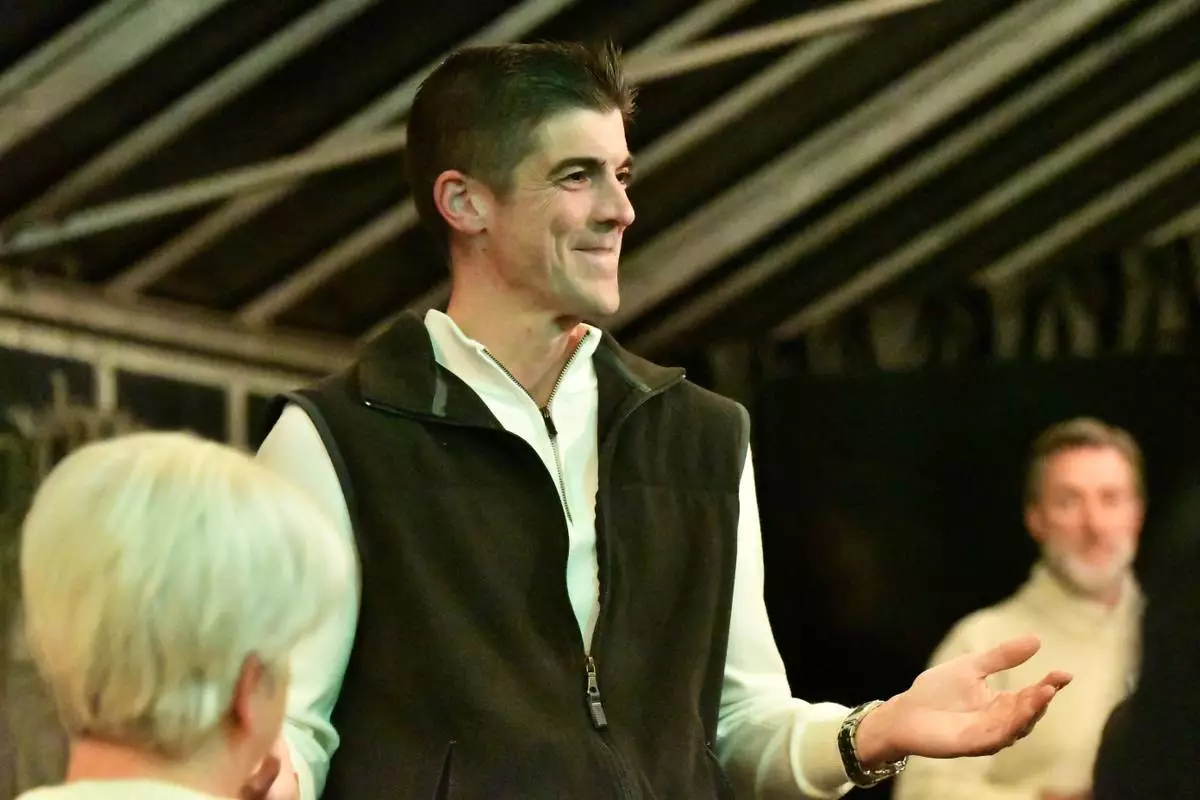
Ryan Crosswell, former federal prosecutor who quit the Department of Justice in protest, speaks at a campaign event for his run for Congress, Dec. 4, 2025, in Allentown, Pa. (AP Photo/Marc Levy)
Ryan Crosswell, a former federal prosecutor who quit the Department of Justice in protest, speaks to attendees at a campaign event for his run for Congress, Dec. 4, 2025, in Allentown, Pa. (AP Photo/Marc Levy)

Ryan Crosswell, a former federal prosecutor who quit the Department of Justice in protest, speaks to attendees at a campaign event for his run for Congress, Dec. 4, 2025, in Allentown, Pa. (AP Photo/Marc Levy)

Ryan Crosswell, a former federal prosecutor who quit the Department of Justice in protest, speaks at a campaign event for his run for Congress, Dec. 4, 2025, in Allentown, Pa. (AP Photo/Marc Levy)

Ryan Crosswell, a former federal prosecutor who quit the Department of Justice in protest, speaks at a campaign event for his run for Congress, Dec. 4, 2025, in Allentown, Pa. (AP Photo/Marc Levy)

WASHINGTON (AP) — President Donald Trump successfully harnessed voter anxiety over the economy, immigration and crime last year to retake the White House — and lift plenty of other Republicans into office with him. But as the party tries to keep its grip on complete control in Washington, that strategy may be harder to replicate.

Republicans have lost a series of elections over the past month, some resoundingly. The latest setbacks came this week when a Democrat won the Miami mayor's race for the first time in three decades. Democrats also won a special election in a historically Republican district in Georgia.

There are also signs that Trump's influence over his party has its limits, and he failed Thursday to persuade Indiana state senators to approve a new congressional map that could have helped Republicans pick up two more seats.

Perhaps most concerning for Republicans, Trump is losing ground on the very issues that powered his comeback victory last year, potentially undermining his utility as a surrogate for the party's candidates in the midterm elections. Only 31% of U.S. adults now approve of how he's handling the economy, down from 40% in March, according to a poll from The Associated Press-NORC Center for Public Affairs Research. Trump has struggled to acknowledge the public’s concern, telling Politico this week that he gave himself an “A+++++” on the economy.

The picture wasn't much brighter on other issues that Trump has capitalized on, including crime and immigration. Despite Trump's aggressive law-and-order posture, which includes deploying the National Guard in Washington and other Democratic-led cities, Americans’ approval of his handling of crime has slipped to 43% from 53% just a few months ago. On immigration, Trump’s most consistent priority since launching his political career a decade ago, approval of his handling of the issue dropped from 49% in March to 38% now.

With Democrats just a few seats shy of reclaiming the House majority, Republicans are watching the developments with a growing sense of unease and frustration that the dynamics of Trump's first midterm — when Democrats scored a net gain of 40 seats in 2018 — are at risk of repeating.

“If you’re not concerned, then you’re living in a cave,” Sen. Jim Justice, R-W.Va., told reporters Thursday. “If you’re not watching the elections that are happening all the time, then you’re living in a cave. We’re not good at our messaging a lot of times as Republicans. The Democrats are professionals at it. We’re not good at it.”

With nearly a year until votes are cast, it’s impossible to predict how the balance of power may shift in Washington. Historically, the party that occupies the presidency loses seats in Congress during the first midterm after a presidential election. But the scope of the Democratic wins in 2018 might be hard to replicate as redistricting and other voting patterns result in fewer genuinely competitive districts.

For his part, Trump remains publicly confident about the party's prospects.

“People want us to win the midterms, and I think we have great spirit,” he said at an event Wednesday. “We should win the midterms.”

His chief of staff, Susie Wiles, recently told a podcast that Trump will campaign aggressively next year and the party will effectively “put him on the ballot.” But the challenge of that strategy was on display this week when a trip to Pennsylvania intended to focus on combating inflation was instead overshadowed by grievances about immigrants from “filthy” countries.

Other challenges continue to stack up. Pressure from rogue Republicans forced Trump to ultimately go along with a vote calling for the release of the Jeffrey Epstein files. And legislation passed this week includes several measures that push back against Trump's Defense Department.

Many Republicans campaigning in some of the most competitive congressional districts in the U.S. aren't distancing themselves from Trump. John Braun, a state senator in Washington state who is challenging Democrat Rep. Marie Gluesenkamp Perez, said he would be fine if Trump decided to visit the district. He also noted with approval that Vice President JD Vance plans to increase his travel plans.

While he was optimistic about the party's opportunities, Braun was clear about the challenges facing Republicans heading into 2026. He said affordability is the top issue he hears from voters.

“We have a lot of work to do and a lot of it's going to depend at the national level in particular on what Republicans do to affect the affordability issues,” Braun said. “People are interested in many things, a wide range of issues. But top of mind right now is how do I support myself, my family in the current environment? We're going to have to do the right things over the next 11 months.”

In Washington on Thursday, there was a distinct sense among Republicans in Congress that the right things weren't happening. Frustration grew after the Senate rejected an extension of health care subsidies, essentially guaranteeing millions of Americans will face a steep rise in costs in January, adding to voters' existing economic concerns.

Sen. Thom Tillis, R-N.C., who has opted against reelection, said this moment is even more perilous for Republicans than the period before the 2018 midterms when the party unsuccessfully sought to repeal and replace the Affordable Care Act, playing into Democratic attacks on health care. At least during that debate, he argued, voters weren't losing something as they would in January.

“Us failing to put something else in place did not create this cliff that people are going to encounter,” Tillis said. “That’s the fundamental difference in an election year.”

Some Republicans on Capitol Hill expressed concern that the party has a problem communicating with voters. And if there’s no last-minute fix to prevent the health care hike, some said there may be no effective message.

“If people suddenly pay thousands of dollars more for health care, I don’t know what kind of messaging is going to matter in that circumstance,” said Rep. Kevin Kiley, R-Calif. “It is what it is. And so we can try to (say) ‘oh it’s their fault or our fault.’ Unfortunately, that’s what a lot of the energy around here seems to be devoted to.”

Associated Press writer Kevin Freking contributed to this report.

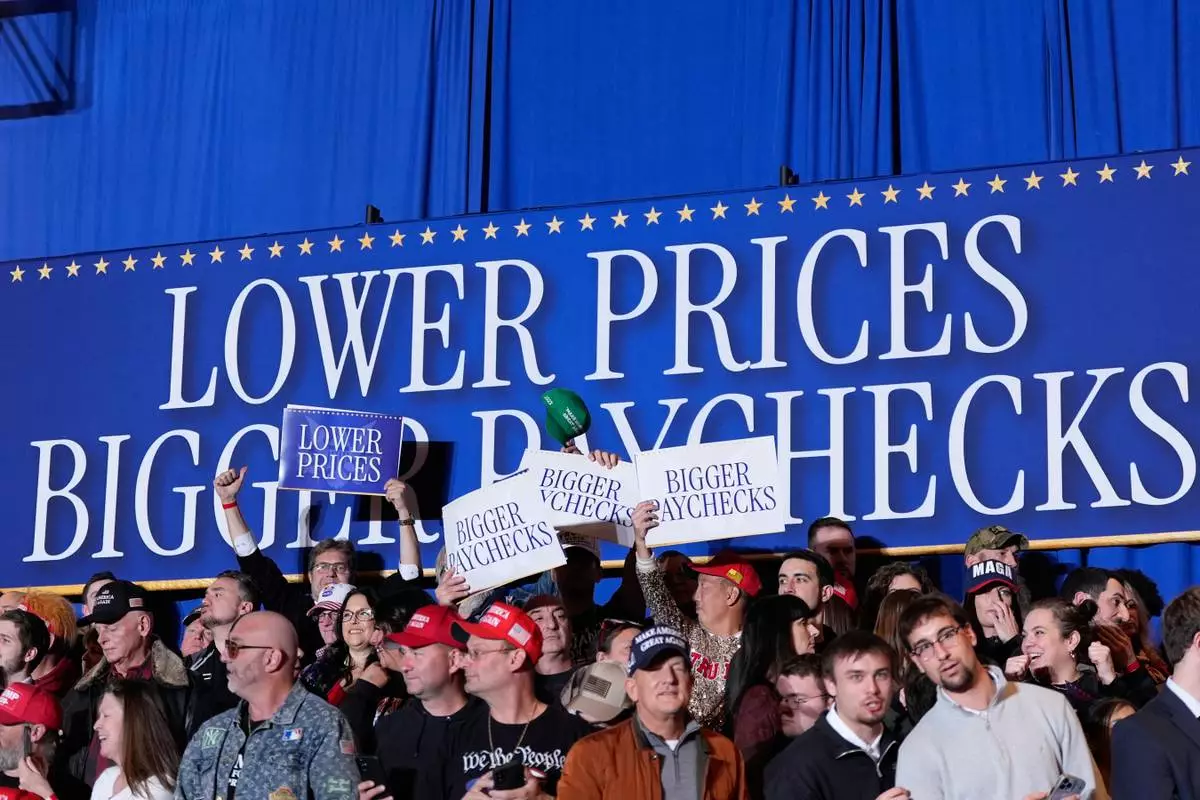
People arrive before President Donald Trump speaks at Mount Airy Casino Resort, Tuesday, Dec. 9, 2025, in Mount Pocono, Pa. (AP Photo/Alex Brandon)

People arrive before President Donald Trump speaks at Mount Airy Casino Resort, Tuesday, Dec. 9, 2025, in Mount Pocono, Pa. (AP Photo/Alex Brandon)

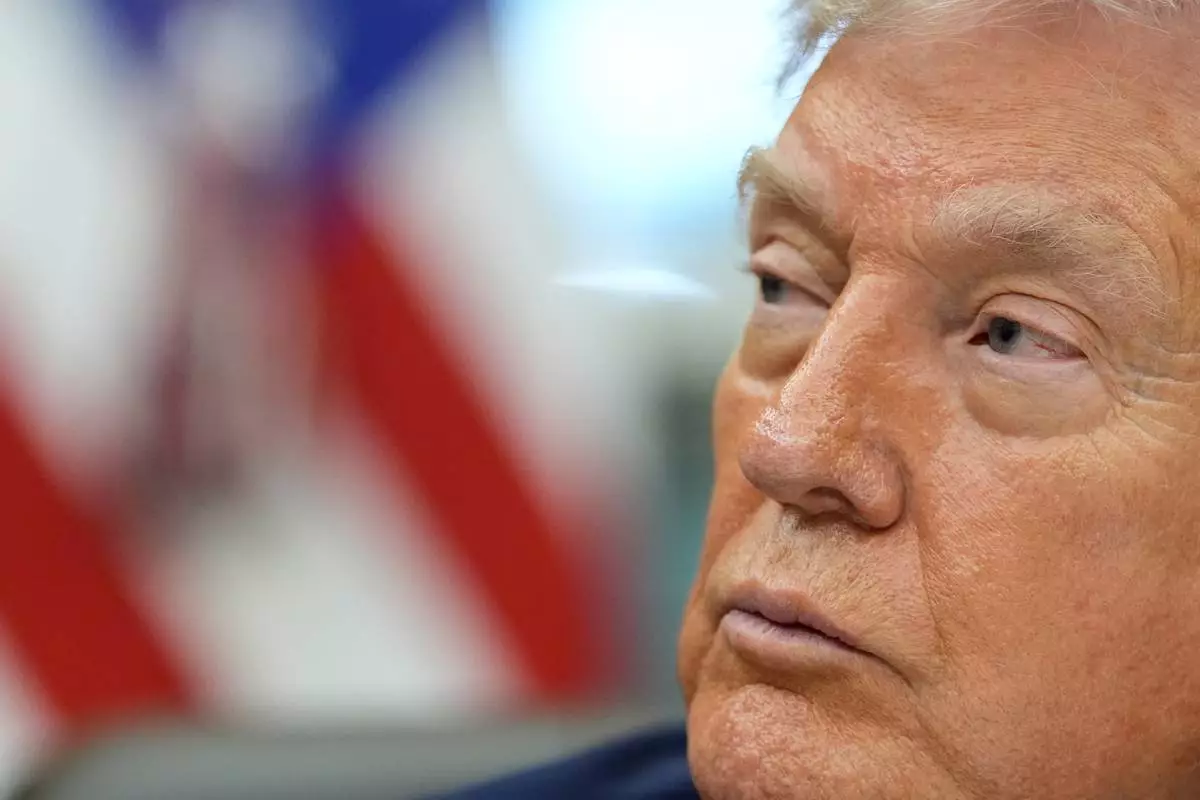
President Donald Trump speaks during a signing ceremony in the Oval Office of the White House, Thursday, Dec. 11, 2025, in Washington. (AP Photo/Alex Brandon)

President Donald Trump speaks during a signing ceremony in the Oval Office of the White House, Thursday, Dec. 11, 2025, in Washington. (AP Photo/Alex Brandon)

Recommended Articles