TAMPA, Fla. (AP) — Catch by catch, Kyle Pitts Sr. put the mistake-prone Atlanta Falcons on his back and carried them to a thrilling comeback victory over the Tampa Bay Buccaneers.
Thursday night got even better for the fifth-year pro when the former University of Florida star learned his 11-reception, 166-yard, three-touchdown performance that keyed a 29-28 win was the most productive game by an NFL tight end in nearly three decades.
The previous tight end to finish with at least 10 catches, 150 yards receiving and three TDs in a game was Hall of Famer Shannon Sharpe in 1996.
The 25-year-old Pitts noted he wasn't even born yet back then.
“Man, I love the state of Florida,” the 6-foot-6, 250-pound Pitts said as he stepped up to the podium in the visiting interview room at Raymond James Stadium.
“It means a lot,” he added about the mention of Sharpe. “It's a great person to be (compared to).”
Kurt Cousins targeted Pitts a team-high 12 times, leaning heavily on the young tight end with leading receiver Drake London out with a knee injury. Pitts scored on receptions of 8, 17 and 7 yards, the latter trimming what had once been a 14-point, fourth-quarter deficit to 28-26 with 3:34 remaining.
His last catch, on third-and-28 from the Atlanta 29, was for 14 yards. Cousins threw 21 yards to David Sills V on fourth-and-14 to set up Zane Gonzalez's 43-yard game-winning field goal as time expired.
“It was the plan, you know, all along. Kyle is our guy,” second-year Falcons coach Raheem Morris said. “You're down a couple of your guys like Drake, some of those guys, and Kyle has really filled in that role and become the lead dog guy. He has done an awesome job.”
The Falcons (5-9) are eliminated from playoff contention, but they relished the opportunity to play spoiler against the division-rival Bucs (7-7), who are trying to win the NFC South for the fifth straight season.
“It's amazing. I mean, we've been having our ups and downs through the year,” Pitts said. “Obviously, it's not fun being eliminated early, but we're resilient. ... It was just pretty fun to get that win.”
The Falcons overcame a team-record 19 penalties for 125 yards. They also withstood a wide-open Sills dropping what would have been a go-ahead TD catch in the third quarter, as well as Bijan Robinson's third-quarter fumble that led to the touchdown that put Tampa Bay up by two scores early in the fourth.
“It's a steppingstone to where we want to go,” Morris said. “We talked about this, building blocks for what we've got to do. What we're talking about is next year. ... Only thing we can do right now is finish.”
AP NFL: https://apnews.com/hub/NFL

Atlanta Falcons tight end Kyle Pitts Sr. (8) leaps over Tampa Bay Buccaneers safety Christian Izien (29) during the first half of an NFL football game, Thursday, Dec. 11, 2025, in Tampa, Fla. (AP Photo/Chris O'Meara)

Atlanta Falcons tight end Kyle Pitts Sr. (8) celebrates his touchdown against the Tampa Bay Buccaneers during the first half of an NFL football game, Thursday, Dec. 11, 2025, in Tampa, Fla. (AP Photo/Jason Behnken)

Atlanta Falcons tight end Kyle Pitts Sr. (8) makes a touchdown catch against the Tampa Bay Buccaneers during the second half of an NFL football game, Thursday, Dec. 11, 2025, in Tampa, Fla. (AP Photo/Jason Behnken)
THE HAGUE, Netherlands (AP) — Judges and prosecutors at the International Criminal Court are trying to live and work under the same U.S. financial and travel restrictions brought against Russian President Vladimir Putin and Osama bin Laden.
Nine staff members, including six judges and the ICC's chief prosecutor, have been sanctioned by U.S. President Donald Trump for pursuing investigations into officials from the U.S. and Israel, which aren't among The Hague court's 125 member states.
Typically reserved for autocrats, crime bosses and the like, the sanctions can be devastating. They prevent the ICC officials and their families from entering the United States, block their access to even basic financial services and extend to the minutiae of their everyday lives.
The court's top prosecutor, British national Karim Khan, had his bank accounts closed and his U.S. visa revoked, and Microsoft even canceled his ICC email address. Canadian judge Kimberly Prost, who was named in the latest round of sanctions in August, immediately lost access to her credit cards, and Amazon's Alexa stopped responding to her.
“Your whole world is restricted,” Prost told The Associated Press last week.
Prost had an inkling of what would happen when she made the list. Before joining the ICC in 2017, she worked on sanctions for the U.N. Security Council. She was targeted by the Trump administration for voting to allow the court’s investigation into alleged war crimes and crimes against humanity committed in Afghanistan, including by American troops and intelligence operatives.
“I’ve worked all my life in criminal justice, and now I’m on a list with those implicated in terrorism and organized crime,” she said.
The sanctions have taken their toll on the court’s work across a broad array of investigations at a time when the institution is juggling ever more demands on its resources and a leadership crisis centered on Khan. Earlier this year, he stepped aside pending the outcome of an investigation into allegations of sexual misconduct. He denies the allegations.
How companies comply with sanctions can be unpredictable. Businesses and individuals risk substantial U.S. fines and prison time if they provide sanctioned people with “financial, material, or technological support,” forcing many to stop working with them.
The sanctions' effects can be sweeping and even surprising.
Shortly after she was listed, Prost bought an e-book, “The Queen’s Necklace” by Antál Szerb, only to later find it had disappeared from her device.
“It’s the uncertainty,” she said. “They are small annoyances, but they accumulate.”
Luz del Carmen Ibáñez Carranza, a sanctioned Peruvian judge who was involved in the same Afghanistan decision as Prost, told the AP that the problems are “not only for me, but also for my daughters,” who can no longer attend work conferences in the U.S.
Deputy prosecutor Nazhat Shameem Khan echoed her colleagues’ concerns, saying “You’re never quite sure when your card is not working somewhere, whether this is just a glitch or whether this is the sanction."
Meanwhile the staffers, some of whom also face arrest warrants in Russia, are worried that Washington might sanction the entire ICC, rendering it unable to pay employees, provide financial assistance to protected witnesses or even keep the lights on.
The ICC was established in 2002 as the world’s permanent court of last resort to prosecute individuals responsible for the most heinous atrocities — war crimes, crimes against humanity, genocide and the crime of aggression. It only takes action when nations are unable or unwilling to prosecute those crimes on their territory.
The court has no police force and relies on member states to execute arrest warrants, making it very unlikely that any U.S. or Israeli official would end up in the dock. But those wanted by the court, like Putin, can risk arrest when traveling abroad or after leaving office — the ICC took custody this year of former Philippine President Rodrigo Duterte, who is accused of crimes against humanity for his deadly anti-drugs crackdowns.
When explaining Trump's executive order sanctioning the ICC in February, the White House said the move was in response to the “illegitimate and baseless actions targeting America and our close ally Israel."
"The United States will not tolerate efforts to violate our sovereignty or to wrongfully subject U.S. or Israeli persons to the ICC’s unjust jurisdiction," Tommy Pigott, a State Department spokesman, said in response to questions from the AP.
There is little the staff can do to get the sanctions lifted. Sanctions imposed during the first Trump administration against the previous prosecutor, Fatou Bensouda, weren’t removed until Joe Biden became president.
Ibáñez, a former prosecutor in Peru, vowed that the sanctions wouldn't have any impact on her judicial activities in The Hague. “In my country, I prosecuted terrorists and drug lords. I will continue my work,” she said.
Prost, too, is defiant, saying the sanctioned staff “are absolutely undeterred and unfettered.”
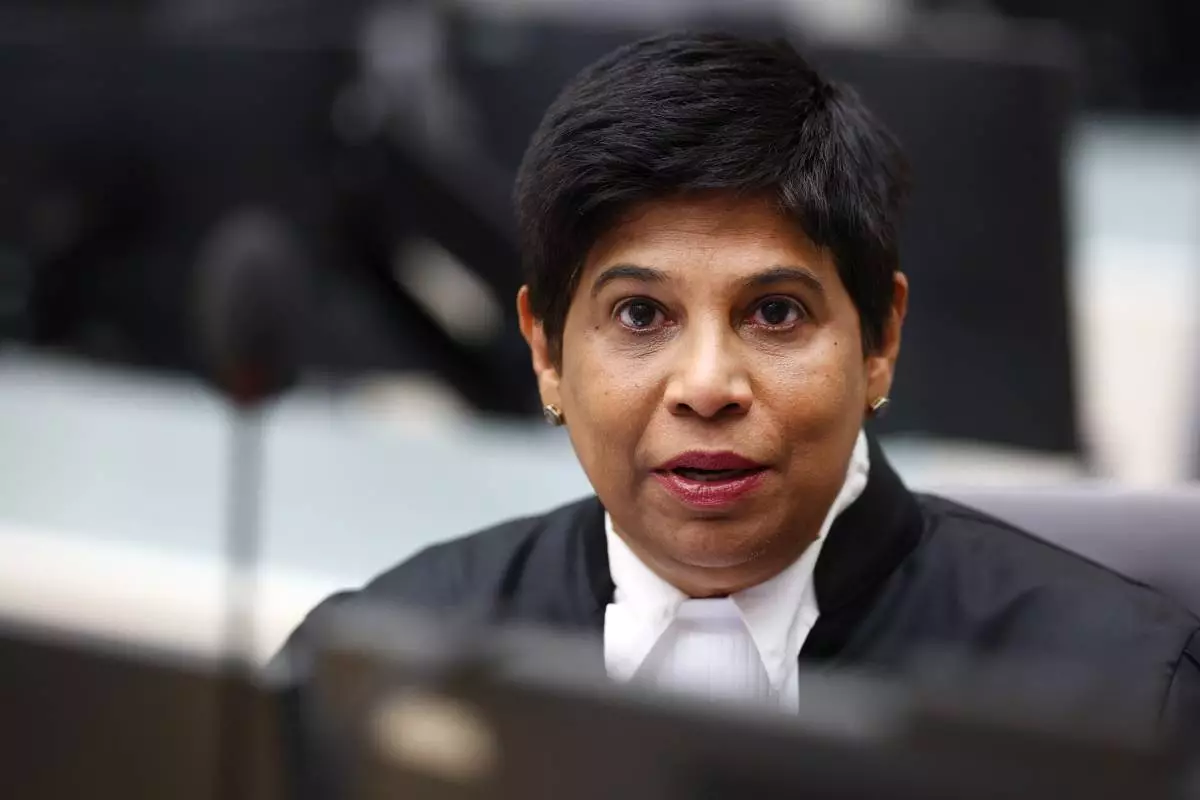
FILE - Deputy Prosecutor Nazhat Shameem Khan attends a hearing at the International Criminal Court (ICC) in The Hague, Netherlands, Monday, Oct. 6, 2025. (Piroschka van de Wouw/Pool Photo via AP, file)
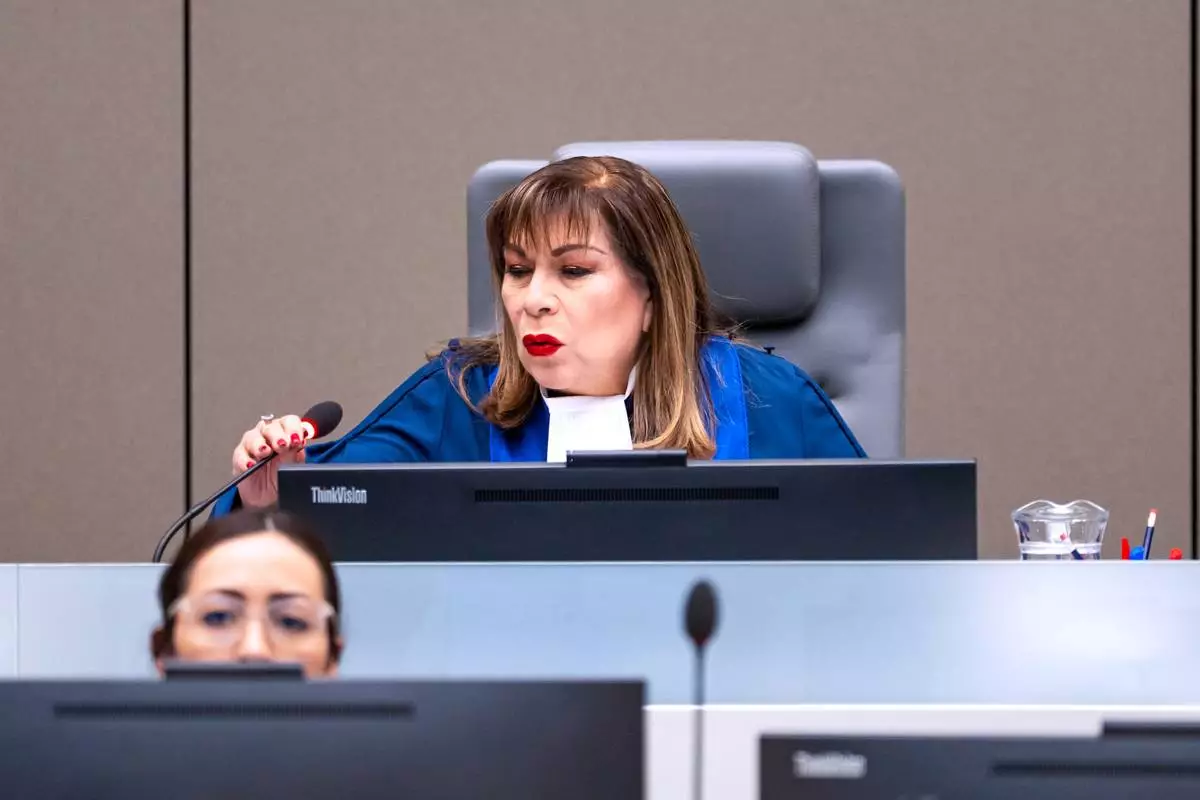
FILE - Presiding judge Luz del Carmen Ibanez Carranza prepares to rule on a request to release former Philippine President Rodrigo Duterte at the International Criminal Court (ICC) in The Hague, Netherlands, Friday, Nov. 28, 2025. (Lina Selg/Pool Photo via AP, file)
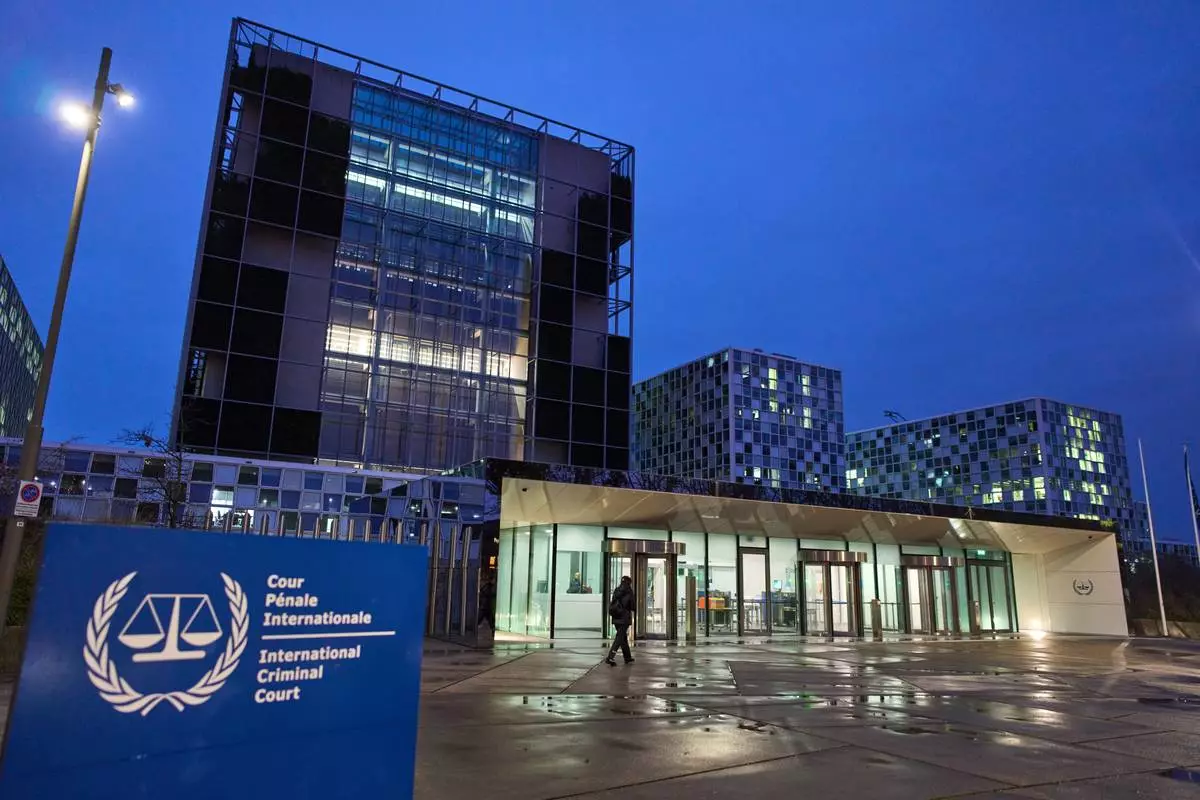
An exterior view of the International Criminal Court, ICC, where Ali Muhammad Ali Abd al-Rahman, a leader of the Sudanese Janjaweed militia, will hear the court's verdict, in The Hague, Netherlands, Tuesday, Dec. 9, 2025. (AP Photo/Peter Dejong)