The just-concluded Central Economic Work Conference shows China has maintained policy continuity even at the transition from the 14th Five-Year Plan to the 15th Five-Year Plan, said an expert on Thursday.
Held in Beijing on Wednesday and Thursday, the annual conference is widely viewed as the compass for China's economic trajectory.
Talking to China Global Television Network (CGTN), Shi Yinghua, director of the Macroeconomic Research Center at the Chinese Academy of Fiscal Sciences, explained China's macro policies for next year, and hailed the continuity in policymaking.
"The Central Economic Work Conference made it clear that in 2026 more proactive and effective macroeconomic policies, and more proactive fiscal policies and moderately accommodative monetary policies will be carried out. This overall policy tone signals that the entire macro policy will maintain the positive orientation next year, while the possible dynamism of the policy can be seen, as the meeting explicitly called for strengthening both counter-cyclical and cross-cyclical adjustments," said Shi.
"This shows we have maintained policy continuity, even in a year that marks the transition from the end of the 14th Five-Year Plan to the start of the 15th Five-Year Plan. What should be noted in the first year of a Five-Year Plan is both the basic tone of short-term policies and how they are to serve the fulfillment of the 15th Five-Year Plan, particularly in making a good start, and toward what the important aspects are. This includes clarifying the government's priority areas and key directions for public investment," she said.
As for the obstacles to China's economic development, Shi emphasized the importance of domestic demand, particularly consumption, in overcoming these challenges.
"I'd like to address the issue from both domestic and international perspectives. Internationally, the uncertainty and complexity of external environment are still on the rise. Domestically, problems of unbalanced and inadequate development still exist. From a macro-regulation standpoint, the most prominent challenge is insufficient domestic demand. Domestic demand should be the main driving force or anchor of stability for our economic development, yet consumption's contributing is still not enough. Therefore, unlocking consumption potential is an area we particularly focus on," Shi said.
"On the one hand, we rely on policies to play an active role, mainly short-term consumption promoting policies, like fiscal subsidies or interest-discounted loans. On the other hand, measures such as transfer payments to individuals, tax policy adjustments, and consolidation of the social security system can increase people's incomes and boost their consumption desire," she said.
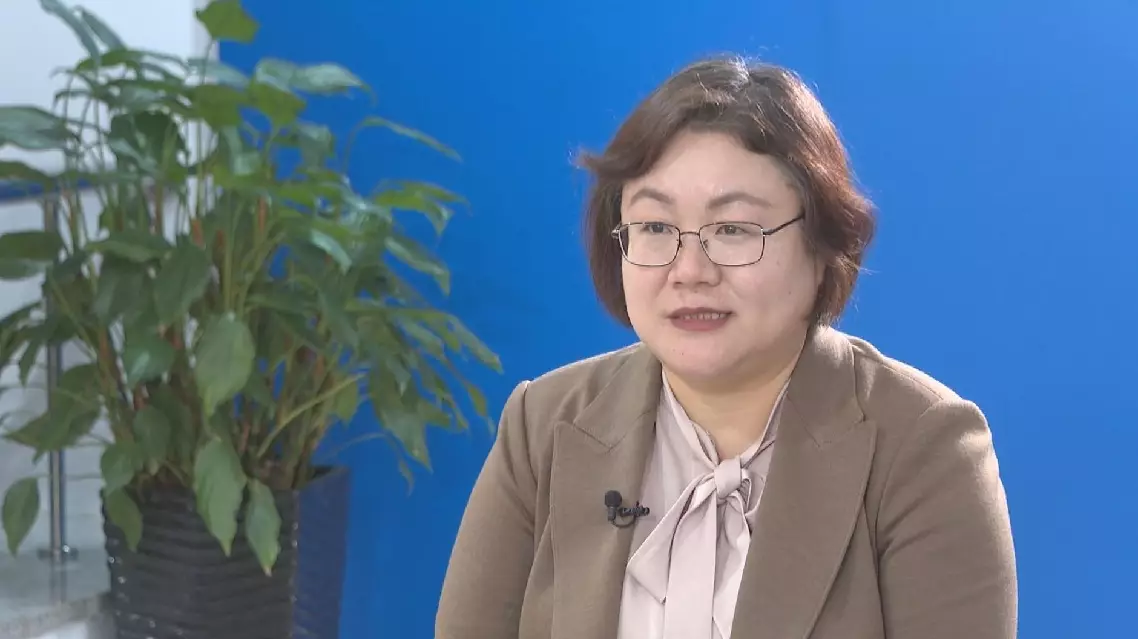
Expert on policy continuity of economic work conference