PARK CITY, Utah (AP) — Russian athletes have told the International Luge Federation that they obtained visas and are coming to the U.S. for a World Cup race next weekend, a move that Ukrainian athletes believe is simply unfair.
The Russians are planning to compete in Lake Placid, New York, in an effort to boost their fledgling hopes of qualifying for the Milan Cortina Olympics that are coming in February. They are not racing at this weekend's World Cup competition in Park City, Utah, despite some claims from Russian officials in recent days that they would be there.
Russia has not seen its athletes compete in a World Cup luge race since that country invaded Ukraine nearly four years ago. The war rages on, and now Ukrainian athletes are bracing for the likelihood of crossing paths with Russians in competition. It's of no consolation to the Ukrainian sliders that the Russians — if they arrive — will be competing as neutral athletes and not under their nation's flag.
“They are not neutral,” Ukrainian luge athlete Anton Dukach said. “They support war.”
Dukach is Ukraine's top Olympic hopeful in luge. He believes that, if he hadn't made it into a shelter in time, he would have been killed two years ago when a Russian rocket hit his apartment. Some of his neighbors, he said, died in that attack.
He's lost many friends and classmates in the war. He races with them in mind and cannot understand why Russians — who haven't been allowed to compete in many sports because of the war — now have sliders and others being given a shot at making it to the Olympics.
The neutrality issue is paramount. Certain sports federations are preparing to let Russian athletes compete, but only after they are cleared in what is described as an independent review process to ensure that they have not publicly supported the war and are not affiliated with Russia's military or other forces.
“Of course I don’t support this decision,” Dukach said. “The FIL and the (International Olympic Committee) said they are neutral, but I don’t think so. We have proof and we already sent evidence that they are not neutral.”
Russian sliders have been trying for several days, through an office in Kazakhstan, to get visas that would allow them to enter the U.S. The luge World Cups in the U.S. — this weekend in Park City, next weekend in Lake Placid — are part of a five-race Olympic qualifying series, which started with a competition at the Olympic venue in Cortina d'Ampezzo, Italy last month.
The Russians were allowed to compete there and crossed paths with the Ukrainians. It was not a World Cup event and wasn't open to spectators. No Russian finished better than 19th there, which didn't exactly get the Olympic quest off to a flying start.
U.S. luge athlete Ashley Farquharson said she found herself sitting a room at the track, getting ready to race when she noticed that the other sliders alongside her were Russians and Ukrainians.
“It was a little awkward,” Farquharson said. “I think they all felt the same way.”
The State Department generally doesn't comment on individual visa situations and did not confirm that the Russian applications were approved. It did, however, offer this statement: "We are doing everything possible to support major international sporting events hosted by the United States without sacrificing our national security.”
The IOC has indicated that it wants Russians to have the opportunity to compete as neutrals at the Milan Cortina Games. However, each sport’s own federation controls the qualifying events. In events like skiing, snowboarding, bobsled, skeleton and luge, governing bodies originally refused to allow any Russians to take part, then amended those decisions after appeals.
If the Russians get into a World Cup — or the Olympics — they would be competing as “Individual Neutral Athletes" and not under their homeland's flag. And even if they compete in Lake Placid, the path to Olympic qualifying may still be very murky. The two remaining Olympic qualifying races after Lake Placid are in Latvia and Germany, and obtaining visas to enter those countries may be difficult for the Russians.
“I've always been proud to represent my country,” Dukach said. “It's even more important now.”
AP Winter Olympics: https://apnews.com/hub/milan-cortina-2026-winter-olympics

Third placed Austria's Dorothea Schwarz reacts after the women's single-seater Luge World Cup race in Winterberg, Germany, Sunday, Dec. 7, 2025. (David Inderlied/dpa via AP)

Third placed Austria's Dorothea Schwarz competes during the women's single-seater Luge World Cup race in Winterberg, Germany, Sunday, Dec. 7, 2025. (David Inderlied/dpa via AP)

First placed Austria's Hannah Prock reacts after the women's single-seater Luge World Cup race in Winterberg, Germany, Sunday, Dec. 7, 2025. (David Inderlied/dpa via AP)
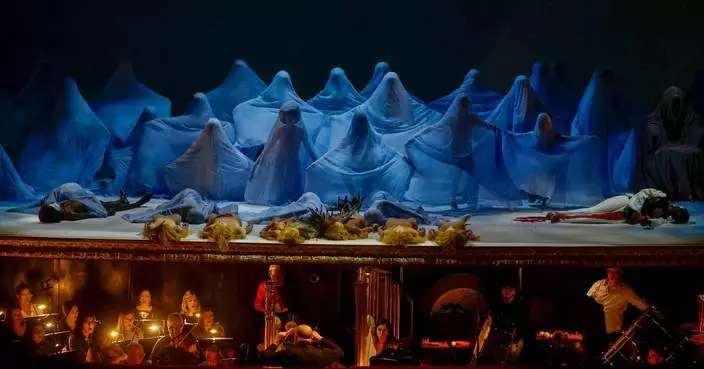
NAPLES, Italy (AP) — At long last, vindication is at hand for an Oscar-winning composer who sought to prove he was just as capable of breathing life into Italy’s grand theaters as into gritty Hollywood films.
On Friday night, Naples’ Teatro San Carlo will stage Ennio Morricone’s only opera, “Partenope,” three full decades after its composition. It is inspired by the mythical siren who drowned herself after failing to enchant Ulysses, her body washing ashore and becoming a settlement that grew over millennia into the seaside city of Naples.
When Morricone wrote “Partenope” in 1995, he was already the world-famous creator of the theme to the Spaghetti Western “The Good, the Bad and the Ugly” and haunting soundtracks for epic films such as “The Untouchables” and “Once Upon a Time in America.”
He earned an Oscar for lifetime achievement in 2007, but his compositions never resounded in the hallowed halls of opera houses — viewed in his home country as the elite musical echelon. To his great chagrin, Partenope gathered dust for decades; Morricone died without seeing it performed.
“In the end, he read as a sign of destiny the fact he would not make his debut in the opera world,” Alessandro De Rosa, a close collaborator who coauthored Morricone's autobiography, said in an interview. “I’m sure that if he were alive now, he would have taken the challenge and would have dialogued with the orchestra and the director, tirelessly, like a young kid.”
Director Vanessa Beecroft and conductor Riccardo Frizza had to find their way through the visionary work without the benefit of those notes.
“It would have been wonderful to be able to talk to Morricone about his musical choices … but we had to understand them from what he left us and tried to interpret them in the best way,” Frizza said.
For instance, he chose not to use violins in this orchestra, instead favoring flutes, harps and horns, which appear in Greek mythology, Frizza explained.
“Then you have the modern instruments, lots of percussion, with the Neapolitan sounds provided by tambourines and putipu’,” he added, referencing a friction drum used in local folk music.
Teatro San Carlo was filled with anticipation on Thursday evening as Neapolitans attended an open rehearsal. Free tickets were snapped up in just a few hours.
“It was such a long wait, that’s why we are here today,” said middle-aged Alfonso Ieneroso as he entered the theater.
The mythical Partenope is part of Naples’ culture, with tradition suggesting her voice represents the city’s enduring spirit. The original Greek settlement was named for her. She is depicted at monuments like the Fontana della Sirena, a fountain that has become one of the city's symbols. Young children all along the Gulf of Naples, living under Mount Vesuvius’ shadow, learn the legend of Partenope from their parents.
And like Morricone's opera, Naples itself spent decades downtrodden and overlooked, but is enjoying resurgence: The U.N. recognized its pizza makers as an intangible cultural heritage of humanity; It featured on foreign media lists of must-visit destinations; Elena Ferrante’s Neapolitan novels were acclaimed bestsellers that became an HBO series; and its soccer team in 2023 took home the nation’s top league trophy for the first time since Maradona played in the 1980s — then won again in May.
Naples has also been celebrating its 2,500th anniversary this year, and Morricone’s opera marks the culmination of festivities. The protagonist in his adaptation is a woman who, after her husband dies and she is separated from her best friend, refuses the consolation of being transformed into a distant constellation. Instead, she asks the gods to let her stretch her wings along the gulf on which an immortal city will arise.
The production explores the link between the ancient legend and the modern city’s identity, as two sopranos embody Partenope simultaneously, reflecting her dual nature as body and myth.
Morricone originally composed the one-act opera — free of charge — to accompany a libretto by authors Guido Barbieri and Sandro Cappelletto for a small festival in Positano, just south of Naples on the Amalfi coast. But it was not to be: the festival went bankrupt and Partenope was shelved.
There were several attempts to revive their work, including one between 1998 and 2000 with the Teatro Massimo of Palermo. But that project ultimately ran aground when a director couldn’t be secured.
“In those years Morricone had the torment of not being accepted as a composer of what he called ‘absolute music,’ as he was identified with his popular movie scores,” Barbieri, one of the libretto’s authors, said in an interview. Cappelletto said that, in a conversation with the two authors in 2017, three years before his death, Morricone appeared “at peace” with his music career.
Partenope has inspired several productions over the centuries, including operas by renowned composers George Frideric Handel and Antonio Vivaldi in the 18th century, and a 2024 movie by Oscar-winning director Paolo Sorrentino. Morricone’s work is finally coming alive to join their ranks.
“It was a great pleasure to listen to Morricone’s music, the real protagonist of this opera,” said Giovanni Capuano, a 26-year-old cinema student, after Thursday's rehearsal. “His spirit is back and has enchanted us.”
Zampano reported from Rome.
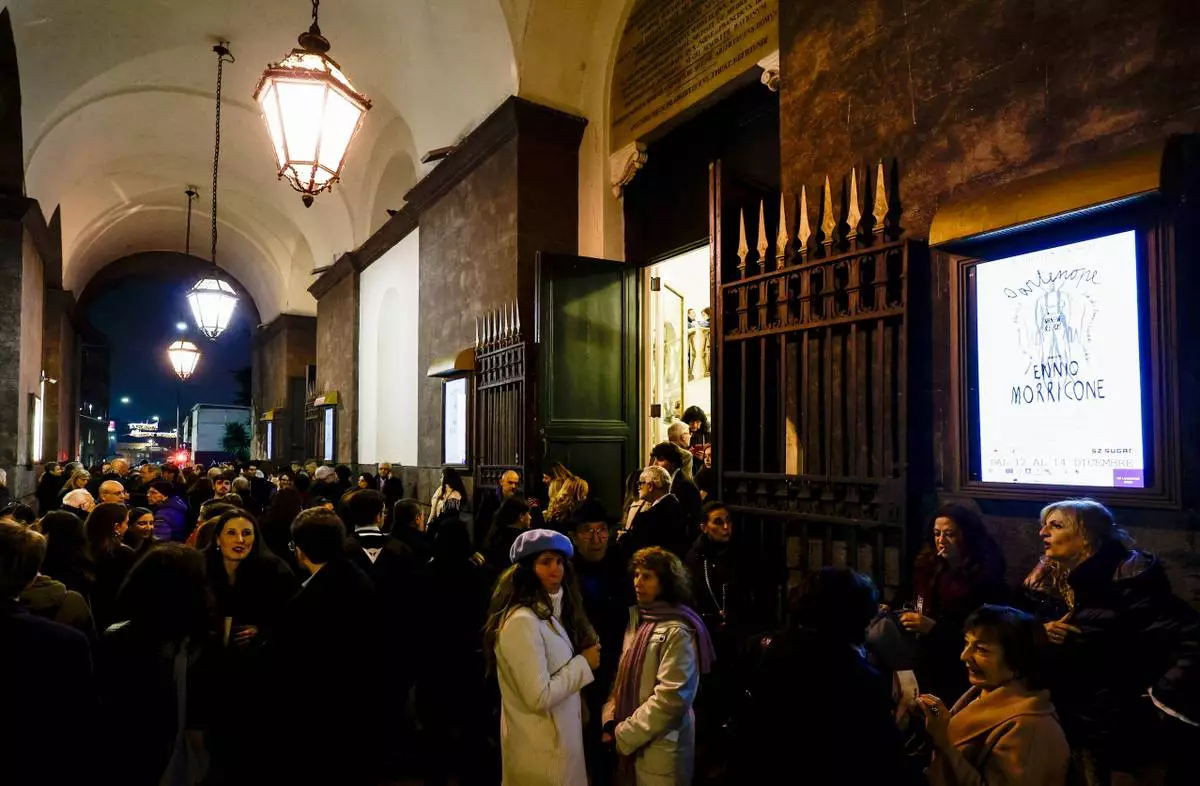
People queue at the San Carlo Theatre, in Naples, Italy, to attend at the general rehearsal of Ennio Morricone's only opera, Partenope, Thursday, Dec. 11, 2025. (AP Photo/Salvatore Laporta)
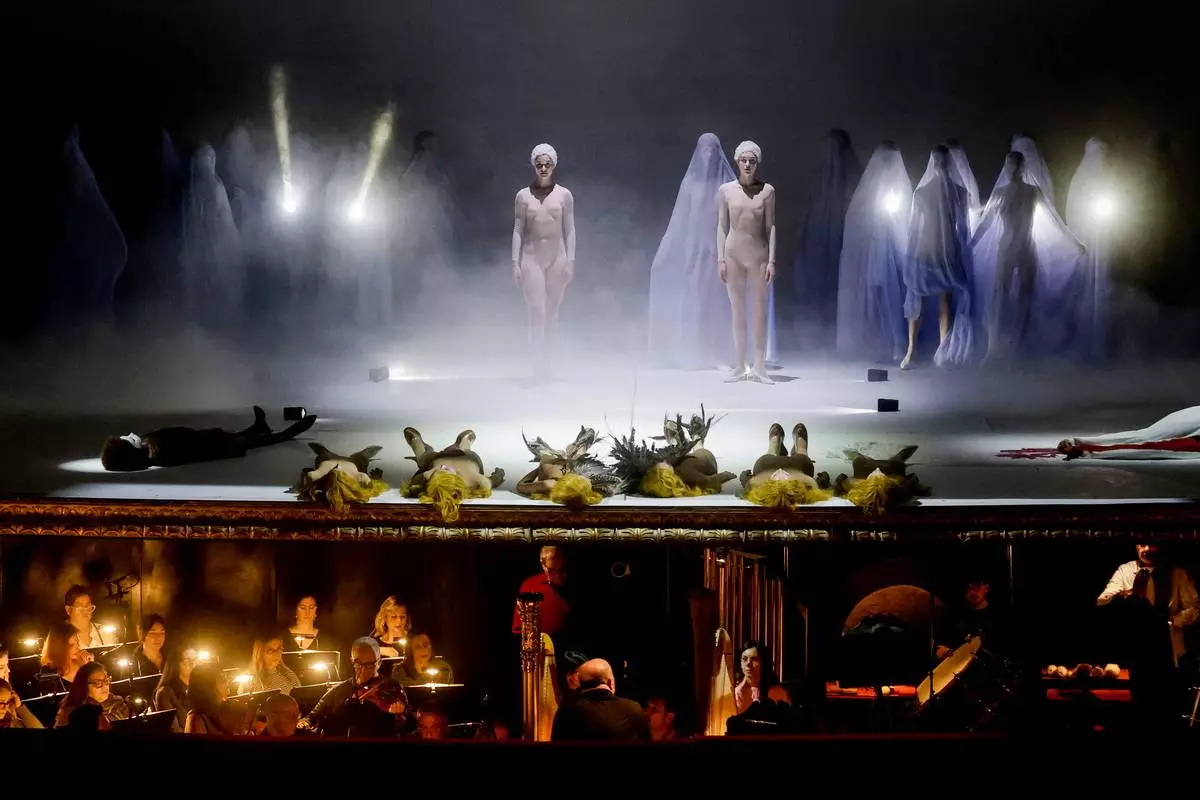
Actors perform during the general rehearsal of Ennio Morricone's only opera, Partenope, at the San Carlo Theatre, in Naples, Italy, Thursday, Dec. 11, 2025. (AP Photo/Salvatore Laporta)
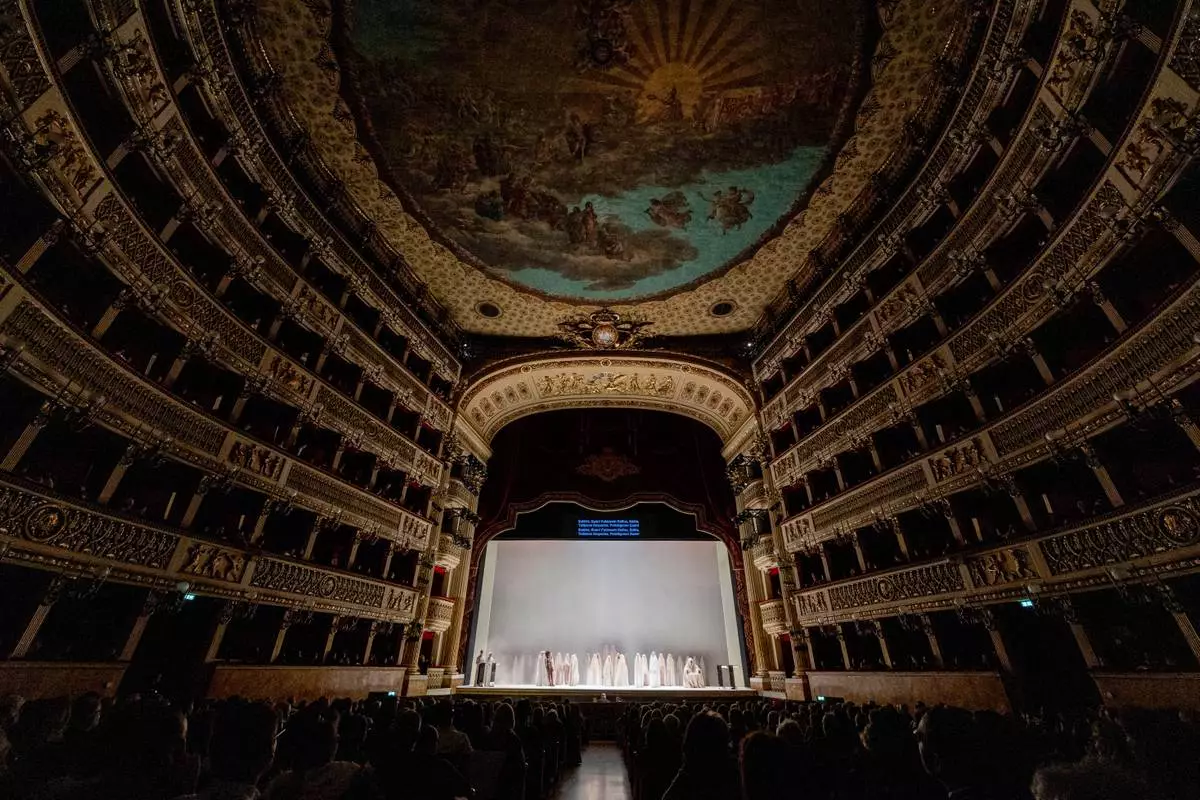
Actors perform during the general rehearsal of Ennio Morricone's only opera, Partenope, at the San Carlo Theatre, in Naples, Italy, Thursday, Dec. 11, 2025. (AP Photo/Salvatore Laporta)
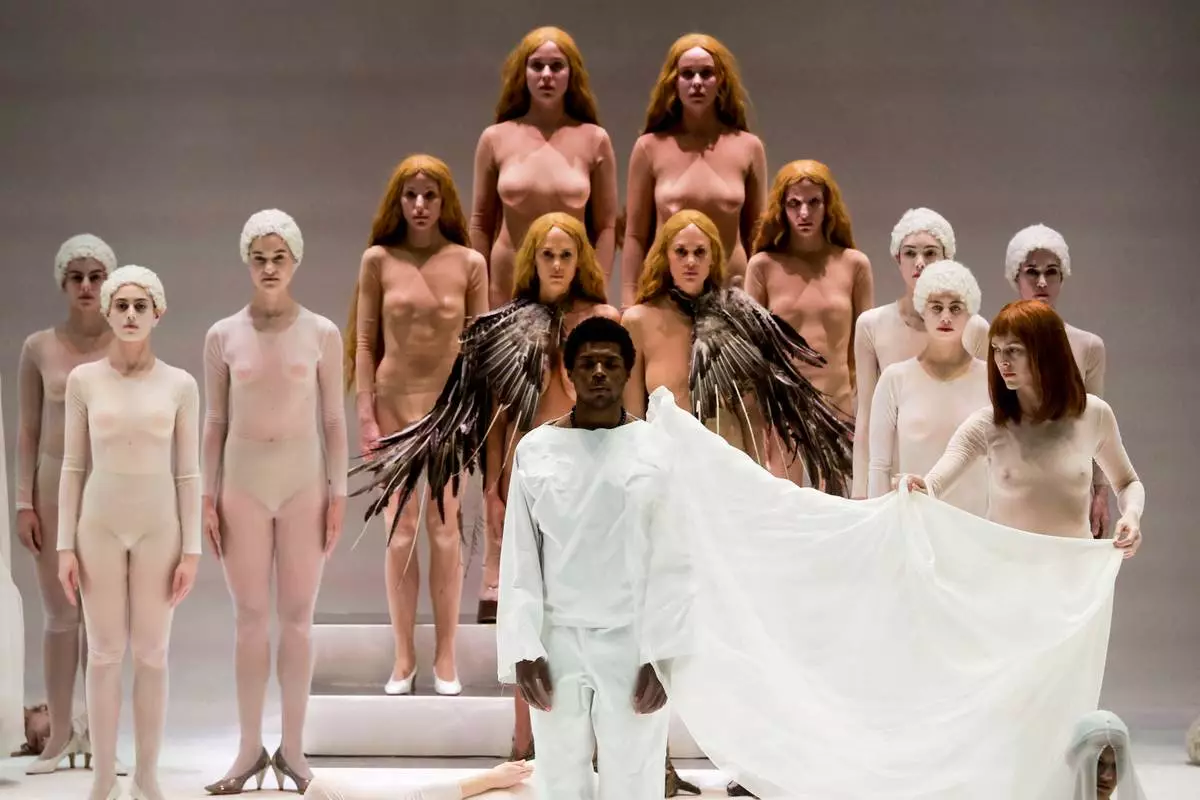
EDS NOTE: NUDITY - Actors perform during the general rehearsal of Ennio Morricone's only opera, Partenope, at the San Carlo Theatre, in Naples, Italy, Thursday, Dec. 11, 2025. (AP Photo/Salvatore Laporta)
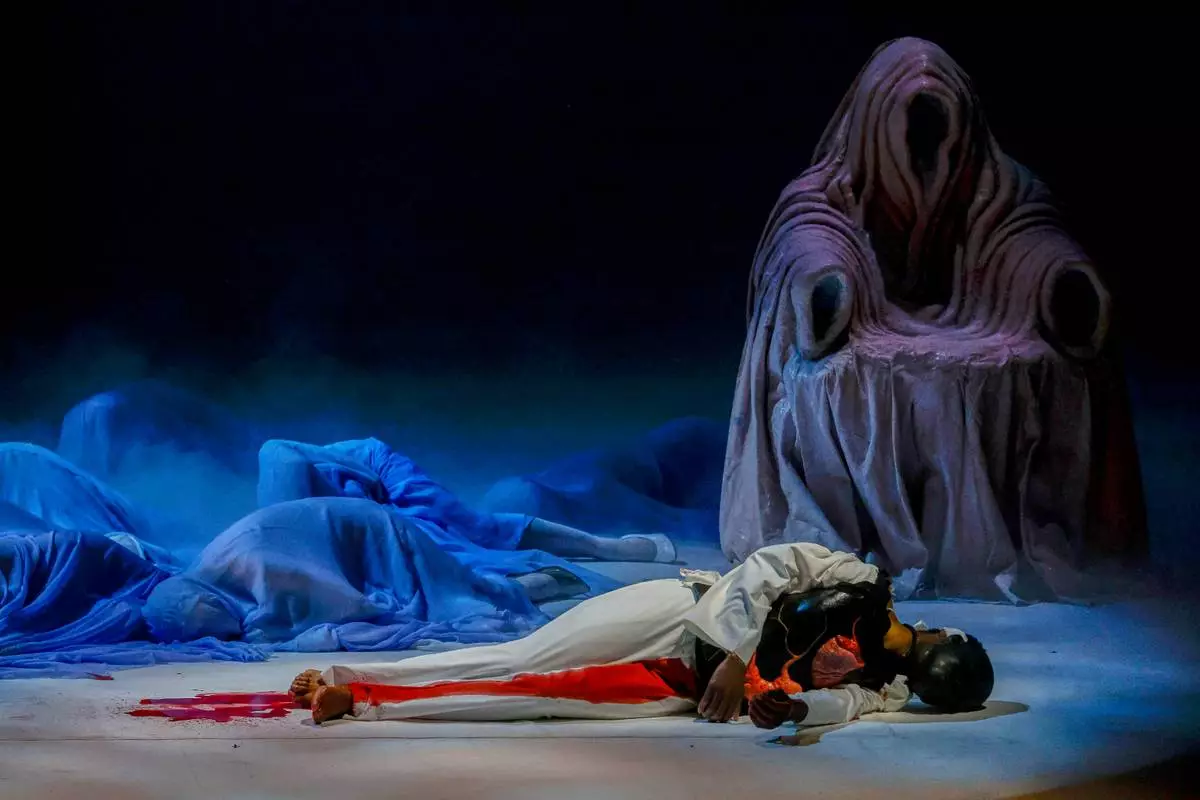
Actors perform during the general rehearsal of Ennio Morricone's only opera, Partenope, at the San Carlo Theatre, in Naples, Italy, Thursday, Dec. 11, 2025. (AP Photo/Salvatore Laporta)