Tropical storms pummeled the land and ravaged ecosystems. Floodwaters engulfed streets and left cars stuck in mud. And fires scorched trees and consumed houses.
Climate change, caused mainly by the use of oil, gas and coal as energy sources, hit people hard in 2025, with suffering and heartache captured by Associated Press photographers around the globe. The extreme weather events that hurt people also hurt many other living things, such as pigs, fish and cows. Lives were altered and many were taken.
Click to Gallery
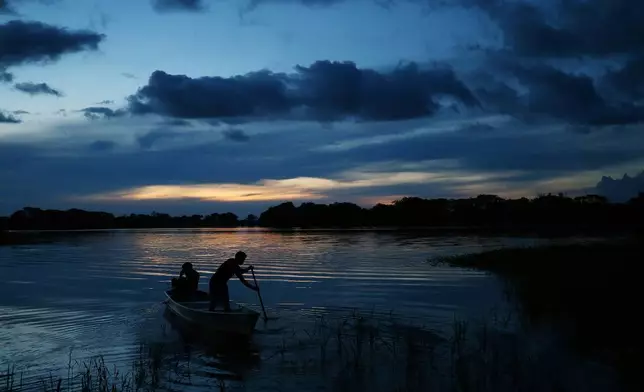
Members of the Mura Indigenous community maneuver a boat Feb. 17, 2025, in the Lago do Soares village in Autazes, Amazonas state, Brazil. (AP Photo/Edmar Barros, File)
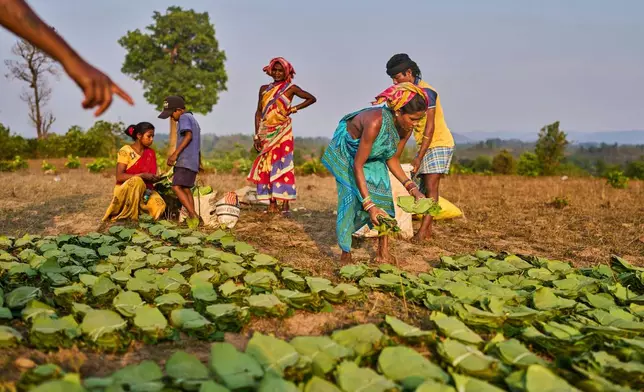
Members of the Gadaba Indigenous communities gather tendu leaves to sell April 16, 2025, in Hatipakna village, India. (AP Photo/Rafiq Maqbool, File)
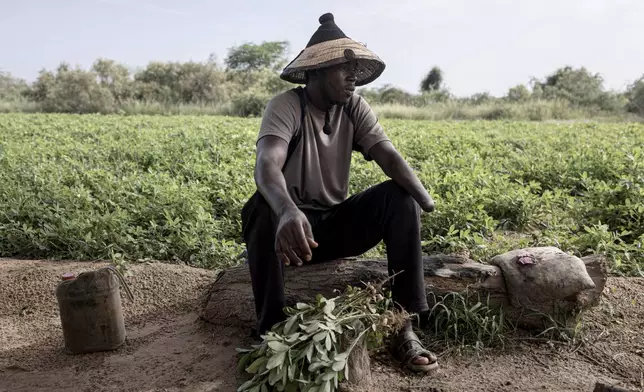
Mamadou Gueye, a 39-year-old farmer who lost his left hand after a fight with a herder over cattle in May 2022, guards his fields of peanuts Oct. 12, 2025, in Ross Bethio, Senegal. (AP Photo/Andrea Ferro)
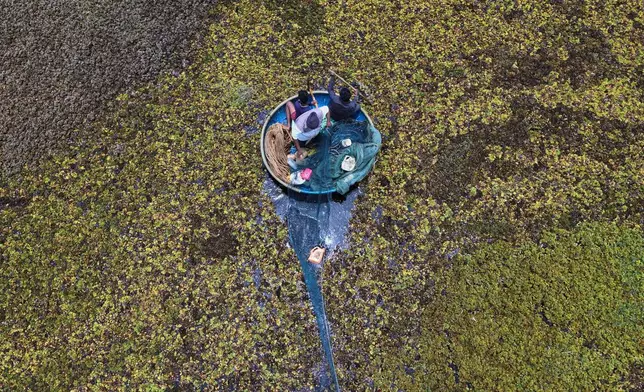
Fisherman Sunil Kumar, bottom, spreads a fishing net to help remove the weeds floating on Doddajala Lake, Aug. 23, 2025, on the outskirts of Bengaluru, India. (AP Photo/Aijaz Rahi, File)
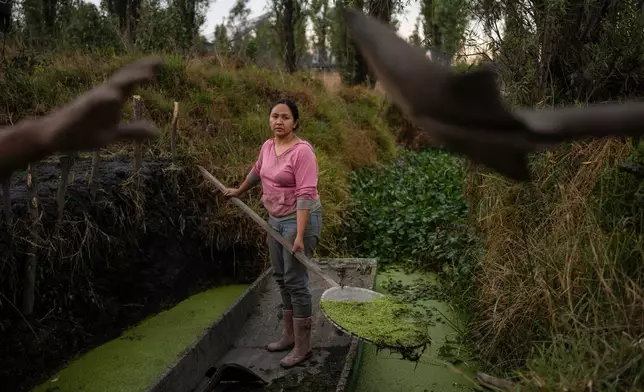
Cassandra Garduño cleans a canal in her chinampa, an island farm built by the Aztecs thousands of years ago May 8, 2025, in San Gregorio Atlapulco, a borough of Mexico City. (AP Photo/Felix Marquez, File)
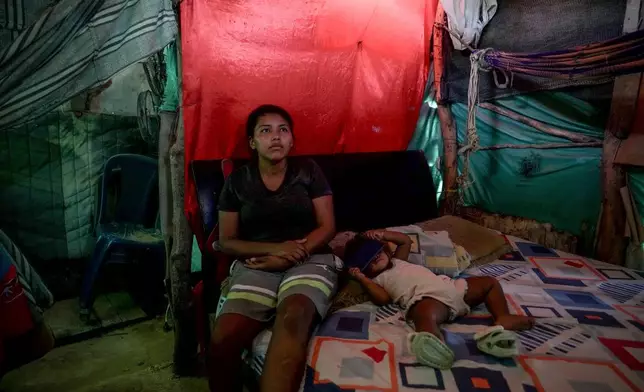
Luciane Mengual, 22, an Indigenous woman from the Wayuu community, poses with her baby at home Feb. 4, 2025, in the Villa del Sur neighborhood, on the outskirts of Riohacha, Colombia. (AP Photo/Ivan Valencia, File)
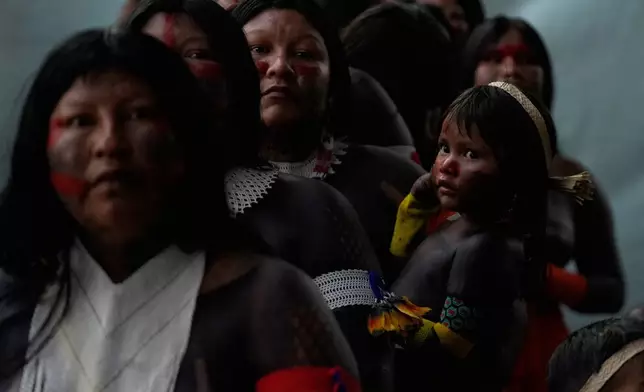
An Indigenous group attends the opening ceremony of the People's Summit offsite from the COP30 U.N. Climate Summit, Nov. 12, 2025, in Belem, Brazil. (AP Photo/Fernando Llano, File)
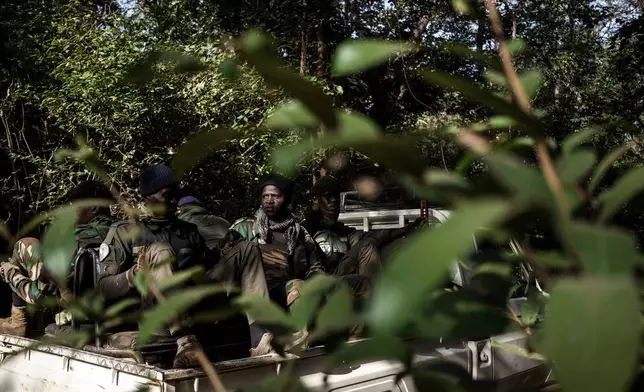
Members of the Lion Intervention Brigade conduct a patrol Jan. 14, 2025, at Niokolo Koba National Park, Senegal. (AP Photo/Annika Hammerschlag, File)
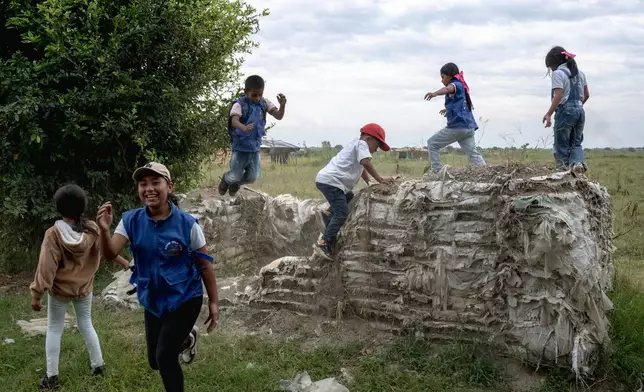
Young Indigenous guards play on the walls of an old military defense barrier made of sandbags, remnants of the military occupation in the area July, 19, 2025, in the Lopez Adentro reserve in Caloto, Colombia. (AP Photo/Nadège Mazars, File)
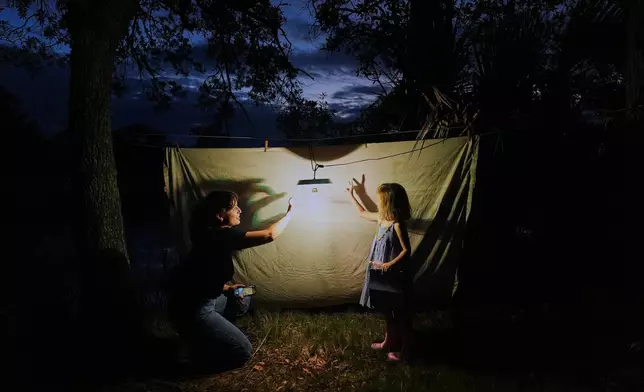
Schuyler Clogston, left, makes shadows puppets with Agnes Suárez after setting up a sheet and light to attract moths for observation Oct. 7, 2025, in Charleston, S.C. (AP Photo/Joshua A. Bickel, File)
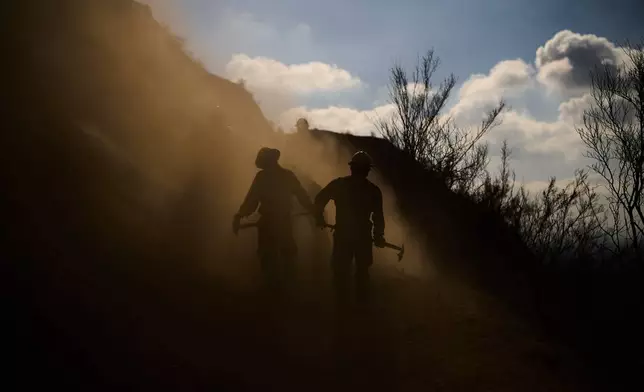
Members of the Navajo Scouts firefighter crew kick up dust as they clear debris from a landslide across a road on a hillside as they battle the Eaton Fire, Jan. 17, 2025, in Altadena, Calif. (AP Photo/John Locher, File)
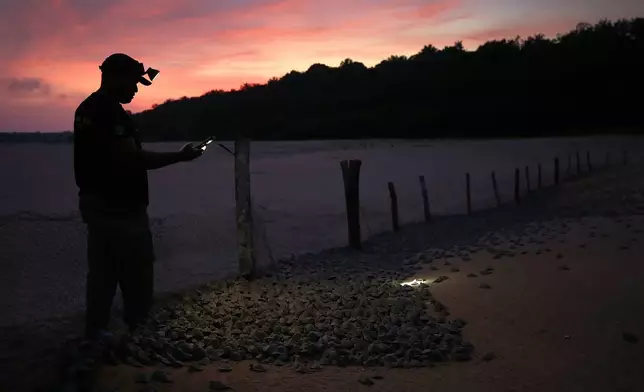
An environmental agent of the Chico Mendes Institute takes photos of turtle hatchlings Nov. 17, 2025, at the Abufari Biological Reserve in Tapaua, Brazil. (AP Photo/Edmar Barros, File)
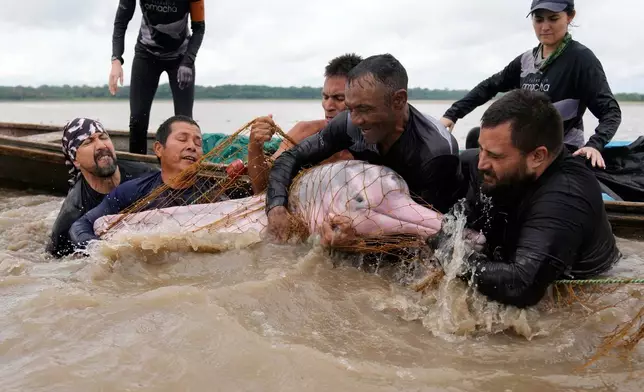
Scientists and veterinarians capture a pink river dolphin in the Amazon River to perform health checks Sept. 7, 2025, in Puerto Narino, Colombia. (AP Photo/Fernando Vergara, File)
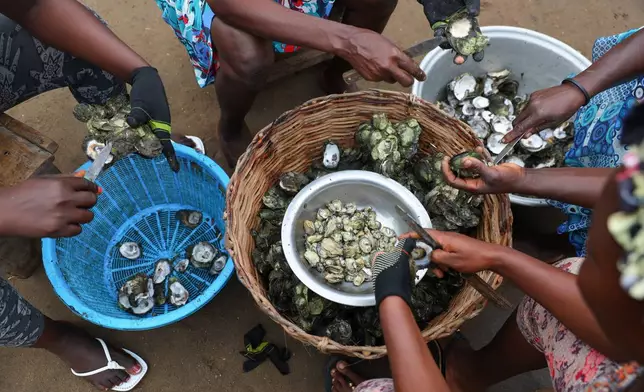
Women open freshly cooked oysters Aug. 6, 2025, in Tsokomey, Ghana. (AP Photo/Misper Apawu, File)
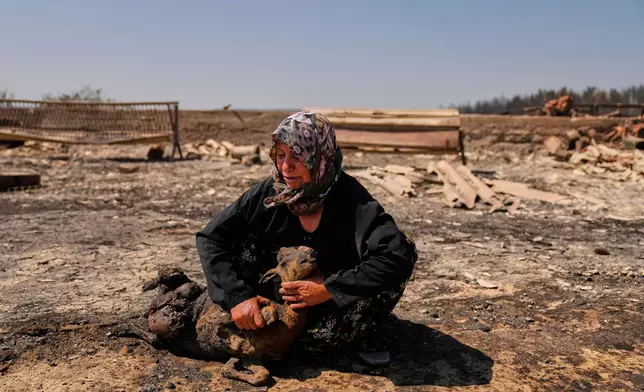
Local farmer Turkan Ozkan, 64, cries next to one of her animals killed during a fire Aug. 12, 2025, in Guzelyeli, Turkey. (AP Photo/Khalil Hamra, File)
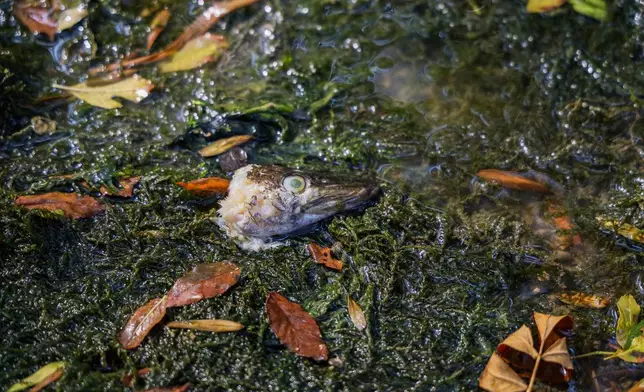
The head of a dead fish lies in the almost dry Aume River, Aug. 14, 2025, in Saint-Fraigne, France. (AP Photo/Yohan Bonnet, File)
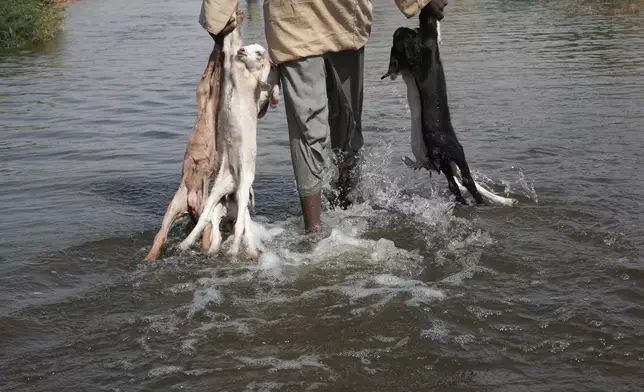
A Sudanese farmer carries his livestock after his farm was destroyed by floods Oct. 1, 2025, in Wad Ramli village, Sudan. (AP Photo/Marwan Ali, File)
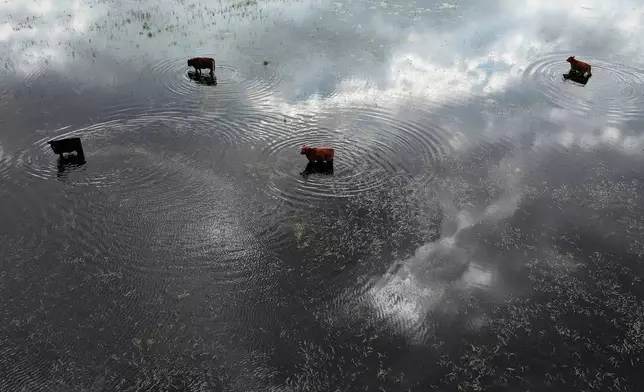
Cows stand in floodwaters at a farm July 25, 2025, in Buenos Aires province, Argentina. (AP Photo/Natacha Pisarenko, File)
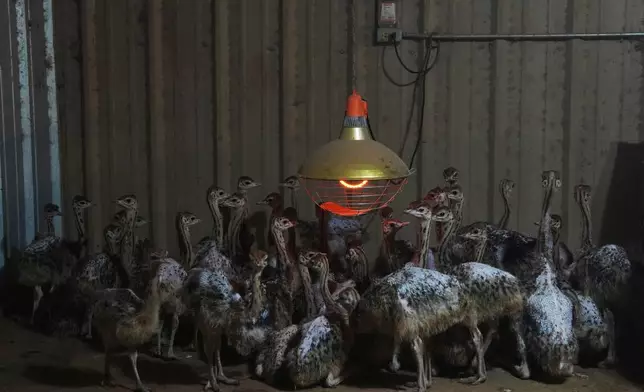
Baby ostriches huddle after being moved into a barn following recent flooding July 9, 2025, at a farm in Bend, Texas. (AP Photo/Joshua A. Bickel, File)
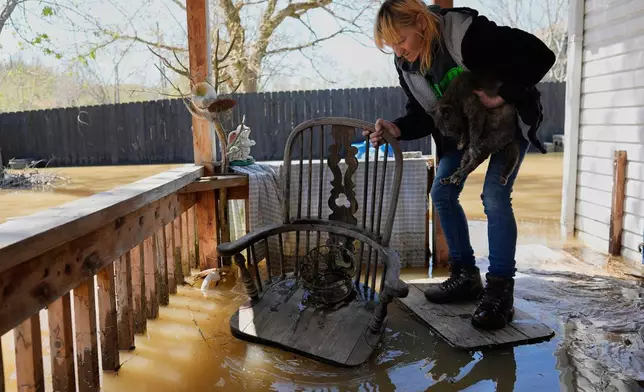
Wanona Harp rescues a cat stranded on her neighbor's porch flooded by the Kentucky River, April 8, 2025, in Lockport, Ky. (AP Photo/Carolyn Kaster, File)
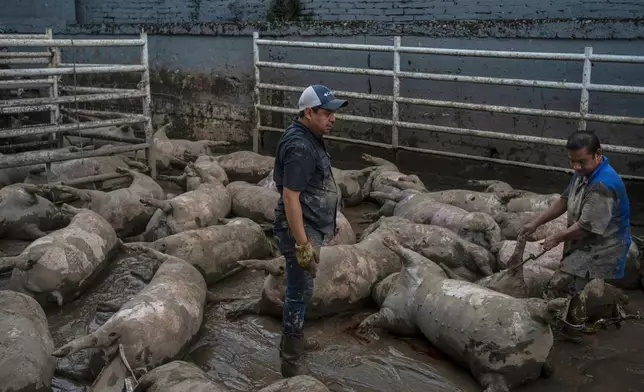
Arturo Huidobro, center, and a worker prepare to remove dead pigs from a farm following heavy rainfall Oct. 11, 2025, in Poza Rica, Mexico. (AP Photo/Felix Marquez, File)
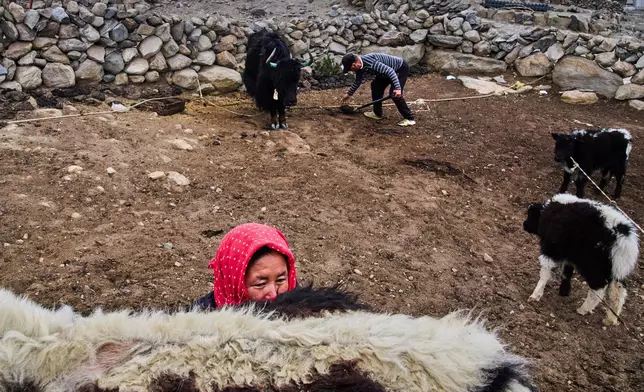
Tanzin Dolma milks a yak as her husband, Punchuk Namdol, collects dung in the background on an early morning July 8, 2025, in Maan village, Ladakh, India. (AP Photo/Dar Yasin, File)
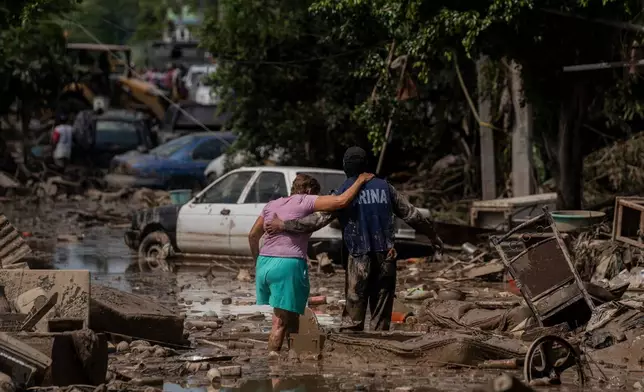
A Navy officer helps a woman cross a flooded street Oct. 12, 2025, in Poza Rica, Veracruz state, Mexico. (AP Photo/Felix Marquez, File)
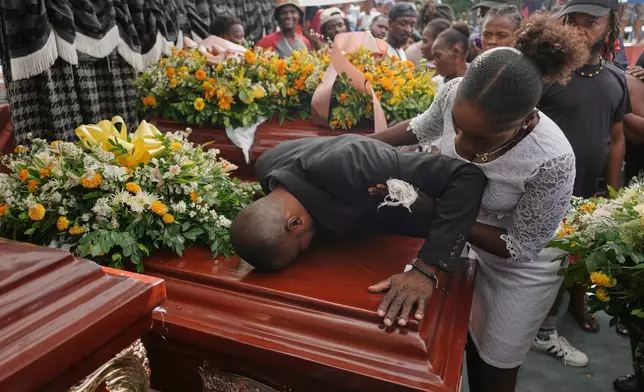
Relatives of Rosiclaire Lenchise mourn during a funeral of victims killed by a landslide triggered by Hurricane Melissa, Nov. 15, 2025, in Petit Goave, Haiti. (AP Photo/Odelyn Joseph, File)
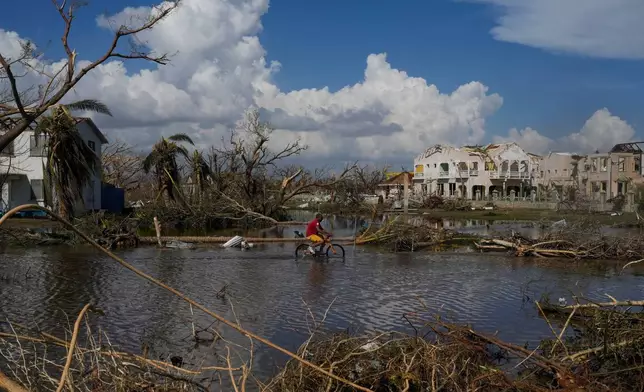
A man rides his bicycle through an inundated street during the aftermath of Hurricane Melissa, Oct. 30, 2025, in Black River, Jamaica. (AP Photo/Matias Delacroix, File)
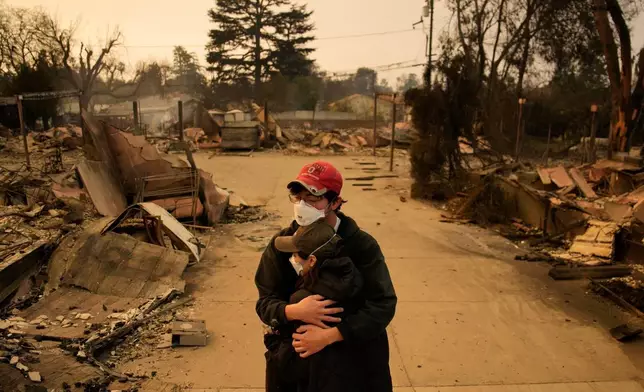
Ari Rivera, rear, and Anderson Hao hold each other in front of their destroyed home Jan. 9, 2025, in Altadena, Calif. (AP Photo/John Locher, File)
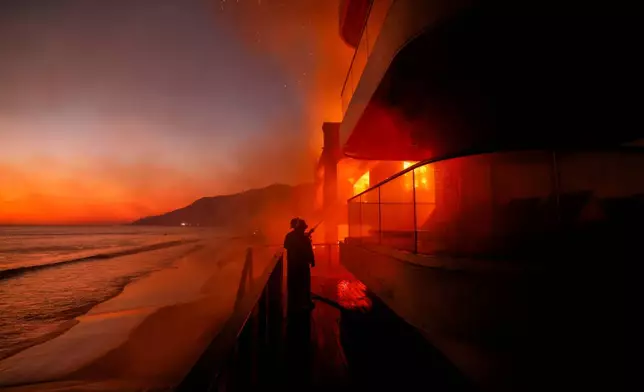
Firefighters work from a deck as the Palisades Fire burns a beachfront property Jan. 8, 2025, in Malibu, Calif. (AP Photo/Etienne Laurent, File)
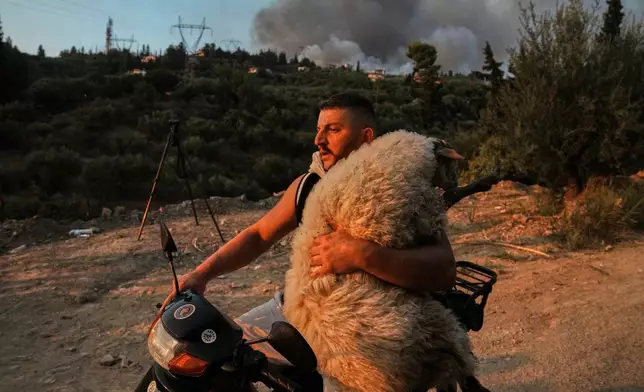
Olsjen Mucobega, 32, uses his motorcycle to evacuate a sheep from a wildfire Aug. 13, 2025, in Patras, Greece. (AP Photo/Thanassis Stavrakis, File)
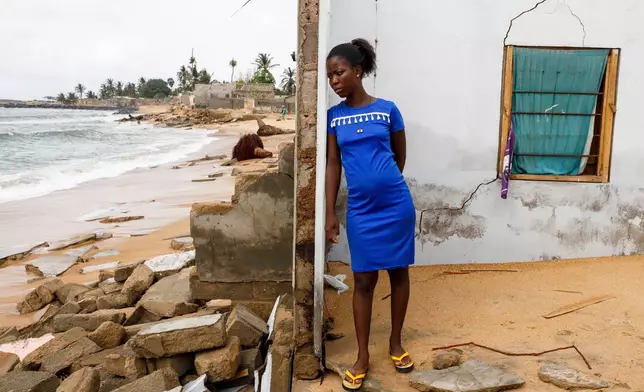
Afeli Bernice Adzo leans against the remains of her father's room as she looks at the ocean that destroyed her family home March 5, 2025, in Avegadzi, Ghana. (AP Photo/Misper Apawu, File)
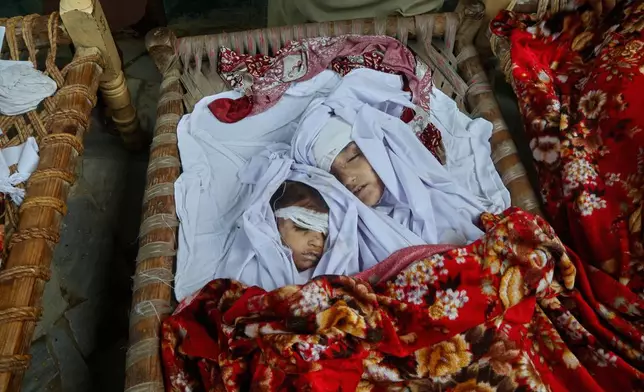
Bodies of children killed in flash flooding lie at a home Aug. 16, 2025, near Pir Baba, Buner district, Pakistan. (AP Photo/Muhammad Sajjad, File)
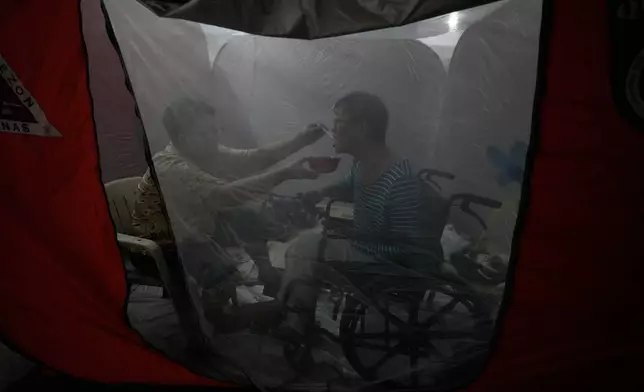
Judy Bertuso, left, feeds her husband Apollo inside a tent at an evacuation center as Typhoon Fung-wong enters the country Nov. 9, 2025, in Quezon city, Philippines. (AP Photo/Aaron Favila, File)
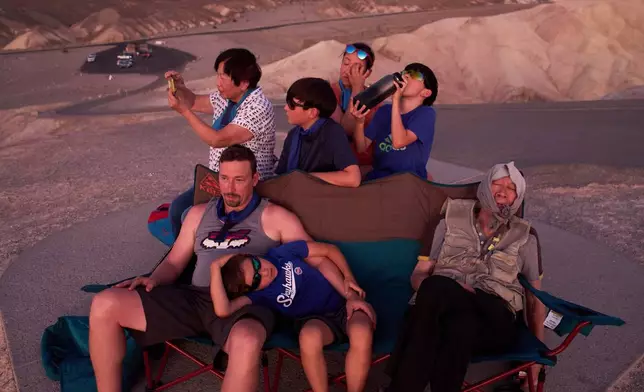
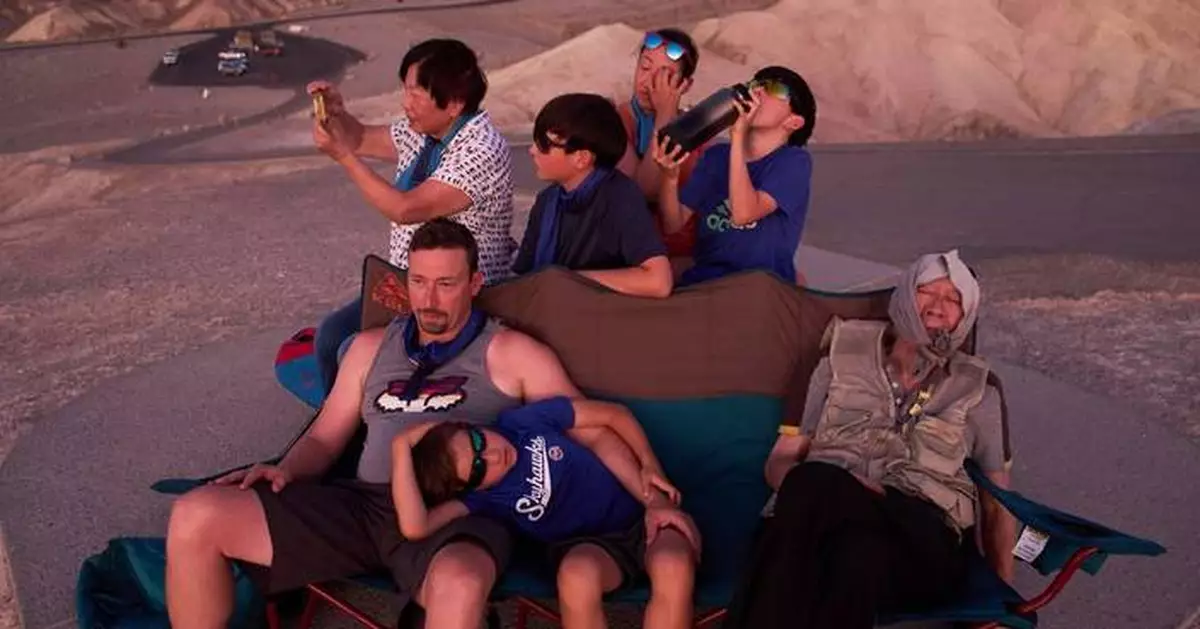
Joe Chyuwei, right, Addison Black, front center, James Black, front left, and back row from left, Helen Chyuwei, Jameson Black, Grace Chyuwei and Grayson Black watch the sunset in the heat at Zabriskie Point, Aug. 3, 2025, in Death Valley National Park, Calif. (AP Photo/John Locher, File)
Amid much misery, however, there was bravery and determination, as people fought to restore ecosystems and protect lands and forests.
In 2025, there were some who sought out the extremes, like a family enjoying a sunset during a scorching August day in California’s Death Valley, the hottest place on Earth. But for most people, it was the other way around: the extremes of weather alterations were thrust upon them, and with devastating consequences.
In the Philippines, as Typhoon Fung-wong approached, a couple took refuge in an evacuation center tent, the wife gently feeding her husband in a wheelchair. In Pakistan, children were swept up in flash flooding, their recovered bodies lying at home in the aftermath. In Ghana, a woman stood amid the rubble of her family home after it was battered and engulfed by rising seas.
In Greece, a man cradled a sheep while riding his motorcycle to evacuate from a wildfire. In Los Angeles, firefighters battled flames that chewed through entire neighborhoods in January, the heart of winter when major wildfires are rare. A couple holding each other in front of their destroyed home made for a scene of disbelief that repeatedly played out over weeks.
In Jamaica, a man rode his bike through a flooded street in the aftermath of Hurricane Melissa, which tore through the Caribbean. That same storm sparked landslides and deaths in Haiti, the poorest country in the Western Hemisphere that is particularly vulnerable to extreme weather events.
In Mexico, heavy rain for weeks led to major flooding, a disaster encapsulated by the image of a navy official helping a woman cross a street filled with mud, debris and cars scattered in mud.
People were not the only beings hurt or killed during extreme weather events, or to face existential threats. AP photographers also captured animals in storms and floods and the aftermath of fires. Other animals were seen thriving in their natural habitats, scenes of natural beauty threatened by climate shocks.
In Ladakh, India, a couple collected dung and milked their yaks in what seemed like routine herding work, although perhaps not for long, as rising temperatures, erratic rainfall and changing vegetation, all impacts of climate change, are putting at risk the raising of yaks.
In Mexico, after heavy rains and floods, a farmworker prepared to remove pigs that died in their pen. In the U.S. state of Kentucky, a woman rescued a cat stranded on a porch during flooding.
In Texas, baby ostriches huddled in a barn after flooding. In Argentina, cows waded through water after floods. And in Sudan, a farmer carried livestock in each hand as he walked through floodwaters.
While too much water brought destruction in some places, in others it was a lack of water, either by drought or fires, that did the damage. In France, the head of a dead fish lay in the nearly dry Aume River, hit hard by drought. In Turkey, a farmer cried while holding one of her animals, charred black, that had perished in a wildfire.
In Ghana, women cooked oysters that were plucked from coastal mangroves, a source of livelihood imperiled by rising temperatures and coastal erosion.
The actions of people also hurt animals. In the Amazon River in Colombia, scientists captured a pink river dolphin to test it for mercury, a toxic liquid metal used in illegal gold mining that contaminates ecosystems.
Images of animals in the midst of extreme weather stood in stark contrast to others that inspired awe, like turtle hatchlings in a reserve in the Brazilian Amazon. The baby turtles, so full of life, only temporarily masked the reality that the species, along with many others in the Amazon, are being hurt by global warming.
While so many pictures showed the bleak state of the climate and ecosystems being destroyed, there were also examples of people determined to protect lands, even if that meant putting their lives at risk.
In Southern California, members of the Navajo Scouts firefighter crew cleared debris while battling a major wildfire. In the U.S. state of South Carolina, a woman made shadow puppets with a young girl near a wetland that many in the community have worked to preserve and help thrive.
In Colombia, Indigenous children training to be guards to protect lands played on the walls of an old military defense barrier, showing that even serious work can have moments of levity. There were no such smiles in Senegal, where members of a brigade that combats poaching of lions were seen through trees as they patrolled Niokolo Koba National Park.
During the U.N. climate summit in Brazil, a group of Indigenous people attended the opening ceremony of the People's Summit, a parallel gathering to demand land rights for Indigenous peoples, who bear some of the deepest harms from climate change but also have some of the solutions. In Colombia, a woman from the Wayuu Indigenous community, a semi-nomadic group struggling amid erratic rainfall, crop failure and development pressures, posed with her baby.
In Mexico City, a woman worked to clean a canal in her chinampa, one of many island farms built by the Aztecs thousands of years ago that today are being revitalized for sustainable farming. Revitalization was also the goal in and around Bengaluru, India, where fishermen spread a huge net to remove weeds and help restore a lake overrun with waste and hurt by degraded ecosystems.
Protection of land and livelihood can come with a cost. In Senegal, a farmer lost his left hand in a fight with herders some years ago when they passed through his farm. Climate change has deepened tensions between herders and farmers, as declining rainfall and rising temperatures have dried up pasture land.
Some people went beyond just working to protect land and demanded that the environment be treated better. That was the case with women from the Gadaba Indigenous communities in India. The women, who have been giving authorities maps of areas they want protected, chatted as they gathered tendu leaves to sell.
For members of the Mura Indigenous community in Brazil, seen maneuvering a boat near an Amazon village, the question before them was whether to support or oppose a major potash mining project on their lands.
That question, along with global impacts to people and animals, and attempts to stem the tide of climate change and protect lands, will continue in 2026.
The Associated Press’ climate and environmental coverage receives financial support from multiple private foundations. AP is solely responsible for all content. Find AP’s standards for working with philanthropies, a list of supporters and funded coverage areas at AP.org.
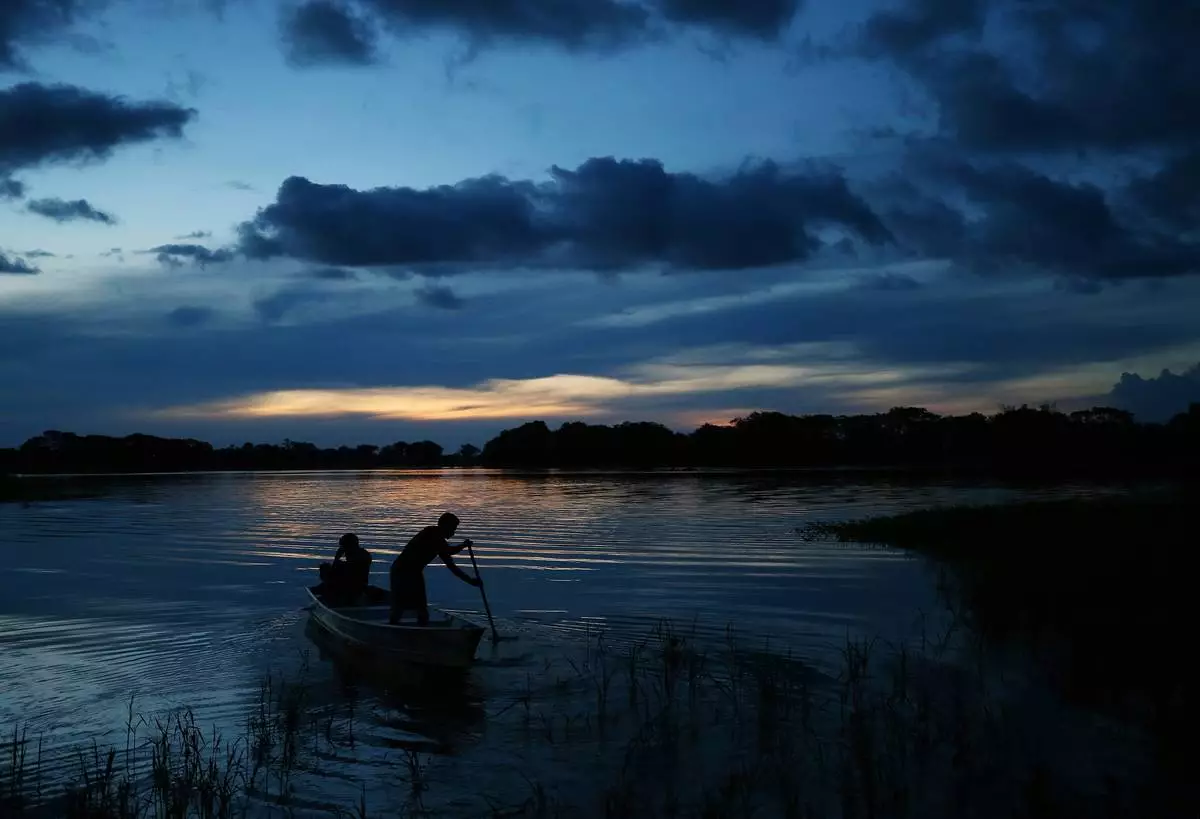
Members of the Mura Indigenous community maneuver a boat Feb. 17, 2025, in the Lago do Soares village in Autazes, Amazonas state, Brazil. (AP Photo/Edmar Barros, File)
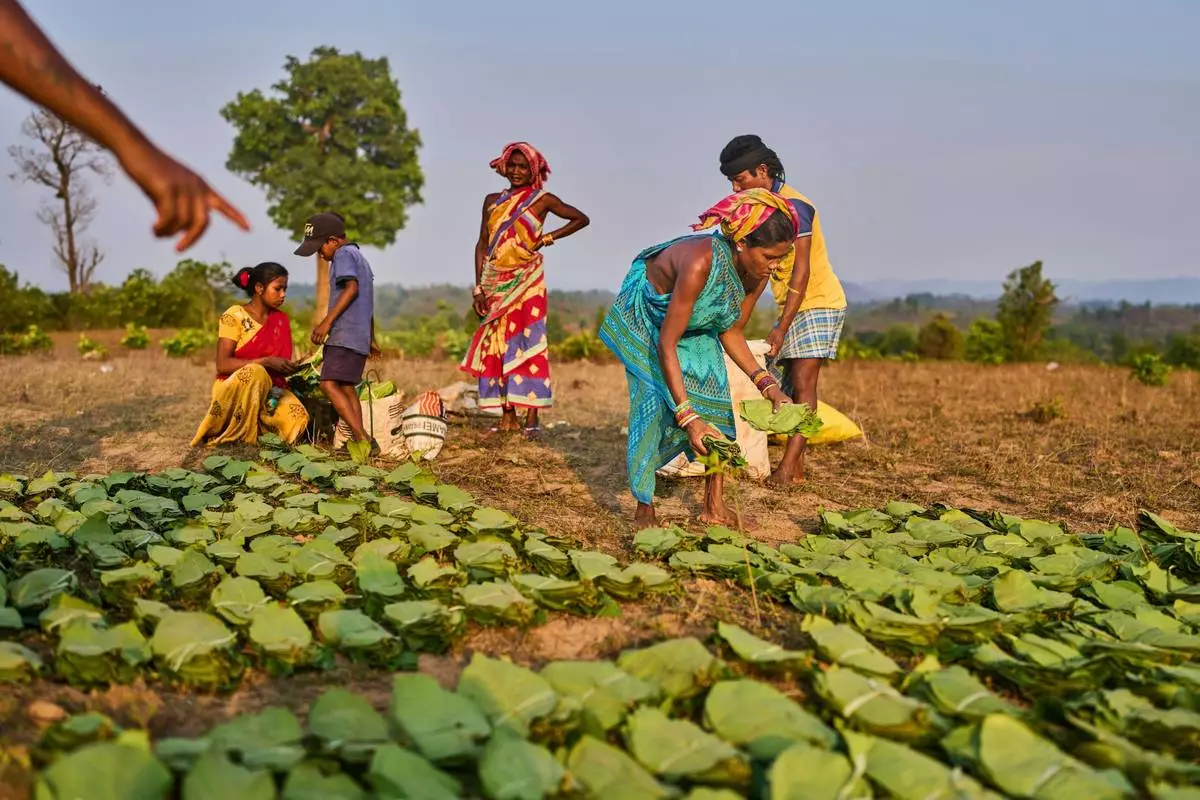
Members of the Gadaba Indigenous communities gather tendu leaves to sell April 16, 2025, in Hatipakna village, India. (AP Photo/Rafiq Maqbool, File)
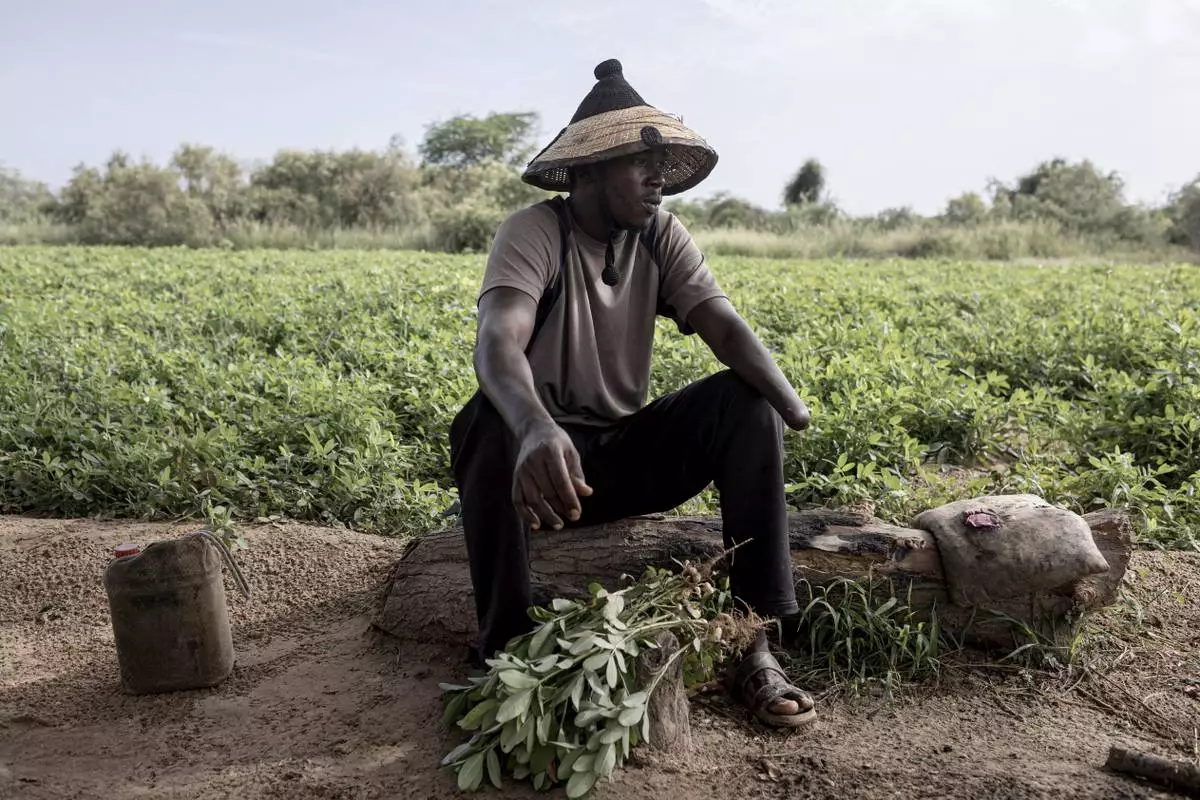
Mamadou Gueye, a 39-year-old farmer who lost his left hand after a fight with a herder over cattle in May 2022, guards his fields of peanuts Oct. 12, 2025, in Ross Bethio, Senegal. (AP Photo/Andrea Ferro)
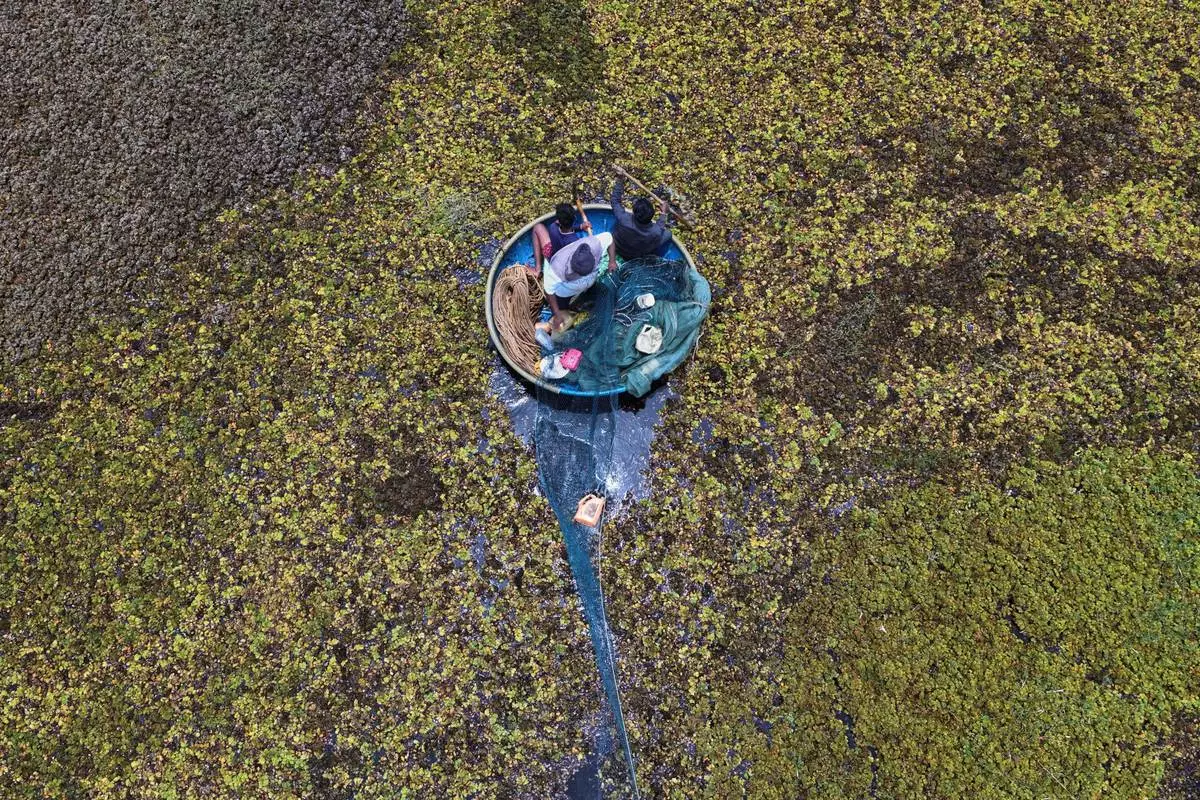
Fisherman Sunil Kumar, bottom, spreads a fishing net to help remove the weeds floating on Doddajala Lake, Aug. 23, 2025, on the outskirts of Bengaluru, India. (AP Photo/Aijaz Rahi, File)
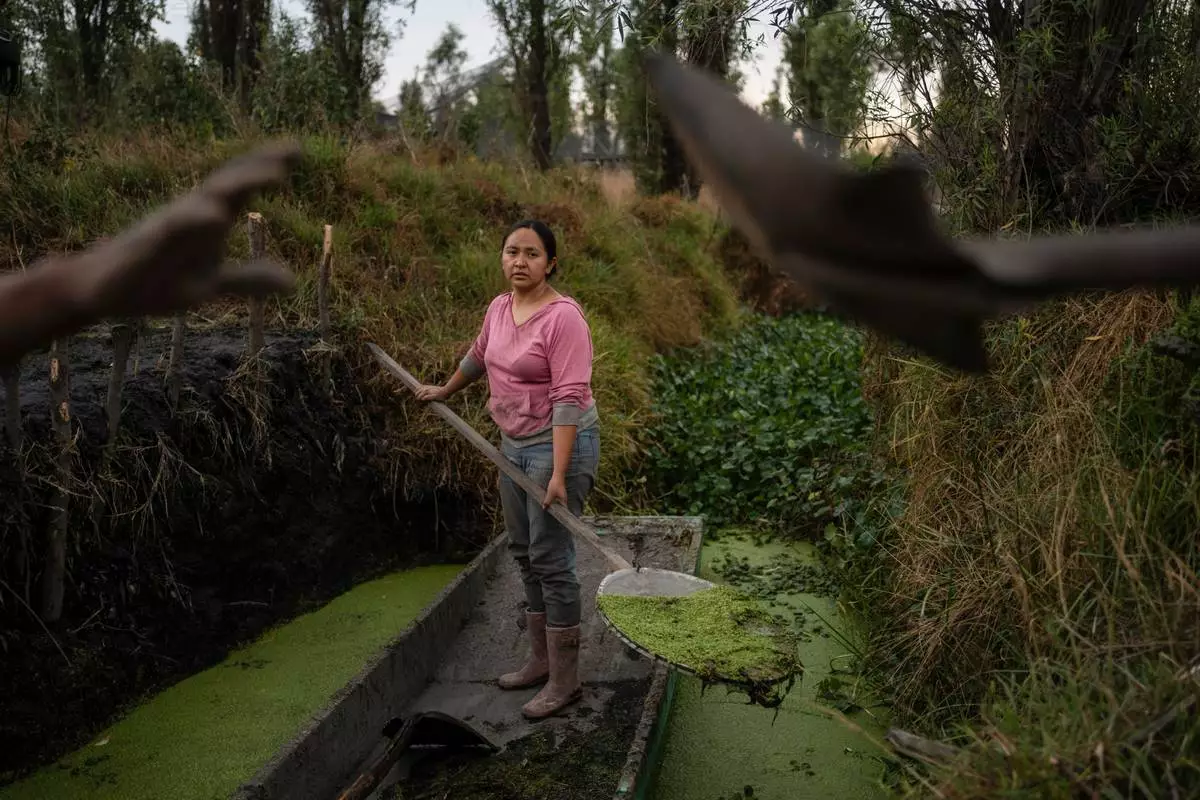
Cassandra Garduño cleans a canal in her chinampa, an island farm built by the Aztecs thousands of years ago May 8, 2025, in San Gregorio Atlapulco, a borough of Mexico City. (AP Photo/Felix Marquez, File)
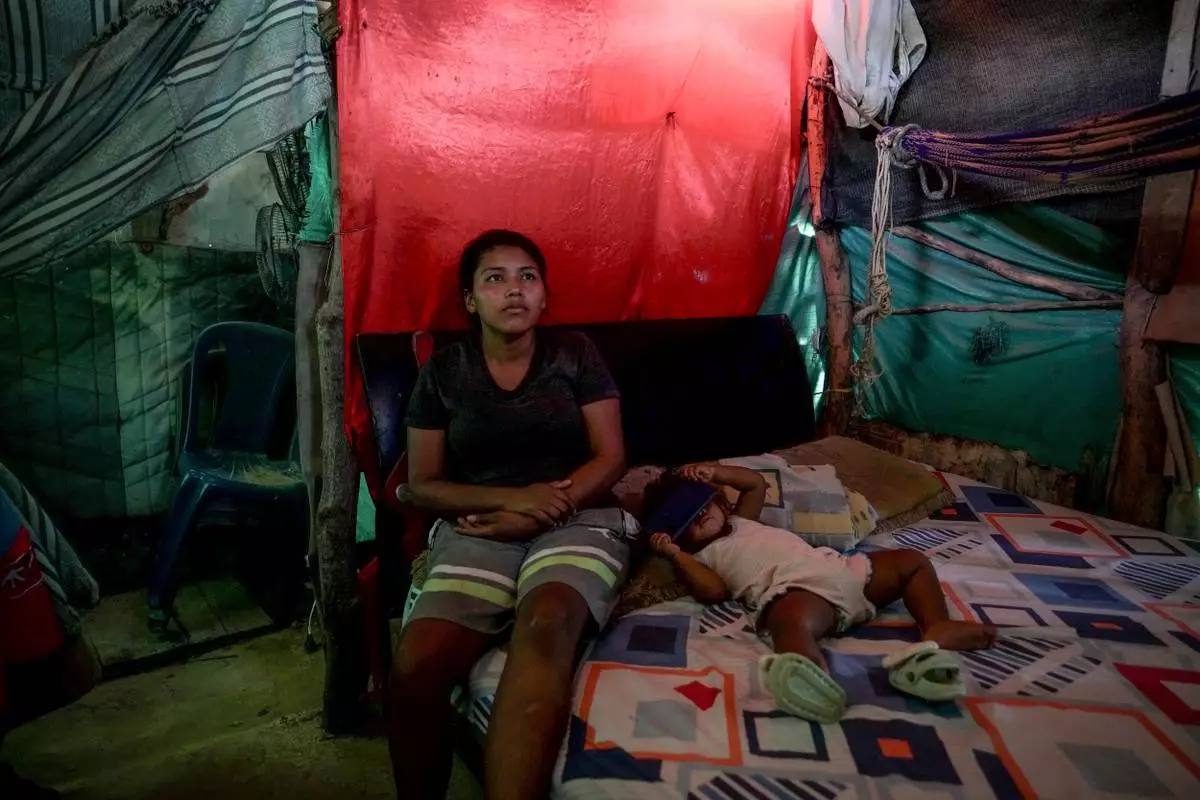
Luciane Mengual, 22, an Indigenous woman from the Wayuu community, poses with her baby at home Feb. 4, 2025, in the Villa del Sur neighborhood, on the outskirts of Riohacha, Colombia. (AP Photo/Ivan Valencia, File)
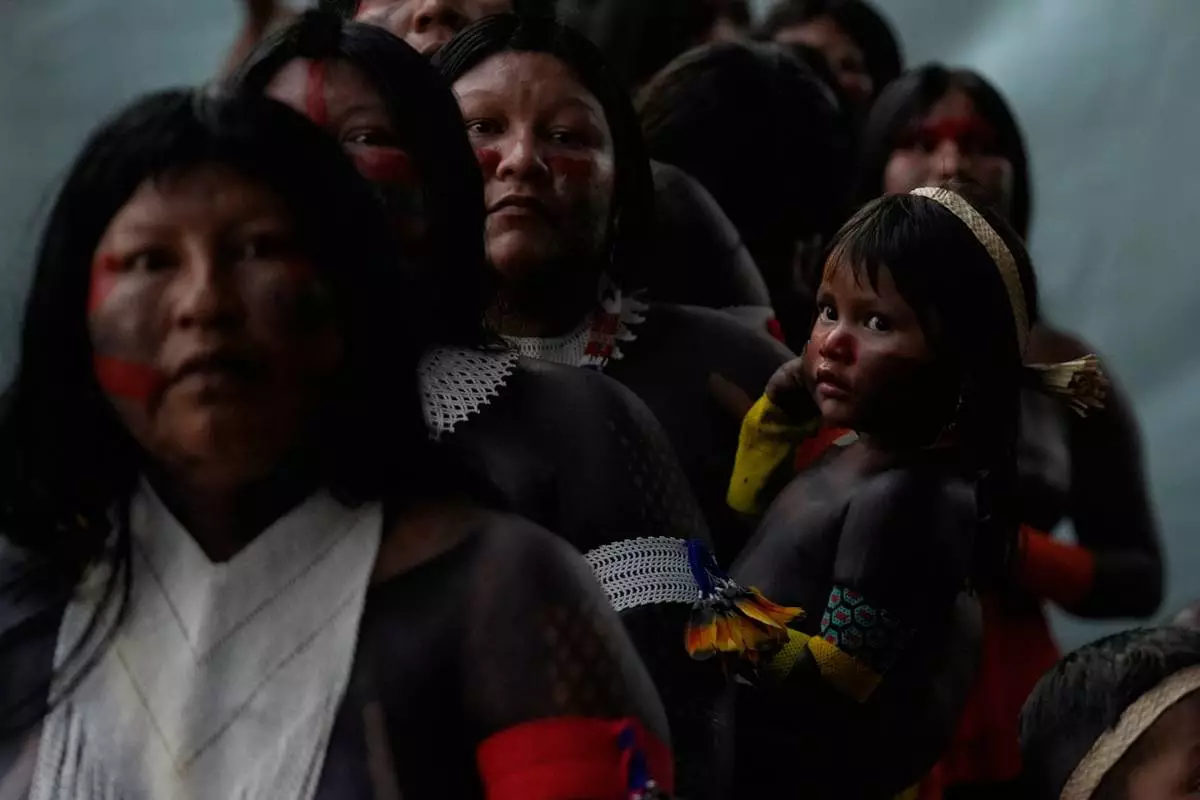
An Indigenous group attends the opening ceremony of the People's Summit offsite from the COP30 U.N. Climate Summit, Nov. 12, 2025, in Belem, Brazil. (AP Photo/Fernando Llano, File)
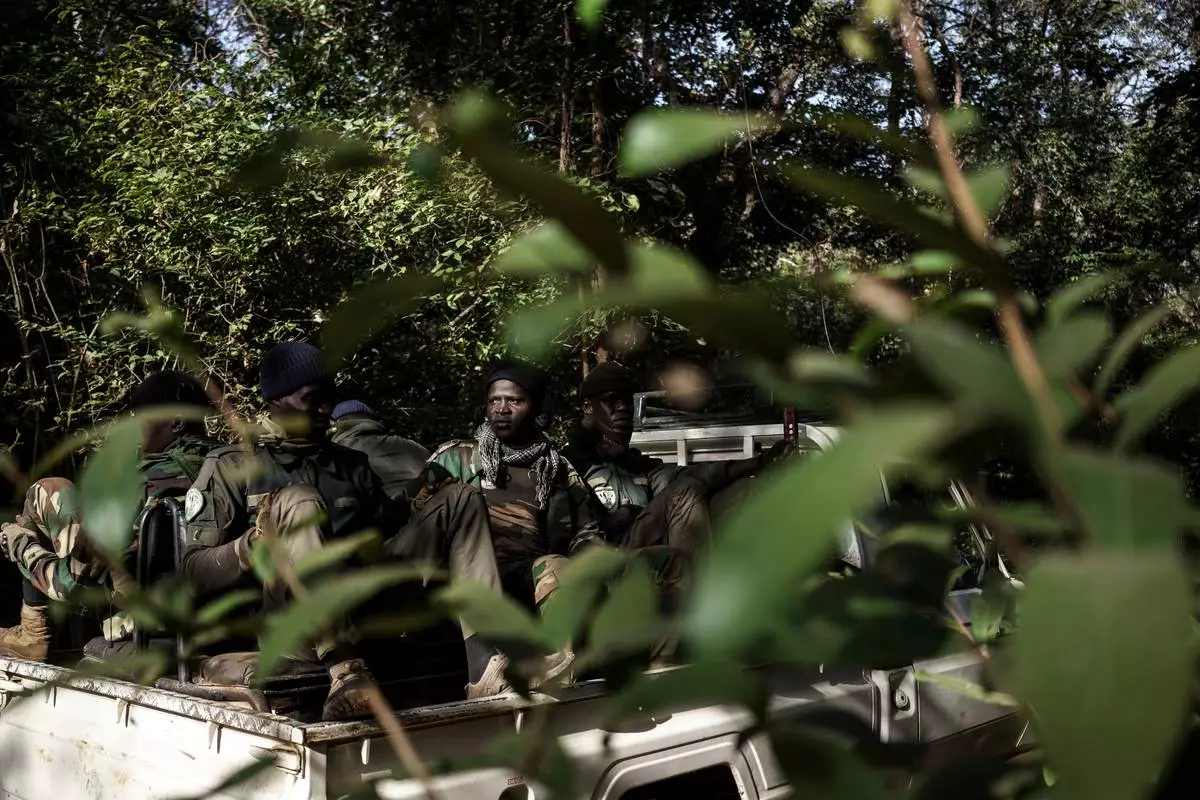
Members of the Lion Intervention Brigade conduct a patrol Jan. 14, 2025, at Niokolo Koba National Park, Senegal. (AP Photo/Annika Hammerschlag, File)
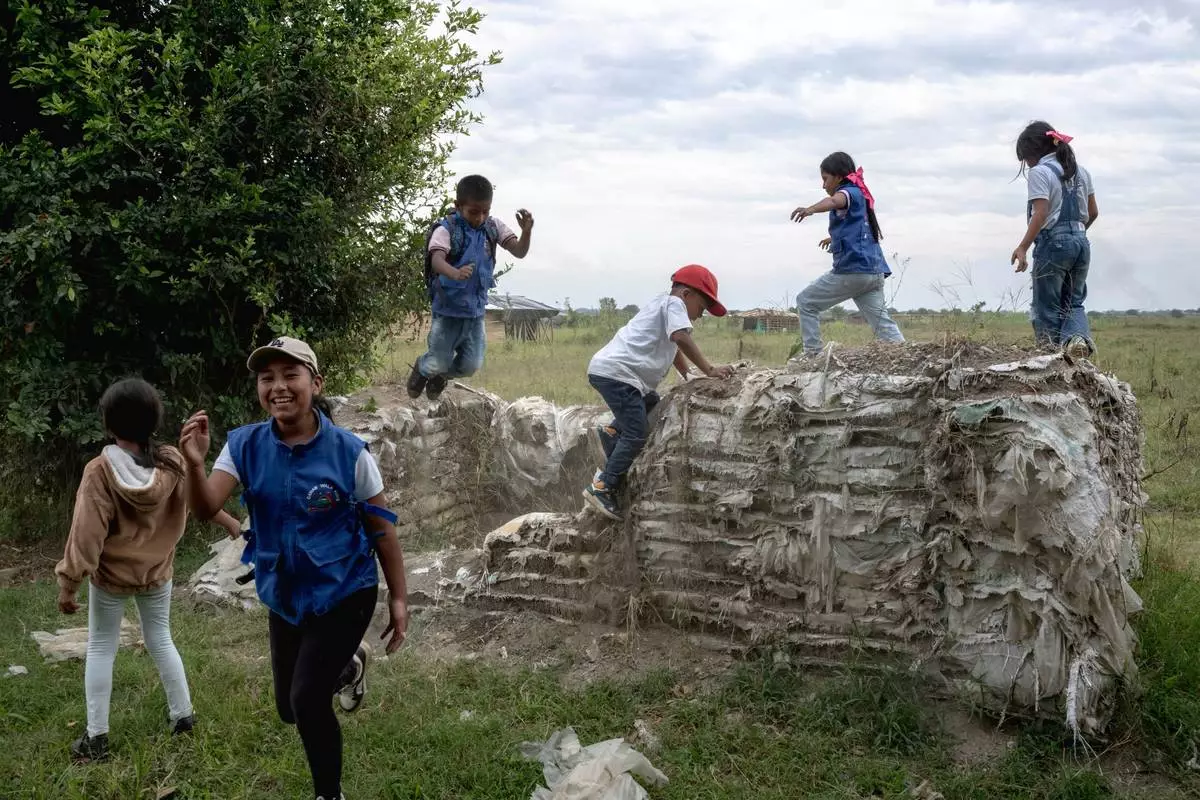
Young Indigenous guards play on the walls of an old military defense barrier made of sandbags, remnants of the military occupation in the area July, 19, 2025, in the Lopez Adentro reserve in Caloto, Colombia. (AP Photo/Nadège Mazars, File)
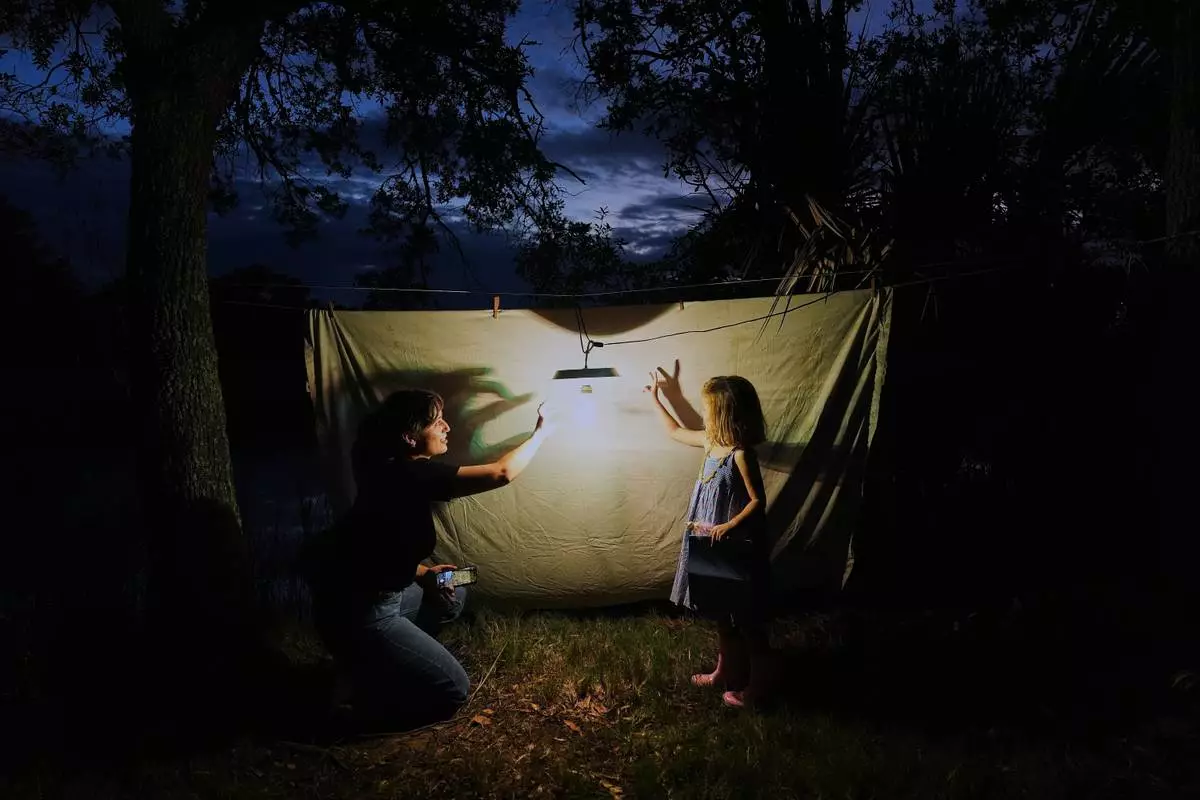
Schuyler Clogston, left, makes shadows puppets with Agnes Suárez after setting up a sheet and light to attract moths for observation Oct. 7, 2025, in Charleston, S.C. (AP Photo/Joshua A. Bickel, File)
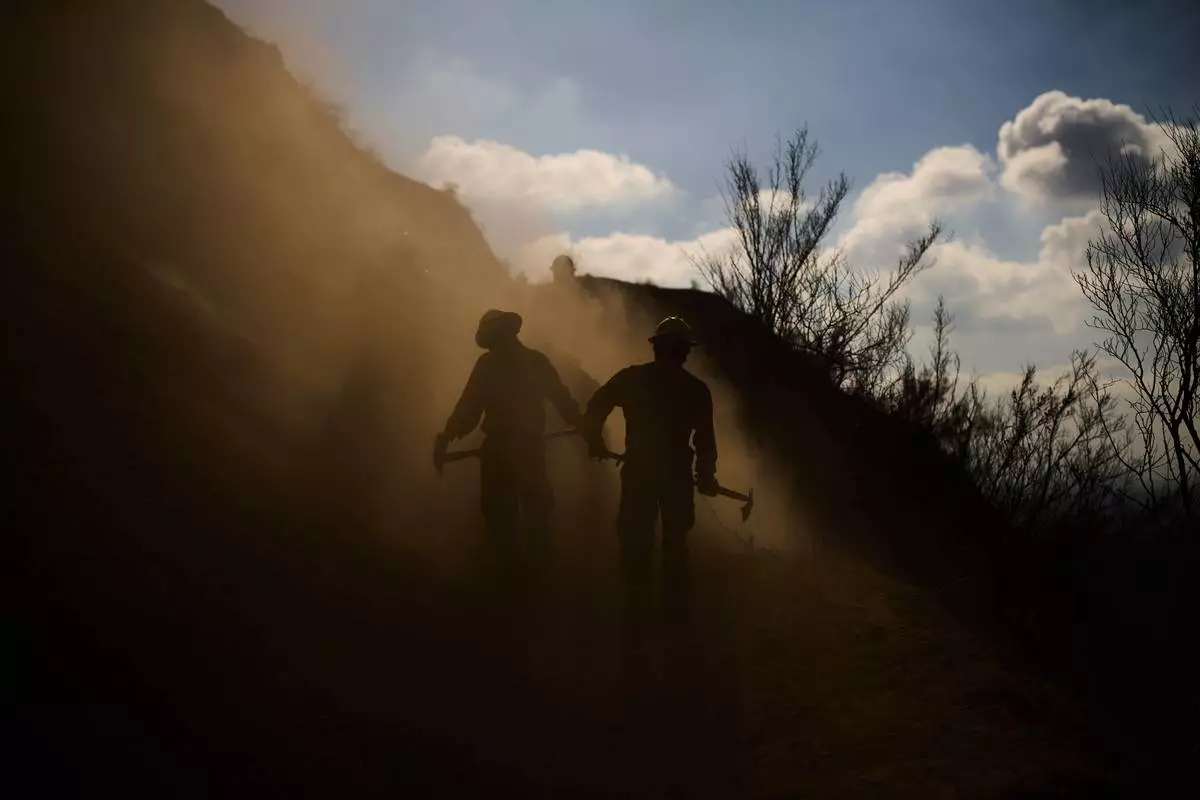
Members of the Navajo Scouts firefighter crew kick up dust as they clear debris from a landslide across a road on a hillside as they battle the Eaton Fire, Jan. 17, 2025, in Altadena, Calif. (AP Photo/John Locher, File)
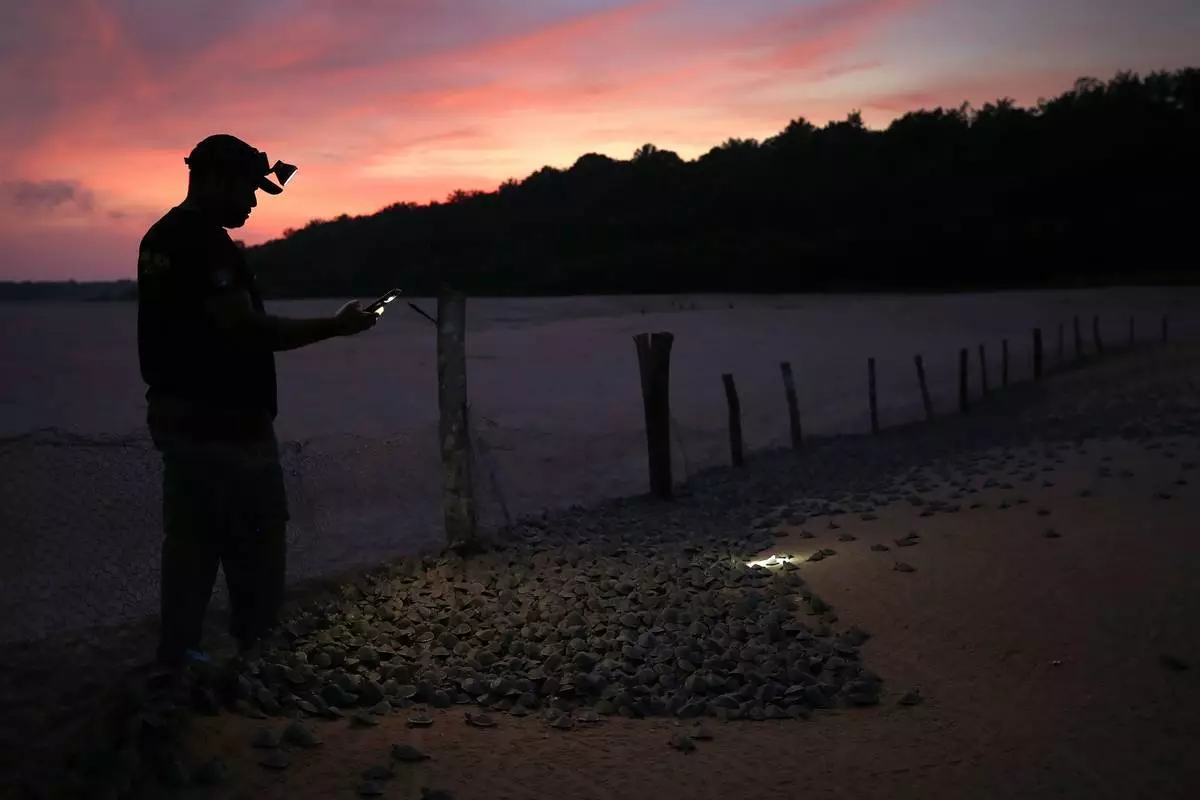
An environmental agent of the Chico Mendes Institute takes photos of turtle hatchlings Nov. 17, 2025, at the Abufari Biological Reserve in Tapaua, Brazil. (AP Photo/Edmar Barros, File)
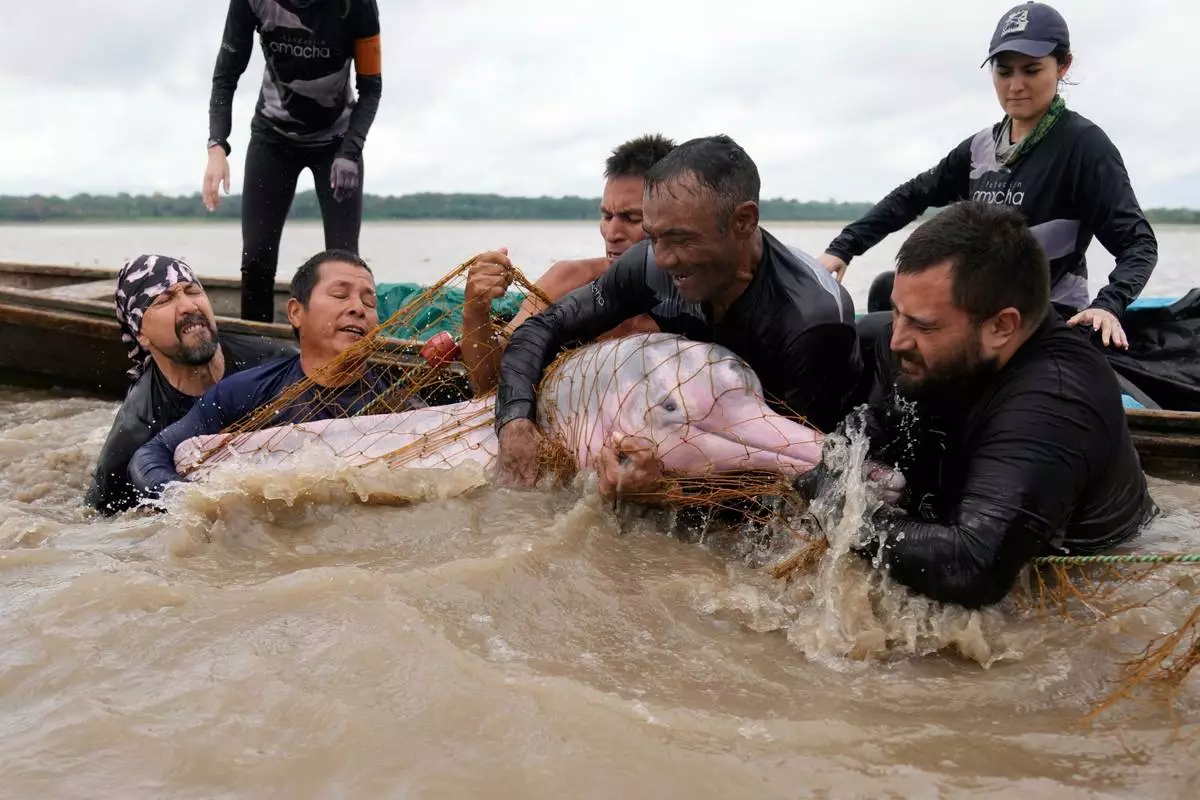
Scientists and veterinarians capture a pink river dolphin in the Amazon River to perform health checks Sept. 7, 2025, in Puerto Narino, Colombia. (AP Photo/Fernando Vergara, File)
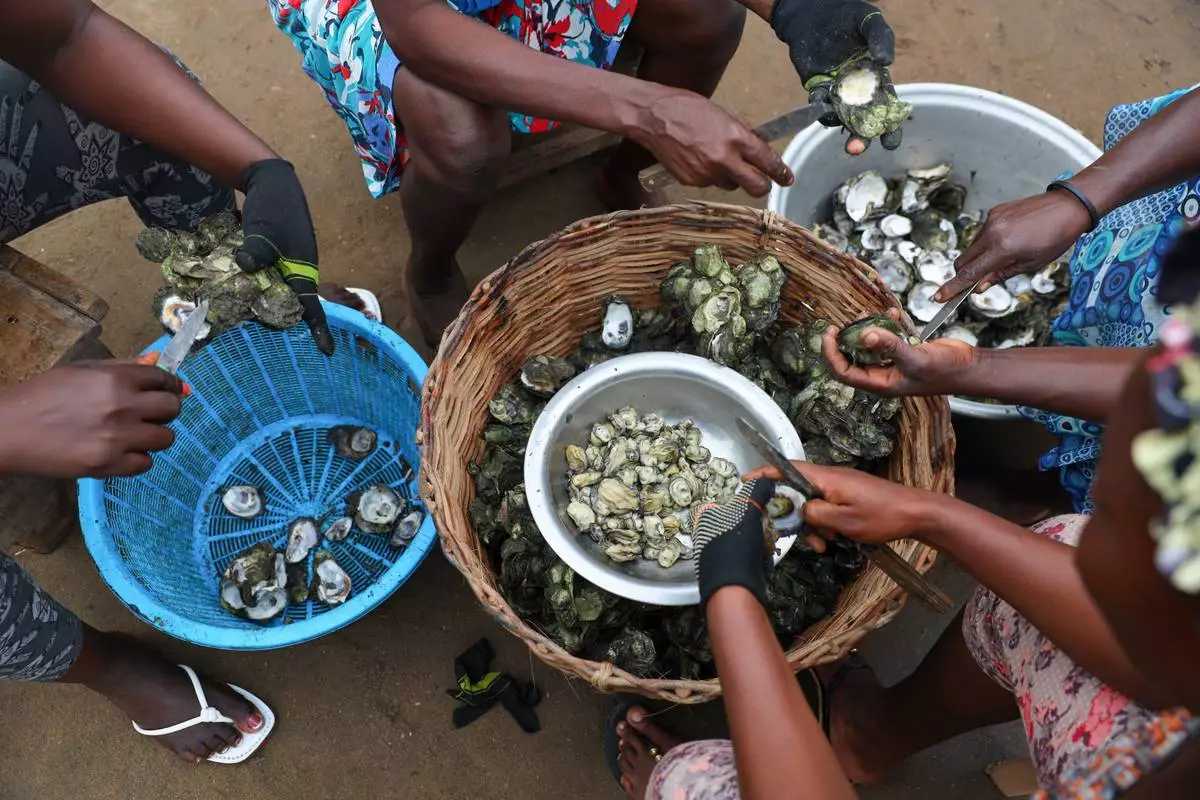
Women open freshly cooked oysters Aug. 6, 2025, in Tsokomey, Ghana. (AP Photo/Misper Apawu, File)
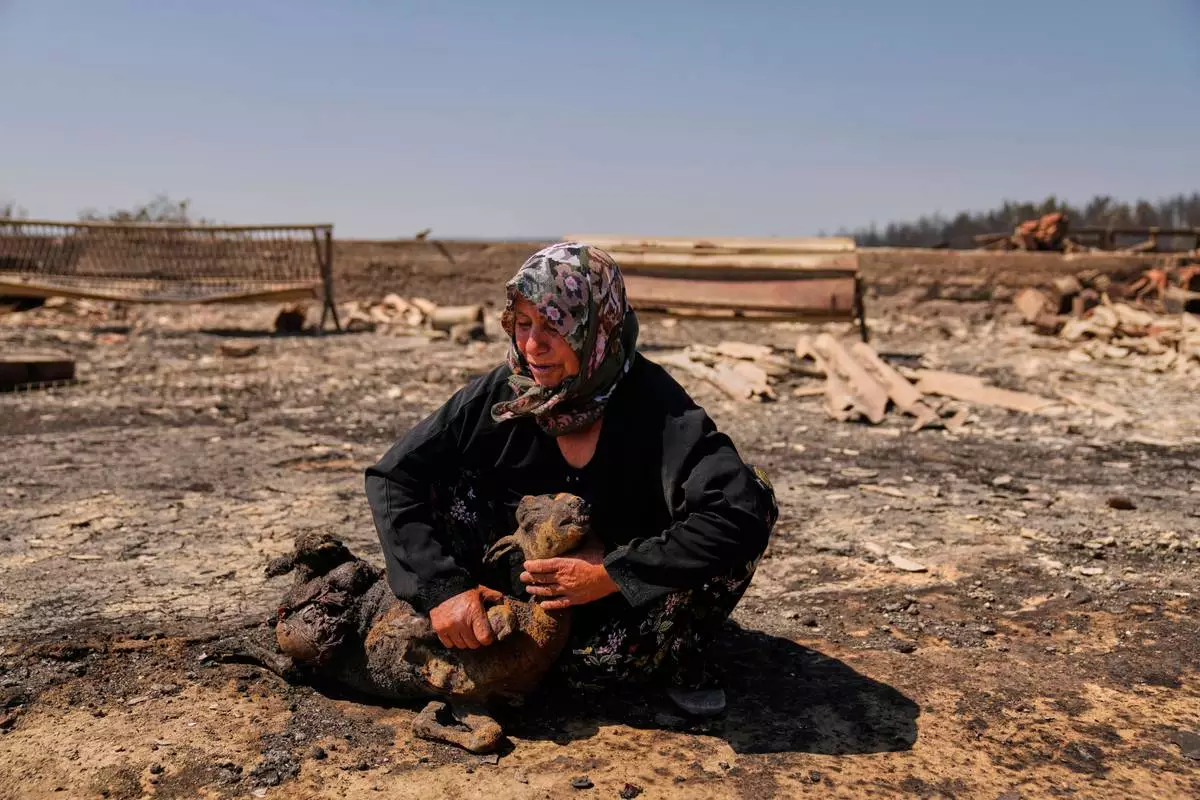
Local farmer Turkan Ozkan, 64, cries next to one of her animals killed during a fire Aug. 12, 2025, in Guzelyeli, Turkey. (AP Photo/Khalil Hamra, File)
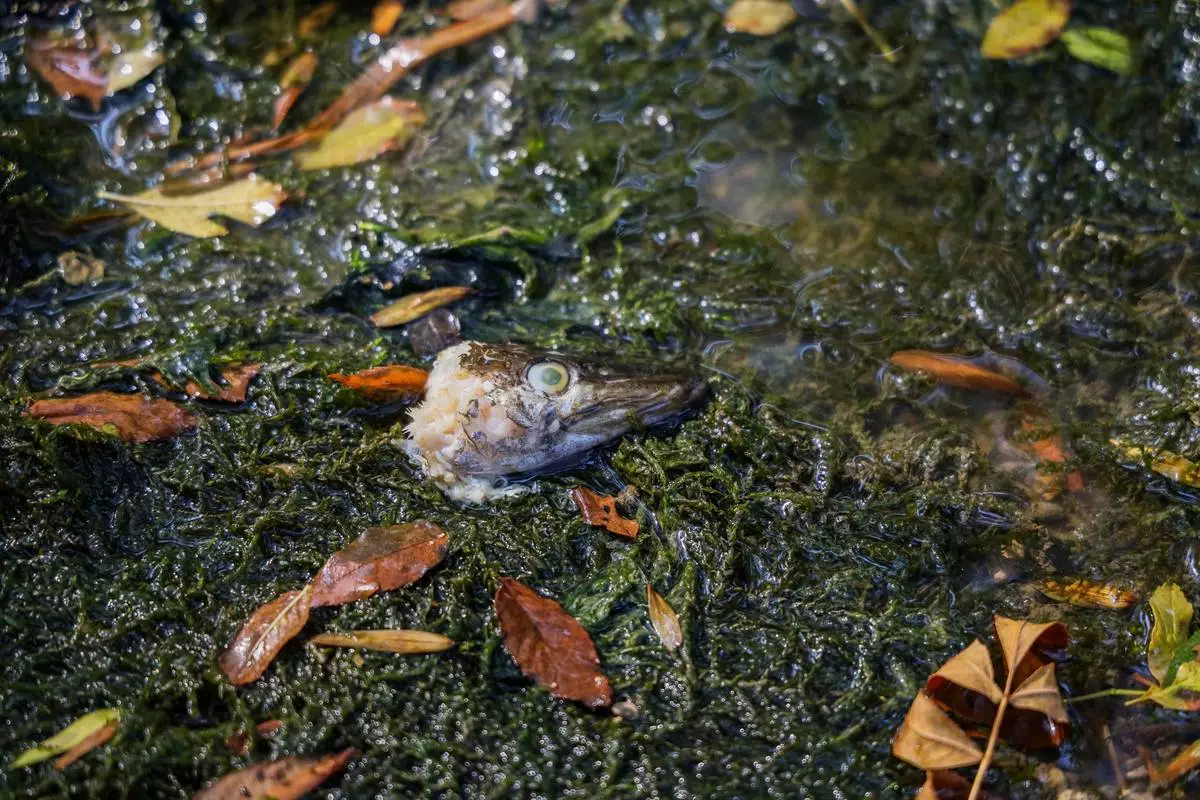
The head of a dead fish lies in the almost dry Aume River, Aug. 14, 2025, in Saint-Fraigne, France. (AP Photo/Yohan Bonnet, File)
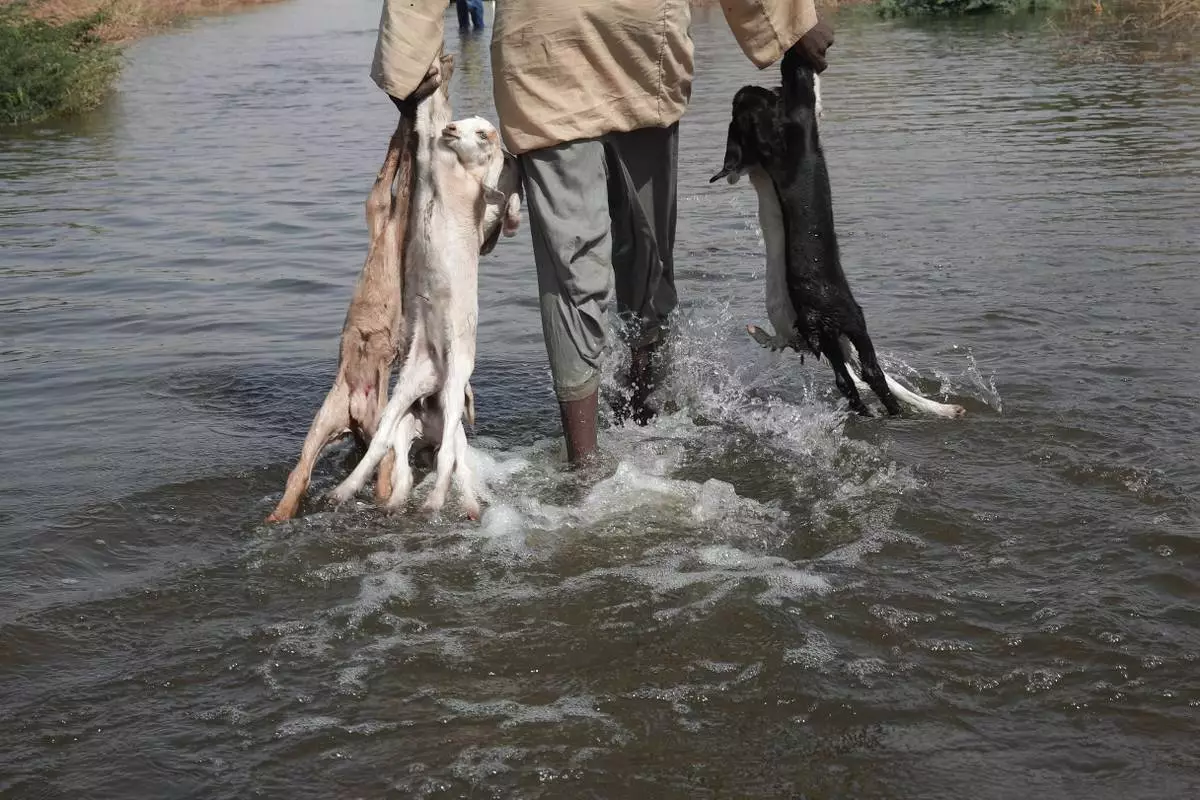
A Sudanese farmer carries his livestock after his farm was destroyed by floods Oct. 1, 2025, in Wad Ramli village, Sudan. (AP Photo/Marwan Ali, File)
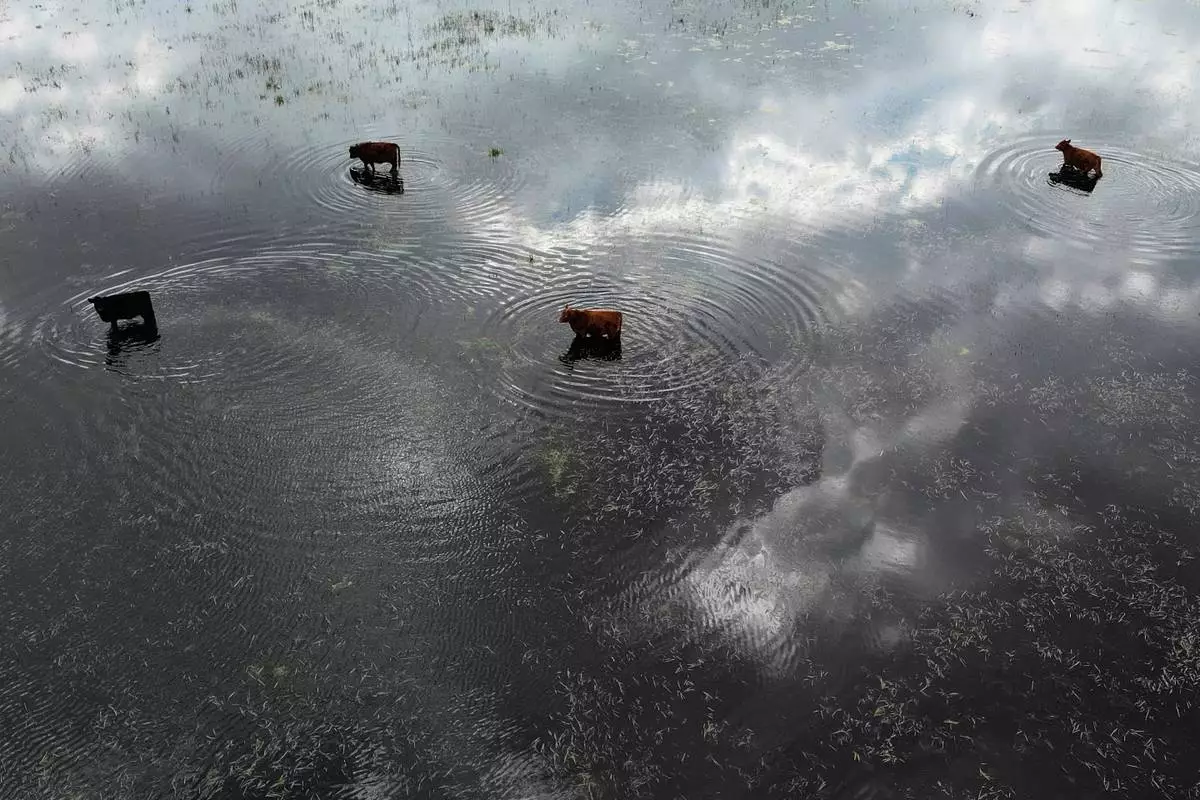
Cows stand in floodwaters at a farm July 25, 2025, in Buenos Aires province, Argentina. (AP Photo/Natacha Pisarenko, File)

Baby ostriches huddle after being moved into a barn following recent flooding July 9, 2025, at a farm in Bend, Texas. (AP Photo/Joshua A. Bickel, File)
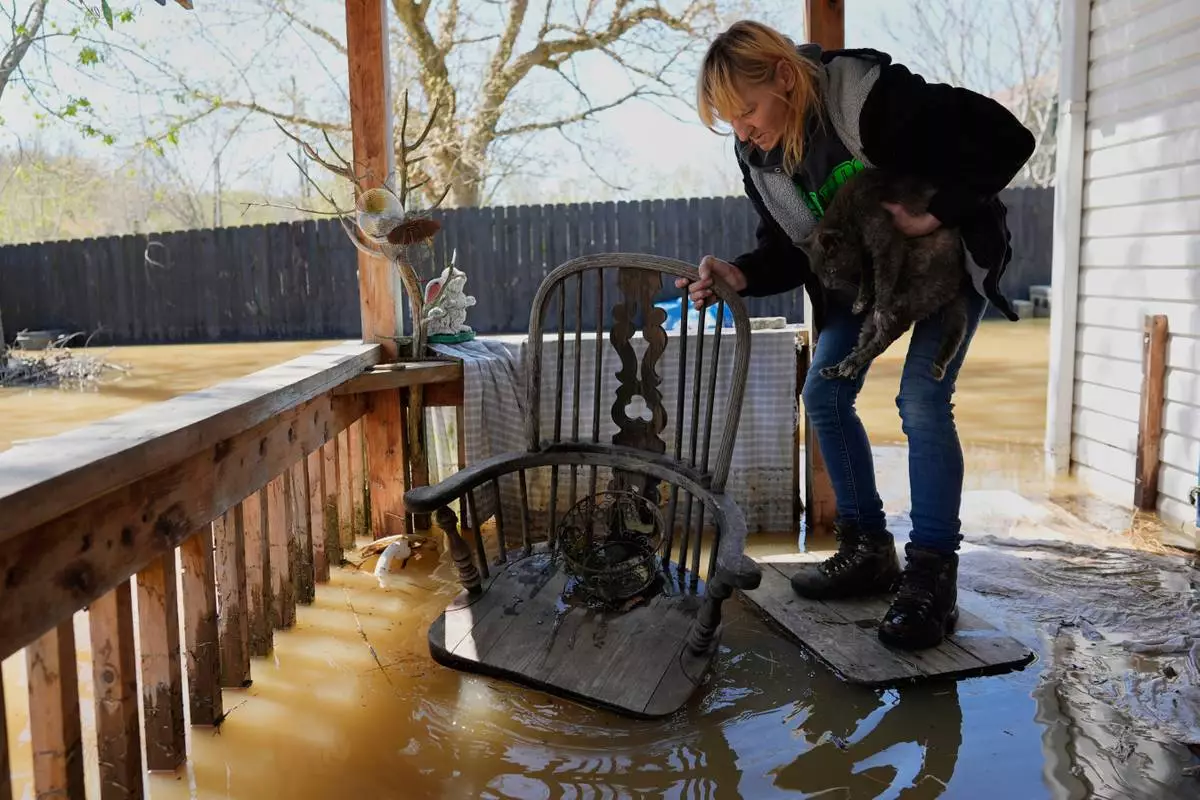
Wanona Harp rescues a cat stranded on her neighbor's porch flooded by the Kentucky River, April 8, 2025, in Lockport, Ky. (AP Photo/Carolyn Kaster, File)
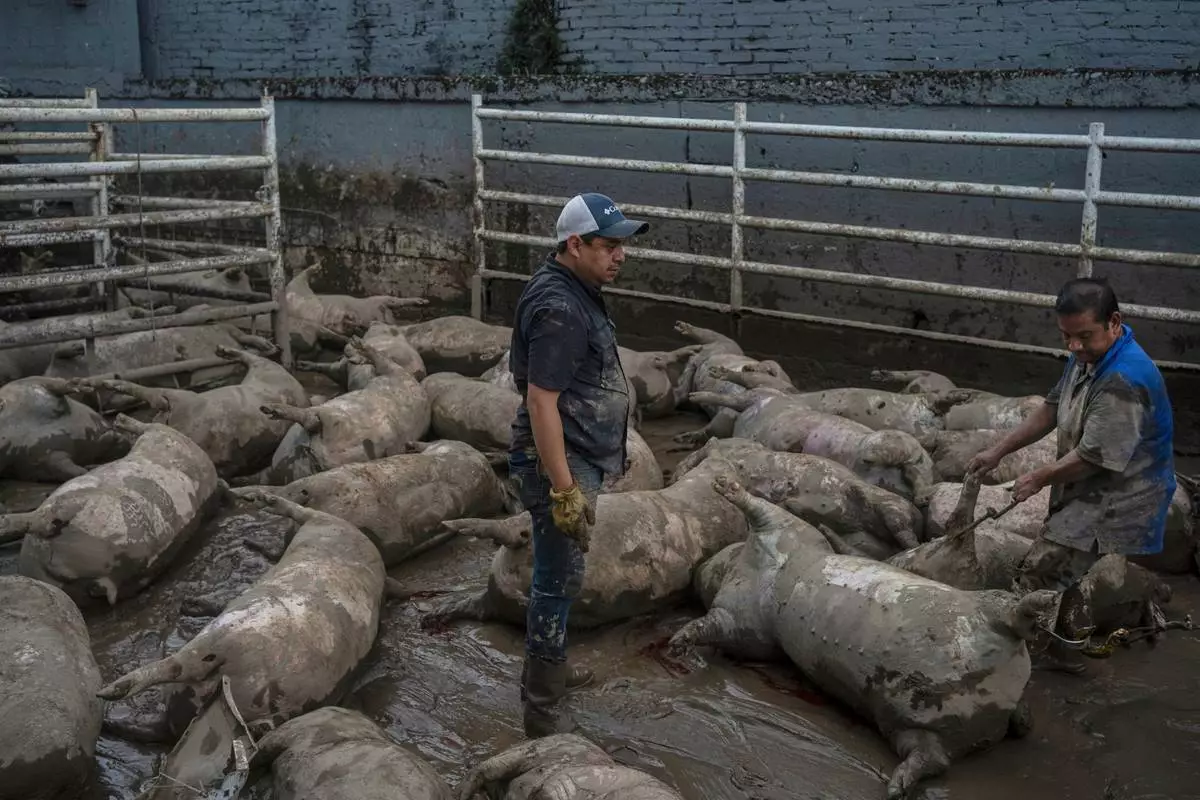
Arturo Huidobro, center, and a worker prepare to remove dead pigs from a farm following heavy rainfall Oct. 11, 2025, in Poza Rica, Mexico. (AP Photo/Felix Marquez, File)
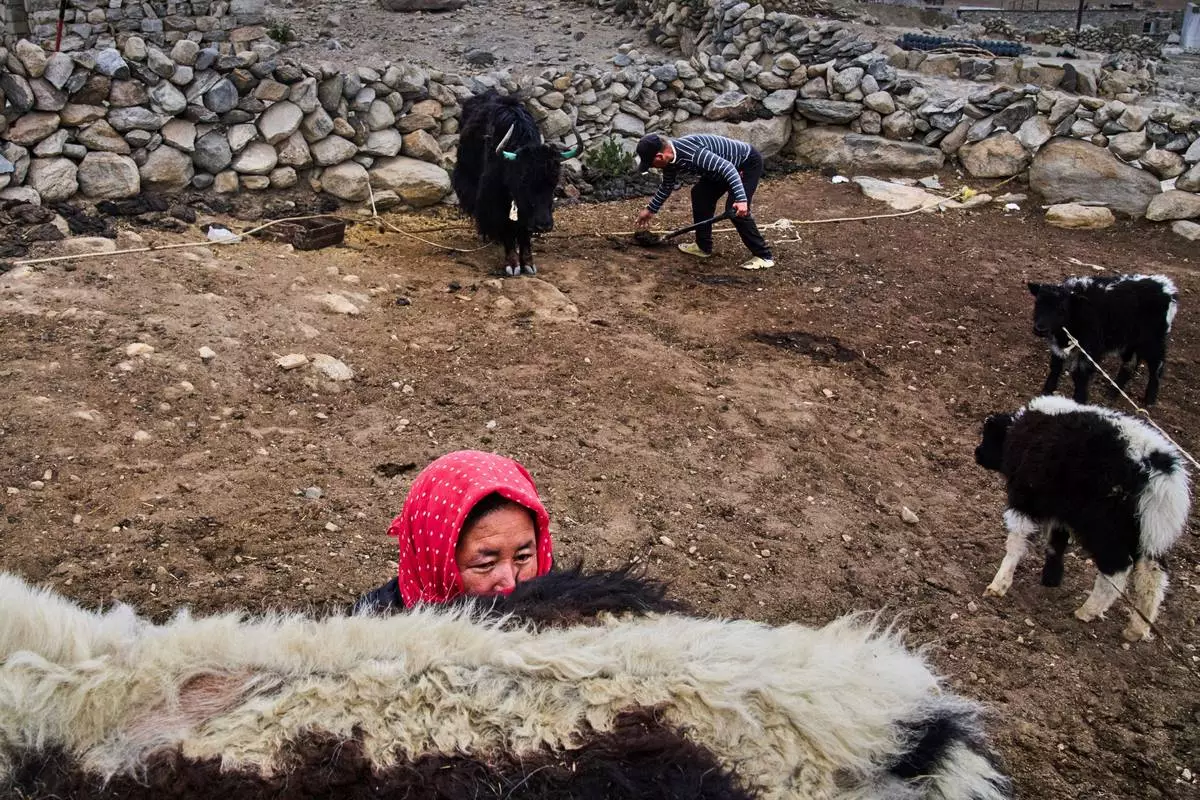
Tanzin Dolma milks a yak as her husband, Punchuk Namdol, collects dung in the background on an early morning July 8, 2025, in Maan village, Ladakh, India. (AP Photo/Dar Yasin, File)
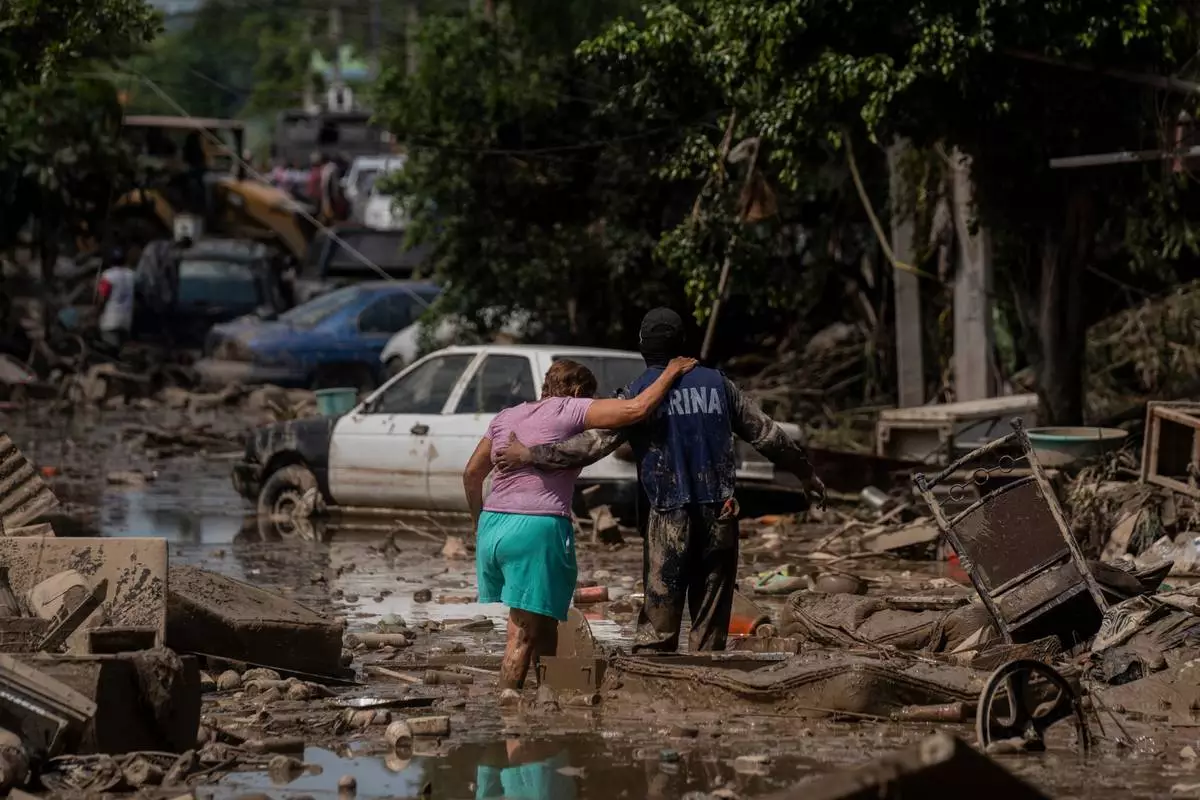
A Navy officer helps a woman cross a flooded street Oct. 12, 2025, in Poza Rica, Veracruz state, Mexico. (AP Photo/Felix Marquez, File)
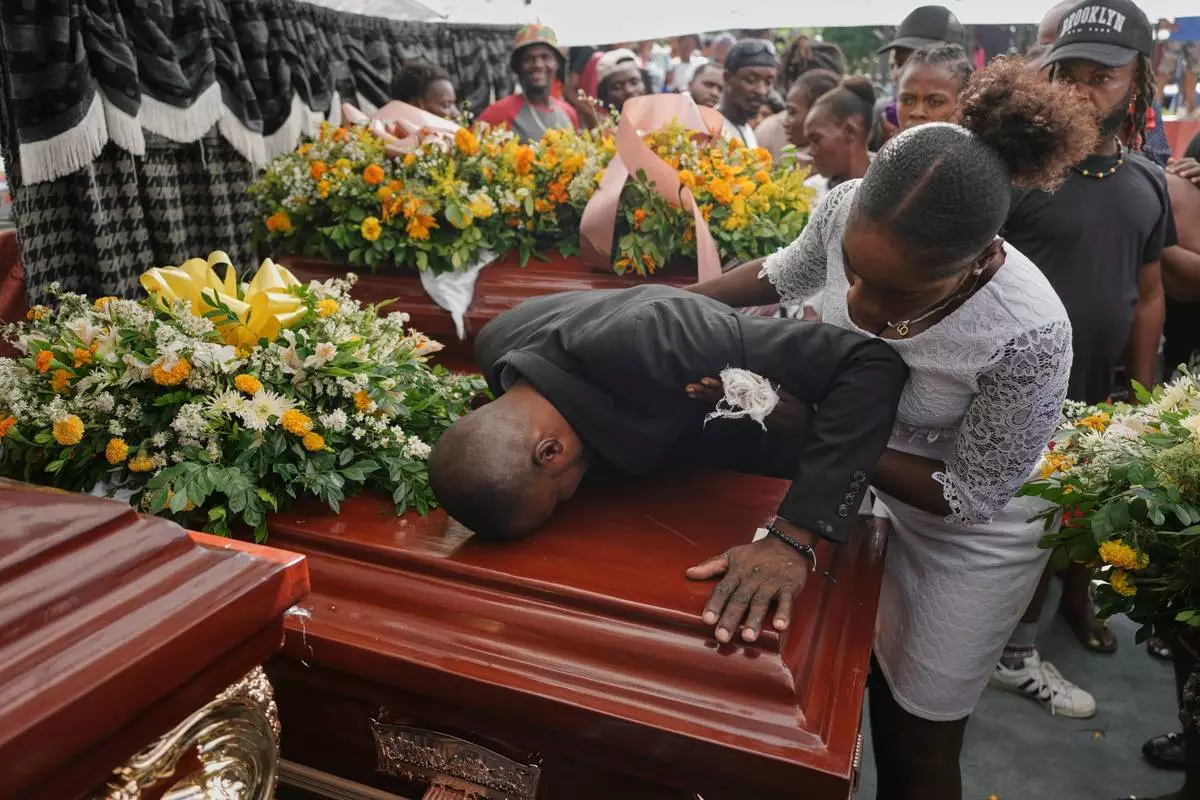
Relatives of Rosiclaire Lenchise mourn during a funeral of victims killed by a landslide triggered by Hurricane Melissa, Nov. 15, 2025, in Petit Goave, Haiti. (AP Photo/Odelyn Joseph, File)
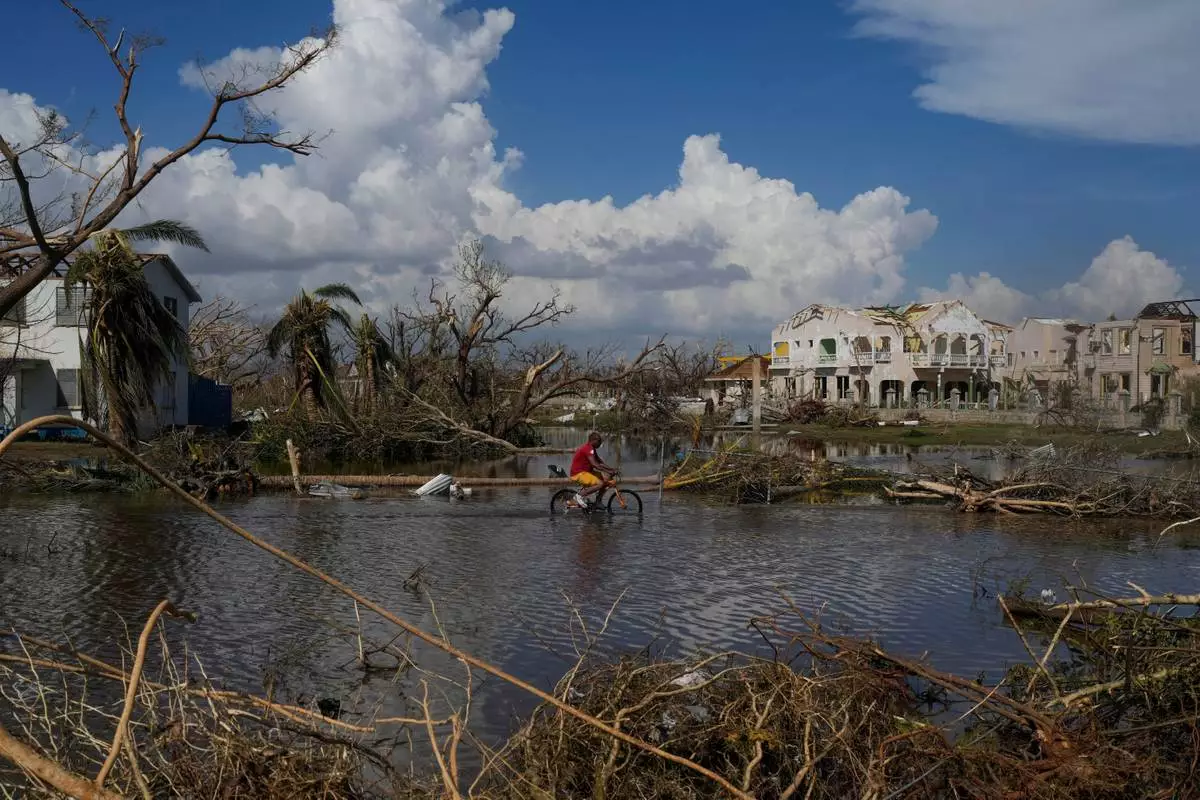
A man rides his bicycle through an inundated street during the aftermath of Hurricane Melissa, Oct. 30, 2025, in Black River, Jamaica. (AP Photo/Matias Delacroix, File)
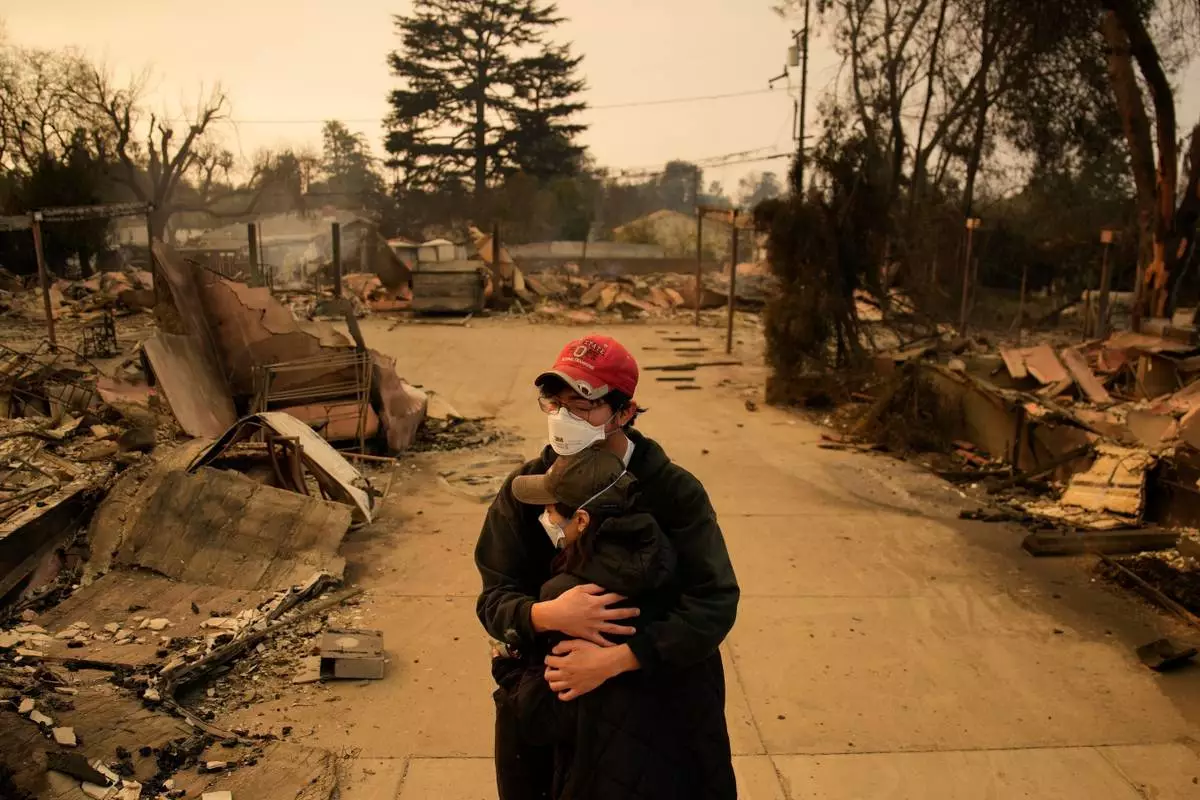
Ari Rivera, rear, and Anderson Hao hold each other in front of their destroyed home Jan. 9, 2025, in Altadena, Calif. (AP Photo/John Locher, File)
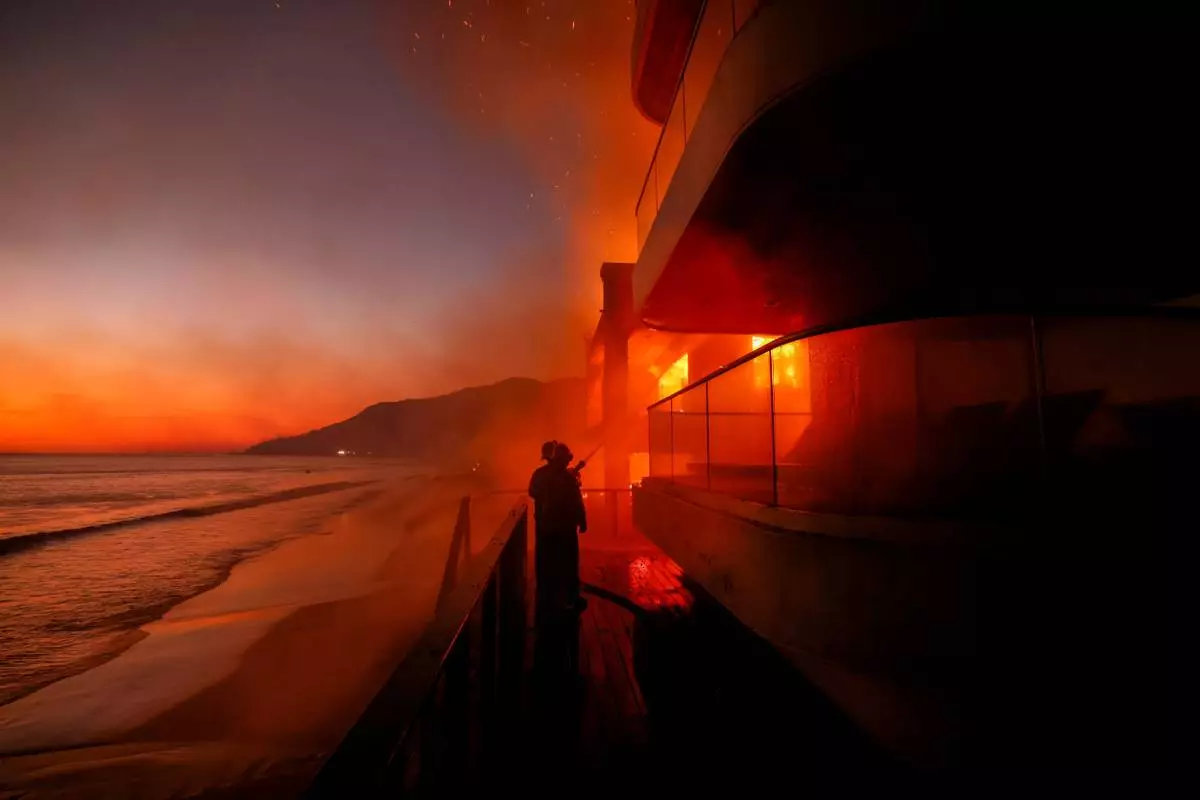
Firefighters work from a deck as the Palisades Fire burns a beachfront property Jan. 8, 2025, in Malibu, Calif. (AP Photo/Etienne Laurent, File)
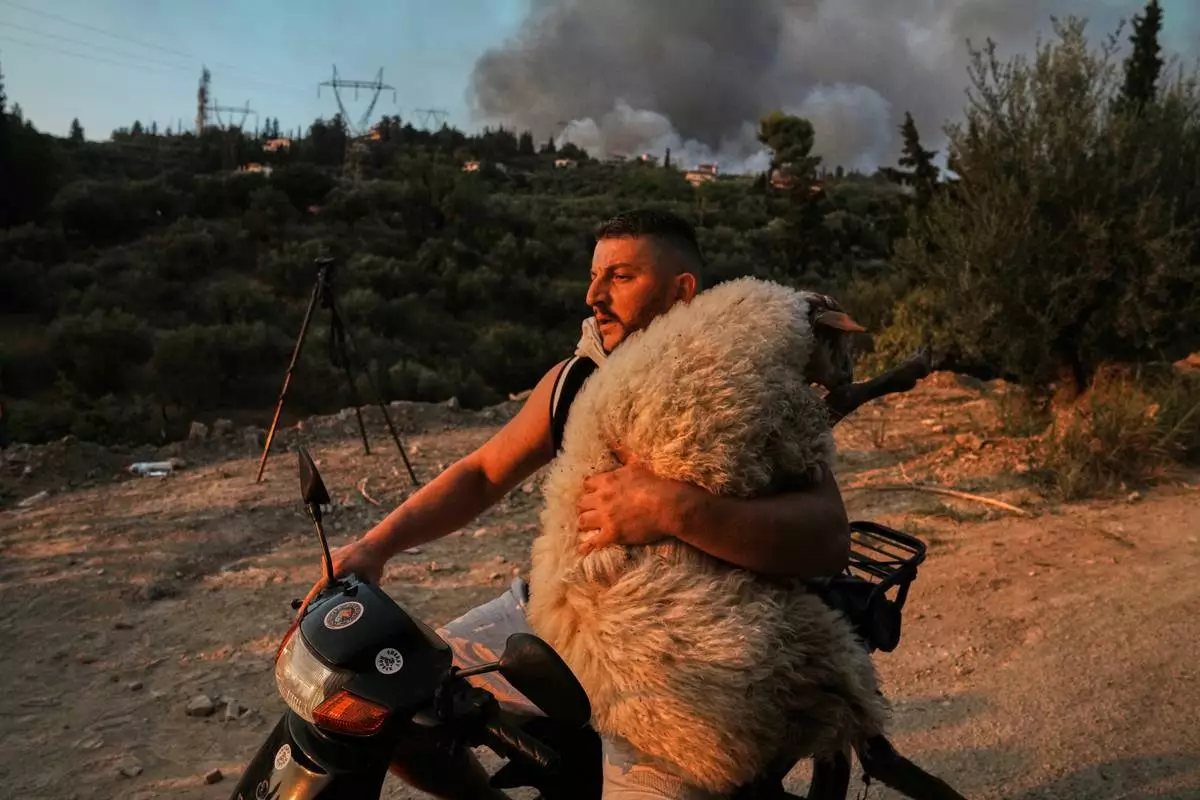
Olsjen Mucobega, 32, uses his motorcycle to evacuate a sheep from a wildfire Aug. 13, 2025, in Patras, Greece. (AP Photo/Thanassis Stavrakis, File)
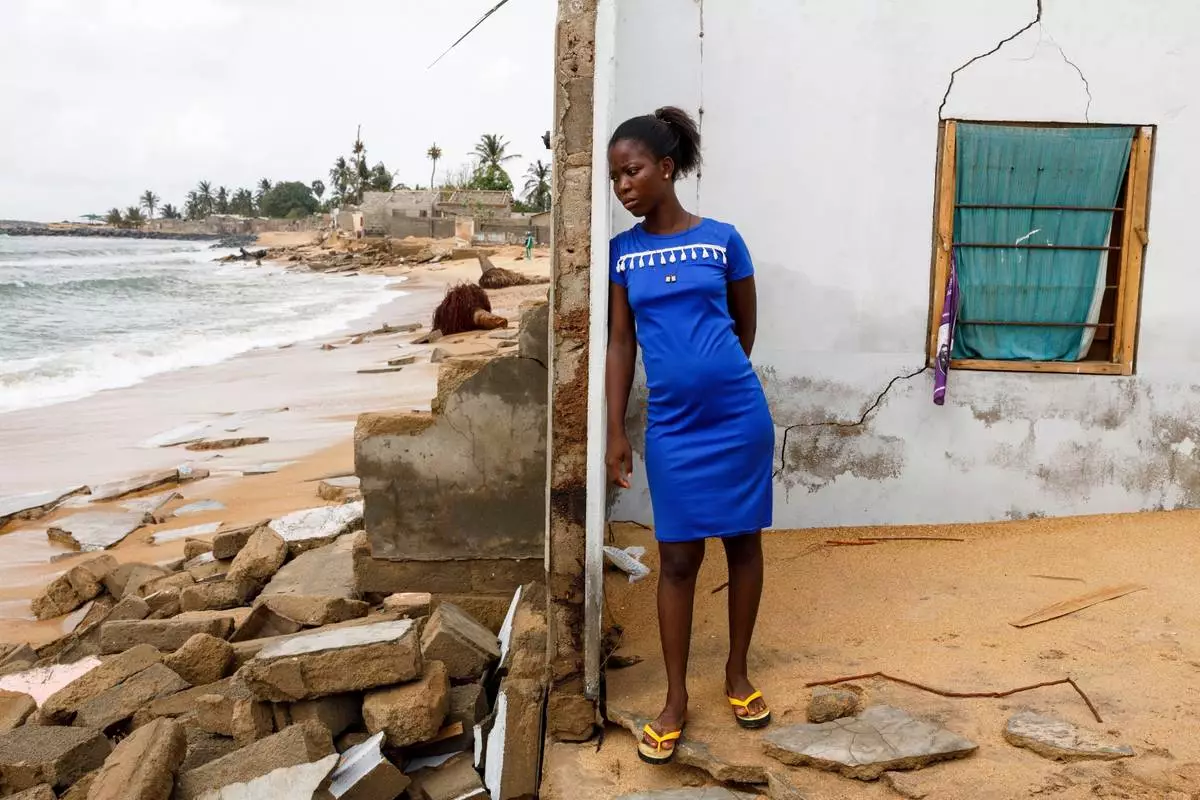
Afeli Bernice Adzo leans against the remains of her father's room as she looks at the ocean that destroyed her family home March 5, 2025, in Avegadzi, Ghana. (AP Photo/Misper Apawu, File)
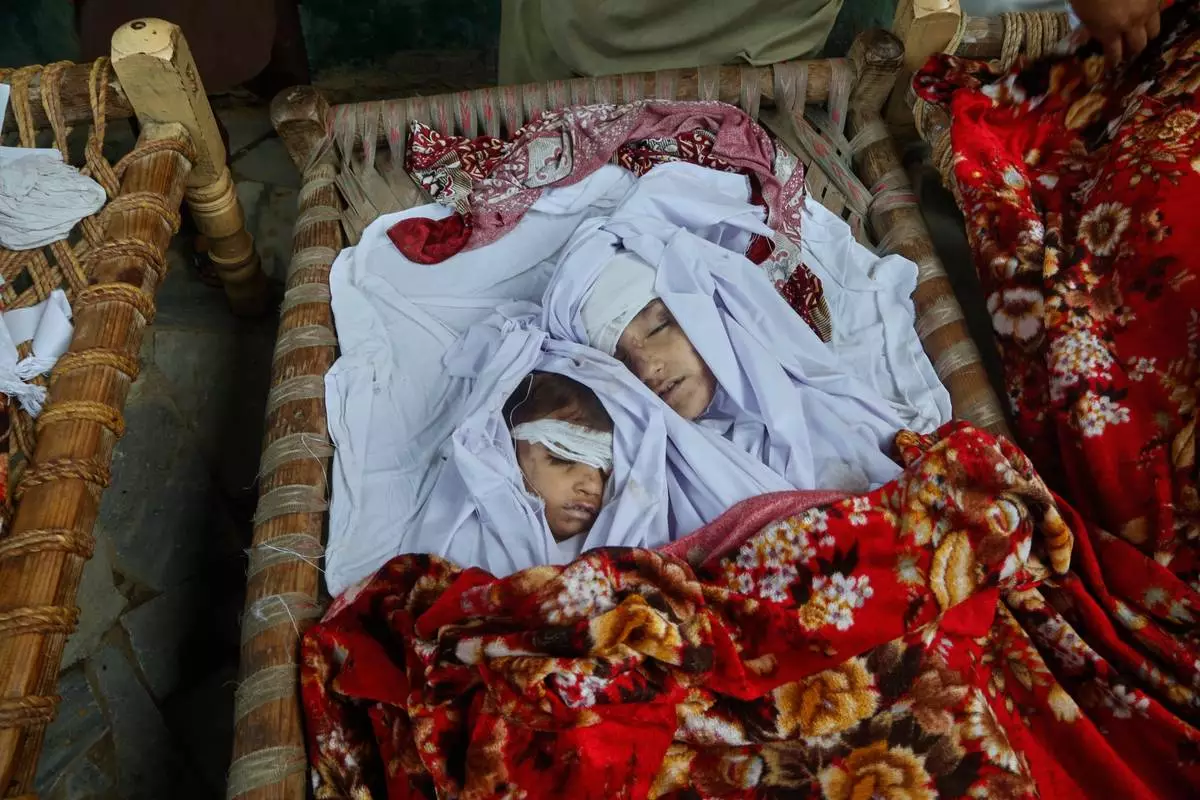
Bodies of children killed in flash flooding lie at a home Aug. 16, 2025, near Pir Baba, Buner district, Pakistan. (AP Photo/Muhammad Sajjad, File)
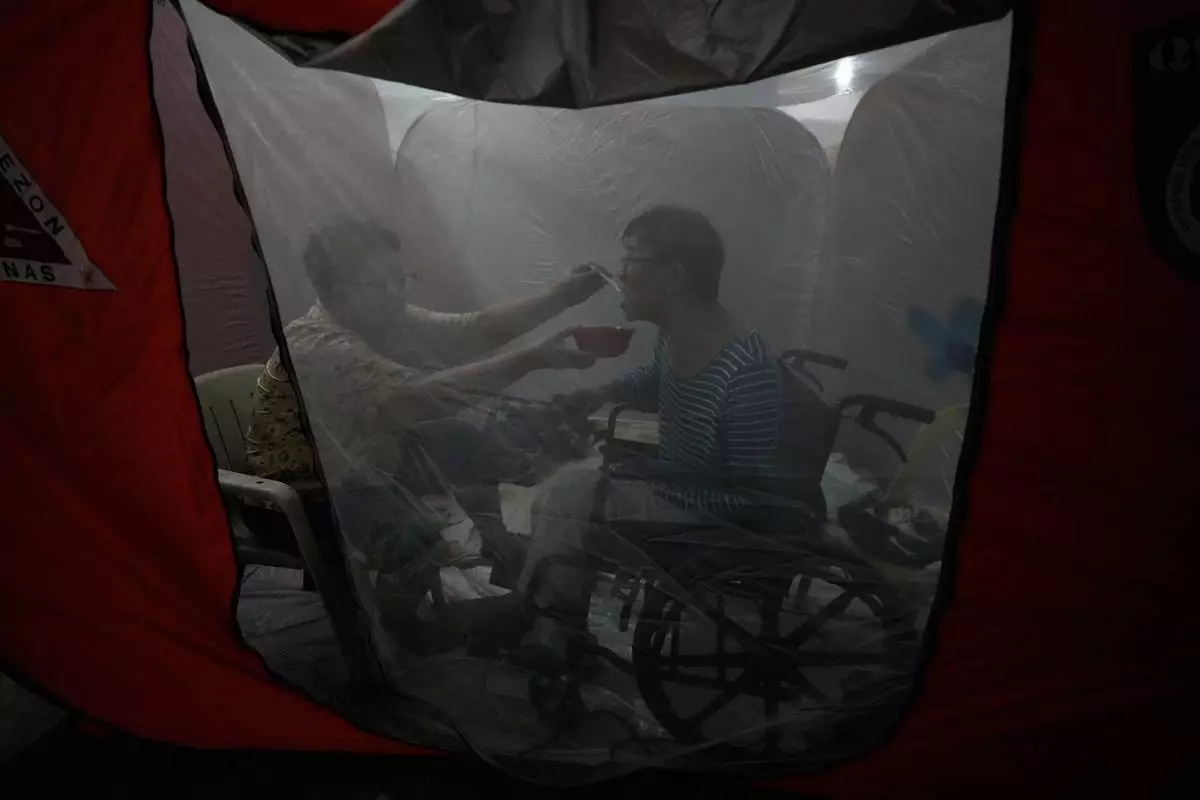
Judy Bertuso, left, feeds her husband Apollo inside a tent at an evacuation center as Typhoon Fung-wong enters the country Nov. 9, 2025, in Quezon city, Philippines. (AP Photo/Aaron Favila, File)

Joe Chyuwei, right, Addison Black, front center, James Black, front left, and back row from left, Helen Chyuwei, Jameson Black, Grace Chyuwei and Grayson Black watch the sunset in the heat at Zabriskie Point, Aug. 3, 2025, in Death Valley National Park, Calif. (AP Photo/John Locher, File)