COPENHAGEN, Denmark (AP) — The United States is using its economic power to “assert its will" and threaten military force against friend and foe alike, a Danish intelligence agency said in a new report.
The Danish Defense Intelligence Service, in its latest annual assessment, said Washington's greater assertiveness under the Trump administration also comes as China and Russia seek to diminish Western, especially American, influence.
Perhaps most sensitive to Denmark — a NATO and European Union member country, and a U.S. ally — is growing competition between those great powers in the Arctic. U.S. President Donald Trump has expressed a desire to see Greenland, a semiautonomous and mineral-rich territory of Denmark, become part of the United States, a move opposed by Russia and much of Europe.
“The strategic importance of the Arctic is rising as the conflict between Russia and the West intensifies, and the growing security and strategic focus on the Arctic by the United States will further accelerate these developments,” said the report, published Wednesday.
The assessment also follows the release last week of a new Trump administration national security strategy that depicts European allies as weak and aims to reassert America’s dominance in the Western Hemisphere.
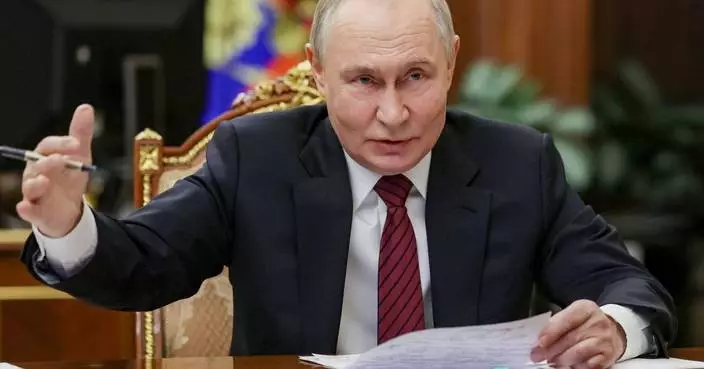
Russian President Vladimir Putin has said Russia is worried about NATO’s activities in the Arctic and will respond by strengthening its military capability in the polar region.
The findings and analyses in the report echo a string of recent concerns, notably in Western Europe, about an increasingly go-it-alone approach by the United States, which under Trump's second term has favored bilateral deals and partnerships at the expense of multilateral alliances like NATO.
“For many countries outside the West, it has become a viable option to forge strategic agreements with China rather than the United States,” read the report, which was written in Danish. “China and Russia, together with other like-minded states, are seeking to reduce Western – and particularly US – global influence.”
“At the same time, uncertainty has grown over how the United States will prioritize its resources in the future,” it added. “This gives regional powers greater room for maneuver, enabling them to choose between the United States and China or to strike a balance between the two.”
The Trump administration has raised concerns about respect for international law with its series of deadly strikes on alleged drug-smuggling boats in the Caribbean Sea and eastern Pacific Ocean — part of a stepped-up pressure campaign against President Nicolás Maduro of Venezuela.
Trump has also refused to rule out military force in Greenland, where the United States already has a military base.
“The United States is leveraging economic power, including threats of high tariffs, to assert its will, and the possibility of employing military force – even against allies – is no longer ruled out,” the report said.

FILE - Danish military forces participate in an exercise with hundreds of troops from several European NATO members in the Arctic Ocean in Nuuk, Greenland, Monday, Sept. 15, 2025. (AP Photo/Ebrahim Noroozi, File)
NEW YORK (AP) — Broadcom is leading artificial-intelligence stocks lower on Friday, but other areas of the market that used to get left behind by Big Tech are picking up some of the slack. That’s keeping Wall Street indexes near their record heights.
The S&P 500 slipped 0.2% in morning trading, coming off its latest all-time high, while the weakness for tech had the Nasdaq composite down 0.4%, as of 10 a.m. Eastern time. The majority of stocks on Wall Street were nevertheless rising, and the Dow Jones Industrial Average added 110 points, or 0.2%, to its own record.
Broadcom fell 8.8% even though the chip company reported a stronger profit for the latest quarter than analysts expected. Analysts called the performance solid, and CEO Hock Tan said strong 74% growth in AI semiconductor revenue helped lead the way.
But investors may have been concerned with some of Broadcom’s financial forecasts, including how much profit it can squeeze out of each $1 of revenue. The AI heavyweight may also have simply run out of momentum after its stock came into the day with a surge of 75.3% for the year so far, more than quadruple the S&P 500’s gain.
Broadcom’s stumble came a day after Oracle plunged nearly 11% despite likewise reporting a bigger profit for the latest quarter than analysts expected.
Doubts remain about whether all the spending that Oracle is doing on AI technology will end up being worth it. Such questions are weighing on the AI industry broadly, even as many billions of dollars continue to flow in.
It’s a return toward Earth for AI superstars, which earlier had been the main engine sending Wall Street higher. Other stocks that used to struggle with uncertainty about the U.S. economy’s strength and what the Federal Reserve will do with interest rates, meanwhile, are climbing.
The smallest U.S. stocks in the Russell 2000 index have leaped 2.6% so far this week, for example. That's much better than the 0.4% dip for the Nasdaq composite, which is packed with tech stocks.
The blue chip stocks in the Dow Jones Industrial Average, which has much less of an emphasis on tech, have also been beating the rest of the market. Visa was again one of the strongest forces lifting the Dow on Friday after rising 1%.
Now, investors are feeling more optimistic about interest rates. The Fed earlier this week cut its main interest rate for the third time this year and indicated another cut may be ahead in 2026. Wall Street loves lower rates because they can boost the economy and send prices for investments higher, even if they potentially make inflation worse.
The Fed’s chair, Jerome Powell, did hint on Wednesday that interest rates may be on hold for a while. But he helped soothe nerves when his comments appeared less harsh than some investors expected in shutting off the possibility of more cuts in 2026.
Stocks of travel-related companies were strong on Friday. Oil prices have eased this week, which should help trim their bills, and hopes are rising that easier interest rates will support the economy and encourage more people to take trips.
Norwegian Cruise Line steamed 3.4% higher for one of the market's bigger gains, while Southwest Airlines climbed 2.2%.
Lululemon Athletica jumped 12.6% for the biggest gain in the S&P 500 after reporting better profit and revenue for the three months through Nov. 2 than analysts expected. It also said its CEO, Calvin McDonald, plans to step down at the end of January following pressure to boost revenue.
In stock markets abroad, indexes rose across most of Europe and Asia.
Stocks jumped 1.7% in Hong Kong and rose 1.4% in Tokyo for two of the world’s bigger gains.
In the bond market, Treasury yields rose. The yield on the 10-year Treasury climbed to 4.18% from 4.14% late Thursday.
AP Writers Teresa Cerojano and Matt Ott contributed.
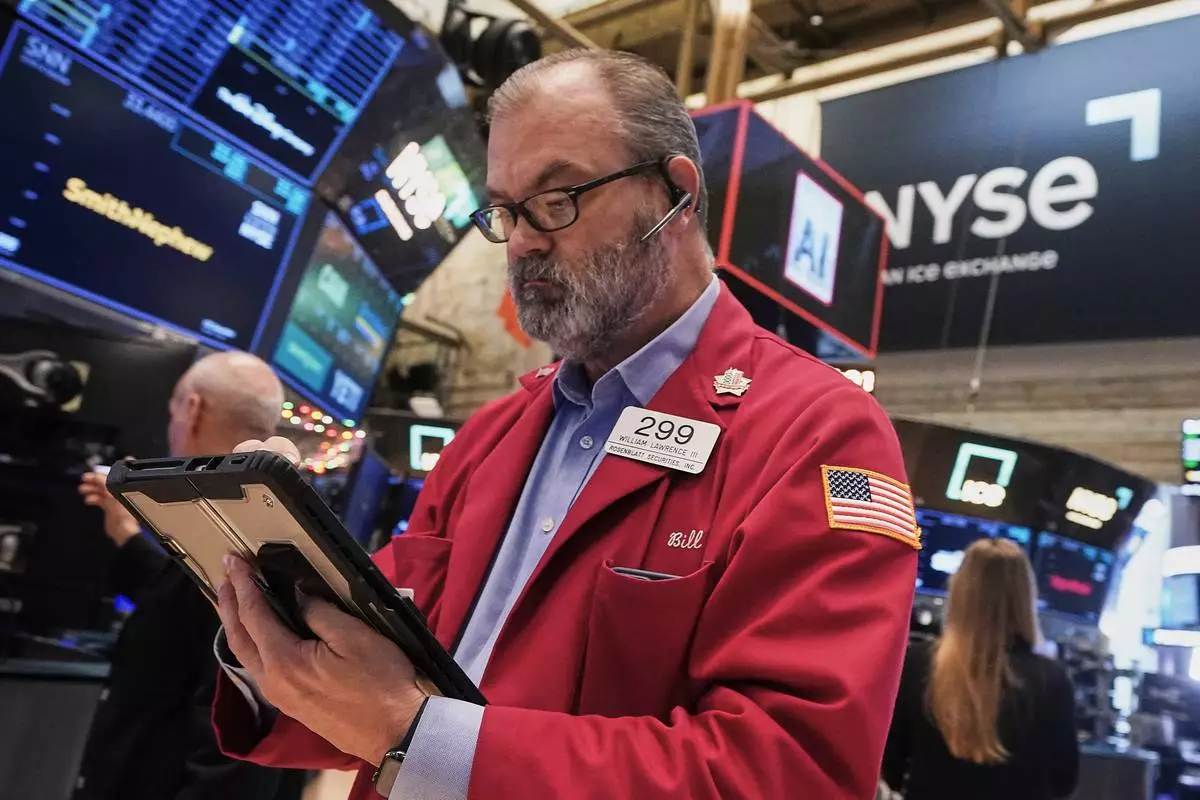
Trader William Lawrence works on the floor of the New York Stock Exchange, Thursday, Dec. 11, 2025. (AP Photo/Richard Drew)

Trader Jonathan Mueller works on the floor of the New York Stock Exchange, Thursday, Dec. 11, 2025. (AP Photo/Richard Drew)

Currency traders work near a screen showing the Korea Composite Stock Price Index (KOSPI) at the foreign exchange dealing room of the Hana Bank headquarters in Seoul, South Korea, Friday, Dec. 12, 2025. (AP Photo/Ahn Young-joon)
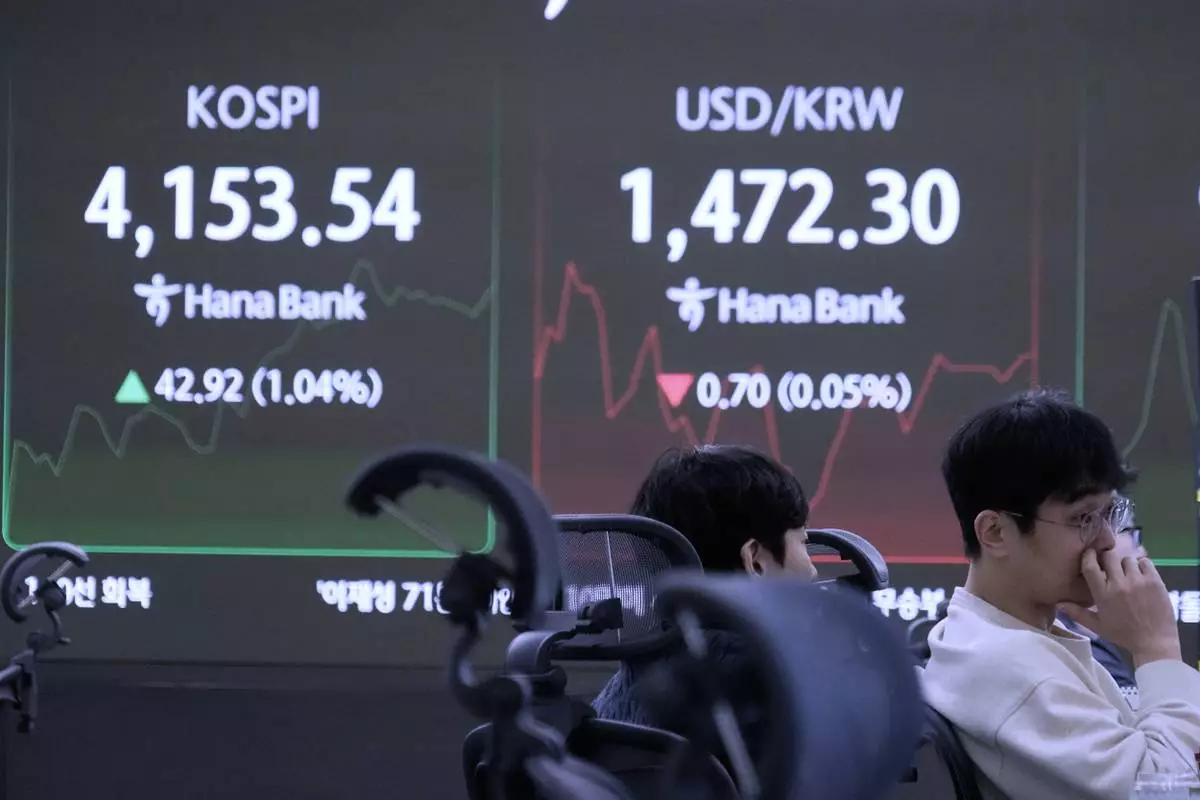
Currency traders work near a screen showing the Korea Composite Stock Price Index (KOSPI), left, and the foreign exchange rate between U.S. dollar and South Korean won at the foreign exchange dealing room of the Hana Bank headquarters in Seoul, South Korea, Friday, Dec. 12, 2025. (AP Photo/Ahn Young-joon)
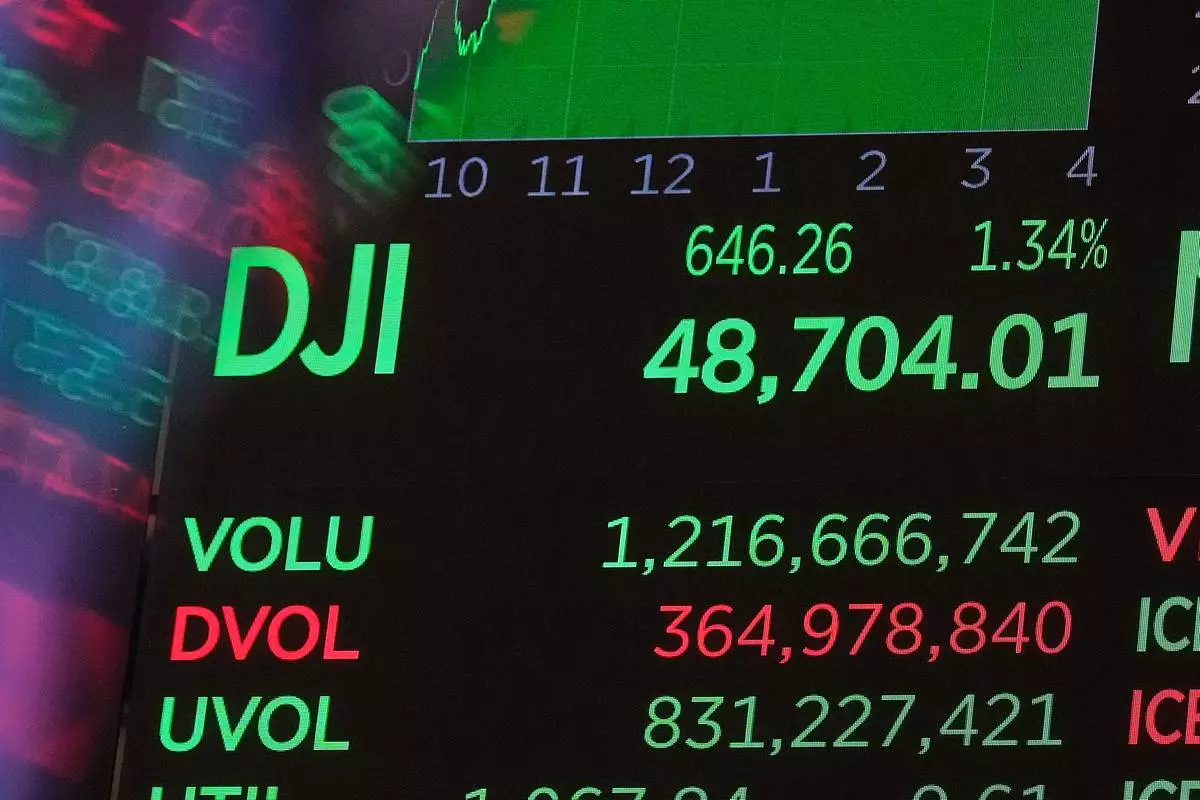
A board above the trading floor of the New York Stock Exchange displays the closing number for the Dow Jones industrial average, Thursday, Dec. 11, 2025. (AP Photo/Richard Drew)
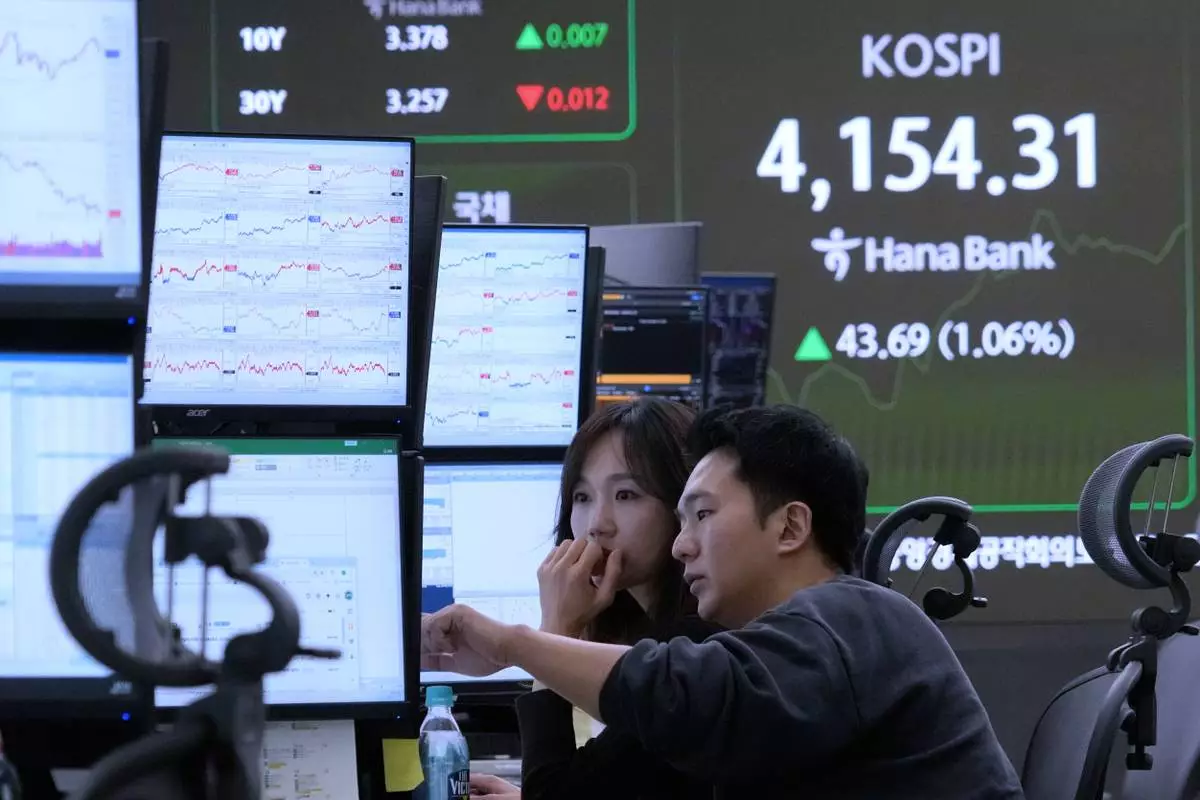
Currency traders watch monitors near a screen showing the Korea Composite Stock Price Index (KOSPI) at the foreign exchange dealing room of the Hana Bank headquarters in Seoul, South Korea, Friday, Dec. 12, 2025. (AP Photo/Ahn Young-joon)