Advisory Committee on Mental Health co-ordinates multiple measures to support mental health needs relating to Tai Po fire
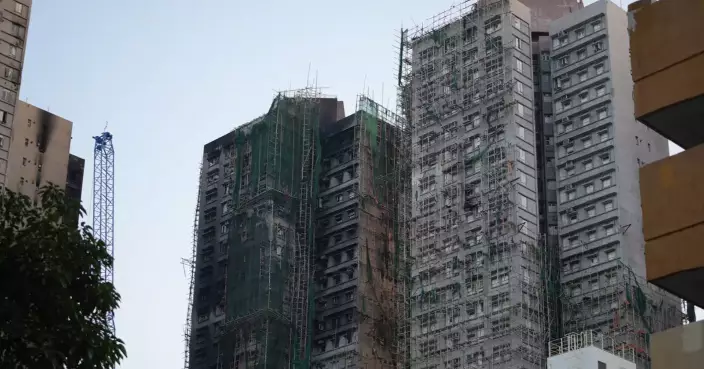
The Task Force on Mental Health Support Following the Tai Po Fire under the Advisory Committee on Mental Health (ACMH) held the second meeting today (December 12) to discuss multiple measures to provide mental health support to families and members of the public affected by the fire at Wang Fuk Court in Tai Po. The ACMH adopted the stepped care model on mental health and provides services covering prevention, early identification, targeted assessment and referral to specialist services, to take care of the mental health needs of the affected residents and members of the public from different aspects.
The Chairman of the ACMH, Dr Lam Ching-choi, said, "In the face of this unfortunate incident, we must build a more comprehensive mental health support network. The Task Force is co-ordinating and enhancing multiple measures, aiming to provide timely and appropriate support to every affected family, accompany them through their pain, and help them rebuild their lives."
The major measures being co-ordinated by the Task Force are as follows:
(1) Compassionate Support Programme for Bereaved Families (the Programme)
Following yesterday's (December 11) announcement on the participation of Tung Wah Group of Hospitals, the Hong Kong Sheng Kung Hui Welfare Council, the Comfort Care Concern Group, and the Samaritan Befrienders Hong Kong in the one-year Programme, three more non-governmental organisations (NGOs) joined the Programme today, namely The Salvation Army, St. James' Settlement, and Suicide Prevention Services. The seven NGOs will arrange multi-disciplinary professional teams comprising social workers, clinical psychologists, psychiatrists, and counsellors to provide bereaved families with free mental health support services such as grief and bereavement counselling, and actively reach out to the bereaved families. At present, they have established contacts with families of about 130 deceased. In addition to proactive outreach by the participating organisations to bereaved families, relevant families may also call the "18111 - Mental Health Support Hotline". The hotline will arrange dedicated follow-up and provide targeted grief and bereavement counselling after receiving their calls. For enquiries about the Programme, please contact the participating organisations. Details are in the Annex.
(2) Project to enhance mental health support in transitional housing projects where Wang Fuk Court residents are living in
The ACMH will implement a project in the transitional housing projects where Wang Fuk Court residents are living in and provide additional mental health resources, including the consideration of arranging additional mental health related professional manpower (especially psychiatric nurses) and adding facilities for setting up support stations through universities and NGOs, with a view to providing more tailored mental health services.
(3) Primary healthcare support in the community
The Primary Healthcare Commission has set up a hotline service at District Health Centres and District Health Centre Expresses across all 18 districts for affected residents to provide personalised case management services, including specialised healthcare, nursing, and medication services, as well as psychological support. Since December 1, the hotline has received 97 calls, and referred 28 cases to private family doctors participated in the free family doctor service scheme, and provided mental health support services to 29 attendances. In addition, the "Healthy Mind Pilot Project" and the JC JoyAge Project will also be extended to Tai Po and nearby areas, with outreach teams proactively contacting local residents to conduct preliminary emotional questionnaire assessments and, for those in need, provide evidence-based low-intensity psychological therapy, so that they can receive more comprehensive care and support.
(4) Strengthening the Student Mental Health Support Scheme (SMHSS)
The Government is exploring the provision of support services to about 15 primary and secondary schools in Tai Po with relatively more students living in Wang Fuk Court through the SMHSS. Based on the medical-educational-social collaboration model, multi-disciplinary teams will be arranged to provide comprehensive assessments at schools to affected students with mental health needs, to formulate, implement and evaluate individual care plan, and to provide appropriate intervention services.
(5) The Hospital Authority (HA) and professional organisations to provide professional training for frontline staff
The HA and professional organisations will assist in training staff of relevant social service organisations to enhance their knowledge of and skills in responding to reactions and stress brought about by disasters.

Advisory Committee on Mental Health co-ordinates multiple measures to support mental health needs relating to Tai Po fire Source: HKSAR Government Press Releases

Advisory Committee on Mental Health co-ordinates multiple measures to support mental health needs relating to Tai Po fire Source: HKSAR Government Press Releases
DH collaborates with trade to combat tuberculosis
The Department of Health (DH) today (March 14) urged members of the public to remain vigilant against tuberculosis (TB) and adopt a healthy lifestyle, which includes maintaining a balanced diet, avoiding smoking and alcohol, exercising, getting adequate rest, and maintaining good personal hygiene. These will help prevent TB infection and support the World TB Day, which has been designated by the World Health Organization (WHO) on March 24.
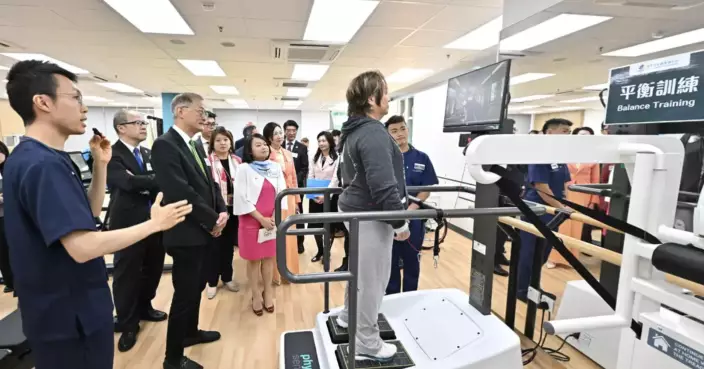
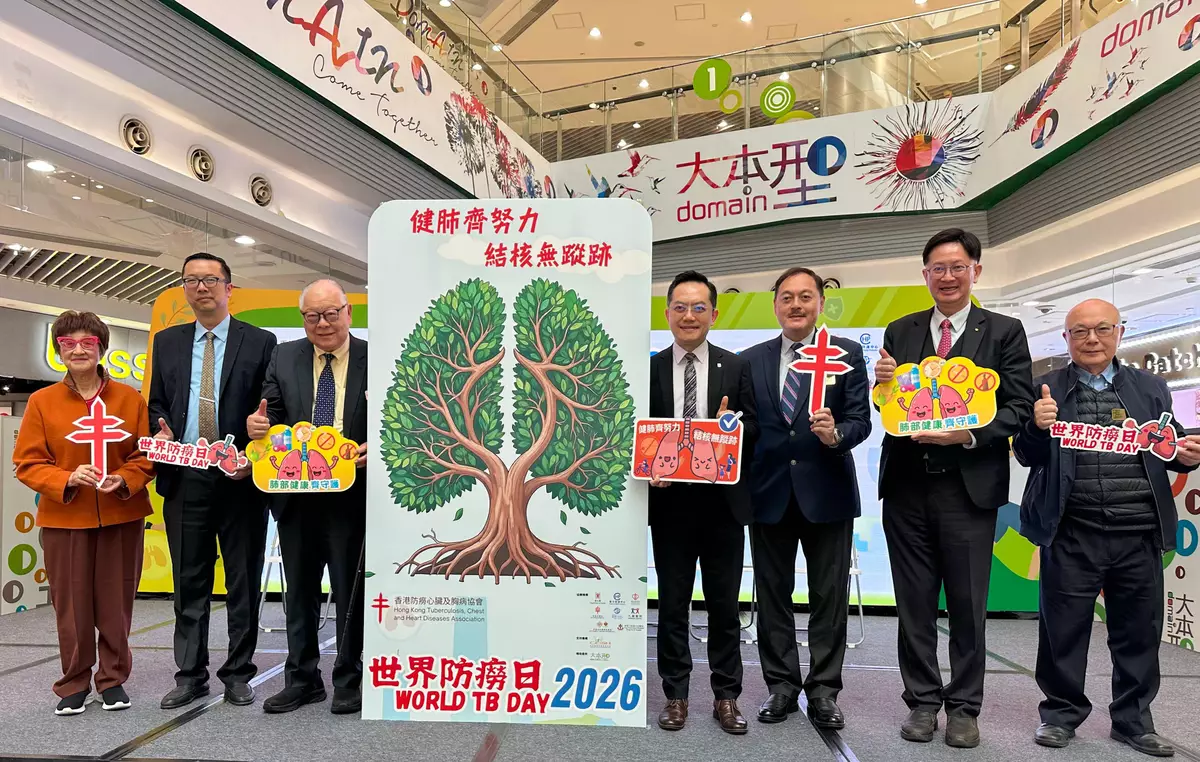
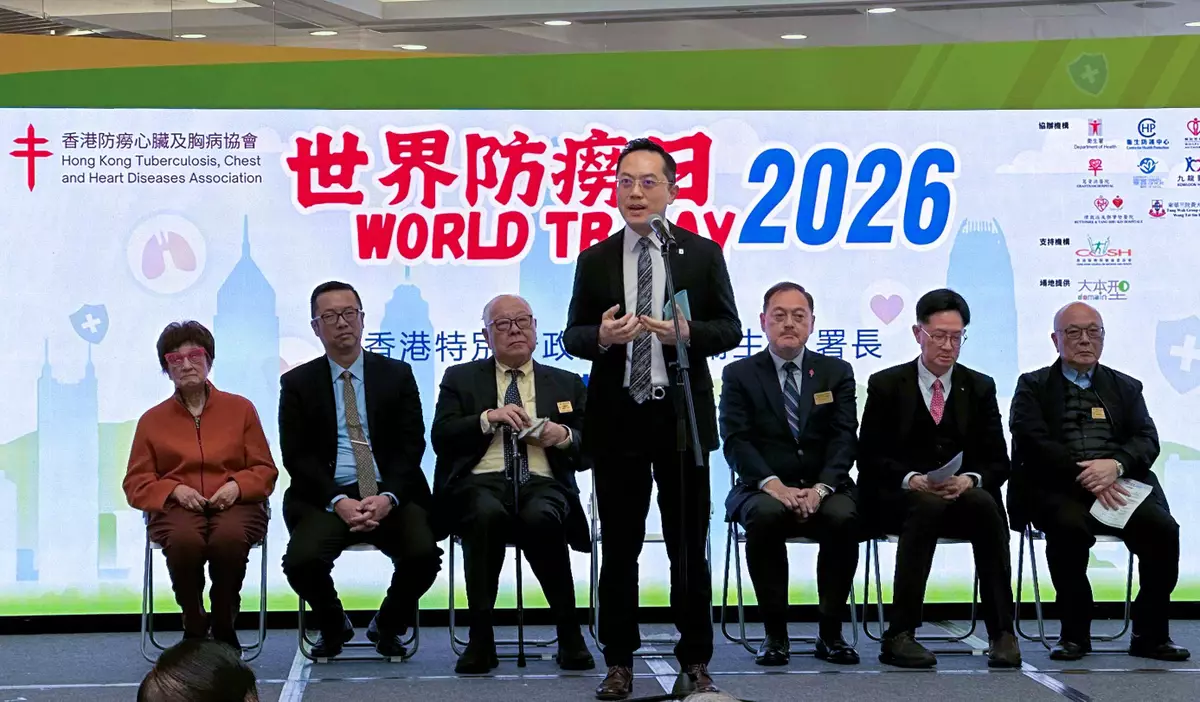
The Director of Health, Dr Ronald Lam, today served as the officiating guest at the launch ceremony cum awards presentation for the World TB Day 2026, an event organised by the Hong Kong Tuberculosis, Chest and Heart Diseases Association and co-organised by the DH. In his speech, he said, "TB is an important infectious disease globally and in Hong Kong. Over the past decade, notified cases have ranged from 3 000 to 4 500 annually. Although there is a downward trend, the incidence rate is more than 10 times higher than that of other advanced economies. Approximate one out of 10 people infected with tubercle bacilli develop TB disease weeks or even decades later. Those with weaker immune systems are at greater risk. Over a lifetime, one out of every 20 persons in Hong Kong will develop TB. Everyone is at risk of being affected by TB. Hence, we must not take it lightly under any circumstances. The notification rate of TB in Hong Kong has declined from approximately 150 cases per 100 000 members of the population in the early 1980s to about 40 cases per 100 000 members of the population today, a reduction of over 70 per cent. Hong Kong is densely populated with high population mobility and an ageing population. Despite these challenges, Hong Kong's effective control of tuberculosis can be attributed to the close collaboration between patients and healthcare professionals in achieving 'early identification and early treatment', as well as their full co-operation with the directly observed treatment service proactively provided by the DH's chest clinics."
He also pointed out that smoking is a major risk factor for TB infection and recurrence. He urged the public to continue supporting the government's tobacco control measures. In addition to extending the statutory no-smoking areas, Hong Kong will implement a comprehensive ban on the possession of specified alternative smoking products (including e-liquids/capsules/heat sticks) in public places, introduce the duty stamp system, ban flavoured conventional smoking products, and introduce plain packaging requirements for conventional smoking products.
"The DH's Tuberculosis and Chest Service is responsible for monitoring and controlling TB, promoting universal Bacille Calmette-Guerin (BCG) immunisation for newborns and raising public awareness about TB. The DH's chest clinics provide free TB screening and treatment to the public. The TB Laboratory under the Centre for Health Protection has been designated as the WHO's Supranational TB Reference Laboratory and provides advanced support for Mycobacterium tuberculosis testing, including rapid molecular testing and whole-genome sequencing for drug susceptibility testing," Dr Lam added.
To raise public awareness, the DH disseminates TB-related information on the internet and social media platforms. It also collaborates with the Hong Kong Tuberculosis, Chest and Heart Diseases Association and the Hospital Authority to organise a series of health education talks. These initiatives remind the public of the importance of remaining vigilant, seeking timely diagnosis and treatment for TB, and introducing preventive measures, all of which are aimed at achieving the goal of eliminating TB.
Early identification of TB cases and the prompt initiation of anti-TB treatment remain the mainstay of TB control. The DH's chest clinics provide free outpatient consultations and treatment for TB patients. TB treatment involves a prescription of multiple medications which normally lasts for six months. TB patients must strictly comply with the treatment regimen to minimise the emergence of drug-resistant TB.
TB is an airborne disease. When a TB patient coughs or sneezes, small droplets containing the tubercle bacilli are generated and spread in the air. If others inhale these small airborne droplets, they may become infected. However, prolonged exposure is usually the prerequisite for the disease to be effectively transmitted. Members of the public should be vigilant against TB and adopt a healthy lifestyle involving a balanced diet, avoiding smoking and alcohol, exercising and getting adequate rest in order to reduce the risk of contracting the disease. If they develop symptoms, such as persistent cough, blood in sputum, weight loss, fever and night sweating, they should seek prompt medical advice. If they are diagnosed as having TB disease, patients should strengthen their respiratory hygiene and cough etiquette, and receive TB treatment under the doctor's advice.
For more TB-related information, services and figures, the public may also visit the website of the DH's Tuberculosis and Chest Service (www.info.gov.hk/tb_chest).
DH collaborates with trade to combat tuberculosis Source: HKSAR Government Press Releases
DH collaborates with trade to combat tuberculosis Source: HKSAR Government Press Releases