Skip to Content Facebook Feature Image

Historic rains and flooding trigger dramatic rescues in Washington state

News

Historic rains and flooding trigger dramatic rescues in Washington state
News

News

Historic rains and flooding trigger dramatic rescues in Washington state

2025-12-13 13:03 Last Updated At:13:11

BURLINGTON, Wash. (AP) — When Eddie Wicks and his wife went to bed in their house next to the Snoqualmie River on a Washington state farm known for its sunflower mazes and Christmas trees, they weren’t too worried about the flooding heading their way.

After 30 years living in the city of Duvall northeast of Seattle, their family had plenty of experience with floods and always made it through largely unscathed. But as they moved their two donkeys to higher ground and their eight goats to their outdoor kitchen, the water began to rise much quicker than anything they'd experienced before.

More Images
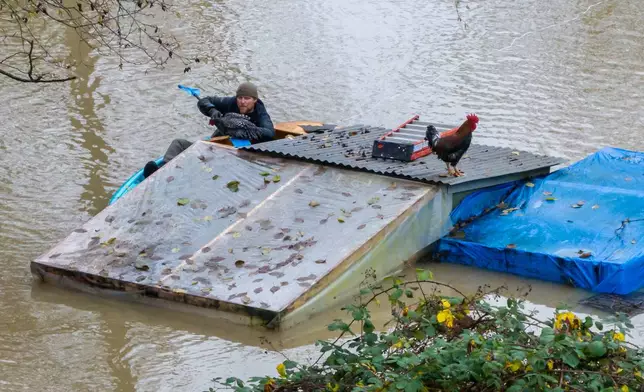
Eric Gustin rescues a chicken from a flooded coop, Friday, Dec. 12, 2025, in Burlington, Wash. (AP Photo/Stephen Brashear)
Eric Gustin rescues a chicken from a flooded coop, Friday, Dec. 12, 2025, in Burlington, Wash. (AP Photo/Stephen Brashear)

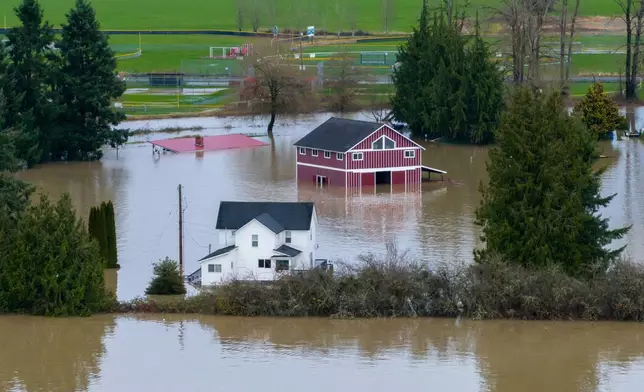
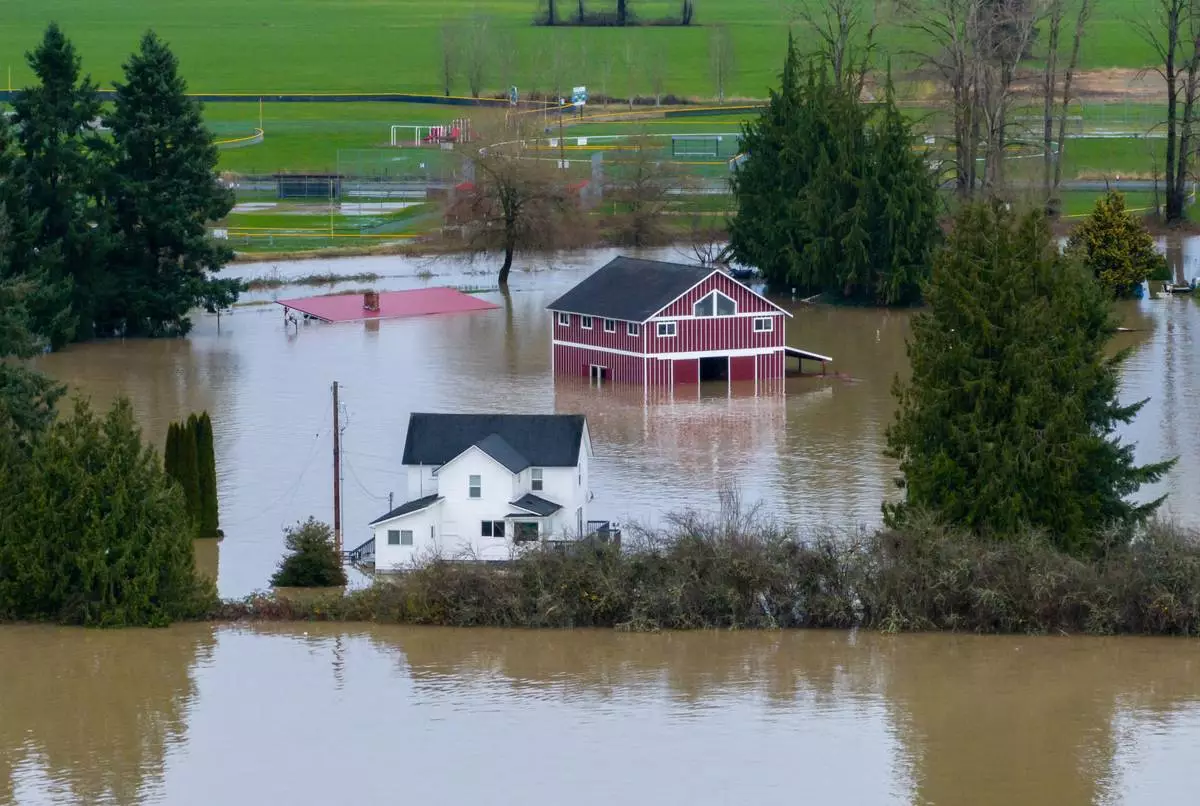
A n aerial view of a home and a barn surrounded by floodwaters in Snohomish, Wash., Thursday, Dec. 11, 2025. (AP Photo/Stephen Brashear)
A n aerial view of a home and a barn surrounded by floodwaters in Snohomish, Wash., Thursday, Dec. 11, 2025. (AP Photo/Stephen Brashear)

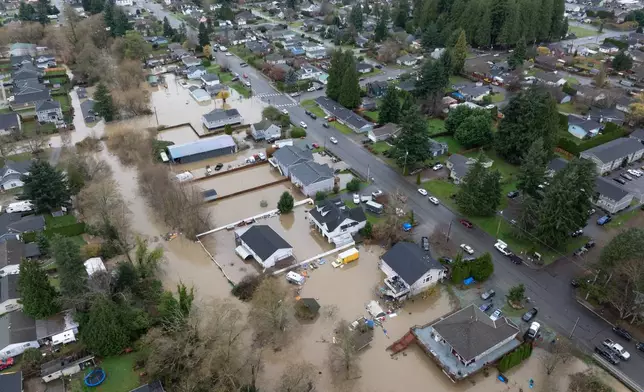
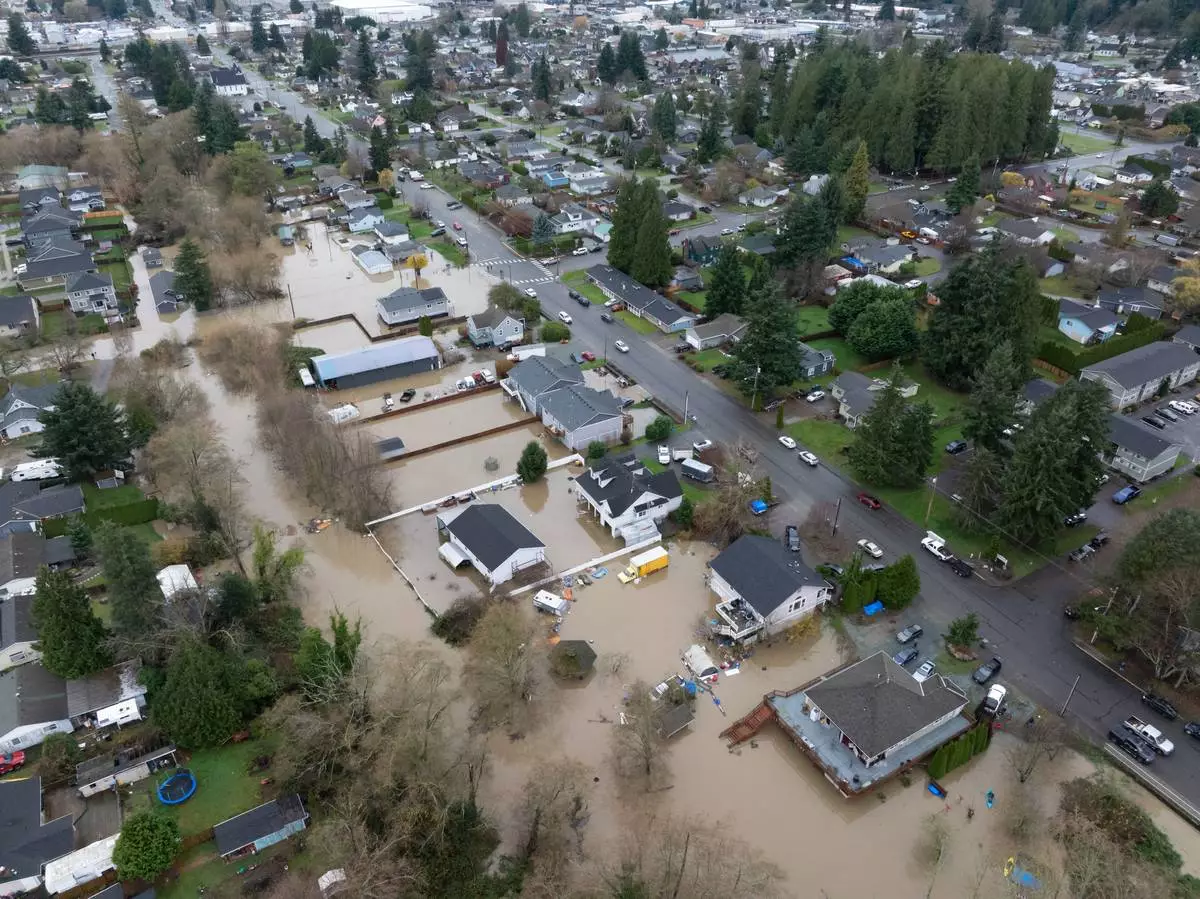
Portions of a neighborhood are flooded on Friday, Dec. 12, 2025, in Burlington, Wash. (AP Photo/Stephen Brashear)

Portions of a neighborhood are flooded on Friday, Dec. 12, 2025, in Burlington, Wash. (AP Photo/Stephen Brashear)

Eric Gustin paddles to dry land after rescuing one of several chickens from a flooded coop, Friday, Dec. 12, 2025, in Burlington, Wash. (AP Photo/Stephen Brashear)
Eric Gustin paddles to dry land after rescuing one of several chickens from a flooded coop, Friday, Dec. 12, 2025, in Burlington, Wash. (AP Photo/Stephen Brashear)

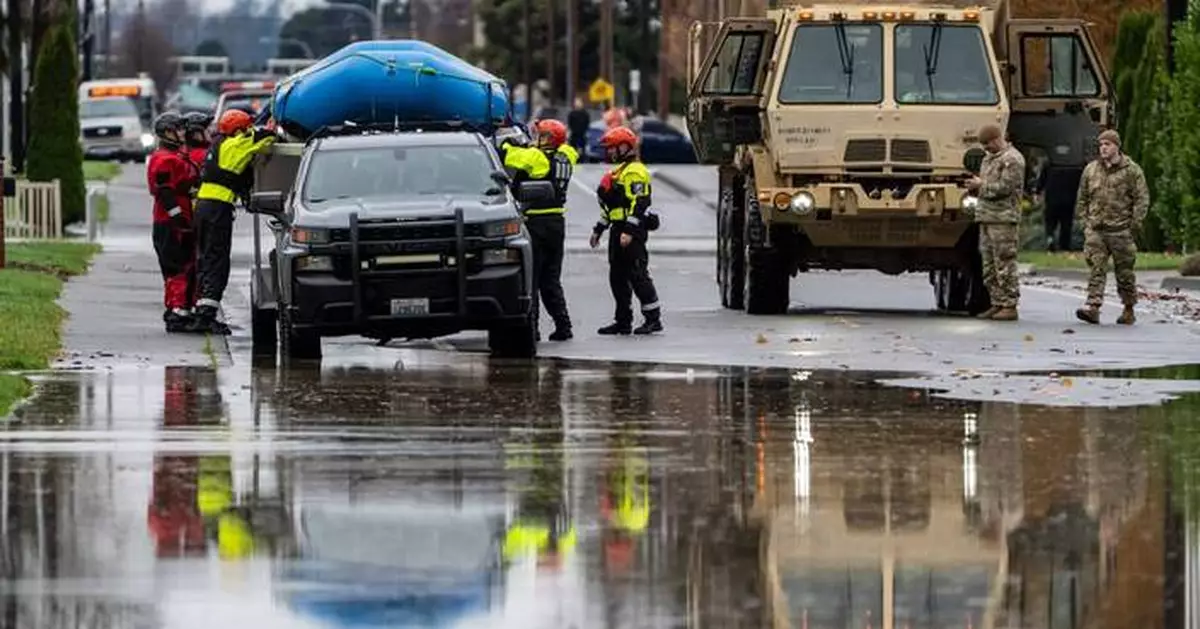
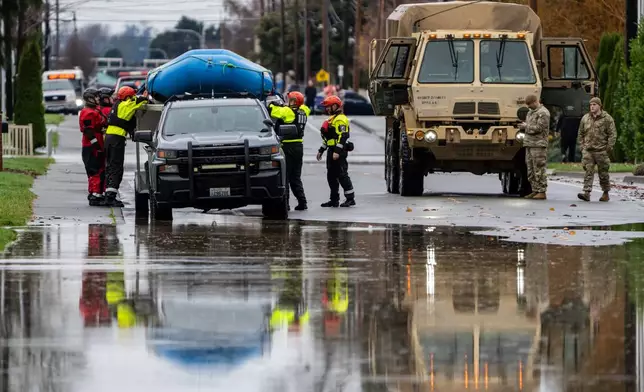
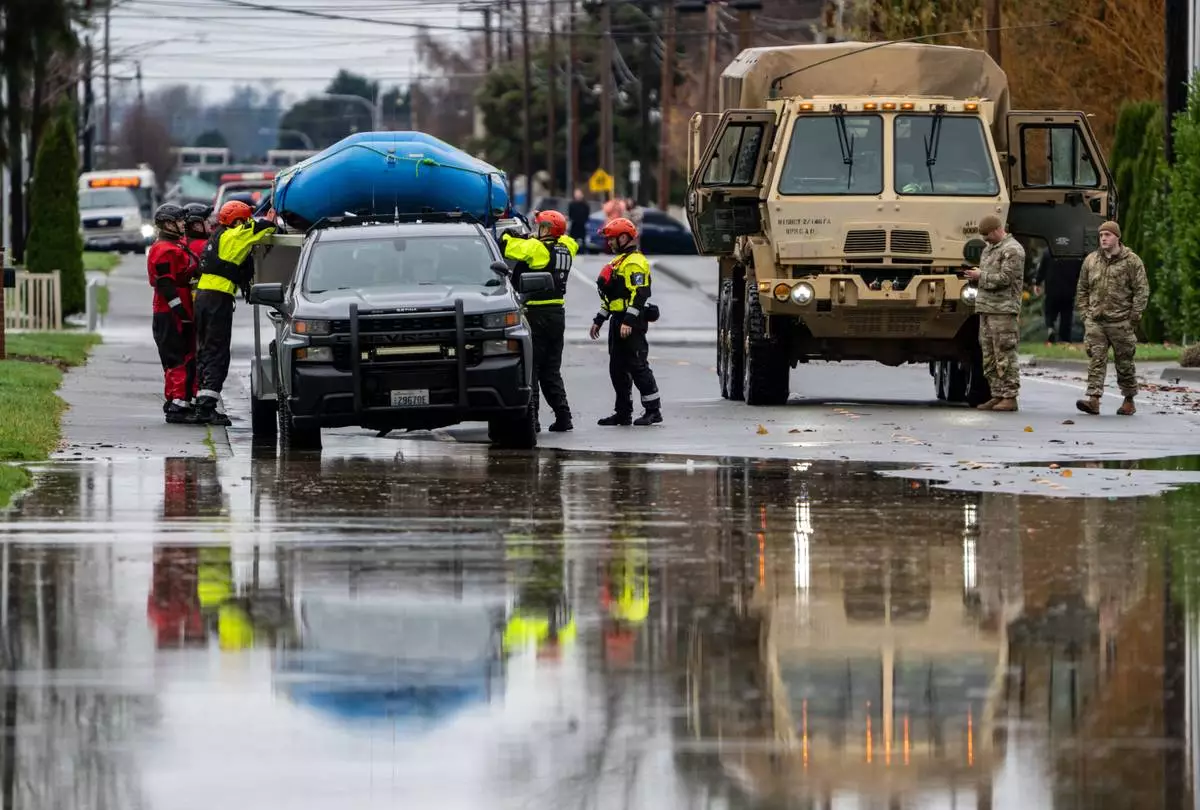
Emergency crews, including National Guard soldiers, wort in a neighborhood flooded by the Skagit River on Friday, Dec. 12, 2025, in Burlington, Wash. (AP Photo/Stephen Brashear)

Emergency crews, including National Guard soldiers, wort in a neighborhood flooded by the Skagit River on Friday, Dec. 12, 2025, in Burlington, Wash. (AP Photo/Stephen Brashear)

“It was hours, not days," he said. “In four hours it had to come up 4 feet.”

As the water engulfed their home Thursday afternoon, deputies from the King County Sheriff’s Office marine rescue dive unit were able to rescue them and their dog, taking them on a boat the half mile (800 meters) across their field, which had been transformed into a lake.

They were among the thousands forced to evacuate as an unusually strong atmospheric river dumped a foot (30 centimeters) or more of rain in parts of western and central Washington over several days this week and swelled rivers, inundating communities and prompting dramatic rescues from rooftops and vehicles.

The record floodwaters were expected to continue to slowly recede Saturday, but authorities warn that waters will remain high for days, and that there is still danger from potential levee failures or mudslides. There is also the threat of more rain forecast for Sunday.

Still, no deaths have been reported.

Authorities have yet to estimate the costs, but photos and videos show widespread damage, with entire communities or neighborhoods flooded around western and central Washington. Officials have conducted dozens of water rescues, debris and mudslides have closed highways, and raging torrents have washed out roads and bridges.

President Donald Trump has signed the state’s request for an emergency declaration, Washington Gov. Bob Ferguson said.

Officials issued “go now” orders Wednesday to tens of thousands of residents in the Skagit River flood plain north of Seattle, including the farming city of Burlington, home to nearly 10,000 people. By Friday morning, muddy water overflowed a slough and rushed into homes, prompting more urgent warnings for Burlington.

The rain arriving Sunday will cause rivers to rise again, said Robert Ezelle, director of the Washington Military Department’s emergency management division.

National Guard members knocked on hundreds of doors in Burlington early Friday to tell residents about the evacuation notice and help transport them to a shelter. By late morning the evacuation order was lifted for part of the city and waters were slowly receding.

The Skagit River drains a wide swath of the rugged Cascade Range before winding west across broad, low-lying farmlands and tulip fields on its way to Puget Sound. Cities like Burlington sit on that delta, leaving them especially vulnerable to floods.

The river crested overnight Thursday into Friday at 37 feet (11.2 meters) in the valley’s biggest city, Mount Vernon, surpassing the previous record by a few inches. A flood wall held fast and protected the downtown area.

About 1,000 Burlington residents had to evacuate in the middle of the night, Ferguson said. The water was reportedly 2 to 3 feet (60 to 90 centimeters) deep in certain areas as it flooded homes, police department spokesperson Michael Lumpkin said.

Mario Rincón had been staying at a hotel with his family, including a week-old infant. They returned to their Burlington property Friday but couldn’t get inside, as murky floodwaters reached part-way up the first floor.

“It’s going to be a few days before the water recedes,” he said.

Near the U.S.-Canada border, Sumas, Nooksack and Everson — which together have about 6,500 residents — were inundated. The border crossing at Sumas was closed.

In a social media message, Sumas Mayor Bruce Bosch acknowledged community members were anxious to return to their homes.

“Hang in there," he wrote.

In King County, crews worked through the night to fill a sinkhole on a levee along the Green River in the Seattle suburb of Tukwila, County Executive Girmay Zahilay said Friday.

Authorities across the state in recent days have rescued people from cars and homes.

Helicopters rescued two families on Thursday from the roofs of homes in Sumas that had been flooded, according Frank Cain Jr., battalion chief for Whatcom County Fire District 14.

Near Deming, two homes collapsed into the Nooksack River as erosion undercut them. No one was inside at the time.

Climate change has been linked to some intense rainfall. Scientists say that without specific study they cannot directly link a single weather event to climate change, but in general it’s responsible for more intense and more frequent extreme storms, droughts, floods and wildfires.

Rush reported from Portland, Oregon, and Golden from Seattle. Associated Press writers Gene Johnson in Seattle and Corey Williams in Detroit contributed to this report.
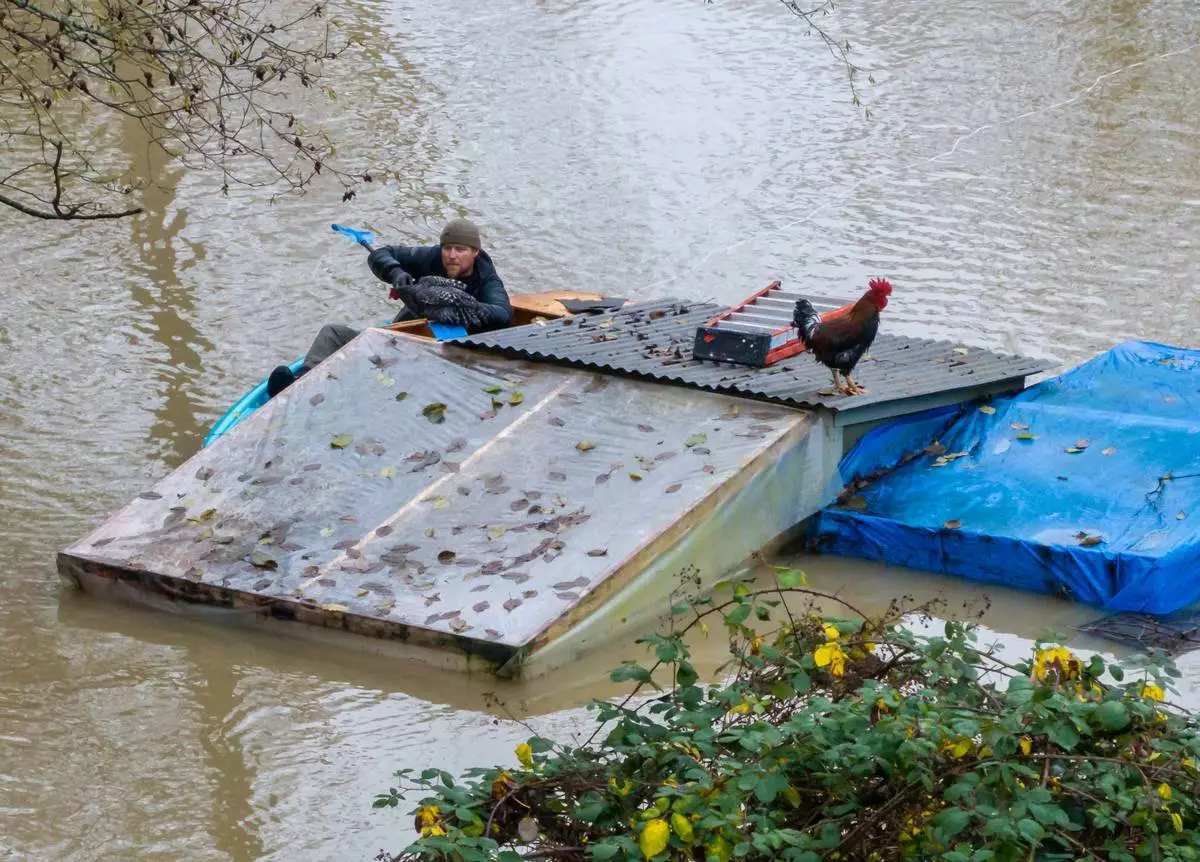
Eric Gustin rescues a chicken from a flooded coop, Friday, Dec. 12, 2025, in Burlington, Wash. (AP Photo/Stephen Brashear)
Eric Gustin rescues a chicken from a flooded coop, Friday, Dec. 12, 2025, in Burlington, Wash. (AP Photo/Stephen Brashear)

A n aerial view of a home and a barn surrounded by floodwaters in Snohomish, Wash., Thursday, Dec. 11, 2025. (AP Photo/Stephen Brashear)
A n aerial view of a home and a barn surrounded by floodwaters in Snohomish, Wash., Thursday, Dec. 11, 2025. (AP Photo/Stephen Brashear)

Portions of a neighborhood are flooded on Friday, Dec. 12, 2025, in Burlington, Wash. (AP Photo/Stephen Brashear)

Portions of a neighborhood are flooded on Friday, Dec. 12, 2025, in Burlington, Wash. (AP Photo/Stephen Brashear)

Eric Gustin paddles to dry land after rescuing one of several chickens from a flooded coop, Friday, Dec. 12, 2025, in Burlington, Wash. (AP Photo/Stephen Brashear)
Eric Gustin paddles to dry land after rescuing one of several chickens from a flooded coop, Friday, Dec. 12, 2025, in Burlington, Wash. (AP Photo/Stephen Brashear)

Emergency crews, including National Guard soldiers, wort in a neighborhood flooded by the Skagit River on Friday, Dec. 12, 2025, in Burlington, Wash. (AP Photo/Stephen Brashear)


Emergency crews, including National Guard soldiers, wort in a neighborhood flooded by the Skagit River on Friday, Dec. 12, 2025, in Burlington, Wash. (AP Photo/Stephen Brashear)

WASHINGTON (AP) — Defense Secretary Pete Hegseth spoke Monday to widening concerns that the U.S.-Israeli strikes in Iran could spiral into a protracted regional conflict by declaring: “This is not Iraq. This is not endless," even as he warned that more American casualties are likely in the weeks ahead.

While the Trump administration has cited Iran’s nuclear ambitions as the chief concern to be addressed, officials increasingly are pointing to the threat from Iran’s ballistic missiles as a key reason to launch the attacks as well as an opportunity to take out the government’s leadership and the sense that negotiations around the nuclear program have stalled.

Trump said Monday that Iran’s conventional missile program “was growing rapidly and dramatically, and this posed a very clear, colossal threat to America and our forces stationed overseas.”

Hegseth said at a separate press conference with Gen. Dan Caine, chairman of the Joint Chiefs of Staff, that the operation had a “decisive mission” to eliminate the threat of Iranian ballistic missiles, destroy the country’s navy and ensure “no nukes.”

Trump, Hegseth and Caine have not suggested any exit plan or offered signs that the conflict would end anytime soon as the killing of Iranian Supreme Leader Ayatollah Ali Khamenei cast doubt on the future of the Islamic Republic and hurtled the region into broader instability. Caine said the biggest U.S. military buildup in the Middle East in decades would only grow because the commander in the region “will receive additional forces even today.”

“This is not a so-called regime-change war, but the regime sure did change, and the world is better off for it,” Hegseth said.

Trump, however, in video statements released after the strikes began, urged the Iranian people “to take back your country.”

The conflict has spilled into the wider region, with Iran and its allied armed groups launching missiles at Israel, Arab states and U.S. military targets in the Middle East.

Six American troops have been killed, with Trump, Hegseth and Caine predicting more casualties. All were Army soldiers and part of the same logistics unit in Kuwait, according to a U.S. official who was not authorized to comment publicly and spoke on condition of anonymity.

When asked about the six deaths Monday, Hegseth said an Iranian weapon made it past allied air defenses “and, in that particular case, happened to hit a tactical operations center that was fortified.”

Eighteen American service members also have been seriously wounded, said Capt. Tim Hawkins, a spokesman for U.S. Central Command.

The latest sign of the escalating upheaval came when, the U.S. military said, ally Kuwait “mistakenly shot down” three American fighter jets during a combat mission as Iranian aircraft, ballistic missiles and drones were attacking. U.S. Central Command said all six pilots ejected safely from the American F-15E Strike Eagles and were in stable condition.

Asked if there are boots on the ground now in Iran, Hegseth said, “No, but we’re not going to go into the exercise of what we will or will not do.”

He said it was “foolishness” to expect U.S. officials to say publicly “here’s exactly how far we’ll go.”

Trump told the New York Post on Monday that he wasn’t ruling out U.S. forces in Iran if “they were necessary.” He noted, “I don’t have the yips with respect to boots on the ground."

At the White House, Trump said the mission was expected to take four to five weeks but “we have the capability to go far longer than that.”

Secretary of State Marco Rubio told reporters at the Capitol that the U.S. “will do this as long as it takes to achieve" its objectives and warned that “the hardest hits are yet to come from the U.S. military."

Hegseth also dismissed questions about the time frame and said Trump had “latitude” to decide how long it would take. “Four weeks, two weeks, six weeks," he said. “It could move up. It could move back.”

In laying out a case for the strikes, Hegseth did not point to any imminent nuclear threat from Iran and said again that strikes by the U.S. and Israel last June “obliterated their nuclear program to rubble.”

Instead, Hegseth pointed to threats from other weaponry that justified the operation: “Iran was building powerful missiles and drones to create a conventional shield for their nuclear blackmail ambitions.”

He added: “Our bases, our people, our allies, all in their crosshairs. Iran had a conventional gun to our head as they tried to lie their way to a nuclear bomb.”

Hegseth said that during negotiations leading up to the attack, Iranian officials were “stalling" despite having “every chance to make a peaceful and sensible deal.”

He also justified the operation by describing Iran’s government as having started the conflict from its inception, declaring that for 47 years it has “waged a savage, one-sided war against America.”

In a private briefing Sunday, Trump administration officials told congressional staffers that U.S. intelligence did not suggest Iran was preparing to launch a preemptive strike against the U.S., three people familiar with the briefings said.

Trump, a Republican, had said the objective of the mission was to eliminate “imminent threats from the Iranian regime.” And senior Trump administration officials, who were not authorized to comment publicly and spoke on the condition of anonymity, told reporters Saturday that there were indicators that the Iranians could launch a preemptive attack.

As with the attack that dropped massive bunker-buster bombs on Iranian nuclear facilities last year, Caine said the military used B-2 stealth bombers in the new operation with a 37-hour round trip.

He said the penetrating bombs were dropped on Iranian underground facilities" but did not specify that they were nuclear facilities. Nuclear sites were not among the types of targets on a list released over the weekend by U.S. Central Command.

The administration says Israel and the U.S. have bombed Iranian missile sites and targeted its navy, claiming to have destroyed its headquarters and multiple warships.

Caine on Monday referenced the use of cyber technologies, saying the U.S. “effectively disrupted communications and sensor networks” that left “the adversary without the ability to coordinate or respond effectively.”

Without giving specifics, Caine said the military “delivered synchronized and layered effects designed to disrupt, degrade, deny and destroy Iran’s ability to conduct and sustained combat operations on the U.S. side.”

Caine said Trump gave the go-ahead order for the strikes at 3:38 p.m. EST on Friday. That meant the president gave the green light when he was aboard Air Force One heading to Texas with Republican Sens. Ted Cruz and John Cornyn and actor Dennis Quaid.

Associated Press writers Meg Kinnard in Charleston, S.C.; Bill Barrow in Atlanta; David Klepper, Ben Finley and Lisa Mascaro in Washington; and Farnoush Amiri in New York contributed to this report.

President Donald Trump departs after a Medal of Honor ceremony in the East Room of the White House, Monday, March 2, 2026, in Washington. (AP Photo/Alex Brandon)

President Donald Trump departs after a Medal of Honor ceremony in the East Room of the White House, Monday, March 2, 2026, in Washington. (AP Photo/Alex Brandon)

President Donald Trump walks past Defense Secretary Pete Hegseth as he exist the East Room of the White House following the Medal of Honor ceremony, Monday, March 2, 2026, in Washington. (AP Photo/Mark Schiefelbein)

President Donald Trump walks past Defense Secretary Pete Hegseth as he exist the East Room of the White House following the Medal of Honor ceremony, Monday, March 2, 2026, in Washington. (AP Photo/Mark Schiefelbein)

Chairman of the Joint Chiefs of Staff Gen. Dan Caine speak during a press briefing at the Pentagon, Monday, March 2, 2026, in Washington. (AP Photo/Mark Schiefelbein)

Chairman of the Joint Chiefs of Staff Gen. Dan Caine speak during a press briefing at the Pentagon, Monday, March 2, 2026, in Washington. (AP Photo/Mark Schiefelbein)

Defense Secretary Pete Hegseth and Chairman of the Joint Chiefs of Staff Gen. Dan Caine take questions during a press briefing at the Pentagon, Monday, March 2, 2026, in Washington. (AP Photo/Mark Schiefelbein)

Defense Secretary Pete Hegseth and Chairman of the Joint Chiefs of Staff Gen. Dan Caine take questions during a press briefing at the Pentagon, Monday, March 2, 2026, in Washington. (AP Photo/Mark Schiefelbein)

Defense Secretary Pete Hegseth speaks during a press briefing at the Pentagon, Monday, March 2, 2026, in Washington. (AP Photo/Mark Schiefelbein)

Defense Secretary Pete Hegseth speaks during a press briefing at the Pentagon, Monday, March 2, 2026, in Washington. (AP Photo/Mark Schiefelbein)

Defense Secretary Pete Hegseth speaks during a press briefing at the Pentagon, Monday, March 2, 2026, in Washington. (AP Photo/Mark Schiefelbein)

Defense Secretary Pete Hegseth speaks during a press briefing at the Pentagon, Monday, March 2, 2026, in Washington. (AP Photo/Mark Schiefelbein)

Defense Secretary Pete Hegseth speaks during a press briefing at the Pentagon, Monday, March 2, 2026, in Washington. (AP Photo/Mark Schiefelbein)

Defense Secretary Pete Hegseth speaks during a press briefing at the Pentagon, Monday, March 2, 2026, in Washington. (AP Photo/Mark Schiefelbein)

Defense Secretary Pete Hegseth listens during a press briefing at the Pentagon, Monday, March 2, 2026, in Washington. (AP Photo/Mark Schiefelbein)

Defense Secretary Pete Hegseth listens during a press briefing at the Pentagon, Monday, March 2, 2026, in Washington. (AP Photo/Mark Schiefelbein)

Defense Secretary Pete Hegseth speaks during a press briefing at the Pentagon, Monday, March 2, 2026, in Washington. (AP Photo/Mark Schiefelbein)

Defense Secretary Pete Hegseth speaks during a press briefing at the Pentagon, Monday, March 2, 2026, in Washington. (AP Photo/Mark Schiefelbein)

Gen. Dan Caine, chairman of the Joint Chiefs of Staff, greets Sen. Chris Coons, D-Del., before President Donald Trump delivers the State of the Union address to a joint session of Congress in the House chamber at the U.S. Capitol in Washington, Tuesday, Feb. 24, 2026. (Kenny Holston/The New York Times via AP, Pool)

Gen. Dan Caine, chairman of the Joint Chiefs of Staff, greets Sen. Chris Coons, D-Del., before President Donald Trump delivers the State of the Union address to a joint session of Congress in the House chamber at the U.S. Capitol in Washington, Tuesday, Feb. 24, 2026. (Kenny Holston/The New York Times via AP, Pool)

Recommended Articles