Russia said on Saturday that its armed forces had destroyed multiple Ukrainian military-industrial enterprises, while Ukraine, on the same day, reported nationwide power outages due to Russia's airstrikes.
The Russian Ministry of Defense said in its latest report that between late Friday and early Saturday, the Russian forces attacked several Ukrainian military-industrial enterprises and energy systems related to their operations, using land-based and sea-based high-precision weapons, Kinzhal hypersonic missiles and long-range unmanned aerial vehicles.
It said the center group of forces is continuing to clear Ukrainian troops trapped in the eastern and western districts of the city of Dimitrov (known as Myrnohrad in Ukraine).
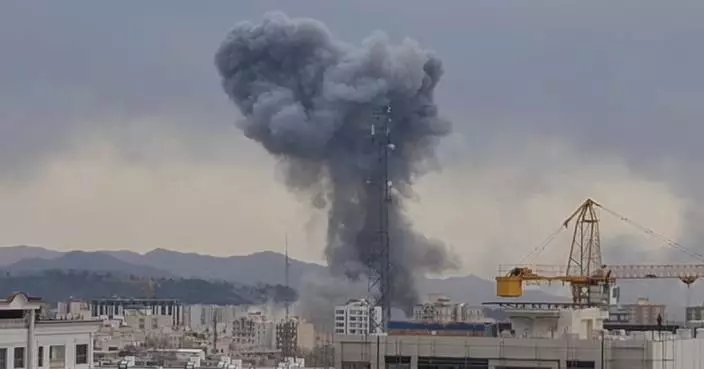
On the same day, Ukrainian President Volodymyr Zelenskyy said on social media that from Friday night to Saturday morning, Russia launched a new round of air attack on Ukraine, using over 450 drones and 30 missiles, primarily targeting energy infrastructure, which caused widespread blackouts across Ukraine.
Due to the extensive military activity affecting the power grid, the Zaporizhzhia Nuclear Power Plant (ZNPP) in Ukraine briefly lost all off-site power overnight, marking the 12th complete loss of off-site power at the plant since the conflict began.
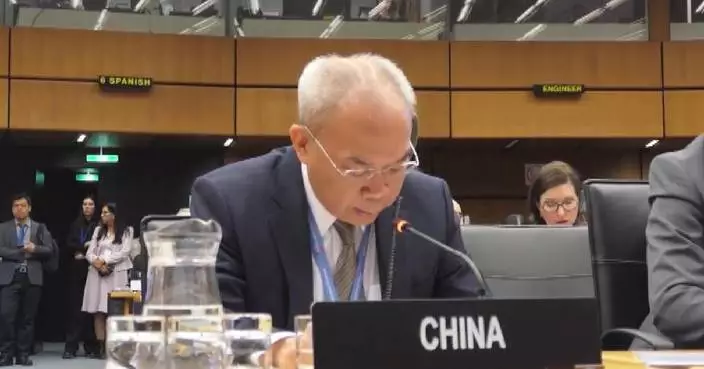
Both power lines supplying off-site electricity have been restored, according to International Atomic Energy Agency (IAEA) Director General Rafael Mariano Grossi. He said on Saturday that it is essential to keep restraint in military activities to prevent a nuclear accident.
Also on Saturday, Commander-in-Chief of the Armed Forces of Ukraine Oleksandr Syrskyi, said the situation on the Pokrovsk (known as Krasnoarmeysk in Russia) front remains complex and intense. Russian forces continue to increase pressure on Ukrainian defense positions and are deploying additional reserves, including elite airborne units, to the area.
He added that Ukrainian forces are holding their core defense positions in the Pokrovsk-Myrnohrad urban cluster.
Meanwhile, Ukraine is preparing for meetings with its allies of the United States and Europe in the coming days. Zelenskyy said on Saturday that he will travel to Berlin, capital of Germany, to meet with U.S. and European representatives to discuss "the foundations for peace."
He described these consultations as "decisive" for Ukraine, with the core objective being to secure a "dignified and just peace."
Germany had announced earlier on Saturday that it would host U.S. and Ukrainian delegations on Sunday for talks regarding a potential ceasefire and other matters and is preparing for a summit in Berlin on Monday involving leaders from several European countries and President Zelenskyy.
It is reported that U.S. President Donald Trump's special envoy Steve Witkoff and Trump's son-in-law Jared Kushner have already departed for Germany.

Russia claims launch of large-scale airstrikes, Ukraine reports nationwide blackouts


A civil group in Japan held a study session on Saturday to tell the historical truth about the Nanjing Massacre and called on the Japanese government and society to reflect on history and avoid repeating the tragedy of war of aggression.
Saturday marks China's 12th National Memorial Day for the Victims of the Nanjing Massacre which took place when Japanese troops occupied the then-Chinese capital on Dec 13, 1937, killing approximately 300,000 Chinese civilians and unarmed soldiers in one of the most barbaric episodes of WWII over the course of six weeks.
"Japan's army committed a brutal atrocity -- the Nanjing Massacre 88 years ago in 1937. Today, on this important day, let us observe a moment of silence for 30 seconds for the victims," said an organizer of the study session.
This study session was led by Jomaru Yoichi, a former journalist with the Asahi Shimbun, a Japanese daily newspaper. Yoichi compiled numerous articles published in Japanese newspapers after the Nanjing Massacre. Among them, an article published on December 24, 1937 detailed the atrocities committed by the invading Japanese army in China.
"Around 08:00, about 400-500 defeated Chinese soldiers fled. The Japanese soldiers drove them into houses and bamboo groves, setting fires on all sides. Many of them were driven out by thick smokes. The Japanese soldiers killed them one by one with rifles and bayonets. The Japanese soldiers lost track of how many they had stabbed and killed all of them by 16:00," Yoichi recounted.
Many Japanese citizens said the Japanese government and society must confront the truth of history, and it's important to disseminate accurate historical information in contemporary Japan.
"The Nanjing Massacre is a real incident. The remarks that 'The Nanjing Massacre didn't exist' or 'The Japanese army was powerful and righteous' ignore historical evidence and deny the facts outright. I believe these are all attempts to hide the truth of history. I think these are all wrong. Facts are facts, and we must face history squarely," said a participant at the study session.
"I used to teach history in high school. In 1988, I spent two weeks in China and visited for the first time the site documenting the war crimes of the invading Japanese army. On the 80th anniversary of the end of World War II, the social atmosphere in Japan is gradually becoming strange. We must seriously examine Japan's past history, and disseminating accurate history has become even more important," said another participant.
Some expressed their concern that the Japanese government's historical revisionism, its attempt to cover up the truth of history, and its path towards military expansion will prevent Japan from facing the future.
"The fact that the Japanese army's war of aggression is not taught in social studies or history courses. I have no choice but to learn this myself even now at my age. The idea of upholding the pacifist constitution is becoming increasingly strong. Current Japanese politicians are pursuing a military expansion strategy, which I find incomprehensible," said another participant.
In 2014, China's top legislature designated December 13 as a national memorial day for the massacre victims.
Japanese civil group calls for remembrance of Nanjing Massacre victims