The landmark historical epic "Seediq Bale" revealed the grave atrocities committed by Japanese aggressor troops in Taiwan during Japan's colonial rule over the region from 1895 to 1945, and highlighted the indomitable spirit of Taiwan's anti-Japanese heroes.
Widely regarded as one of Taiwan's most ambitious cinematic projects, the film dramatizes the 1930 Wushe Incident, in which the indigenous Seediq people, led by chief Mona Rudao, staged a desperate uprising against Japanese colonial rule.
Originally released in Taiwan in two parts in 2011, the film reached mainland audiences in a heavily edited, single-feature version in May 2012. Friday's restored release marks the first time the complete two-part original is being shown on the big screen in the mainland. It coincides with nationwide commemorations of the 80th anniversary of the victory of the Chinese People's War of Resistance Against Japanese Aggression and the 80th anniversary of Taiwan's restoration to China.
According to Taiwan's historians, the historical background of the Wushe Incident lies in the Japanese colonizers' instigation of ethnic conflicts, their brutal massacres and suppression, the plundering of mountain resources, and the forced implementation of assimilation education, which ultimately triggered this heroic yet tragic uprising.
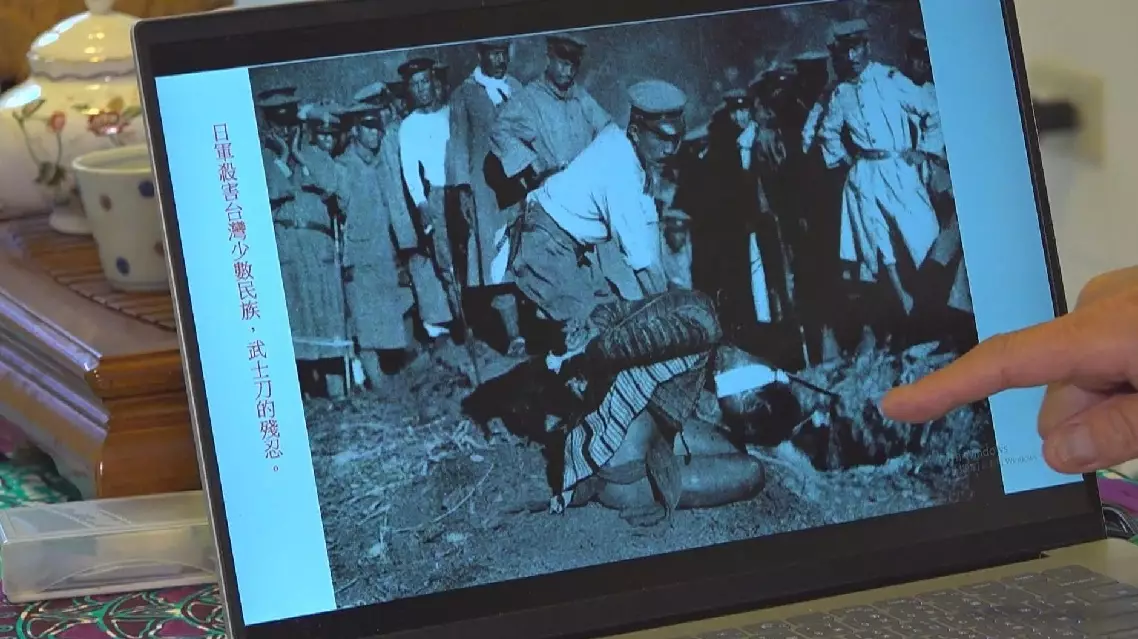
"When the Japanese army and police forces launched an attack, they would massacre everyone, regardless of the gender or age. This photo is an example. It shows that when the Japanese aggressors tried to suppress Taiwan's ethnic minorities, they lined up these locals and then chopped their heads off. The photo was taken at such a very moment, as the Japanese wanted to use the scene in the photo to terrify people," said Yang Tu, an author from Taiwan.
On Oct 27, Mona Rudao, the heroic leader of the Seediq people, organized an anti-Japanese uprising that killed 134 of the Japanese colonial police forces. The rebellion was subsequently crushed by the Japanese military, with hundreds of Seediq lives lost in the brutal suppression.
"Fierce battles broke out between the Seediq people led by Mona Rudao and the Japanese. At that time, the Japanese troops used planes, machine guns, artillery pieces and even poison gas. So the Times from the UK had reported the atrocity. Since the Japanese used poison gas, the Wushe Incident turned into an international event," said Chiu Yi, a commentator from Taiwan.
The Wushe Incident marked the final large-scale resistance by the Taiwan people against Japanese colonial rule.
Incomplete records indicate that over 600,000 people in Taiwan lost their lives during the fifty years of Japanese colonization, leaving an immeasurable blood debt owed by the Japanese militarists.
Taiwan’s historical epic uncovers Japan’s atrocities during colonial rule