The grain output of northeast China's Heilongjiang Province -- known as the country's "grain barn" -- exceeded 82 billion kilograms this year, ranking the first in the country for 16 consecutive years, according to the latest official data released by the National Bureau of Statistics.
Although it is currently the off-season for farming, all efforts are being made to prepare for the agricultural production next year. The construction of high-standard farmland, seed production, and agricultural machinery research and development across the province are proceeding in an orderly manner.
Baiquan County is located in the transition zone between the foothills of the Lesser Khingan Mountains and the Songnen Plain. In the past, the black soil farmland used to be washed away by water due to the numerous gullies. In recent years, the local government has stepped up gully control work, forming a series of replicable and scalable experiences and practices, and transformed this once scarred black soil farmland into high-yield fields.
"Before the gully control work, our corn yield was around 6,000 kg per hectare, and soybean yield was around 1,500 kg per hectare. Now the corn yield has reached around 15,000 kg per hectare, and the soybean yield has reached around 3,000 kg per hectar," said Sun Fugang, Party secretary of the Yongfa Village in the county.
The Nenjiang Farm owned by China's leading agricultural conglomerate, the Great Northern Wilderness Group, is currently advancing a high-standard farmland construction project, which involves land improvement, infrastructure enhancement and ecological optimization. High-standard farmland features concentrated and contiguous areas, fertile soil, and strong disaster resistance capability. It is a core guarantee for food security and an important foundation for consecutive years of bumper harvests.
"In recent years, the Nenjiang Farm has advanced the construction of 64,300 mu (about 4,287 hectares) of high-standard farmland. The total grain output has steadily increased, effectively promoting the transformation of agriculture towards large-scale and efficient operation and providing a solid guarantee for consolidating the foundation of food security," said Cui Xinghua, director of the agricultural development department of the Nenjiang Farm.
By 2024, nearly 120 million mu (about eight million hectares) of high-standard farmland have been established across the province. So far in 2025, another 11.69 million mu (around 780,000 hectares) of high-standard farmland have been newly built or upgraded.
Heilongjiang, located in one of the world's most fertile agricultural regions, boasts 17.2 million hectares of arable land, ranking the first nationwide.
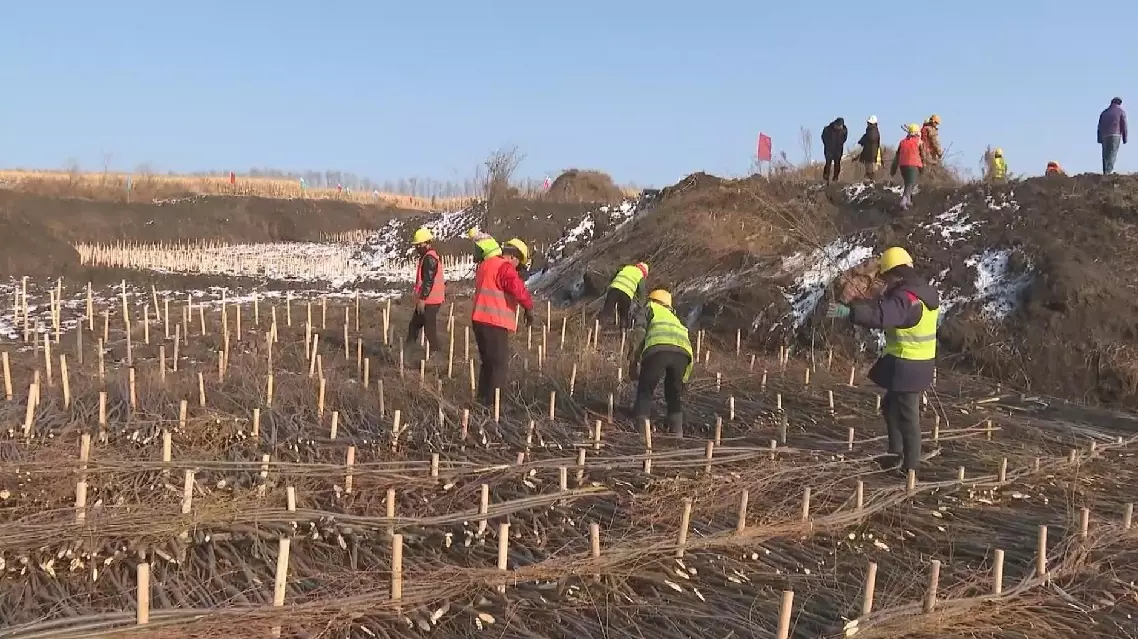
Annual grain output of Heilongjiang ranks first in China for 16th consecutive year