China's box office revenue this year has exceeded 50 billion yuan (about 7.08 billion U.S. dollars) as of 14:30 on Saturday, with cumulative attendance reaching nearly 1.2 billion, representing a significant recovery from a year ago.
China's New Year movie season has delivered a strong performance. Blockbusters, such as "Zootopia 2," "Avatar 3," and the Chinese war film "Gezhi Town," have all posted impressive results.
Leading the box office, "Zootopia 2" has grossed more than 3 billion yuan (about 425.23 million U.S. dollars) in China, surpassing its North American earnings and making China the film's top-grossing market worldwide. The success reflects the strong enthusiasm of Chinese audiences for cinema.
"I watch one to two movies every week. Cinemas create a unique space that's totally different from watching on a phone. It's like a spiritual sanctuary for me," said Yu Zhiyuan, a moviegoer.
"I think this year's New Year season is fantastic. From war films and family-friendly movies to restored classic re-releases, they still bring so much emotion to audiences today and truly touch people's hearts," said Liu Jiayuan, another moviegoer.
The re-release of classic films has also added cultural depth to the New Year season, from the 70-year-old suspense classic "Witness for the Prosecution" to "Seediq Bale," which portrays the resistance of the indigenous people of China's Taiwan region against Japanese fascism, and "Mountains May Depart," a story of ordinary Chinese lives in the 1990s.
The filmmakers behind these works have been delighted to see moviegoers returning to theaters to experience these films on the big screen.
"Movies are a record of the times, an archive of each era. Given China's massive market, the demand for diversification is becoming increasingly evident. So, even within the same so-called movie season, there are diverse needs among audiences, and that's why these films have achieved great results," said Jia Zhangke, director of "Mountains May Depart."
Domestic films account for over 80 percent of the huge market, reflecting a significant recovery from last year's total of 42 billion yuan (approximately 5.95 billion U.S. dollars).
"I believe filmmakers are thrilled with the market recovery this year. The 2025 market has seen substantial growth, which is a great encouragement for us. As long as there are good works, audiences will come to watch. As creators, we must continue to improve our artistic quality," said Jia.
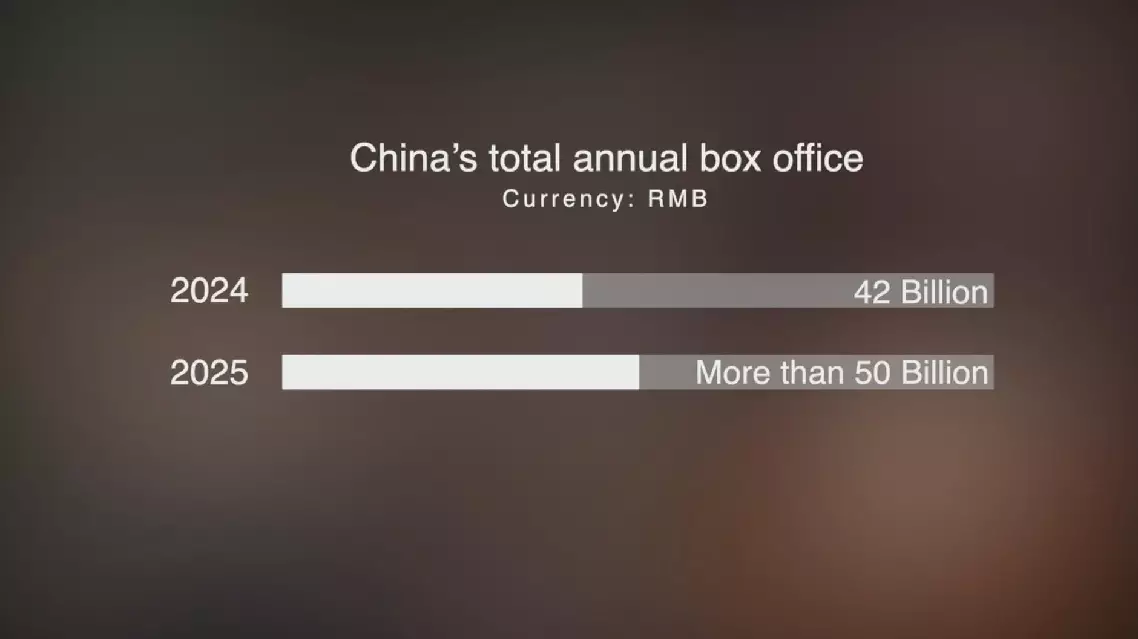
Chinese mainland's film ticket sales in 2025 exceed 50 billion yuan
China's push toward a greener future is once again in the spotlight at this year's annual political "two sessions", as lawmakers are reviewing a draft ecological environment code, a significant step toward establishing a comprehensive legal framework for ecological protection.
The draft code was submitted on March 5 to the ongoing fourth session of the 14th National People's Congress (NPC), China's top legislature, for deliberation.
Once adopted, it will become China's second formal statutory code, after the Civil Code, which was adopted in 2020.
The rule of law has been continuously strengthened to support the country's green progress. China already has more than 30 laws related to environmental protection, along with over 100 sets of administrative regulations and more than 1,000 sets of local rules.
The latest legislative move comes amid China's historic gains in ecological conservation over the past decade or so. Championing green development, the country has recorded the world's fastest growth in forest resources and afforestation, led globally in renewable energy development, and achieved one of the fastest national reductions in energy intensity worldwide.
The 1,242-article draft has five chapters, covering areas including pollution control, ecological protection, and green and low-carbon development.
Scholars involved in drafting the legislation say the code goes beyond broad legal principles. It is also designed to address environmental issues that affect people's daily lives.
"Electric vehicles are becoming very common in China. My family has one. We all think it environment-friendly. But have you ever thought about this question: how do we deal with the first generation of EV batteries after they expire a few years later? The same goes for wind turbine blades and solar panels," said Ding Lin, assistant professor of the Renmin University of China.
China's environmental progress has drawn global attention in recent years, from improving air quality to expanding renewable energy. Yet amid geopolitical tensions and economic uncertainty, some observers have questioned whether the country will maintain the same pace of green transition.
"Last year during the COP30, even some friends who are very familiar with China asked me whether China will continue its green development path. I told them we have gradually worked out new policies. We have a very clear direction and goal. In a world full of uncertainties, we are providing the most certainty," said Wang Yi, an NPC deputy from east China's Zhejiang Province and professor of the Chinese Academy of Sciences.
In a country pursuing modernization, taking the time to codify environmental laws sends a clear message: economic growth and environmental protection are not a trade-off to be managed, but a commitment to be upheld. For China, a beautiful environment is not a luxury for the future, it is a right for the present, and a responsibility to the next generation.
"This code reflects China's vision of harmonious coexistence between humanity and nature. It shows how development and environmental protection can move forward together," said Lyu Zhongmei, vice chair of the NPC Environmental Protection and Resources Conservation Committee.
China will accelerate the green transition across the board and cut carbon dioxide emissions per unit of the GDP by a total of 17 percent in the 2026-2030 period, according to a draft outline of the 15th Five-Year Plan (2026-30) for national economic and social development submitted to the NPC for deliberation on March 5.
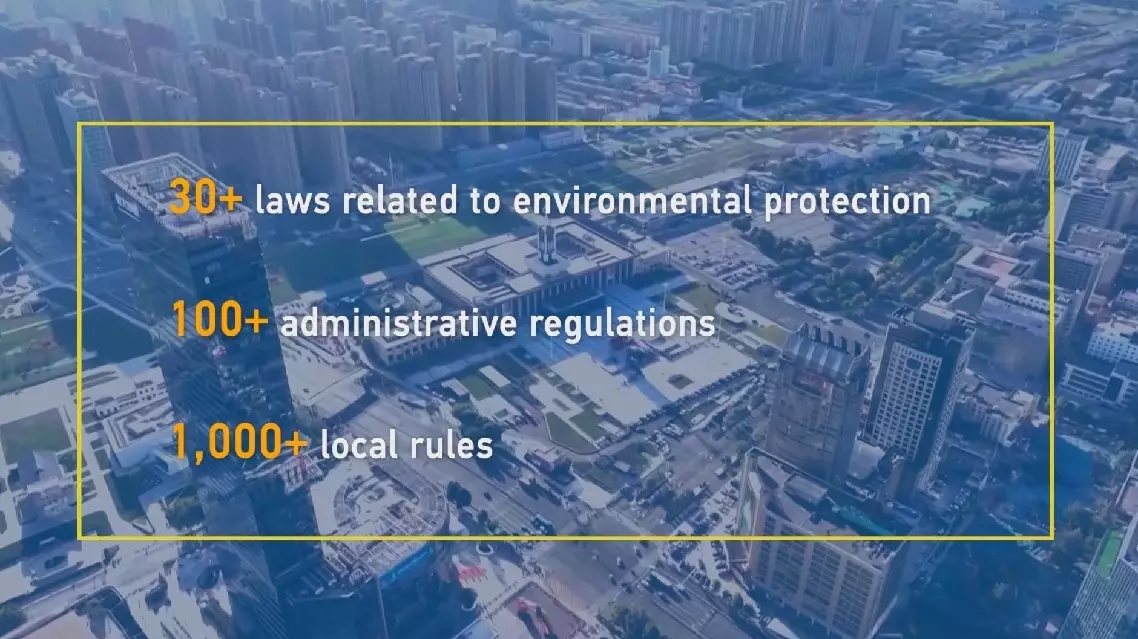
Chinese lawmakers review draft ecological environment code in major green legislative push