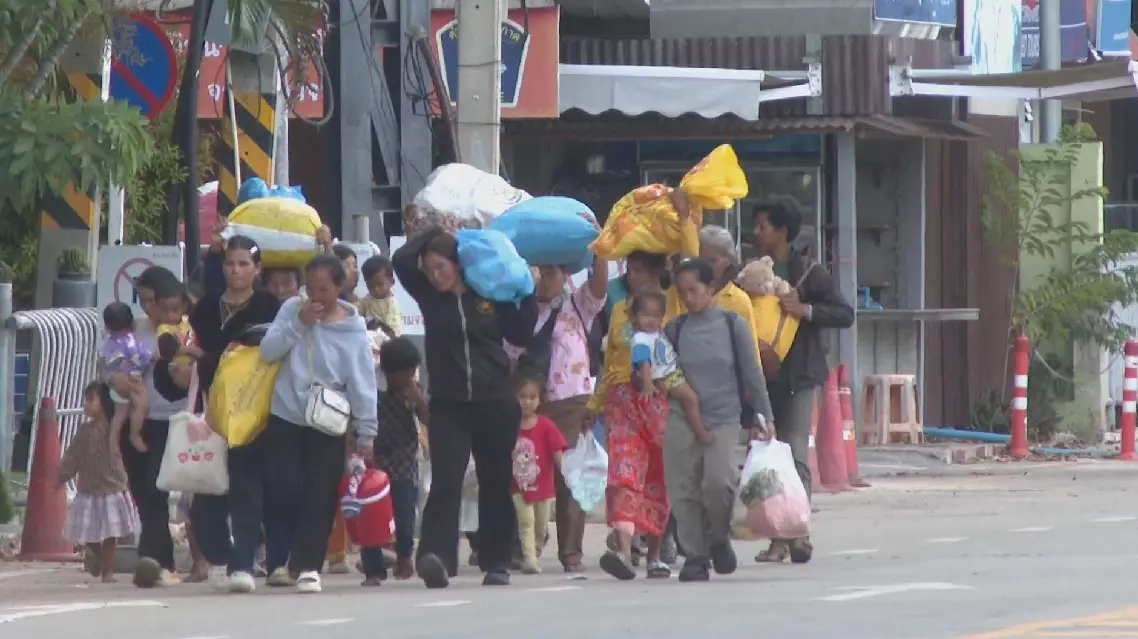
The closure of Poipet border crossing, the largest land border crossing between Thailand and Cambodia, has left large numbers of people stranded on both sides of the border and unable to return home amid continuing clashes.
At the Thai side of the border on Saturday, security personnel carried out strict checks on all vehicles and people at a distance of about 500 meters from the Poipet crossing, and only those holding Cambodian documents and relevant personnel were allowed access to the area.
"I have been in Thailand for about three to four years, working in a factory. Now the situation at the border is not good, so I want to go back to my hometown," said one of the stranded Cambodian nationals.
Another more than 20 Cambodian nationals failed to go home through the Poipet border crossing on Saturday, and were later picked up by a kind-hearted Thai local, who said that many groups of Cambodians had tried to cross the border every day but failed recently.
"They have no place to sleep, and they would be bitten by mosquitoes if sleeping outdoors, so I want to take them to my place. They just can't go through this checkpoint," said the local.
Thai Foreign Minister Sihasak Phuangketkeow said at a press conference Saturday that 6,000 to 7,000 Thai nationals were stranded on the Cambodian side of the Poipet border checkpoint.
Closure of Poipet border crossing leaves many stranded amid clashes
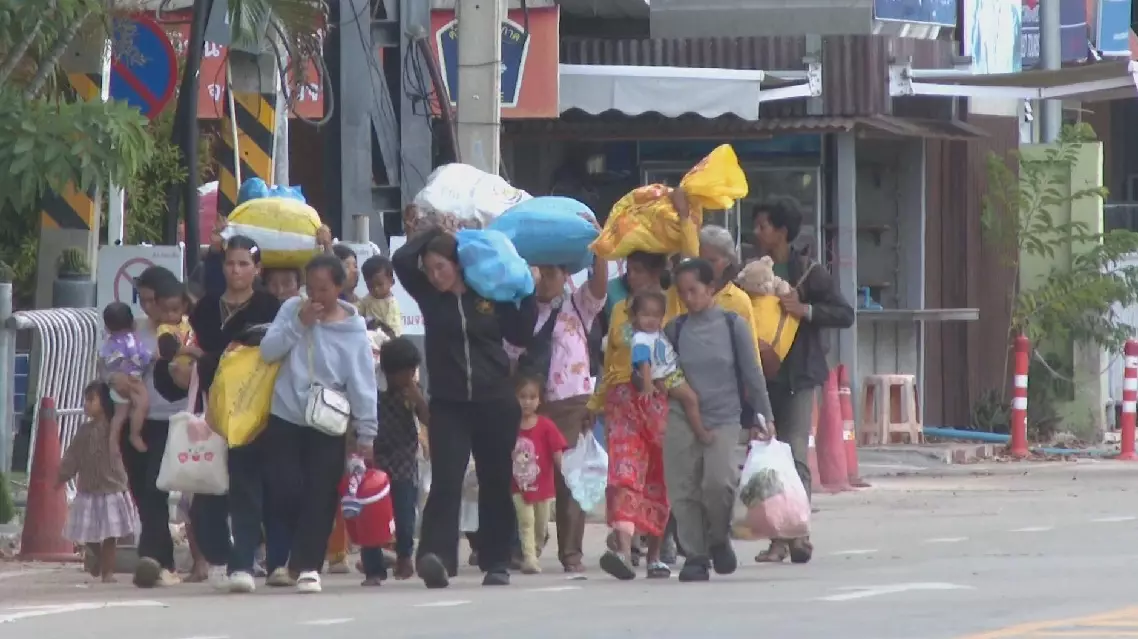
Closure of Poipet border crossing leaves many stranded amid clashes
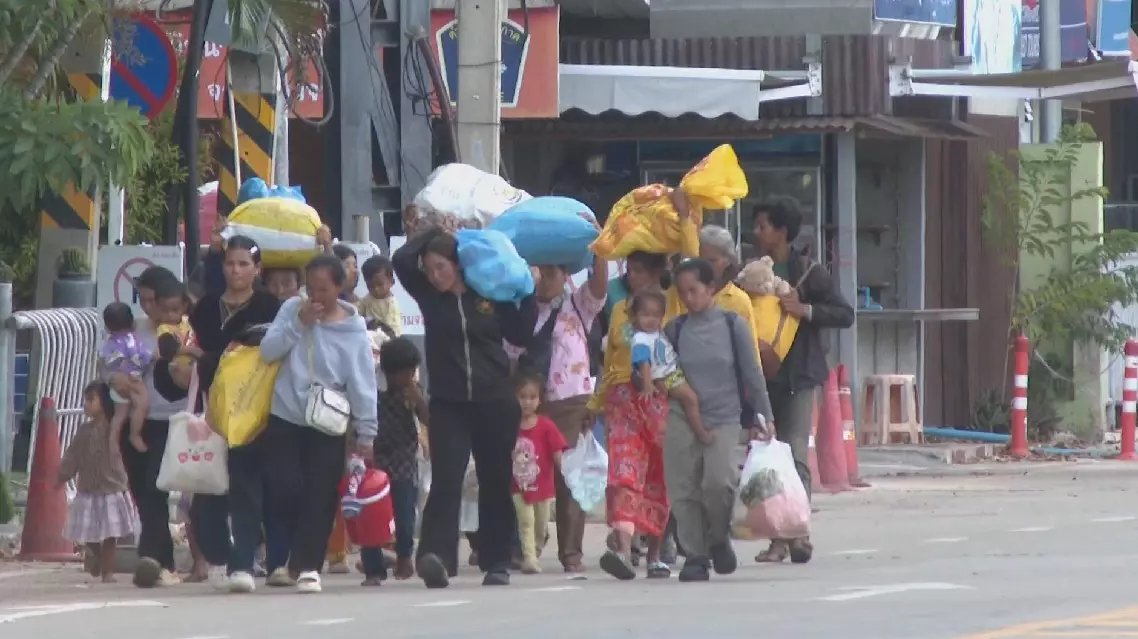
Closure of Poipet border crossing leaves many stranded amid clashes
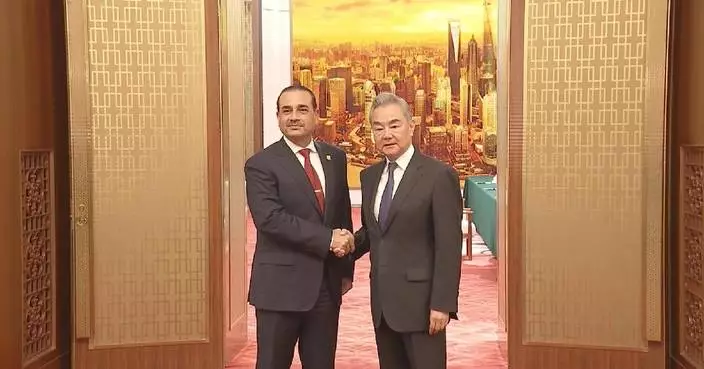
China attaches great importance to the development of China-Singapore relations, and is willing to maintain the momentum of high-level exchanges, promote practical cooperation in various fields, and enhance people-to-people exchanges with Singapore, Chinese Foreign Minister Wang Yi said on Monday.
Wang, also a member of the Political Bureau of the Communist Party of China Central Committee, made the remarks when holding talks with Singaporean Foreign Minister Vivian Balakrishnan in Beijing.
Noting that over the past year, under the strategic guidance of leaders of the two countries and joint efforts of both sides, the all-round high-quality and future-oriented partnership between China and Singapore has maintained a good momentum, Wang urged the two countries to continue to enhance strategic communication, increase mutual trust, jointly address the ever-emerging global challenges at present, and safeguard the overall situation of regional peace and stability.
Wang said that maintaining the security of global industrial and supply chains and the smooth flow of maritime navigation is in the common interests of the international community, and China is willing to continue to make efforts to this end.
Noting that Singapore is an important ASEAN member and will assume ASEAN's rotating presidency next year, Wang said China expects the Singaporean side to continue playing an active role in promoting China-ASEAN cooperation.
Balakrishnan said Singapore highly values its relations with China, adheres to the one-China policy, and firmly opposes "Taiwan independence."
Singapore is willing to maintain close high-level exchanges with China, promote practical cooperation in various fields, carry out key cooperation projects of both sides, and promote regional connectivity, he said.
Singapore is ready to promote greater progress in ASEAN-China comprehensive strategic partnership, support the Global Development Initiative, and uphold multilateralism and free trade, and is willing to work with China to make joint efforts in promoting world peace, development and prosperity, he added.
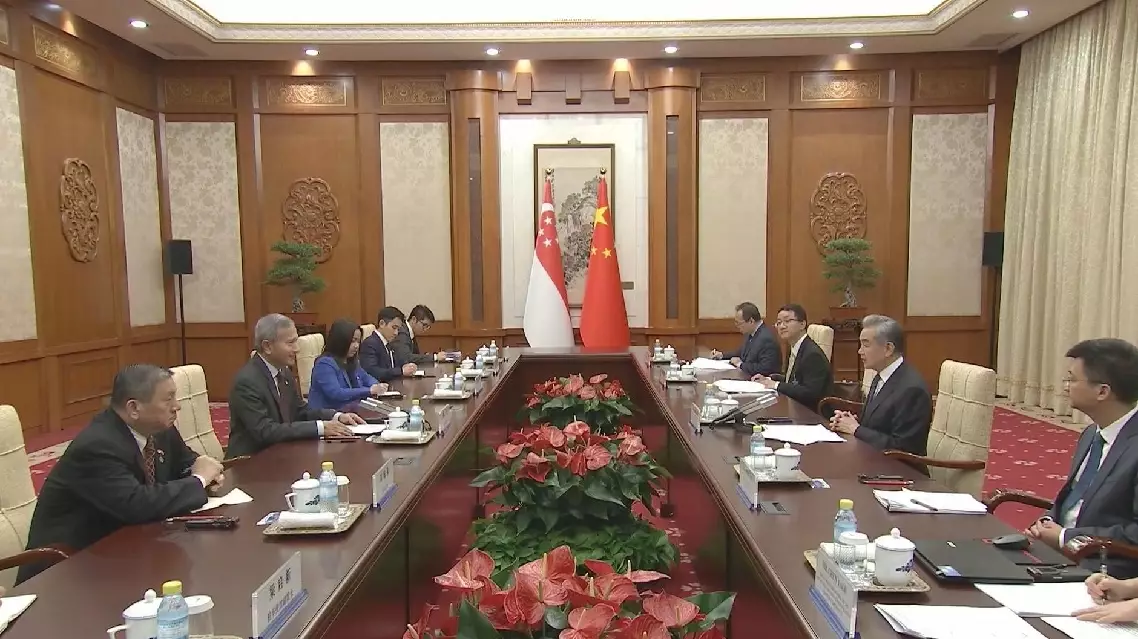
China ready to promote practical cooperation with Singapore: Chinese FM