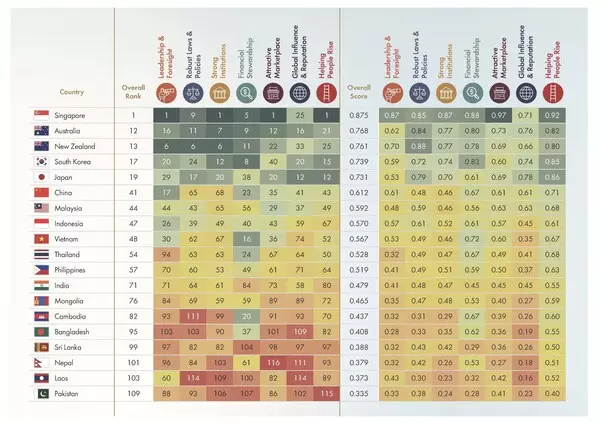
HA NOI, Viet Nam, Dec. 16, 2025 /PRNewswire/ -- Japan's strong institutional foundations and advances in data capability continue to anchor its position as one of Asia Pacific's leading governments, as highlighted at yesterday's regional knowledge-sharing forum for the Chandler Good Government Index (CGGI) 2025. The forum, hosted by the Ho Chi Minh National Academy of Politics (HCMA), the Academy of Public Administration and Governance (APAG) and the Chandler Institute of Governance (CIG), reviewed regional trends alongside Japan's performance.
Experience the interactive Multichannel News Release here: https://www.multivu.com/chandler-institute-of-governance/9372451-en-chandler-good-government-index-2025
Now in its fifth year, the CGGI measures government capabilities and outcomes in 120 countries. It provides comparative benchmarks across seven pillars, covering Leadership and Foresight, Robust Laws and Policies, Strong Institutions, Financial Stewardship, Attractive Marketplace, Global Influence and Reputation, and Helping People Rise.
Watch the Forum Recording: https://bit.ly/4pDMwcX
Explore the CGGI Reports and Data: https://chandlergovernmentindex.com/
Download the Presentation Here
Japan: strong institutional performance with advances in digital capability
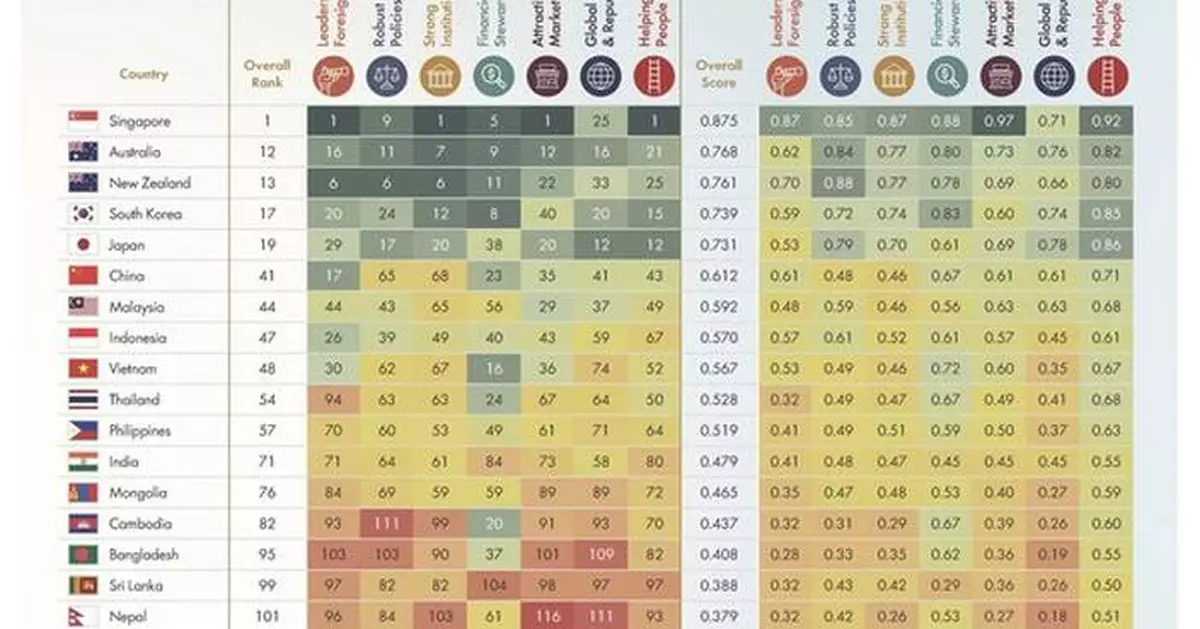
Japan ranks 19th in the CGGI 2025, continuing its long-standing top 20 performance. Over five years, results reflect stability and targeted improvements in critical governance areas.
One key gain is in data capability, now ranking 1st globally, up from 16th in 2021. This places Japan alongside leading digital governments including Australia, Denmark, and Estonia. The improvement reflects continued investment in digital transformation, including reforms by Digital Agency to streamline services, integrate systems, and improve accessibility.
The country also stands out for its strong legal and institutional framework. In 2025, Japan ranks:
- 17th globally in the Robust Laws and Policies pillar, up two places since 2021
- 20th globally in the Strong Institutions pillar, also up two places; and
- 12th in the Helping People Rise pillar, reflecting strong performance in health, personal safety and other social indicators.
Speaking at the forum, Dinesh Naidu, Director (Knowledge) at CIG, noted that Japan's sustained investment in institutional quality remains critical as the government navigates changes in demographics, technology and service delivery expectations. "Japan's example shows that strong institutions, when combined with strategic reform, can provide an effective foundation for future growth," Naidu said.
Asia Pacific: diverse trajectories with strong performers
Asia Pacific remains one of the most diverse governance regions in the Index. In 2025, Singapore (1), Australia (12), New Zealand (13), South Korea (17) and Japan (19) were the region's top five performers, demonstrating multi-year consistency rooted in strong institutions and long-term planning. Japan remains an integral part of this group of regional leaders, shaping policy discourse through its administrative quality, regulatory standards and contributions to regional cooperation.
Among emerging economies, Mongolia stands out for its upward trajectory, rising from 88th in 2021 to 76th in 2025, with gains in Leadership and Foresight and improvements to digital service delivery under its Vision 2050 strategy.
These developments reflect a broader global trend: governments that invest in capability see tangible progress relative to their peers. This dynamic is part of what the Index refers to as "governance competition", where advances in one country raise expectations for others. "The CGGI shows that capability building matters. As countries improve faster, they raise the bar and set new benchmarks for everyone else. Standing still is no longer an option," Naidu said.
A practical tool for governments
Designed by practitioners for practitioners, the CGGI offers governments practical benchmarks and insights to support long-term capability development. Countries use the Index to understand their strengths, identify areas for improvement, and learn from peers across the region.
"The Index is intended to support governments that are committed to long-term improvement," Naidu added. "We hope today's discussions contribute to a stronger, more capable, and future-ready Asia Pacific."
The Chandler Institute of Governance (CIG) is a non-profit organisation that works with governments worldwide to build a strong and efficient public sector. We focus on the critical 'how' of governance in our partnerships with governments to strengthen institutions and systems, equip leaders, and share knowledge. We are not affiliated with any national government or political party, and we do not represent any partisan or commercial interests.
** The press release content is from PR Newswire. Bastille Post is not involved in its creation. **
Japan's Governance Model Strengthened by Digital Capability and Institutional Stability, the Chandler Good Government Index 2025 Finds
At Anker Day 2026, Anker Innovations marks its 15th anniversary by unveiling THUS™ - ANKER's first neural-net Compute-in-Memory AI audio chip - and a new generation of products across soundcore and eufy.
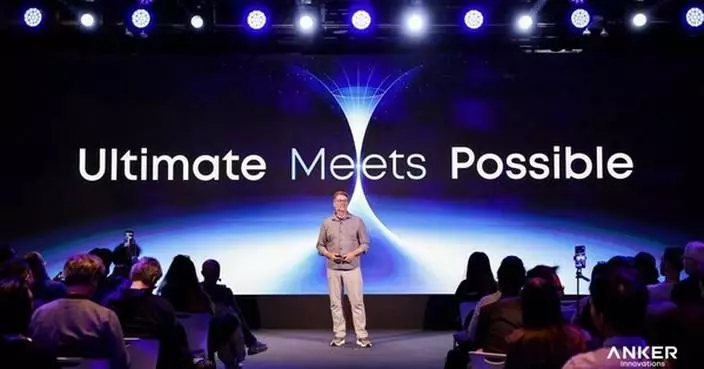
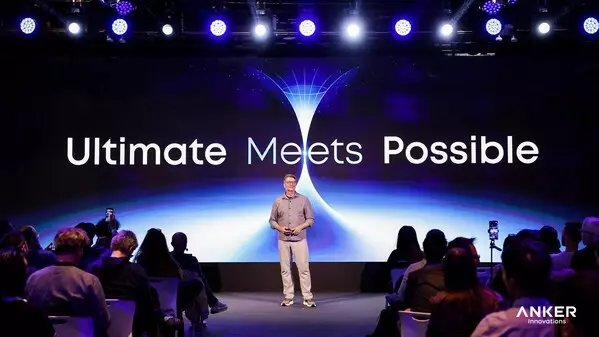
NEW YORK and Bellevue, Wash., May 22, 2026 /PRNewswire/ -- Anker Innovations is hosting Anker Day 2026: Where Ultimate Meets Possible, its annual brand event to showcase the newest product launches and technology break-throughs across its portfolio. Where Ultimate Meets Possible will bring together media, retail buyers and key influencers for an exclusive look at what's next in consumer electronics, spanning premium audio, home energy and the smart home appliances.
Where Ultimate Meets Possible will be held at STORIED in New York City, an invite-only experience featuring keynote presentations, hands-on product demonstrations and a deep dive into the company's latest innovations.
Anker Day 2026 debuted innovations across three brands: soundcore's Liberty 5 Pro and Pro Max — the first earbuds powered by Anker's new THUS™ AI chip — alongside VibeOS AI platform and Nebula SpaceFlow; Anker SOLIX's S2000, the world's longest-lasting 2kWh home backup power station; and eufy's EdgeAgent™, a local AI home security agent, plus new baby care products.
Started With Power
Anker was founded in 2011 and released its first product in the following year: a 4,500mAh ultra-slim power bank. It was a modest beginning, but behind it was an engineering conviction that would shape everything that followed. If technology is going to make a meaningful difference in people's lives, it has to be built to the highest possible standard.
2012 - The Beginning
Anker's first product: a 4,500mAh ultra-slim power bank - the start of a commitment to putting well-engineered, reliable power in people's hands.
2013 - PowerIQ™
Introduced PowerIQ™, enabling fast-charging compatibility across both iOS and Android - setting the standard for universal charging intelligence.
2018 - GaN from Aerospace
An early adopter of Gallium Nitride (GaN) from aerospace applications for consumer charging - delivering a 40% size reduction without sacrificing output.
2019 - World's Smallest 18W Charger
Delivered the world's smallest 18W charger at the time - proving that ultimate performance and ultra-compact form are not a trade-off.
2022 - GaNPrime™
Pioneered high-power multi-port chargers with dynamic power distribution - intelligently allocating power across multiple devices simultaneously.
2023 - 240W Wall Charger
Delivered the industry's highest-power 240W wall charger at the time - meeting the demands of the most power-hungry professional setups.
2024 - InstaCord™ & UltraDura™
In 2024, InstaCord™ became Anker's most advanced retractable‑cable technology and UltraDura™ achieved industry‑leading durability.
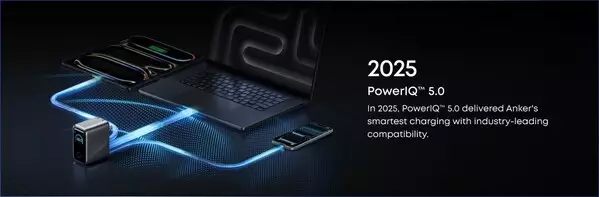
2025 - GaNPrime™ 2.0 • PowerIQ™ 5.0 • AnkerSense™ View • TurboBoost™
GaNPrime™ 2.0 (most advanced fast charging), PowerIQ™ 5.0 (smartest compatibility), AnkerSense™ View (intelligent display technology), and TurboBoost™ for ultra-fast power bank recharging. The pursuit never stops.
Fifteen years. Eight technology generations. Every breakthrough driven by one and only promise: seeking the ultimate innovation, not as an end in itself, but because technology built to its highest standard is how we put the possibilities people want in their lives within reach. Technology in service of people. That is what this pursuit has always meant.
Today's Milestone: Anker Thus™
For 80 years, chip design has followed the same logic established by John von Neumann in 1945: separate the processor from memory, and shuttle data between them one instruction at a time. For eight decades across mainframes, desktops, and data centers, this model worked. AI breaks that assumption. A neural network draws on millions of learned parameters all at once - and in a wearable device, moving that data between memory and processor consumes more than 90 percent of chip power, leaving almost nothing for actual computation.
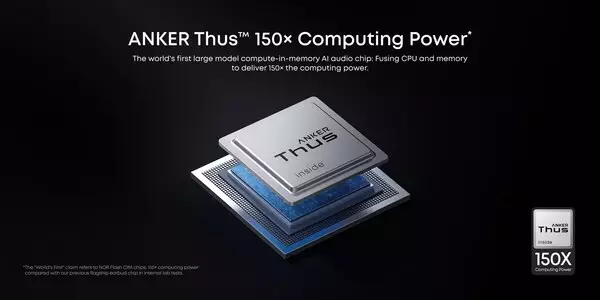
THUS™ applies a different principle: embed computation directly inside NOR Flash memory cells, where the model already lives. The model parameters never have to move. The energy previously consumed by data movement is redirected entirely to computation.
The first THUS™ AI chip debuts in earbuds, delivering up to 150 times more AI computing power on the environmental noise cancellation task than Anker's previous-generation flagship earphones.
Clear Calls - the chip's first disclosed feature - runs a large neural network entirely on-device, anchored by eight MEMS microphones and two bone conduction sensors, for a significantly clear call in any environment. Additional AI-powered features including Signature Sound and Voice Control debuted at Anker Day.
"Every AI chip built until now stores the model on one side and does the computation on the other. To think, the device has to carry all those parameters across, many times per second, every single inference. THUS™ puts the computation where the model already lives. The model never has to move again."
- Steven Yang, Founder and CEO, Anker Innovations
THUS™ takes inspiration from "Thus have I heard", a Buddhist phrase that reflects direct transmission - knowledge conveyed as it was experienced, without distortion.
All performance figures are based on internal Anker lab tests. The 150× AI computing power figure applies specifically to the environmental noise cancellation task and reflects the architectural change from rule-based to neural-net AI processing. It is not a general performance claim and does not reflect a process node upgrade. The environmental noise cancellation workload referenced here runs as an on-device neural network model on the first THUS™ chip.
Anker soundcore Liberty 5 Pro: The First Product Powered by Anker Thus™
The soundcore Liberty 5 Pro and Liberty 5 Pro Max are the first two products to ship with the THUS™ chip. Their positioning is organized around three on-device intelligence layers the chip enables - understanding, adapting, and tuning - each representing a function earbuds could not credibly perform before neural-net AI became viable at this scale. Coming to the market soon.
15 Years, One Promise
From our first power bank to a proprietary AI chip in 2026 - the categories we build in keep expanding, and so does the scope of what technology can do for people's lives. Our promise has been one and only, seeking the ultimate innovation, with the conviction that technology built to its highest standard makes the possibilities people want in their lives the ones they can actually live. Fifteen years is long enough to know that trust is earned slowly. Fifteen years in. The pursuit continues.
About Anker Innovations
Anker Innovations is a global consumer technology company driven by ultimate innovation, creating products that help people power, create, connect, and live more freely. Founded in 2011, Anker Innovations serves more than 200 million consumers across 146 countries and regions. Learn more at anker.com.
DISCLAIMER
*Statements in this news release that are not statements of historical fact may include forward-looking statements regarding future events or the future financial performance of the company. We wish to caution you that such statements are just predictions and that actual events or results may differ materially. Forward-looking statements involve a number of risks and uncertainties surrounding competitive and industry conditions, market acceptance for the company's products, risks of litigation, technological changes, developing industry standards and other factors related to the company's businesses. The actions referred to in this press release are not an admission or acknowledgement of any claim or allegation. The Company reserves all of its rights.
** This press release is distributed by PR Newswire through automated distribution system, for which the client assumes full responsibility. **
15 Years of Seeking Ultimate Innovation: From Power Banks to Proprietary AI THUS™ Chip
15 Years of Seeking Ultimate Innovation: From Power Banks to Proprietary AI THUS™ Chip
15 Years of Seeking Ultimate Innovation: From Power Banks to Proprietary AI THUS™ Chip