With China’s southern island province of Hainan developing into a major free trade port, it is becoming a key gateway linking the Chinese and global markets, especially in advanced, niche sectors, according to an expert from the National University of Singapore (NUS).
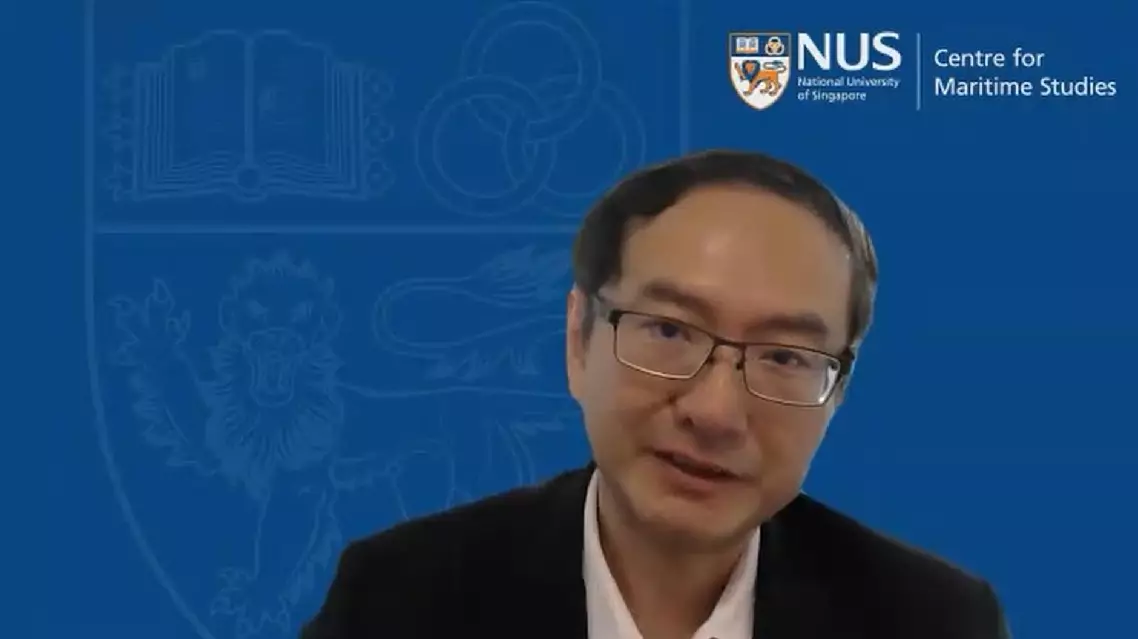
In a recent interview with China Global Television Network (CGTN), Goh Puay Guan, Track Leader at the Centre for Maritime Studies of NUS, highlighted Hainan's unique role in advancing China's high-standard opening-up.
"Traditionally, it (Hainan) started as sort of an agriculture-and-tourism type industry. And I understand that now there's a lot of push towards higher value-added manufacturing, in biotechnology, robotics, AI, etc. So I think in areas like that, it can sort of play a complementary role that helps it to act as a gateway right into the main Chinese market and vice versa, as a conduit for the products to come out through the Hainan free trade market and then go out to the rest of the world,” he said.
To fully leverage its unique position, Hainan should focus on advanced, niche industries and seek broader development on the basis of those, said Goh.
"It (Hainan) may have to select certain niche areas that it can be very strong in, for example, healthcare or medical services. So certain niche areas like this, where it potentially can play a certain role, I think that it may be good, in this way, to find certain roles it can take part in and therefore be able to tap on these different sectors of China's growth and economy," he said.
Hainan to be gateway into Chinese market, featuring higher value-added industries: expert
China's permanent representative to the United Nations Fu Cong on Monday once again urged the Japanese side to retract erroneous remarks on Taiwan.
Fu made this statement at an open debate of the UN Security Council on leadership for peace.
Noting that this year marks the 80th anniversary of the victory of the Chinese People's War of Resistance Against Japanese Aggression and the World Anti-Fascist War, Fu said leadership for peace begins with "cherishing peace and upholding justice."
He emphasized that at a time when the international community is reflecting on history and planning for the future, it is outrageous that Japan's Prime Minister Sanae Takaichi has gone against the trend by claiming that the so-called survival-threatening situation for Japan is linked to Taiwan of China, and by implying and threatening that Japan would militarily intervene in the Taiwan question.
The Fu noted that what Takaichi did constitutes a blatant interference in China's internal affairs, openly contravenes the commitments made by Japan as a defeated state in World War II to China and the international community, directly challenges the victorious outcomes of World War II and the post-war international order, violates the basic norms governing international relations based on the purposes and principles of the UN Charter, and poses serious risks to peace in Asia and the world at large.
"The lessons of World War II are still fresh. Eighty years ago, Japanese militarists expanded armaments under the pretext of a so-called survival-threatening situation and launched external aggression in the name of self-defense, bringing profound catastrophes to China, the wider Asia and the whole world. Eighty years on, we must never allow the resurgence of militarism and fascism. China, once again, urges the Japanese side to retract these erroneous remarks, earnestly reflect upon and repent the wrongdoings, and refrain from continuing down the wrong path."
Fu said Japan's return of Taiwan, which it had unlawfully seized, to China, constitutes an important component of the post-war international order.
He then stressed that Taiwan is an inalienable part of China's territory,which is an ironclad fact jointly affirmed in political and legal terms.
Chinese diplomat again urges Japan to retract erroneous remarks on Taiwan