PROVIDENCE, R.I. (AP) — The ongoing effort to find a man who walked onto Brown University ’s campus during a busy exam season and shot nearly a dozen students in a crowded lecture hall has raised questions about the school's security systems and the urgency of the investigation itself.
A day after Saturday's mass shooting, officials said a person of interest taken into custody would be released without charges, leaving investigators with little actionable insight from the limited security video they had recovered and scrambling to develop new leads.
Click to Gallery
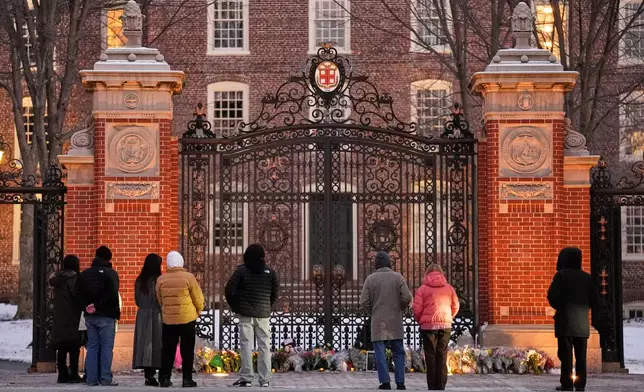
Visitors pause at a makeshift memorial for the victims of Saturday's shooting, at the Van Wickle Gate at Brown University, Monday, Dec. 15, 2025, in Providence, R.I.(AP Photo/Robert F. Bukaty)
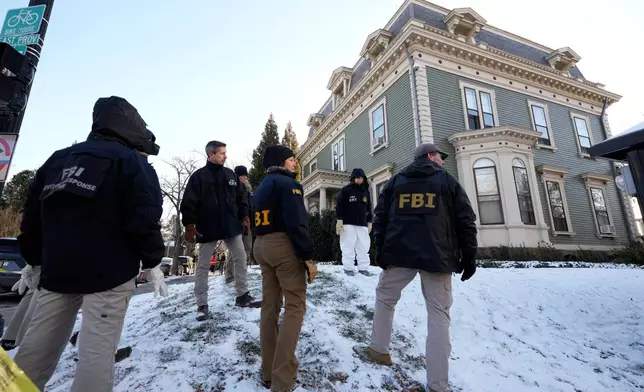
Members of the FBI Evidence Response Team search for evidence near the campus of Brown University, Monday, Dec. 15, 2025, in Providence, R.I. (AP Photo/Robert F. Bukaty)
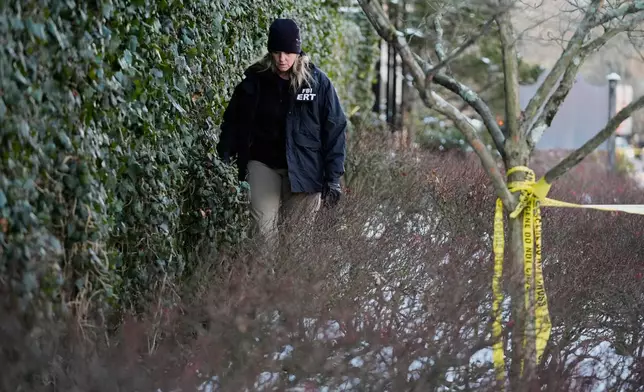
A member of the FBI Evidence Response Team searches for evidence near an ivy-covered wall following the shooting at Brown University, Monday, Dec. 15, 2025, in Providence, R.I. (AP Photo/Robert F. Bukaty)
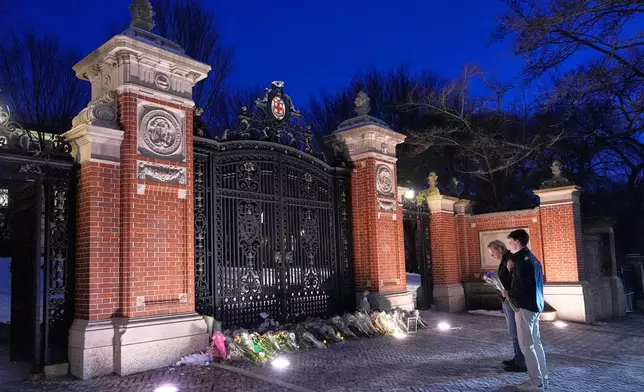
Visitors pause at a makeshift memorial for the victims of Saturday's shooting, at the Van Wickle Gate at Brown University, Monday, Dec. 15, 2025, in Providence, R.I.(AP Photo/Robert F. Bukaty)
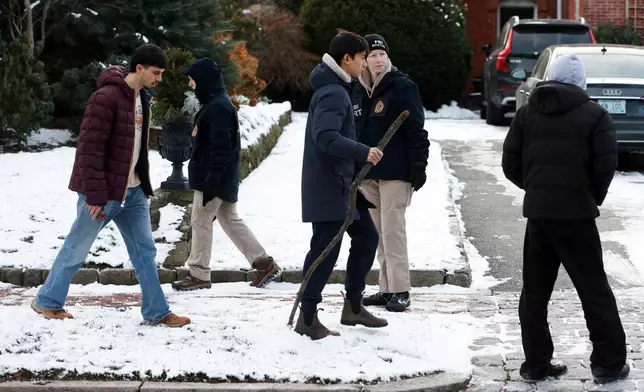
Pedestrians ask FBI agents, on the sidewalk on Cooke St. for updates, in Providence, R.I., two days after a shooting occurred on Brown University's campus, Monday, Dec. 15, 2025. (Lily Speredelozzi/The Sun Chronicle via AP)
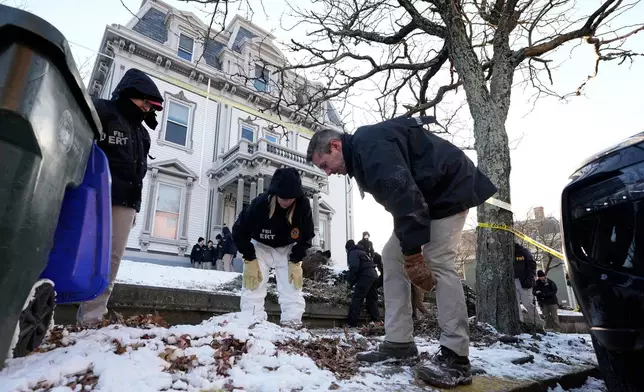
Members of the FBI Evidence Response Team search for evidence near the campus of Brown University, Monday, Dec. 15, 2025, in Providence, R.I. (AP Photo/Robert F. Bukaty)
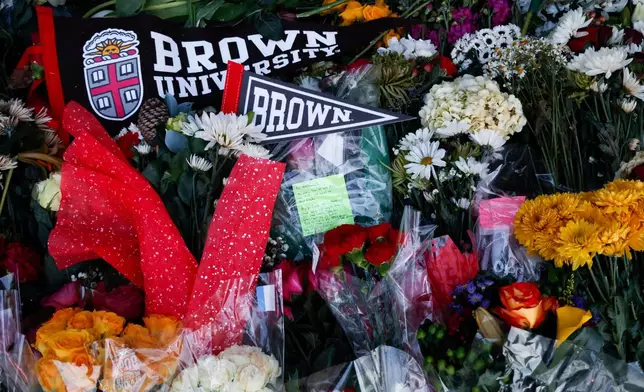
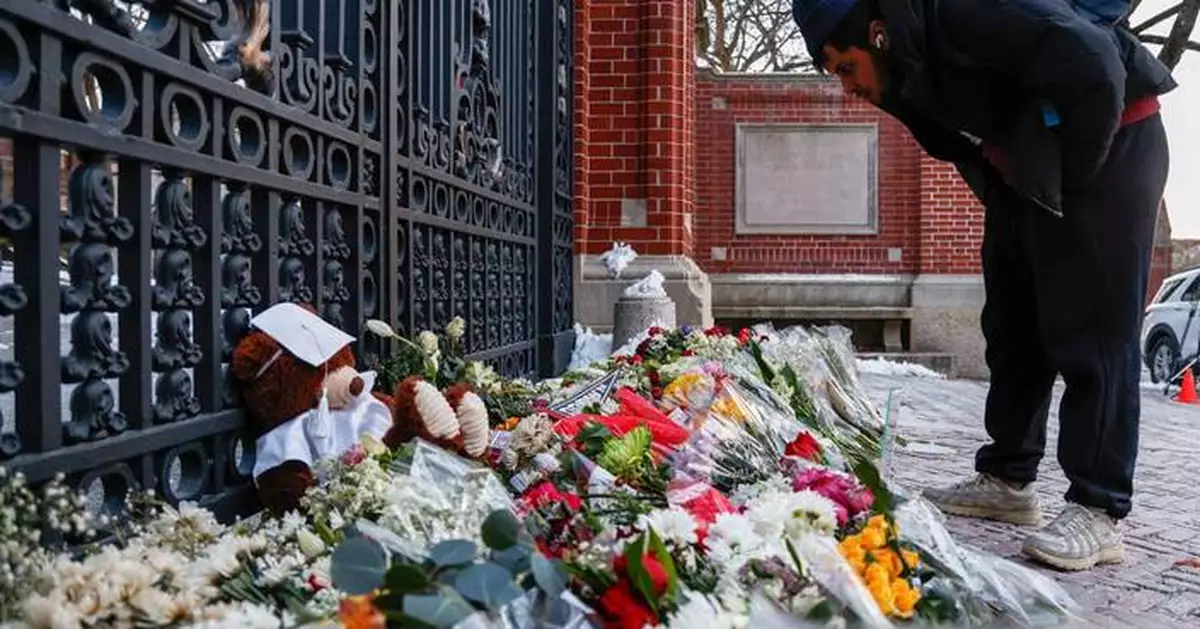
Community flowers, notes and mementos are placed in a makeshift memorial display in front of Brown University's Van Wickle gates, in Providence, R.I., two days after a shooting took place on Brown University's campus, Monday, Dec. 15, 2025. (Lily Speredelozzi/The Sun Chronicle via AP)
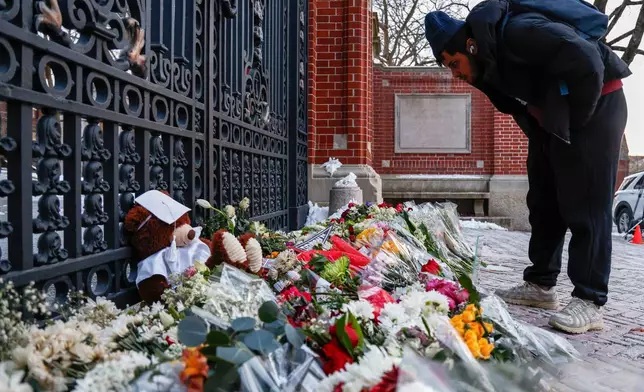
A community member looks at flowers, notes and mementos in a makeshift memorial display sitting in front of Brown University's Van Wickle gates, in Providence, R.I., two days after a shooting took place on the university's campus, Monday, Dec. 15, 2025. (Lily Speredelozzi/The Sun Chronicle via AP)
Law enforcement officials were still doing basic investigative work days after the shooting that killed two students and wounded nine, canvassing local residences and businesses for security camera footage and looking for physical evidence. That's left students and some Providence residents frustrated at perceived gaps in the university’s security and camera systems that helped allow the shooter to disappear.
“The fact that we’re in such a surveillance state but that wasn’t used correctly at all is just so deeply frustrating,” said Li Ding, a student at the nearby Rhode Island School of Design who dances on a Brown University team.
Ding is among hundreds of students who have signed a petition to increase security at school buildings, saying that officials need to do a better job keeping the campus secure against threats like active shooters.
“I think honestly, the students are doing a more effective job at taking care of each other than the police,” Ding said.
Kristy dosReis, chief public information officer for the Providence Police Department, said that at no point did the investigation stand down even after officials appeared to have a breakthrough in the case, detaining a Wisconsin man who they now believe was not involved.
The FBI put out a video timeline Tuesday that includes new footage of the second man of interest from before the attack. It shows him along quiet residential streets near campus. Authorities believe he was casing the area, Col. Oscar Perez, the Providence police chief, said. Police and the FBI had previously released video and photographs of the man, who wore a mask in the footage.
While Brown University is dotted with cameras, there were few in the Barus and Holley building, home of the engineering school that was targeted.
“Reality is, it’s an old building attached to a new one,” Rhode Island Attorney General Peter Neronha told reporters about the lack of cameras nearby.
Brown President Christina Paxson defended the university's response, saying it was deeply committed to the safety, security and well-being of its students. She also said the campus is equipped with 1,200 cameras.
“I have been deeply saddened by people questioning that,” she said Tuesday. “As time goes on, there is a natural instinct to assign responsibility for tragic events like this. Anxiety here is very natural, but the shooter is responsible. Horrific gun violence took the lives of students and hospitalized others, and it’s deeply sad and tragic that schools across the country are targets of violence. Brown is no exception.”
Paxson said the university has two security systems. One system is activated at a time of emergency and sent out text messages, phone calls and emails that, in this shooting, reached 20,000 individuals. The other system features three sirens across the campus, but Paxson said that would not be activated in an active shooter situation.
“Those get activated when there is a broad scale emergency, and we want people to rush into buildings,” she said. “In the case of an active shooter, activating that system could have caused people to rush into Barus and Holley. So that is not a system we would ever use in the case of an active shooter.”
When pressed by a reporter who noted the university website says the sirens can be used when there is an active shooter, Paxson reaffirmed she didn’t think it would be used in that situation.
“It depends on the circumstances and where the active shooter would be but you don’t want to ever get people rushing into buildings that might be the site of an active shooter,” she said.
But some said they were uncertain what to do during a prolonged campus lockdown.
Chiang-Heng Chien, a 32-year-old doctoral student in engineering, hid under desks and turned off the lights after receiving an alert about the shooting in a campus lab.
“While I was hiding in the lab, I heard the police yelling outside but my friends and I were debating whether we should open the door, since at that moment the shooter was believed to be (nearby),” he said in a text.
Law enforcement experts say colleges are often at a disadvantage when responding to threats like an active shooter. Their security officers are typically less trained and paid less than in other law enforcement departments. They also don’t always have close partnerships with better-resourced agencies.
Often, funding for campus police departments is not a top priority, even for schools with ample resources, said Terrance Gainer, a former Illinois law enforcement official who later served as the U.S. Senate’s sergeant-at-arms.
“They just aren’t as flush in law enforcement as you would think. They don’t like a lot of uniformed presence, they don’t like a lot of guns around,” said Gainer, who is now a consultant. “Whether it’s Brown or someone else, a key question is, what type of relationship do they have with the local police department?”
At Utah Valley University, where conservative leader Charlie Kirk was assassinated by a shooter on a school building roof last summer, the undersized campus police department never asked neighboring agencies to assist with security at the outdoor Kirk event that attracted thousands, an Associated Press review found.
Providence has an emergency alert system, but it switched from a mobile app to a web-based system in March. The new system requires someone to register online to receive alerts — something not all residents knew.
Emely Vallee, 35, lives about a mile (1.6 kilometers) from Brown with her two young children. She said she received “absolutely nothing” in alerts. She relied instead on texts from friends and the news.
Vallee had expected to be notified through the city’s 311 app, but hadn’t realized that Mayor Brett Smiley phased out the app in March. Smiley said his administration sent out multiple alerts the day of the shooting using the new 311 system and has continued to send them.
Hailey Souza, 23, finished her shift at a smoothie shop just off-campus minutes before the shooting. Everything seemed normal and quiet, Souza said.
The shop Souza manages, In The Pink, is a block from the engineering building. One of the shooting victims, Ella Cook, was a regular at the store, Souza said. Cook had come in a few days earlier and said her last final was Saturday.
Souza later learned that police came by the store to tell her co-workers about an active shooter. But Souza never received an emergency alert. “Nothing,” she said.
Wieffering, Tau and Slodysko reported from Washington. Associated Press writers Kimberlee Kruesi and Matt O’Brien in Providence and Michael Casey in Boston contributed to this report.
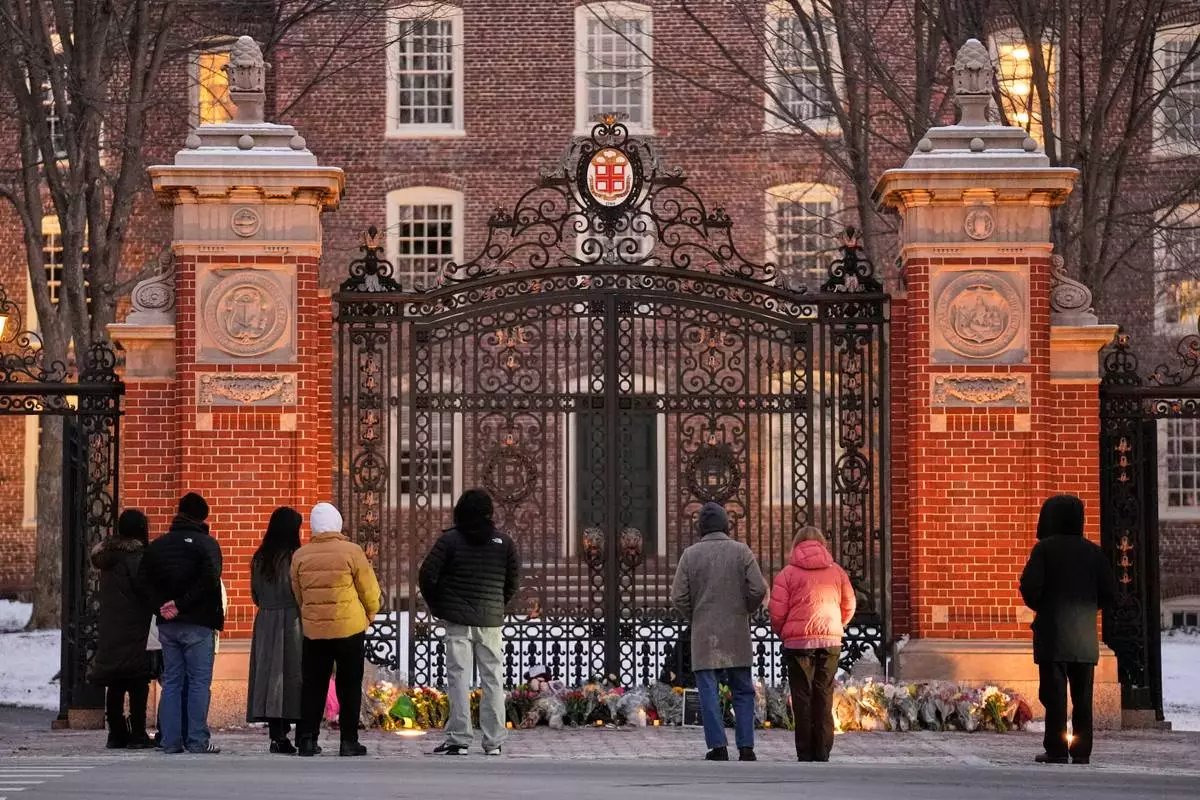
Visitors pause at a makeshift memorial for the victims of Saturday's shooting, at the Van Wickle Gate at Brown University, Monday, Dec. 15, 2025, in Providence, R.I.(AP Photo/Robert F. Bukaty)
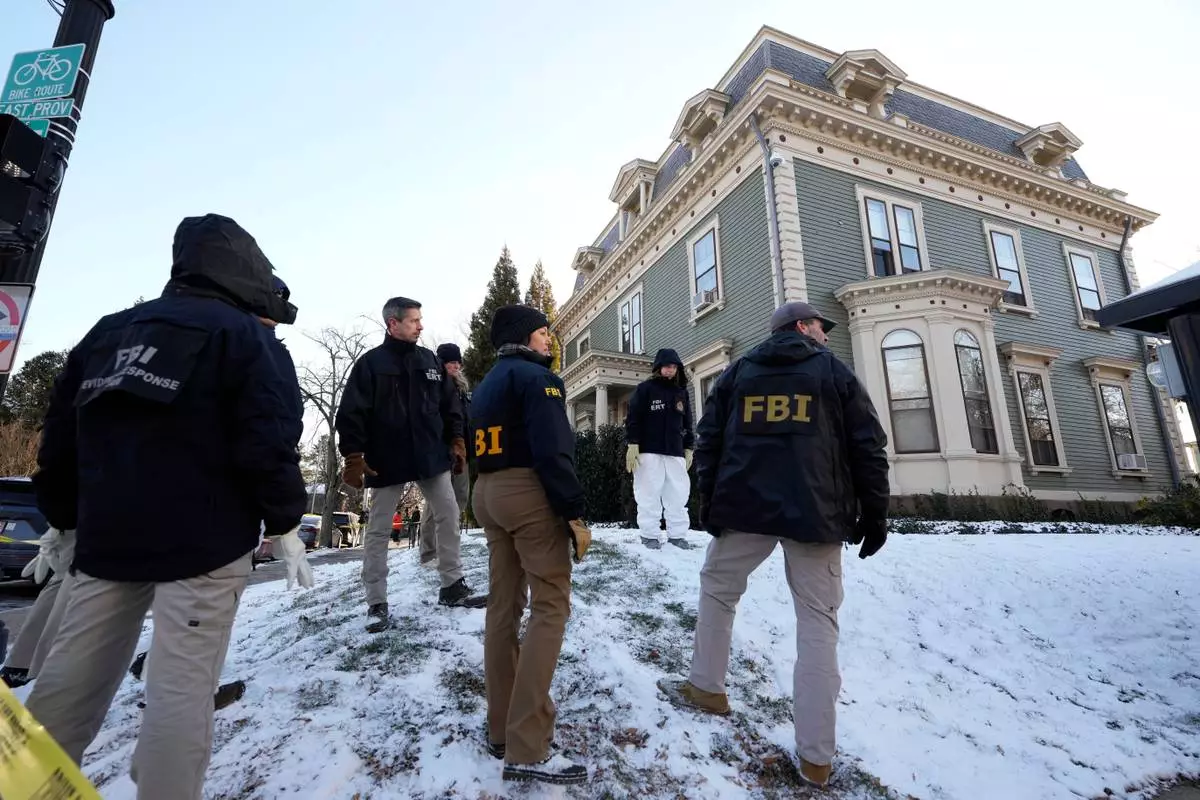
Members of the FBI Evidence Response Team search for evidence near the campus of Brown University, Monday, Dec. 15, 2025, in Providence, R.I. (AP Photo/Robert F. Bukaty)
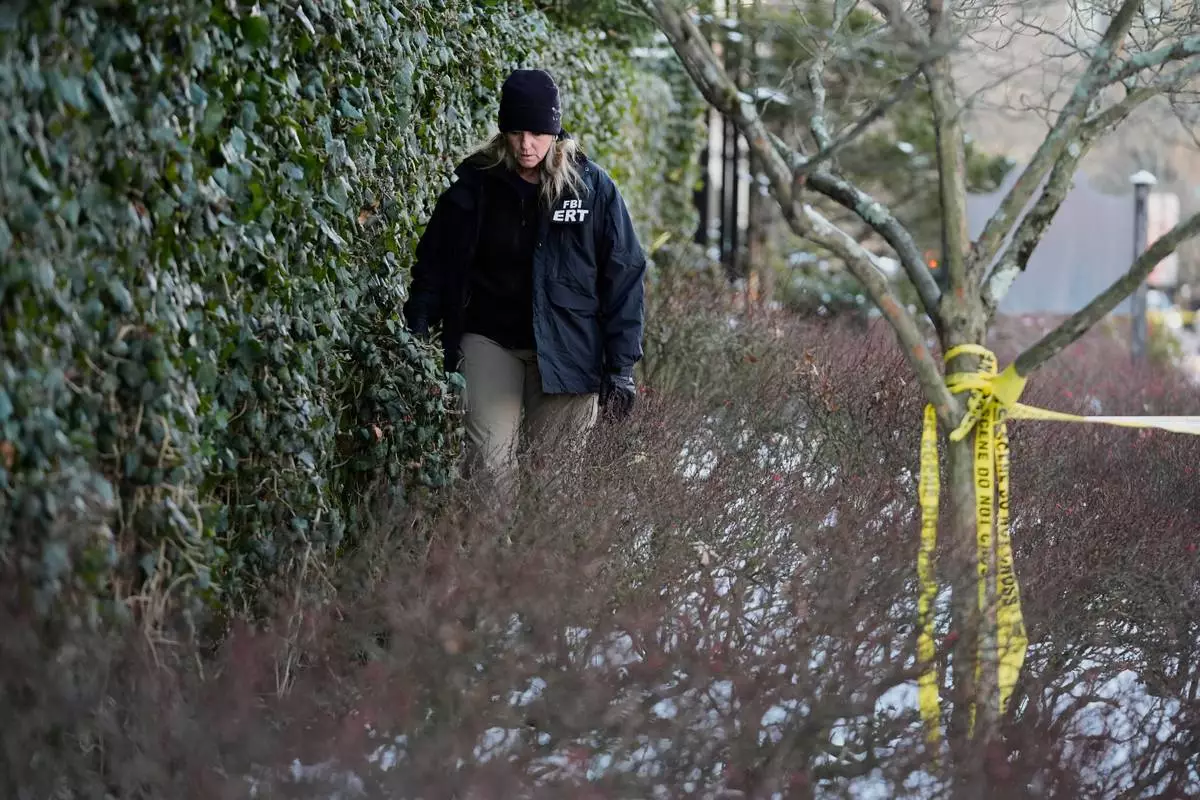
A member of the FBI Evidence Response Team searches for evidence near an ivy-covered wall following the shooting at Brown University, Monday, Dec. 15, 2025, in Providence, R.I. (AP Photo/Robert F. Bukaty)
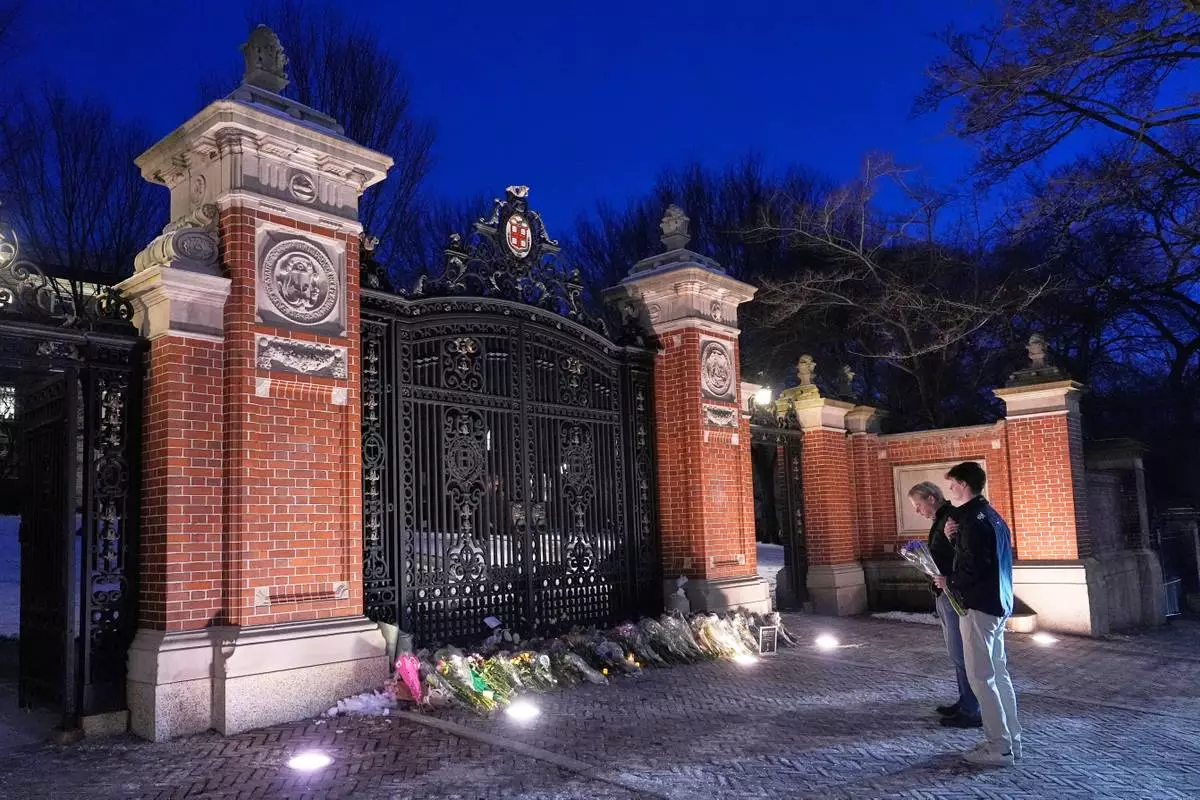
Visitors pause at a makeshift memorial for the victims of Saturday's shooting, at the Van Wickle Gate at Brown University, Monday, Dec. 15, 2025, in Providence, R.I.(AP Photo/Robert F. Bukaty)
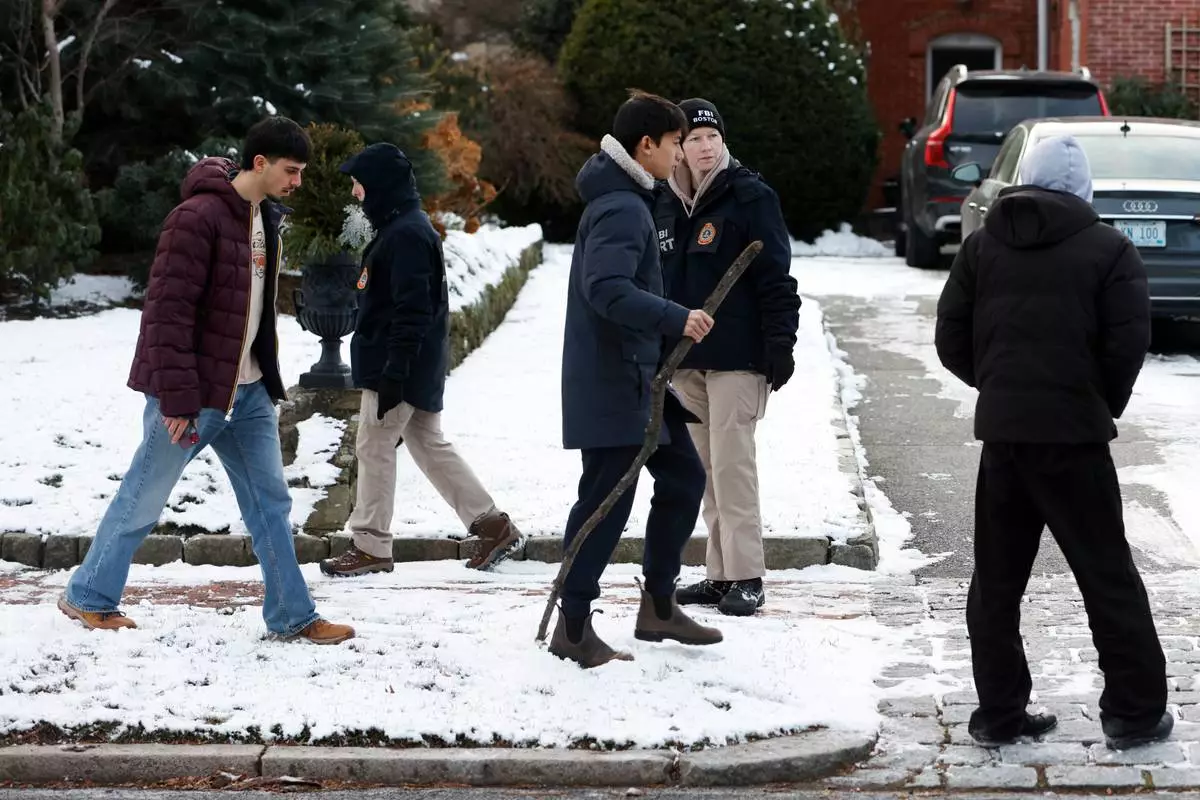
Pedestrians ask FBI agents, on the sidewalk on Cooke St. for updates, in Providence, R.I., two days after a shooting occurred on Brown University's campus, Monday, Dec. 15, 2025. (Lily Speredelozzi/The Sun Chronicle via AP)
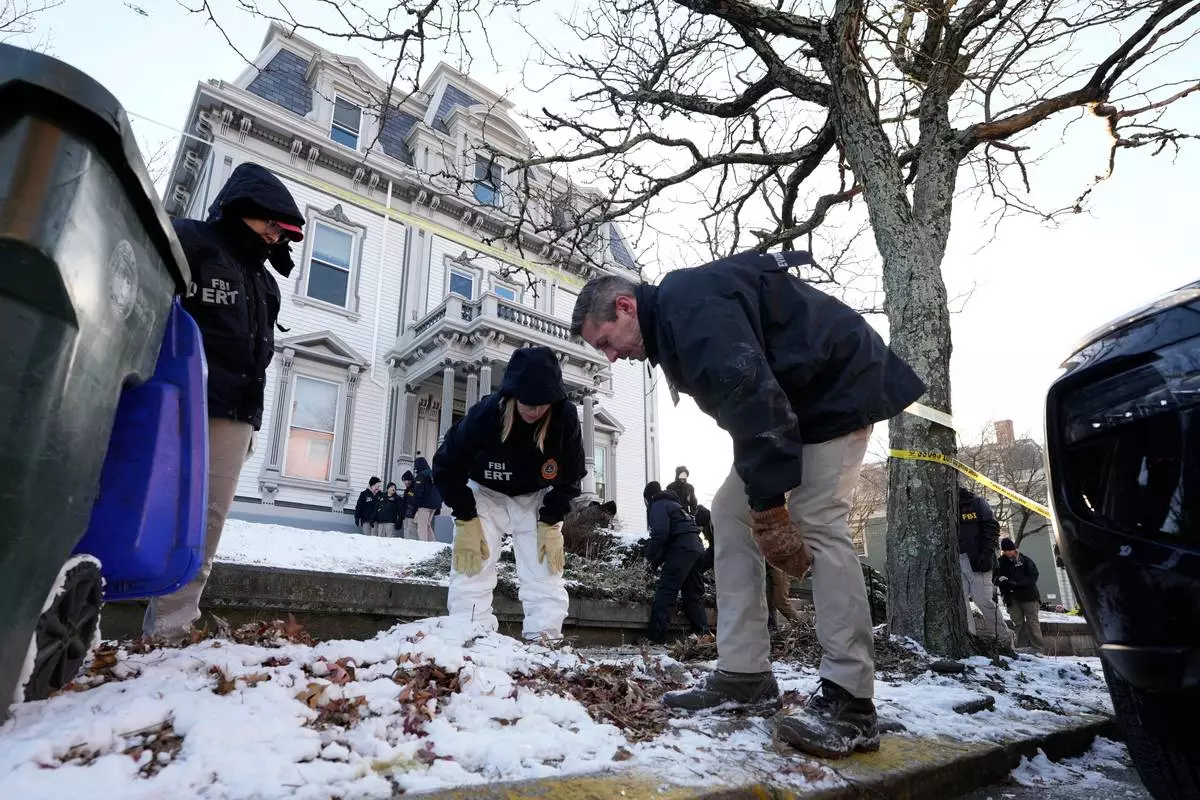
Members of the FBI Evidence Response Team search for evidence near the campus of Brown University, Monday, Dec. 15, 2025, in Providence, R.I. (AP Photo/Robert F. Bukaty)
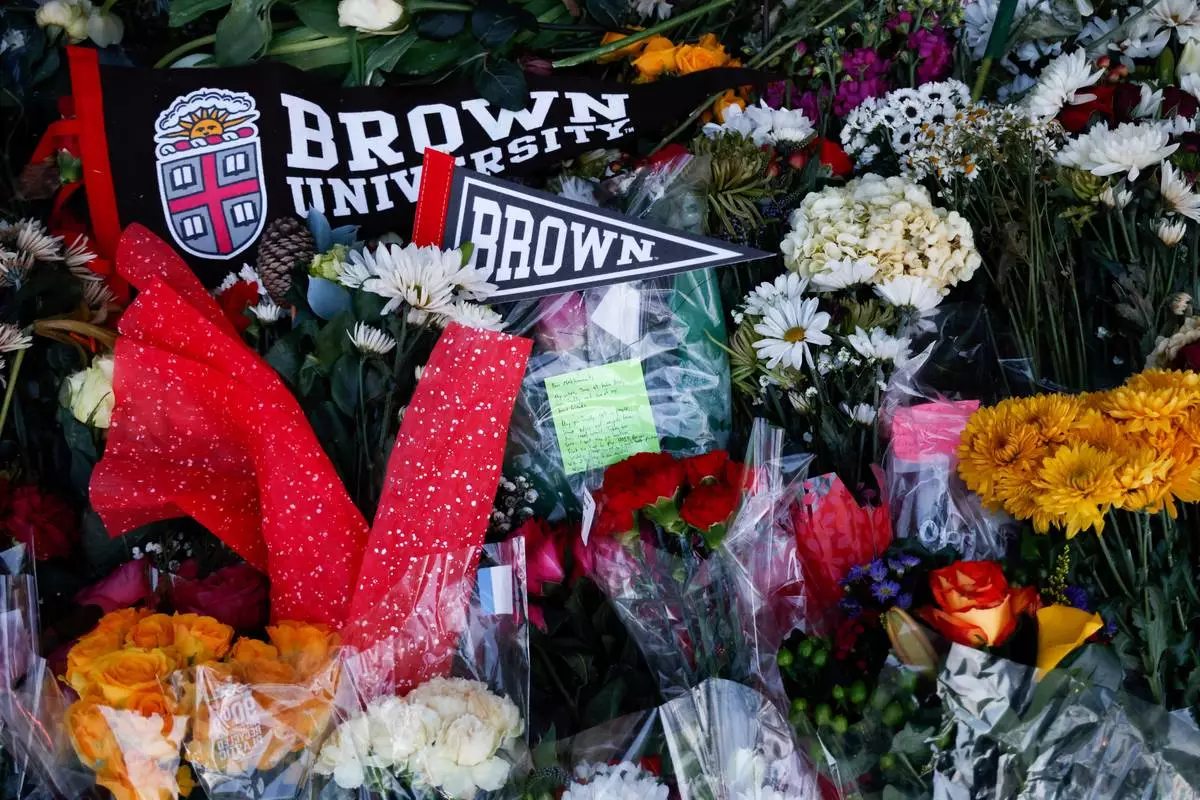
Community flowers, notes and mementos are placed in a makeshift memorial display in front of Brown University's Van Wickle gates, in Providence, R.I., two days after a shooting took place on Brown University's campus, Monday, Dec. 15, 2025. (Lily Speredelozzi/The Sun Chronicle via AP)
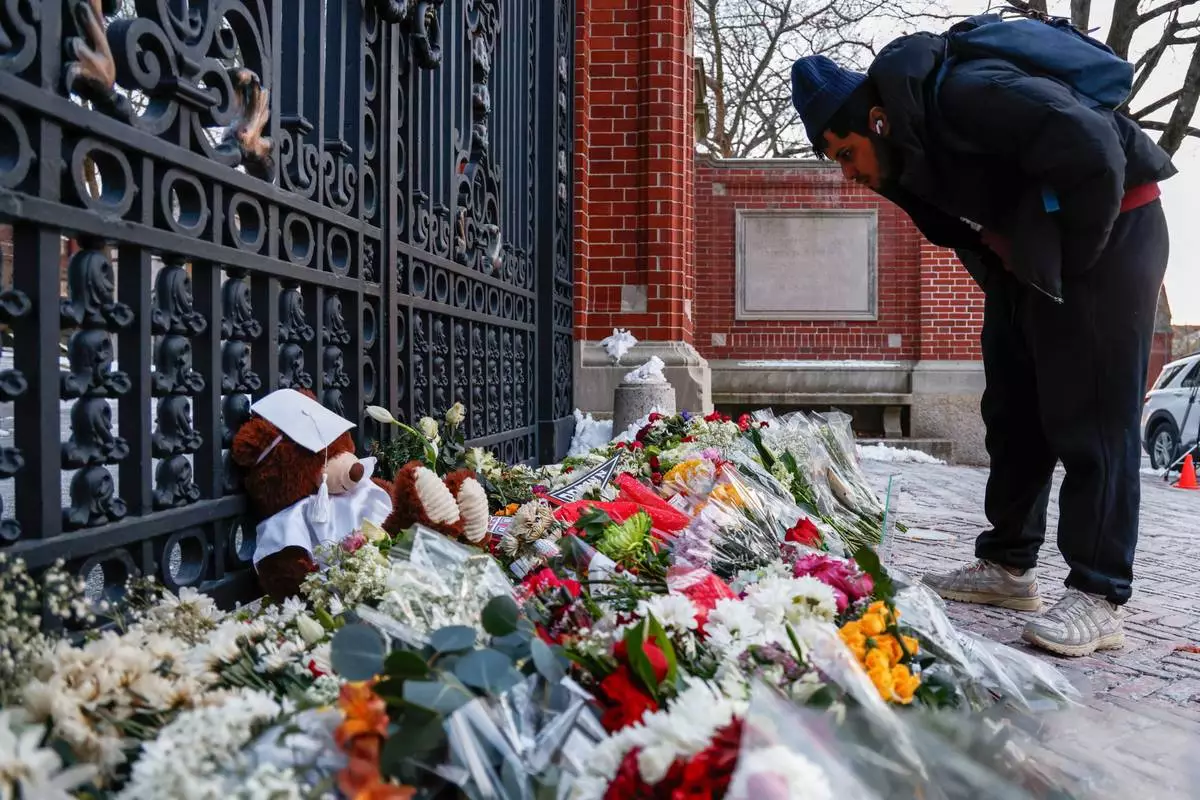
A community member looks at flowers, notes and mementos in a makeshift memorial display sitting in front of Brown University's Van Wickle gates, in Providence, R.I., two days after a shooting took place on the university's campus, Monday, Dec. 15, 2025. (Lily Speredelozzi/The Sun Chronicle via AP)