China will impose anti-dumping duties on imports of pork and pig by-products originating from the European Union (EU), effective from Wednesday, the Ministry of Commerce said Tuesday.
The anti-dumping duties, ranging from 4.9 percent to 19.8 percent on EU companies, will be in place for five years.
At the request of the China Animal Agriculture Association, on June 17, 2024, the ministry initiated an anti-dumping investigation into pork and pig by-products originating from the EU.
The ministry said it conducted the investigation in accordance with laws and regulations, extensively consulting various stakeholders to fully protect the rights of all parties, ultimately reaching an objective, fair and impartial conclusion.
The ruling shows that the imports of such products from the EU were dumped and caused substantial harm to the domestic industry in China.
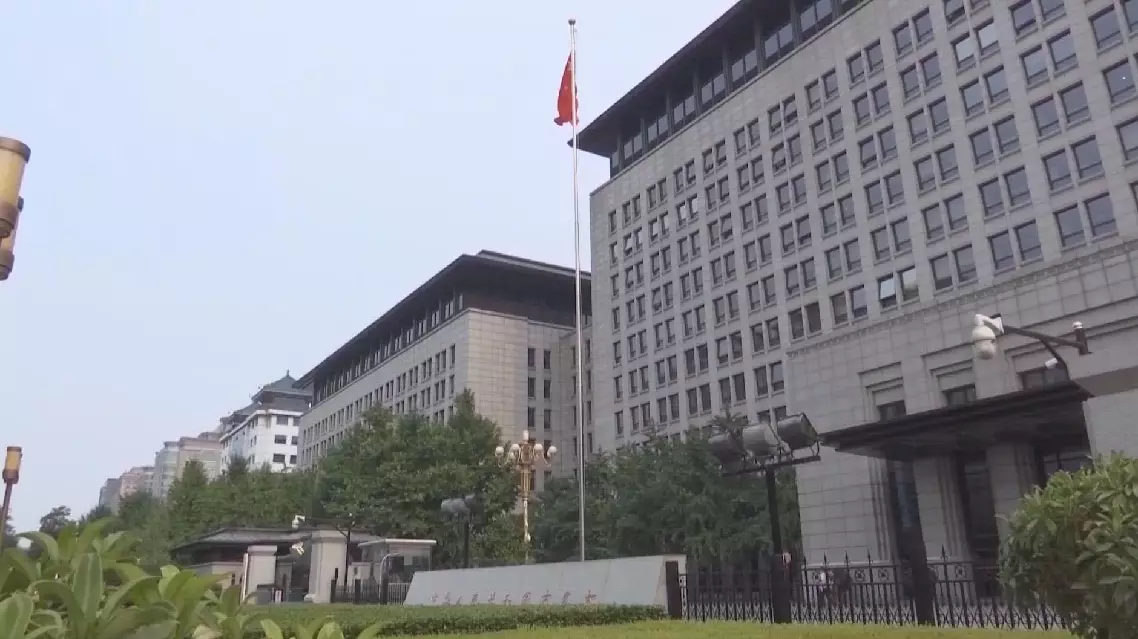
China to impose anti-dumping duties on certain pork imports from EU
China to impose anti-dumping duties on certain pork imports from EU
The maiden flight of China's independently developed Zhuque-3 reusable rocket, also the country's first attempt to recover an orbital stage of a carrier rocket, has made important breakthrough despite final-stage failure, said Dai Zheng, commander in chief of the Zhuque-3 mission.
The Zhuque-3 is a large-capacity, low-cost, reusable liquid launch vehicle independently developed by China to deploy large-scale constellations.
The Zhuque-3 rocket blasted off from the Dongfeng commercial space innovation pilot zone, near the Jiuquan Satellite Launch Center in northwest China.
After ignition and liftoff, the first and second stages of the rocket separated in about 130 seconds. The second stage continued to complete the orbital insertion mission, while the first stage began its return journey.
The reuse section appeared in people's sight on time. Nevertheless, its first-stage booster suffered anomalous combustion during recovery, failing to achieve a soft touchdown on the landing pad.
The specific causes are under investigation, according to Dai, also the CEO of LandSpace, the rocket's designer, who gave an exclusive interview to the China Central Television (CCTV) in Beijing.
"This launch was actually China's first attempt to recover the first stage of an orbital-deployed launch vehicle. From the very beginning, we didn't expect the maiden flight to be a guaranteed success, it was more of an experimental and exploratory endeavor, and the result is slightly regrettable," said Dai.
Getting a rocket from supersonic speed to a perfectly intact landing on the ground is an extremely difficult task for rocket control, and the retrieved footage from the rocket showed that Zhuque-3 is not far from success, according to Dai.
"After separation, it underwent a high-altitude, high-angle attitude adjustment. After the attitude adjustment, it ignited at an altitude of 80 kilometers. This high-altitude ignition phase is actually very successful. When it entered the lower 40-kilometer range, the engine was shut down. Then it entered the aerodynamic gliding phase, during which the rocket descended at a supersonic speed, which was very fast at this point, and we had to rely on the grid fins on the rocket and the onboard control system to control the rocket," he said.
"From 40 kilometers to the final three kilometers above the ground, the supersonic descent phase, the aerodynamic control during the phase were flawless. At three kilometers above the ground, a landing ignition was required, somewhat like an emergency brake. As the altitude dropped to zero, the speed essentially decreased to zero. Only then could the landing legs extend to absorb the final impact, allowing the rocket to land intact. This is an extremely challenging maneuver for rocket control. Our final attempt to brake failed, so it didn't function as a brake, and ultimately it crashed at the edge of the landing zone, approximately 40 meters from the designated touchdown center," said Dai.
Although the mission was not entirely successful, for Dai and his team, the successful entry into orbit is also very meaningful.
"The primary objective of this mission was to verify the rocket's ability to reach the designated orbit. It shows that our rocket is able to subsequently provide services to satellite customers. Recovery is a very important means for a rocket company to reduce costs, but for our customers, their requirement is you deliver their cargo, their payload, their satellite, to the intended operational orbit. Whether the rocket can be reused is not their concern. In fact, we didn't launch the rocket with a real payload this time, but with a dummy payload instead. For the rocket industry, especially for a private commercial rocket company like ours, a successful flight is essential to demonstrate the rocket's capability before we can sell it. This is actually an industry practice," said Dai.

China's self-developed reusable rocket achieves key breakthrough in maiden flight: mission leader