Skip to Content Facebook Feature Image

Dux Launches from Stealth With $9M Seed Round to Bring Agentic Exposure Management to Modern Cyber Defense

News

Dux Launches from Stealth With $9M Seed Round to Bring Agentic Exposure Management to Modern Cyber Defense
News

News

Dux Launches from Stealth With $9M Seed Round to Bring Agentic Exposure Management to Modern Cyber Defense

2025-12-16 21:40 Last Updated At:21:50

TEL AVIV, Israel & NEW YORK--(BUSINESS WIRE)--Dec 16, 2025--

Dux, an agentic exposure management platform built for the speed of AI-driven cyberattacks, today emerged from stealth with a $9 million seed round led by Redpoint, TLV Partners and Maple Capital, with participation from leading cybersecurity executives from CrowdStrike, Okta and Armis.

This press release features multimedia. View the full release here: https://www.businesswire.com/news/home/20251216193951/en/

Dux was created to eliminate exposures before they become attacks — by uncovering what's actually exploitable and finding the fastest path to safety. Already supporting major U.S. enterprises, the company was founded by Or Latovitz, Amit Nir and Nadav Geva, all graduates of the IDF’s elite Talpiot program who led large-scale offensive and defensive cybersecurity and AI initiatives for national agencies. Their work earned multiple national innovation awards and involved building operational systems deployed at a national scale.

This significant seed financing will support the expansion of Dux’s R&D team in Tel Aviv, grow its U.S. go-to-market organization, and accelerate development of the platform’s agentic capabilities across exploitability analysis, lightweight mitigation and continuous exposure management.

The Problem: Exploitation Now Moves Faster Than Remediation

Enterprises have long struggled with an increasing volume of assets, scanners and vulnerabilities — more than teams can realistically triage. AI has exacerbated this problem by dramatically increasing the speed at which vulnerabilities are exploited. Mandiant reports that, in just two years, the average time-to-exploit has collapsed from 32 days to just 5 days. Earlier this year, Anthropic documented the first real-world, AI-orchestrated cyber-espionage campaign where attackers used agentic AI not just for guidance but to execute attacks autonomously.

“These attacks don’t wait for patch cycles,” said Or Latovitz, co-founder and CEO of Dux. “Defenders need rapid insight into what’s actually exploitable and the means to reduce those exposures effectively, at the pace modern attacks demand.”

Dux’s Solution: An Agentic Approach Aligned to CTEM

Dux aligns with Gartner’s Continuous Threat Exposure Management (CTEM) framework, but applies it through agentic AI workers designed to reason like expert analysts at scale. Instead of generating more findings or another prioritization layer, Dux focuses on the essential question: What matters now, and what’s the fastest path to safety?

Dux’s AI-workers continuously analyze exploitability across the entire environment, determining whether existing controls already block a potential attack path, surfacing lightweight mitigations that can eliminate risk faster than a full patch and routing targeted remediation to identified owners only when necessary.

“Most scanner findings aren’t exploitable once you account for real context,” said Amit Nir, co-founder and CPO. “But discovering that manually takes expert judgment and deep knowledge of the environment. Agentic AI lets teams apply that level of reasoning across every vulnerability and asset, every time.”

The Shift: A New Operating Model for Vulnerability Management

“Attackers are moving faster than ever, and defenders need a platform built for that pace,” said Erica Brescia, managing director at Redpoint. “Dux puts vulnerabilities in the context of their actual threat to a business, and then uses AI agents exactly where speed and precision matter most to resolve them. At last, and with Dux, vulnerability management is something teams can finally get ahead of — overcoming what was an insurmountable hurdle during my time at GitHub.”

Dux represents a shift from periodic scans and manual triage to continuous, agentic investigation. The platform determines what’s viable for an attacker in a given environment and moves organizations toward the fastest safe fix, whether that’s a configuration change, a control update or a targeted patch. The result is a materially smaller attack surface and a far shorter path from vulnerability discovery to resolution.

“Every time a zero-day drops or a critical vulnerability hits the news, teams need answers fast. Our customers spin up AI-workers to investigate those vulnerabilities across their environment within minutes,” said Nadav Geva, co-founder and CTO. “That’s a level of rapid, environment-specific research that simply wasn’t possible before.”

“Most security tools show you what’s vulnerable. Dux shows you what attackers can actually use — and that’s a game changer,” said Rona Segev, co-founder and managing partner at TLV Partners. “Their AI agents bring a perspective that’s been missing from exposure management, and the Dux team has precisely the kind of experience you want steering a shift of this magnitude.”

About Dux

Dux is an agentic exposure management platform that rapidly uncovers what is truly exploitable in an environment and eliminates it fast. The platform uses AI-workers to perform continuous exploitability analysis, surface control-based mitigations and accelerate remediation across the entire environment. Founded by veterans of national-scale cyber and AI programs, Dux is backed by Redpoint, TLV Partners and Maple Capital and operates in the United States and Israel.

Learn more at https://dux.io/.
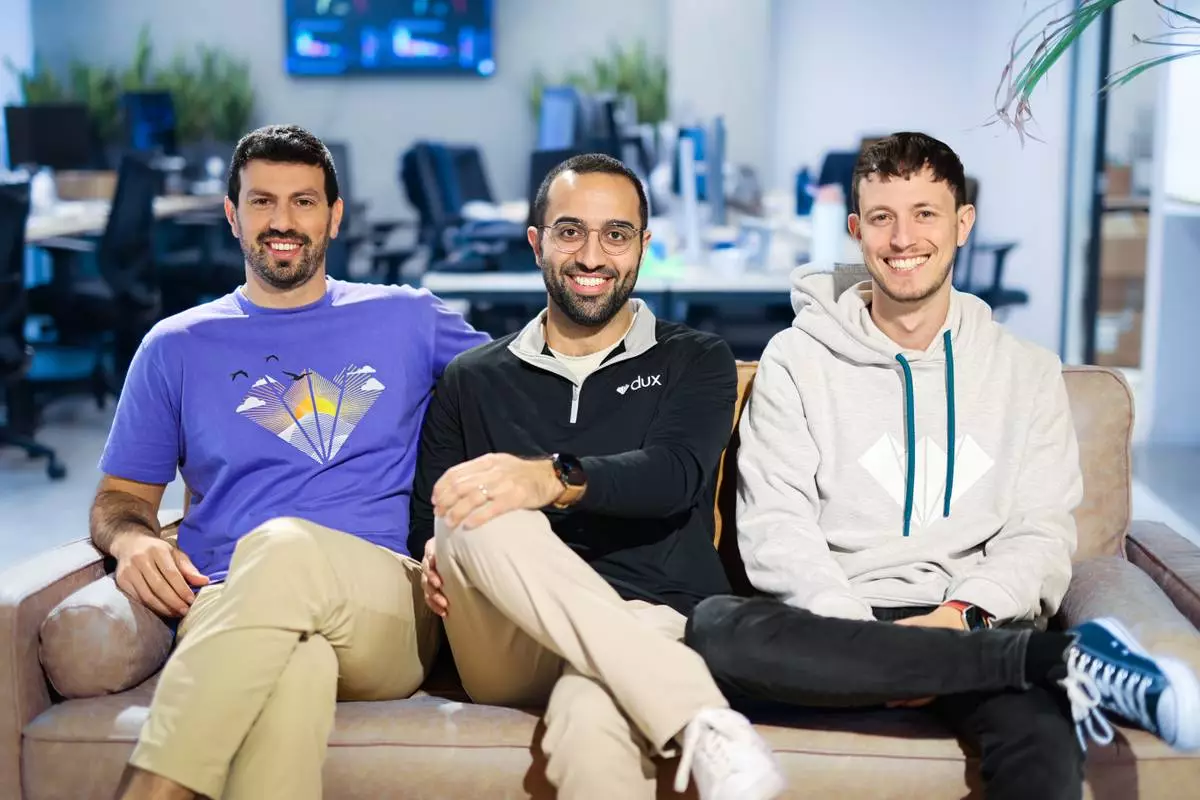
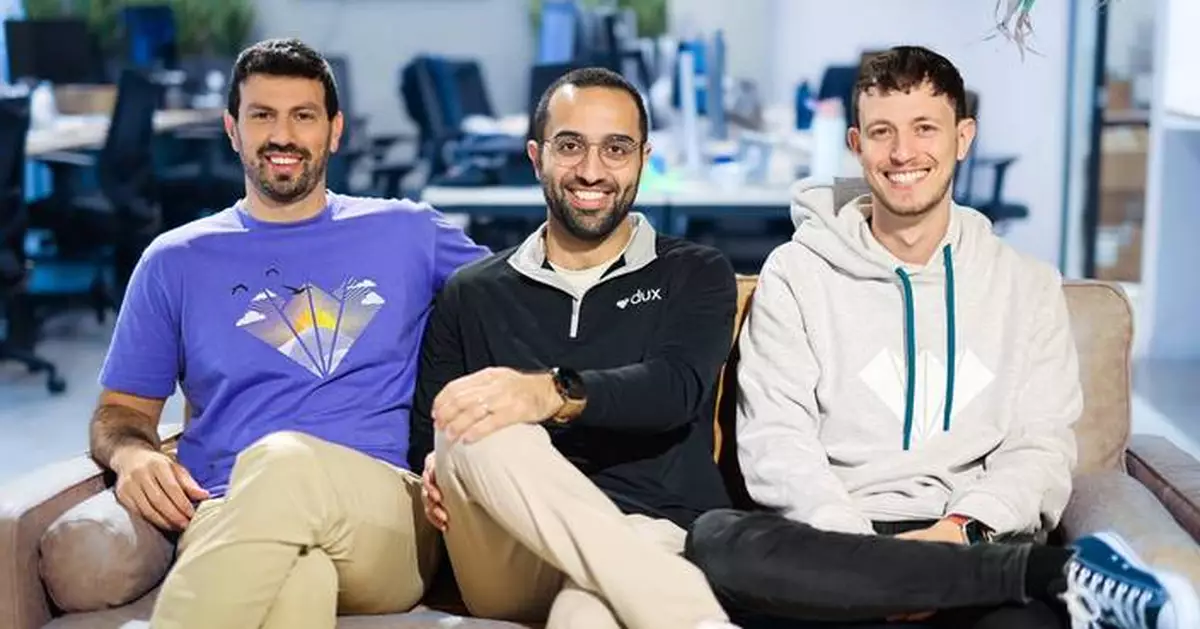
Dux founders (left to right): Amit Nir, CPO; Or Latovitz, CEO; and Nadav Geva, CTO
Dux founders (left to right): Amit Nir, CPO; Or Latovitz, CEO; and Nadav Geva, CTO
KYIV, Ukraine (AP) — Ukrainian President Volodymyr Zelenskyy says proposals being negotiated with U.S. officials for a deal to end the fighting in Russia's nearly 4-year-old invasion of his country could be finalized within days, after which American envoys will present them to the Kremlin before possible further meetings in the U.S. next weekend.

A draft peace plan discussed with the U.S. during talks in Berlin on Monday is “not perfect” but is “very workable,” Zelenskyy told reporters hours after the discussions. He cautioned, however, that some key issues — notably what happens to Ukrainian territory occupied by Russian forces — remain unresolved.

U.S.-led peace efforts appear to be picking up momentum. But as the spotlight shifts to Moscow, Russian President Vladimir Putin may balk at some of the proposals thrashed out by officials from Washington, Kyiv and Western Europe, including postwar security guarantees for Ukraine.

Zelenskyy said that after the Berlin talks, “we are very close to (a deal on) strong security guarantees.”

The security proposal will be based on Western help in keeping the Ukrainian army strong, an official from a NATO nation said, speaking on condition of anonymity to discuss sensitive matters.

“Europeans will lead a multinational and multi-domain force to strengthen those troops and to secure Ukraine from the land, sea and air, and the U.S. will lead a ceasefire monitoring and verification mechanism, with international participation,” the official said.

Kremlin spokesman Dmitry Peskov repeated Tuesday that Russia wants a comprehensive peace deal, not a temporary truce.

If Ukraine seeks “momentary, unsustainable solutions, we are unlikely to be ready to participate,” he said.

“We want peace — we don’t want a truce that would give Ukraine a respite and prepare for the continuation of the war,” he told reporters. “We want to stop this war, achieve our goals, secure our interests, and guarantee peace in Europe for the future.”

American officials said Monday there's consensus from Ukraine and Europe on about 90% of the U.S.-authored peace plan. U.S. President Donald Trump said: “I think we’re closer now than we have been, ever” to a peace settlement.

Plenty of potential pitfalls remain, notably the land issue.

Zelenskyy reiterated that Kyiv rules out recognizing Moscow’s control over any part of the Donbas, an economically important region in eastern Ukraine made up of Luhansk and Donetsk. Russia's army doesn’t fully control either but Trump has previously indicated that Ukraine will have to cede territory.

“The Americans are trying to find a compromise,” Zelenskyy said, before visiting the Netherlands on Tuesday. “They are proposing a ‘free economic zone’ (in the Donbas). And I want to stress once again: a ‘free economic zone’ does not mean under the control of the Russian Federation.”

Putin wants all the areas in four key regions that his forces have seized, as well as the Crimean Peninsula, which Moscow illegally annexed in 2014, to be recognized as Russian territory.

Zelenskyy warned that if Putin rejects diplomatic efforts, Ukraine expects increased Western pressure on Moscow, including tougher sanctions and additional military support for defense, such as enhanced air defense systems and long-range weapons.

Zelenskyy said that what’s driving Kyiv officials in the negotiations is for Russia to be “held accountable for what it has done — for this war, for all the killings, for all the suffering.”

Ukraine and the U.S. are preparing up to five documents related to the peace framework, several of them focused on security, Zelenskyy said.

He was upbeat about the progress in the Berlin talks.

“Overall, there was a demonstration of unity,” Zelenskyy said. “It was truly positive in the sense that it reflected the unity of the U.S., Europe, and Ukraine.”

Emma Burrows in London contributed.

Follow AP’s coverage of the war in Ukraine at https://apnews.com/hub/russia-ukraine

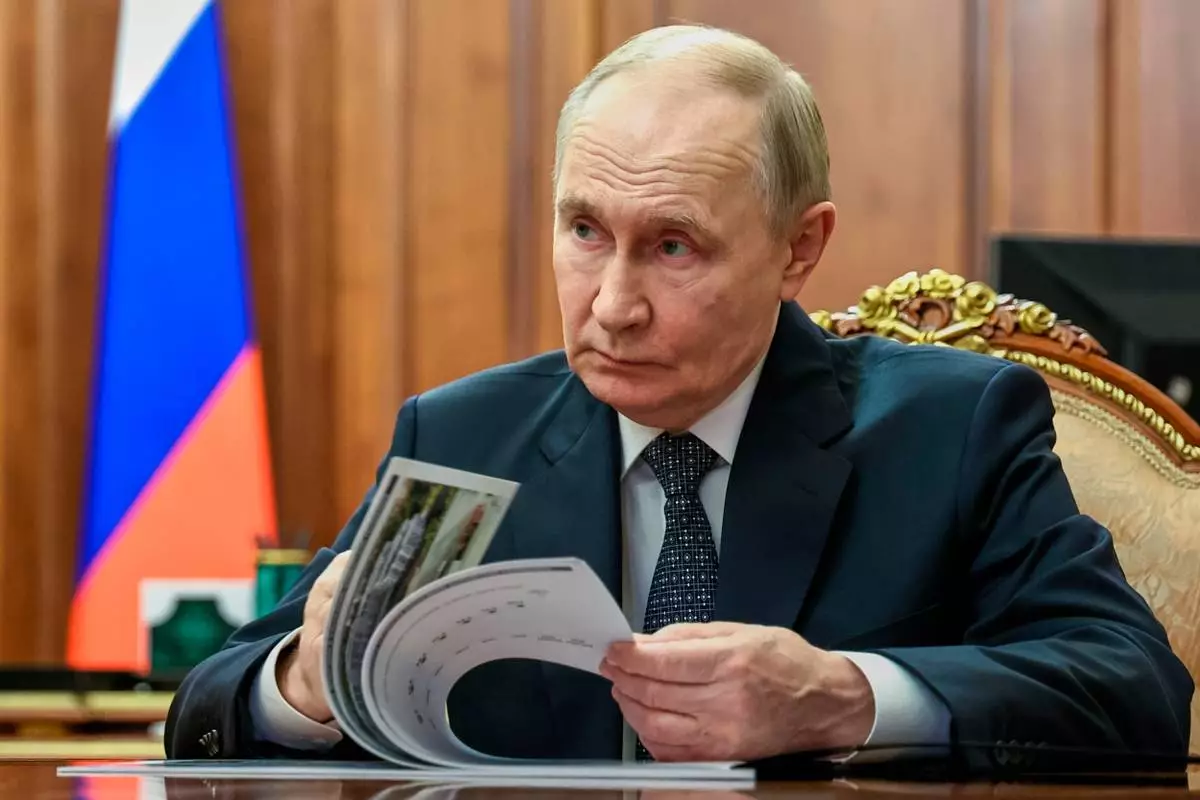
Russian President Vladimir Putin listens to the Head of the Kabardino-Balkar Republic of Russia, Kazbek Kokov, during their meeting at the Kremlin in Moscow, Russia, Tuesday, Dec. 16, 2025. (Mikhail Metzel/Sputnik, Kremlin Pool Photo via AP)

Russian President Vladimir Putin listens to the Head of the Kabardino-Balkar Republic of Russia, Kazbek Kokov, during their meeting at the Kremlin in Moscow, Russia, Tuesday, Dec. 16, 2025. (Mikhail Metzel/Sputnik, Kremlin Pool Photo via AP)

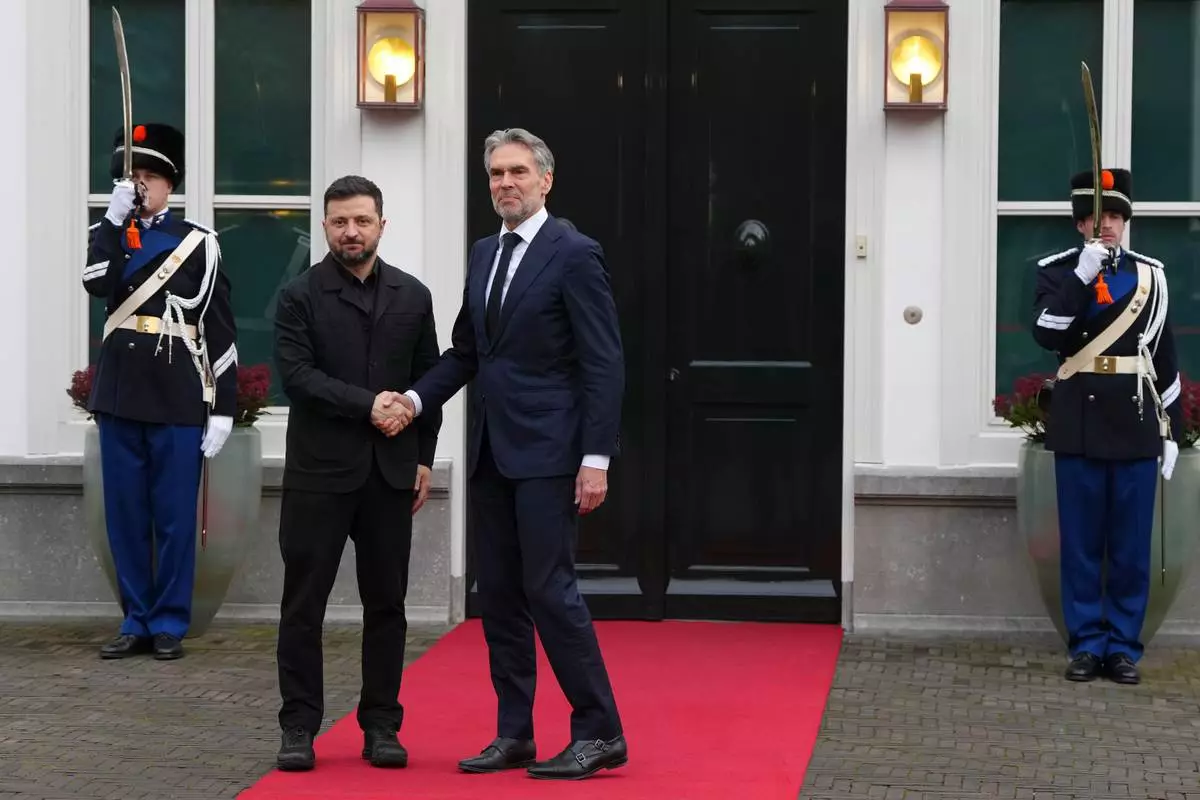
Dutch Prime Minister Dick Schoof, center, welcomes Ukraine's President Volodymyr Zelenskyy in The Hague, Netherlands, Tuesday, Dec. 16, 2025. (AP Photo/Peter Dejong)

Dutch Prime Minister Dick Schoof, center, welcomes Ukraine's President Volodymyr Zelenskyy in The Hague, Netherlands, Tuesday, Dec. 16, 2025. (AP Photo/Peter Dejong)

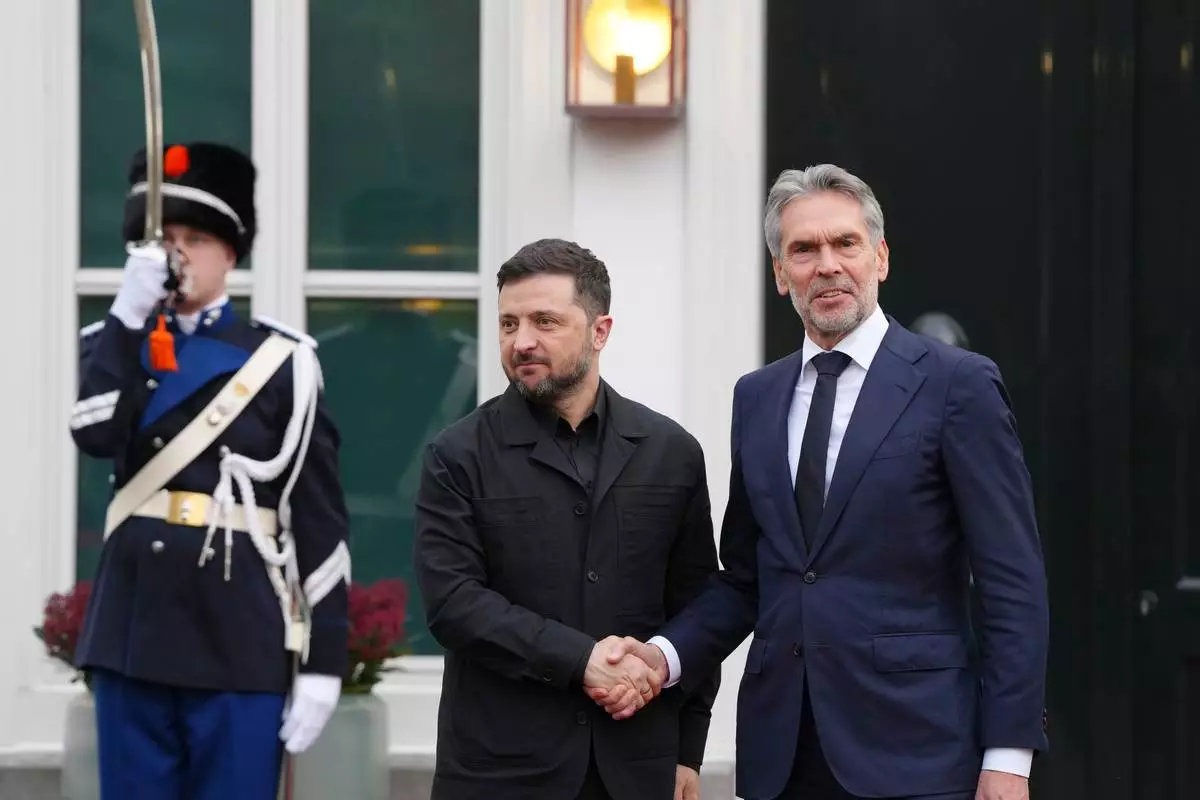
Dutch Prime Minister Dick Schoof, right, welcomes Ukraine's President Volodymyr Zelenskyy in The Hague, Netherlands, Tuesday, Dec. 16, 2025. (AP Photo/Peter Dejong)

Dutch Prime Minister Dick Schoof, right, welcomes Ukraine's President Volodymyr Zelenskyy in The Hague, Netherlands, Tuesday, Dec. 16, 2025. (AP Photo/Peter Dejong)

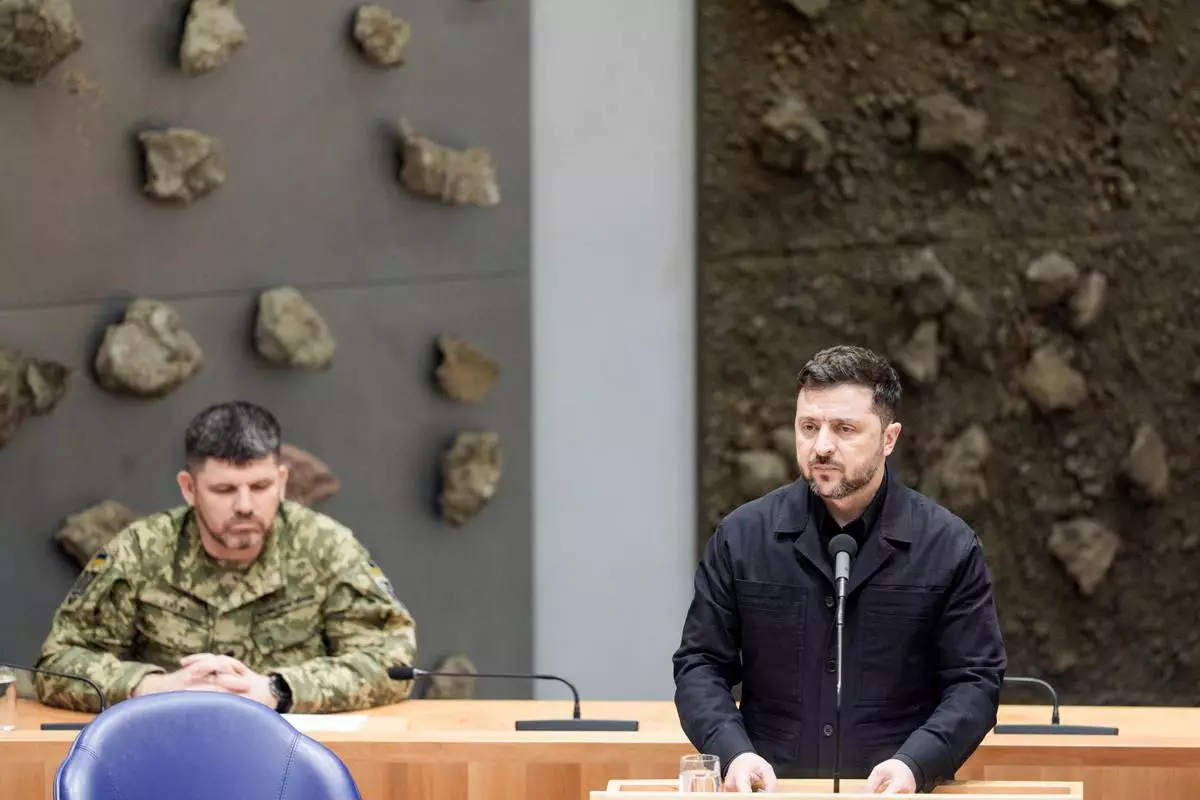
Ukraine's President Volodymyr Zelenskyy, right, delivers a speech during a parliament session in The Hague, Netherlands, Tuesday, Dec. 16, 2025. (Robin van Lonkhuijsen/Pool Photo via AP)

Ukraine's President Volodymyr Zelenskyy, right, delivers a speech during a parliament session in The Hague, Netherlands, Tuesday, Dec. 16, 2025. (Robin van Lonkhuijsen/Pool Photo via AP)

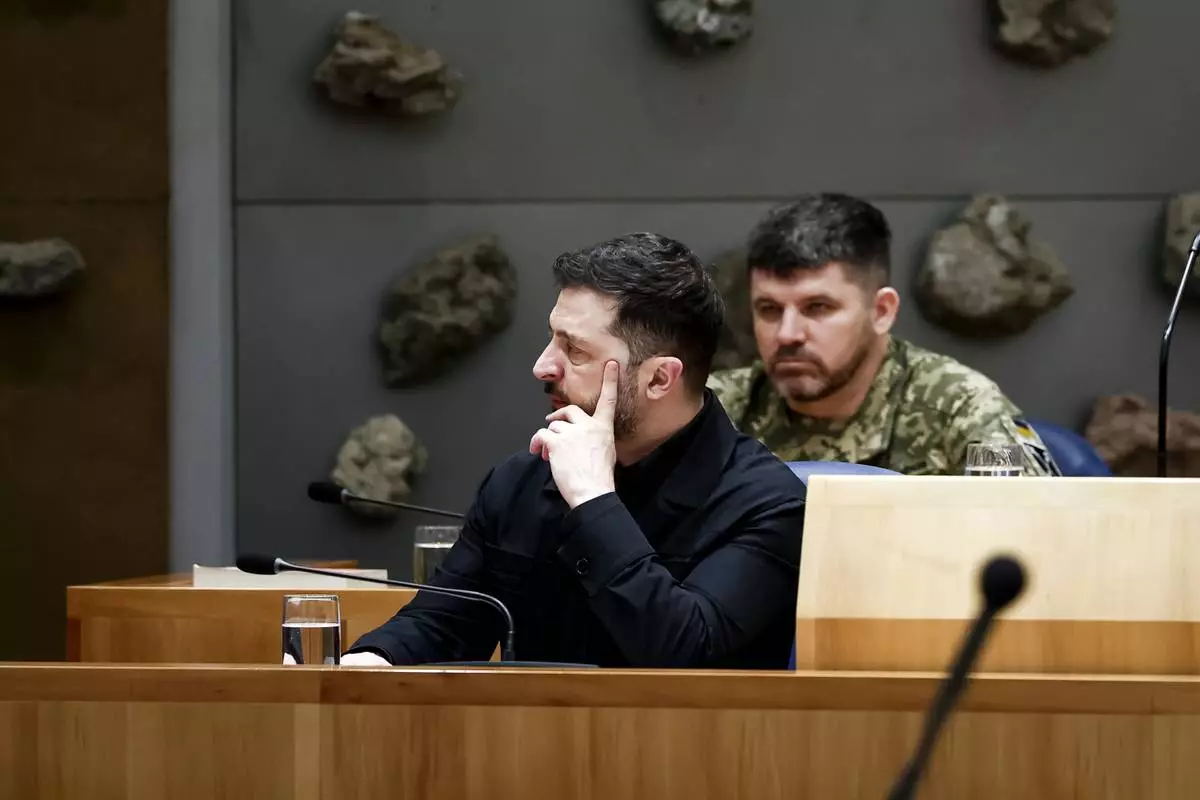
Ukraine's President Volodymyr Zelenskyy, front, attends a parliament session in The Hague, Netherlands, Tuesday, Dec. 16, 2025. (Robin van Lonkhuijsen/Pool Photo via AP)

Ukraine's President Volodymyr Zelenskyy, front, attends a parliament session in The Hague, Netherlands, Tuesday, Dec. 16, 2025. (Robin van Lonkhuijsen/Pool Photo via AP)

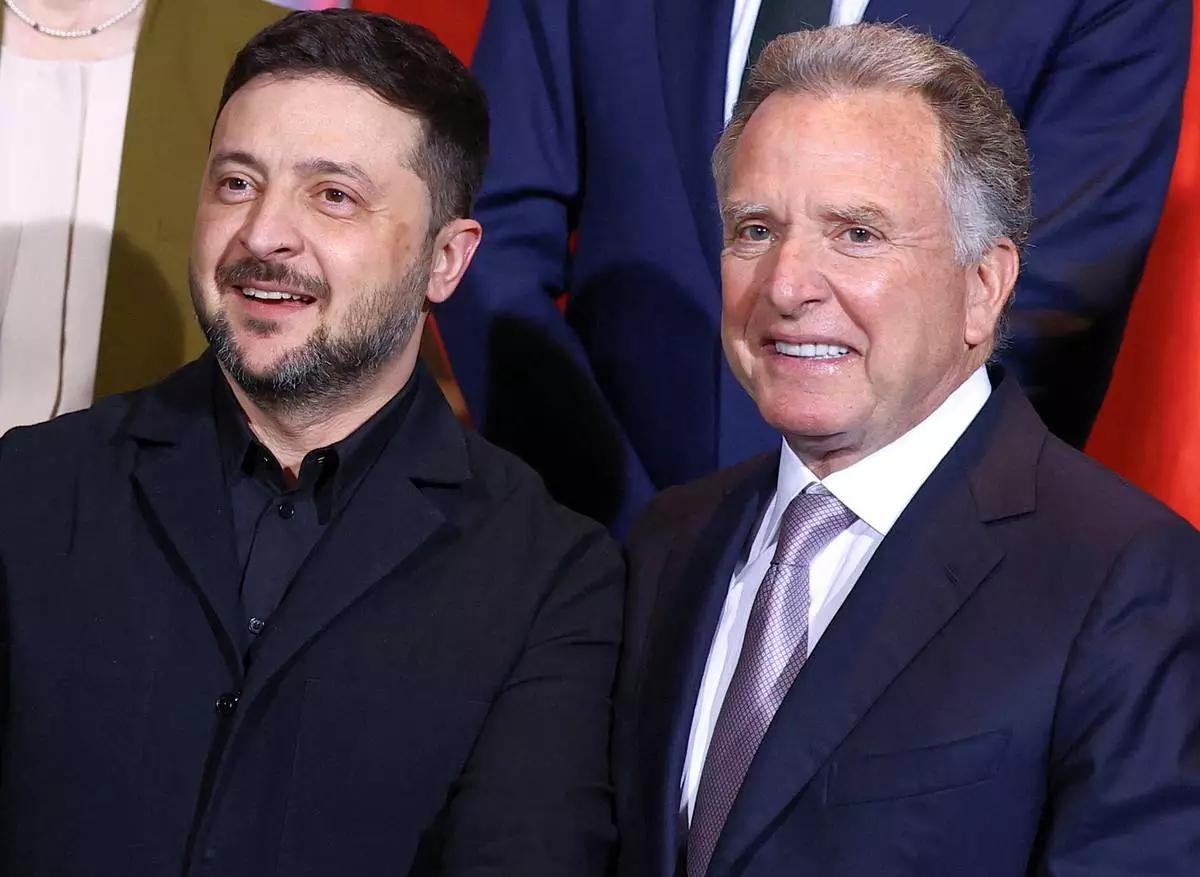
Ukraine's President Volodymyr Zelenskyy and U.S. Special Envoy Steve Witkoff gather for a family photo at the Chancellery in Berlin, Monday, Dec. 15, 2025. (Lisi Niesner/Pool Photo via AP)

Ukraine's President Volodymyr Zelenskyy and U.S. Special Envoy Steve Witkoff gather for a family photo at the Chancellery in Berlin, Monday, Dec. 15, 2025. (Lisi Niesner/Pool Photo via AP)

Recommended Articles