Skip to Content Facebook Feature Image

EU likely to delay free-trade deal with South America as French farmers block roads

News

EU likely to delay free-trade deal with South America as French farmers block roads
News

News

EU likely to delay free-trade deal with South America as French farmers block roads

2025-12-16 23:31 Last Updated At:12-17 16:08

PARIS (AP) — French farmers are driving opposition to a massive transatlantic trade deal between five South American nations of the Mercosur bloc and the 27-nation European Union that officials say will likely lead to its delay.

Farmers turned out across France with heavy tractors this week to build makeshift barricades and block roads, tried and tested methods of pressuring the French government that have previously proved successful in winning concessions.

More Images
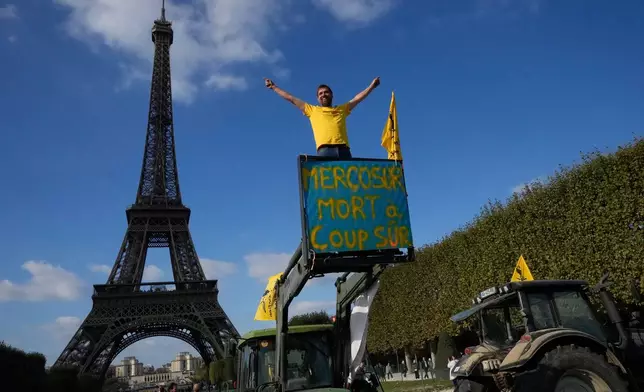
FILE - French farmers protest against the Mercosur trade alliance with South America countries, Tuesday, Oct. 14, 2025 near the Eiffel Tower in Paris. (AP Photo/Michel Euler, File)
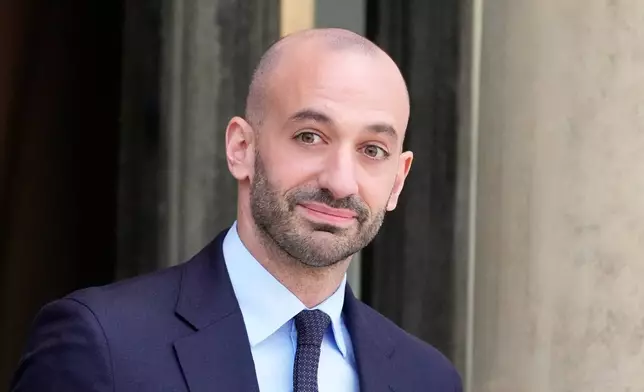
FILE - French farmers protest against the Mercosur trade alliance with South America countries, Tuesday, Oct. 14, 2025 near the Eiffel Tower in Paris. (AP Photo/Michel Euler, File)

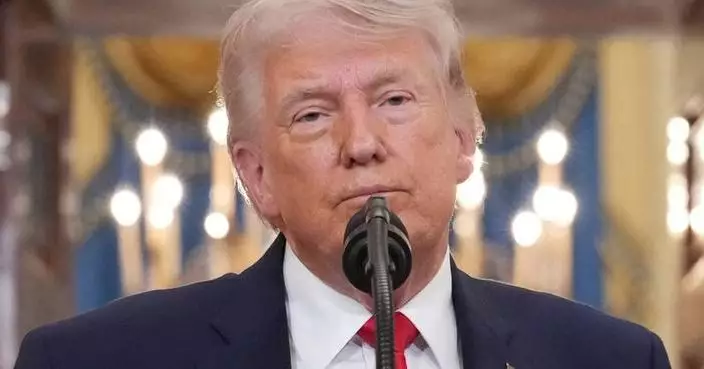
FILE - French Deputy minister in charge of European Affairs Benjamin Haddad leaves the weekly cabinet meeting, Tuesday, Oct. 14, 2025 at the Elysee Palace in Paris. (AP Photo/Michel Euler, File)
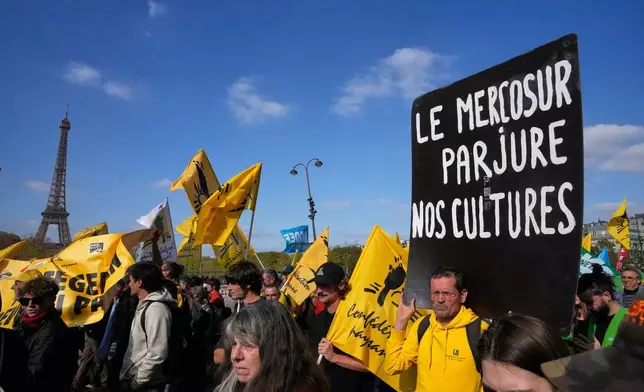
FILE - French Deputy minister in charge of European Affairs Benjamin Haddad leaves the weekly cabinet meeting, Tuesday, Oct. 14, 2025 at the Elysee Palace in Paris. (AP Photo/Michel Euler, File)

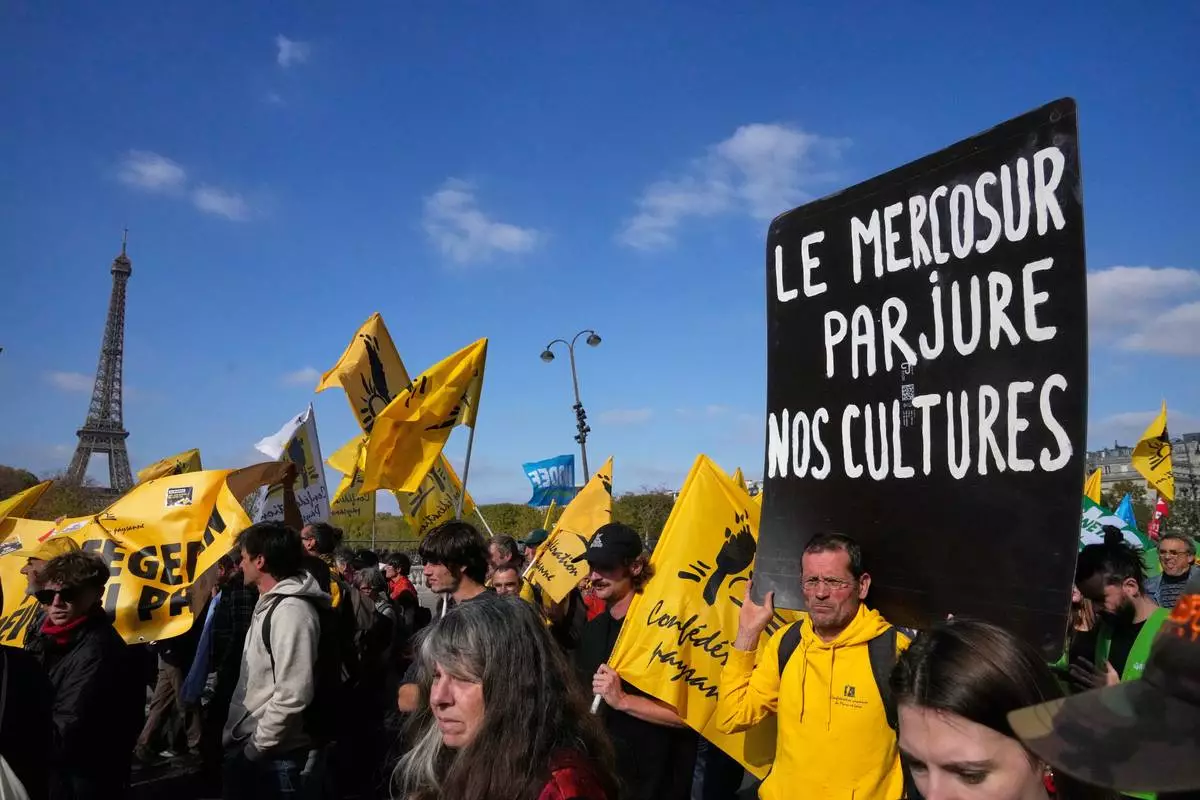
FILE - French farmers protest with a poster reading "Mercosur betrays our cultures" against the Mercosur trade alliance with South America countries Tuesday, Oct. 14, 2025 near the Eiffel Tower in Paris. (AP Photo/Michel Euler, File)

FILE - French farmers protest with a poster reading "Mercosur betrays our cultures" against the Mercosur trade alliance with South America countries Tuesday, Oct. 14, 2025 near the Eiffel Tower in Paris. (AP Photo/Michel Euler, File)

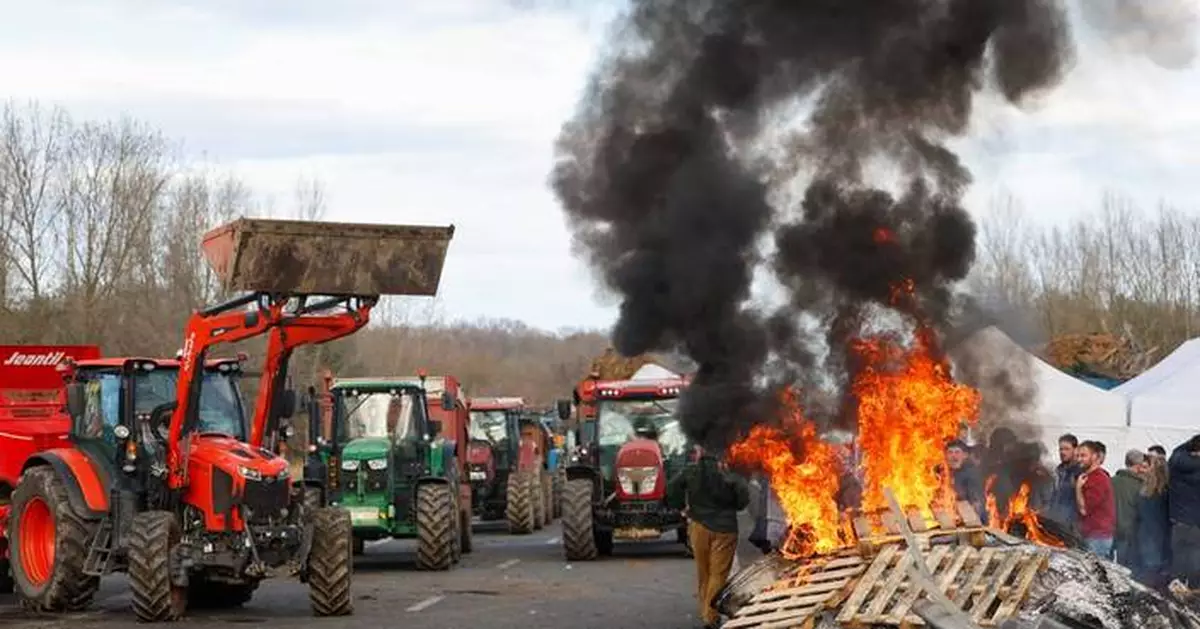
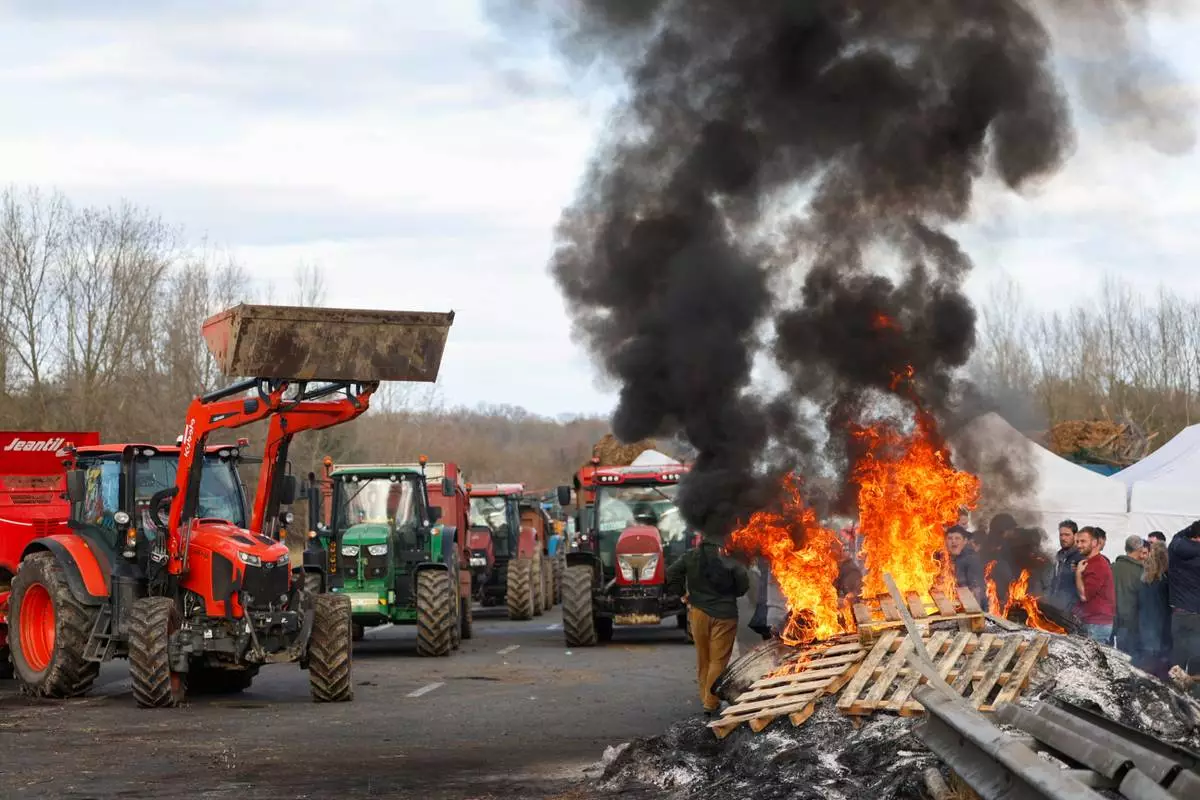
FILE - French farmers gather around a fire as they block the highway near Urt, southwestern France, to protest against a mass cull of cows ordered to contain the spread of a skin disease, Monday Dec. 15, 2025. (AP Photo/Nicolas Mollo, File)

FILE - French farmers gather around a fire as they block the highway near Urt, southwestern France, to protest against a mass cull of cows ordered to contain the spread of a skin disease, Monday Dec. 15, 2025. (AP Photo/Nicolas Mollo, File)

They are incensed by the planned free-trade deal between the EU and the five active Mercosur countries — Brazil, Argentina, Uruguay, Paraguay and Bolivia — that would progressively remove duties on almost all goods traded between the two blocs over the next 15 years.

The accord has been under negotiation for 25 years, and once ratified would cover a market of 780 million people and a quarter of the globe’s gross domestic product.

EU lawmakers voted Tuesday to advance the deal by adding new safeguards to it in addition to approving concessions to farmers made by the European Commission. It is still likely to be delayed because three key demands from the French have not yet been met.

In France, an agricultural powerhouse, farmers’ concerns about the Mercosur trade deal are combining with anger about government sanitary measures against the spread of a bovine disease, creating a volatile cocktail of rural discontent and growing protest.

Speaking to The Associated Press on Tuesday from a tractor blockade on a highway leading into Paris, aspiring farmer Loic Rivière said he was fighting for his ambition of setting up his own cereal or vegetable farm.

“We want to protect our future,” he said. “What we face isn’t the same as our parents. There’s more competition, more globalization, more diseases” affecting crops and animals.

Scattered cases in France of lumpy skin disease, a viral cattle disease previously confined to sub-Saharan Africa and mainly transmitted by insect bites, are inflaming emotions in farming communities, after government officials ordered the culling of infected herds.

About 30 tractors blocked the RN12 highway heading toward Paris at the protest Tuesday that Riviere was part of, he said. French media reporting from other demonstrations around the country this week showed farmers piling up potatoes, tires, straw bales and other things they had at hand to make barricades. Some were set on fire, creating dramatic television images of flames and smoke that gave an impression of bubbling rural fury, even though some of the protests were relatively small and scattered.

Motorists showed their support for the protesting farmers by tooting their horns, Rivière said.

Farmers “are fed up of not being listened to,” he said. “What we do is the foundation of life but obstacles are being thrown in our way.”

Some of those farmers will continue on to join a march on Brussels as leaders gather for a much-anticipated summit of EU leaders grappling with the Mercosur deal and funding Ukraine.

Worried by a surging far right that rallies support by criticizing the deal, the French have demanded safeguards to monitor and stop large economic disruption in the EU, increased regulations in the South American partner nations like pesticide restrictions, and more inspections of imports at EU ports.

“Today we don’t see them (the safeguards), that’s why we’ve asked for a delay,” said Benjamin Haddad, France’s Minister of European Affairs ahead of a meeting in Brussels. He called on the bloc to “stop being naive” and to protect European agriculture from “unfair competition" by adopting assertive trade policies styled after Washington and Beijing.

“This is what the Americans do, this is what the Chinese do, and so, we need to be open, but we also need to protect ourselves and protect our interests and basically ensure a level playing field,” Haddad said.

France is joined by other EU nations with large agricultural sectors critical of the deal — including Poland and Ireland.

The “Irish government has some concerns,” said Thomas Byrne, Ireland’s Minister of State for European Affairs and Defence. “The indications that I have at the moment is that it will be delayed until January.”

Yet there was clear support for the Mercosur deal among EU lawmakers. They voted 431-161, with 70 abstentions, to advance the deal.

“The Mercosur trade agreement will strengthen Europe’s geopolitical position. It will make us less dependent on China, on Russia and the moods of Donald Trump. It is the clear signal to the world the EU is a reliable partner,” said Svenja Hahn, a German MEP with the center-right Renew Europe coalition.

Philipp Lausberg, an analyst at the European Policy Centre, argued that delays now could risk the deal itself as more right-wing governments come into power in the EU. The deal would help the EU secure markets for its exports and key imports like rare earths, but “if they don’t do it now, then the chances of it going through are waning,” he said.

Bernd Lange, a German lawmaker, said that not signing would be "geopolitically irresponsible and economical nonsense.”

“Some other powers that like to portray us as irrelevant would then rub their hands with glee,” he said. "The finish line for is now in sight and we should cross it.”

European Commission President Ursula von der Leyen is determined to sign the agreement, but needs the backing of at least two-thirds of member countries. It remains unclear whether France could find enough allies to veto her signature.

Despite the likelihood of a delay, von der Leyen and European Council President António Costa are still scheduled to sign the deal in Brazil on Saturday.
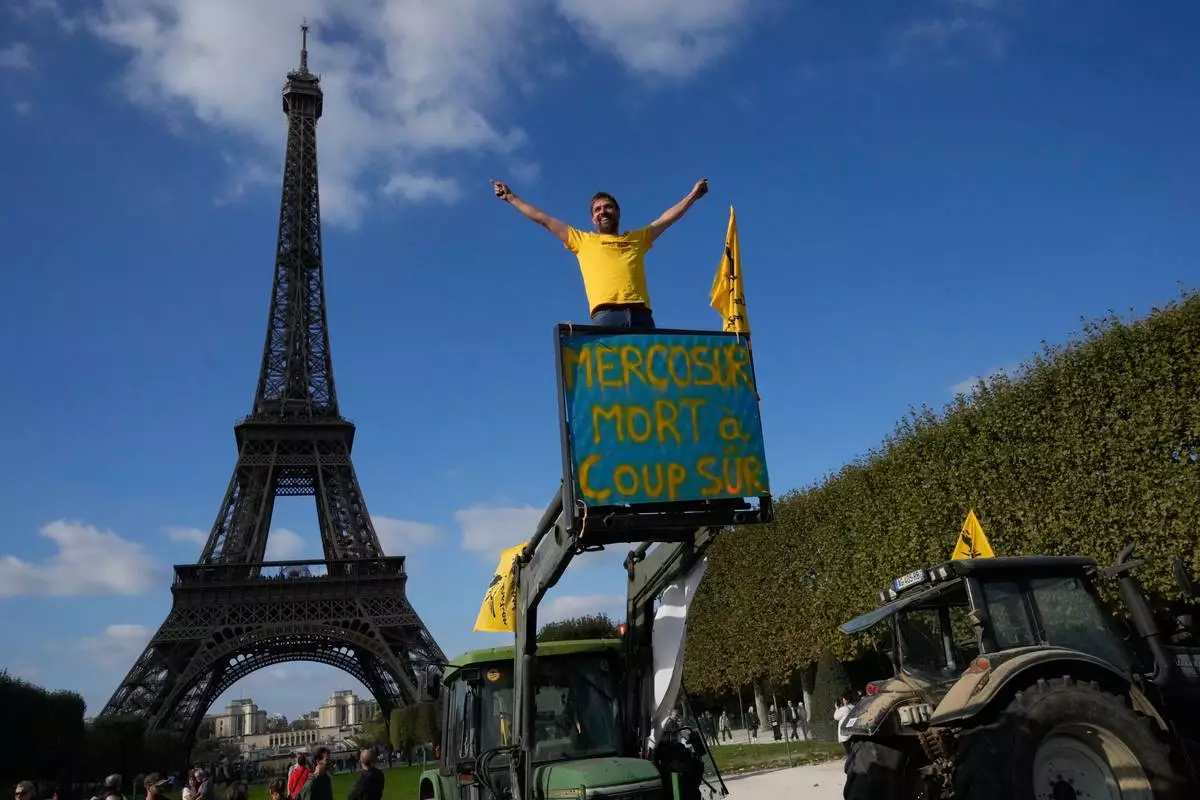
FILE - French farmers protest against the Mercosur trade alliance with South America countries, Tuesday, Oct. 14, 2025 near the Eiffel Tower in Paris. (AP Photo/Michel Euler, File)
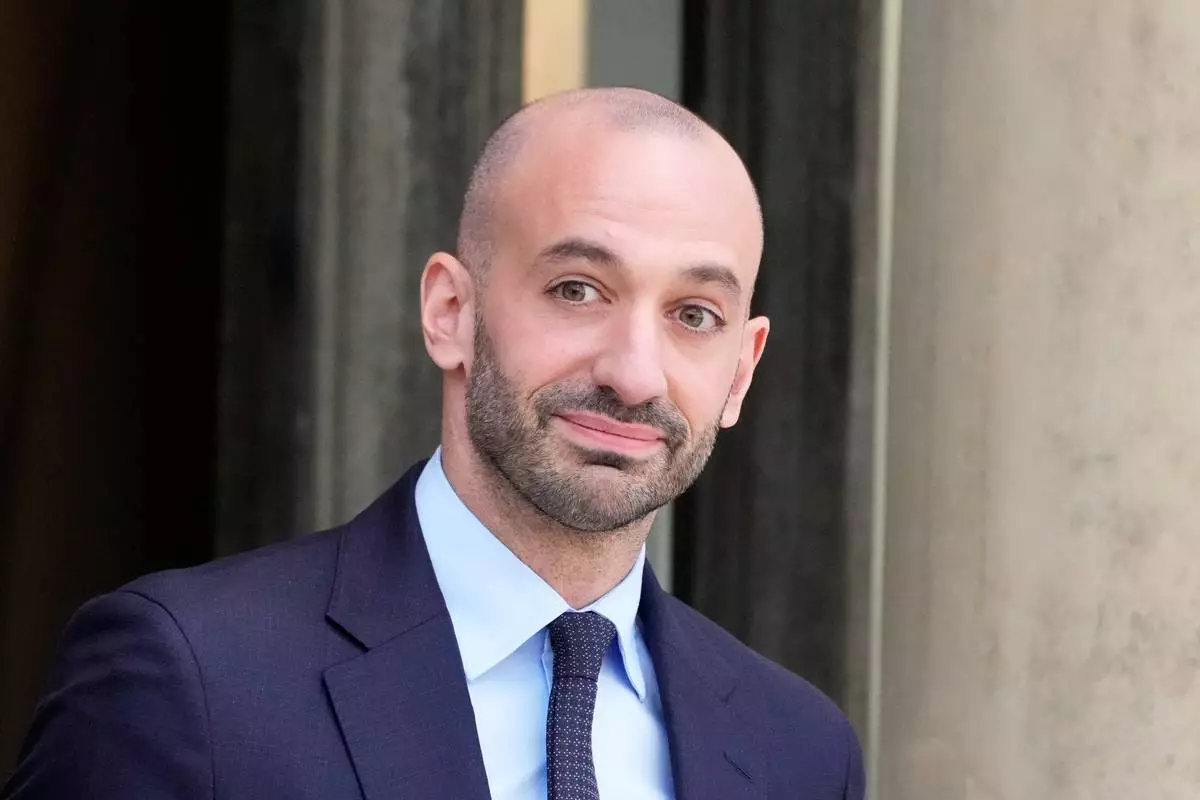
FILE - French farmers protest against the Mercosur trade alliance with South America countries, Tuesday, Oct. 14, 2025 near the Eiffel Tower in Paris. (AP Photo/Michel Euler, File)

FILE - French Deputy minister in charge of European Affairs Benjamin Haddad leaves the weekly cabinet meeting, Tuesday, Oct. 14, 2025 at the Elysee Palace in Paris. (AP Photo/Michel Euler, File)
FILE - French Deputy minister in charge of European Affairs Benjamin Haddad leaves the weekly cabinet meeting, Tuesday, Oct. 14, 2025 at the Elysee Palace in Paris. (AP Photo/Michel Euler, File)

FILE - French farmers protest with a poster reading "Mercosur betrays our cultures" against the Mercosur trade alliance with South America countries Tuesday, Oct. 14, 2025 near the Eiffel Tower in Paris. (AP Photo/Michel Euler, File)
FILE - French farmers protest with a poster reading "Mercosur betrays our cultures" against the Mercosur trade alliance with South America countries Tuesday, Oct. 14, 2025 near the Eiffel Tower in Paris. (AP Photo/Michel Euler, File)

FILE - French farmers gather around a fire as they block the highway near Urt, southwestern France, to protest against a mass cull of cows ordered to contain the spread of a skin disease, Monday Dec. 15, 2025. (AP Photo/Nicolas Mollo, File)
FILE - French farmers gather around a fire as they block the highway near Urt, southwestern France, to protest against a mass cull of cows ordered to contain the spread of a skin disease, Monday Dec. 15, 2025. (AP Photo/Nicolas Mollo, File)

DES MOINES, Iowa (AP) — The near-daily changes in U.S. gas prices are dizzying for drivers, who are left feeling frustrated and cash-strapped by the highest fuel costs since 2022.

With the Iran war pushing up prices worldwide, the U.S. average for a gallon of gas topped $4 on Tuesday, according to AAA.

Prices can change from one day to the next or from one nearby station to another, forcing drivers in the U.S. to game out the right moment to fill up or hunt for cheaper prices.

Experts say differences in price aren’t typically decided by any individual gas retailer, and most of them aren't pocketing the extra pennies when prices rise. The uncertainty at the pump is trickling down from a massive, volatile oil and gas market that's making it hard for gas stations to keep up.

Lonnie McQuirter, director of operations at 36 Lyn Refuel Station in south Minneapolis, said his margins have gotten much tighter. About a mile (1.6 kilometers) off Interstate 35, the neighborhood convenience store posted $3.399 a gallon for regular gas on Wednesday, which is about 18 cents lower than the metro average, according to AAA.

“We price based on what we’re able to buy fuel at, and how well we can operate,” McQuirter said. He declined to speculate about his competitors, saying, “They’ve got different economics.”

Wholesale fuel prices, which shift multiple times a day, are the main reason McQuirter said he's charging more than a month ago. He's also facing higher credit card fees and rising costs to maintain pumps.

In times like these, with consumers “screaming for help,” McQuirter said small operators like him act more on emotion than greed.

“We’re in our stores every day looking our customers in the eye,” he said. “It really takes a toll when people are having to cut back on certain things in order to afford to live.”

A lot of it is outside the gas retailer’s control. Roughly half the price at the pump pays for the cost of crude oil, the main ingredient in gasoline, according to the U.S. Energy Information Administration. About 20% goes to refiners who turn crude into gas.

Those costs have risen as crude oil prices jumped in response to the war and shipping disruptions in the Strait of Hormuz. Gas retailers are adjusting the price at the pump to account for the higher price they just paid for their next shipment of gasoline.

Taxes — federal, state and local — account for nearly 20% of the price, while about 10% is left for retailers, who still have to pay for transportation, labor and other expenses.

Retailers' markup has averaged about 38 cents a gallon over the past five years, according to the convenience store trade group NACS, citing data from research firm OPIS. After expenses, stations may keep roughly 15 cents per gallon, said Jeff Lenard, a vice president at NACS.

“Some make more, some make less,” Lenard said.

Patrick De Haan, head of petroleum analysis at GasBuddy, compared it to a homeowner’s role in setting their sale price.

“If I was selling a house today, I’d be beholden to whatever the housing market is,” De Haan said. “That’s the same for gas station owners. Whatever the price of oil and gasoline are, they are a price taker, not maker.”

Although the national average just passed $4 a gallon, the price that drivers pay varies widely by state, city and station.

Taxes alone can create large gaps. California's gas taxes and fees totaled about 71 cents per gallon last year, compared with roughly 9 cents in Alaska.

Distance from refineries, the type of retailer, how much volume the location goes through and whether there are other fuel options nearby also play a role.

Gas stations near competitors may choose to price gasoline competitively on large outdoor signs to attract drivers, hoping they'll come inside and buy higher-margin items, said Neal Walters, a partner focused on energy at the global management consulting firm Kearney.

“It’s one of the only retail locations where you don’t have to go into the store to find out what you’re paying,” Walters said.

While U.S. retailers sell hundreds of millions of gallons of gas a day nationwide, they typically won't see large gains when prices rise.

“The margins shrink when prices go up because it’s harder for them to pass along the increases as quickly as they themselves get them,” De Haan of GasBuddy said.

When oil prices start to fall, retailers may recover some of those losses, particularly if there’s uncertainty about future supply costs. Prices can rocket up but tend to drift down like a falling feather, said Garrett Golding, assistant vice president for energy programs at the Federal Reserve Bank of Dallas.

Higher gas prices can also hurt sales inside the gas stations, if customers who are being squeezed at the pump spend less on other things.

“So it’s not always the case that higher prices mean the service station owners are actually doing better,” Golding said.

Most profits in the oil and gas supply chain are made upstream, he said, by companies that extract and refine crude oil. Still, Golding says they aren't necessarily celebrating; at some point, a significant spike in prices could start to hurt demand.

“It may be a good stretch of days or weeks for them,” he said, “but they’re also cautious of what it could portend.”

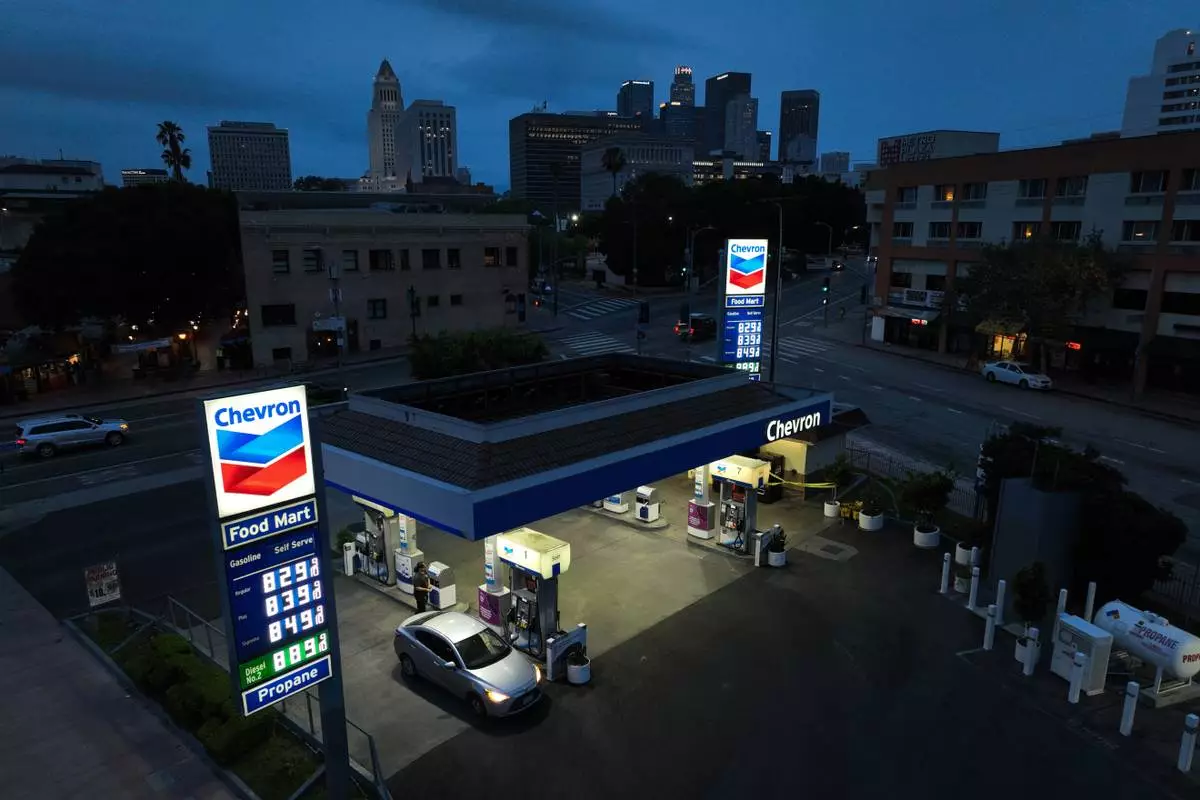
Gas prices are displayed at a Chevron gas station, in downtown Los Angeles, Tuesday, March 31, 2026. (AP Photo/Jae C. Hong)

Gas prices are displayed at a Chevron gas station, in downtown Los Angeles, Tuesday, March 31, 2026. (AP Photo/Jae C. Hong)

Recommended Articles