The China-Laos Railway has transported more than 16 million tons of goods worth over 70 billion yuan in four years since it began operation, according to customs data.
The railway has established itself as a vital trade artery, with the variety of goods shipped expanding from 583 categories at its launch to more than 3,800. Its freight services now connect over 6,000 enterprises across China with 19 countries and regions, including Laos and Thailand, strengthening economic ties across Southeast Asia.
As a flagship project under the Belt and Road Initiative, the 1,035-kilometer railway links Kunming, the provincial capital of Yunnan in southwest China, with Vientiane, the capital of Laos. Since its opening in December 2021, it has evolved into a "golden gateway," significantly boosting connectivity and promoting the flow of trade between China and Southeast Asian countries.
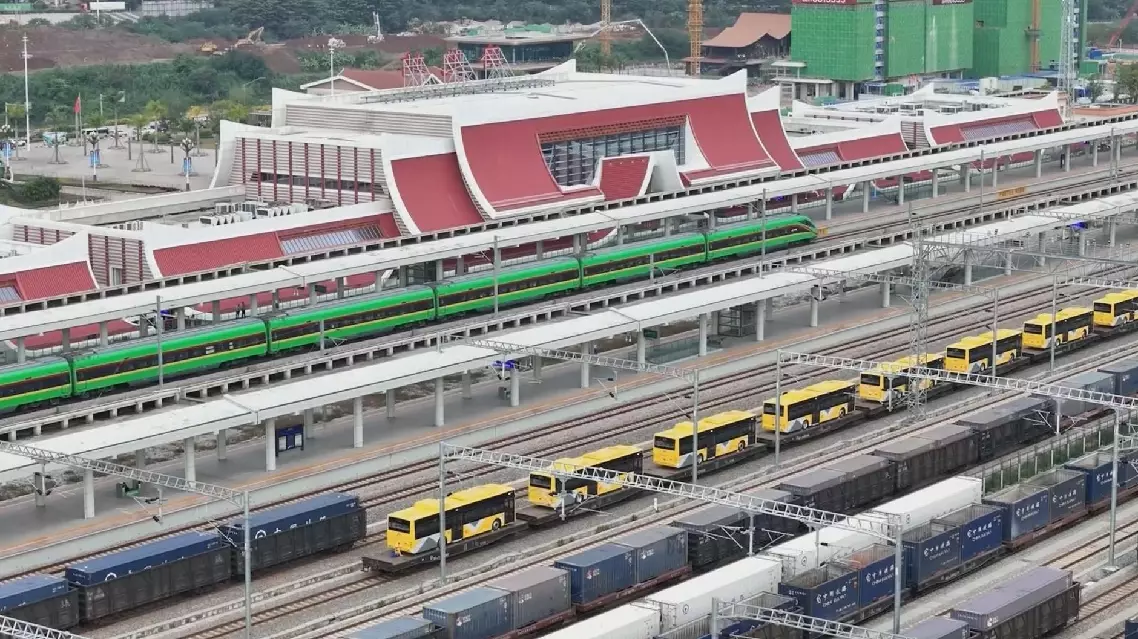
China-Laos Railway handles 16 mln tons of goods
China attaches great importance to the development of China-Singapore relations, and is willing to maintain the momentum of high-level exchanges, promote practical cooperation in various fields, and enhance people-to-people exchanges with Singapore, Chinese Foreign Minister Wang Yi said on Monday.
Wang, also a member of the Political Bureau of the Communist Party of China Central Committee, made the remarks when holding talks with Singaporean Foreign Minister Vivian Balakrishnan in Beijing.
Noting that over the past year, under the strategic guidance of leaders of the two countries and joint efforts of both sides, the all-round high-quality and future-oriented partnership between China and Singapore has maintained a good momentum, Wang urged the two countries to continue to enhance strategic communication, increase mutual trust, jointly address the ever-emerging global challenges at present, and safeguard the overall situation of regional peace and stability.
Wang said that maintaining the security of global industrial and supply chains and the smooth flow of maritime navigation is in the common interests of the international community, and China is willing to continue to make efforts to this end.
Noting that Singapore is an important ASEAN member and will assume ASEAN's rotating presidency next year, Wang said China expects the Singaporean side to continue playing an active role in promoting China-ASEAN cooperation.
Balakrishnan said Singapore highly values its relations with China, adheres to the one-China policy, and firmly opposes "Taiwan independence."
Singapore is willing to maintain close high-level exchanges with China, promote practical cooperation in various fields, carry out key cooperation projects of both sides, and promote regional connectivity, he said.
Singapore is ready to promote greater progress in ASEAN-China comprehensive strategic partnership, support the Global Development Initiative, and uphold multilateralism and free trade, and is willing to work with China to make joint efforts in promoting world peace, development and prosperity, he added.
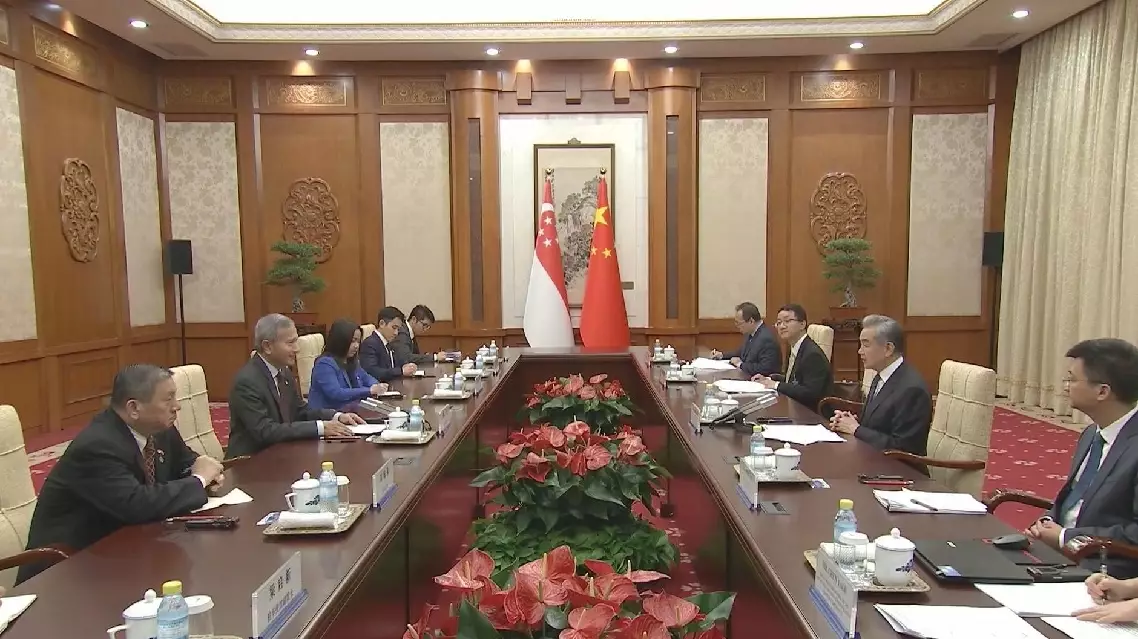
China ready to promote practical cooperation with Singapore: Chinese FM