HA approves implementation arrangements for Sale of Home Ownership Scheme Flats 2025, Sale of Green Form Subsidised Home Ownership Scheme Flats 2025 and White Form Secondary Market Scheme 2025
The following is issued on behalf of the Hong Kong Housing Authority:
The Hong Kong Housing Authority (HA) Subsidised Housing Committee (SHC) approved the average selling prices and sales arrangements for the Sale of Home Ownership Scheme (HOS) Flats 2025 (HOS 2025) and the Sale of Green Form Subsidised Home Ownership Scheme (GSH) Flats 2025 (GSH 2025), the arrangements for the White Form Secondary Market Scheme (WSM) 2025 (WSM 2025), as well as the White Form (WF) income and asset limits for HOS 2025 and WSM 2025.
"The HA has long been striving to enhance the housing ladder through the provision of various types of subsidised sales flat (SSF) schemes and continuous enhancement of relevant arrangements in order to assist Public Rental Housing (PRH) tenants with better financial capabilities and other eligible applicants to achieve upward mobility by purchasing SSFs. The HA is going to launch the HOS 2025, the GSH 2025 and the WSM 2025 together and start inviting applications in the second quarter of 2026. The HOS 2025 and the GSH 2025 offer a total of over 9 700 new flats while the WSM 2025 offers 7 000 quotas allowing successful applicants to purchase a flat with premium unpaid in the secondary market," a spokesman for the HA said.
HOS 2025 and GSH 2025
Flats for sale
Flats for sale under the HOS 2025 include a total of over 8 300 flats in five new HOS developments at a wide variety of locations (including Kai Tak, Kam Tin, Tseung Kwan O, Ping Shan, and Tung Chung), with saleable areas ranging from about 26.1 square metres to about 52.0 sq m (about 281 square feet to about 560 sq ft). Larger flats, with saleable areas ranging from about 41.2 sq m to about 52.0 sq m (about 443 sq ft to about 560 sq ft), will account for about a quarter of the total number of flats (see Annex 1 and Annex 2).
Flats for sale under the GSH 2025 include over 1 400 new flats from a new GSH development in Kowloon Bay, with saleable areas ranging from about 26.0 sq m to about 43.6 sq m (about 280 sq ft to about 469 sq ft). Larger flats, with saleable areas ranging from about 41.5 sq m to about 43.6 sq m (about 447 sq ft to about 469 sq ft), will account for about a quarter of the total number of flats (see Annex 3 and Annex 4). Moreover, a new batch of recovered Tenants Purchase Scheme flats will also be offered for sale under the GSH 2025.
Pricing
The HA continues to price HOS and GSH flats at an affordable level, which was based on the affordability of the applicants, i.e. at least 75 per cent of the flats for sale can allow non-owner occupier households earning the median monthly household income to spend no more than 40 per cent of their monthly income on mortgage payments. Based on this principle of setting selling prices at an affordable level, the discount for the HOS 2025 was set at 30 per cent from the assessed market values (for sale at 70 per cent of the assessed market values).
The selling prices of flats in the five new HOS developments range from about $1.5 million to about $4.8 million, with an average selling price of about $2.78 million. The mortgage payment is about $11,200 per month, assuming that the buyer takes out a mortgage at 90 per cent of the flat price for a mortgage repayment period of 30 years at a prevailing mortgage interest rate of about 3.5 per cent.
GSH flats will be sold at a discount of 10 per cent more than that of the preceding HOS sale exercise. Since the discount rate for the HOS 2025 was set at 30 per cent, the average selling prices of all GSH flats under the GSH 2025 would be set at 40 per cent discount from the assessed market values (i.e. for sale at 60 per cent of the assessed market values). The selling prices of flats in the new GSH development range from about $1.68 million to about $3.54 million with an average selling price of about $2.68 million. The mortgage payment is about $11,400 per month, assuming that the buyer takes out a mortgage at 95 per cent of the flat price for a mortgage repayment period of 30 years at a prevailing mortgage interest rate of about 3.5 per cent.
Implementation of new measures under Policy Address
To facilitate upward mobility of young people, starting from the HOS 2025, an extra ballot number will be allocated to young family applicants and young one-person applicants aged below 40 with WF status who opted to join the Youth Scheme (HOS). Moreover, the HOS 2025 and the GSH 2025 will continue to implement the enhanced arrangement of allocating an extra ballot number to applicants who have failed to purchase an SSF in the last two consecutive sale exercises of the same type of SSF. The HOS and the GSH will be conducted separately.
The HA will increase the quota allocation ratio between the GF and the WF from 40:60 to 50:50 starting from the HOS 2025, and at the same time increase the ratio of larger flats in HOS and GSH projects to encourage more PRH tenants to purchase SSFs. In fact, the ratio of larger flats has been increased from about 20 per cent in the past to about 25 per cent under the HOS 2025. Moreover, when design conditions of existing developments permit, the HA will progressively optimise the space utilisation of the flats. Therefore, in this new batch of HOS flats offered for sale, more than half have adopted the new design, providing residents with an improved experience upon returning home and enabling more flexible use of the space outside the kitchen, such as for placing a shoe cabinet, storage cabinet, etc. Future designs will continue to develop along this new approach.
Given the supply of HOS flats in the next five years is expected to increase steadily, even the quota allocation ratio between GF and WF applicants has been adjusted to 50:50, and opportunities for WF applicants to purchase HOS flats will still increase by about 25 per cent. As in the past, the flexibility to reallocate any unused quota from the GF queue to WF queue and vice versa will be maintained.
To encourage upward mobility through the housing ladder, starting from the HOS 2025 and the GSH 2025, the HA will shorten the alienation restriction period of new SSFs put up for sale in the open market, from 15 years to 10 years from the date of the first assignment.
WSM 2025
In response to the keen demand of WSM quotas from WF applicants, the HA is further increasing the quota by 1 000 to 7 000 starting from WSM 2025, which includes 2 000 quotas for young applicants aged below 40 while the remaining 5 000 are ordinary quotas. The allocation ratio for family and one-person applicants is kept at 9:1 and any unused family quotas will be reallocated to one-person applicants and vice versa.
White Form Income and Asset Limits
At the same time, the HA has also reviewed the WF income and asset limits with reference to the existing mechanism. For WF family applicants of the HOS 2025 and the WSM 2025, the income limit will be maintained at the same level of $60,000 per month as the HOS 2024 and the WSM 2024. According to the existing arrangement, the income limits for WF one-person applicants will be set at half the limits for family applicants at $30,000 per month. Although the income limits remain unchanged, given the number of non-owner occupied household in private sector increases, compared with HOS 2024 and WSM 2024, the eligible household number is anticipated to increase by 17 500 to 357 000.
While the asset limit for WF applicants should be slightly adjusted downwards to $1,220,000 according to the existing mechanism, the HA considers that it would be appropriate to provide applicants with a buffer and maintain the asset limits for WF family applicants and one-person applicants at the same level of $1,230,000 and $615,000 respectively as the HOS 2024 and the WSM 2024.
At the meeting, some SHC members raised concerns about long‑term accommodation support for those affected by the fire at Wang Fuk Court in Tai Po. The HA noted that the Government will conduct a comprehensive collection of residents' views, carry out an analysis and formulate long‑term plans to help the affected families rebuild their homes. Going forward, the HA will exercise the utmost flexibility and will fully and proactively support the Government in taking forward the relevant initiatives.
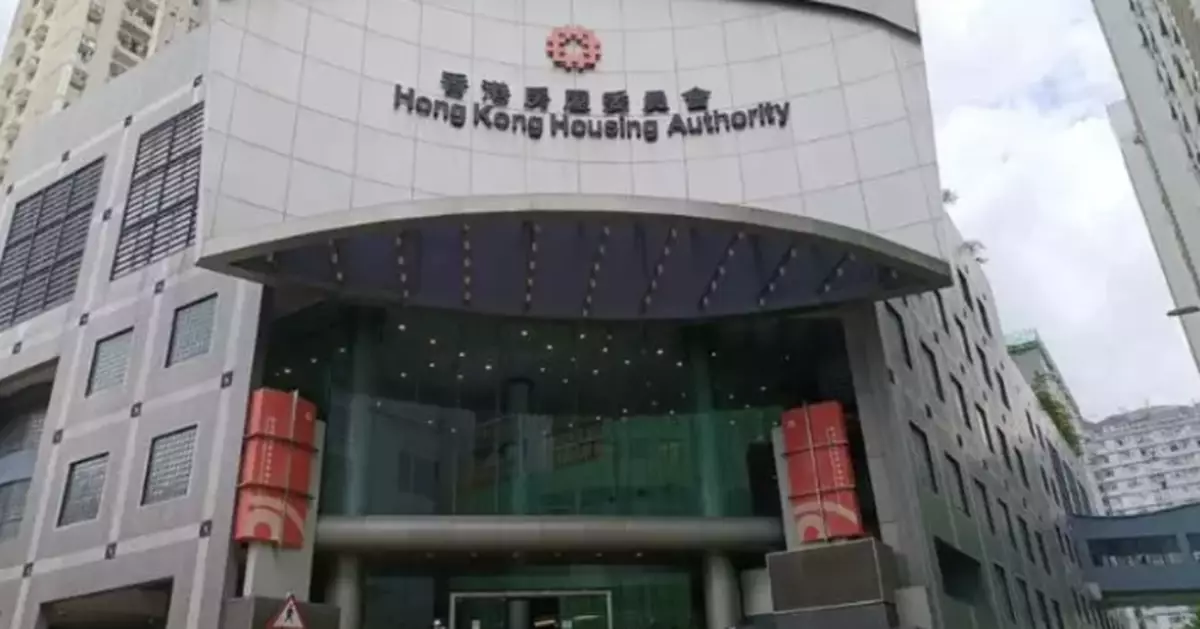
The Hong Kong Housing Authority, Photo source: reference image